
Reviewed · WALKING TOURS
Booze, Brothels & The Bard: A Walking Tour of London’s Bawdy Borough
Southwark keeps its juiciest stories close. This two-hour walk reveals the rough-edged side of London through old prisons, beer trading, medieval power, Shakespeare, and the pleasures once found beyond the City’s rules. I like the route’s small-group limit of 15 people and its sharp focus on real places rather than a long list of dates. I also like that guide Tom brings warmth and clear storytelling to the walk.
The main trade-off is pace. You visit 11 places in about two hours, with roughly five minutes at each stop. You get a lively introduction, not a full museum visit, so you may want to return to several sites on your own.
In This Review
- Five things to know before you book
- Why Southwark makes such a good history walk
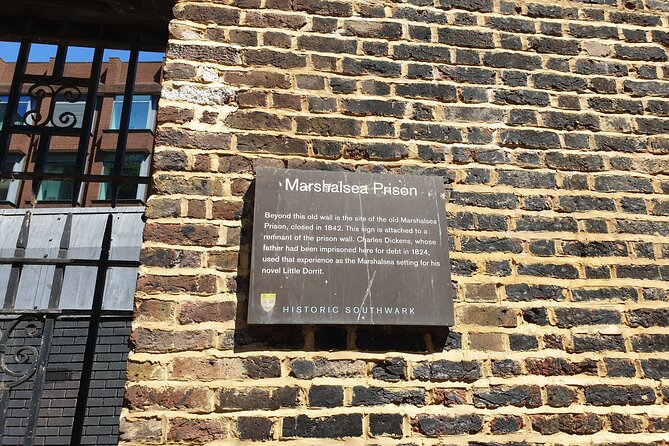
- Starting at St George the Martyr and Marshalsea Prison
- Crossbones Graveyard and Southwark’s outcasts
- Beer, coaching inns, and the George
- The Old Operating Theatre and London’s medical past
- London Bridge and Southwark Cathedral
- Borough Market and the pleasures of old Southwark
- Winchester Palace and the Clink
- Ending with Shakespeare’s Globe Theatre
- What the guide adds to the experience
- Is $27.78 a fair price?
- Who should book this walk?
- Should you book Booze, Brothels & The Bard?
- FAQ
- How long does the walking tour last?
- How much does the tour cost?
- Where does the tour begin?
- Where does the tour end?
- What language is the tour offered in?
- What is included in the price?
- Are admission tickets to the museums included?
- How many people can join the tour?
- Can most people participate?
- Can I cancel for a full refund?
Five things to know before you book
- The walk covers 11 historic sites in about two hours, ending at Shakespeare’s Globe Theatre.
- Southwark’s darker past takes center stage, including Marshalsea Prison, Crossbones Graveyard, and the Clink.
- Guide Tom receives special praise for his passion, clear explanations, and colorful stories.
- Borough Market and the Globe add familiar London sights to a route filled with less obvious history.
- The group can include no more than 15 people, which gives you a better chance to hear and speak with the guide.
- The $27.78 price covers the walking guide, while admission to museums or interiors is not included.
Why Southwark makes such a good history walk
Southwark once sat outside the City of London’s strict control. That mattered. The borough became a place for inns, theaters, prisons, food sellers, beer traders, and entertainment that respectable officials preferred to keep at arm’s length.
This tour uses that setting well. You are not simply looking at grand churches and famous monuments. You are following the lives of prisoners, actors, drinkers, sex workers, merchants, criminals, the poor, and powerful churchmen.
I like that the route connects famous names with ordinary street life. Shakespeare and Dickens appear alongside prison walls, market stalls, coaching inns, and burial grounds. That mix helps you see London as a working town, not just a collection of postcard sights.
The tone is bawdy, but the route is also serious. Southwark’s past includes poverty, disease, imprisonment, prostitution, and the treatment of people who lived outside polite society. You should expect frank subject matter and stories that may not suit young children or anyone looking for a gentle sightseeing stroll.
More Walking Tours in London
- Tour for Muggles The Ultimate Harry Potter Walking Tour in London
★ 5.0 · 4,684 reviews - London Jack The Ripper Guided Walking Tour
★ 5.0 · 3,131 reviews - Changing of the Guard Guided Walking Tour in London
★ 5.0 · 1,793 reviews
Starting at St George the Martyr and Marshalsea Prison
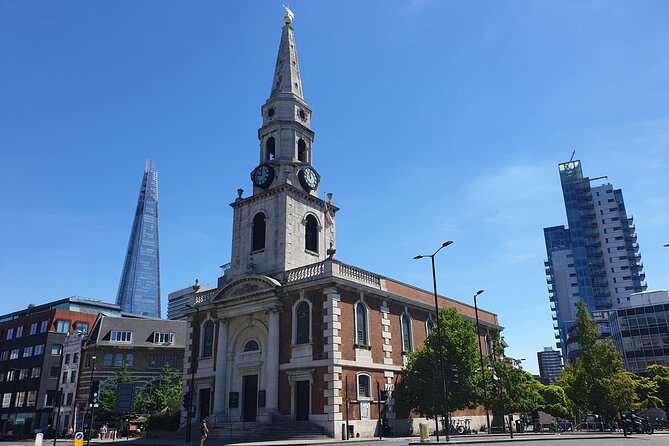
The walk begins on Borough High Street near St George the Martyr. The church is linked with Charles Dickens, whose father was held in the nearby Marshalsea debtors’ prison.
Only a small part of the prison survives. That fragment may seem modest, but it carries real weight once you understand what happened there. Debtors could be locked away because they could not pay, and their families sometimes lived with them inside the prison.
The stop is brief, about five minutes, so listen closely. This is not a full visit to a preserved prison complex. Instead, the guide uses the remaining structure as a doorway into Dickens, debt, and the harsh rules faced by poor London families.
For me, this is a strong opening because it sets the mood quickly. You begin with the lives of people caught in London’s legal and financial systems, not with royal grandeur.
Crossbones Graveyard and Southwark’s outcasts
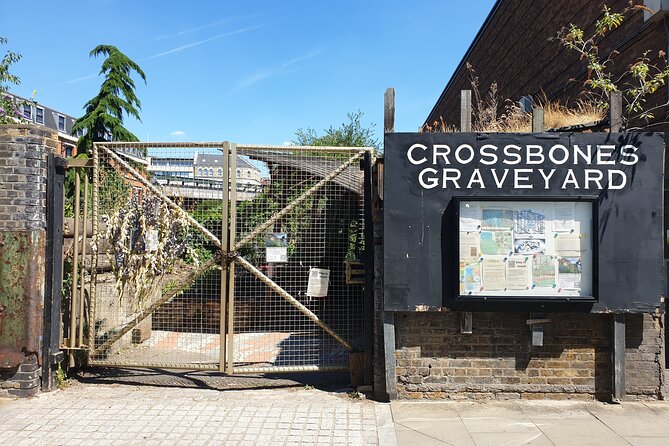
Crossbones Graveyard is one of the most affecting stops. It is associated with thousands of people buried outside the usual church system, including those treated as Southwark’s outcasts.
The site now serves as a Garden of Remembrance. Its memorial character gives the tour a pause in tone. After the jokes and rough stories of old Southwark, you are reminded that many people who lived on society’s edges ended their lives with little dignity or public recognition.
Again, the stop lasts only around five minutes. You will not have time for an extended visit, and you should not expect a complete account of everyone buried there. Still, the site adds an important human side to the walk.
I value this stop because it keeps the tour from turning Southwark’s past into entertainment alone. The borough’s bawdy reputation came with a cost, and Crossbones makes that clear.
Beer, coaching inns, and the George
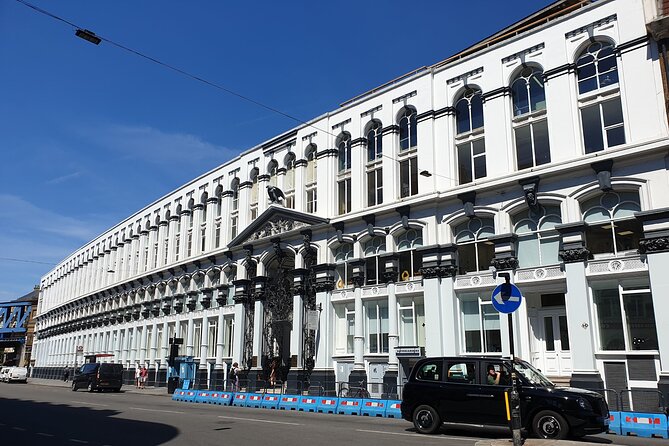
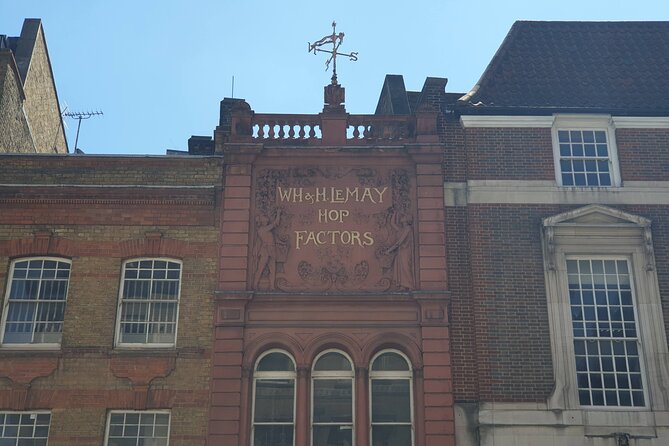
At the Hop Exchange, the guide explains Southwark’s beer trade. The building is described as the largest surviving reminder of that trade, linking the district to the movement and sale of hops.
This stop helps explain the title’s booze theme. Beer was not a side note in old London. It supported commerce, lodging, work, and social life. The building itself gives you something solid to connect with while the guide explains that commercial past.
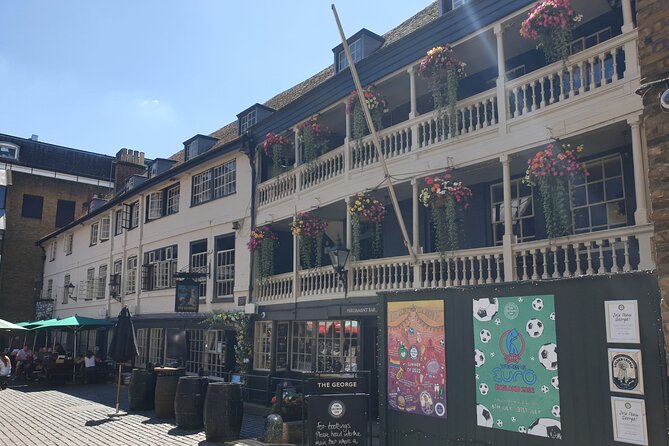
The George offers another look at how people moved through London. It is the city’s last surviving galleried coaching inn, a place tied to coaches, travelers, food, lodging, and public life.
You will see the exterior as part of the walking route rather than settle in for a drink or meal. That is useful to know. The tour shows you the setting and explains its role, but the schedule does not allow time to linger.
The George is one of the places where I would return after the walk. Its importance is easier to appreciate when you can take a slower look, and the tour gives you enough background to do that with purpose.
Something different for another day:
- Stonehenge, Windsor Castle, and Bath from London
★ 4.5 · 18,662 reviews - London Big Bus Hop-On Hop-Off Tour with Optional River Cruise
★ 3.5 · 10,803 reviews - London Small Group Tour of Historical Pubs
★ 5.0 · 10,422 reviews - Stonehenge, Windsor Castle and Bath with Pub Lunch in Lacock
★ 4.5 · 7,402 reviews
The Old Operating Theatre and London’s medical past
The Old Operating Theatre Museum and Herb Garret is presented as Europe’s oldest surviving operating theatre. That makes it one of the route’s most unusual stops.
The name alone signals a different kind of history. You move from prisons, drinking, and theater into medicine, where surgery was performed in a very different age. The herb garret also points to the plants and remedies connected with earlier medical practice.
The tour does not include a museum admission, and the stop is listed at about five minutes. You should treat it as an introduction to the building, not a museum tour. If medical history interests you, note the location and consider returning separately.
This is a good example of the route’s variety. Southwark’s story is not only about vice and Shakespeare. It also includes institutions that shaped how Londoners were treated, housed, imprisoned, and buried.
London Bridge and Southwark Cathedral
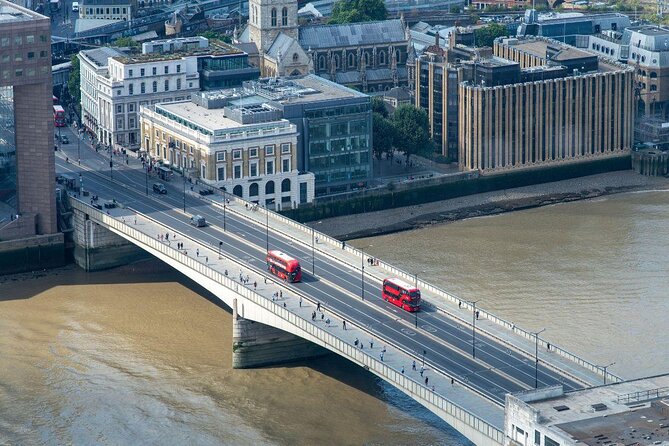
London Bridge is the route’s most instantly recognizable landmark. The stop lets the guide connect the bridge with Southwark’s role as a crossing point and gateway into the city.
The bridge itself has changed greatly over time, so this is another place where the guide’s explanation matters more than the modern view alone. A short stop will not provide every chapter of its story, but it can give you a useful sense of why this part of the river has always drawn trade and movement.
Southwark Cathedral provides a calmer contrast. It is described as London’s oldest surviving Gothic church. Its presence shows that the borough was not only a place of taverns, prisons, and theaters. It also held major religious buildings and powerful institutions.
You may find the five-minute format a little frustrating here. Both London Bridge and the cathedral deserve more time than the schedule allows. The upside is that the walk keeps moving and gives you a broad view of the area without committing your whole day.
Borough Market and the pleasures of old Southwark
Borough Market is one of the route’s most appealing stops for the senses. It is presented as a food market with a history reaching back about 1,000 years.
The market helps tie together many of the tour’s themes. Food supported the inns, theaters, prisons, churches, and streets around it. A market also tells you about ordinary daily life in a way a grand monument cannot.
Because the tour allows only a short stop, you probably will not have time to browse at leisure or eat a full meal. Plan to return after the walk if you want to shop, sample food, or take a closer look.
I like the way Borough Market breaks up the heavier material. After stories of prison and poverty, it gives you a living connection to Southwark’s long role as a place where people came to buy, sell, eat, and meet.
Winchester Palace and the Clink
The ruins of Winchester Palace reveal the power once held in medieval Southwark. This was one of the most prestigious homes in medieval England, associated with the Bishops of Winchester.
The remains are not a complete palace, so you will need to use the guide’s description to picture the original building. That is part of the appeal. A few surviving walls can seem plain until you understand who lived there and how much authority the site represented.
The Clink Prison Museum brings the route back to punishment and confinement. Southwark’s notorious prison gave the English language the word clink, and the site remains one of the borough’s best-known reminders of its darker past.
The tour does not include museum admission. You will receive the setting and historical explanation from the guide, then decide if you want a longer visit later.
This pairing works well. Winchester Palace shows the district’s high-status side, while the Clink points to its reputation for crime and punishment. Within a few minutes, you move between medieval authority and notorious incarceration.
Ending with Shakespeare’s Globe Theatre
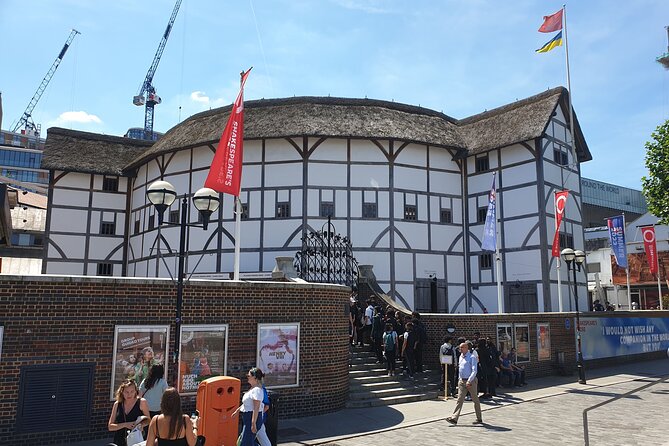
The tour finishes at Shakespeare’s Globe Theatre on New Globe Walk. The building is a reconstruction of Shakespeare’s original theater, and it gives the walk a fitting final stop.
The Globe connects many earlier parts of the route. Southwark’s theaters operated beyond the City’s boundaries, close to inns, markets, drinking houses, and other entertainment. Shakespeare’s work may be celebrated worldwide, but his theater belonged to a noisy, commercial, and sometimes disreputable district.
You will see the reconstructed theater as part of the walk, but the tour does not include a performance or interior admission. If Shakespeare is a major reason for your visit, you may want to arrange a separate Globe visit.
The ending is practical, too. You finish near one of London’s best-known cultural attractions rather than at an obscure street corner. That makes it easy to continue sightseeing afterward.
What the guide adds to the experience
The strongest part of this walk is the storytelling. Tom receives particular praise for being punctual, friendly, engaging, and able to explain the history in a vivid way. One detailed account describes feeling transported into the lives of people who lived in the borough long ago.
That matters on a route with many brief stops. You are often looking at a surviving wall, a church exterior, or the site of a vanished institution. A guide who can explain what used to be there turns those fragments into meaningful places.
The tour also appears to work well for people who enjoy questions and conversation. A maximum of 15 participants is small enough for personal attention without making the experience feel private or expensive.
The format depends on the guide’s delivery. If you prefer extended time inside museums, quiet contemplation, or detailed architectural study, this may feel rushed. If you want a strong introduction to Southwark with plenty of stories, the pace should suit you.
Is $27.78 a fair price?
At $27.78 per person, this is a reasonable price for a two-hour guided walk, especially with a group capped at 15 people. You are paying for the guide’s local research, organization, and ability to connect 11 separate sites into one clear story.
The value is less about admission savings. The listed stops are visited from the outside or introduced briefly, and museum entry is not included. You are buying context, not a package of tickets.
I would see the price as good value if you are new to Southwark and want a focused orientation. It is also useful early in a London visit because the route shows you which places deserve a longer return visit.
The value drops if you want to spend substantial time inside the Old Operating Theatre, the Clink, or the Globe. In that case, think of the walk as a guide-led preview and budget for separate admission if available.
Who should book this walk?
I would recommend it to you if you enjoy:
- London history told through unusual people and places
- Shakespeare and Dickens, but also prisons, markets, and working life
- A compact walking route with a clear beginning and end
- Small groups and direct access to the guide
- Stories with adult themes and a slightly dark sense of humor
- Choosing later museum visits after getting your bearings
You may want a different experience if you need step-free certainty, though the available information only confirms that most people can participate. You should also think twice if you dislike fast-paced walks or material about poverty, prostitution, imprisonment, and death.
Wear comfortable shoes and keep the schedule in mind. The walk covers a lot of ground in two hours, and the short stop at each site means you should be ready to listen while standing and moving between locations.
Booking 35 days ahead is the average pattern, so do not leave it until the last moment if your London dates are fixed. Confirmation arrives at booking, and free cancellation is available until 24 hours before the start time. A minimum group is required, and if the tour cannot run for that reason, you can choose another date or receive a full refund.
Should you book Booze, Brothels & The Bard?
Book it if you want Southwark explained through its rougher, stranger, and more human stories. The combination of Marshalsea Prison, Crossbones, the Hop Exchange, Borough Market, the Clink, and Shakespeare’s Globe gives you a side of London that standard sightseeing routes often skip.
The best reason to choose it is the guide-led storytelling, particularly if Tom is leading your walk. Just remember that five-minute stops are introductions, not full visits. If you accept that limitation, this is a lively and well-priced way to understand why Southwark became London’s borough of prisons, pleasure, trade, and theater.
FAQ
How long does the walking tour last?
The tour lasts approximately two hours.
How much does the tour cost?
The listed price is $27.78 per person.
Where does the tour begin?
It begins on Borough High Street, London SE1 1JX, United Kingdom.
Where does the tour end?
It ends at Shakespeare’s Globe Theatre, 21 New Globe Walk, London SE1 9DT, United Kingdom.
What language is the tour offered in?
The tour is offered in English.
What is included in the price?
A walking tour guide is included.
Are admission tickets to the museums included?
No museum admission is listed as included. The walking tour provides the guide, while sites such as the Old Operating Theatre Museum and the Clink Prison Museum may require separate admission.
How many people can join the tour?
The maximum group size is 15 people.
Can most people participate?
Yes. The available information states that most people can participate, and the meeting point is near public transportation.
Can I cancel for a full refund?
Yes, if you cancel at least 24 hours before the experience start time. Cancellations made less than 24 hours in advance are not refunded, and changes within that period are not accepted.
Just added around London
- The Private British Museum Tour★ 5.0 · 6 reviews
- London to Southampton Cruise Port | Private Transfer★ 5.0 · 6 reviews
- London’s Chinatown Food Experience★ 4.0 · 6 reviews
- London Gatwick (LGW) Airport Departure Private Transfer – Hotel to Airport★ 4.0 · 6 reviews
- Transfer from Heathrow Airport to London hotel on private car★ 4.5 · 6 reviews
- Christmas in Canterbury, Dover and Greenwich with Christmas Lunch★ 4.5 · 6 reviews
- Jazz Notes – Jazz Jam Ticket★ 5.0 · 6 reviews
- Transfer from London Stansted Airport to Central London★ 5.0 · 6 reviews
Walking Tours, compared.

Oxford University Walking Tour With University Alumni Guide
Read our review →
Tour for Muggles The Ultimate Harry Potter Walking Tour in London
Read our review →

Cambridge University Walking Tour by Alumni™ Kings College Option
Read our review →
Blackbeard to Banksy – The Ultimate Walking Tour of Bristol
Read our review →
Air Raid Shelter + St. Nicholas Market Walking Tour
Read our review →
Walking Tour of Bath with Blue Badge Tourist Guide
Read our review →
Changing of the Guard Guided Walking Tour in London
Read our review →Browse the lists this tour appears in