
Reviewed · WALKING TOURS
Burnings, Butchery & Black Death: A Walking Tour of London’s Bloody Past
London keeps its darkest stories in plain sight. This two-hour walk links plague pits, execution sites, medieval religious buildings, old markets, and Victorian sanitation in a compact part of the city. I like the way it avoids the usual Jack the Ripper routine and instead covers more than a thousand years, from the Middle Ages to Victorian London. I also like the small group limit of 15, which should make it easier to hear the guide in busy streets and cramped lanes.
The tour costs $27.73 per person, a fair price for two hours with ten stops and entry to St. Bartholomew the Great. The main drawback is its subject matter: executions, disease, butchery, bomb attacks, and sewage are not light sightseeing topics. The walk also requires good weather, and the route is most rewarding if you enjoy stories as much as famous buildings.
In This Review
- Key points before you book
- Why this London walk feels different
- The Charterhouse and Smithfield Market
- St John’s Gate and Cloth Fair
- William Wallace and St Bartholomew the Great
- The Golden Boy and the Great Fire
- Holborn Viaduct and the River Fleet
- Ye Olde Mitre and St Bartholomew’s Hospital Museum
- Price, pace, and group size
- Who will enjoy this tour most?
- Practical details for a smooth afternoon
- Should you book Burnings, Butchery & Black Death?
- FAQ
- How long does the tour last?
- How much does the tour cost?
- Where does the tour begin?
- Where does the tour finish?
- How many people can join the tour?
- What happens if bad weather cancels the tour?
Key points before you book
- A thousand years in two hours: The route moves from a fourteenth-century monastery and plague pit to Victorian London’s open-air sewer.
- Ten stops in a compact area: You see old churches, markets, alleys, hospitals, memorials, and a pub without spending the day on public transport.
- A different kind of dark history: The focus goes beyond Jack the Ripper to plague, public executions, religious orders, the Great Fire, the Blitz, and medical history.
- Tom is a much-praised guide: His clear speaking voice, humor, local knowledge, and ability to answer questions are repeatedly singled out.
- Small groups matter: With no more than 15 people, you have a better chance of hearing stories in narrow streets and asking questions.
- Plan for the weather: The experience can be moved or refunded if poor conditions force cancellation.
Why this London walk feels different
Many London history walks follow a familiar script. This one takes you through the Smithfield and Barbican area, where the old city survives in fragments. A quiet passage may hide a medieval church. A modern road may cover the course of a filthy river. A pub may occupy a site with centuries of religious and political history.
I like this format because it makes you look down, up, and around. The guide is not simply pointing at grand monuments. He is explaining why a street bends, why a market developed where it did, and how disease, fire, religion, punishment, and trade shaped this corner of London.
Tom is the guide most often praised in the feedback provided for this experience. His style seems to be conversational rather than stiff. He is described as clear, humorous, approachable, and able to connect old events with modern life. That matters on a walking tour. Facts about plague pits and medieval orders can blur together if they are delivered like a school lecture.
The group size is another practical strength. A maximum of 15 people is small enough for questions without turning the walk into a private tour. You should still expect an outdoor experience with city noise, passing pedestrians, and occasional difficulty finding a perfect place for everyone to gather.
More Walking Tours in London
- Tour for Muggles The Ultimate Harry Potter Walking Tour in London
★ 5.0 · 4,684 reviews - London Jack The Ripper Guided Walking Tour
★ 5.0 · 3,131 reviews - Changing of the Guard Guided Walking Tour in London
★ 5.0 · 1,793 reviews
The Charterhouse and Smithfield Market
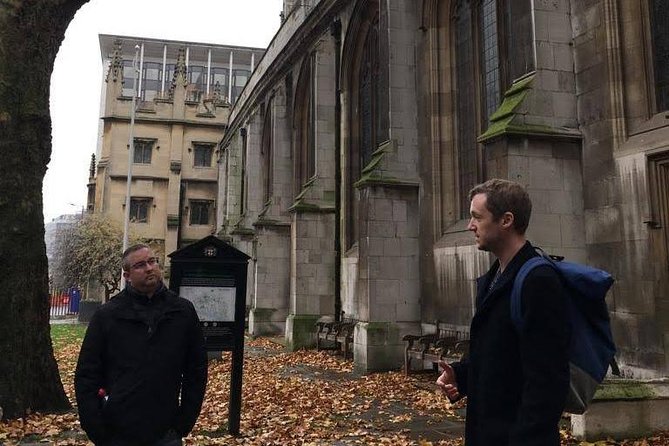
The walk begins near Underground Ltd on Aldersgate Street, close to Barbican. The first stop is the Charterhouse, a fourteenth-century monastery and plague pit. Its importance comes from the collision of religion and disease. This was not just an old religious foundation. It is tied to one of London’s most frightening recurring problems: how to bury the dead when epidemics overwhelmed normal churchyards.
The stop lasts about ten minutes and does not include a separate admission charge. You should expect an exterior-focused introduction rather than a long indoor visit. The value is in learning how the ground beneath the modern city can hold evidence of mass death.
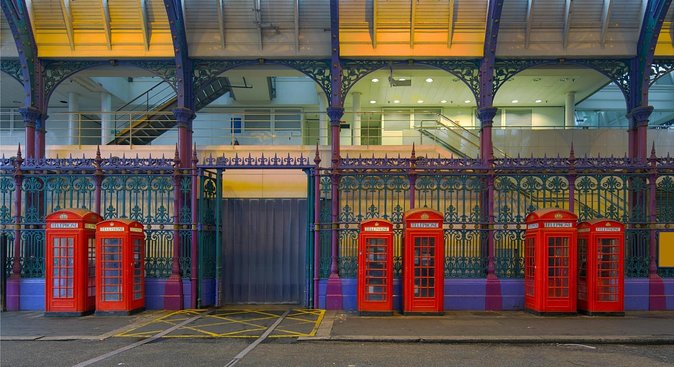
From there, the route reaches Smithfield Market, a meat market with a history of roughly one thousand years. This is an especially useful stop because it connects the unpleasant parts of city life with ordinary commerce. Butchery was not a side issue in medieval London. It affected smells, waste, public health, animals, workers, and the daily food supply.
The market also gives the tour its title in a literal way. Smithfield is a place where trade and punishment once existed close together. The guide can use the area to explain how London’s public spaces served several roles at once, including markets, religious gatherings, and scenes of violence.
You should not expect a full market tour or food tasting. The scheduled stop is about ten minutes, and the emphasis is on the site’s past. If you are sensitive to stories about slaughter or public executions, this is one of the points where the tone becomes especially grim.
St John’s Gate and Cloth Fair
St John’s Gate introduces the medieval Knights Hospitallers, a religious and military order associated with care for the sick and armed service abroad. The building gives the tour a change of pace. Instead of focusing only on death and punishment, the story turns to medieval institutions, faith, medicine, and organized aid.
The history of St John’s Gate also helps explain why this district became linked to hospitals and medical care. The tour does not treat London as a collection of isolated attractions. It shows how one institution can influence the streets around it for centuries.
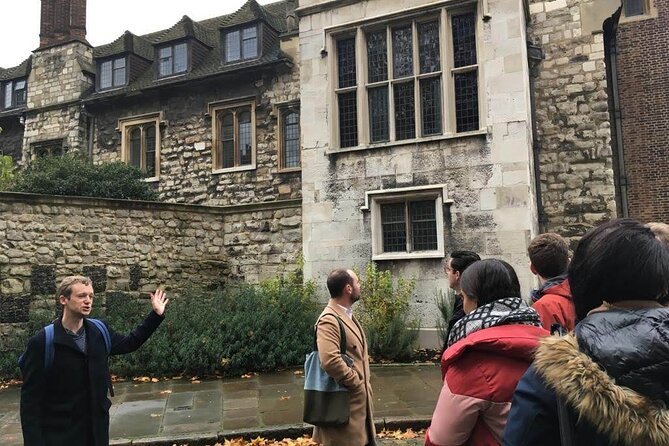
Next comes Cloth Fair, a quiet alley with a noisy history. This is the kind of place you could easily pass without noticing. The narrow setting is part of the appeal, because the contrast between the peaceful lane and its violent past is sharper than it would be in a large public square.
I would pay close attention here to the guide’s storytelling. The route’s smaller places depend on explanation. Without a guide, Cloth Fair may look like an old alley. With the right context, it becomes evidence of how much London has changed while retaining traces of earlier lives.
A repeated strength of this walk is the number of places that could be missed without local guidance. You are not simply ticking off major landmarks. You are being shown the streets between them, where the city’s past is less polished and often more revealing.
William Wallace and St Bartholomew the Great
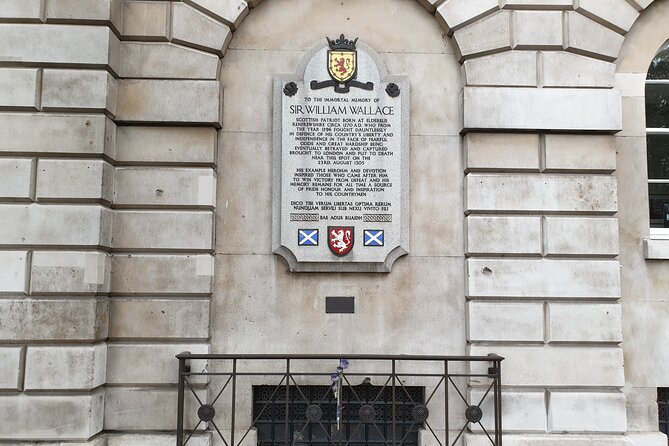
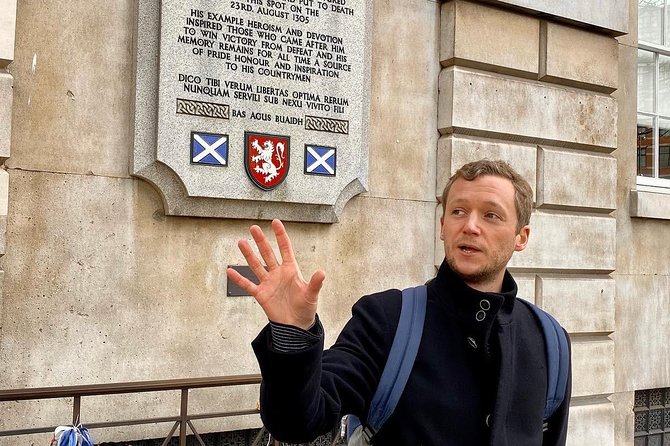
The William Wallace Memorial is a memorable stop for anyone familiar with the Scottish warrior often called Braveheart. The memorial marks a place connected with his execution, giving the tour another example of how public punishment was tied to visible city spaces.
This stop is not about film history alone. The film reference may help you place Wallace in your memory, but the real point is the older political world behind the popular image. A good guide can separate the legend from the historical figure without turning the stop into a dry lecture.
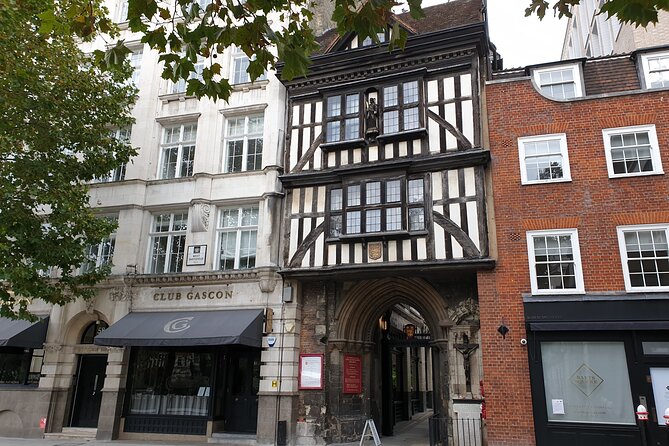
Church of St Bartholomew the Great is one of the architectural high points of the route. It is described as London’s oldest surviving parish church, and admission is included in the tour. After several outdoor stops, stepping into a historic church gives you a chance to pause and see the city’s religious past in physical form.
The church is valuable because it survived while so much of medieval London disappeared. Its age also connects directly with the neighboring hospital and market district. You can see how worship, care for the sick, trade, and burial were once packed into a small area.
The tour allocates about ten minutes here, so do not expect a long service-style visit or a detailed architectural survey. Still, this is one of the stops where the included admission adds real value. You are not only hearing about the past. You are entering one of its surviving buildings.
The route has also been praised for passing filming locations. That detail may appeal to film fans, but it works best as a bonus. The main attraction remains the historical setting, not a hunt for movie appearances.
Something different for another day:
- Stonehenge, Windsor Castle, and Bath from London
★ 4.5 · 18,662 reviews - London Big Bus Hop-On Hop-Off Tour with Optional River Cruise
★ 3.5 · 10,803 reviews - London Small Group Tour of Historical Pubs
★ 5.0 · 10,422 reviews - Stonehenge, Windsor Castle and Bath with Pub Lunch in Lacock
★ 4.5 · 7,402 reviews
The Golden Boy and the Great Fire
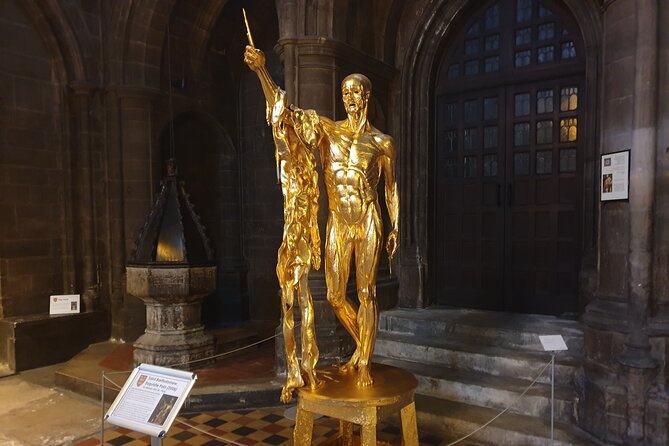
The Golden Boy of Pye Corner marks the point where the Great Fire of London supposedly came to an end in 1666. The statue is small and easy to overlook, but its message is striking. It links a city-changing disaster with a pointed explanation for why the fire happened.
This stop also brings in eighteenth-century ghost hysteria, showing how Londoners responded to fear after catastrophe. The tour is at its best when it connects major events with ordinary reactions. Fires, epidemics, and executions were not just dates in a textbook. They shaped rumors, blame, religion, and public behavior.
The Great Fire is often presented through famous buildings and broad maps. The Golden Boy gives you a more intimate marker. You are standing at a modest memorial that records where an enormous urban crisis stopped.
Allow yourself to look beyond the statue. The surrounding city is modern and busy, which makes the old story harder to picture. That contrast is exactly why a guide helps. Tom’s humor and clear delivery are useful here, since the story moves from disaster to superstition without losing its thread.
Holborn Viaduct and the River Fleet
Holborn Viaduct brings the walk into Victorian London and sanitation. The site is associated with the River Fleet, described as Victorian London’s largest open-air sewer. This is one of the strongest examples of the tour’s broad time range. You begin with a medieval monastery and end up discussing the infrastructure of an industrial city.
The River Fleet was not simply an unpleasant curiosity. Open sewage affected health, smell, housing, transport, and the way London developed. This stop helps you understand that the city’s modernization was not only about grand stations, bridges, and public buildings. It also involved covering rivers and hiding the waste created by rapid growth.
You may find this part more useful than a standard sightseeing stop because it explains what is beneath the pavement. London’s past is not confined to what remains above ground. Roads, bridges, and underground routes often follow older natural features and city problems.
The ten-minute schedule keeps the story moving, but it also means you will not receive a full history of London’s sewer system. Think of Holborn Viaduct as a sharp, memorable chapter rather than a complete lesson in Victorian engineering.
Ye Olde Mitre and St Bartholomew’s Hospital Museum
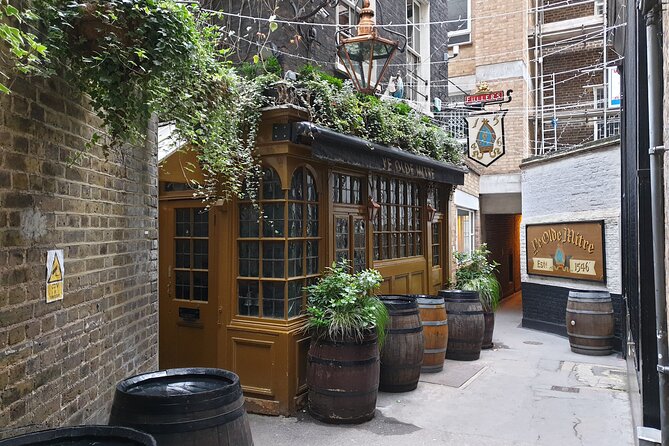
The route ends in the direction of Ely Place, around the corner from Farringdon Station. Before the finish, it visits Ye Olde Mitre, a tucked-away pub reached through an alley. Admission is free, and the tour information does not include food or drink, so any lunch or pub stop should be treated as your own extra plan rather than part of the ticket.
Still, this is a useful ending for a walking tour about London’s hard-lived past. Historic pubs can make the city feel less like a museum and more like a place where people have continued to meet, eat, argue, and drink for generations. The pub is also a practical place to continue your afternoon if you want to stay in the area.
One particularly useful tip from the feedback is the praise for the food at the Mitre, including cheese toasties and pork pies. That is not included in the tour price, and availability can change, but it gives you a sensible option after two hours on foot.
The final stop is the Museum at St Bartholomew’s Hospital, described as the oldest surviving hospital in the country. The stop adds medical history to the route’s themes of plague, injury, religion, and care.
You should check your expectations here. The schedule lists the museum as a ten-minute stop with no separate admission charge, suggesting a brief visit rather than an extended museum session. Even so, it brings the walk to a fitting close. You have followed London from disease and religious charity to organized medical care.
The official end point is Ely Place, near Farringdon Station. That location makes it easy to continue sightseeing or return to your accommodation by public transport.
Price, pace, and group size
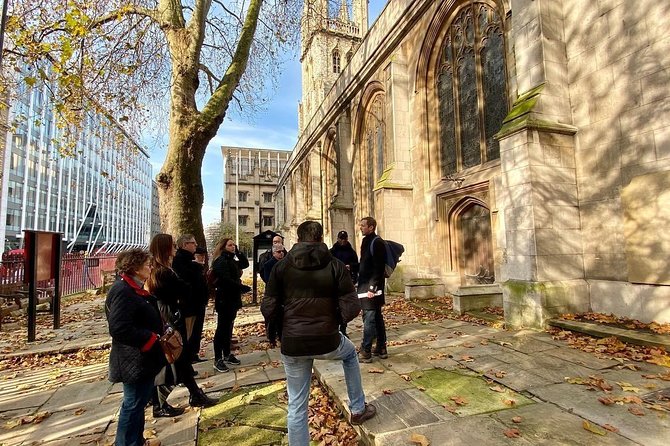
At $27.73 per person, this is reasonably priced for a two-hour guided walk in central London. You receive a live tour in English, a route with ten historical stops, and entry to St Bartholomew the Great. Most of the locations are free to view from outside, but the cost pays for the guide’s research, storytelling, route planning, and local knowledge.
I would not book this mainly for admission savings. I would book it because the route joins together places that are easy to miss and gives them meaning. A self-guided walk could take you past several of these sites, but it would be difficult to recreate the same sequence of explanations and connections.
The pace appears manageable. One detailed comment calls it not too taxing, and the itinerary allows about ten minutes at each stop. You are walking through city streets for around two hours, so comfortable shoes remain sensible. The route is not presented as a strenuous hike, but it is still an outdoor walk with regular standing.
The group limit of 15 is important. Large groups often lose the small details that make old streets interesting. Here, you have a better chance of hearing the guide, asking about a building, or getting advice about pubs and places to explore afterward.
The tour is frequently booked well ahead, with an average booking point of 47 days in advance. That does not mean every date sells out, but it is a warning not to leave it until the last day of a short London visit.
Who will enjoy this tour most?
This experience suits you if you like:
- Social history: You want to hear how disease, trade, punishment, religion, and public health shaped ordinary life.
- Unusual London locations: You prefer old alleys, memorials, churches, and street details to a list of only major attractions.
- A guide-led walk: You enjoy asking questions and hearing stories delivered with humor.
- Compact sightseeing: You want a two-hour activity that fits around museums, meals, or other plans.
- A darker tone: You are comfortable with executions, plague, butchery, ghosts, bombing, and sewage.
It may not suit you if you want a relaxed architecture walk with little discussion of death. The title is accurate. The stories are not softened into a family picnic.
The tour is also less useful for anyone who cannot manage a two-hour city walk, although the supplied information says most people can participate. Service animals are allowed, and the meeting point is near public transport.
Practical details for a smooth afternoon
You receive confirmation when booking, and the experience uses a mobile ticket. It is offered in English. Start at Underground Ltd on Aldersgate Street in the Barbican area, and finish on Ely Place near Farringdon Station.
Build in enough time to reach the starting point. The route crosses an area with many streets and landmarks, but a delayed arrival could mean missing the Charterhouse introduction, which sets up much of the later discussion.
The tour requires good weather. If poor conditions cause cancellation, you are offered another date or a full refund. You can also cancel for a full refund if you do so at least 24 hours before the start time. Changes or cancellations made inside that 24-hour window are not accepted.
I would schedule this on a dry day and avoid placing an important timed attraction immediately afterward. The route may finish close to Farringdon, but city walking rarely runs with the precision of a train timetable.
Should you book Burnings, Butchery & Black Death?
Book it if you want a focused, story-led look at London beyond the standard landmarks. The route offers strong variety: a monastery, market, religious gate, old alley, execution memorial, parish church, fire marker, sewer site, pub, and hospital museum.
I especially like that it does not simply repeat Jack the Ripper stories. You get plague, the Knights Hospitallers, William Wallace, the Great Fire, Victorian sanitation, the Blitz, filming locations, and the development of medical care. Tom’s clear delivery and humor appear to be a major part of the experience, though guides can vary by date.
Skip it if grim subjects are not your idea of a holiday or if you want substantial time inside each building. For everyone else, $27.73 buys an efficient, small-group introduction to a side of London you could easily walk past without noticing.
FAQ
How long does the tour last?
The walking tour lasts approximately two hours.
How much does the tour cost?
The listed price is $27.73 per person.
Where does the tour begin?
It begins at Underground Ltd, Aldersgate Street, Barbican, London EC1A 4JA, UK.
Where does the tour finish?
It ends on Ely Place, around the corner from Farringdon Station.
How many people can join the tour?
The tour has a maximum group size of 15 people.
What happens if bad weather cancels the tour?
You can be offered a different date or a full refund if the experience is canceled because of poor weather.
Just added around London
- The Private British Museum Tour★ 5.0 · 6 reviews
- London to Southampton Cruise Port | Private Transfer★ 5.0 · 6 reviews
- London’s Chinatown Food Experience★ 4.0 · 6 reviews
- London Gatwick (LGW) Airport Departure Private Transfer – Hotel to Airport★ 4.0 · 6 reviews
- Christmas in Canterbury, Dover and Greenwich with Christmas Lunch★ 4.5 · 6 reviews
- Transfer from Heathrow Airport to London hotel on private car★ 4.5 · 6 reviews
- Jazz Notes – Jazz Jam Ticket★ 5.0 · 6 reviews
- Transfer from London Stansted Airport to Central London★ 5.0 · 6 reviews
Walking Tours, compared.

Oxford University Walking Tour With University Alumni Guide
Read our review →
Tour for Muggles The Ultimate Harry Potter Walking Tour in London
Read our review →

Cambridge University Walking Tour by Alumni™ Kings College Option
Read our review →
Blackbeard to Banksy – The Ultimate Walking Tour of Bristol
Read our review →
Air Raid Shelter + St. Nicholas Market Walking Tour
Read our review →
Walking Tour of Bath with Blue Badge Tourist Guide
Read our review →
Changing of the Guard Guided Walking Tour in London
Read our review →Browse the lists this tour appears in