
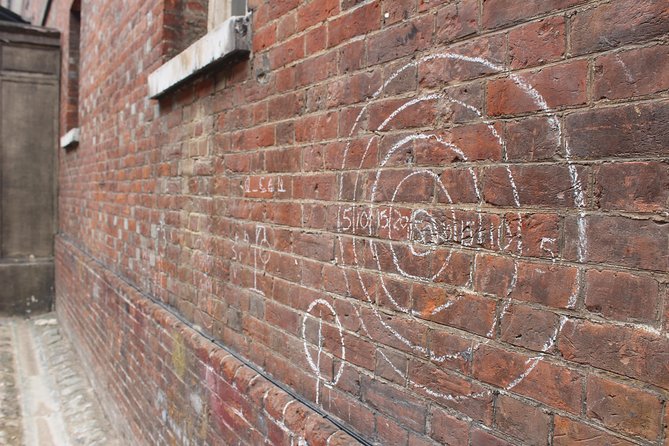
Reviewed · TOURS
Call the Midwife Location Tour in Chatham
Poplar is hiding inside an old dockyard. This 90-minute walking tour lets Call the Midwife fans see how Chatham’s weathered streets become 1950s and 1960s East End London on screen. I like the guide-led stories about filming tricks, and I like that your ticket also opens the wider Historic Dockyard Chatham.
The tour is especially strong when guides such as Helen, Natalie, and Irene connect a real doorway or alley with a particular scene. The main catch is simple: many sets and props are removed after filming, so some locations may look like ordinary dock buildings unless you use the guide’s photos and imagination.
In This Review
- Key points to know before booking
- At the Memorial between Chatham’s historic ships
- How Chatham becomes Poplar Dock
- Following Sister Julienne and Nurse Trixie’s footsteps
- The Call the Midwife gallery and final prop display
- Why the wider dockyard changes the value
- Getting there from London
- Walking, weather, and what to bring
- Who will enjoy this tour most
- Booking, group size, and cancellation
- Should you book the Call the Midwife Location Tour?
- FAQ
- Where does the Call the Midwife Location Tour begin?
- How long does the tour last?
- Is admission to Chatham Dockyard included?
- What does the tour include?
- Is transportation included?
- What language is the tour offered in?
- How large can the tour group be?
- Are service animals allowed?
- Can most people participate?
- What happens if the weather is poor?
Key points to know before booking
- The meeting point is between HMS Cavalier and HMS Ocelot: Find the Memorial inside Chatham Dockyard, in Chatham ME4 4UY.
- The tour lasts about 90 minutes: Expect a walking route with stops outside, stories about production, and a final look at props and costumes.
- Your dockyard admission is included: You can continue exploring the 80-acre site after the guided portion.
- The guides make or break the experience: Helen, Natalie, and Irene have earned special praise for clear storytelling, scene references, and friendly presentations.
- The real filming locations can look surprisingly plain: Bring patience, and pay attention to the guide’s pictures showing how the same spaces became Poplar.
- Wear comfortable shoes: There is a fair amount of walking and standing, and Chatham’s open setting offers little shelter on a hot day.
At the Memorial between Chatham’s historic ships
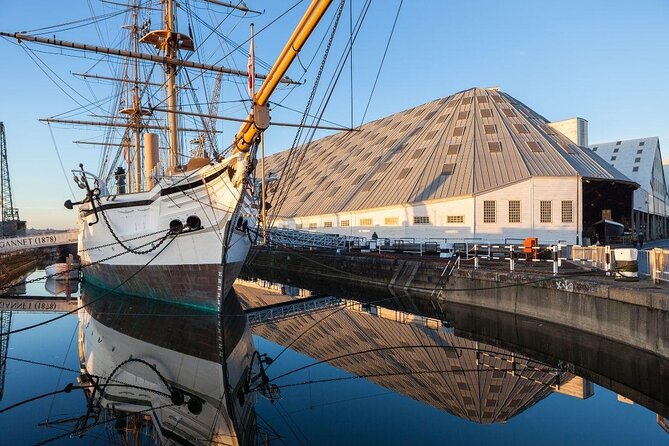
Your tour begins at the Memorial between HMS Cavalier and HMS Ocelot. This is a useful landmark, but Chatham Dockyard is a large site, so give yourself time to reach the meeting point after entering.
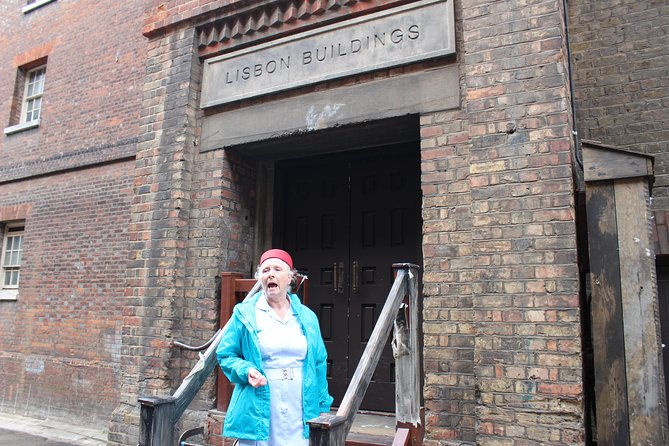
The guide is dressed as a midwife, which gives the introduction a bit of period flavor without turning the whole outing into theater. You meet the guide and the rest of the group, then set off on foot through the dockyard.
The group can include up to 26 people. That is small enough to keep the guide’s commentary manageable, though it is not a private tour. If you want the best view of photographs and the clearest sound, stay reasonably close to the guide.
Before the television connection begins, you are already walking through a working piece of British naval history. The Historic Dockyard contains more than 100 Georgian and Victorian buildings across 80 acres, along with ships, galleries, and other exhibits. That matters because the Call the Midwife tour is not a stand-alone film set visit. It is one part of a much larger day out.
Other England trips people book alongside this one:
- Stonehenge, Windsor Castle, and Bath from London
★ 4.5 · 18,662 reviews - London Big Bus Hop-On Hop-Off Tour with Optional River Cruise
★ 3.5 · 10,803 reviews - London Small Group Tour of Historical Pubs
★ 5.0 · 10,422 reviews
How Chatham becomes Poplar Dock
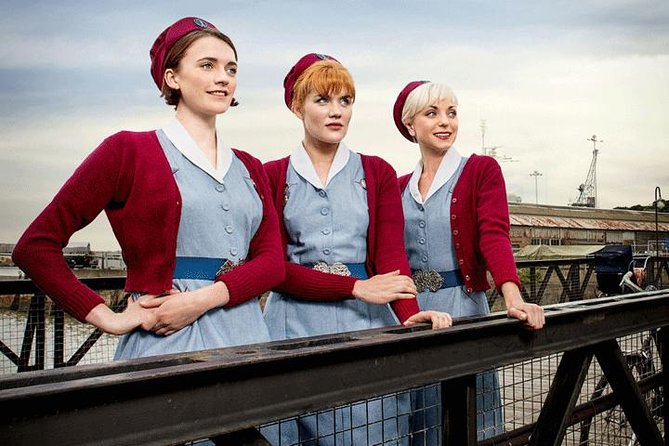
The clever part of the tour is seeing how filmmakers use Chatham’s buildings and alleys to represent another place and time. The dockyard’s old brick structures can suggest the poorer streets around Poplar Dock, even though you are well outside London.
You will see exterior locations used in the series, then hear how the camera, set dressing, props, and framing change their appearance. The guide explains how one area can serve several settings, seasons, or storylines. Irene, in particular, was praised for explaining the tricks that make one dockyard corner appear to be something quite different on screen.
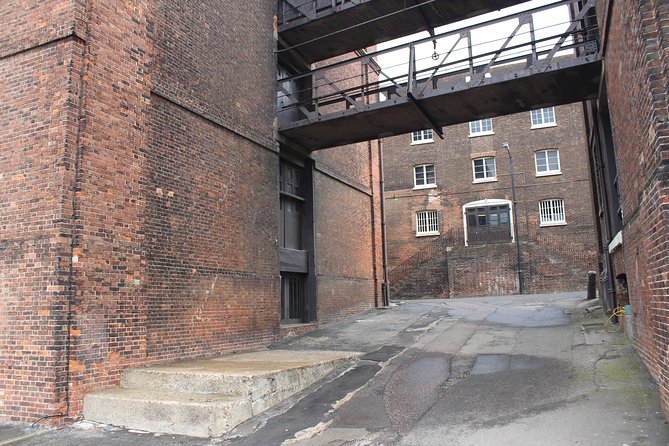
This is where expectations matter. You are not walking through a permanent replica of Nonnatus House, with every doorway dressed exactly as it appears on television. The dockyard is a real historic site, and filming sets may be temporary. After production ends, much of the dressing is taken away.
That can make the first part feel understated. A plain alley may not mean much until the guide holds up a photograph and shows you the same place filled with period vehicles, signs, clothing, and other details. Helen’s use of a picture book has been singled out as especially helpful. Those images are not a side extra. They are the key to seeing the television location in front of you.
I would treat this section as a lesson in film production rather than a walk through a preserved set. If you enjoy learning how television creates a sense of place, you will get real value from it. If you mainly want to pose beside large, permanent replicas, you may find the outdoor route too modest.
Following Sister Julienne and Nurse Trixie’s footsteps
The tour links familiar characters and scenes to the dockyard’s exterior spaces. You may hear which series or episodes used particular areas, as well as how the production team reused locations for different purposes.
That episode-by-episode detail is one of the best reasons to choose a guided tour instead of simply visiting the dockyard on your own. The buildings do not explain their television roles by themselves. A guide provides the connection between the ordinary-looking location and what you remember from the screen.
The strongest guides also give the outing a sense of occasion. Helen has been praised for bringing the spirit of the series to life through stories and photographs. Natalie has been described as clear, funny, and well prepared. Irene received similar praise for explaining the production methods and identifying special filming places.
Still, the presentation follows a set route and script. There may not be much room for extended discussion. One concern raised about the format is that it can feel like walking back and forth while looking at images in a book. If you prefer a loose conversation with lots of questions, this may feel controlled.
The amount of dockyard history can also vary in how useful it feels to you. Some people appreciate the added context. Others come mainly for Call the Midwife and may find the naval background takes time away from the television material. The balance is reasonable because your ticket includes the whole site, but the tour is not exclusively about costumes and props.
The Call the Midwife gallery and final prop display
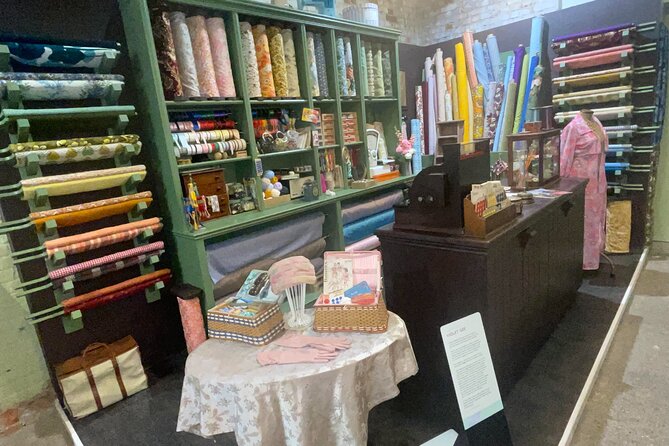
The gallery near the end is the part many fans are waiting for. Here you can see props and costumes used in the show, giving you something physical to examine after the outdoor locations.
This indoor section helps complete the story. Outside, you learn how the production transformed real dockyard buildings. Inside, you get a closer look at the objects that helped create the period world. Several accounts describe the exhibition as the natural finish to the tour, and it is easy to understand why.
It is also important to know when this material appears. The props and costumes are not spread throughout the entire route. Much of the visible screen material comes toward the end, so someone expecting displays at every stop could feel let down.
The gallery is not enormous based on the feedback provided, and one criticism is that the props collection could be larger or arranged with more interactive stations. Even so, it gives the tour a clear payoff. If you are deciding between a general dockyard visit and this guided experience, the gallery and guide’s scene-by-scene explanations are the main extras you are paying for.
Something different for another day:
- Beatles Magical Mystery Tour
★ 5.0 · 9,266 reviews - Liverpool: “Blue Route” – City & Beatles Tour
★ 5.0 · 8,562 reviews - Stonehenge, Windsor Castle and Bath with Pub Lunch in Lacock
★ 4.5 · 7,402 reviews - Oxford University Walking Tour With University Alumni Guide
★ 5.0 · 6,905 reviews
Why the wider dockyard changes the value
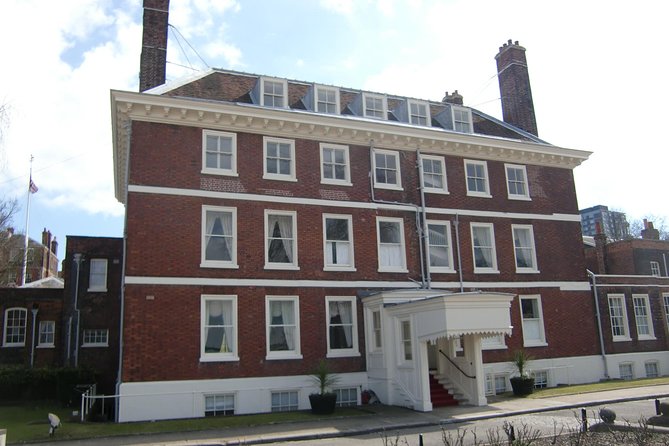
The listed price is $55.50 per person. For a 90-minute location walk alone, that can feel high, especially if you measure value by the number of permanent props or sets you see.
The calculation changes because entry to Chatham Dockyard is included. You are free to explore the rest of the 80-acre site after the tour, with its historic ships, galleries, and other displays. HMS Cavalier and HMS Ocelot are already part of the setting, and the wider site also includes a submarine, a rope museum, and other attractions mentioned by past customers.
That makes this better viewed as a full day at a historic attraction with a specialist television tour included, not as a quick film-location photo stop. Fans who arrive early and stay afterward can make much better use of the admission.
I would not book this solely for a short glimpse of a recognizable building. I would book it if you want the guide’s production stories and expect to spend extra time around the dockyard. A pair of fans who enjoys both British social drama and naval history will probably see more value than someone who has no interest in the site beyond the show.
Getting there from London
Chatham is suitable for a day trip from London. The rail journey is described as short, but you still need to connect from Chatham station to the dockyard. A taxi has been used for that final leg, while transport options for the return can be less convenient.
Plan the return before you start the tour. Bus and app-based car options have been described as awkward, and one particularly practical suggestion is to arrange your transport home in advance. The tour itself does not include hotel pickup, drop-off, or transportation to and from the attraction.
You receive a mobile ticket, and the tour is offered in English. Confirmation is provided at booking. The meeting point is inside the dockyard, not at a London departure point, so check your route carefully and allow time for the site entrance and walk to the Memorial.
Walking, weather, and what to bring
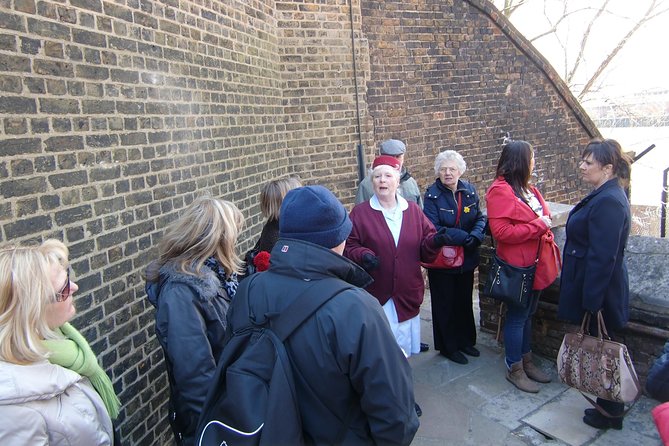
This is an outdoor walking experience with periods of standing. Wear trainers or sturdy walking shoes, and carry as little as you comfortably can. One guide was praised for looking after the group during record-breaking heat, but hot weather can still make the route tiring.
The tour requires good weather. If poor weather causes cancellation, you are offered another date or a full refund. For your own comfort, a hat, water, and weather-appropriate clothing make sense, although these items are not listed as formal inclusions.
Most people can take part, and service animals are allowed. The supplied information does not describe step-free access or seating at every stop, so contact the provider if you need those details confirmed before booking.
Photography is useful here. You will want pictures of the dockyard locations, but the guide’s comparison images are just as important because they show what the spaces looked like during filming. There has also been confusion about optional photo downloads: complimentary photos may still carry a charge to download. Ask before purchasing anything extra.
Who will enjoy this tour most
This is aimed squarely at fans of Call the Midwife, especially those who know the characters and can identify scenes from several series. It is also a good match for anyone curious about how period television is made.
You do not need to be a production expert. The guide explains how the same streets and buildings can represent different places, and the visual references help connect the facts to the show. Fans arriving from abroad have considered the trip worthwhile, including one person who came from Japan and another group from California.
The experience may be less satisfying if you want a large working set, extensive costume displays, or constant audience participation. The outdoor locations can look deserted and plain between shoots. Some of the magic has to come from your memory of the program.
That is not a flaw in the dockyard itself. It is simply the nature of a location tour. You are seeing the real place after the cameras and temporary dressing have gone.
Booking, group size, and cancellation
The tour is often reserved well ahead, with an average booking time of about 64 days before the visit. That suggests planning early is sensible, particularly for a specific date in 2025 when the official tour returns.
The maximum group size is 26. Free cancellation is available up to 24 hours before the start time for a full refund. Changes or cancellations made within 24 hours are not accepted for a refund, and all cut-off times use local time.
The experience provider is Brit Movie Tours. If bad weather cancels the outing, you are offered another date or a full refund.
Should you book the Call the Midwife Location Tour?
Book it if you are a committed fan and will use the included dockyard admission for several more hours. The guides, especially Helen, Natalie, and Irene, are the heart of the experience, and their photographs and filming stories help ordinary dock buildings make sense.
Think twice if you want a permanent television set or a large prop collection. At $55.50, the tour needs the wider dockyard to feel like good value. Arrive ready for a walk, keep your expectations realistic, and see the gallery as the finishing piece rather than the whole attraction.
For the right audience, this is a smart pairing: a guided look at how Call the Midwife creates Poplar, followed by a full visit to one of England’s major historic dockyards.
FAQ
Where does the Call the Midwife Location Tour begin?
It begins at the Memorial between HMS Cavalier and HMS Ocelot inside Chatham Dockyard, Chatham ME4 4UY.
How long does the tour last?
The guided walking tour lasts approximately 1 hour and 30 minutes.
Is admission to Chatham Dockyard included?
Yes. Entry to Chatham Dockyard is included, and you can explore more of the site after the guided tour ends.
What does the tour include?
The price includes a professional guide and entry to Chatham Dockyard.
Is transportation included?
No. Hotel pickup, hotel drop-off, and transportation to or from the attraction are not included.
What language is the tour offered in?
The tour is offered in English.
How large can the tour group be?
The maximum group size is 26 people.
Are service animals allowed?
Yes. Service animals are allowed.
Can most people participate?
Yes. Most people can participate, although the experience includes walking and standing. The supplied information does not specify access arrangements at every location.
What happens if the weather is poor?
If poor weather causes the experience to be canceled, you will be offered a different date or a full refund.
Just added around England
- The Private British Museum Tour★ 5.0 · 6 reviews
- London’s Chinatown Food Experience★ 4.0 · 6 reviews
- London to Southampton Cruise Port | Private Transfer★ 5.0 · 6 reviews
- Transfer from Heathrow Airport to London hotel on private car★ 4.5 · 6 reviews
- London Gatwick (LGW) Airport Departure Private Transfer – Hotel to Airport★ 4.0 · 6 reviews
- Christmas in Canterbury, Dover and Greenwich with Christmas Lunch★ 4.5 · 6 reviews
- Bristol private pub hopping and sightseeing with local guide★ 5.0 · 6 reviews
- Isle of Wight Tour App, Hidden Gems Game and Big Britain Quiz (7 Day Pass) UK★ 4.0 · 6 reviews
Tours, compared.
London Big Bus Hop-On Hop-Off Tour with Optional River Cruise
Read our review →


Oxford University Walking Tour With University Alumni Guide
Read our review →
Stonehenge, Windsor Castle and Bath Full Day Guided Tour
Read our review →
London Jack the Ripper Guided Tour with Ripper-Vision
Read our review →