
Reviewed · JACK THE RIPPER TOURS
Interactive Jack the Ripper Night Walk: London’s Murder Mystery
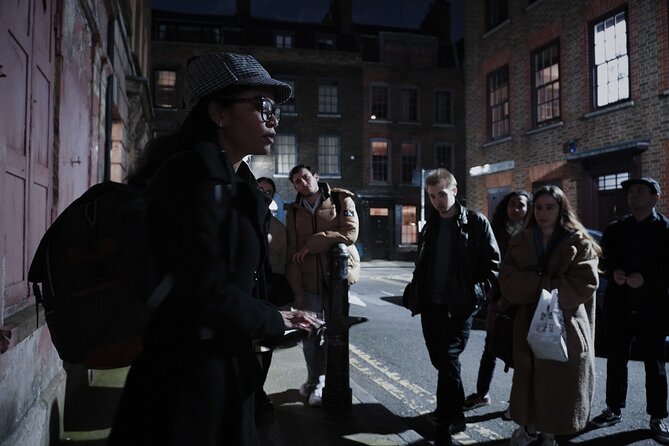
Dark streets tell old stories. This two-and-a-half-hour walk through Whitechapel links the Jack the Ripper case to real places, Victorian poverty, and the women whose lives were caught in the story. I like the atmospheric route after sunset, and I like that the tour treats the victims as people rather than mere plot points. The main drawback is that you finish at Mitre Square, not at the starting point, so you need to plan your way back.
The $22.99 price is fair for a long guided walk with seven stops and a group capped at 25 people. Guides such as Tyson, Sadie, Lisa, and Jess have earned praise for strong storytelling and lively delivery, though one review noted that it was sometimes hard to hear the guide. Bring comfortable shoes and stay near the guide, especially in a full group.
In This Review
- Key details before you book
- Starting at St Mary’s Whitechapel Church
- Brick Lane and the poverty behind the case
- Princelet Street and Annie Chapman
- Puma Court and the danger of quiet corners
- The Ten Bells and the final hours
- Gunthorpe Street and Martha Tabram
- Goulston Street and the disputed clue
- St Botolph’s Aldgate and a place of safety
- Mitre Square and the walk’s grim ending
- What the $22.99 price gets you
- Who should book this night walk?
- Booking advice and cancellation terms
- Should you book it?
- FAQ
- How long is the Jack the Ripper night walk?
- Where does the tour begin?
- Where does the tour end?
- What locations are included?
- Is the tour offered in English?
- How many people can join the tour?
- Can I cancel for a full refund?
Key details before you book
- Seven locations in Whitechapel and Spitalfields: The route includes Brick Lane, Princelet Street, The Ten Bells, Goulston Street, and the final stop at Mitre Square.
- A mystery rather than a solved case: You explore clues and theories about Jack the Ripper, but the identity remains unknown.
- About 2 hours and 30 minutes: Each listed stop lasts around 17 minutes, with walking time between locations.
- A night-time setting: Darkness adds atmosphere, but it also makes clear audio and sensible footwear important.
- A group of up to 25 people: Large enough for social energy, but possibly less intimate than a private tour.
- Flexible booking terms: You can cancel for a full refund up to 24 hours before the start time.
Starting at St Mary’s Whitechapel Church
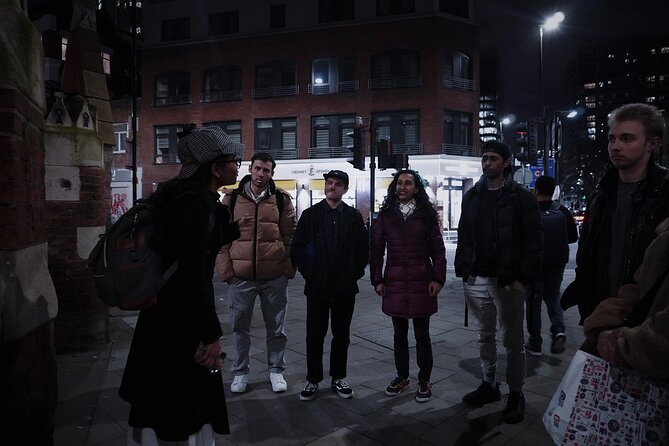
The tour begins at the St Mary’s Whitechapel Church Memorial in London E1 1FE. This is a useful starting point because you are already near the streets tied to the case, rather than spending the first part of the evening on a bus or in a classroom.
You meet the guide, join the English-speaking group, and set off into Whitechapel. The route is built around short stops of roughly 17 minutes each. That format keeps the walk moving and gives you time to look around, ask questions, and connect the stories to the streets beneath your feet.
The experience is interactive in the sense that you are encouraged to consider clues, movements, and competing ideas about the murderer’s identity. Do not expect a final answer. The mystery is the point, and the evidence has never produced a universally accepted name.
The group limit is 25 people. That is manageable, but it is not a tiny seminar. If you want a quieter, more personal discussion, the private upgrade may be worth considering. In a larger group, stay close during explanations and speak up if you cannot hear.
More Walking Tours in London
- Tour for Muggles The Ultimate Harry Potter Walking Tour in London
★ 5.0 · 4,684 reviews - London Jack The Ripper Guided Walking Tour
★ 5.0 · 3,131 reviews - Changing of the Guard Guided Walking Tour in London
★ 5.0 · 1,793 reviews
Brick Lane and the poverty behind the case
Brick Lane is now associated with street art and curry houses, but the tour first looks at its former life as part of one of London’s most notorious slums. That change in setting gives the evening a useful frame.
The Jack the Ripper story is often reduced to dark alleys and sensational crimes. The Brick Lane stop adds social context by looking at crime, poverty, and desperation in Victorian East London. Those conditions do not excuse violence, but they help you understand why the area was seen as vulnerable and why so many people lived with little protection.
I like this opening because it places the murders in the lives of ordinary people. You are not simply chasing a killer through photogenic lanes. You are also hearing about the conditions faced by people who had few safe options.
This is one of the busiest parts of modern East London, so the present-day surroundings may feel less eerie than the subject suggests. That contrast is useful, though. You can see how London changes while the old street plan keeps parts of the past in view.
Princelet Street and Annie Chapman
Princelet Street offers a more hushed change of pace. Its cobbles and old façades help you picture East London in the 1880s, even though the modern city remains nearby.
Here, the guide connects the street to Jack the Ripper’s movements and to Annie Chapman. The focus on Chapman helps keep the story tied to an individual woman, not just a name in a list of victims. The tour’s strongest guides use this part of the route to explain the human circumstances around the case.
The street is visually memorable, but you should not expect every building to look exactly as it did in 1888. The value comes from standing in the same area and hearing how the neighborhood functioned, rather than from seeing a preserved crime scene.
This is also a good point to settle into the guide’s style. Tyson has been praised for remembering names, answering questions, and keeping the whole group involved. Jess has been praised for combining humor with clear storytelling. Those qualities matter on a walking tour, since the guide’s delivery shapes much of what you take away.
Puma Court and the danger of quiet corners
Puma Court is presented as one of the eeriest alleys in Spitalfields. Its narrow passage and shadows create the sort of setting people expect from a Jack the Ripper walk, but the stop is not only about atmosphere.
The guide uses the location to discuss how exposed the victims were in dim, quiet corners. That point gives the tour a more serious tone. The darkness is not just theatrical decoration. It helps you think about how difficult it would have been to find help or witnesses in a poorly lit passage.
You might find this stop more powerful than the larger streets because the space feels enclosed. At the same time, narrow alleys can make it harder to hear, especially if the group gathers close together. Stay near the guide and let others know if the volume drops.
The tour does not promise ghost stories or invented facts. Its strongest material comes from the connection between place, crime, and uncertainty. If you want a purely supernatural experience, this may feel too grounded. If you prefer a crime walk with historical context, it is a good fit.
More Jack the Ripper walks:
- London Jack the Ripper Guided Tour with Ripper-Vision
★ 4.5 · 4,840 reviews - Ultimate Jack the Ripper : Guided Tour of London
★ 5.0 · 1,495 reviews - The Original Jack the Ripper : Guided Tour
★ 5.0 · 1,264 reviews - London Jack The Ripper Small-Group Walking Tour
★ 5.0 · 1,013 reviews
The Ten Bells and the final hours
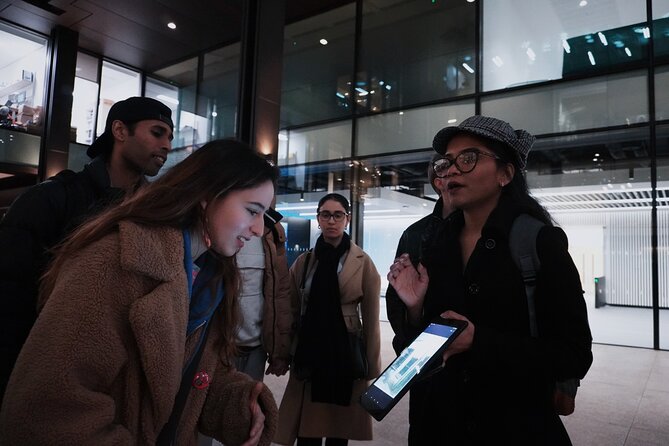
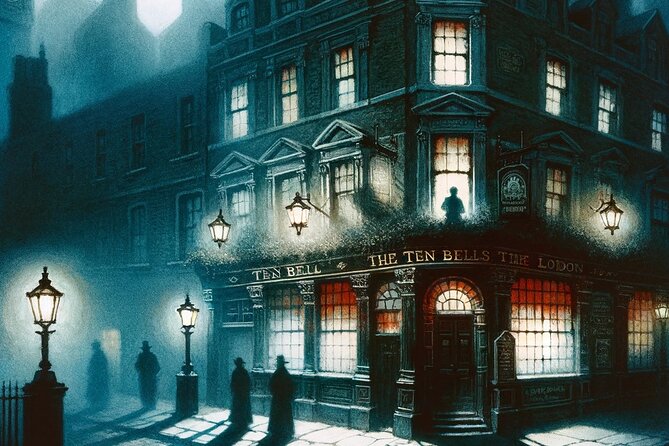
The Ten Bells is one of the best-known places on the route. The historic pub is linked to several women who were reportedly seen there before their deaths, and the guide recounts what is known about their final hours.
You gather outside rather than treating the pub as a major indoor attraction. That keeps the focus on the case and the surrounding streets. The pub’s presence also helps explain how public houses formed part of daily life in East London.
This stop can be emotionally difficult. The subject involves violence against women, and the tour does not make that violence disappear behind a puzzle. Sadie has received particular praise for telling the women’s stories in a spirited and empowering way. That approach matters because it shifts attention away from glorifying the unknown murderer.
The Ten Bells is also a practical reminder that modern London continues around the tour. You may see ordinary evening activity while hearing about events from more than a century ago. The contrast can make the story feel closer, not less real.
Gunthorpe Street and Martha Tabram
Gunthorpe Street brings the group to the story of Martha Tabram. She was killed violently, but she is not officially included among the canonical Ripper victims. Many people still believe she may have been the first.
That uncertainty makes this a useful stop for understanding how the case has been built. Some connections are firm, while others remain debated. A good guide should tell you where the evidence ends and speculation begins. The tour’s emphasis on solving the mystery works best when you hear both the accepted account and the competing theories.
This is also a place where the tour avoids presenting the identity of Jack the Ripper as settled. You will hear clues and theories, but you will not receive a neat answer at the end. As one guide put it through the basic structure of the experience, who Jack the Ripper was remains the million-dollar question.
For me, the uncertainty is part of the value. You are not being asked to memorize one suspect. You are being encouraged to weigh the information and recognize how much of the case remains unresolved.
Goulston Street and the disputed clue
At Goulston Street, the discussion turns to a bloodied apron fragment and a chalk message connected to the double murder. These details caused fierce debate among investigators and later historians.
This is the most clue-driven part of the walk. The guide explains how the fragment and message became linked to the crimes, then shows why the evidence remains controversial. You get a sense of how investigators tried to make sense of events with limited information and intense public pressure.
The stop is valuable for anyone who enjoys the puzzle side of the case. It also shows the limits of crime-solving after the fact. A fragment, a message, and a location may seem persuasive, but they do not automatically prove who committed the murders.
Listen closely here. The material can become dense, and the group may be standing outdoors near other street noise. One review specifically noted that the guide was sometimes difficult to hear. Standing close is a simple way to get more from the explanation.
St Botolph’s Aldgate and a place of safety
St Botolph’s Aldgate adds a different note to the route. The church stood near the edge of Whitechapel and offered shelter to many women during the Victorian era.
This stop is important because it shows that the neighborhood was not defined only by danger. Places of safety, charity, and support existed close to the streets where people faced serious hardship. The contrast gives you a fuller picture of East London life.
The stop may appeal especially to anyone who wants more than a murder puzzle. You hear about the women who needed help and the institutions that offered some protection, even if that protection was limited. It is a reminder that the story involves social conditions as well as criminal clues.
The church also helps prepare you for the final location. From here, the walk moves toward Mitre Square, where the evening reaches its darkest point.
Mitre Square and the walk’s grim ending
The tour ends at Mitre Square, London EC3A 5DE. This is where Catherine Eddowes was murdered, and the violence of the crime shocked the city.
Ending here gives the route a clear dramatic shape. You have moved from the wider conditions of Whitechapel to specific streets, disputed clues, and the stories of individual women. Mitre Square brings those threads together in one final location.
The ending is also practical. You do not return to St Mary’s Whitechapel Church. Before booking, check how you will continue from Mitre Square, especially if you have dinner plans, a train to catch, or a hotel far from the City of London. You will need to orient yourself for the return journey.
That one-way format is not a flaw, but it is easy to overlook. The final location is in the City of London, so the route ends in a different part of central London than where it began.
What the $22.99 price gets you
At $22.99 per person, this is a reasonably priced evening activity. You get about 150 minutes of guiding, seven locations, and a route that connects real streets to a famous unsolved case.
The value depends on how much you enjoy guided storytelling. If you want entry to historic buildings, transport, food, or a theatrical show, this tour does not provide those extras. Your payment is mainly for the guide’s research, route planning, and ability to turn scattered places and clues into a coherent story.
That is why the guide matters so much. Tyson has been praised for detailed subject knowledge, lively delivery, and using people’s names to keep the group involved. Lisa has been praised for helping with questions and practical matters. Jess has been described as funny, patient, and clear. Sadie’s approach has been praised for giving the women’s stories an empowering focus.
The quality may vary with the individual guide, as it can on any walking tour. The consistently strong rating of 4.9 from 171 reviews and a 97 percent recommendation rate suggest that the format works well for most people, but the note about volume is worth taking seriously.
Group discounts are available, and you can upgrade to a private tour if you want a more personal pace. A private option is most useful for people who want to ask many questions, prefer a quieter experience, or are marking a special occasion.
Who should book this night walk?
I would choose this tour if you enjoy:
- London crime stories with real locations
- Unsolved cases and competing theories
- Walking through older parts of East London after dark
- Social history alongside the main mystery
- Guides who tell stories rather than recite dates
- A reasonably priced evening activity
It suits couples, small groups, and solo visitors who enjoy meeting others on a guided walk. The maximum group size of 25 keeps it from becoming enormous, though it may still feel busy at the most popular stops.
I would think twice if you dislike stories of violence against women, have difficulty walking for two and a half hours, or want a tour that begins and ends in the same place. The supplied information says most people can participate, but it does not provide detailed accessibility information, so contact the provider if you have specific mobility needs.
The tour is offered in English. If English is not your first language, the historical names, theories, and street noise may require extra concentration.
Booking advice and cancellation terms
This experience is often reserved well ahead of time, with an average booking lead of 36 days. That suggests you should not assume a same-week evening slot will always be available, especially if your London dates are fixed.
You receive confirmation when booking, and a mobile ticket is available. Cancellation is free up to 24 hours before the start time for a full refund. Inside that 24-hour window, you receive no refund, and changes are not accepted. The cut-off uses local London time.
Plan to arrive with enough time to find the St Mary’s Whitechapel Church Memorial. Wear shoes suited to a long city walk, keep your phone charged for the mobile ticket, and remember that the finish is at Mitre Square.
Should you book it?
Book the Interactive Jack the Ripper Night Walk if you want a well-priced, place-based mystery tour with serious attention to Victorian East London. The best parts are the route through Whitechapel, the focus on Annie Chapman, Martha Tabram, and Catherine Eddowes, and the chance to weigh clues instead of being handed a forced solution.
I would book it for the storytelling and the streets, not for a guaranteed answer or a ghost show. Check the route home from Mitre Square, stay close enough to hear the guide, and consider the private upgrade if you want more discussion. For most people interested in London’s darker past, this is a thoughtful and atmospheric way to spend an evening.
FAQ
How long is the Jack the Ripper night walk?
The tour lasts approximately 2 hours and 30 minutes.
Where does the tour begin?
It begins at the St Mary’s Whitechapel Church Memorial, Unnamed Road, London E1 1FE, UK.
Where does the tour end?
The final stop is Mitre Square, London EC3A 5DE. The tour does not return to its starting point.
What locations are included?
The route includes Brick Lane, Princelet Street, Puma Court, The Ten Bells, Gunthorpe Street, Goulston Street, St Botolph’s Aldgate, and the final stop at Mitre Square.
Is the tour offered in English?
Yes. The tour is offered in English.
How many people can join the tour?
The activity has a maximum of 25 travelers.
Can I cancel for a full refund?
Yes. You can cancel at least 24 hours before the start time for a full refund. Cancellations or changes made within 24 hours are not refunded or accepted.
Just added around London
- The Private British Museum Tour★ 5.0 · 6 reviews
- London to Southampton Cruise Port | Private Transfer★ 5.0 · 6 reviews
- London’s Chinatown Food Experience★ 4.0 · 6 reviews
- Christmas in Canterbury, Dover and Greenwich with Christmas Lunch★ 4.5 · 6 reviews
- Transfer from Heathrow Airport to London hotel on private car★ 4.5 · 6 reviews
- London Gatwick (LGW) Airport Departure Private Transfer – Hotel to Airport★ 4.0 · 6 reviews
- Jazz Notes – Jazz Jam Ticket★ 5.0 · 6 reviews
- Transfer from London Stansted Airport to Central London★ 5.0 · 6 reviews
Jack the Ripper Tours, compared.
London Jack the Ripper Guided Tour with Ripper-Vision
Read our review →
Ultimate Jack the Ripper : Guided Tour of London
Read our review →
London Jack The Ripper Small-Group Walking Tour
Read our review →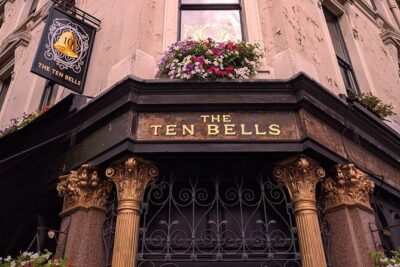

The Original Jack the Ripper Coach Tour of Haunted London
Read our review →
Browse the lists this tour appears in