
Reviewed · JACK THE RIPPER TOURS
Jack the Ripper: Night Murder Mystery Walking Tour in London
Dark stories need the right setting. This 2.5-hour Whitechapel walk uses real streets, old passageways, and Victorian crime scenes to explain the Jack the Ripper case in the order events unfolded. You visit places linked with Martha Tabram, Catherine Eddowes, Annie Chapman, and other women whose lives are too often pushed aside by the killer’s legend.
I especially like the chronological route, which makes a tangled case easier to follow, and the focus on the victims and the harsh conditions they faced. The night setting adds atmosphere without requiring theatrical tricks. The main drawback is practical: this is a long walk with few chances to sit, and one person found the guide difficult to hear at times.
The tour costs $22.93 per person, runs in English, and accepts groups of up to 25. With a rating of 4.9 out of 5 from 80 reviews and 99 percent of customers recommending it, it is a strong pick for true-crime fans, though its subject matter is grim and not suited to every evening out.
In This Review
- Key points before you book
- Why the night setting works in Whitechapel
- Starting near St Mary’s Whitechapel Church
- Brick Lane and Princelet Street: the world behind the case
- Puma Court: a lane built for atmosphere
- The Ten Bells and the women linked to it
- Gunthorpe Street and Martha Tabram’s disputed place in the case
- Goulston Street and the apron clue
- St Botolph without Aldgate and the social cost of the story
- Ending at Mitre Square
- Guides make or break this experience
- Is $22.93 good value?
- Who should book this night walk?
- FAQ
- How long is the Jack the Ripper walking tour?
- How much does the tour cost?
- What language is the tour offered in?
- Where does the tour begin?
- Where does the tour end?
- How many people can join the tour?
- Can I cancel for a full refund?
- Should you book it?
Key points before you book
- Chronological storytelling: The route follows the murders and clues in sequence, helping you understand how the case developed.
- Victim-centered history: The guides give attention to the women, their working lives, and the poverty and social failures of Victorian Whitechapel.
- Seven Whitechapel stops: Brick Lane, Princelet Street, Puma Court, the Ten Bells, Gunthorpe Street, Goulston Street, and St Botolph without Aldgate all add a different piece to the story.
- Nighttime atmosphere: Narrow lanes and dim streets make the setting feel closer to the world being discussed, especially on cold or cloudy evenings.
- Strong guide-led experience: Guides including Tyson, Kory, Dougal, Hadi, Korhan, Anahita, Lisa, and Kody have been praised for storytelling, care, humor, and command of the subject.
- Good low-cost evening activity: At $22.93, the tour gives you a guided look at an area of London you might not explore on your own.
Why the night setting works in Whitechapel
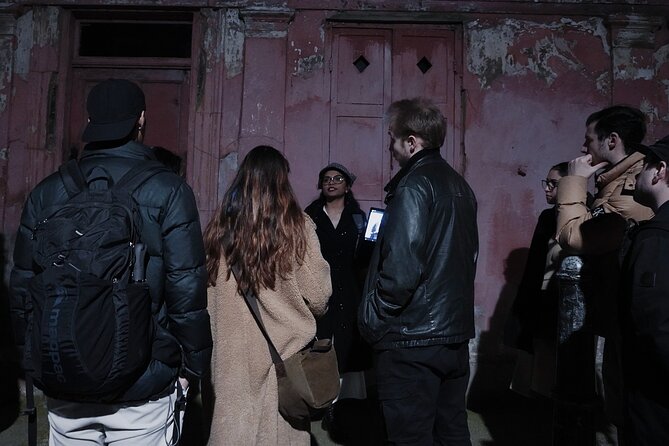
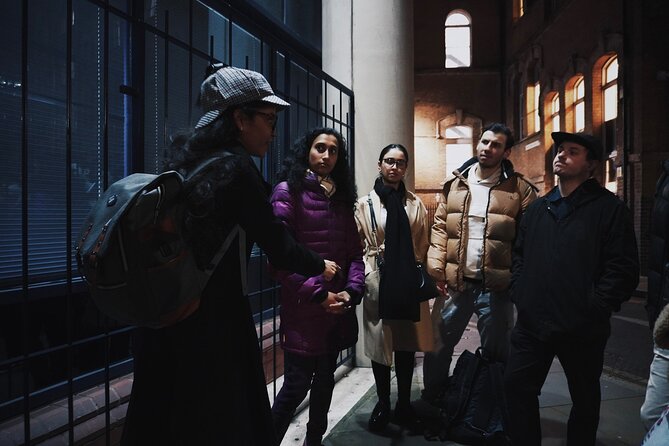
This is not a bus tour where you watch London slide past a window. You walk through the East End, pause in specific places, and listen as the guide connects each street with a name, date, clue, or theory.
The darkness matters. It does not recreate the murders, and it should not. Instead, it helps you notice how narrow streets, enclosed courts, and changing pockets of light can affect your sense of the area. A cold or cloudy night can make the Victorian setting feel especially close, though heavy rain can make the evening harder. One group completed the walk through torrential downpours and still enjoyed it, largely because Tyson kept the mood positive.
The guides also add ordinary London context. Kory, for example, was praised for discussing the buildings and neighborhoods along the way, not just the killer. That broader view is useful because the case makes more sense when you understand the poverty, crowded housing, and lack of safety that shaped Whitechapel in the late 19th century.
The subject is violent, but the best version of this tour is not a parade of gruesome details. Hadi received particular praise for treating the material with care, adding gentle humor at the right moments, and keeping the women at the center of the story. That tone makes the walk more thoughtful and less like a cheap horror show.
More Walking Tours in London
- Tour for Muggles The Ultimate Harry Potter Walking Tour in London
★ 5.0 · 4,684 reviews - London Jack The Ripper Guided Walking Tour
★ 5.0 · 3,131 reviews - Changing of the Guard Guided Walking Tour in London
★ 5.0 · 1,793 reviews
Starting near St Mary’s Whitechapel Church
The meeting point is at the St Mary’s Whitechapel Church Memorial on an unnamed road in London E1 1FE. From there, the group moves into the Whitechapel area and begins setting the social scene.
The opening section is important because Jack the Ripper did not appear in a vacuum. The guide explains how poverty, overcrowding, and desperation shaped daily life in Victorian London. Brick Lane, now known for food, street art, and culture, once formed part of a much poorer district.
This first stop gives you a useful frame for the rest of the evening. Instead of treating the murders as an isolated puzzle, the guide can show how vulnerable women lived and worked, why certain streets mattered, and how limited their choices were.
Expect the group to remain standing during the stops. The tour has seven listed locations, each planned for about 17 minutes, with walking time between them. The timing creates a steady pace, but you should wear comfortable shoes and be ready to walk for the full two and a half hours.
Brick Lane and Princelet Street: the world behind the case
At Brick Lane, the story begins with place rather than spectacle. The street’s modern identity can make it hard to picture its Victorian past, so the guide’s explanation helps you separate the present-day shops and restaurants from the cramped, difficult world that once occupied the area.
You will hear about overcrowding and poverty, conditions that made women more exposed to violence and made police work far less effective. This context is one of the tour’s best features because it gives the names in the case a social setting.
Princelet Street offers a sharper contrast. It is quiet and narrow, and that stillness helps the guide explain the Ripper’s connection with the district. The stop also brings Annie Chapman into the discussion, including the circumstances and living conditions faced by women like her.
I like this part of the walk because it asks you to think beyond the familiar mystery. The central question is not only who killed these women. It is also why their lives were so precarious and why Victorian society offered them so little protection.
Puma Court: a lane built for atmosphere
Puma Court is described as one of the places that has changed least since the 19th century. Its narrow shape gives the guide a natural setting for discussing how someone could disappear from view.
This is likely to be one of the more atmospheric stops. The passage is not a stage set, and that is precisely the point. A real, tight urban space can communicate more than a dramatic prop. You can look around, notice the limited sightlines, and consider how quickly a person might vanish from the notice of others.
The practical downside is that narrow locations can make it harder for everyone to see and hear. The tour may share some spots with other groups, and Dougal was praised for positioning his group so people could still see the locations. Stay close, keep your attention on the guide, and speak up if you cannot hear.
More Jack the Ripper walks:
- London Jack the Ripper Guided Tour with Ripper-Vision
★ 4.5 · 4,840 reviews - Ultimate Jack the Ripper : Guided Tour of London
★ 5.0 · 1,495 reviews - The Original Jack the Ripper : Guided Tour
★ 5.0 · 1,264 reviews - London Jack The Ripper Small-Group Walking Tour
★ 5.0 · 1,013 reviews
The Ten Bells and the women linked to it
The Ten Bells is one of Whitechapel’s most famous Ripper locations. The tour stops outside the pub and discusses the belief that several victims visited there shortly before their deaths.
This is a place where fact and legend can easily blur. A good guide needs to explain what is documented, what is disputed, and how the pub became tied to the case over time. The experience is strongest when you treat the Ten Bells as part of the wider story rather than proof of every theory surrounding it.
The stop also helps humanize the women. They were not merely names in a police file. They had routines, relationships, financial problems, and places they went in search of help, work, or company. The tour’s victim-focused approach gives this location more weight than a simple photo stop.
The pub is also where the evening’s social ending begins to come into view. The tour wraps up later in the area, but the Ten Bells provides a memorable midpoint and a chance to connect the case with a real, functioning London landmark.
Gunthorpe Street and Martha Tabram’s disputed place in the case
Gunthorpe Street is linked with the murder of Martha Tabram, who may have been the Ripper’s first victim. That word, may, matters. Her death is part of the ongoing debate, and the guide explains why some experts include her while others do not.
This is a good example of how the tour handles the mystery. You are not given a neat answer where the evidence does not support one. Instead, you get clues, competing theories, and a sense of why the case remains open to argument.
The narrow passage also reinforces the physical reality of the area. You can understand why the guide wants you to visit the location rather than simply show a photograph. The setting gives scale to the story and shows how close the murder sites were to ordinary streets and public places.
If you prefer a tour with a clear solution, the uncertainty may frustrate you. If you enjoy weighing evidence, this section should be one of the highlights.
Goulston Street and the apron clue
Goulston Street is connected with one of the case’s most famous clues: a bloody piece of apron belonging to Catherine Eddowes. A chalk message was also found nearby, leading to arguments and conspiracy theories that continue to shape the Ripper story.
This stop works best when the guide separates the physical clue from the later speculation. The apron is a specific piece of evidence. The chalk message raises questions about meaning, authorship, and police decisions. The guide can then show you how a small discovery became part of a much larger debate.
The location adds another layer because the route is not only about murder sites. It is also about how newspapers, police officers, and the public built a legend from partial information. The case became famous partly because the evidence was incomplete and the press filled the gaps with fear and imagination.
Kory was praised for bringing old news reports and photographs of the neighborhood into his storytelling. That sort of supporting material can help you picture what has changed and what has not.
St Botolph without Aldgate and the social cost of the story
The tour pauses at St Botolph without Aldgate, a church associated with vulnerable women seeking refuge. Here, the focus turns from clues to the wider failures of Victorian society.
This is one of the most meaningful stops because it prevents the evening from becoming only a guessing game about the killer’s identity. The women connected with the case needed shelter, safety, and support. The church becomes a place to consider how little protection was available to them.
The guide also gives the victims more room as people. That approach was important to guests who appreciated hearing about the women’s lives rather than seeing them treated as side notes in a famous crime.
You should expect a serious tone here. The subject is not light, and the route asks you to think about poverty and violence as social issues, not just background details for a mystery.
Ending at Mitre Square
The tour ends at Mitre Square, London EC3A 5DE. The final location brings the chronological route to its close and gives the guide room to discuss the case’s final clues, competing theories, and the question of who Jack the Ripper might have been.
Several guides were praised for staying afterward to discuss theories. That extra conversation can be useful if you want to compare suspects or ask about evidence that did not fit neatly into the route.
The endpoint also gives the evening a clear finish in the City of London. There is no long ride back to the starting point built into the experience, so plan your onward route before you arrive. The meeting and ending points are different, and that matters when you are arranging your evening.
Guides make or break this experience
The strongest feature here is the guide. Names praised in the feedback include Tyson, Kory, Dougal, Hadi, Korhan, Korhn Yasin, Anahita, Lisa, Kody, and Korey. Their styles vary, but the repeated strengths are clear: strong command of names and dates, lively storytelling, care with the subject, and an ability to keep a group together.
Tyson was praised for staying upbeat in bad weather. Kody was noted for knowing the names, dates, and locations and for checking that nobody fell behind. Hadi created a welcoming start by greeting each person and handled the difficult material with restraint.
There is one practical warning. One person found it hard to hear the guide when he turned away while speaking. In a group of up to 25, this can happen, especially on busy streets. Stay near the guide, avoid standing at the edge of the group, and politely ask for repetition if needed.
Is $22.93 good value?
At $22.93 per person, this is an inexpensive way to spend an evening in London. You get about two and a half hours of guided walking, seven historic locations, and a structured explanation of one of the city’s most famous unsolved cases.
The value is strongest if you would otherwise wander Whitechapel without knowing which streets matter. The guide supplies the sequence, context, and theories that turn ordinary streets into meaningful locations. It is also a longer walk than some comparable Ripper experiences, according to one direct assessment of the tour.
Group discounts may reduce the cost for larger parties. The group limit is 25, so the experience is not private or intimate by default, but it is also not an enormous crowd. Confirmation arrives when you book, and free cancellation is available until 24 hours before the start time. Cancellations or changes inside that window are not refunded or accepted.
Who should book this night walk?
I would choose this tour if you enjoy true crime, Victorian London, urban history, or guided walks with a puzzle at the center. It suits visitors who want a structured evening activity and people who prefer real streets and evidence over a staged haunted attraction.
It is also a good choice if you care about the victims’ stories. The best guides do not treat the women as props in a killer’s tale. They explain the social conditions around them and give the case a more human shape.
I would think twice if you dislike grisly subjects, have difficulty walking for two and a half hours, or need frequent places to sit. You should also prepare for changing London weather. Bring a coat and footwear that can handle wet streets, since the tour continues in rain.
FAQ
How long is the Jack the Ripper walking tour?
The tour lasts approximately 2 hours and 30 minutes.
How much does the tour cost?
The listed price is $22.93 per person. Group discounts are available.
What language is the tour offered in?
The tour is offered in English.
Where does the tour begin?
It begins at the St Mary’s Whitechapel Church Memorial on an unnamed road in London E1 1FE, United Kingdom.
Where does the tour end?
The tour ends at Mitre Square, London EC3A 5DE.
How many people can join the tour?
The maximum group size is 25 people.
Can I cancel for a full refund?
Yes. You can cancel at least 24 hours before the experience starts for a full refund. Cancellations or changes made less than 24 hours before the start time are not accepted, and the payment is not refunded.
Should you book it?
Book this tour if you want a serious, well-paced night walk through Whitechapel, with clear storytelling and attention to the women behind the case. The price is fair, the route is easy to understand, and the guides are the main reason the experience earns such strong marks.
Choose another activity if you want a short, seated attraction or a purely theatrical ghost story. This is a walking tour with grim subject matter, uncertain evidence, and limited chances to rest. For the right audience, though, it offers a thoughtful way to see a less familiar side of London while sorting fact from legend one street at a time.
Just added around London
- The Private British Museum Tour★ 5.0 · 6 reviews
- London to Southampton Cruise Port | Private Transfer★ 5.0 · 6 reviews
- London’s Chinatown Food Experience★ 4.0 · 6 reviews
- London Gatwick (LGW) Airport Departure Private Transfer – Hotel to Airport★ 4.0 · 6 reviews
- Transfer from Heathrow Airport to London hotel on private car★ 4.5 · 6 reviews
- Christmas in Canterbury, Dover and Greenwich with Christmas Lunch★ 4.5 · 6 reviews
- Jazz Notes – Jazz Jam Ticket★ 5.0 · 6 reviews
- Street Photography Workshops in London★ 5.0 · 6 reviews
Jack the Ripper Tours, compared.
London Jack the Ripper Guided Tour with Ripper-Vision
Read our review →
Ultimate Jack the Ripper : Guided Tour of London
Read our review →
London Jack The Ripper Small-Group Walking Tour
Read our review →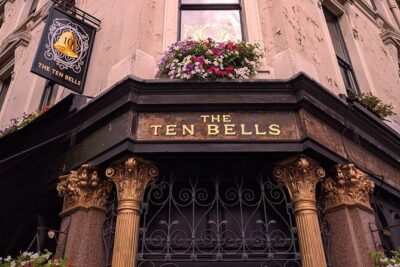

The Original Jack the Ripper Coach Tour of Haunted London
Read our review →
Browse the lists this tour appears in