
Reviewed · JACK THE RIPPER TOURS
Jack the Ripper – What About the Women?
The women deserve more than a footnote. This thoughtful East London walk shifts attention from the killer’s legend to the lives of Martha Tabram, Polly Nichols, Annie Chapman, Elizabeth Stride, Catherine Eddowes, and Mary Jane Kelly. I like its victim-first approach and the way it connects Victorian poverty with the East End you see today. The main consideration is that this is still a two-hour evening walk through a crime story, so it may not suit anyone looking for light sightseeing.
I also like the small-group limit of 20 people and the clear meeting point outside Aldgate station. Guides such as Cecily and Ellie have been praised for their warm delivery, strong local knowledge, and ability to make difficult material accessible. You will hear little about gruesome murder details and much more about working women, poverty, housing, migration, addiction, and social neglect.
In This Review
- Key Points About This East London Walk
- Why This Is Not a Standard Ripper Tour
- Starting on Whitechapel Road With Martha Tabram and Polly Nichols
- Brick Lane, Polly Nichols, and the East End’s Changing Identity
- Spitalfields, Annie Chapman, and the Ten Bells
- Old Spitalfields Market and Mary Jane Kelly’s Story
- Petticoat Lane and the Working East End
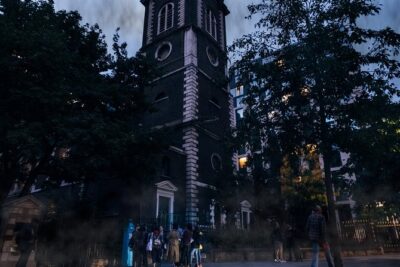
- St Botolph’s Aldgate, Elizabeth Stride, and Catherine Eddowes
- Guides Who Make the Subject Accessible
- How Much Walking and What the Evening Timing Means
- Is the $34.28 Price Good Value?
- Who Should Book This Tour?
- Should You Book Jack the Ripper: What About the Women?
- FAQ
- How long does the Jack the Ripper: What About the Women? tour last?
- What time does the tour begin?
- Where does the tour begin?
- What places does the walking tour visit?
- Is the tour graphic?
- What is the cancellation policy?
Key Points About This East London Walk
- The women come first: The tour focuses on the victims’ lives, not on turning Jack the Ripper into a celebrity.
- A two-hour evening route: You walk through Whitechapel, Brick Lane, Spitalfields, Petticoat Lane, and the area around Aldgate after dark.
- Strong Victorian social context: Expect discussion of dosshouses, workhouses, spikes, alcoholism, immigration, charities, and working-class life.
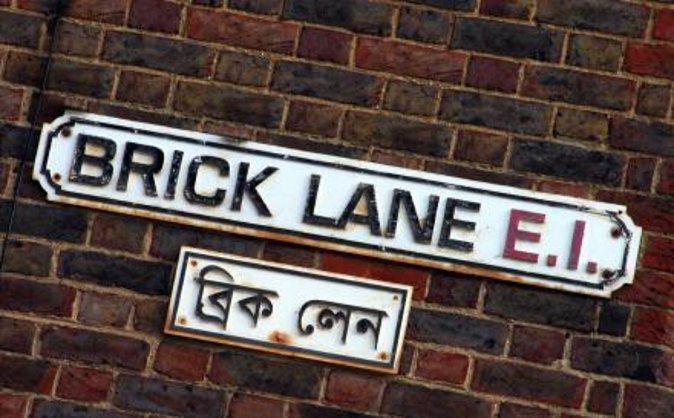
- Historic sites meet modern East London: The route includes Brick Lane Mosque, Old Spitalfields Market, the Truman Brewery site, street art, shops, and current community work.
- Small and personal: The maximum group size is 20, with regular stops and some places to sit.
- Good value for a focused history walk: At $34.28 per person, the price is reasonable if you want a serious, guided look at the women and their world rather than a theatrical crime show.
Why This Is Not a Standard Ripper Tour
Many Jack the Ripper walks treat 1888 as a puzzle about an unknown murderer. This one asks a better question: who were the women before they became names in a police file?
That change matters. The women are often reduced to a job description or a gruesome final photograph. Here, the guide explains their circumstances, relationships, work, poverty, and the social pressures that shaped their lives. The murders remain part of the story, but they are not the entire story.
You will also hear how Victorian London made poor women especially exposed to danger. Cheap lodging was hard to find. A woman without enough money could end up moving between streets, pubs, charitable refuges, workhouses, and overcrowded sleeping houses. The route helps you understand those choices instead of treating them as personal failings.
The tour is fact-based and avoids grisly images. That makes it suitable for families with mature children. One family brought daughters aged 12 and 15 and found the subject handled with care. Still, the topic includes murder, poverty, addiction, and traumatic lives, so parents should decide based on their children.
More Jack the Ripper walks:
- London Jack the Ripper Guided Tour with Ripper-Vision
★ 4.5 · 4,840 reviews - London Jack The Ripper Guided Walking Tour
★ 5.0 · 3,131 reviews - Ultimate Jack the Ripper : Guided Tour of London
★ 5.0 · 1,495 reviews
Starting on Whitechapel Road With Martha Tabram and Polly Nichols
The walk begins at 6:30 pm on Aldgate High Street, London EC3N 1AH, outside Aldgate station. This is a useful starting point because you can reach it by public transport, and the meeting point is designed to be easy to find.
The first section takes about 20 minutes along Whitechapel Road. You begin with Martha Tabram and Polly Nichols while learning what daily life looked like for poor residents of the Victorian East End.
This opening gives the tour its purpose. You are not simply shown a murder location and handed a dramatic theory. Instead, you get the background needed to understand the women’s choices and risks. The guide discusses dosshouses, workhouses, spikes, and other forms of accommodation used by people with little money.
The term spike referred to a night shelter connected with a workhouse system. These places could offer a bed, but often under strict and unpleasant conditions. A dosshouse was another low-cost option, usually crowded and far from comfortable. For women trying to survive day by day, a safe and affordable place to sleep was not guaranteed.
I appreciate that the tour also points out charities still working in the area today. That small detail connects the past to the present without pretending that Victorian poverty vanished neatly. You get a sense of East London as a place with continuing social concerns, not just a historic stage set.
Brick Lane, Polly Nichols, and the East End’s Changing Identity
The walk continues to Brick Lane, where you stop at the site of the pub linked to Polly Nichols on her final night. This part focuses on her life and on alcohol use and addiction in Victorian London.
The stop is brief, about 15 minutes, but it adds an important layer. Victorian drinking culture was tied to work, poverty, social life, and survival. A pub could be a place to meet people, find warmth, or escape a difficult room. It could also worsen an already fragile situation. The guide treats addiction as a social problem rather than a simple matter of bad character.
Brick Lane also gives the tour a wider story about immigration and cultural change. At Brick Lane Mosque, you learn how different communities came to the East End and how the area developed its mixed cultural identity over time.
That setting is one of the pleasures of the route. You are not walking through a sealed historic district. Modern shops, food businesses, street art, and religious buildings sit beside traces of Victorian London. The guide helps you notice how one street can carry several periods of East London history at once.
The stop is not just decoration. It explains that the East End has long been shaped by people arriving, settling, working, and building communities. That makes the district easier to understand when you return during the day.
Spitalfields, Annie Chapman, and the Ten Bells
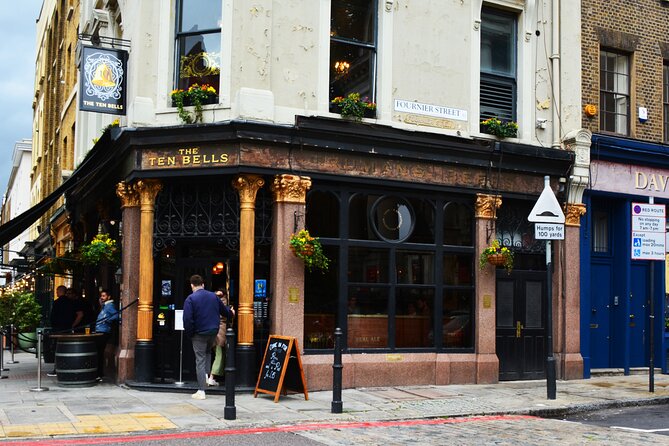
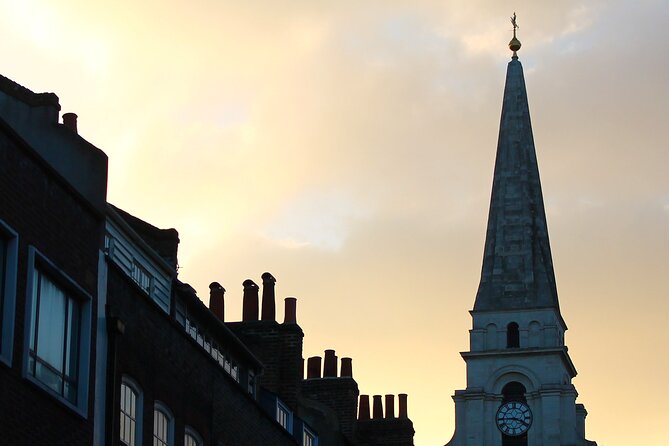
At Spitalfields, the tour visits the old Truman Brewery site. It was once the largest brewery in the world, and its scale helps explain the industrial importance of this part of London.
Nearby is 29 Hanbury Street, the site where Annie Chapman was found on the morning of September 8. The guide then turns to Annie’s life and the personal heartbreak she experienced.
This is where the tour’s humane approach becomes especially clear. You are encouraged to think about Annie as a person with a past, not just as a location on a crime map. The details of her life matter because they show how quickly a woman could move from ordinary hopes to severe hardship.
The route also passes the Ten Bells pub. The name carries its own modern history. The pub was once renamed the Jack the Ripper pub, a choice that tied the business to the killer’s myth. The movement Reclaim the Night helped push for the name to return to the Ten Bells.
That change is worth discussing because it shows how public memory works. Naming a pub after a murderer can turn violence into entertainment. Restoring the old name places attention back on the neighborhood and its history rather than rewarding the killer with another monument.
You may find this section particularly useful if you have already taken a conventional Ripper walk. It visits familiar places but asks you to read them differently.
Something different for another day:
- Stonehenge, Windsor Castle, and Bath from London
★ 4.5 · 18,662 reviews - London Big Bus Hop-On Hop-Off Tour with Optional River Cruise
★ 3.5 · 10,803 reviews - London Small Group Tour of Historical Pubs
★ 5.0 · 10,422 reviews - Stonehenge, Windsor Castle and Bath with Pub Lunch in Lacock
★ 4.5 · 7,402 reviews
Old Spitalfields Market and Mary Jane Kelly’s Story
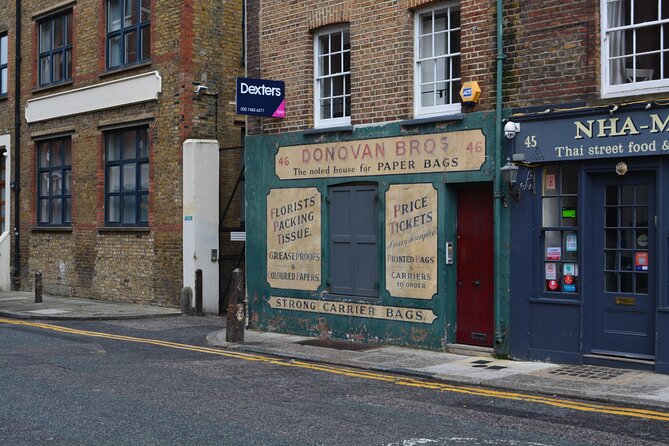
Old Spitalfields Market opened in 1887, the year of Queen Victoria’s Golden Jubilee and one year before the Whitechapel murders began. The market provides a vivid point of contrast between royal celebration and working-class hardship.
The guide briefly sets those two worlds beside each other. Victorian London could celebrate imperial power, new wealth, and grand public events while poor residents struggled for food, housing, and secure work. You do not need a long lecture to understand the contrast. The market itself makes the point.
The tour then moves along Crispin Street to the former site of a refuge for working-class people that actually provided useful shelter. This offers a counterpoint to the harsher workhouse system. Not every institution serving poor people was equally cold or punitive, and that distinction helps avoid an overly simple picture of the period.
Across the street is the former site of Mary Jane Kelly’s residence. Kelly was the last of the women usually linked to the Whitechapel murders and remains the most mysterious of the group.
Her story is treated with restraint. You will hear about her life and the uncertainty around her past without being pushed toward sensational guesses. This is an important difference from tours that use mystery as an excuse for dramatic invention.
Spitalfields Market is also one of the practical highlights of the walk. It is a lively place to pause, look around, and notice the contrast between old street patterns and modern businesses. Some stops offer places to sit, which helps if you need a short rest during the walk.
Petticoat Lane and the Working East End
The route continues to Petticoat Lane Market, once the heart of the East End textile industry. The stop lasts about five minutes, so do not expect a long market visit or shopping break.
Its value is historical. Textile work shaped the local economy and gave the area a strong working identity. The guide uses the market to explain another part of East London’s labor story, adding context to the women’s lives and the people around them.
This is also a reminder to keep your expectations realistic. The tour is not a food walk, shopping tour, or broad overview of London. Every stop supports the central subject: women living in a poor and changing district in the late nineteenth century.
St Botolph’s Aldgate, Elizabeth Stride, and Catherine Eddowes
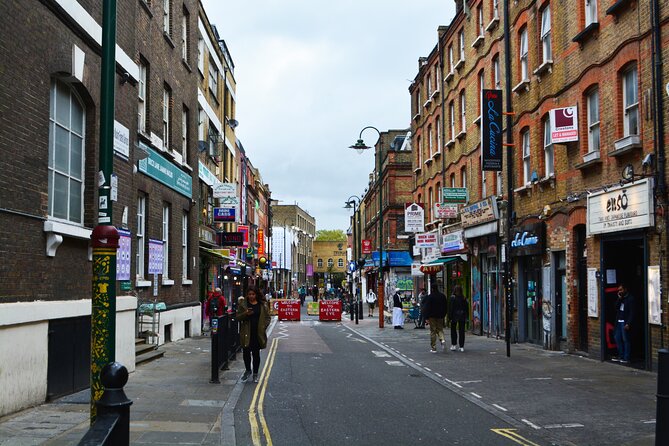
The final part of the route introduces Elizabeth Stride at St Botolph’s Church without Aldgate. Stride came from Sweden, and the guide covers her difficult early life in Gothenburg before turning to her experiences in London.
Her story widens the frame again. The East End was not made up only of people born nearby. It drew workers and migrants from other parts of Britain and Europe. Stride’s life shows how movement, poverty, and personal upheaval could intersect in Victorian London.
The tour finishes near Mitre Square, where Catherine Eddowes was found. Eddowes came from Wolverhampton, and the guide presents her as a lively, forceful woman rather than a flat figure in a murder case.
This final section lasts about 25 minutes, making it one of the longer stops. It gives you time to consider how the women were treated by the police, the press, and later popular culture. Their lives were often pushed aside while the unknown killer became the famous figure.
There is a minor planning point here. The booking details identify Spitalfields Market at 65 Brushfield Street as the end meeting point, while the route description says the walk finishes near Mitre Square. Confirm the exact final location with Rebel Tours before setting out, especially if you have an evening reservation afterward.
Guides Who Make the Subject Accessible
The strongest feature of this tour is its guiding. Cecily is praised for clear speaking, warmth, emotional respect, and strong command of both the women’s stories and the neighborhood. That clarity can make a real difference if English is not your first language or you have trouble hearing guides in crowded groups.
Ellie is also praised for her friendly manner and detailed understanding of the women and the East End. The small group helps here. With no more than 20 people, the walk can feel more personal than a large, theatrical street tour, and you have a better chance of asking questions.
Good guiding is essential for this subject. The route includes sites where little physical evidence remains, so the story has to come through explanation. Cecily and Ellie have been singled out for making the past easy to picture without exaggeration.
The guides also offer suggestions for local restaurants, pubs, and shops. That is a useful extra at the end of an evening walk, since you finish in an area with plenty of places to continue exploring.
How Much Walking and What the Evening Timing Means
The experience lasts about two hours and involves a lot of walking, with frequent stops. You may find places to sit along the way, but you should still wear comfortable shoes and expect to remain outdoors for the full tour.
The 6:30 pm start changes the mood. East London looks and feels different after sunset than it does in daylight, and the evening timing fits the subject. It also means you should allow enough time to reach Aldgate station before the group leaves.
The route passes through active parts of the East End, including Brick Lane and Spitalfields. You get atmosphere without entering a staged attraction. The trade-off is that city streets can be noisy, crowded, or less easy to hear in than a museum gallery.
Service animals are allowed, and the tour is near public transportation. Most people can take part, but the supplied details do not promise full step-free access or a specific accessibility format. If mobility or hearing support is important to you, contact Rebel Tours before booking.
Is the $34.28 Price Good Value?
At $34.28 per person, this is a fair price for a two-hour guided walk in central London, especially with a group capped at 20 people. You are paying for interpretation, not entry tickets, since the listed stops are viewed from public streets and admission is free.
The value is strongest if you want a careful history lesson with a clear point of view. A self-guided route could take you to many of the same streets, but it would be harder to connect Martha Tabram’s story with Victorian housing, Annie Chapman’s life with the Ten Bells, or Elizabeth Stride’s background with migration into London.
The price is less appealing if you want a broad introduction to London or a dramatic ghost walk. This tour stays focused. It also does not include food, drinks, museum admission, or transport after the walk.
The experience is often booked about 27 days ahead. That suggests you should reserve early if the evening time and date matter to you, particularly since the group is limited to 20 people.
Who Should Book This Tour?
I would choose this walk if you have read Hallie Rubenhold’s The Five or want to learn about the women beyond the usual headlines. The tour draws on that wider interest in the victims and gives you a physical route through the places connected with their lives.
It is also a good fit for history fans, social history readers, first-time visitors to Whitechapel, and families with mature children who prefer factual discussion to graphic crime scenes. The clear delivery makes it approachable for people who do not know the Jack the Ripper story at all.
You should think twice if you dislike walking at night, find murder-related subjects upsetting, or want a tour centered on identifying the killer. The guide does not turn the murderer into the main attraction, and that is precisely the point.
Free cancellation is available up to 24 hours before the 6:30 pm start. Changes or cancellations inside that window are not refunded. The tour also depends on suitable weather and a minimum number of participants, with a different date or full refund offered if the operator cancels.
Should You Book Jack the Ripper: What About the Women?
Book it if you want the Whitechapel murders placed in human and social context. The best parts are the victim-focused storytelling, the thoughtful guides, the small group, and the way the route links old sites with present-day East London.
Skip it if you want sensational crime details, graphic images, or a fast-paced attraction with lots of dramatic effects. For most people seeking a respectful and unusual look at London, this $34.28 walk offers solid value and a far more meaningful question than who was Jack the Ripper: who were the women, and why were their lives so easily ignored?
FAQ
How long does the Jack the Ripper: What About the Women? tour last?
The walking tour lasts approximately two hours.
What time does the tour begin?
The tour starts at 6:30 pm.
Where does the tour begin?
The meeting point is Aldgate High Street, London EC3N 1AH, outside Aldgate station.
What places does the walking tour visit?
The route includes Whitechapel Road, Brick Lane, Brick Lane Mosque, the old Truman Brewery site, 29 Hanbury Street, the Ten Bells area, Old Spitalfields Market, Crispin Street, Petticoat Lane Market, St Botolph’s Church without Aldgate, and the area near Mitre Square.
Is the tour graphic?
The tour focuses on the women’s lives and Victorian society rather than gruesome murder details. No grisly pictures are used.
What is the cancellation policy?
You can cancel at least 24 hours before the start time for a full refund. Cancellations or changes made less than 24 hours before the start are not refunded. If poor weather or an insufficient number of participants causes the operator to cancel, you will be offered another date or a full refund.
Just added around London
- The Private British Museum Tour★ 5.0 · 6 reviews
- London to Southampton Cruise Port | Private Transfer★ 5.0 · 6 reviews
- London’s Chinatown Food Experience★ 4.0 · 6 reviews
- London Gatwick (LGW) Airport Departure Private Transfer – Hotel to Airport★ 4.0 · 6 reviews
- Christmas in Canterbury, Dover and Greenwich with Christmas Lunch★ 4.5 · 6 reviews
- Transfer from Heathrow Airport to London hotel on private car★ 4.5 · 6 reviews
- Jazz Notes – Jazz Jam Ticket★ 5.0 · 6 reviews
- Transfer from London Stansted Airport to Central London★ 5.0 · 6 reviews
Jack the Ripper Tours, compared.
London Jack the Ripper Guided Tour with Ripper-Vision
Read our review →
Ultimate Jack the Ripper : Guided Tour of London
Read our review →
London Jack The Ripper Small-Group Walking Tour
Read our review →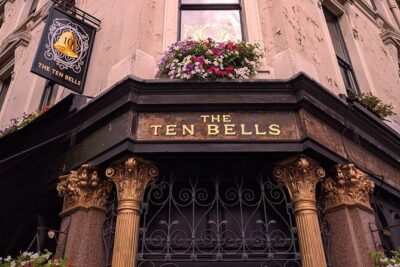

The Original Jack the Ripper Coach Tour of Haunted London
Read our review →
Browse the lists this tour appears in