
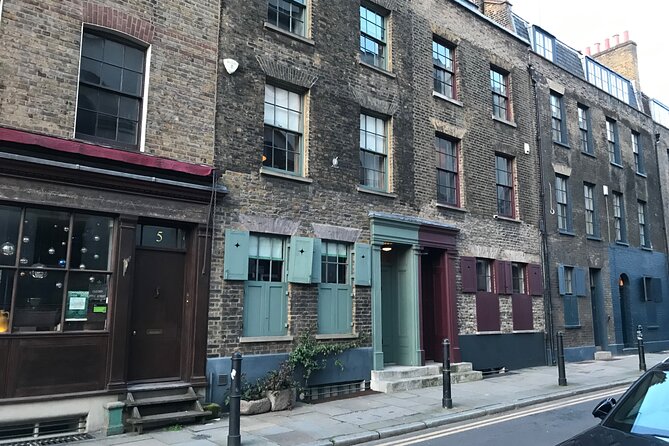
Reviewed · JACK THE RIPPER TOURS
London – Jack the Ripper Small Group Tour
The killer is only part of the story. This 2-hour-15-minute walk through Whitechapel and Spitalfields combines crime scenes, Victorian poverty, disputed evidence, and the lives of the women caught in the case. I especially like the small-group format and the clever radio microphone and earphones, which help you hear Richard Walker clearly on noisy East London streets. I also appreciate the iPad images that connect today’s streets with their 1888 appearance.
The main consideration is that this is an educational, victim-focused walk rather than a spooky ghost tour. You will spend time standing while Richard explains evidence and theories, so comfortable shoes and a reasonable level of fitness matter.
In This Review
- Key points to know before you go
- Why this Jack the Ripper walk feels different
- Starting opposite London Hospital on Whitechapel Road
- Buck’s Row and Polly Nichols
- Brick Lane, lodging houses, and the geography of the case
- Christ Church Spitalfields and the Ten Bells
- Old Spitalfields Market and Victorian poverty
- Spitalfields and the final murder sites
- The guide, technology, and group size
- Walking, timing, and the Liverpool Street finish
- Is $41.67 a fair price?
- Who will enjoy this experience most?
- Should you book the Whitechapel night walk?
- FAQ
- Where does the Jack the Ripper tour begin?
- What time does the tour start?
- How long does the walking tour last?
- Where does the tour end?
- Which transport connections are available at the end?
- How far does the group walk?
- Is the tour suitable for someone with walking difficulties?
- What is the maximum group size?
- Is the tour offered in English?
- Are admission tickets included?
- What equipment is provided?
- Is this a scary or gory tour?
Key points to know before you go
- Richard Walker leads a research-heavy walk: His approach questions familiar assumptions about the murders, the victims, eyewitness accounts, and possible suspects.
- The tour covers about 1.5 miles: The route links four murder sites and ends near Liverpool Street Station.
- The focus is on people, not gore: You hear about the women’s lives and circumstances rather than a parade of grisly details.
- Radio headsets make a real difference: You can hear the guide even when traffic, crowds, and city noise compete for attention.
- The route runs at night: A 7 p.m. start gives Whitechapel the right atmosphere while leaving you near major Underground and Elizabeth line connections afterward.
- The $41.67 price buys intimacy and structure: It is good value if you want a serious guide and a limited-size group, less so if you only want a quick stroll past a few famous locations.
Why this Jack the Ripper walk feels different
Jack the Ripper tours are easy to find in London. Many lean hard into fog, fear, and theatrical gore. Richard Walker’s version takes another road. He treats the murders as a historical investigation, with attention to the women who died, the neighborhood they lived in, and the assumptions repeated about them for more than a century.
That approach will suit you if you enjoy true crime, disputed evidence, and social history. It may not suit you if your ideal evening involves jump scares, ghost stories, or lurid descriptions.
Walker also brings a clear personal theory to the subject. He uses Scotland Yard’s 2008 geographical profile and an FBI criminal profile created by Special Agent John Douglas in 1988 as part of the discussion. You are not simply handed one neat answer. Instead, you examine where the murders happened, who lived nearby, and how different suspects fit the known facts.
The guide’s passion is one of the strongest parts of the experience. He is described as an energetic storyteller who can keep a group engaged for more than two hours, while still making room for questions. His signature Indiana Jones hat also makes him easier to spot at the meeting point.
More Jack the Ripper walks:
- London Jack the Ripper Guided Tour with Ripper-Vision
★ 4.5 · 4,840 reviews - London Jack The Ripper Guided Walking Tour
★ 5.0 · 3,131 reviews - Ultimate Jack the Ripper : Guided Tour of London
★ 5.0 · 1,495 reviews
Starting opposite London Hospital on Whitechapel Road
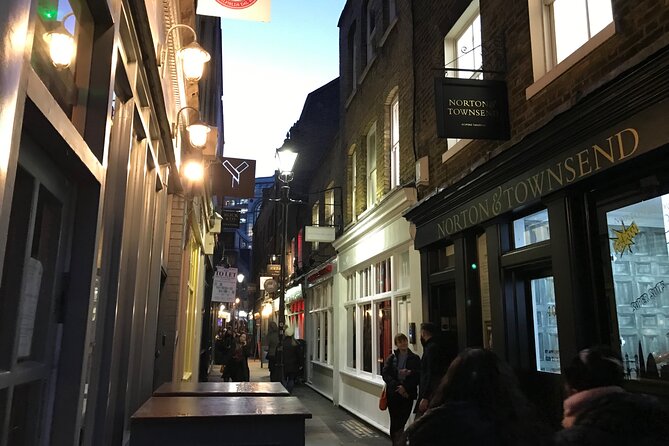
The walk begins at 7 p.m. at 279 Whitechapel Road, opposite the London Hospital. This is a useful starting point because the first story concerns Emma Elizabeth Smith, described here as the first victim of the Whitechapel Murders.
Smith died after a brutal attack on April 3, 1888. Her case provides an early look at the district, the social conditions of the period, and the grim setting in which the later murders took place. You begin with a person, not just a nickname attached to a famous criminal.
The opening stop lasts about 10 minutes. There is no admission fee, and you remain outdoors. Since this is an evening walking tour, arrive ready to begin promptly rather than expecting time to settle into a café or indoor meeting room.
Buck’s Row and Polly Nichols
From Whitechapel Road, the route continues to Buck’s Row in Whitechapel. Here, Walker reconstructs the first murder generally linked with Jack the Ripper and explains when, where, and how Polly Nichols was killed.
This is the first real crime-scene investigation of the evening. You consider the location, the timing, and how the attack might have happened quickly and quietly. The guide also introduces the first suspect, setting up the pattern of comparing people against the evidence rather than treating every popular theory as fact.
The stop lasts roughly 20 minutes. That is enough time for a clear explanation, but it also means you may be stationary for a while. One of the few practical weaknesses of the tour is the limited chance to sit during these talks. If standing is uncomfortable, this is worth taking seriously before booking.
Brick Lane, lodging houses, and the geography of the case
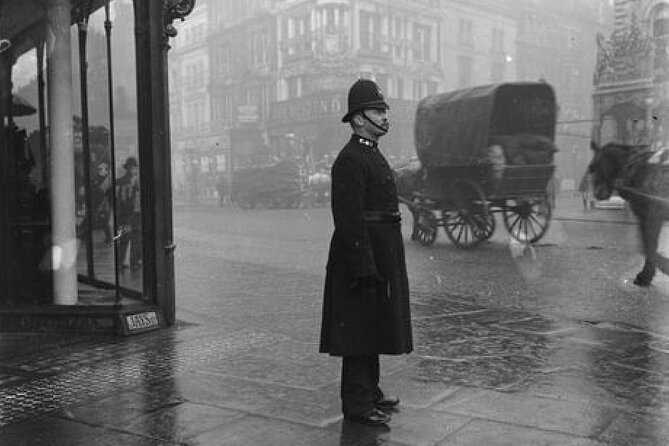
Brick Lane adds welcome context beyond the murders themselves. Today, the area is famous for curry and street life. On this walk, it also helps explain the geography of the victims’ lives.
The route examines the eastern boundary of the area where all five victims were living when the murders occurred. You hear about Thrawl Street, which ran from Brick Lane toward Commercial Street, and Wilmott’s Lodging House, where Polly Nichols stayed. Flower and Dean Street also enters the story because the third and fourth victims lived there, and Scotland Yard believed the killer may have lived nearby.
Annie Chapman’s murder site is close to Brick Lane, giving this section another crime-scene connection. Walker presents more evidence and introduces a second suspect, one who fits both the geographical profile associated with Scotland Yard and the profile developed by the FBI.
This is one of the most useful sections for understanding why location matters. The case is not only about names and dramatic theories. It is also about walking distances, familiar streets, lodging houses, and the practical territory of someone who knew the area.
The Brick Lane stop lasts about 20 minutes. It is a good place to pay attention to the contrast between the modern neighborhood and the poverty of Victorian Whitechapel.
Something different for another day:
- Stonehenge, Windsor Castle, and Bath from London
★ 4.5 · 18,662 reviews - London Big Bus Hop-On Hop-Off Tour with Optional River Cruise
★ 3.5 · 10,803 reviews - London Small Group Tour of Historical Pubs
★ 5.0 · 10,422 reviews - Stonehenge, Windsor Castle and Bath with Pub Lunch in Lacock
★ 4.5 · 7,402 reviews
Christ Church Spitalfields and the Ten Bells
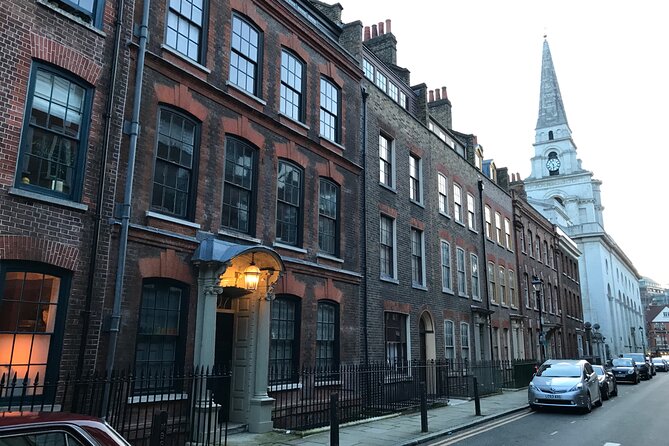
Christ Church Spitalfields gives the tour a striking architectural pause. Designed by Nicholas Hawksmoor, the church is an imposing landmark opposite the Ten Bells pub.
The Ten Bells is tied closely to the Ripper story because the victims drank there. The pub’s name refers to the church bells across the street. That connection gives you a sense of how close homes, pubs, lodging houses, churches, markets, and murder sites were in this compact part of London.
The stop takes around 15 minutes. Admission to the tour does not include entry to the pub, and the walk does not promise a drink or tea break. You are viewing the area from the street, not taking a pub tour.
This stop is especially good for people who want the setting as much as the mystery. Hawksmoor’s church, the pub, and the surrounding streets help you picture the district as a lived-in neighborhood rather than a stage set for a crime story.
Old Spitalfields Market and Victorian poverty
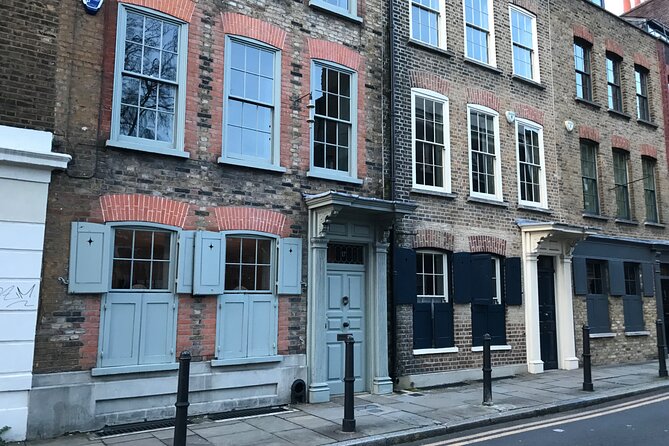
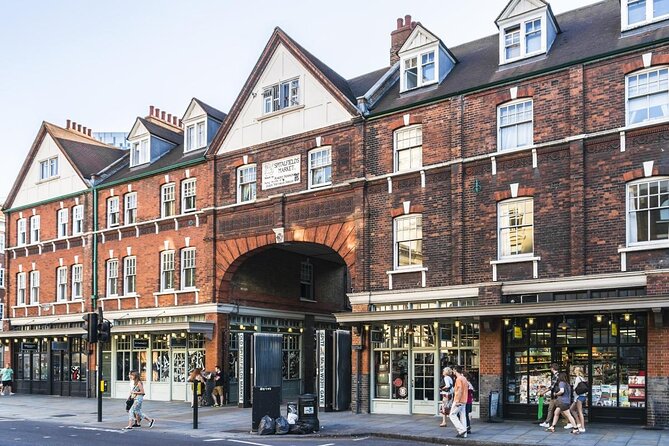
Old Spitalfields Market has served as a community center for centuries. Its role here is less about a specific murder and more about the conditions surrounding the case.
Walker connects the market with the American writer Jack London, who witnessed severe poverty in Victorian London. That detail broadens the tour’s purpose. You begin to see why Whitechapel was so often described through fear and scandal, while the people living there faced insecure housing, low wages, and hard choices.
The stop lasts about 15 minutes and is free to visit from the tour’s point of view. You remain outside and continue on foot. This section may appeal most to you if you want social history woven into the crime story. If you only want suspect names and police clues, it may feel like a detour.
I think it earns its place. Understanding the district helps you avoid the old cartoon version of the case, where every poor woman is reduced to a stereotype and every dark corner becomes a theatrical prop.
Spitalfields and the final murder sites
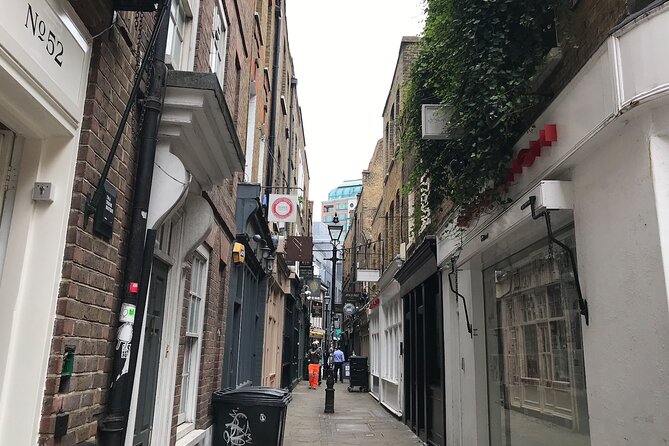
The final section takes you into Spitalfields, where the route explores what was described as the worst street in London. Annie Chapman lived here until the night she was murdered, and Mary Kelly also lived and died in this area.
Mary Kelly is presented as a different kind of victim from the others. Her story introduces a third convincing suspect and gives the tour another chance to question familiar ideas about who the killer was and why the women were targeted.
This is also where the victim-focused method becomes clearest. Walker examines who these women were, why they may have been vulnerable, and how later retellings shaped their reputations. The discussion challenges the assumption that all the victims were definitively working as prostitutes, an issue that has often been treated as settled fact.
The stop lasts about 20 minutes. By this point, you will have covered the main route and heard several competing explanations. The strength is the amount of detail. The drawback is that the presentation can feel lecture-like if your group is quiet or if you hoped for a more interactive format.
The guide, technology, and group size
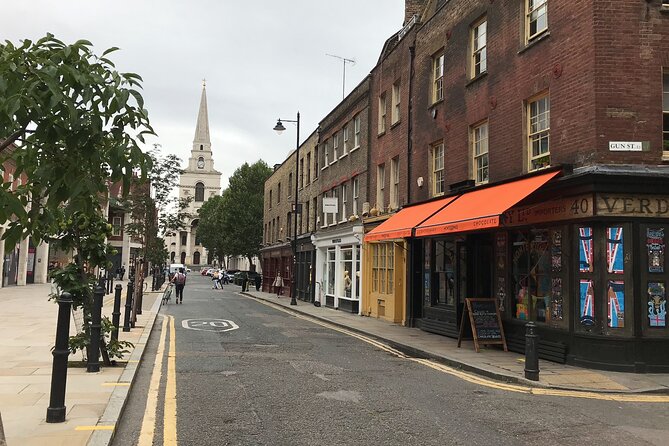
Richard Walker is the named guide and experience provider. The strongest praise centers on his command of the subject, his humor, and his enthusiasm. He is not simply reciting a standard script about a top-hatted villain. He has spent years researching the case and presents his own analysis alongside established facts.
The radio microphone and earphones are a smart addition. East London is not silent, especially at night. With the system, you can hear Walker while walking or standing near traffic and other groups. An iPad lets him show period images, which can make it easier to connect modern streets with Victorian scenes.
The published maximum is 15 people. Walker has also referred to groups of 12 or fewer in some tour descriptions and responses, so the exact limit may vary by booking period. Either way, the experience is intended to be much smaller than the groups of 30 or 40 often seen on popular Ripper walks.
A smaller group matters here because the subject invites questions. You can ask about suspects, eyewitness testimony, the geographical profile, or the victims’ lives without shouting across a crowd. Still, small does not automatically mean highly interactive. If your group prefers to listen, you may receive a long, continuous presentation.
Walking, timing, and the Liverpool Street finish
The route covers about 1.5 miles, or 2.5 kilometers. The distance is manageable for most people with moderate fitness, but the pace and amount of standing matter more than the mileage alone.
Wear comfortable shoes. There are no promises of regular seating, and one section may involve standing in one place for a substantial period. The experience is not suitable for people with walking difficulties, so consider your comfort over two hours before committing.
The tour ends at 126A Middlesex Street near Liverpool Street Station. That is a useful finish for an evening in London. From there, you have access to the Central, Circle, Hammersmith and City, and Metropolitan lines, as well as the Elizabeth line.
The route also lets you see East London at night without having to navigate the back streets yourself. You stay with a guide who knows the connections between the sites, rather than trying to match old street names to a modern map while listening to a podcast.
Is $41.67 a fair price?
At $41.67 per person, this is not the cheapest way to hear the Jack the Ripper story. You can find large walking tours at lower prices, and you can also explore parts of Whitechapel independently.
The value comes from the research, the route, and the group size. You are paying for a structured walk that links four murder sites with the victims’ homes, lodging houses, pubs, markets, and the wider social setting. The earphones and iPad also solve two common problems on city walking tours: poor sound and weak visual context.
I consider it good value if you have a serious interest in the case or want more than a spooky night out. It is less convincing value if you mainly want atmospheric photos, short explanations, or dramatic crime details.
The booking is non-refundable and cannot be changed for any reason. That makes it wise to check your schedule, footwear, fitness, and expectations before paying.
Who will enjoy this experience most?
You are a strong match for this walk if you:
- Enjoy true crime presented with evidence and competing theories
- Want to learn about the victims rather than only the killer
- Like Victorian social history and changing neighborhoods
- Prefer a small group to a large crowd
- Appreciate a guide who has a clear point of view
- Can walk and stand for more than two hours
- Want to finish near useful public transport
Families can also enjoy it. The material is serious, but the tour is not designed as a horror show and has been described as suitable for children because it is interesting rather than scary.
You may want another tour if you are seeking a ghost walk, graphic descriptions, or a heavily theatrical performance. You should also think twice if sitting regularly is important to you or if you prefer a fast-moving route with many short stops.
Should you book the Whitechapel night walk?
Book it if you want a thoughtful Jack the Ripper tour led by Richard Walker, with strong attention to the women involved, the streets they knew, and the evidence behind competing suspects. The excellent rating of 4.9 from 208 ratings and a 99 percent recommendation rate fit the experience’s strongest qualities: clear delivery, serious research, useful audio equipment, and an intimate group.
Go in expecting a historical investigation, not a horror attraction. Wear good shoes, prepare to stand, and allow the guide time to build his case. If that sounds like your kind of London evening, $41.67 is a fair price for a focused walk through Whitechapel and Spitalfields.
FAQ
Where does the Jack the Ripper tour begin?
It begins at 279 Whitechapel Road, London E1 1BY, opposite the London Hospital.
What time does the tour start?
The scheduled start time is 7 p.m.
How long does the walking tour last?
The tour lasts approximately 2 hours and 15 minutes.
Where does the tour end?
It ends at 126A Middlesex Street near Liverpool Street Station.
Which transport connections are available at the end?
Liverpool Street provides access to the Central, Circle, Hammersmith and City, and Metropolitan lines, along with the Elizabeth line.
How far does the group walk?
The route covers about 1.5 miles, or 2.5 kilometers.
Is the tour suitable for someone with walking difficulties?
No. The tour requires a moderate level of physical fitness and is not suitable for people with walking difficulties.
What is the maximum group size?
The stated maximum is 15 participants.
Is the tour offered in English?
Yes. The experience is offered in English.
Are admission tickets included?
The listed stops are free, but admission to the Ten Bells pub is not included. Coffee and tea are also not included.
What equipment is provided?
You receive a radio microphone and earphones, and Richard uses an iPad to display images.
Is this a scary or gory tour?
The tour focuses on facts, theories, the victims, and Victorian London rather than scary or graphic presentation.
Just added around London
- The Private British Museum Tour★ 5.0 · 6 reviews
- London to Southampton Cruise Port | Private Transfer★ 5.0 · 6 reviews
- London’s Chinatown Food Experience★ 4.0 · 6 reviews
- London Gatwick (LGW) Airport Departure Private Transfer – Hotel to Airport★ 4.0 · 6 reviews
- Christmas in Canterbury, Dover and Greenwich with Christmas Lunch★ 4.5 · 6 reviews
- Transfer from Heathrow Airport to London hotel on private car★ 4.5 · 6 reviews
- Jazz Notes – Jazz Jam Ticket★ 5.0 · 6 reviews
- Transfer from London Stansted Airport to Central London★ 5.0 · 6 reviews
Jack the Ripper Tours, compared.
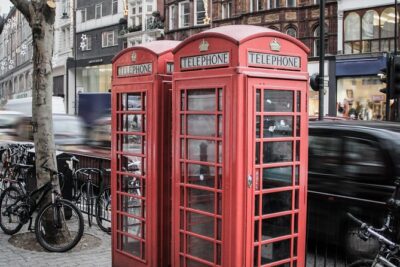
London Jack the Ripper Guided Tour with Ripper-Vision
Read our review →
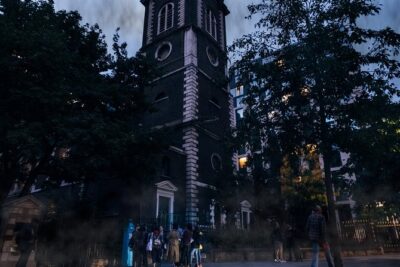
Ultimate Jack the Ripper : Guided Tour of London
Read our review →
London Jack The Ripper Small-Group Walking Tour
Read our review →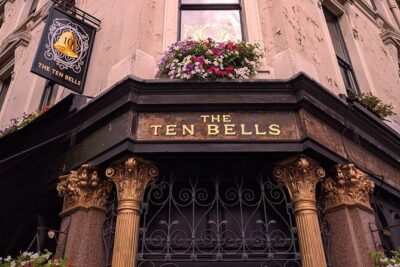

The Original Jack the Ripper Coach Tour of Haunted London
Read our review →
Browse the lists this tour appears in