
Reviewed · WALKING TOURS
London Mystical and Dragons Walking Tour
London has more dragons than you might expect. This 2 to 3 hour walk links the City of London’s stones, churches, rivers, Roman remains, and symbols into a playful but thoughtful story about power, myth, and sacred places. I especially like the small maximum of eight people, which gives guide Arjun room to answer questions, and the way the route mixes verifiable history with folklore instead of offering only standard sightseeing. The main caution is that some stops may be closed, particularly on Sundays or bank holidays, and the experience depends on good weather.
I also like the leisurely pace. You cover a fair stretch from Cannon Street to Temple, but frequent stops keep it manageable. You should come for unusual stories and symbolism, not a conventional architectural tour. If you prefer firm historical facts with little speculation, parts of the dragon and energy-line discussion may not suit you.
In This Review
- Key points before you book
- Why this London walk feels different
- Starting with London Stone and lost waterways
- Roman mysteries beneath modern London
- The Bank of England and the City of Dragons
- Bow Bells, Cheapside, and the city’s lost trees
- St. Paul’s and the Phoenix symbol
- Three churches with different kinds of mystery
- St. Dunstan, Temple Church, and the Knights Templar
- Meeting the protector dragon at Temple Bar
- Pace, distance, and group size
- Is $29.48 good value?
- Who should book this walk?
- Should you book the London Mystical and Dragons Walking Tour?
- FAQ
- Where does the tour begin?
- What time does the tour start?
- Where does the tour finish?
- How long does the tour last?
- How many people can join?
- Is the tour offered in English?
- Are admission tickets included?
- Can I cancel for a refund?
Key points before you book
- Dragons shape the whole route: You follow symbols connected with the City of London, St George, Beowulf, Tiamat, and the city’s protective creatures.
- The Mithraeum is a major stop: Roman worship of Mithras gives the tour a solid archaeological anchor beneath the mystical themes.
- The route crosses central London on foot: It begins at 113 Cannon Street and finishes beside the Royal Courts of Justice at Temple Bar Memorial.
- Small groups make a difference: With no more than eight people, you can ask questions and keep close to the guide.
- Church interiors are not guaranteed: St Bride’s and Temple Church may be unavailable when services, holidays, or opening hours interfere.
- You receive a PDF afterward: This gives you a record of the places visited and helps you return to sites later.
Why this London walk feels different
Most City of London walks concentrate on major buildings, famous fires, royalty, or financial power. This one asks you to look again at details you might pass without noticing: carved creatures, church symbols, old watercourses, sacred wells, trees, and the alignment of important sites.
Arjun leads the walk with a personal interest in mythology, symbolism, and London’s older layers. His approach is not simply a list of dates. He connects Roman beliefs, Christian imagery, pagan traditions, rivers, ceremonial spaces, and modern city streets. You are encouraged to consider how old ideas survive in shapes and symbols, even after their original meaning has faded.
That makes the tour particularly good for people who enjoy folklore, comparative mythology, and unusual historical questions. Families can also enjoy it. One family found that the guide handled questions from a 10-year-old well, while another group with teenagers appreciated the balance between solid history and spiritual interpretation.
You should expect discussion rather than theatrical performance. The most successful parts are the stories that make you look at ordinary places in a new way. The less certain parts are presented as symbolism, belief, or interpretation, so keep an open but sensible mind.
More Walking Tours in London
- Tour for Muggles The Ultimate Harry Potter Walking Tour in London
★ 5.0 · 4,684 reviews - London Jack The Ripper Guided Walking Tour
★ 5.0 · 3,131 reviews - Changing of the Guard Guided Walking Tour in London
★ 5.0 · 1,793 reviews
Starting with London Stone and lost waterways
The walk begins at 113 Cannon Street at 1:30 pm. The first stop is London Stone, a famous piece of stonework with legends linking its presence to the safety of London. You spend about 10 minutes here, considering why a modest object could carry such weight in the city’s imagination.
London Stone is a good opening because it sets the tone. You are not being asked to admire a grand monument. Instead, you start with a small object surrounded by stories, claims, and layers of meaning. If you want a dramatic first sight, this may feel understated. If you like questions about sacred objects and civic identity, it works well.
From there, the route moves toward Bloomberg Arcade and the forgotten Walbrook river. The stop lasts about five minutes, but its importance is larger than the time suggests. The Walbrook helped shape early London, and much of its course now lies beneath streets and buildings.
The tour uses the lost river as a way to think about water, settlement, and memory. Modern London can make the past seem completely erased, yet old waterways still help explain why certain areas developed as they did. This is one of the walk’s useful habits: it asks you to picture what existed below the pavement.
Roman mysteries beneath modern London
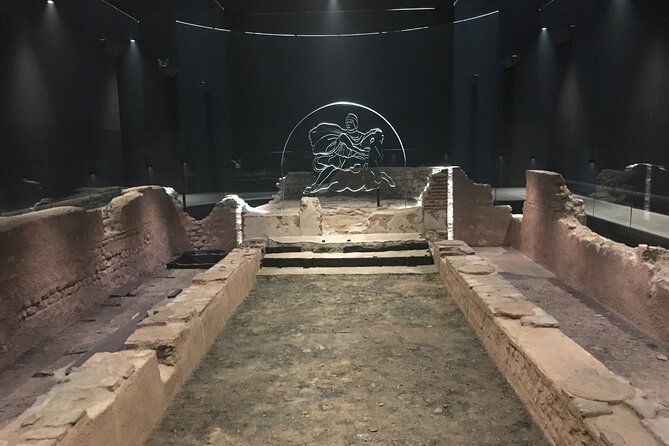
The Mithraeum is one of the strongest historical anchors on the route. It recalls the Roman temple devoted to Mithras, a sun god worshipped by Roman soldiers and others across the empire. The site gives you a clear connection to Roman London and shows how much of the city’s past remains below present-day streets.
Several people particularly enjoyed this part because it provides something tangible amid the more interpretive material. The temple also fits the tour’s interest in secretive worship, sacred space, and symbolism. You can consider the contrast between a Roman religious site, medieval churches, and the modern financial district above them.
Access can vary. If an interior site is closed, the guide may use photographs and spend more time at other stops. That keeps the walk moving, but it is not the same as entering the actual site. Check the date and opening conditions if seeing the Mithraeum is one of your main reasons for booking.
The Bank of England and the City of Dragons
At the Bank of England, the guide introduces the idea of the City of Dragons and its connection with a forgotten river. You spend about five minutes here, looking at the financial center through a mythological lens.
This stop is less about entering the bank and more about the symbolism of power, protection, money, and place. London’s financial district is usually explained through economics. Here, the same streets become part of a story about guardianship and old forces beneath civic authority.
You may find this especially enjoyable if you like the way myths attach themselves to institutions. It is also a useful reminder that symbols are not limited to museums. They appear on buildings, signs, churches, and monuments you see during an ordinary walk.
Something different for another day:
- Stonehenge, Windsor Castle, and Bath from London
★ 4.5 · 18,662 reviews - London Big Bus Hop-On Hop-Off Tour with Optional River Cruise
★ 3.5 · 10,803 reviews - London Small Group Tour of Historical Pubs
★ 5.0 · 10,422 reviews - Stonehenge, Windsor Castle and Bath with Pub Lunch in Lacock
★ 4.5 · 7,402 reviews
Bow Bells, Cheapside, and the city’s lost trees
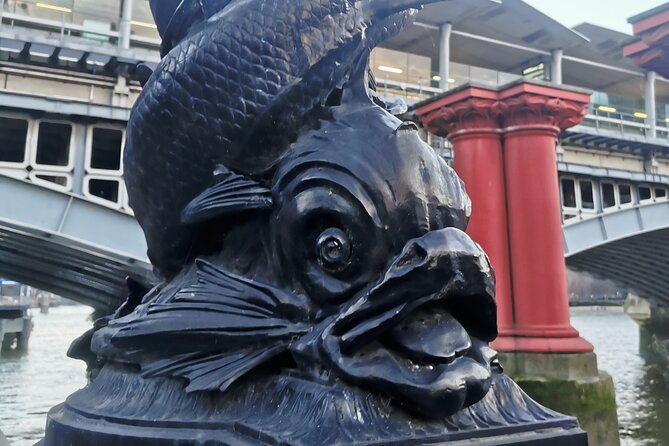
St. Mary-le-Bow Church brings the tour to one of London’s best-known church traditions. The focus here is on sidelined symbolism connected with Bow Bells, rather than a standard account of the church’s architecture. You spend about 10 minutes examining what the building may communicate through its forms and images.
At Cheapside, the subject changes to trees. The tour points to the oldest tree in the City of London and uses it as a reminder of the many trees that once occupied an area now covered by buildings and paving.
These short stops work well together. One looks at church symbolism, the other at natural life and what the city has removed. You are encouraged to think about London not as a fixed collection of streets, but as a place repeatedly rebuilt over rivers, woods, temples, churches, and older settlements.
St. Paul’s and the Phoenix symbol
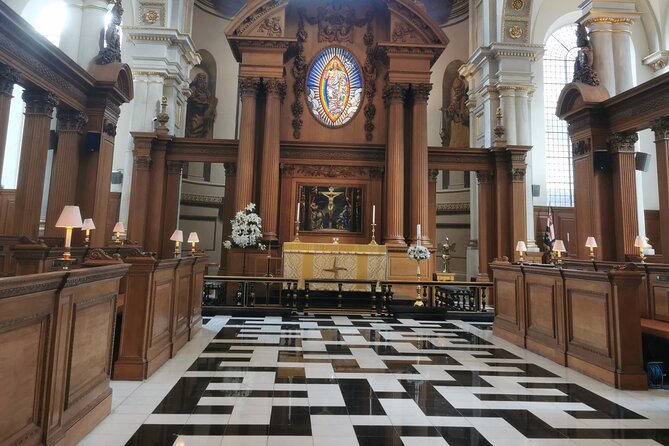
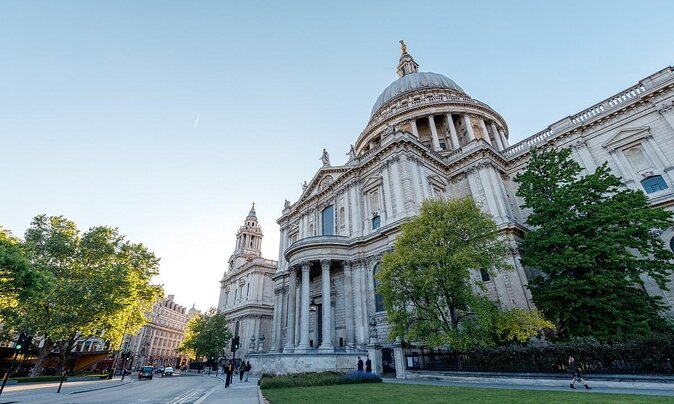
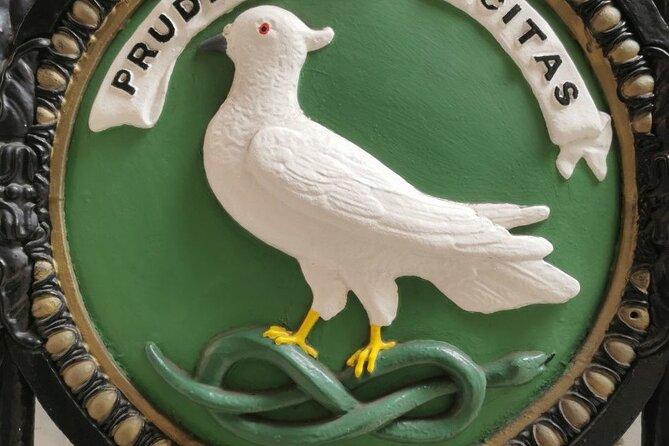
St. Paul’s Cathedral receives about 10 minutes. The guide presents it as a ceremonial site with roots reaching far back in time and explains its connection with the Phoenix symbol.
St. Paul’s is already one of London’s major sights, but this walk asks you to notice a different layer. The Phoenix suggests destruction, renewal, and rebirth, ideas that fit a city repeatedly damaged and rebuilt. You will not receive the full cathedral visit on this tour, so treat the stop as an interpretive introduction rather than a substitute for touring the interior.
This is one of the places where the guide’s storytelling matters most. A familiar landmark can feel fresh when you consider its symbols instead of only its size and fame.
Three churches with different kinds of mystery
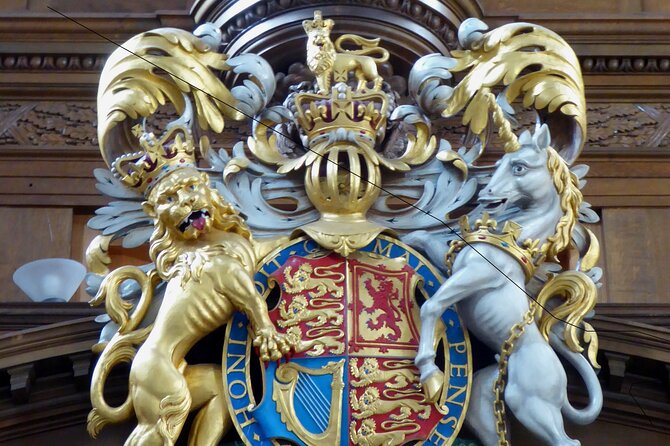
At the Church of St. Martin-within-Ludgate, you spend about 20 minutes with a building that carries a long historical record and older enigmas. The extra time allows for more explanation and questions.
The walk then reaches Ludgate Circus, where the guide recalls another lost London river and the king associated with the city’s name. This five-minute stop is brief, but it helps connect place names, waterways, and early legends.
St. Bride’s Church is given about 20 minutes. Its pagan associations and well make it one of the more atmospheric stops on the route. The church offers a chance to consider how older sacred customs can be absorbed, altered, or remembered within later religious buildings.
You should not assume every church will be open. A Sunday visit had two closed stops, and a bank holiday meant that none of the interior places could be entered. The guide used images and alternative explanations, but access is still an important limitation. If interiors matter to you, avoid dates when opening hours are likely to be restricted.
St. Dunstan, Temple Church, and the Knights Templar
St. Dunstan in the West is another short stop, lasting about five minutes. The guide focuses on medieval features and ancient symbolism. It is a good example of the tour’s method: pause at a place many people overlook, then examine it through several periods of London’s past.
Temple Church receives about 20 minutes and brings the Knights Templar into the story. Built by the Templars and modeled on the Church of the Holy Sepulchre, it is presented as a place where architecture and esoteric ideas meet.
Temple Church can be a highlight, but it is not always open to visitors. One participant found it disappointing to see only images when the church was closed. I would check access before booking if this is the stop you most want to experience.
Even without entry, the building’s connection with the Templars gives the route a strong finish before the final dragon story. The guide’s treatment is more about symbols and ideas than sensational conspiracy claims, which keeps the discussion suitable for people with different levels of interest.
Meeting the protector dragon at Temple Bar
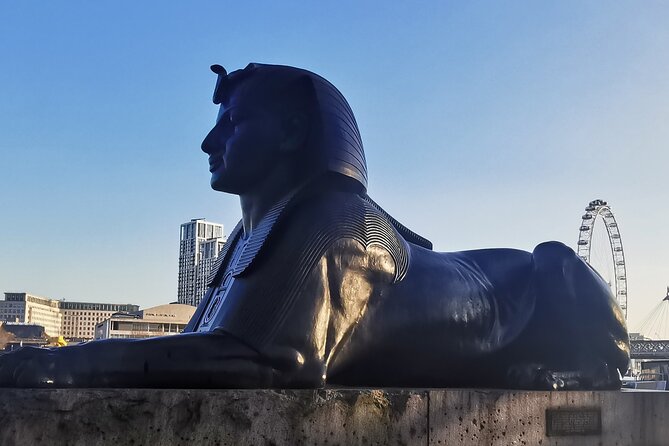
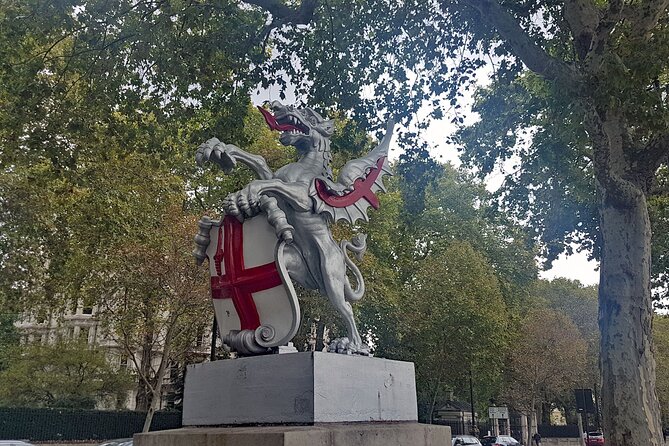
The tour ends at Temple Bar Memorial, next to the Royal Courts of Justice. This final stop takes about 10 minutes and focuses on the dragon described as the fiercest protector of the City of London.
The mythology reaches across several traditions, including Beowulf, Tiamat, and St George. That broad comparison is typical of the walk. You are invited to see recurring images of dragons as protectors, threats, guardians, or symbols of power across different cultures.
Ending here is practical as well as thematic. You finish in central London at Temple, with public transport nearby and the Royal Courts of Justice as an easy landmark. The route does not return you to Cannon Street, so plan your onward journey from the Temple Bar area.
Pace, distance, and group size
The walk lasts roughly two to three hours and includes many stops. You cover a good distance between Cannon Street and Temple, but the pace is broken up by explanations, church visits when available, and pauses for questions.
Wear comfortable walking shoes. One participant specifically praised the relaxed rhythm, while another advised bringing a good pair of shoes because there is a lot of walking. Those comments fit together: this is not a hard hike, but it is a city walk with steady movement.
The maximum group size is eight. That is a real advantage here because the subject invites questions and discussion. You can ask about a symbol, request clarification, or bring up a connection from your own culture without being lost in a large crowd.
The tour is offered in English and uses a mobile ticket. Service animals are allowed, and the route is near public transportation. The information says most people can participate, but it does not provide a detailed accessibility assessment, so contact the operator if you need specific information about pavement conditions, church access, or walking distances.
Is $29.48 good value?
At $29.48 per person, this is fairly priced for a small-group walk lasting up to three hours. The value comes less from paid admissions and more from the guide’s research, route design, and ability to connect scattered places into one story.
The stops themselves are listed with free admission, but that does not mean they are all available for interior visits at every departure. You are paying for interpretation and access to a way of seeing London, not for a package of entry tickets.
I think the price works best if you enjoy active sightseeing and would otherwise walk past these places without understanding their connections. It is less compelling if you want a tour built around grand interiors or guaranteed entry to every church.
Afterward, you are meant to receive a PDF showing the locations visited. This is a useful extra because you can revisit places independently. One person had not received the PDF at the time of writing, so keep an eye on your email and contact the guide if it does not arrive.
Who should book this walk?
I would choose this tour if you like mythology, sacred places, Roman London, church symbolism, lost rivers, or unusual city stories. It also suits repeat visitors who have already seen the Tower of London, Westminster, and St. Paul’s in the usual way.
Families with older children and teenagers can enjoy it, especially if they like asking questions. The dragon theme gives younger participants an easy way into the material, while the Roman and medieval content gives adults plenty to consider.
I would skip it if you want a strictly academic account with every claim separated from legend. The tour moves between documented history and mystical interpretation. Arjun presents the material with enthusiasm and without judgment, but you still need to decide how much weight to give each idea.
Weather matters. The experience may be canceled in poor conditions, with a different date or full refund offered. The minimum group requirement also means a departure can be canceled if too few people book. You can cancel for a full refund up to 24 hours before the start time, but later cancellations are not refunded.
Should you book the London Mystical and Dragons Walking Tour?
Book it if you want to see the City of London through a less familiar lens. The best parts are the Roman Mithraeum, the lost rivers, the churches, and the way dragons, Phoenix imagery, trees, and sacred sites are tied into one route.
Go with curiosity, comfortable shoes, and realistic expectations about opening hours. If you accept that some stops may be viewed from outside, this is a thoughtful and unusual afternoon walk with personal attention, a strong sense of place, and plenty to discuss afterward.
FAQ
Where does the tour begin?
It begins at 113 Cannon Street, London EC4N 5AW, United Kingdom.
What time does the tour start?
The scheduled start time is 1:30 pm.
Where does the tour finish?
It finishes at Temple Bar Memorial in the City of London, next to the Royal Courts of Justice.
How long does the tour last?
The tour takes approximately two to three hours.
How many people can join?
The group has a maximum of eight travelers.
Is the tour offered in English?
Yes. The experience is offered in English.
Are admission tickets included?
The listed stops have free admission, but some interiors may be closed on the day of your visit. The guide may provide images and alternative explanations when access is unavailable.
Can I cancel for a refund?
Yes. You can cancel at least 24 hours before the local start time for a full refund. Cancellations or changes made less than 24 hours before the start time are not accepted for a refund.
Just added around London
- The Private British Museum Tour★ 5.0 · 6 reviews
- London to Southampton Cruise Port | Private Transfer★ 5.0 · 6 reviews
- London’s Chinatown Food Experience★ 4.0 · 6 reviews
- London Gatwick (LGW) Airport Departure Private Transfer – Hotel to Airport★ 4.0 · 6 reviews
- Christmas in Canterbury, Dover and Greenwich with Christmas Lunch★ 4.5 · 6 reviews
- Transfer from Heathrow Airport to London hotel on private car★ 4.5 · 6 reviews
- Jazz Notes – Jazz Jam Ticket★ 5.0 · 6 reviews
- Transfer from London Stansted Airport to Central London★ 5.0 · 6 reviews
Walking Tours, compared.

Oxford University Walking Tour With University Alumni Guide
Read our review →
Tour for Muggles The Ultimate Harry Potter Walking Tour in London
Read our review →

Cambridge University Walking Tour by Alumni™ Kings College Option
Read our review →
Blackbeard to Banksy – The Ultimate Walking Tour of Bristol
Read our review →
Air Raid Shelter + St. Nicholas Market Walking Tour
Read our review →
Walking Tour of Bath with Blue Badge Tourist Guide
Read our review →
Changing of the Guard Guided Walking Tour in London
Read our review →Browse the lists this tour appears in