
Reviewed · WORKSHOPS IN LONDON
Private DJ Class
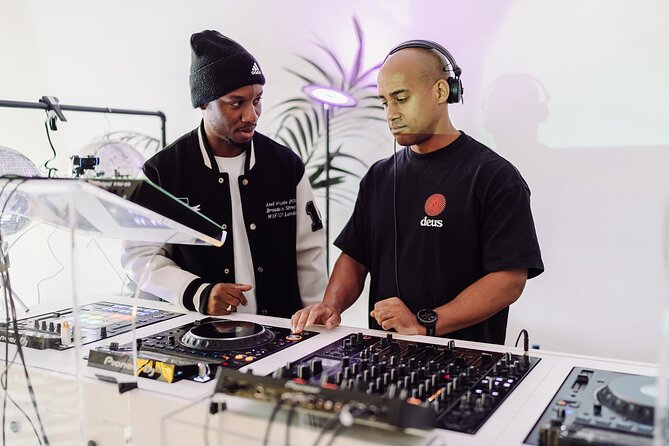
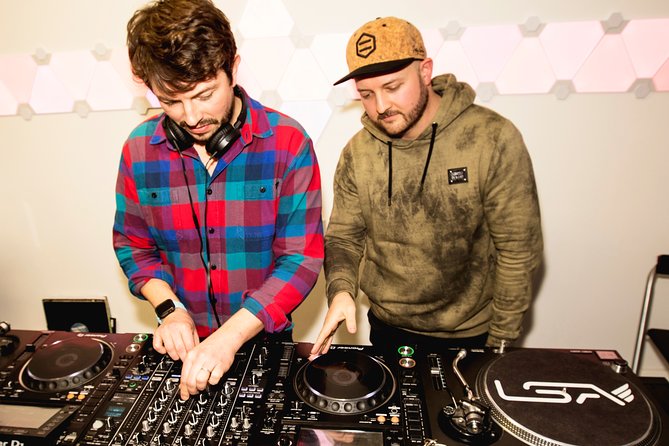
Your next London lesson could have a beat. This private DJ class gives you two hours of one-to-one instruction on industry-standard Pioneer DJ decks, with no audience listening over your shoulder. I like the personal format and the chance to learn practical mixing skills rather than simply watch a demonstration.
I also like the clear meeting point at 93a Bayham St and the class’s focused list of techniques, including beatmatching, phrasing, EQing, filters, and harmonic mixing. The main consideration is price: at $137.13 per person, this is a serious spend for two hours, especially if you are only curious about DJing.
In This Review
- Key points at a glance
- What this private London DJ class is really like
- Meeting at 93a Bayham St in London
- Starting with Pioneer DJ decks
- Beatmatching: the first essential skill
- Phrasing and harmonic mixing
- EQ and filters: shaping the transition
- Why the private format matters
- Is $137.13 a fair price?
- Who should book this class?
- Planning your two hours wisely
- Booking and cancellation advice
- Should you book the Private DJ Class?
- FAQ
- Where does the Private DJ Class begin?
- Where does the class end?
- How long does the class last?
- How much does the class cost?
- Is the class private?
- What equipment will I use?
- What skills are covered?
- Is the class offered in English?
- Is the meeting point near public transportation?
- Can I cancel for a refund?
Key points at a glance
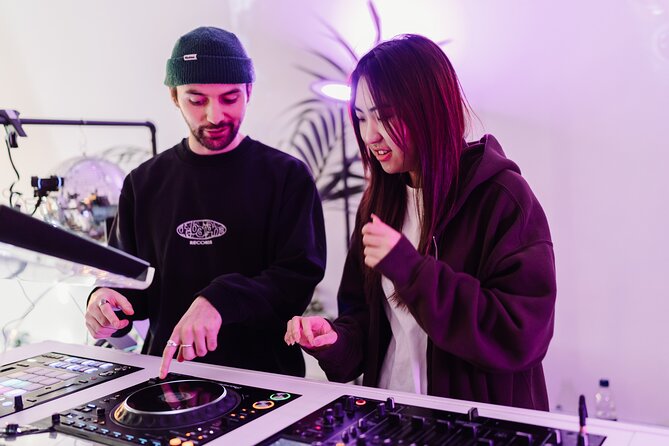
- Private instruction: Only your group takes part, so you can ask questions and repeat exercises without feeling self-conscious.
- Two hours on Pioneer decks: You learn on professional-level equipment instead of a simplified tourist setup.
- Core mixing skills included: The lesson covers beatmatching, phrasing, harmonic mixing, EQing, and filters.
- Easy London meeting point: Start and finish at 93a Bayham St, London NW1 0AG.
- Useful for beginners: The class is designed as a fun tutorial covering the basic skills needed to mix tracks.
- Flexible cancellation: You can receive a full refund if you cancel at least 24 hours before the start time.
What this private London DJ class is really like
This is not a nightclub night out or a concert with a quick chance to touch the controls. It is a practical lesson built around you and your group.
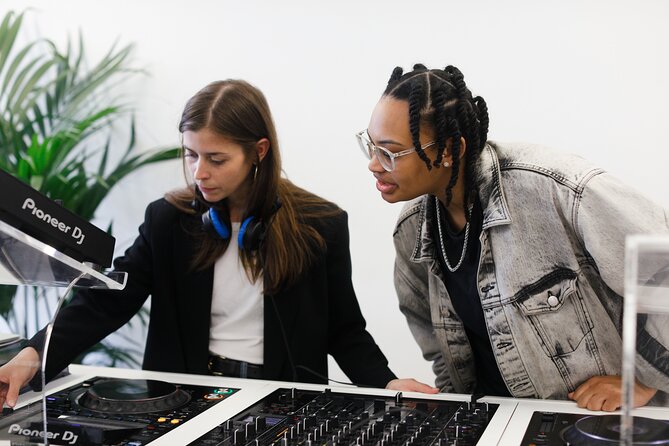
For two hours, a trainer shows you how to mix tracks using Pioneer DJ decks. The small, private setup matters. You do not need to worry about strangers hearing a rough transition, and you can stop to ask what each control does. That makes a big difference when you are learning equipment that can look intimidating at first.
The class is offered in English. It is also a private activity, so the pace can feel more personal than a large workshop. The available description does not promise a set playlist, a club performance, or a recording to take home. You should book it for hands-on instruction, not for a finished DJ set or a sightseeing stop.
More Workshops in London
- London Traditional English Scone Making and Tea Workshop
★ 5.0 · 271 reviews - Street Art Tour and Spray Painting Workshop in London
★ 5.0 · 98 reviews - Street Art Walking Tour and Workshop in London
★ 5.0 · 58 reviews
Meeting at 93a Bayham St in London
You begin at 93a Bayham St, London NW1 0AG, and return there when the class ends. That simple arrangement is useful on a busy London day because you do not need to coordinate several meeting points or find your way across town during the lesson.
The studio is near public transportation, though the available details do not specify the nearest station or the exact route from central London. I would check your route before leaving and allow enough time to find 93a Bayham St without arriving flustered. Turning up calm is helpful when your first challenge may be learning where the deck controls are.
The mobile ticket also keeps the arrival process straightforward. Confirmation comes at booking, so keep the booking details accessible on your phone.
Starting with Pioneer DJ decks
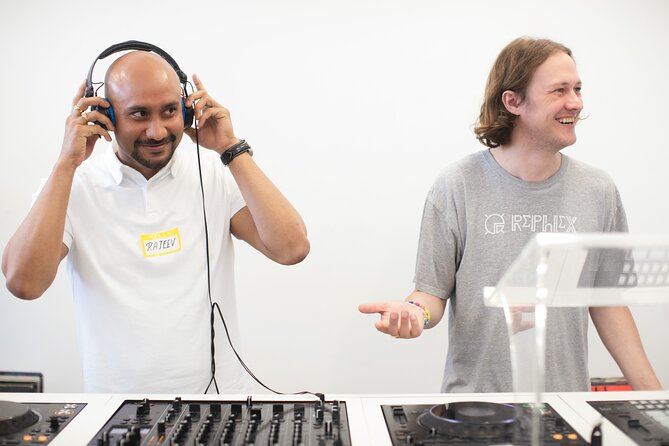
The equipment is a major reason to consider this class. You learn on Pioneer DJ decks, a familiar name in professional and serious amateur DJ setups.
That does not mean the equipment will instantly feel easy. A deck has several controls working at once: jog wheels, tempo controls, cue functions, channel faders, crossfader, EQ knobs, and filters. A private trainer can break that down in a sensible order, allowing you to understand what matters before trying to combine everything.
I would expect the lesson to begin with the basic role of the decks and the mechanics of moving between tracks. The precise teaching order is not specified, so the class may adapt to your starting point. If you already know how to cue a track, say so early. If the equipment is completely new to you, ask for a slow explanation before moving into full transitions.
The high-end gear is both a benefit and a small challenge. It gives you a more realistic introduction, but you may need time to get comfortable. Do not judge your ability by your first attempt. The point of private tuition is to make mistakes in a calm setting and learn what caused them.
Beatmatching: the first essential skill
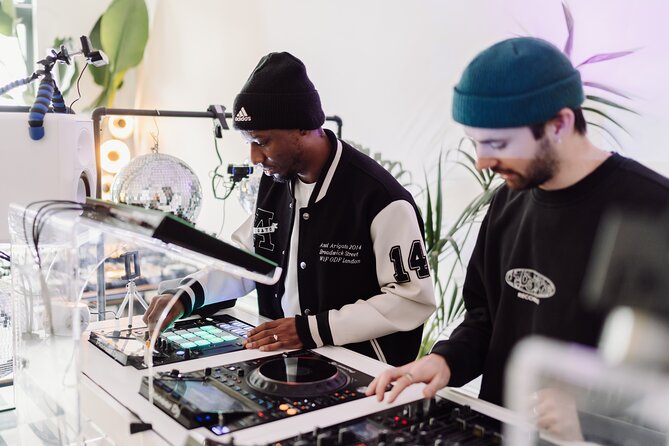
Beatmatching is the basic act of bringing two tracks into the same tempo so their beats line up. It sounds simple until two tracks begin drifting apart or one enters just slightly too early.
This class specifically teaches beatmatching, making it useful for someone who wants a proper foundation. You learn to listen for the beat and adjust the track rather than relying only on automatic software assistance. The supplied information does not say how much of the process is manual or software-supported, so you should ask the trainer how the class approaches it.
The private format helps here. You can repeat the same transition several times, and the trainer can point out whether the problem is tempo, timing, cueing, or a late adjustment. In a group class, that sort of repetition may be harder to fit in.
If you are new to DJing, beatmatching is likely to take up a good part of your attention. Do not expect to master it permanently in one sitting. The value is in learning the method and leaving with a clearer sense of what to practice.
Something different for another day:
- Stonehenge, Windsor Castle, and Bath from London
★ 4.5 · 18,662 reviews - London Big Bus Hop-On Hop-Off Tour with Optional River Cruise
★ 3.5 · 10,803 reviews - London Small Group Tour of Historical Pubs
★ 5.0 · 10,422 reviews - Stonehenge, Windsor Castle and Bath with Pub Lunch in Lacock
★ 4.5 · 7,402 reviews
Phrasing and harmonic mixing
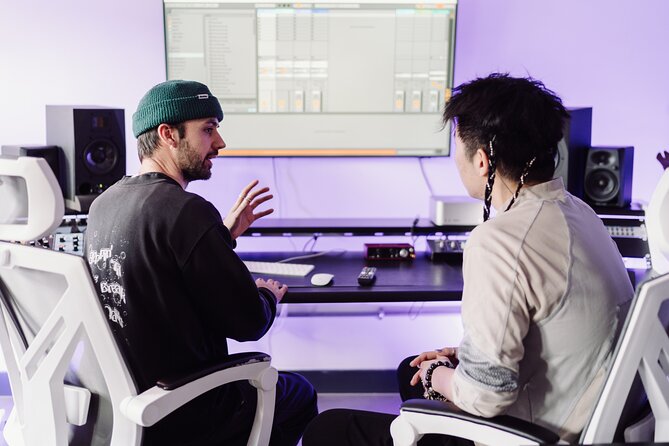
Beatmatching keeps the rhythm aligned. Phrasing helps you bring tracks together at musically sensible points.
In practical terms, phrasing means understanding how sections of a track fit together, such as introductions, breaks, choruses, and changes in energy. A technically accurate transition can still sound awkward if you bring in the next track at the wrong moment. Including phrasing in the lesson moves the class beyond simply matching numbers on a screen.
Harmonic mixing adds another layer. It concerns choosing tracks whose musical keys work well together. You do not need to be a trained musician to benefit from this idea. The trainer can show you how key choices may make a transition sound smoother, while poor choices can make two tracks clash.
The class description lists these as part of the basic skills covered, but it does not promise a full music theory course. I would see them as practical tools that help you make better track choices. If you have favorite songs in mind, ask whether you can use them during the lesson. The available details do not confirm that personal music requests are included.
EQ and filters: shaping the transition
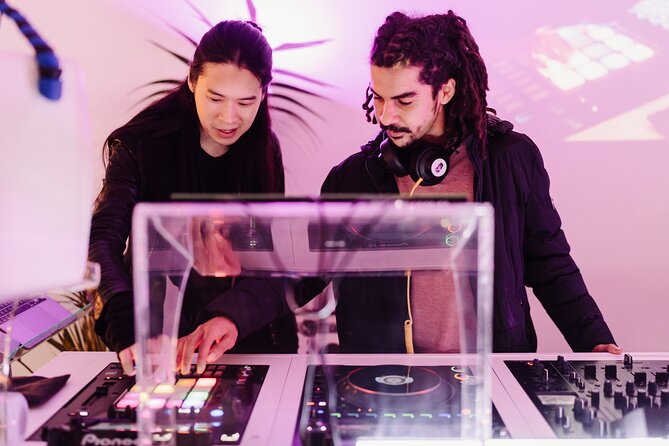
EQing and filters let you control how much of each track is heard during a mix. The low, middle, and high frequencies can be adjusted so that two tracks do not compete for the same sonic space.
For a beginner, this is where a mix can start to sound more deliberate. You might reduce the bass on one track while bringing in another, or use a filter to create a gradual change in tone. These tools are not magic buttons. Used too heavily, they can make a transition thin or harsh. A trainer can show you how small adjustments often work better than dramatic ones.
The class includes both EQing and filters, so you are not limited to a simple fade between songs. That is worthwhile if you want to understand how DJs shape energy rather than just switch from one track to the next.
I would ask questions as you go. Find out which knob affects which frequency range, when to make an adjustment, and how to return the controls to a neutral position. Those small habits are useful long after the two hours end.
Why the private format matters
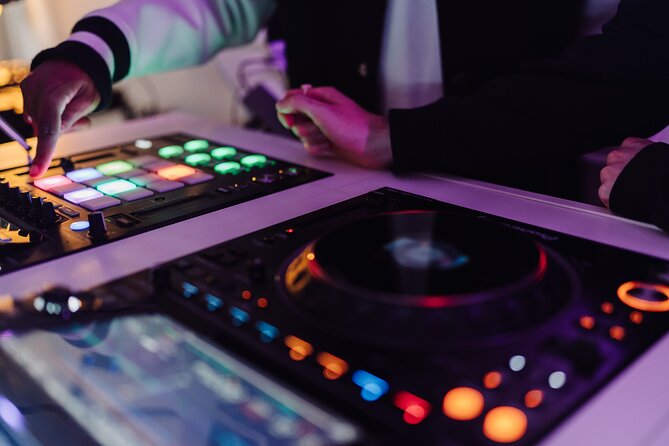
The strongest feature here is privacy. Only your group participates, and nobody else needs to hear your first attempts.
That removes a common problem with beginner classes: spending more time worrying about making mistakes than listening to the music. You can ask basic questions, take a second try, or admit that a control is confusing. The trainer’s attention is focused on your needs rather than divided across a room.
The one-to-one nature also lets you move at a suitable pace. If you pick up beatmatching quickly, you may have more time for phrasing or filters. If the decks feel unfamiliar, you can spend longer getting comfortable before attempting a full transition.
A previous student, Josh, described feeling comfortable with the high-end software and technology during the one-to-one course. That detail is useful because it points to the class’s main success: making professional equipment feel approachable. The provider also praised the studio itself in response, suggesting that the setting is part of the appeal.
Still, private does not automatically mean unlimited customization. The supplied details do not state the trainer’s name, the maximum group size beyond it being private, or the exact lesson plan. Contact the provider if those points matter to you.
Is $137.13 a fair price?
At $137.13 per person, the class costs more than a casual London activity. The question is what you want from the two hours.
I think the price is easier to justify if you have a real interest in DJing, want personal instruction, or prefer learning by doing. You are paying for a private session, professional equipment, and direct access to a trainer. If you were to attend with a small group of friends, the experience could also feel more worthwhile because everyone in your party shares the private lesson.
The value is less clear if you are only looking for a novelty activity. Two hours goes quickly, and the class does not include a wider London tour, a club night, or a stated take-home recording. You may leave excited, but you should not assume you will be performing confidently after a single class.
For someone who has already considered buying DJ software or equipment, this can be a useful test before spending more money. You can find out whether the controls and process appeal to you. That trial value is one of the better reasons to book.
The rating is 5 out of 5, with all listed participants recommending it. The review sample is small, with 11 ratings, so I would treat the perfect score as encouraging rather than proof that every lesson will be identical. The most praised points are the personal attention, comfortable introduction to advanced equipment, and unexpectedly impressive studio setting.
Who should book this class?
I would recommend it most strongly to:
- A first-time DJ who wants patient instruction
- Someone curious about club or studio DJing
- A music fan who wants to learn how transitions are built
- A couple or small private group seeking an unusual London activity
- An aspiring DJ who wants to try professional-style decks before buying equipment
- A learner who feels nervous practicing in front of strangers
It may be less suitable if you want a large social class, a performance in front of an audience, or a sightseeing experience. It is also not the best pick if your main goal is advanced production, songwriting, or studio recording. The stated lesson focuses on DJ mixing skills.
Most people can participate, and service animals are allowed. The class is near public transportation, but the listing does not give detailed information about physical access to the studio or deck setup. If you have access needs beyond the stated service-animal policy, ask before booking.
Planning your two hours wisely
I would arrive ready to listen closely and practice. Wear whatever lets you stay comfortable for a two-hour indoor lesson, and keep your phone available for the mobile ticket, but avoid letting it distract you from the controls.
Before the class begins, think about what you want to learn most. You might be interested in smooth transitions, understanding the equipment, choosing tracks that work together, or learning what to practice next. Telling the trainer your priority can help the private format work in your favor.
You should also ask whether you can choose the tracks used in the lesson. That is not confirmed in the available details, but it is a sensible question. Mixing music you know well may make phrasing and energy easier to understand.
Do not try to cram every technique into one perfect performance. Give yourself time to understand beatmatching first, then build toward phrasing, harmonic mixing, EQ, and filters. A clear grasp of the basics is more useful than a rushed sample of every feature.
Booking and cancellation advice
The class is often booked around 15 days ahead, so I would not leave it until the last moment if your London dates are fixed. You receive confirmation when booking, and the experience is offered in English.
Free cancellation is available if you cancel at least 24 hours before the local start time. A cancellation inside that window is not refunded, and changes made within 24 hours are not accepted. That rule is reasonable, but mark the lesson clearly in your schedule, especially if you are moving around London during a short stay.
Should you book the Private DJ Class?
Book it if you want a focused, private introduction to DJ mixing and are happy to pay for personal coaching. The combination of Pioneer decks, a two-hour lesson, and no audience makes this more useful than a quick novelty session.
I would skip it if you want nightlife, sightseeing, or a polished performance rather than practice. For the right person, especially someone testing a serious interest in DJing, the chance to work through beatmatching and the other core skills with a trainer can make the $137.13 worthwhile. Go in with modest expectations, ask plenty of questions, and treat the lesson as a starting point rather than a finished DJ career.
FAQ
Where does the Private DJ Class begin?
The class begins at 93a Bayham St, London NW1 0AG, UK.
Where does the class end?
The activity ends back at the meeting point on Bayham St.
How long does the class last?
The class lasts approximately two hours.
How much does the class cost?
The listed price is $137.13 per person.
Is the class private?
Yes. Only your group participates in the activity.
What equipment will I use?
You will learn on industry-standard Pioneer DJ decks.
What skills are covered?
The class covers beatmatching, phrasing, harmonic mixing, EQing, and filters.
Is the class offered in English?
Yes, the class is offered in English.
Is the meeting point near public transportation?
Yes, the meeting point is near public transportation.
Can I cancel for a refund?
Yes. You can receive a full refund if you cancel at least 24 hours before the experience start time. Cancellations made less than 24 hours in advance are not refunded.
Just added around London
- The Private British Museum Tour★ 5.0 · 6 reviews
- London’s Chinatown Food Experience★ 4.0 · 6 reviews
- London to Southampton Cruise Port | Private Transfer★ 5.0 · 6 reviews
- London Gatwick (LGW) Airport Departure Private Transfer – Hotel to Airport★ 4.0 · 6 reviews
- Christmas in Canterbury, Dover and Greenwich with Christmas Lunch★ 4.5 · 6 reviews
- Transfer from Heathrow Airport to London hotel on private car★ 4.5 · 6 reviews
- Jazz Notes – Jazz Jam Ticket★ 5.0 · 6 reviews
- Street Photography Workshops in London★ 5.0 · 6 reviews
Workshops in London, compared.

London Traditional English Scone Making and Tea Workshop
Read our review →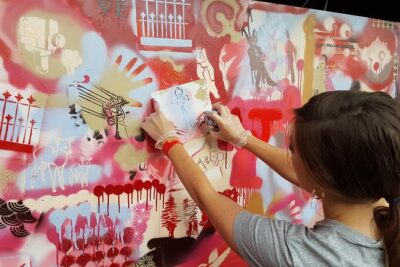
Street Art Tour and Spray Painting Workshop in London
Read our review →
3 Hour Chinese Dumpling Cooking Class for 2-6 people in London
Read our review →



Beginners Photography Course – Small Group Workshop
Read our review →Browse the lists this tour appears in