
Reviewed · GHOST TOURS
Private Ghosts and Gore Walking Tour of London
London gets darker after sunset. This private walk turns the City of London into a map of ghosts, executions, plague pits, cursed churches, and grim old crimes. I like the way it mixes supernatural tales with solid London history, and I especially like the small group format, which lets your guide shape the evening around your interests. The main drawback is pace: with 24 stops in about two hours, you will hear many short stories rather than linger at each place.
I also like the practical route. You begin at the Monument to the Great Fire of London and finish near Farringdon Station, so the walk crosses a remarkable slice of central London instead of circling one small area. Guide Michael has earned especially strong praise for bringing historical context to the macabre stories, but the tour’s subject matter is not gentle. Expect executions, grave robbing, plague deaths, murdered bodies, and some deliberately nasty pub legends.
In This Review
- Five things to know before you book
- What kind of London tour is this?
- From the Monument to the City’s first ghosts
- Bank Station, black ghosts, and a famous cat
- Haunted pubs and the unlucky Bow Bells
- Roman walls, plague pits, and ruined churches
- Newgate Prison and the darker side of justice
- Grave robbers, executions, and St Bartholomew’s ghosts
- The final stretch: resurrection pubs and a giant plague pit
- Is $247.70 good value?
- Practical details that affect your choice
- Who should book this London ghost walk?
- Should you book it?
- FAQ
- How long does the Private Ghosts and Gore Walking Tour of London last?
- How many people can join the private tour?
- What language is the tour offered in?
- Where does the tour begin?
- Where does the tour finish?
- Is the tour wheelchair and stroller accessible?
- What is the cancellation policy?
Five things to know before you book
- Twenty-four stops in two hours: The route covers a lot of ground, with roughly five minutes at each location plus walking time.
- A private group of up to 15: Your party gets the guide to itself, which makes questions and conversation easier than on a large public walk.
- The stories are rooted in real London places: Churches, prison sites, plague pits, Roman walls, execution grounds, and old pubs give the ghost tales a strong sense of place.
- Michael is a major strength: His approach combines entertaining storytelling with historical explanation, rather than relying only on spooky effects.
- It finishes by Farringdon Station: The end point is close to the Elizabeth Line entrance, useful if you want to continue your evening elsewhere.
- The price is per group: At $247.70 for up to 15 people, the value improves sharply when shared among a family or group of friends.
What kind of London tour is this?
This is not a theatrical haunted-house attraction. There are no actors, special effects, or staged scares listed. Instead, you walk through the City of London while a guide explains the stories attached to its churches, alleys, monuments, pubs, and former prisons.
That makes the tour a good match for you if you like history with a dark edge. The ghosts are the hook, but the setting does much of the work. You will hear how the Great Fire changed London, how executions were carried out, how plague pits shaped the city, and why certain churches and streets became linked with death.
The private format matters here. A group of up to 15 is small enough for a personal feel, and you can ask about a particular ghost, building, or period. The strongest comments about Michael describe him as more than a guide, with the kind of historical background that gives the stories useful context. That balance is important. Without it, a two-hour ghost walk could become a string of disconnected legends.
You should still set your expectations correctly. Each listed stop lasts about five minutes. Since there are 24 stops, the route is broad and quick. You get a succession of compact stories, not long visits inside each church or pub. The tour is also described as wheelchair and stroller accessible, though the moderate fitness recommendation suggests you should be prepared for a substantial amount of walking.
More Ghost Tours in London
- Ghost, Ghouls and Gallows Tour : Guided Tour with Boat Ride
★ 4.5 · 3,212 reviews - Ghost Bus Tour of London
★ 4.0 · 961 reviews - Ghastly Ghost Walking Tour in London
★ 5.0 · 878 reviews
From the Monument to the City’s first ghosts
The tour begins at the Monument to the Great Fire of London, near Fish Street Hill. From there, the first group of stories concentrates on Cornhill and the old financial district.
At St. Magnus The Martyr, you hear about a shadowy figure seen near one particular grave. A spiritual medium reportedly identified the ghost in 1951 and explained the reason for its fixation. This is a strong opening because it gives you a clear mystery: who is the figure, what happened, and why has the spirit not found rest?
At 54 and 55 Cornhill, the subject changes from ghosts to devils carved high above the street. You will need to look upward to spot them. The story connects the figures with an architectural dispute, offering one of the tour’s recurring pleasures: ordinary details in the city reveal old grudges and strange stories.
St Peter-upon-Cornhill brings in Charles Dickens. This is linked with the churchyard where Ebenezer Scrooge sees his own grave in A Christmas Carol. The stop is useful for putting London’s ghost tradition into a literary setting. You are not just hearing folklore. You are also seeing how the city’s churches, graveyards, and dark streets fed the imagination of writers.
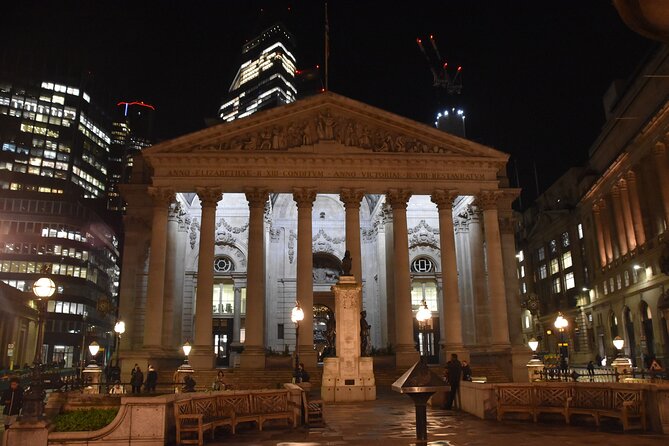
At St Michael’s Cornhill, the guide tells the tale of the devil visiting London during a storm. Then the route reaches St Margaret Lothbury, beside the Bank of England, where a very tall ghost is said to rattle guards’ guns, stomp up stairs, and frighten bank tellers.
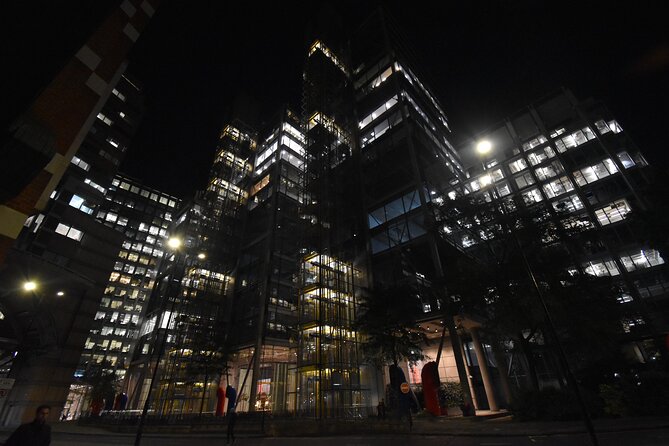
These first stops are close to the financial heart of London, which creates a striking contrast. Modern offices and major banks occupy streets filled with stories about graves, devils, disturbed bones, and restless spirits. If you enjoy that clash between everyday city life and old superstition, this section will work well.
Bank Station, black ghosts, and a famous cat
The next group of stops centers on Bank and the surrounding churches.
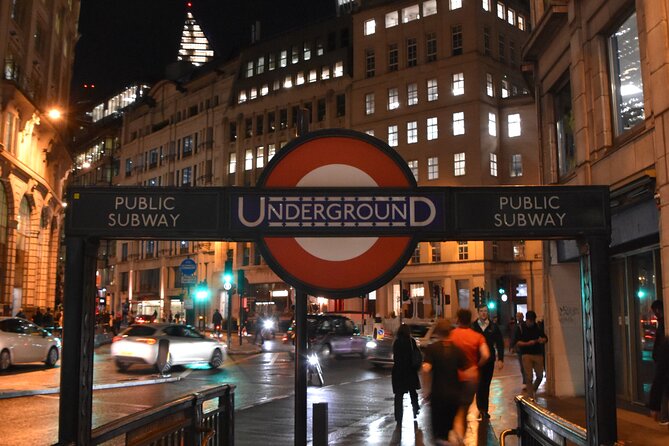
At St Mary Woolnoth, you hear about the Black or Bank Ghost, a phantom linked with Bank Station, the Bank of England, and nearby streets. The story includes a woman in black asking if you have seen her brother. You also hear the disturbing secret associated with the Bank Station booking hall.
The story is effective because the setting is so familiar and practical. You may use Bank Station without thinking about its ghosts, yet the tour asks you to picture the underground area as part of an older world of death and rumor. This is one of the places where a guide adds real value. The story needs context and timing, not just a spooky claim.
At St Michael Paternoster Royal, the subject becomes one of London’s best-known lord mayors and his cat. The cat is said to move between this church and the next stop, so the route itself becomes part of the story.
At St James Garlickhythe, the tone turns grim. Workers found a mummified body near the altar in 1835. The remains were displayed in a case until roughly 20 years ago, and local children reportedly played with the body, known as Jimmy the Mummy. The ghost is said to point toward the burial spot.
This is one of the tour’s more memorable and uncomfortable stories. It also shows why the experience is better suited to adults and older children who can handle macabre material. The title promises gore, and this stop delivers it without needing much decoration.
Haunted pubs and the unlucky Bow Bells
The walk continues through more churches and pubs, where the stories become a mix of folklore, local identity, and bad luck.
Williamson’s Tavern is described as one of London’s most haunted pubs. Lord mayors, poltergeists, phantoms, banging doors, and unexplained footsteps all feature here. The story that police dogs become frightened inside gives the stop a colorful detail, while the building’s single exit adds a little theatrical tension.
At St Mary Le Bow, you learn the meaning of being born within the sound of the Bow Bells, the traditional mark of a Cockney or proper Londoner. This is not presented mainly as a ghost stop. Instead, the church is called London’s most cursed, with a record of fires, collapses, accidents, murders, and deaths.
I like this shift. A ghost tour can become repetitive if every stop involves the same kind of phantom. Here, the guide can show you that a place may feel cursed because of repeated disasters, even when no ghost appears.
More Walking Tours in London
- Tour for Muggles The Ultimate Harry Potter Walking Tour in London
★ 5.0 · 4,684 reviews - London Jack The Ripper Guided Walking Tour
★ 5.0 · 3,131 reviews - Changing of the Guard Guided Walking Tour in London
★ 5.0 · 1,793 reviews - The Great British Rock and Roll Walking Tour
★ 5.0 · 1,371 reviews
Roman walls, plague pits, and ruined churches
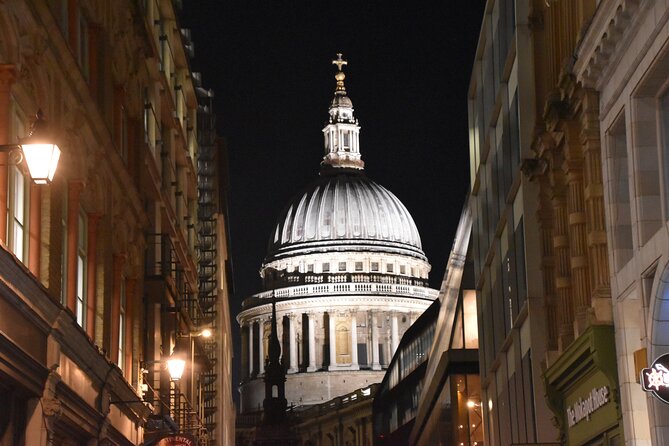
Noble Street takes the walk into one of the oldest parts of London. The street follows an area associated with the Roman garrison and includes parts of the Roman and medieval walls. It is also linked with death from the city’s earliest days.
This stop features unusual occurrences and orb photographs. You may be invited to take a picture and see if anything strange appears. Keep your expectations sensible. The value is less in proving the supernatural than in standing beside layers of London that are easy to miss on a normal sightseeing route.
At St Anne and St Agnes Garden, the guide discusses one of London’s plague pits. The story explains how plague affected the city and why orbs are often associated with photographs taken at such sites. This is also a good moment to remember that London’s ghost stories often begin with very real mass death.
The ruined garden at Christchurch Greyfriars is one of the tour’s most crowded supernatural locations. The ghosts include Queen Isabella and her lover, a quarrelling married couple, a religious prophetess, a monk, and a greyhound. The sheer number of figures makes this stop feel like a collection of overlapping legends rather than one tidy tale.
That variety is fun, but it can also feel rushed. If you want to study ruins, take photographs, or ask detailed questions about each ghost, the five-minute format will not give you much room.
Newgate Prison and the darker side of justice
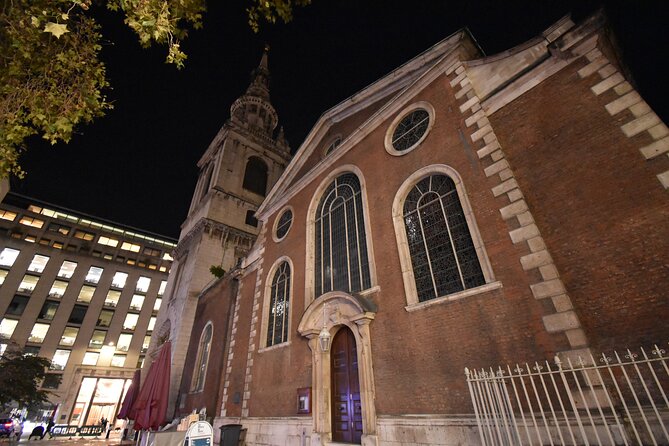
Temple Bar once marked the main western entrance to the City of London. Designed by Sir Christopher Wren, it later became associated with the public display of severed heads belonging to traitors and criminals. The story gives you a direct look at how public punishment once worked in London.
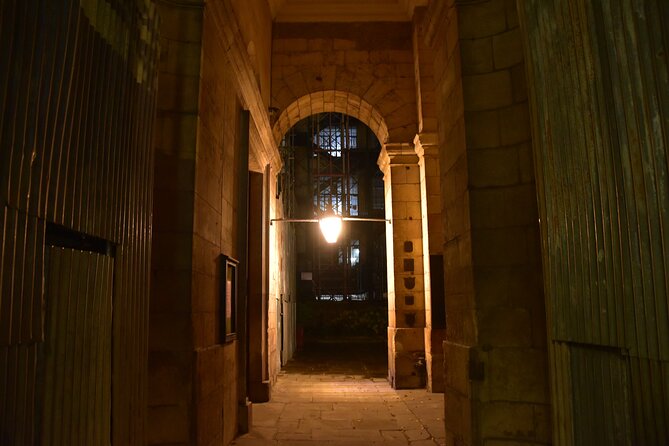
At Amen Court, you can see remaining walls associated with Newgate Prison. The setting is especially unsettling because children now play over ground said to contain the bones of people condemned to death. The guide also explains why the homes in the area were built over those foundations without many residents knowing the full story.
The Viaduct Tavern adds a lighter, more mischievous ghost. Fred is said to flush the ladies’ toilets, bang doors, and create harmless confusion. A medium once questioned the ghost’s identity, which gives the guide another chance to add detail to a familiar haunted-pub format.
At Old Bailey, the route reaches the Central Criminal Court, built on the former Newgate Prison site. Executions took place in the street here until 1868, and the area is linked with the Black Dog of Newgate. The warning is simple: if a large black dog appears, you had better update your will.
The nearby Holy Sepulchre Church houses an execution bell. It once rang before hangings at Newgate Prison and the Old Bailey. This is a strong historical object to encounter because the sound itself formed part of the death ritual. The story then continues to Cock Lane, where a church clerk, a murder investigation, and a young girl claiming to channel a dead woman create one of the tour’s strangest episodes.
This section is probably the best fit for you if you want the gore side of the tour. It deals openly with public hanging, condemned prisoners, murder accusations, and the old machinery of justice.
Grave robbers, executions, and St Bartholomew’s ghosts
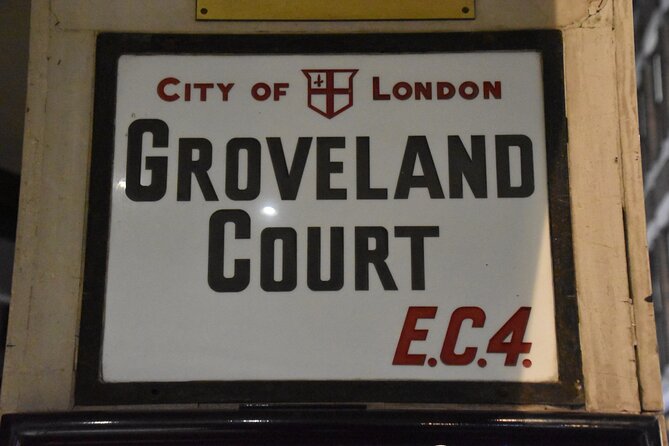
At the Golden Boy of Pye Corner, a small statue marks the western limit of the Great Fire of London. The guide also explains the site’s connection with a notorious pub, stolen bodies, and doctors at nearby St Bartholomew’s Hospital who needed fresh corpses for dissection.
This story moves from folklore into the history of medicine. Grave robbers, known as resurrection men, supplied bodies to medical schools and hospitals. The demand for fresh remains led to murder, making this one of the most disturbing parts of the walk.
West Smithfield was a major execution site. William Wallace and Wat Tyler were among the rebels killed here, and punishments included hanging, drawing, and quartering, burning at the stake, and boiling alive. The nearby meat market made the setting even more unpleasant in earlier centuries, with the smells of blood and butchered animals adding to public executions.
The area around St Bartholomew’s Hospital brings the story into more recent times. The hospital is said to have poltergeists, a haunted lift, and strange late-night occurrences reported by students working in laboratories, rooms, and study areas. You do not need to accept every ghost claim to appreciate the setting. This is one of London’s oldest medical areas, surrounded by places tied to death, surgery, anatomy, and public punishment.
At St Bartholomew the Great, you hear about Rahere, the church’s founder, who is said to hobble around the building after centuries of walking normally. The guide explains who may be responsible for his limp. This stop works best when you focus on the church’s age and atmosphere, not just the sighting itself.
The final stretch: resurrection pubs and a giant plague pit
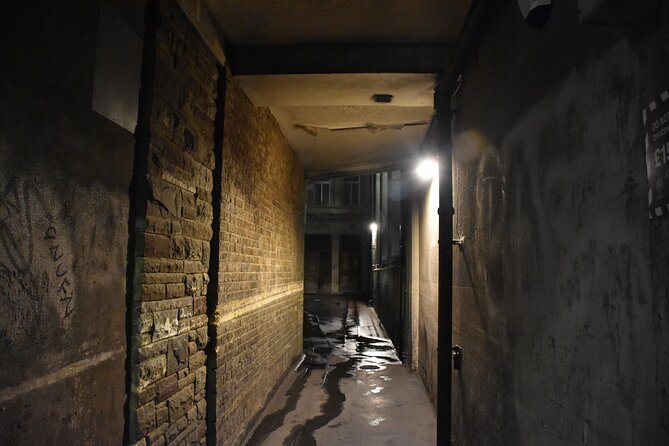
The Rising Sun was another resurrectionist pub. It is linked with one of London’s most disturbing ghosts, nicknamed the sex pest ghost. The story concerns unwanted behavior toward women and helps explain why female staff were reportedly unwilling to live on the premises.
This is a good example of a story that may not suit everyone. The material is intentionally uncomfortable, and the guide does not soften the subject. If you prefer mild folklore, you may find this stop too much. If you want the full grim side of London’s past, it fits the tour’s theme.
The final stop is The Charterhouse, near Farringdon. It is associated with one of London’s largest plague pits, said to contain around 50,000 people. The site was also home to monks executed during the Reformation, and the most frequently seen ghost is a praying monk.
You also hear about a headless duke and the fact that a major school of psychiatry occupies Charterhouse Square. That last detail gives the tour a thoughtful ending. Strange experiences may have supernatural explanations, but medical science can offer other ways to understand them. After two hours of ghosts, bodies, and curses, ending with that question is more satisfying than simply sending you off with one final scare.
Is $247.70 good value?
The listed price is $247.70 per group of up to 15, not per person. For one or two people, that is a costly walking tour. For a family or group of friends sharing the fee, the calculation changes. A full group would pay about $16.50 per person, while four people would pay about $62 each.
The value rests almost entirely on the guide and the private format. You are paying for two hours of storytelling, route planning, and access to a large set of historic locations, not for entry tickets. No admissions are included because the stops are viewed from public areas, churchyards, gardens, streets, and the exteriors or surroundings of pubs and civic buildings.
Michael’s praised style is important here. He is described as entertaining and strong on historical explanation, which is exactly what this route needs. Without a guide who can connect 24 separate stops, the walk could feel like a list of ghost claims. With a strong storyteller, the route becomes a broad lesson in London’s darker past.
Practical details that affect your choice
The tour lasts about two hours and is offered in English. It begins at the Monument to the Great Fire of London on Fish Street Hill and ends near the Elizabeth Line entrance at Farringdon Station.
The start and finish are useful because they let you see several distinct parts of central London without returning to the starting point. You can also continue from Farringdon by public transport after the walk.
A moderate level of physical fitness is recommended. The tour is wheelchair and stroller accessible, and service animals are allowed, but accessibility does not remove the need for steady walking across the route. Ask about your group’s specific needs when booking if mobility is a concern.
The tour is often booked about 45 days ahead. That suggests you should plan early if you need a particular evening or date. Free cancellation is available up to 24 hours before the start time. Cancellations or changes made inside that window are not refunded or accepted.
The rating is 4.8 from 13 reviews, with 92 percent recommending the experience. That is a small sample, so I would treat it as encouraging rather than final proof. The praise is consistent, though: the private feel, Michael’s delivery, and the mix of entertainment and historical context receive the strongest emphasis.
Who should book this London ghost walk?
I would choose this tour for a group that wants more than a standard city orientation. It suits history buffs, fans of Dickens, people interested in crime and punishment, and anyone who enjoys old churches and forgotten streets with a side of horror.
It also works well for a first evening in London if you want help finding your bearings after dark. A private guide gives you a safer, more organized way to explore the City than wandering between obscure churchyards on your own.
I would hesitate if you want a slow photographic walk, a theatrical scare attraction, or a gentle family activity. The route is quick, the subject matter is often gruesome, and several stories involve executions, corpses, grave robbing, and sexual misconduct.
Should you book it?
Book it if your group enjoys real places, old crimes, and ghost stories told with historical context. The strongest reason to choose this experience is not simply the number of ghosts. It is the route through London’s churches, prison sites, plague pits, execution grounds, and ancient streets, guided by someone who can make those connections clear.
For a couple, the price may feel steep. For a larger private group, it becomes much better value. Bring comfortable shoes, expect a brisk pace, and choose this walk for its stories and setting rather than guaranteed paranormal proof.
FAQ
How long does the Private Ghosts and Gore Walking Tour of London last?
The tour lasts approximately two hours.
How many people can join the private tour?
The private group can include up to 15 people.
What language is the tour offered in?
The tour is offered in English.
Where does the tour begin?
The meeting point is the Monument to the Great Fire of London, Fish Street Hill, London EC3R 8AH.
Where does the tour finish?
The tour ends near the Elizabeth Line entrance at Farringdon Station on Cowcross Street.
Is the tour wheelchair and stroller accessible?
Yes. The tour is listed as wheelchair and stroller accessible. A moderate level of physical fitness is also recommended.
What is the cancellation policy?
You can cancel up to 24 hours before the start time for a full refund. Cancellations or changes made less than 24 hours before the start time are not accepted, and the amount paid will not be refunded.
Just added around London
- The Private British Museum Tour★ 5.0 · 6 reviews
- London to Southampton Cruise Port | Private Transfer★ 5.0 · 6 reviews
- London’s Chinatown Food Experience★ 4.0 · 6 reviews
- Christmas in Canterbury, Dover and Greenwich with Christmas Lunch★ 4.5 · 6 reviews
- Transfer from Heathrow Airport to London hotel on private car★ 4.5 · 6 reviews
- London Gatwick (LGW) Airport Departure Private Transfer – Hotel to Airport★ 4.0 · 6 reviews
- Jazz Notes – Jazz Jam Ticket★ 5.0 · 6 reviews
- Street Photography Workshops in London★ 5.0 · 6 reviews
Ghost Tours, compared.
Ghost, Ghouls and Gallows Tour : Guided Tour with Boat Ride
Read our review →
Shadows of York: Ghost Walk and Horrible History.
Read our review →



The Original Jack the Ripper Coach Tour of Haunted London
Read our review →Browse the lists this tour appears in