
Reviewed · WALKING TOURS
Private Guided Walking Tour of Bloomsbury, London
Bloomsbury keeps its secrets in plain sight. This private walking tour links beautiful squares and gardens with stories of writers, hospitals, abandoned children, empire, and urban planning. I like the personal pace, and I like that you can shape the conversation around your interests instead of following a fixed group script.
I also like the chance to ask questions throughout the two-hour walk, then get practical ideas for the rest of your London stay. The main drawback is the price: at $140.49 per person, it makes the most sense for a small group that values private guiding. The British Museum interior is not part of the standard tour, either, though you can add a short visit.
- Bloomsbury’s elegant squares hide darker stories, including violence, war, illness, and poverty.
- The private format lets you set the pace and ask for more detail on literature, architecture, medicine, or London history.
- The route includes the Brunswick Centre, a bold post-war development that feels very different from Georgian Bloomsbury.
- Tavistock Square links quiet gardens with wartime history, giving the walk more weight than a simple architecture stroll.
- The British Museum exterior ends the route, with an optional interior tour available as an upgrade.
- Guide Jack received special praise for his charm, historical perspective, and help with the museum.
In This Review
- Why Bloomsbury Works So Well on Foot
- Gardens, Violence, and the Early Character of Bloomsbury
- A Historic Shopping Street and the Women Who Printed Ideas
- Hospitals, Literature, and a Monarch’s Private Treatment
- The Foundling Hospital and the Children Who Changed Public Feeling
- The Brunswick Centre: Modern London in a Georgian Neighborhood
- Tavistock Square and the Memory of War
- Senate House and the Bloomsbury Group
- Ending at the British Museum
- What $140.49 Per Person Buys You
- Who Will Enjoy This Private Walk?
- Practical Details Before You Book
- Should You Book the Bloomsbury Tour?
- FAQ
- How long is the Bloomsbury walking tour?
- What is the price of the tour?
- Is the tour private?
- What language is the tour offered in?
- Where does the tour start and finish?
- Is the British Museum interior included?
- Is lunch or dinner included?
- Can I cancel for a full refund?
Why Bloomsbury Works So Well on Foot
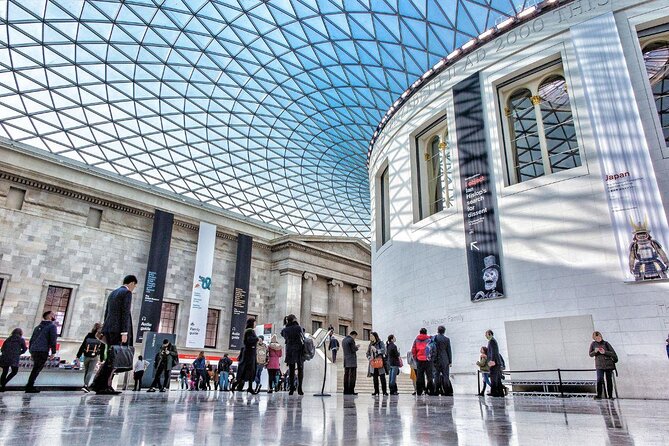
Bloomsbury is compact enough to explore without rushing, but layered enough to reward a guide. In two hours, you move from elegant gardens to shopping streets, hospitals, university buildings, memorials, and one of London’s best-known museums.
That mix is the main reason I find this tour appealing. You are not simply looking at handsome buildings and taking photographs. You are connecting places to people and ideas: Elizabethan traders, feminist publishers, composers, writers, monarchs, medical pioneers, and the circle of artists and thinkers known as the Bloomsbury Group.
The private setup matters here. Bloomsbury’s stories often depend on small details, and a guide can point out what you might otherwise walk past. You can also pause for questions or ask to spend more time on the subjects that interest you most.
The meeting point is outside Holborn Station on Kingsway. That gives you an easy public transport starting point, and the tour ends back at the same meeting point. Since the route is on foot, wear comfortable shoes and allow enough time to arrive before the scheduled start.
Gardens, Violence, and the Early Character of Bloomsbury
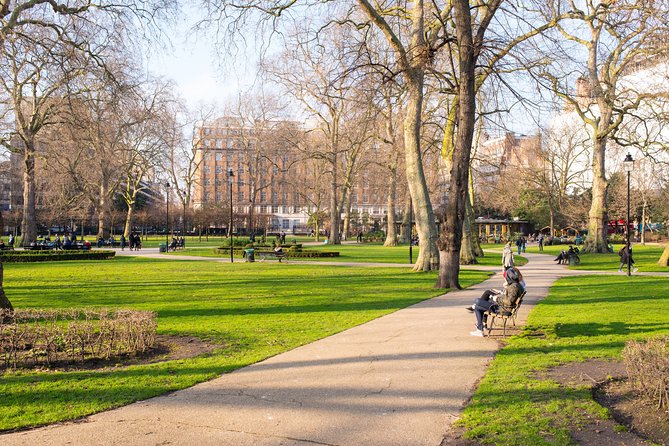
The opening section introduces Bloomsbury through its early history and its gardens. The area’s polished appearance can make it seem calm and settled, but the guide brings out the violence beneath that surface.
This contrast gives the tour a useful tone from the beginning. You get the graceful urban setting, but you also learn that London neighborhoods are rarely as peaceful in the past as their present-day appearance suggests.
I would pay close attention here if you enjoy social history. The gardens are not just pleasant spaces for a short walk. They help explain how the neighborhood developed and why its public image became so refined.
The guide’s role is especially useful at this stage. Without context, a square or garden can blur into the next one. With a private guide, you can ask why the space matters, how it changed, and what remains from its earlier life.
More Walking Tours in London
- Tour for Muggles The Ultimate Harry Potter Walking Tour in London
★ 5.0 · 4,684 reviews - London Jack The Ripper Guided Walking Tour
★ 5.0 · 3,131 reviews - Changing of the Guard Guided Walking Tour in London
★ 5.0 · 1,793 reviews
A Historic Shopping Street and the Women Who Printed Ideas
The route then follows a beautiful historic shopping street tied to Elizabethan traders and feminist publishers. That combination gives the stop unusual range.
You hear about commerce and the people who helped shape the street, but you also encounter the publishing and political work of women who challenged the limits placed on them. It is a reminder that London’s history is not only about monarchs and grand institutions. Printers, publishers, traders, and reformers helped shape the city too.
I like this part because it broadens the usual London story. If you are interested in books, publishing, women’s history, or the way streets change over time, this may be one of the most rewarding sections.
You also get a practical benefit from the private format. If a particular publishing story catches your attention, you can ask the guide to expand on it instead of moving on at the pace of a large group.
Hospitals, Literature, and a Monarch’s Private Treatment
The medical section brings together two surprising stories. One concerns a famous children’s hospital and its connection to a classic work of literature. The other concerns one of England’s most famous monarchs, who was privately treated in the adjoining square.
This gives the neighborhood a strong medical identity. The stop is not only about buildings or famous names. It shows how hospitals, private treatment, and public concern for sick children became part of Bloomsbury’s identity.
The literary connection should appeal to anyone who likes seeing real places behind familiar works. The guide helps connect a hospital setting to a story that many people know, while the royal medical story adds a very different kind of personal detail.
I would expect this portion to work best for people who enjoy social history more than formal architecture. You are learning how medicine affected daily life and public feeling, not simply admiring a facade.
The Foundling Hospital and the Children Who Changed Public Feeling
Another stop marks the site where the Foundling Hospital was created. The focus here is the plight of poor abandoned children and the way their suffering moved people across England.
The stories reach into the worlds of music and literature, with composers and writers responding to the institution and its cause. This is one of the tour’s more emotional sections because it places vulnerable children at the center of a major London story.
I value this stop because it shows how charity, culture, and public opinion can influence one another. The Foundling Hospital was not just a charitable institution. Its existence helped make the condition of abandoned children harder for society to ignore.
The location also gives the walk a change of mood. After stories of trade, publishing, and medicine, you are looking at a place shaped by compassion, fundraising, and public response. Ask questions here if you want to understand how the hospital operated or how artists helped bring attention to its work.
Something different for another day:
- Stonehenge, Windsor Castle, and Bath from London
★ 4.5 · 18,662 reviews - London Big Bus Hop-On Hop-Off Tour with Optional River Cruise
★ 3.5 · 10,803 reviews - London Small Group Tour of Historical Pubs
★ 5.0 · 10,422 reviews - Stonehenge, Windsor Castle and Bath with Pub Lunch in Lacock
★ 4.5 · 7,402 reviews
The Brunswick Centre: Modern London in a Georgian Neighborhood
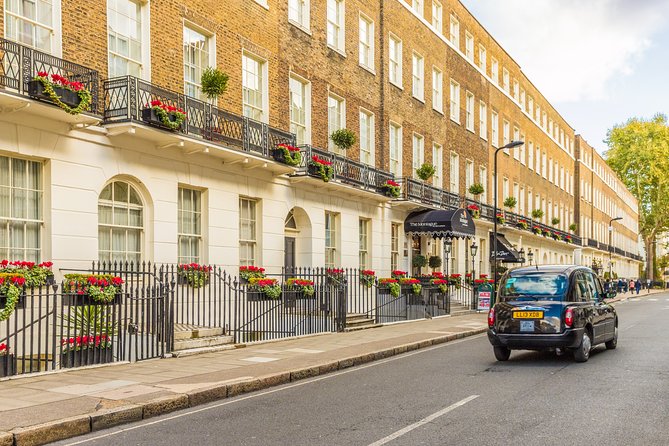
The Brunswick Centre is the route’s sharpest architectural change. After the Georgian streets and traditional squares, this imposing post-war development introduces a very different idea of city planning.
It was an important milestone in London’s post-war urban design, but it was also controversial. That tension makes the stop worthwhile. You are not being asked to admire it simply because it is bold, or dismiss it because it looks unlike the buildings around it.
Instead, the guide places the Brunswick Centre in the story of a changing Bloomsbury. Its scale and design raise practical questions about how cities handle housing, shopping, public space, and historic surroundings.
I would especially recommend this section if you are interested in architecture or urban planning. It gives the walk some visual variety and prevents the experience from becoming a procession of similar Georgian facades.
The drawback is personal taste. If you came hoping for nothing but old London buildings, the Brunswick Centre may feel like an interruption. I see it as a useful one, since it shows that Bloomsbury is not frozen in the past.
Tavistock Square and the Memory of War
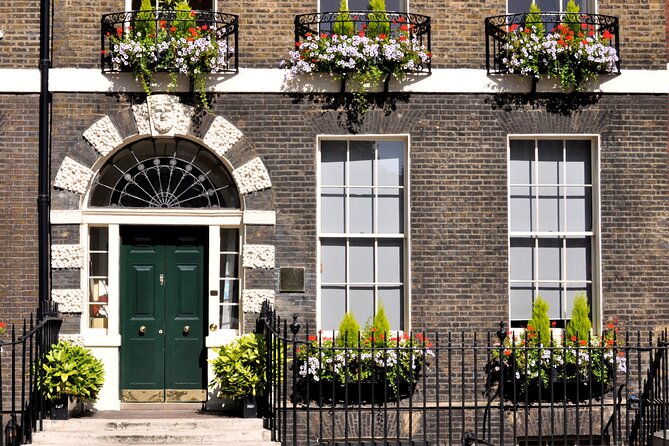
Tavistock Square offers a quieter setting, but its monuments connect the area to some of the bloodiest conflicts in history. The square is associated with Bloomsbury’s writers, artists, and thinkers, yet its memorials point toward war and international suffering.
That contrast gives the stop real force. A peaceful garden can hold memories of violence on a global scale, and the guide helps you read the monuments instead of treating them as background decoration.
I would take time to look closely at the memorials and ask about their connections. The square rewards a slower pace, which is easier to manage when only your group is taking part.
This is also a good example of why a private walk can offer more than a self-guided route. You can ask what each monument represents, how the square became associated with those causes, and how the setting fits into Bloomsbury’s intellectual identity.
Senate House and the Bloomsbury Group
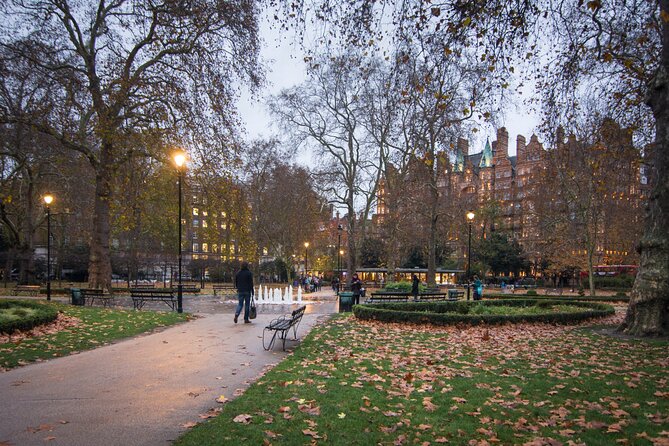
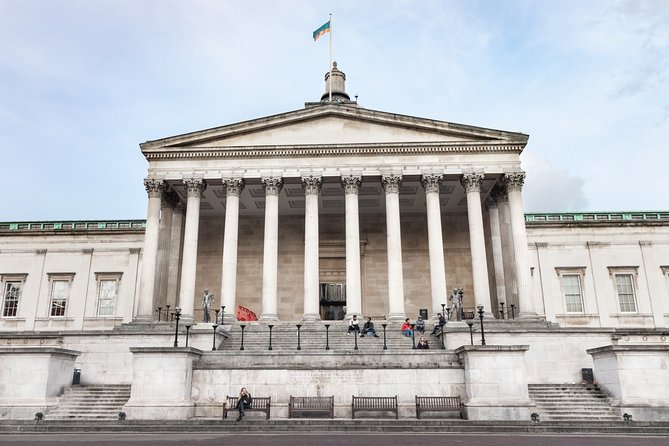
Senate House is one of the route’s most imposing buildings. It marks the home of the University of London and provides a clear connection to the district’s academic life.
The guide also explains how members of the elite and artistic Bloomsbury Group lived in and around the nearby square. That brings together the university, literary circles, art, and private life.
You should expect this section to focus on people and ideas as much as architecture. Bloomsbury’s fame comes partly from the thinkers and artists who gathered here, and the setting helps make those connections more concrete.
I like that the tour does not treat the Bloomsbury Group as an isolated cultural footnote. Their presence forms part of a wider story about education, status, artistic work, and the way neighborhoods attract certain communities.
If you already know something about the group, use the private format to ask for more detail. If you do not, the guide can give you a useful introduction without assuming that you have studied the subject in advance.
Ending at the British Museum
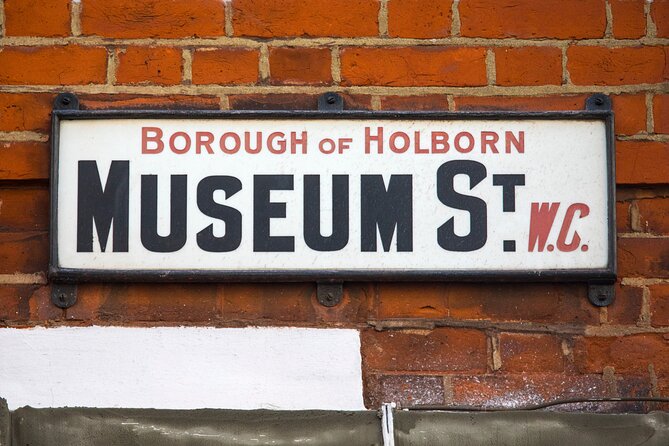
The walk finishes with exterior views of the British Museum and its distinctive domed building. The guide explains how the museum came to represent empire, status, and exploration.
That framing is important. The museum is not presented only as a famous collection of objects. Its building and institutional story reflect the ambitions and power structures that shaped Britain’s relationship with the wider world.
The standard walking tour does not include an interior visit. You can add a short museum tour, which may be a smart choice if you want help making sense of the huge collection.
A five-star account of this experience gave special praise to the ending at the museum, where guide Jack showed highlights and added historical perspective. That is a useful clue about the value of the upgrade. The museum can feel overwhelming on your own, so a focused introduction may help you use your time well.
Still, check exactly what the add-on includes when booking. The supplied details confirm that an interior tour can be added, but they do not give its extra price or precise length.
What $140.49 Per Person Buys You
At $140.49 per person, this is not a budget London walk. You are paying for privacy, a dedicated guide, a flexible pace, and advice that continues beyond the route.
The value improves if you are traveling as a small group and can share the cost among several people. It also improves if you want a tailored conversation rather than a general introduction to Bloomsbury.
The included recommendations for the rest of your London stay are a useful extra. You can ask for ideas suited to your interests, and the provider can also arrange a restaurant reservation to match your tastes. Lunch and dinner are not included, so plan your own meal before or after the walk.
I would not book this tour only to see the British Museum from outside. You can do that without paying for a private guide. The cost makes more sense if you want the connected stories of Bloomsbury and appreciate being able to adjust the experience to your group.
Who Will Enjoy This Private Walk?
I would recommend this experience to you if you like London history with several subjects in play: literature, medicine, architecture, charity, war memorials, universities, and museums.
It suits couples, families, and small groups who prefer conversation and questions over a fixed audio guide. It may also work well as an early London activity because the guide can offer recommendations for the rest of your visit.
The tour is offered in English, and most people can participate. Service animals are allowed, and the meeting point is near public transportation.
The two-hour length is another advantage. You get a focused introduction without committing half a day. The tradeoff is that the route cannot explore every building or story in depth. If you want a slow architectural study or a long museum visit, you will need more time elsewhere.
Practical Details Before You Book
The tour begins at Underground Ltd, Holborn Station, Kingsway, London WC2B 6AA. It ends back at the same meeting point, so you do not need to plan a separate return journey from the final stop.
A mobile ticket is provided, and confirmation arrives at booking. Since this is a private activity, only your group participates.
The tour is free to cancel up to 24 hours before the start time for a full refund. Cancellations or changes made less than 24 hours before the start are not accepted for a refund, and the cut-off follows local London time.
The tour is usually booked well ahead, with an average booking time of 68 days in advance. That does not guarantee that every date will sell out, but it is a good reason to reserve early if your London schedule is fixed.
Should You Book the Bloomsbury Tour?
Book it if you want a thoughtful private walk through a compact London neighborhood, and if $140.49 per person fits your budget. The mix of elegant squares, difficult social history, literature, medicine, architecture, war memorials, and the British Museum gives the experience more range than a simple sightseeing stroll.
I would add the museum interior option if this is your first visit and you want help choosing highlights. If you mainly want to enter the British Museum or keep costs low, skip the private tour and visit the museum independently.
For the best match, choose this experience when you value a flexible guide and real conversation. Guide Jack’s praised charm and museum perspective suggest the personal side can be a major strength, but the exact guide may vary. The private format, useful London advice, and ability to personalize the walk are the strongest reasons to book.
FAQ
How long is the Bloomsbury walking tour?
The tour lasts approximately two hours.
What is the price of the tour?
The listed price is $140.49 per person.
Is the tour private?
Yes. Only your group participates in the activity.
What language is the tour offered in?
The tour is offered in English.
Where does the tour start and finish?
It starts at Underground Ltd, Holborn Station, Kingsway, London WC2B 6AA, UK. It ends back at the meeting point.
Is the British Museum interior included?
No. The standard tour includes exterior views of the British Museum. A short interior tour can be added as an upgrade.
Is lunch or dinner included?
No. Lunch and dinner are not included. The provider can arrange a restaurant reservation on request.
Can I cancel for a full refund?
Yes, if you cancel at least 24 hours before the experience start time. Cancellations or changes made less than 24 hours before the start are not accepted for a refund.
Just added around London
- The Private British Museum Tour★ 5.0 · 6 reviews
- London’s Chinatown Food Experience★ 4.0 · 6 reviews
- London to Southampton Cruise Port | Private Transfer★ 5.0 · 6 reviews
- London Gatwick (LGW) Airport Departure Private Transfer – Hotel to Airport★ 4.0 · 6 reviews
- Christmas in Canterbury, Dover and Greenwich with Christmas Lunch★ 4.5 · 6 reviews
- Transfer from Heathrow Airport to London hotel on private car★ 4.5 · 6 reviews
- Jazz Notes – Jazz Jam Ticket★ 5.0 · 6 reviews
- Street Photography Workshops in London★ 5.0 · 6 reviews
Walking Tours, compared.

Oxford University Walking Tour With University Alumni Guide
Read our review →
Tour for Muggles The Ultimate Harry Potter Walking Tour in London
Read our review →

Cambridge University Walking Tour by Alumni™ Kings College Option
Read our review →
Blackbeard to Banksy – The Ultimate Walking Tour of Bristol
Read our review →
Air Raid Shelter + St. Nicholas Market Walking Tour
Read our review →
Walking Tour of Bath with Blue Badge Tourist Guide
Read our review →
Changing of the Guard Guided Walking Tour in London
Read our review →Browse the lists this tour appears in