
Reviewed · JACK THE RIPPER TOURS
Private Jack the Ripper Walking Tour of Whitechapel and Brick Lane
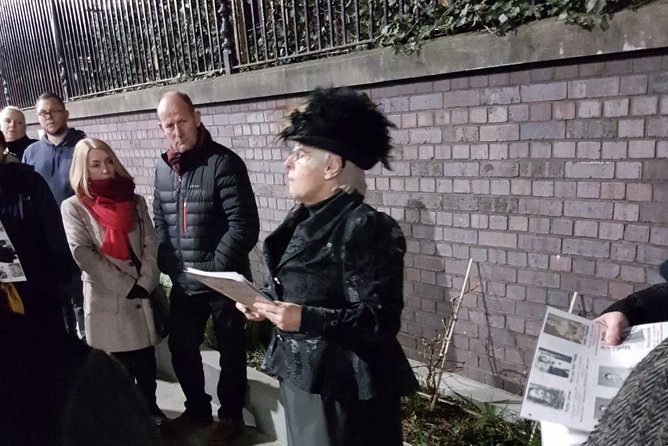
Dark streets, old crimes, and hard facts await. This private Jack the Ripper walking tour links Whitechapel, the City of London, and Brick Lane across two and a half hours, using real locations to explain the 1888 murders and the East End that shaped them. Guide Jenny brings a theatrical Victorian touch, often dressing in period clothing, while a backlit tablet helps you connect old photographs with the streets under your feet.
I especially like the private format, which gives your group room to ask questions instead of trailing behind a large crowd. I also like the careful use of vintage photographs, murder-site images, and newspaper material. The main consideration is the subject itself: this is a serious tour about poverty, violence, and murdered women, so it may not suit younger children or anyone looking for a light London walk.
In This Review
- Key points to know before you book
- Why this private Whitechapel walk works so well
- Starting at St Botolph’s Aldgate and Aldgate Square
- Mitre Square and the night of the double event
- Petticoat Lane and the Goulston Street clue
- Martha Tabram and the move toward Brick Lane
- Brick Lane and Polly Nichols’s final drink
- Hanbury Street and the evidence behind the stories
- Puma Court and the Dear Boss letter
- The Ten Bells, Christchurch, and Mary Kelly
- The letters and the former Millers Court site
- Timing, comfort, and who should book
- Should you book the private Jack the Ripper tour?
- FAQ
- How long does the Jack the Ripper walking tour last?
- Where does the tour begin?
- Where does the tour end?
- How many people can join the private tour?
- What does the tour cost?
- Is the tour offered in English?
- Does the tour provide photographs or visual material?
- Is food or bottled water included?
- What is the cancellation policy?
Key points to know before you book
- Jenny’s period costume and storytelling style give the walk a strong sense of time and place without relying only on spooky theatrics.
- The 14-inch backlit tablet displays photographs of victims, suspects, streets, and documents clearly, a useful aid after dark.
- The private group setting is best for people who want to ask detailed questions about suspects, evidence, and competing theories.
- The route covers major murder sites, including Mitre Square, Hanbury Street, Gunthorpe Street, and the former location of Millers Court.
- Brick Lane and modern East London remain part of the experience, so you see how the old case fits into a living neighborhood.
- The walk ends near Liverpool Street Station, making it easy to continue your evening elsewhere in London.
Why this private Whitechapel walk works so well
Jack the Ripper tours can easily become a parade of lurid stories. This one has the ingredients for something more useful: real addresses, social history, primary documents, and a guide who knows how to separate established facts from later myth.
Jenny receives the strongest praise for her enthusiasm, detailed research, and personal manner. She has led walks in the area for decades and is described as a familiar local figure. That matters here because Whitechapel is not a museum set. It is a working part of London, and the streets have changed greatly since 1888.
The private setup also changes the pace. Your group of up to five people gets the guide’s full attention. You can stop to ask why one suspect is taken seriously, how a particular letter entered the story, or which parts of the popular Ripper tale are uncertain. If you book for only two people, you are not paying for empty seats in a large group. You are paying for time and conversation.
The listed price is $205.76 per group of up to five, while the tour information also gives a base price of £150 for five people, with an additional £25 per person beyond that. Check the price shown in your booking currency before paying. For a full group, the cost works out more reasonably per person than it first appears. For one or two people, it is a premium walking tour, but the private attention and longer question time help explain the difference.
More Walking Tours in London
- Tour for Muggles The Ultimate Harry Potter Walking Tour in London
★ 5.0 · 4,684 reviews - London Jack The Ripper Guided Walking Tour
★ 5.0 · 3,131 reviews - Changing of the Guard Guided Walking Tour in London
★ 5.0 · 1,793 reviews
Starting at St Botolph’s Aldgate and Aldgate Square
The walk begins on Aldgate High Street near St Botolph’s Aldgate, where Jenny introduces Whitechapel as it existed in 1888. This is a useful opening because the case makes little sense without the setting.
You hear about a crowded East End marked by low wages, insecure work, common lodging houses, and workhouses. At Aldgate Square, the focus turns to the poverty endured by local residents. The tour does not treat the neighborhood as a backdrop for a mystery alone. It explains the harsh conditions that shaped the lives of the women, workers, and families who lived there.
That social context is one of the walk’s best features. The murders were not isolated events in an empty quarter. They happened in a place where many people struggled to find safe lodging and steady income. You begin to see how darkness, overcrowding, poor policing, and social neglect formed part of the story.
The first stops are short, about five minutes at St Botolph’s and eight minutes at Aldgate Square. That keeps the introduction moving, though you should expect much of the detail to come through spoken explanation rather than long sightseeing stops.
Mitre Square and the night of the double event
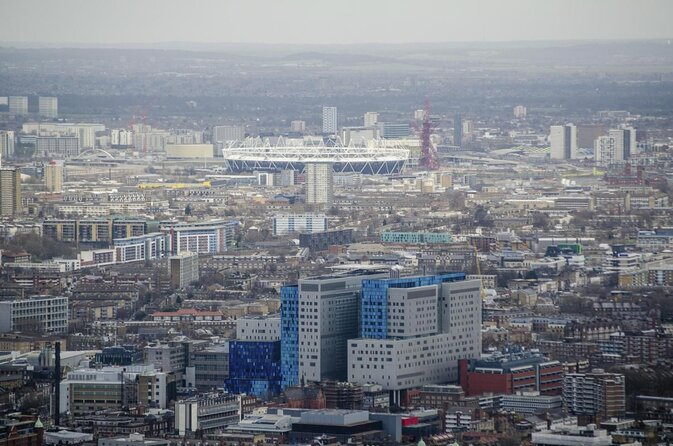
The route then reaches Mitre Square in the City of London, the site connected with the murders of Elizabeth Stride and Catherine Eddowes on September 30, 1888. This was the night often called the double event, and the guide spends about 20 minutes here.
Mitre Square is an important stop because it shows how two murders on the same night helped fuel public fear and press attention. The walk examines the known circumstances and the questions that remain around the sequence of events.
You will also notice the administrative boundary between the City of London and the Metropolitan Police area. That division is not just a map detail. It mattered to the investigation and helps explain why policing responsibilities could become complicated across such a small area.
This is one of the longer stops, and rightly so. The subject needs more than a quick photograph and a ghost story. With a private guide, you can ask about the evidence surrounding Stride and Eddowes, the police response, and why this night became central to the Ripper case.
Petticoat Lane and the Goulston Street clue
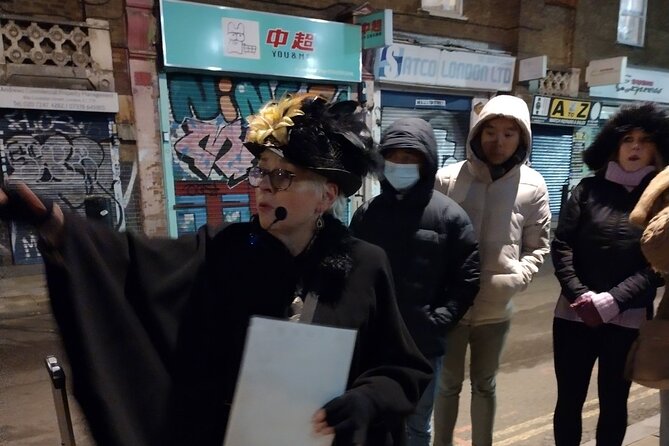
At Petticoat Lane Market, now known as Middlesex Street, the tour pauses at the boundary between the City of London and the Metropolitan area. The market name is familiar to many London visitors, but here it becomes part of the case’s geography.
The stop itself is brief, around five minutes, but it positions you for the next piece of evidence. At 118 to 119 Goulston Street, the tour examines the doorway where a piece of Catherine Eddowes’s apron was found. Graffiti on the doorpost added another layer of mystery and controversy.
This is a good example of how the walk uses physical locations to explain uncertainty. You are not simply told that a clue existed. You are shown where it was found and why its meaning has been debated. The tablet helps here by displaying relevant images and articles in a clear format.
The experience includes photographs of victims, locations, and the surrounding area on a 14-inch backlit tablet. That is particularly useful during an evening walk, when old printed images would be hard to see. It also lets you compare past and present without relying on your imagination alone.
More Jack the Ripper walks:
- London Jack the Ripper Guided Tour with Ripper-Vision
★ 4.5 · 4,840 reviews - Ultimate Jack the Ripper : Guided Tour of London
★ 5.0 · 1,495 reviews - The Original Jack the Ripper : Guided Tour
★ 5.0 · 1,264 reviews - London Jack The Ripper Small-Group Walking Tour
★ 5.0 · 1,013 reviews
Martha Tabram and the move toward Brick Lane

The next section follows Wentworth Street and Gunthorpe Street, where the tour discusses Martha Tabram. She is now often considered a possible first victim of Jack the Ripper, though her place in the case remains disputed.
At Wentworth Street, you spend about eight minutes hearing about the murder. Gunthorpe Street takes only a couple of minutes, but it marks the location of George Yard Buildings, where Tabram was killed.
This part of the walk is valuable because it introduces a wider question: how many murders should be connected to Jack the Ripper? The familiar list of victims is not as simple as a fixed set of names. Some cases are more firmly linked than others, and a careful guide should tell you where the evidence becomes uncertain.
The shorter Gunthorpe Street stop may feel quick if you want a long explanation at the exact spot. Still, the route has many locations to cover, and the guide can use the private format to expand on points that interest your group.
Brick Lane and Polly Nichols’s final drink
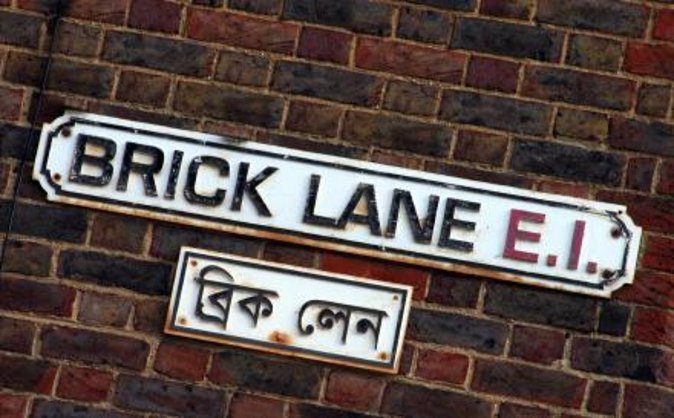
Brick Lane brings a change of mood. You stop opposite the Frying Pan Pub, associated with Mary Ann Nichols, also known as Polly, and her last drink before her death.
Today, Brick Lane is known for food, markets, and street life. The walk places that modern setting beside the darker story of the late Victorian East End. You are not walking through a preserved crime scene. You are seeing a neighborhood that has continued to change while the old addresses remain part of its memory.
The stop lasts about ten minutes. Jenny’s local familiarity helps make this section feel grounded rather than staged. The guide is described as friendly, funny, and willing to answer a long string of questions. That personal approach is particularly useful on Brick Lane, where the surroundings can distract you from the details of the case.
You should expect some street noise and normal city activity. That is part of the experience, but it also means the walk will not feel like a silent atmospheric performance at every stop.
Hanbury Street and the evidence behind the stories
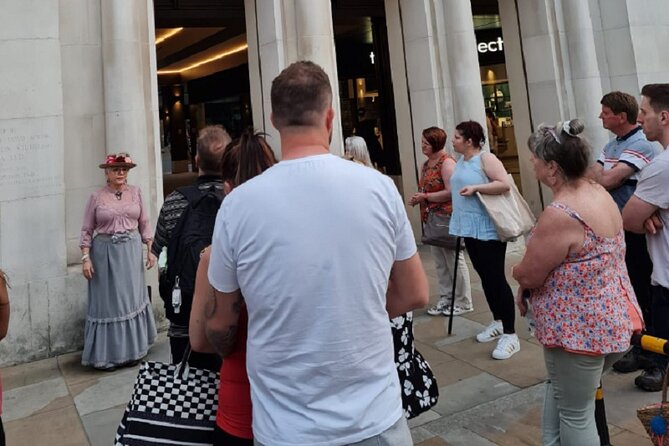
At Hanbury Street, the tour examines the site of Annie Chapman’s murder in the backyard of 29 Hanbury Street. You spend about ten minutes here.
The stop gives you a chance to consider how cramped yards and shared buildings affected privacy, movement, and the discovery of crime scenes. It also shows why exact addresses matter. Newspaper accounts and later retellings can turn a place into a symbol, but standing near the location helps you understand its relationship to nearby streets.
The backlit tablet is especially useful at stops like this. Old images can show you the people and buildings that written descriptions leave vague. You may not see the original backyard as it was, but you get a stronger sense of how the location entered the case.
The tour’s strength is not that it solves the mystery. It gives you the facts, the disputed evidence, and the major theories, then allows you to think about them yourself.
Puma Court and the Dear Boss letter
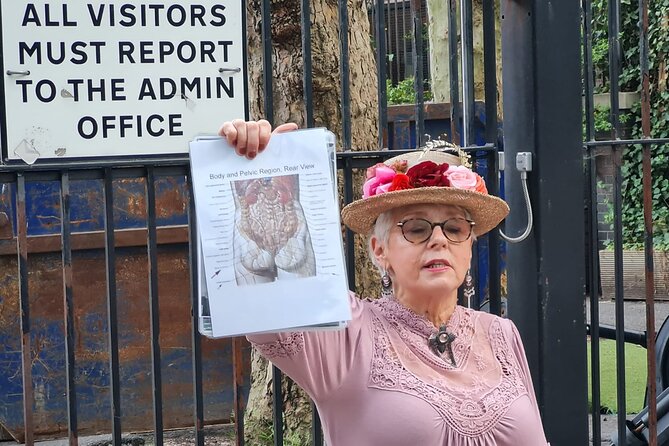
Puma Court is an old courtway where the guide discusses the Dear Boss letter, sent to the Central News Office. This is one of the case’s most famous documents and a major reason the name Jack the Ripper became fixed in the public imagination.
The stop takes around ten minutes. Here, the tablet becomes more than a collection of photographs. It can show articles, letters, and visual references while Jenny explains how the document affected the investigation and the press.
If you already know the standard Ripper story, this is where private guiding can add the most value. You can ask about the letter’s authenticity, its role in creating the killer’s public identity, and the difference between contemporary evidence and later folklore.
The Ten Bells, Christchurch, and Mary Kelly
Opposite The Ten Bells, the tour turns to the pub associated with Mary Kelly and to Christchurch graveyard. The guide explains how homeless women and prostitutes gathered in the area during the day.
The stop lasts about eight minutes. The Ten Bells is one of the most recognizable names in the Ripper story, but it is worth remembering that a famous pub sign does not tell the whole story. The surrounding streets, lodging conditions, and patterns of daily life offer a broader picture.
This portion can be emotionally difficult. The women at the center of the case are not simply characters in a mystery. They were people living with poverty and limited choices. A good tour should keep that fact visible, and this route gives social conditions a regular place in the discussion.
The letters and the former Millers Court site
The walk ends at the London Fruit and Wool Exchange. In a passage leading to its central courtyard, Jenny discusses the From Hell letter, sent to George Lusk of the Whitechapel Vigilance Society.
The final stop takes place in the courtyard where Millers Court on Dorset Street once stood. This is associated with the murder of Mary Kelly, often described as the last victim in the main Ripper sequence. The tour spends about 20 minutes here, making it one of the most substantial stops of the evening.
You also examine men suspected of the crimes over the years. This is a fitting place to talk about competing theories, since the case remains famous partly because no suspect has been universally accepted as the killer.
The route ends about a five-minute walk from Liverpool Street Station. That is practical if you want dinner, a train, or another evening activity. The stated end point is on Bell Lane in the E1 area, so check the exact meeting and finishing points when booking and allow yourself enough time to arrive at Aldgate High Street before the start.
Timing, comfort, and who should book
The tour lasts approximately two hours and 30 minutes and is offered Monday through Thursday from 3:00 PM to 9:00 PM during the stated operating period. The evening schedule suits the subject and leaves daytime free for museums, markets, or other London sights.
You need a moderate level of physical fitness. This is a walking tour through city streets, with repeated stops and no supplied bottled water or food. Bring your own water, wear comfortable shoes, and dress for changeable London weather.
The suggested minimum age is 12 and older. That is sensible given the murders and the detail involved. Service animals are allowed, and the route is near public transportation.
The tour is best for:
- People who already know a little about the Ripper case and want more detail.
- Couples or families who prefer a private guide to a large group.
- History fans interested in Victorian poverty, policing, and newspaper culture.
- Visitors who enjoy walking through ordinary neighborhoods rather than visiting a formal museum.
- Anyone who wants to challenge familiar Ripper myths instead of hearing only a spooky tale.
The 5 out of 5 rating from 10 ratings is encouraging, and the praise centers on Jenny’s energy, preparation, and willingness to answer questions. Still, the small number of ratings means you should treat that score as a positive signal rather than a guarantee that every group will enjoy the same tone.
Should you book the private Jack the Ripper tour?
Book it if you want a focused, personal walk through Whitechapel and Brick Lane, with plenty of historical explanation and room for questions. Jenny’s period costume, local familiarity, tablet images, and long experience give the experience more character than a basic address-to-address stroll.
Think twice if you dislike grim subject matter, want a short sightseeing walk, or prefer to explore London without spending several hours on one unsolved crime. For a group of up to five, the price can offer fair value because the guide’s attention stays with you. For one or two people, it is a more expensive choice, but the private format is the main reason to pay more.
FAQ
How long does the Jack the Ripper walking tour last?
The tour lasts approximately two hours and 30 minutes.
Where does the tour begin?
It begins on Aldgate High Street, London EC3N 1AH, near St Botolph’s Aldgate.
Where does the tour end?
It ends on Bell Lane in the E1 area, about a five-minute walk from Liverpool Street Station.
How many people can join the private tour?
The basic price covers a private group of up to five people. Additional people cost £25 per person.
What does the tour cost?
The supplied price is $205.76 per group of up to five. The tour information also gives a basic price of £150 for five people, so check the currency and final amount shown when booking.
Is the tour offered in English?
Yes. The tour is offered in English.
Does the tour provide photographs or visual material?
Yes. The guide carries a 14-inch backlit tablet with photographs of the victims, murder sites, and the surrounding area.
Is food or bottled water included?
No. Bottled water, food, and drinks are not provided.
What is the cancellation policy?
You can cancel at least 24 hours before the start time for a full refund. Cancellations or changes made less than 24 hours before the experience are not accepted for a refund.
Just added around London
- The Private British Museum Tour★ 5.0 · 6 reviews
- London to Southampton Cruise Port | Private Transfer★ 5.0 · 6 reviews
- London’s Chinatown Food Experience★ 4.0 · 6 reviews
- London Gatwick (LGW) Airport Departure Private Transfer – Hotel to Airport★ 4.0 · 6 reviews
- Christmas in Canterbury, Dover and Greenwich with Christmas Lunch★ 4.5 · 6 reviews
- Transfer from Heathrow Airport to London hotel on private car★ 4.5 · 6 reviews
- Jazz Notes – Jazz Jam Ticket★ 5.0 · 6 reviews
- Transfer from London Stansted Airport to Central London★ 5.0 · 6 reviews
Jack the Ripper Tours, compared.
London Jack the Ripper Guided Tour with Ripper-Vision
Read our review →
Ultimate Jack the Ripper : Guided Tour of London
Read our review →
London Jack The Ripper Small-Group Walking Tour
Read our review →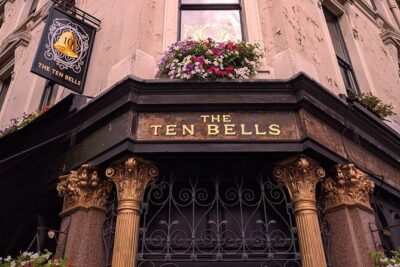
The Original Jack the Ripper Coach Tour of Haunted London
Read our review →
Browse the lists this tour appears in