
Reviewed · BOURNEMOUTH TOURS
Private Tour Winchester
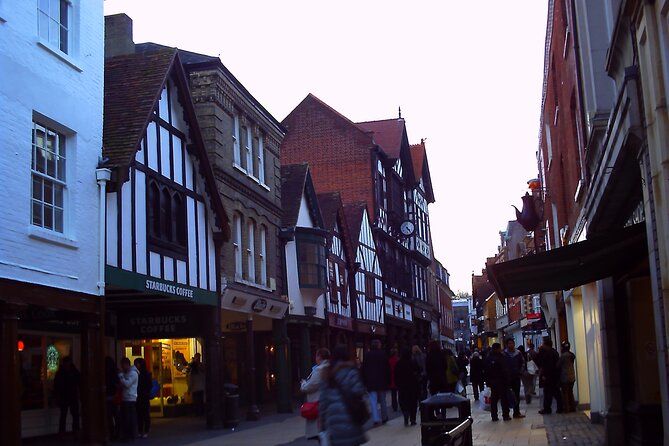
Winchester packs centuries into a short walk. This private 90-minute tour gives you a clear introduction to the city, from Licoricia of Winchester and Anglo-Saxon kings to the cathedral, Wolvesey Castle, Jane Austen, and the modern streets around them. I especially like the private format, which lets your group ask questions, and the guides’ strong grasp of local history. The low price of $34.53 per person also makes it an appealing way to get your bearings before exploring alone.
I also like the range of subjects. This is not only a parade of kings and bishops. The route brings in Jewish history through Licoricia, Jane Austen’s final days, church politics, royal marriages, and the daily lives of ordinary people. The main caution is the pace and terrain: Winchester is hilly, the cathedral admission is extra, and the experience may be led by a trained team member rather than Dr. Lillian Gonzales herself.
In This Review
- Key points to know before booking
- Starting at Winchester Railway Station
- Licoricia of Winchester at The Arc
- Winchester Cathedral, from Saxon beginnings to Gothic scale
- The college and Jane Austen’s final Winchester connection
- Wolvesey Castle and the politics of royal marriage
- Guildhall and King Alfred’s statue
- How the guides shape the experience
- Is $34.53 per person good value?
- Weather, hills, and who should book
- Should you book this Winchester walk?
- FAQ
- Where does the private Winchester tour start?
- Where does the tour finish?
- How long does the tour last?
- Is Winchester Cathedral admission included?
- Is the tour suitable for people who struggle with hills?
- Can I cancel for a full refund?
Key points to know before booking
- Licoricia’s story adds a human voice: The tour begins with Winchester’s Jewish heritage and the statue of a major medieval woman.
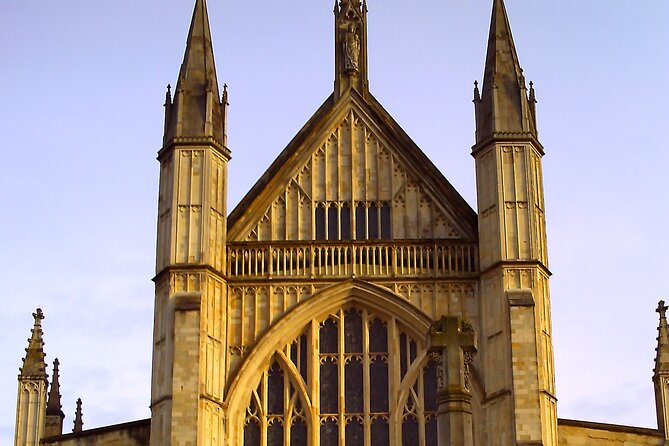
- The cathedral is discussed from Saxon roots to Gothic grandeur: Admission is not included, so plan for an extra ticket if you want to enter.
- Guides bring different strengths: Lillian, Michele, James, and Sam are among the guides named in the feedback, with Lillian receiving especially warm praise.
- The route covers major city symbols: You see or discuss Winchester Cathedral, Wolvesey Castle, the Guildhall, and King Alfred’s statue.
- The walk lasts about 1 hour 30 minutes: That is enough for a useful overview, but not a full examination of every building.
- Hills and weather matter: Wear comfortable, waterproof shoes if rain is likely, and think twice if hills are difficult for you.
Starting at Winchester Railway Station
The meeting point is Winchester Railway Station on Station Road, making this a practical choice if you are arriving by train. The tour begins at 10:00 a.m. or later, with operating hours listed through 7:00 p.m., Monday to Sunday.
Starting at the station is useful because Winchester can feel like a tangle of old lanes at first. You do not need to find a hotel lobby or a distant meeting place. Arrive with enough time to locate the station entrance and meet your guide without rushing.
The activity ends somewhere different from the station. The exact end point is not clearly stated in the details provided, so ask your guide at the start where you will finish. That matters if you have a train to catch, luggage to collect, or a dinner reservation.
This is a private activity, so only your group takes part. That gives you more room to ask about a favorite subject, pause for a photograph, or request a slower pace. Several people found guides willing to adapt, including Michele, who adjusted the walk for a mother who moved slowly. That kind of flexibility is a real advantage over a large city walk.
Still, private does not mean effortless. The route includes hills, and Winchester’s old center is not perfectly flat. If you struggle with slopes, the operator says this tour is not recommended. A sturdy pair of shoes is sensible, especially after rain. One guide specifically advised waterproof footwear because puddles can leave ordinary shoes soaked.
A few more tours and experiences worth a look
- The Premier Classic London: Private 4-Hour Tour in a Black Cab
★ 5.0 · 2,737 reviews - Stonehenge Inner Circle Private Tour from London with Bath Visit
★ 5.0 · 1,909 reviews - Private Historical Walking Tour of York
★ 5.0 · 1,324 reviews
Licoricia of Winchester at The Arc
The first stop is The Arc, home to Winchester Library and a statue of Licoricia of Winchester. The pause lasts about five minutes and costs nothing.
This is a smart place to begin. Licoricia was a wealthy Jewish woman in medieval Winchester and one of the city’s most important historical figures. Her story opens a door to a side of medieval England that can disappear when tours focus only on monarchs, cathedrals, and battles.
Expect a short explanation rather than a long museum visit. The statue gives the guide a fixed point, while the story supplies the meaning. You can ask questions about Jewish life, money, power, and the place of women in medieval society.
I like that the tour puts Licoricia near the start rather than treating her as a footnote. It signals that Winchester’s past belongs to more than its bishops and kings. One guide was praised for speaking especially movingly about her, which suggests this stop can carry more emotional weight than its five-minute length indicates.
The limitation is simple: five minutes is brief. If Licoricia’s story interests you, you may want to ask for suggestions on what to read or see after the walk. The tour can introduce the subject, but it cannot cover every detail in such a short stop.
Winchester Cathedral, from Saxon beginnings to Gothic scale
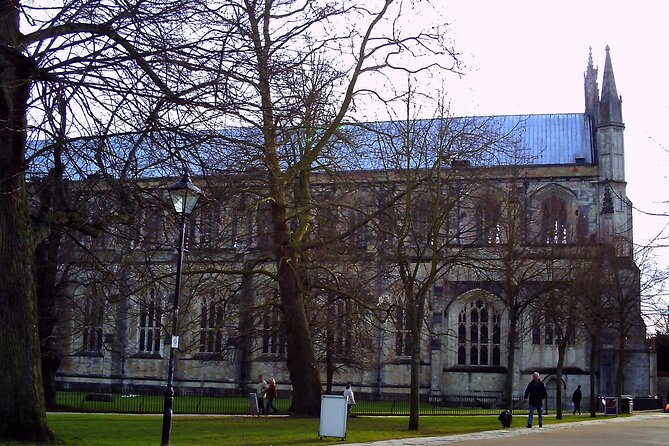
The cathedral is the central stop, with about 15 minutes devoted to its story. The admission ticket is not included, so the tour’s price does not cover entry inside.
Even a short explanation can help you see the cathedral with better context. The guide traces its origins to the Anglo-Saxon period and explains how it developed into the Gothic building you see today. That change was not merely a matter of adding decoration. It reflects shifting religious ideas, money, political influence, and the ambition of powerful churchmen.
The cathedral’s transformation under Bishop William of Wykeham received particular praise from one guide’s account. If you are interested in architecture, ask how and why the building changed from its earlier form. A good explanation can turn pointed arches and huge windows into clues about the people who paid for them and the society they wanted to shape.
The 15-minute stop is enough for orientation, not a full cathedral visit. You will hear the main story and learn why the building matters, but you will not have time for a slow look at every chapel, memorial, or architectural feature. If you want to go inside, set aside extra time after the tour and budget for the separate admission.
This is also one place where guide delivery matters. Lillian received repeated praise for linking the building to wider British and European events. Others enjoyed guides who turned political and religious changes into stories about real people. One less satisfied customer found Sam too quiet and monotone, so you may wish to tell your guide if you are having trouble hearing in a busy street.
The college and Jane Austen’s final Winchester connection
Another stop takes you to an iconic college building described as belonging to one of the top five colleges in the United Kingdom. It is next to the house where Jane Austen died in Winchester.
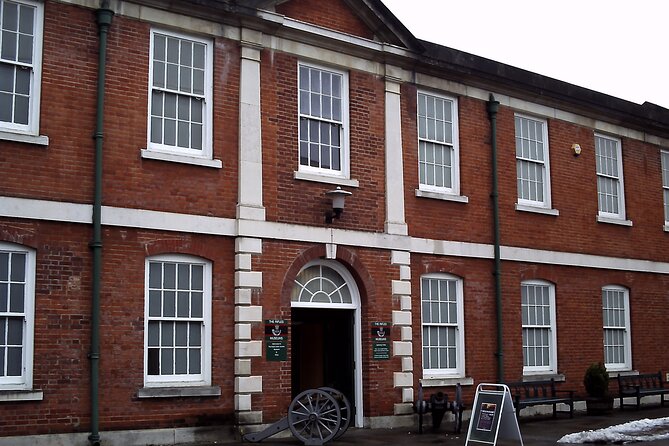
The route details do not give this stop a precise time or an admission arrangement, so treat it as an outside explanation rather than a scheduled college visit. The value comes from the contrast. You move from an institution associated with education and privilege to the modest final chapter of one of England’s best-known novelists.
Jane Austen’s connection gives the walk a personal thread. Winchester was not only a place of kings, bishops, and grand buildings. It was also where Austen spent the last part of her life. Standing near the house where she died can make that fact feel less abstract, even during a brief stop.
If Austen is your main reason for coming to Winchester, keep your expectations measured. This is not advertised as a dedicated literary tour, and the stop is part of a wider city circuit. You receive context alongside the cathedral, palace, and royal history rather than a full study of Austen’s life and work.
The college building also adds a useful reminder that Winchester remains a living city. Its medieval and royal past is not sealed away in a museum. Students, residents, worshippers, and visitors still move through the same streets.
Something different for another day:
- Stonehenge, Windsor Castle, and Bath from London
★ 4.5 · 18,662 reviews - London Big Bus Hop-On Hop-Off Tour with Optional River Cruise
★ 3.5 · 10,803 reviews - London Small Group Tour of Historical Pubs
★ 5.0 · 10,422 reviews - Beatles Magical Mystery Tour
★ 5.0 · 9,266 reviews
Wolvesey Castle and the politics of royal marriage
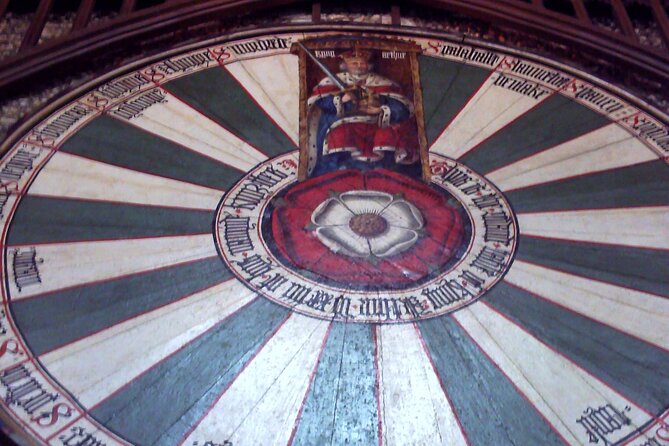
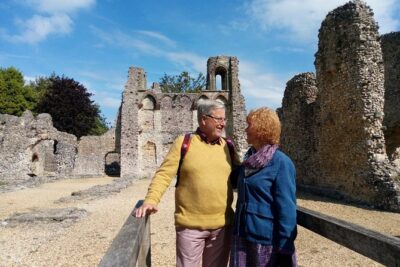
At Wolvesey Castle, you spend about five minutes among the ruins of what was once the bishop of Winchester’s palace. Admission is free.
The ruins may look modest compared with the cathedral, but the story attached to them is large. This was a place of high church power, wealth, ceremony, and royal connection. The guide explains that Queen Mary and Philip II of Spain had breakfast here during their wedding celebrations.
That detail gives the stones a memorable human scene. Instead of hearing only that a bishop once lived here, you can picture a royal couple stopping for a meal in a palace tied to one of the most politically charged marriages in English history.
Again, five minutes is a quick stop. You will get the setting and the key story, not a full archaeological explanation. If you want time to inspect the ruins at leisure, plan to return separately.
I find this stop useful because it balances the cathedral. The cathedral represents public worship and grand architecture. Wolvesey represents the worldly power of the medieval church. Together, they help explain why Winchester mattered so much.
Guildhall and King Alfred’s statue
The route continues to Winchester Guildhall, described as the gateway to the statue of King Alfred. Alfred was the great Anglo-Saxon king associated with Winchester and Wessex.
This part of the walk takes you back to the city’s earliest political identity. Before later Norman and Gothic additions shaped Winchester’s appearance, the city was a major Anglo-Saxon center. King Alfred gives the guide a chance to explain why Winchester became important and how its role connected to the wider kingdom of Wessex.
The stop also helps tie the route together. At The Arc, you encounter a medieval woman whose life shows the city’s social and religious complexity. At the cathedral and Wolvesey, you see the reach of church power. At the Guildhall, King Alfred brings the focus back to royal authority and the city’s Anglo-Saxon roots.
The details do not specify a separate admission charge here. It appears to be an outdoor stop on the walking route. That keeps the tour affordable and avoids filling a short experience with ticket queues.
How the guides shape the experience
Guide quality is the biggest variable here. The strongest feedback goes to Dr. Lillian Gonzales, who is described as holding a Ph.D. in history and bringing detailed knowledge, energy, and a gift for making historical figures feel human. People especially appreciated her ability to connect local events with British and European politics, religion, and everyday life.
Michele also received warm praise for being friendly, well informed, patient, and helpful with a slower walking pace. James was described as friendly and informative, even during a rainy tour. Sam was praised by several people for his history studies and willingness to answer questions, though one person found him difficult to hear and less engaging.
The operator explains that Lillian has trained a team with backgrounds in history and teaching. That is important to understand before you book. You may get Lillian, but you may also receive another guide. If having her specifically is essential, contact Travelusion Tours before reserving and ask what can be arranged.
I would not treat a student guide as automatically a poor choice. Sam was studying for a master’s degree in history at the University of Winchester, and several comments describe him as helpful and well prepared. Still, teaching style varies. Some people want a lively storyteller, while others prefer a calm academic explanation.
The best guides on this tour seem to do more than recite dates. They explain how political decisions affected ordinary people, bring warmth to figures such as Jane Austen, William the Conqueror, and Henry VIII, and answer questions beyond the planned route. That personal exchange is where a private walk can earn its price.
Is $34.53 per person good value?
At $34.53 per person, this is a fairly modest price for a private 90-minute walk, especially if your group has several people sharing the cost. Gratuities are included, which removes one small uncertainty at the end.
The price covers the guide and the walking experience, not lunch, private transportation, or cathedral admission. Since the tour begins at the railway station and uses city streets, you do not need a vehicle for the activity itself. Still, add the cathedral ticket if entering the building matters to you.
The value is strongest for a first visit. In a short period, you get a framework for understanding Winchester. Afterward, you can decide which places deserve more time. If you already know the city well or want long visits inside each monument, the brief stops may feel too thin.
A private tour also becomes better value when you use the guide actively. Bring questions. Ask about the people behind the buildings. Request advice for what to see after the walk. The feedback shows that guides often offer extra pointers, and the private setting gives you a better chance to make the tour fit your interests.
Weather, hills, and who should book
You can book this tour on any day from Monday through Sunday during the stated operating period, but weather will affect your comfort. Rain did not stop several successful tours, yet wet pavement and puddles make waterproof shoes a wise choice. In warm weather, one guide adjusted the route to provide more shade and built in stops for water and food.
The tour suits history lovers, first-time visitors, couples, families, and anyone arriving by train who wants a quick orientation. It is particularly good for people who enjoy asking questions rather than listening silently to a fixed script.
It may not suit you if hills are a serious problem, if you need a wheelchair-friendly route that has been specifically confirmed in advance, or if you want extensive indoor sightseeing. Service animals are allowed, and most people can take part, but the operator specifically warns that the city is hilly.
Free cancellation is available if you cancel at least 24 hours before the start time. Changes made inside that window are not accepted, and no refund is provided for late cancellation. The tour also requires a minimum number of participants, so a cancellation by the operator would bring an offer of another date or experience, or a full refund.
Should you book this Winchester walk?
I would book it as a first look at Winchester, especially if you enjoy history and want a guide who can connect buildings with people, power, religion, and literature. The route is short, the price is reasonable, and the private format gives you room to ask for more detail.
Book with two conditions in mind. Confirm who is likely to guide your group if Lillian is important to you, and plan extra time and money for the cathedral if you want to enter. If hills are manageable and you prefer an intelligent introduction over a long monument-by-monument visit, this tour is a strong starting point.
FAQ
Where does the private Winchester tour start?
It starts at Winchester Railway Station, Railway Station, Station Road, Winchester SO23 8TJ, United Kingdom.
Where does the tour finish?
The experience ends in a different location from the railway station. The exact ending point is not specified in the provided details, so ask the tour provider or guide before starting.
How long does the tour last?
The tour lasts approximately 1 hour and 30 minutes.
Is Winchester Cathedral admission included?
No. Admission to Winchester Cathedral is not included in the tour price.
Is the tour suitable for people who struggle with hills?
The operator says Winchester is a very hilly city and does not recommend this tour if you struggle with hills.
Can I cancel for a full refund?
Yes, if you cancel at least 24 hours before the experience start time. Cancellations made less than 24 hours in advance are not refunded.
Just added around England
- The Private British Museum Tour★ 5.0 · 6 reviews
- London’s Chinatown Food Experience★ 4.0 · 6 reviews
- London to Southampton Cruise Port | Private Transfer★ 5.0 · 6 reviews
- Christmas in Canterbury, Dover and Greenwich with Christmas Lunch★ 4.5 · 6 reviews
- Transfer from Heathrow Airport to London hotel on private car★ 4.5 · 6 reviews
- London Gatwick (LGW) Airport Departure Private Transfer – Hotel to Airport★ 4.0 · 6 reviews
- Bristol private pub hopping and sightseeing with local guide★ 5.0 · 6 reviews
- Isle of Wight Tour App, Hidden Gems Game and Big Britain Quiz (7 Day Pass) UK★ 4.0 · 6 reviews
Bournemouth Tours, compared.
Lulworth Cove & Durdle Door Mini-Coach Tour from Bournemouth
Read our review →
Full Day Jurassic Coast Mini-Coach Tour from Bournemouth
Read our review →
Journey Through Winchester’s Past: Private Tour
Read our review →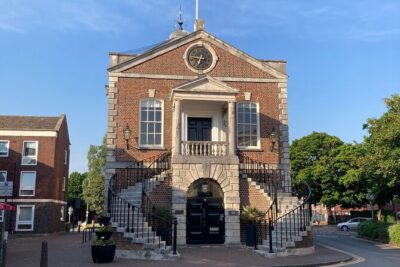

PURBECK HILLS & JURASSIC COAST – PRIVATE – 4×4 LAND ROVER SAFARI
Read our review →
Browse the lists this tour appears in