
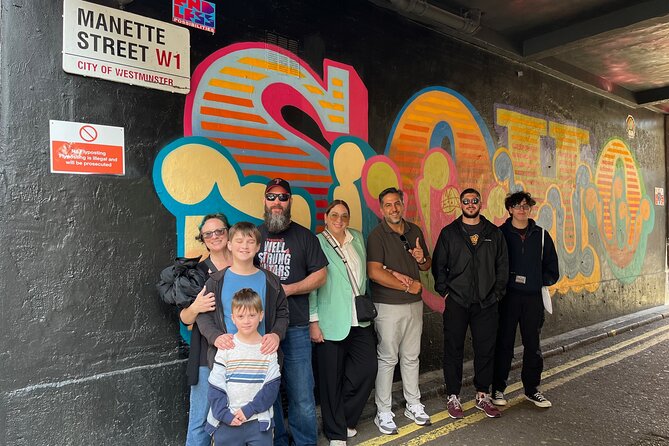
Reviewed · WALKING TOURS
Rock Music Walking Tour of London’s Soho
London’s rock story fits into a few city blocks. This two-hour walk through Soho links Denmark Street, old clubs, recording studios, music shops, pubs, and places tied to the Beatles, David Bowie, Oasis, Jimi Hendrix, and the Rolling Stones. Guide Evren adds the real strength: personal music-industry stories that turn ordinary doorways into vivid pieces of London’s past.
I like the small maximum group of 20, which should make it easier to hear the guide and ask questions. I also like the morning timing. You get a focused music lesson early, then keep the afternoon free for museums, shopping, or more Soho wandering. The main drawback is that this is a street-level tour, so you mostly see exterior locations rather than entering every studio, club, or landmark. Rain is another factor, since the walk goes ahead outdoors.
In This Review
- Key points to know before booking
- Why Soho is the right place for a rock music walk
- Denmark Street, where the guitars and stories begin
- Brian Epstein, Jimi Hendrix, and the turning point of 1967
- Soho Square and Paul McCartney’s business headquarters
- The coffee bar and the birth of British rock and roll
- John Lennon, Oasis, Bowie, and the Beatles recording trail
- The Dog and Duck, where the walk keeps going
- Evren’s guiding style and what it adds
- Is $31.95 good value for two hours?
- Who will enjoy this Soho walk most?
- Should you book the Rock Music Walking Tour of London’s Soho?
- FAQ
- How long does the Rock Music Walking Tour of London’s Soho last?
- How much does the tour cost?
- Where does the tour start?
- Where does the tour end?
- Is an alcoholic drink included?
- Is the tour available in English and how large is the group?
Key points to know before booking
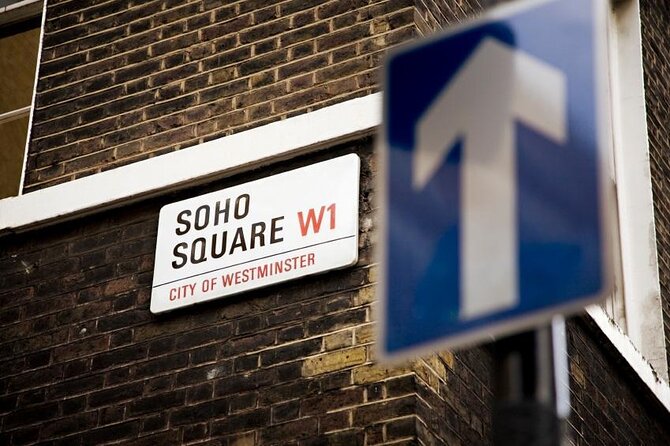
- Denmark Street is the musical heart of the walk: See the narrow street linked with the Rolling Stones, David Bowie, Jimi Hendrix, Elton John, and many other musicians.
- Evren’s personal stories are a major asset: He draws on firsthand involvement in the music industry, not just a list of dates and names.
- The tour connects famous artists with real places: Stops relate to the Beatles, Oasis, Paul McCartney, Brian Epstein, John Lennon, and the recording of Hey Jude.
- The finish is social rather than formal: The walk ends at The Dog and Duck, a historic pub where Evren can share more music stories and invite conversation over food or drinks.
- The $31.95 price buys a compact, specialized experience: At about two hours, it works well as a focused morning activity, especially for music fans.
- Expect an easy urban walk, not a museum visit: You will learn through streets, buildings, photos, stories, and context, with no alcoholic drink included in the price.
Why Soho is the right place for a rock music walk
Soho can feel like a jumble of restaurants, shops, theaters, offices, and old pubs. That is exactly what makes this subject work. Music history here is not confined to one grand museum. It is attached to modest buildings, former clubs, studios, businesses, and corners that are easy to miss when you walk through on your own.
The tour gives those streets a useful soundtrack. You are not simply told that famous musicians once worked in London. You are shown where particular events happened and how a small part of Soho helped launch British rock and pop.
The appeal is strongest if you enjoy the period from the 1960s through the 1990s. The route covers the Beatles, the Rolling Stones, David Bowie, Jimi Hendrix, Elton John, Led Zeppelin, Black Sabbath, and Oasis. It also includes a nod to Mozart, so the story reaches beyond electric guitars and British pop.
I would not book this expecting a broad survey of all London music. The focus is Soho, and the two-hour format means the guide has to move through many names and locations at a brisk pace. That narrow focus is a benefit if you want a concentrated walk, but less useful if you are searching for a full citywide music tour.
More Walking Tours in London
- Tour for Muggles The Ultimate Harry Potter Walking Tour in London
★ 5.0 · 4,684 reviews - London Jack The Ripper Guided Walking Tour
★ 5.0 · 3,131 reviews - Changing of the Guard Guided Walking Tour in London
★ 5.0 · 1,793 reviews
Denmark Street, where the guitars and stories begin
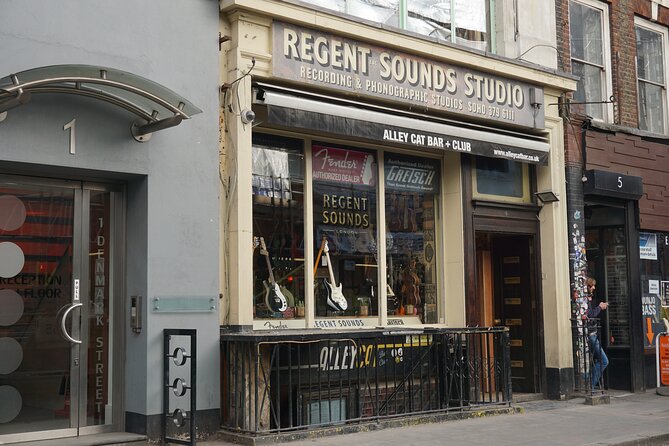
The walk starts at 268 to 269 Tottenham Court Road, close to public transportation. From there, the route heads toward Denmark Street, the area most strongly tied to the tour’s identity.
Denmark Street is famous here not because of one single event, but because so many musicians, shops, writers, and recording businesses were packed into a short stretch. The tour connects the street with the Rolling Stones, David Bowie, Jimi Hendrix, and Elton John. That list alone gives you a sense of the scale of the place.
One useful detail is the attention given to guitar shopping. You learn where to look for new and used guitars in London, which adds practical value even if you are not planning to buy an instrument. Music fans often enjoy seeing the shops and buildings linked with the working side of the industry, rather than only visiting polished attractions built for sightseeing.
The guide also uses photographs and stories to show how the street looked and functioned in earlier decades. That matters because many music landmarks do not announce themselves. A building may now serve a different purpose, while its importance survives through a story attached to the address.
Allow time to look around, but do not expect a long shopping stop or a chance to enter every business. The point is the connection between the street, the musicians, and the music trade. If you want to browse guitars afterward, the route gives you a useful starting point.
Brian Epstein, Jimi Hendrix, and the turning point of 1967
One stop focuses on the place where Brian Epstein put on Jimi Hendrix on a fateful night in 1967. This is the kind of detail that gives the walk its flavor. Instead of hearing only that Hendrix played in London, you connect him with a specific local event and with Epstein, the manager closely associated with the Beatles.
The value here lies in the guide’s storytelling. Evren is praised for explaining how musicians developed at the start of their careers, including the people and places around them. His approach appears less like a formal lecture and more like a conversation built around streets you can see.
That personal angle is particularly useful for listeners who already know the big names. You may have read about Hendrix, Epstein, or the British rock scene, but a local address can make those stories easier to picture. It also helps younger members of a family understand that these artists began as working musicians in ordinary clubs and neighborhoods, not as untouchable legends.
The tour does not promise entry to the venue connected with this event. Think of it as a location stop, supported by context and anecdotes. For some people, that will be enough. If you need interiors, live performances, or museum displays, this experience may feel less substantial.
Soho Square and Paul McCartney’s business headquarters
The route continues to Soho Square, where you see the site connected with Paul McCartney’s business headquarters. This stop broadens the story beyond performance. Rock music depends on offices, managers, publishing, recording, and business decisions as much as it depends on songs and concerts.
Soho Square also gives the walk a change of pace. After the tight concentration of Denmark Street, an open square offers a place to pause and place the music scene within the neighborhood. The guide can connect the surroundings with the people who shaped British music without reducing the story to a simple list of celebrity addresses.
I like this part because it shows how famous musicians remained tied to working areas of London. You are not being taken from one isolated plaque to another. The walk uses the neighborhood itself as the setting.
The stop is still mainly about what you can see from the street. There is no promise of access to McCartney’s offices, and you should not expect a Beatles exhibition. The payoff is the explanation, especially if Evren fills in the business and personal context behind the address.
Something different for another day:
- Stonehenge, Windsor Castle, and Bath from London
★ 4.5 · 18,662 reviews - London Big Bus Hop-On Hop-Off Tour with Optional River Cruise
★ 3.5 · 10,803 reviews - London Small Group Tour of Historical Pubs
★ 5.0 · 10,422 reviews - Stonehenge, Windsor Castle and Bath with Pub Lunch in Lacock
★ 4.5 · 7,402 reviews
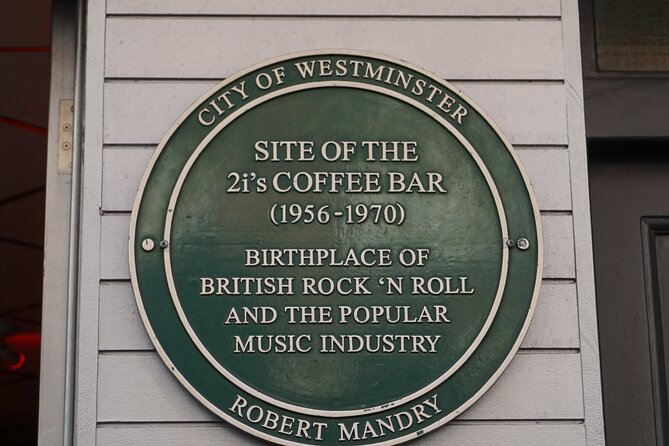
The coffee bar and the birth of British rock and roll
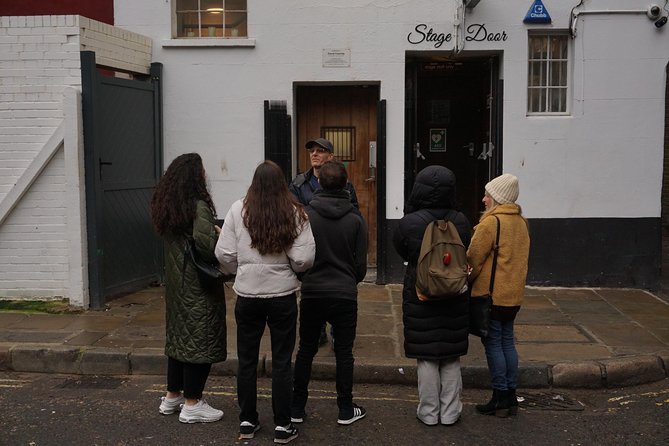
The next section takes you to a coffee bar described as a starting point for British rock and roll. From there, the route moves around the corner to one of London’s most famous music venues, a place where nearly every major artist has played.
This is a good example of how the tour handles Soho. A coffee bar may seem small and ordinary now, but the guide explains how places like this helped create a music scene. The story is about gathering points, early audiences, and the movement of ideas between musicians and venues.
The nearby venue adds scale. It connects the early local scene with artists who later became major names. You get a sense of how a short walk could link a humble beginning with one of London’s best-known stages.
Because the venue itself is not identified in the supplied details, I would not book the tour expecting a scheduled interior visit. The experience is about seeing the location and hearing why it matters. That distinction is worth knowing before you arrive.
John Lennon, Oasis, Bowie, and the Beatles recording trail

The walk then layers several different eras of music onto the same small part of Soho. You see the place where John Lennon took part in a famous comedy routine, then stand at the spot used for a famous Oasis album cover.
That Oasis stop will likely appeal to fans who think of British music as more than 1960s rock. It shows that Soho’s role continued into later decades and that album imagery can be tied to a real corner of the city. The guide’s use of past photographs helps you compare what you see with what appeared in music culture at the time.
The route also reaches the studio where David Bowie recorded Ziggy and where the Beatles recorded Hey Jude. These are among the strongest stops for music fans. Two major acts, two distinct periods, and two recordings with a lasting place in popular music all become connected to one studio location.
You should keep your expectations practical. The tour gives you the exterior setting and the story behind it, rather than a recording session or guaranteed entry. Even so, seeing the place where those recordings were made can be more memorable than viewing another general display about the artists. The location gives the music a physical anchor.
The range of names is one reason this walk suits mixed-age groups. Parents may focus on the Beatles, Hendrix, or Bowie, while younger people may know Oasis better. The guide can move across those generations without making the tour only about one band.
The Dog and Duck, where the walk keeps going
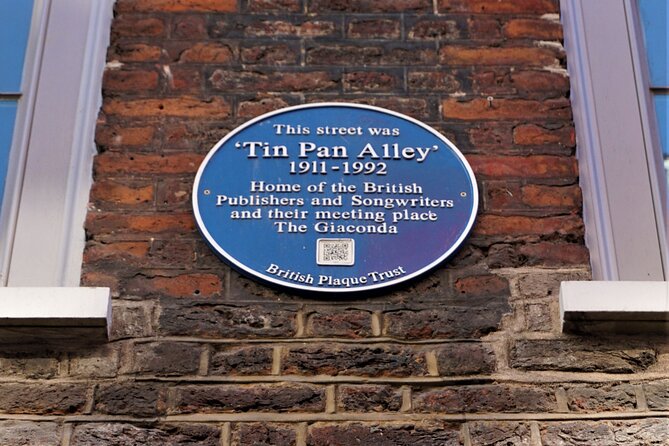
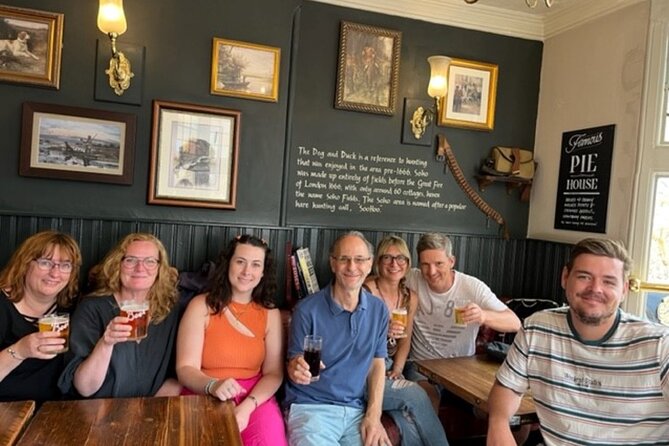
The official route ends at The Dog and Duck, 18 Bateman Street, an old pub with a long list of famous connections. Alcoholic drinks are not included, but you can choose to buy a drink or food if you want to remain there.
This ending is more than a final address. Evren uses the pub for personal stories about his own involvement in music and encourages the group to talk about favorite artists and music experiences. That informal exchange is one of the most praised parts of the experience.
I can see why it works. A walking tour can feel like a stream of facts, but a pub conversation gives the subject room to breathe. You may hear stories that do not fit neatly beside a plaque or recording studio. You also get a chance to ask about bands, venues, and the music business.
Still, the pub portion is optional in practical terms because drinks and food cost extra. If you have another appointment, you can finish when the walking portion ends. If you like talking music with other people, plan to stay and treat the pub as part of the experience rather than rushing away.
Evren’s guiding style and what it adds
The guide is named Evren, though some descriptions use slight variations of his name. The repeated praise centers on his passion, personal experience, warmth, and ability to tell stories. He is described as someone who was involved in the music industry and who understands the early careers of many performers.
That background changes the feel of the tour. You are not relying only on memorized facts. Evren can talk about how the industry worked, how musicians got started, and what happened around the famous names. His stories also appear to include gossip and lesser-known details, which suits Soho’s informal character.
The best fit is someone who likes conversation as much as sightseeing. Evren invites the group to share favorite artists and personal music memories at the pub. If you prefer a silent audio guide and a fixed list of dates, this may feel more personal and less structured than you want.
A group size of up to 20 is reasonable for a city walk. It is small enough to keep the guide within earshot, though the experience will feel more intimate if the actual group is smaller. The mobile ticket and English-language format keep things simple, but the tour is not designed as a private custom route.
Is $31.95 good value for two hours?
At $31.95 per person, this is not the cheapest way to walk through Soho. You can see many streets and buildings for free. The question is whether you want the connections, stories, and guidance that you would probably miss on your own.
For a music fan, I think the price is fair. You get a focused two-hour route, an expert local guide, access to a carefully connected set of music sites, and the chance to hear firsthand industry stories. The value rises if you are unfamiliar with Soho and would otherwise pass these locations without knowing what happened there.
The price is harder to justify if you already have detailed knowledge of every stop or mainly want to visit recording studios and venues from the inside. There is no alcoholic drink included, and you should budget separately if you want to continue the conversation at The Dog and Duck.
The tour is booked an average of 35 days in advance, so it is sensible to reserve ahead if your London dates are fixed. Free cancellation is available up to 24 hours before the start time. Cancellations or changes made inside that window are not accepted for a refund.
Who will enjoy this Soho walk most?
I would recommend it most strongly to:
- Classic rock and British pop fans
- People interested in the Beatles, Bowie, Hendrix, the Stones, Elton John, or Oasis
- Families with teens who want music history tied to real places
- Visitors who prefer stories and local context to formal museum displays
- Guitar fans curious about London’s new and used instrument shops
- Anyone wanting a useful morning activity with the afternoon left open
You do not need to know every band before joining. The route works for newcomers because it explains why the places matter. Still, the more music you already know, the more connections you are likely to catch.
Most people can participate, and service animals are allowed. The walk takes place outdoors in central London, so sensible shoes and clothing for the forecast are important. A rainy day does not erase the history, but it can make a two-hour street walk less comfortable.
Should you book the Rock Music Walking Tour of London’s Soho?
Book it if you want music history with a human voice. Denmark Street, the Brian Epstein and Hendrix story, Soho Square, the Oasis album-cover location, and the Bowie and Beatles studio stop give the walk a strong sequence. Evren’s personal stories and the relaxed pub finish add something you are unlikely to get from walking the route alone.
Skip it if you need guaranteed access inside studios and venues, dislike outdoor walks, or want a broad tour of London’s entire music scene. For everyone else, $31.95 buys a compact and highly focused morning, with enough time afterward to explore Soho on your own. The perfect audience is not only the serious rock expert. It is anyone who wants to understand how much music grew from a surprisingly small patch of London.
FAQ
How long does the Rock Music Walking Tour of London’s Soho last?
The tour lasts approximately two hours.
How much does the tour cost?
The listed price is $31.95 per person.
Where does the tour start?
It starts at 268 to 269 Tottenham Court Road, London W1T 7AQ, UK.
Where does the tour end?
The tour ends at The Dog and Duck, 18 Bateman Street, London W1D 3AJ, UK.
Is an alcoholic drink included?
No. Alcoholic beverages are not included in the tour price.
Is the tour available in English and how large is the group?
Yes, the tour is offered in English. The maximum group size is 20 people.
Just added around London
- The Private British Museum Tour★ 5.0 · 6 reviews
- London to Southampton Cruise Port | Private Transfer★ 5.0 · 6 reviews
- London’s Chinatown Food Experience★ 4.0 · 6 reviews
- London Gatwick (LGW) Airport Departure Private Transfer – Hotel to Airport★ 4.0 · 6 reviews
- Transfer from Heathrow Airport to London hotel on private car★ 4.5 · 6 reviews
- Christmas in Canterbury, Dover and Greenwich with Christmas Lunch★ 4.5 · 6 reviews
- Jazz Notes – Jazz Jam Ticket★ 5.0 · 6 reviews
- Transfer from London Stansted Airport to Central London★ 5.0 · 6 reviews
Walking Tours, compared.

Oxford University Walking Tour With University Alumni Guide
Read our review →
Tour for Muggles The Ultimate Harry Potter Walking Tour in London
Read our review →

Cambridge University Walking Tour by Alumni™ Kings College Option
Read our review →
Blackbeard to Banksy – The Ultimate Walking Tour of Bristol
Read our review →
Air Raid Shelter + St. Nicholas Market Walking Tour
Read our review →
Walking Tour of Bath with Blue Badge Tourist Guide
Read our review →
Changing of the Guard Guided Walking Tour in London
Read our review →Browse the lists this tour appears in