
Reviewed · WALKING TOURS
Roman Ruins to Blitz Bombings: A Walking Tour of London’s Fiery History
London’s past is under your feet. This compact walking tour links Roman traces, medieval churches, the Great Fire, and Blitz damage into one clear story of survival. I like the way Tom brings overlooked places to life, and I like the small-group format, capped at 15 people, which leaves room for questions. The main catch is simple: you will walk a lot in about two hours.
I also like the route’s range. You move from the Tower of London to St. Paul’s Cathedral, with the Great Fire, the London Stone, Guildhall, and the Bank of England between them. The tour costs $27.78 per person, a fair price if you want context rather than only postcard views, but admission fees to certain sites are not included.
In This Review
- Five details that make this London walk different
- A two-hour lesson in how London keeps rebuilding
- Starting at the Tower of London
- St. Dunstan in the East and the marks of war
- The Monument and London’s Great Fire
- The London Stone and the power of a small object
- The Bank of England and the city’s working heart
- Guildhall and the city’s civic story
- St. Paul’s Cathedral and the final view
- What the $27.78 price really buys you
- Walking demands, pace, and group comfort
- The guide makes or breaks this experience
- Who should book this London history walk?
- Should you book Roman Ruins to Blitz Bombings?
- FAQ
- How much does the walking tour cost?
- How long does the tour last?
- Where does the tour start?
- Where does the tour end?
- How large is the group?
- Is the tour offered in English?
- Can I cancel for a refund?
Five details that make this London walk different
- Tom’s storytelling gets high praise: His passion, clear explanations, and useful suggestions for other places in London are a major part of the experience.
- The route connects several disasters: Roman London, the Great Fire of 1666, medieval destruction, and Second World War bombing all appear in one walk.
- You see more than the famous landmarks: The London Stone and St. Dunstan in the East add unusual stops beyond the standard sightseeing circuit.
- The group stays small: A maximum of 15 people makes it easier to hear the guide and ask questions.
- It is a serious walking tour: The listed duration is about two hours, but one detailed assessment called it an extremely long walk and advised against it for anyone with mobility problems.
A two-hour lesson in how London keeps rebuilding
This is not a tour built around entering grand interiors or ticking off a long list of attractions. Its value comes from the connections between the stops. You see how London was damaged, rebuilt, renamed, and reimagined over many centuries.
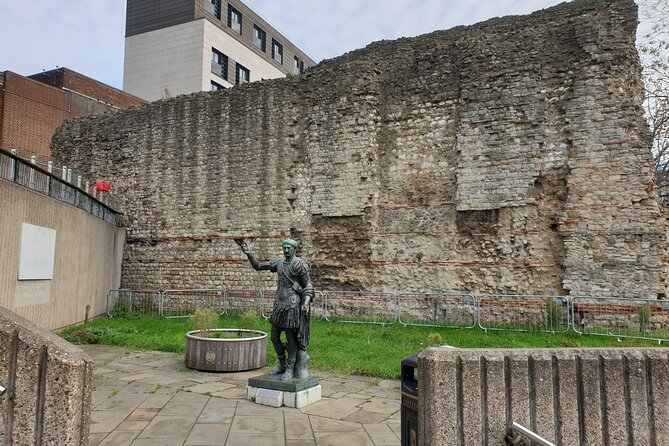
The subject matter is broad but manageable. You get Roman remains and legends, royal power, religious buildings, urban government, fire, and wartime destruction. One useful feature is the guide’s habit of pointing out nearby side attractions, including free museums with Roman ruins and artifacts. That can turn a two-hour walk into the starting point for a fuller day in the City of London.
I would choose this experience early in a London visit if you enjoy understanding what you are looking at. It can give you a working map of the oldest part of the city before you explore on your own.
The tour is offered in English and arrives as a mobile ticket. Confirmation comes when you book. The group can include no more than 15 people, which is small enough to feel personal without the price of a private guide.
More Historical Tours in London
- London Small Group Tour of Historical Pubs
★ 5.0 · 10,422 reviews - Soho Music & Historic Pubs Tour
★ 5.0 · 1,993 reviews - Royal Historic Pubs Walking Guided Tour in London
★ 5.0 · 803 reviews
Starting at the Tower of London
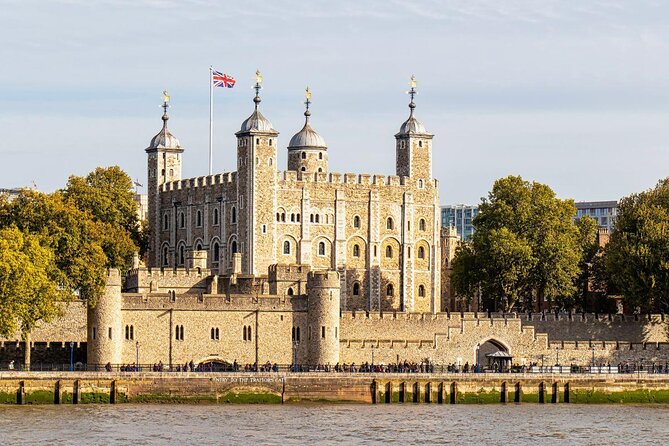
The meeting point is 38 Trinity Square, London EC3N 4DJ, close to the Tower of London. The walk begins with one of London’s strongest symbols of royal authority and confinement.
The Tower is described as Europe’s oldest surviving royal palace. That short stop helps set the tone for the entire route. London is not presented only as a collection of pretty old buildings. You are looking at a city shaped by rulers, defense, religion, trade, fire, and war.
The tour does not include admission to the Tower, and this is important when you plan your day. You will see the site as part of the walk, but the tour price is not a ticket for a full visit inside. If the Tower is a priority, plan a separate visit and allow extra time beyond the two-hour walk.
The stop itself is listed as five minutes. That means the guide is there to frame the building and its role, not to lead an extended interior tour. I see this as a strength for anyone who wants a broad historical route. It may disappoint you if you expected lengthy visits inside each major attraction.
St. Dunstan in the East and the marks of war
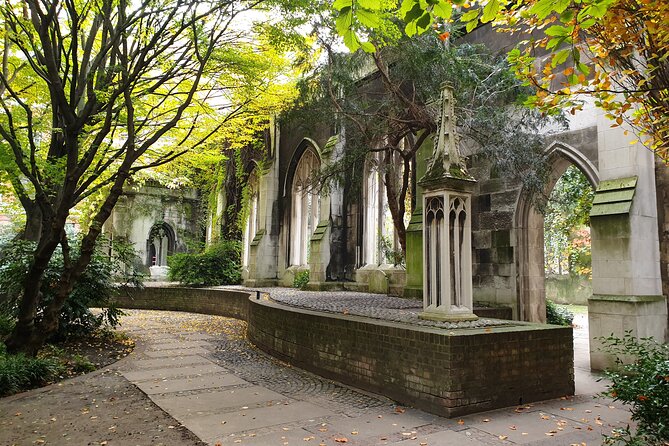
From the Tower, the route continues to St. Dunstan in the East. This is the garden of a medieval church destroyed during the Second World War.
The stop gives the tour its clearest link to the Blitz. Instead of discussing wartime damage only through dates and general statements, you get a place where destruction and later use occupy the same setting. A ruined church used as a garden can make the effects of war easier to grasp than a long lecture.
The stop is free, and no admission ticket is needed. It is also a good example of the tour’s style: the route takes you to a place that many people could pass without knowing why it matters.
You get about five minutes here, so listen closely and ask questions while the group is gathered. The guide’s ability to explain without piling on too much information is useful at stops like this. One particularly positive assessment praised the way Tom kept the explanations engaging without overwhelming the group.
The Monument and London’s Great Fire
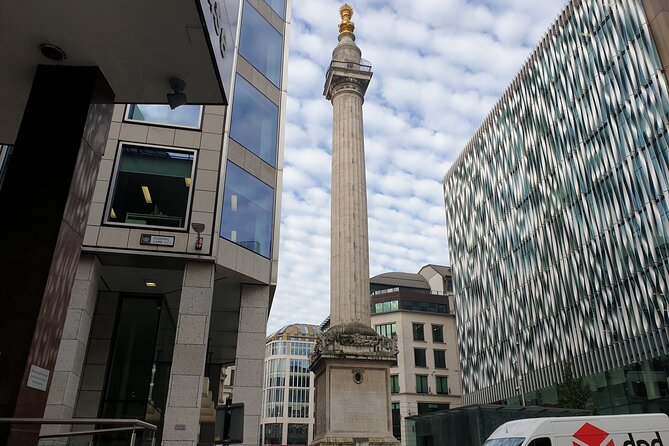
The Monument to the Great Fire of London marks the 1666 disaster that changed the city. It is one of the route’s key historical anchors, linking a famous column to the wider story of London’s rebuilding.
The tour price does not include admission to the Monument. The itinerary allows about five minutes, so this is an exterior-focused stop rather than a full visit. If you want to climb or explore inside, you will need to arrange that separately.
The useful part here is the scale of the event in relation to the streets around you. The guide can help you see the Great Fire not as an isolated fact, but as one of several moments when London was forced to change. Set beside the Tower and St. Dunstan, the Monument helps create a timeline of royal London, medieval London, and a city altered by catastrophe.
I would not book this tour solely for entrance time at the Monument. I would book it for the explanation around the building and its place in the route.
More Walking Tours in London
- Tour for Muggles The Ultimate Harry Potter Walking Tour in London
★ 5.0 · 4,684 reviews - London Jack The Ripper Guided Walking Tour
★ 5.0 · 3,131 reviews - Changing of the Guard Guided Walking Tour in London
★ 5.0 · 1,793 reviews - The Great British Rock and Roll Walking Tour
★ 5.0 · 1,371 reviews
The London Stone and the power of a small object
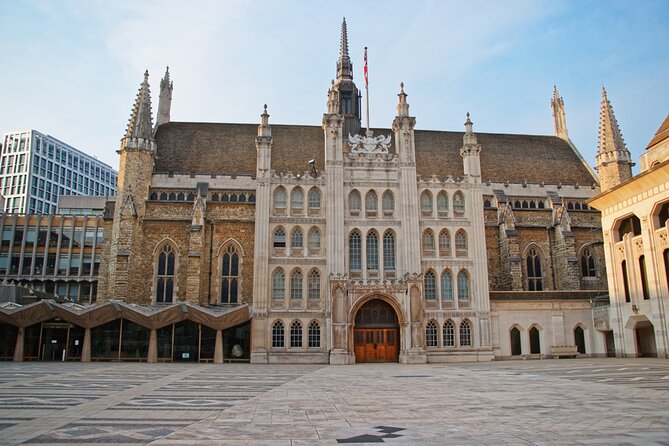
The London Stone is one of the walk’s most unusual stops. It is a stone with remarkable legends attached to it, and the tour uses it to show how a modest object can gather layers of meaning over time.
This is the sort of stop I value on a walking tour. You do not need another grand facade to learn something memorable. A small, familiar-looking object can open a conversation about legends, identity, and the ways Londoners have interpreted their city.
Admission is free. The stop lasts about five minutes, so you will not linger for long. Still, it breaks up the sequence of major landmarks and gives the walk a little mystery without turning the whole experience into a ghost story or a collection of tall tales.
If you like history that includes legends as well as established events, this should appeal to you. If you prefer only heavily documented political history, you may find this part less substantial. The guide’s job is to give the legends their place without letting them take over the tour.
The Bank of England and the city’s working heart
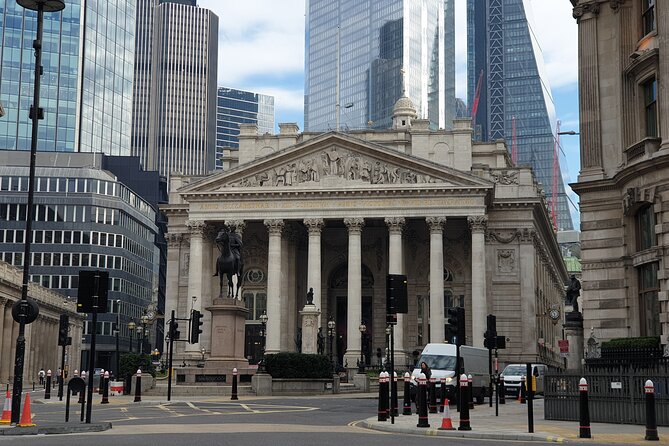
The next stop is the Bank of England Museum, home of the United Kingdom’s central bank. The building adds an economic and civic side to the walk, after the earlier focus on royal power, religious ruins, and physical destruction.
Admission is not included. The listed stop is about five minutes, so you should think of it as an introduction rather than a museum visit. If you want to examine the displays, plan another visit on your own.
This short stop matters because London’s history is not only about palaces and churches. Money, banking, and the Corporation of London helped shape the City as well. The route gives you a quick look at that side of the capital without making the tour feel like an economics lesson.
A guide who can keep the pace clear is especially helpful here. The subject could easily become dry, but Tom’s strength, based on the available comments about his guiding, is making facts approachable and answering questions with enthusiasm.
Guildhall and the city’s civic story
Guildhall brings the tour to a 15th-century hall associated with the Corporation of London. This stop shifts attention from national institutions to the city’s own government and civic life.
The tour does not include admission. As with the Bank of England Museum, you get a short introduction rather than an extended interior visit. The five-minute timing works if you want a city overview. It is less suitable if your main goal is to study the building in detail.
I like the sequence here. After the Tower’s royal associations and the Monument’s disaster story, Guildhall shows another force shaping London: local administration. It also helps explain why this part of the city feels different from the West End. You are walking through the historic City of London, where major institutions sit close together.
The guide’s habit of pointing out side attractions can be especially useful around this section. If you want to continue exploring Roman remains or free museums after the tour, this is a good time to ask for suggestions.
St. Paul’s Cathedral and the final view
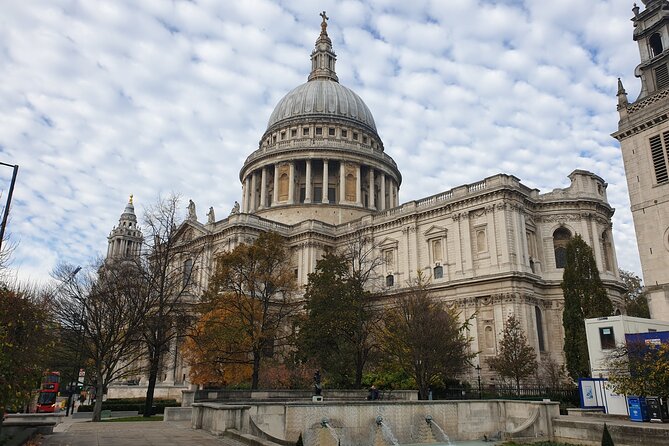
The walk ends at St. Paul’s Cathedral, Christopher Wren’s 17th-century cathedral. It is a fitting finish because the building represents rebuilding on a grand scale.
The itinerary gives St. Paul’s about five minutes and does not include admission. You should not expect a full cathedral visit as part of the tour. Instead, the guide places the cathedral within the story of London’s fires, reconstruction, and changing city center.
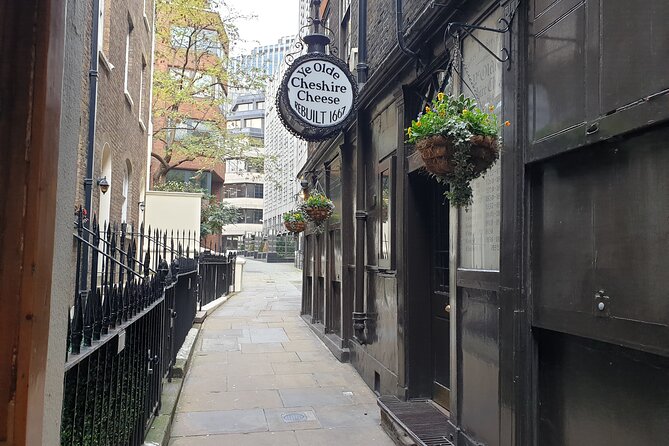
This final stop also gives you a natural point to continue your day. The tour ends outside Ye Olde Cheshire Cheese at 145 Fleet Street, not far from Blackfriars Station. That is a practical ending for anyone who wants food, a drink, or more sightseeing after the walk.
Do not confuse the ending with the start. The route crosses a large part of the historic center, so you need to arrange your transport back to your hotel or onward destination. The starting point is near public transportation, and the ending is also close to Blackfriars Station.
What the $27.78 price really buys you
At $27.78 per person, this is priced as an accessible guided walk rather than a full attraction package. You are paying for the guide’s route, narration, and local context. You are not paying for entry to the Tower of London, the Monument, the Bank of England Museum, Guildhall, or St. Paul’s Cathedral.
That distinction makes the value depend on your travel style. If you want a guide to help you notice details and connect events, the price is reasonable. If you expect several paid attractions to be included, the cost can feel less attractive.
I would compare it with the cost of spending two hours wandering without a plan. You could certainly see several of these places for free, but you might miss the connections between them. The useful part is not simply reaching each stop. It is understanding why they belong together.
The tour also receives a perfect five-star rating from 190 ratings, with 100 percent recommending it. That is unusually consistent feedback, and the praise focuses on the guide’s delivery, historical understanding, and ability to make ordinary streets feel worth your attention.
Walking demands, pace, and group comfort
The two-hour duration sounds modest, but this is a point-to-point city walk covering several major locations. One detailed assessment called it extremely long and specifically advised against it for anyone with mobility problems.
Take that warning seriously. The tour information says most people can participate, but it does not promise a low-effort route. Wear comfortable shoes, keep your attention on the pace, and think carefully about whether a continuous walk suits you.
The maximum group size is 15. That is a real advantage over a large street crowd. You should be able to hear the guide more easily, ask questions, and stay connected to the group while moving through central London.
Service animals are allowed. The experience is near public transportation, and the mobile ticket keeps the arrival process simple. Still, the supplied details do not provide a full step-free route description, so anyone with specific mobility needs should confirm the practical arrangements before booking.
The guide makes or breaks this experience
The strongest part of the tour is Tom’s guiding. His approach is described as friendly, clear, passionate, and willing to answer questions. He also gives suggestions for other places to see and local spots to enjoy after the walk.
That matters because the tour includes several brief stops. You need a guide who can give each place a useful frame without trying to deliver a university lecture at every corner. The available feedback repeatedly praises Tom for making history enjoyable and for helping people notice places they normally pass without a second thought.
I would book this for the storytelling, not simply for the route. The buildings are important, but the guide’s interpretation turns them into a connected lesson about London’s repeated destruction and renewal.
Who should book this London history walk?
This tour suits you best if you:
- Enjoy history but prefer a moving, street-level lesson to a long museum visit.
- Want to understand the City of London beyond its famous skyline.
- Like Roman remains, legends, churches, civic buildings, and wartime history in one route.
- Appreciate a guide who welcomes questions and offers ideas for the rest of your visit.
- Can manage a substantial walk over roughly two hours.
- Are happy to visit major interiors separately when admission is not included.
It may not suit you if you need frequent rests, want a fully accessible route, or expect long visits inside the Tower, Monument, museums, Guildhall, and cathedral. The tour gives you context at each location, not full admission-based sightseeing.
You can cancel for a full refund if you cancel at least 24 hours before the local start time. Changes or cancellations made less than 24 hours before the start are not accepted for a refund.
Should you book Roman Ruins to Blitz Bombings?
Book it if you want London to make more sense. The route links the Tower of London, a wartime church ruin, the Great Fire Monument, the London Stone, the Bank of England, Guildhall, and St. Paul’s Cathedral in a brisk two-hour walk. That is a lot of ground, but the range is exactly the appeal.
I especially recommend it for first-time visitors with a strong interest in history who want a useful orientation to the City. Tom’s engaging style and practical suggestions add real value. Just budget separately for any attraction interiors, wear good shoes, and skip it if a long walk would make the day tiring rather than rewarding.
FAQ
How much does the walking tour cost?
The price is $27.78 per person. The tour itself is included, but admission tickets to certain stops are not included.
How long does the tour last?
The tour lasts approximately two hours. It includes walking between the listed stops, with about five minutes allocated at each location.
Where does the tour start?
The meeting point is 38 Trinity Square, London EC3N 4DJ, UK.
Where does the tour end?
The tour ends outside Ye Olde Cheshire Cheese, 145 Fleet Street, London EC4A 2BP, UK. The pub is not far from Blackfriars Station.
How large is the group?
The maximum group size is 15 people.
Is the tour offered in English?
Yes. The tour is offered in English and uses a mobile ticket.
Can I cancel for a refund?
Yes. You can cancel at least 24 hours before the experience start time for a full refund. Cancellations or changes made less than 24 hours before the start time are not accepted.
Just added around London
- The Private British Museum Tour★ 5.0 · 6 reviews
- London to Southampton Cruise Port | Private Transfer★ 5.0 · 6 reviews
- London’s Chinatown Food Experience★ 4.0 · 6 reviews
- Christmas in Canterbury, Dover and Greenwich with Christmas Lunch★ 4.5 · 6 reviews
- Transfer from Heathrow Airport to London hotel on private car★ 4.5 · 6 reviews
- London Gatwick (LGW) Airport Departure Private Transfer – Hotel to Airport★ 4.0 · 6 reviews
- Jazz Notes – Jazz Jam Ticket★ 5.0 · 6 reviews
- Street Photography Workshops in London★ 5.0 · 6 reviews
Walking Tours, compared.

Oxford University Walking Tour With University Alumni Guide
Read our review →
Tour for Muggles The Ultimate Harry Potter Walking Tour in London
Read our review →

Cambridge University Walking Tour by Alumni™ Kings College Option
Read our review →
Blackbeard to Banksy – The Ultimate Walking Tour of Bristol
Read our review →
Air Raid Shelter + St. Nicholas Market Walking Tour
Read our review →
Walking Tour of Bath with Blue Badge Tourist Guide
Read our review →
Changing of the Guard Guided Walking Tour in London
Read our review →Browse the lists this tour appears in