
Reviewed · WALKING TOURS
Secrets of the London Underground Small Group Walking Tour
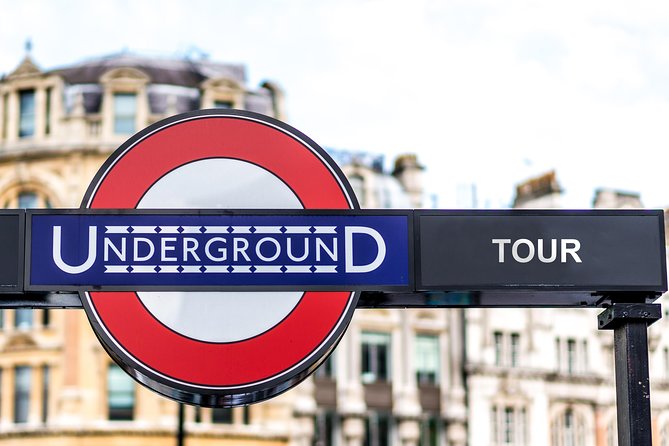
The Tube has stories beneath every step. This 2.5-hour tour connects six central London stations, from Baker Street’s 1863 origins to Westminster, mixing transport history with city streets, Victorian engineering, wartime tales, and abandoned platforms. I like the focused subject and the chance to see London through its underground network rather than only its famous landmarks.
I also like that guides such as John, Angela, and Peter bring different strengths, including clear explanations, humor, historic photographs, and memorable anecdotes. The main catch is value: at $41.13 per person, you still need to pay for your own Tube travel, and much of the experience involves walking between stations and riding trains rather than entering closed-off areas.
In This Review
- Key points to know before you book
- What this London Underground tour is really about
- Baker Street and the Underground’s 1863 beginning
- Oxford Circus and the modern Tube network
- Green Park and the story of Down Street
- Piccadilly Circus and competing railway companies
- Embankment and the river above your head
- Westminster and the final chapter
- The guides are the heart of the experience
- Price, Tube fares, and what you receive
- Walking, stairs, weather, and group size
- Who should book this Tube history walk?
- Should you book the Secrets of the London Underground tour?
- FAQ
- How long does the tour last?
- Where does the tour begin?
- Where does the tour end?
- What time does the tour start?
- Is Tube travel included in the price?
- Does the tour enter abandoned stations?
- How much walking is involved?
- Is the tour suitable for people with reduced mobility?
- How many people can join the tour?
Key points to know before you book
- Baker Street begins the story in 1863: You start at one of the Underground’s earliest stations and hear how the first railway was built before modern construction equipment.
- Six stations create the route: The tour moves through Baker Street, Oxford Circus, Green Park, Piccadilly Circus, Embankment, and Westminster.
- Expect a walking tour, not a secret tunnel visit: You hear about disused and haunted stations, but the experience does not promise access behind closed doors.
- Your Tube fare is extra: Bring a suitable contactless card, Oyster Card, or Travel Card. The tour advises a day travel card for Zones 1 and 2.
- The guide makes a big difference: John received especially warm praise for his energy and command of the subject, while Angela was appreciated for using photographs and discussing wartime history.
- Plan for stairs and weather: The route includes many steps and outdoor walking, so good shoes and an umbrella are sensible.
What this London Underground tour is really about
This is a history walk with Tube travel woven through it. You are not simply riding from one station to the next, and you are not getting a full behind-the-scenes tour of closed tunnels or restricted platforms.
Instead, you follow the development of the Underground across central London. Your guide explains how the system began in the Victorian era, how different railway companies built competing lines, and how the network took on new roles during war and social change.
That format works well if you already use the Tube but have never stopped to ask how it was built. The railway is so familiar that it is easy to treat it as a practical machine, something that gets you from one museum or palace to another. This tour gives that machine a human and political story.
You may hear about the engineers who worked before modern technology, the decisions that shaped station locations, and the strange fate of stations that lost their passengers and closed. The subject is narrow, but London’s Underground reaches into architecture, politics, transport, wartime life, and urban growth.
The group can include up to 25 people. That is not a tiny private outing, but it is still more personal than a large coach tour. A good guide should be able to keep the group moving and audible in busy stations, and the strongest feedback points to guides who handled that well.
More Walking Tours in London
- Tour for Muggles The Ultimate Harry Potter Walking Tour in London
★ 5.0 · 4,684 reviews - London Jack The Ripper Guided Walking Tour
★ 5.0 · 3,131 reviews - Changing of the Guard Guided Walking Tour in London
★ 5.0 · 1,793 reviews
Baker Street and the Underground’s 1863 beginning
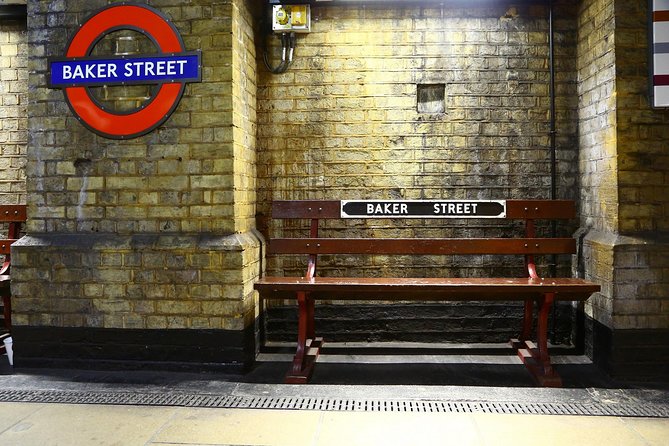
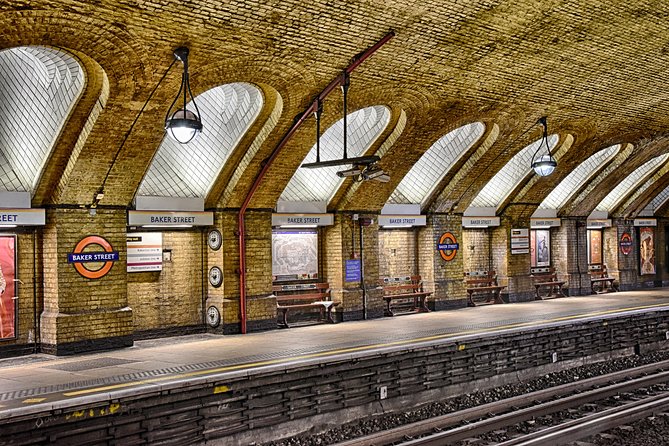
The meeting point is outside Baker Street Underground Station on Marylebone Road. The tour begins at 1:00 pm, so you can have lunch first and arrive with time to spare.
Baker Street matters because it connects directly to the Metropolitan Railway, the world’s first underground railway. One of the Underground’s original stations opened here in 1863, giving your guide a strong starting point for the story.
This is where the tour explains the basic problem Victorian engineers faced. London needed new transport, but building wide railways across the city would have caused major disruption. The answer was to place railway lines below the streets, using the methods and machinery available at the time.
You can expect the focus to be on construction, early railway companies, and the way the system grew in stages. This is also a good point to ask questions, since the opening section sets up the names, dates, and rival lines that appear later.
The practical drawback is that the tour starts inside the working Tube network, not in a museum-style exhibition. If you want a long look at historic train carriages or a preserved station interior, this may feel too quick.
Oxford Circus and the modern Tube network
The next stop is Oxford Circus Station. The tour covers the Victoria line and the station’s later development, including the opening of its platforms in 1969.
This stop shows how the Underground did not remain a Victorian project. London kept adding new lines and improving connections as the city expanded. Oxford Circus became important because passengers could change between lines, with cross-platform interchange planned as part of the Victoria line development.
The exact transport details may sound technical, but they help explain why some stations feel like complicated underground junctions. You begin to see that the Tube is not one railway built at one time. It is a collection of lines, companies, dates, and design choices joined into one network.
This is also one of the points where you should expect movement rather than a long stationary talk. The tour schedule allows roughly 10 minutes at each listed stop, with additional time for walking and train travel.
If you dislike busy stations, keep that in mind. Oxford Circus is a major central London interchange, and following a guide through crowds requires attention. One useful strength mentioned about the guides is their awareness of the group and their ability to keep people together.
Green Park and the story of Down Street
Green Park brings one of the tour’s more unusual subjects: Down Street Station. Opened in 1907 by the Great Northern, Piccadilly and Brompton Railway, it later served the Piccadilly line.
Down Street sat between Dover Street, now called Green Park, and Hyde Park Corner. Its location proved inconvenient because nearby stations already served the area. With little passenger use, it closed in 1932.
This is the sort of detail that makes the tour different from a standard London sightseeing walk. You learn that a station could be a genuine part of the railway network and still disappear when passengers preferred a more convenient entrance nearby.
The stop also introduces the Underground’s abandoned and disused stations. You will hear about places left behind on the network, along with stories of haunted stations. The appeal is less about ghost stories alone and more about how the city keeps changing while old infrastructure remains beneath it.
Be careful with your expectations here. The tour discusses these places, but the experience does not promise entry into closed stations. If you have taken a dedicated Hidden London or behind-the-scenes railway tour before, you may find this section familiar or less secret than the title suggests.
Something different for another day:
- Stonehenge, Windsor Castle, and Bath from London
★ 4.5 · 18,662 reviews - London Big Bus Hop-On Hop-Off Tour with Optional River Cruise
★ 3.5 · 10,803 reviews - London Small Group Tour of Historical Pubs
★ 5.0 · 10,422 reviews - Stonehenge, Windsor Castle and Bath with Pub Lunch in Lacock
★ 4.5 · 7,402 reviews
Piccadilly Circus and competing railway companies

Piccadilly Circus Station adds another layer to the story. The Baker Street and Waterloo Railway, now the Bakerloo line, opened the station in 1906. The Great Northern, Piccadilly and Brompton Railway, now the Piccadilly line, opened its platforms later that same year.
That split history matters. The Underground developed through separate railway companies, not one tidy master plan. Their lines eventually became part of today’s system, but the early dates and names reveal a period of competition and expansion.
Piccadilly Circus is also a useful place to connect transport history with London’s public life. A station in this location was built to serve one of the city’s major commercial and entertainment districts, showing how railways followed demand and helped shape it in return.
Your guide may also use this part of the route to explain station design and the changing role of Underground stations. The experience is strongest when those small facts are tied to what you can see around you, rather than delivered as a list of dates.
The stop is brief, about 10 minutes, so do not expect a long architectural inspection. You are getting a guided introduction while moving through a live station and central London streets.
Embankment and the river above your head
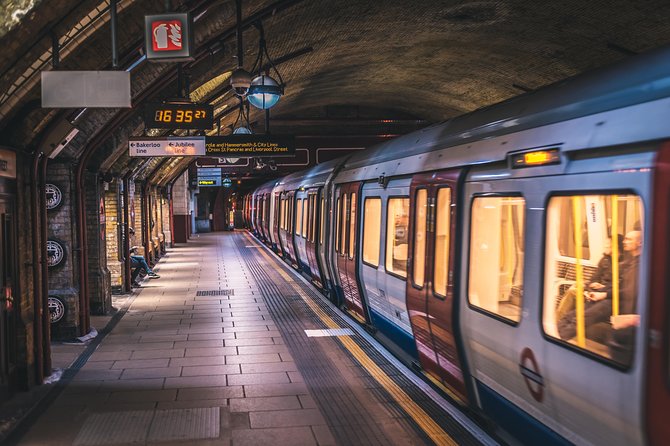
At Victoria Embankment, the subject shifts from railway lines to the city itself. The Embankment runs along the north bank of the Thames, from Westminster toward the City of London, and much of the area was developed in the 19th century by reclaiming marshy ground from the river.
That background helps explain why transport construction in London was never only about digging a tunnel. Engineers and planners were also reshaping streets, river edges, roads, and public spaces.
This part of the route gives you a welcome change from station corridors. You are likely to spend time outdoors, so the weather matters. A previous participant found the tour disappointing on a very wet day, not because the guide lacked information, but because the walking and outdoor movement became tiring.
Take that warning seriously. The tour operates on Tuesdays, Thursdays, and Sundays from April through March, except December 24 to 26 and January 1. London rain can arrive at any time of year, so carry an umbrella and wear shoes that can handle wet pavement and repeated walking.
The Embankment stop is also a good place to absorb the scale of the city. Above ground, you see a major river corridor. Below ground, the Underground continues the same work of connecting London’s districts.
Westminster and the final chapter
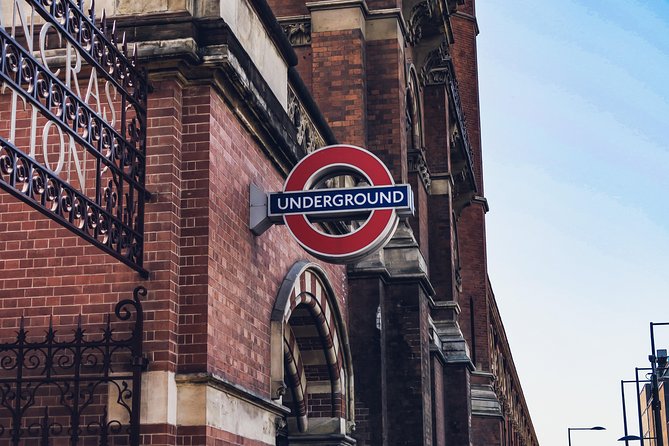
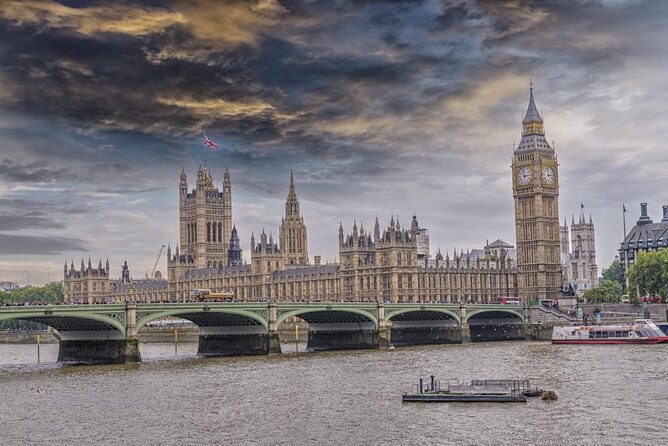
The tour ends at Westminster Tube Station on Bridge Street. The station opened as Westminster Bridge on December 24, 1868, when the steam-operated District Railway opened its first section from South Kensington.
That early use of steam is a useful reminder that the first Underground trains were not the clean electric trains you know today. The system developed through several stages, and the technology changed as London’s needs changed.
The original access route included a passage from Bridge Street and a pedestrian subway under the road. These details show how station design had to deal with crowded streets and the complicated relationship between railways and pedestrians.
Westminster is a fitting finish because it brings together transport, government, and London’s long urban story. The tour ends at Westminster Station rather than returning to Baker Street, so you are left in a useful central location for continuing your afternoon.
The final stop is listed as having free admission, but remember that the tour itself requires Tube travel along the route. You should still have your payment method ready for the rides between locations.
The guides are the heart of the experience
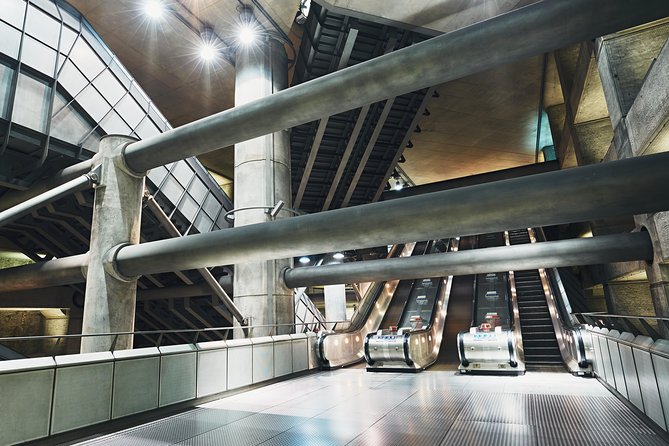
The best part of this tour is likely to be the person leading it. John received particularly strong praise for his enthusiasm, calm delivery, humor, and grasp of the Underground’s history. His approach seems to suit people who want plenty of facts without a dry lecture.
Angela was praised for discussing construction, politics, and the Underground during the Second World War. She also used photographs to help connect past events with the stations and streets around you.
Peter was appreciated for his humor and historical anecdotes. Those comments point to an important truth about a specialist walking tour: the guide turns a sequence of stations into a story.
The tone can vary from one departure to another. The subject is factual and sometimes technical, so your enjoyment will depend partly on how well the guide explains complicated railway changes in plain language.
The tour received an overall rating of 4.4 from 38 reviews, with many strong marks for the guides and the information. The lower ratings focused mainly on expectations, price, and the amount of walking, not on poor guide performance.
Price, Tube fares, and what you receive
The price is $41.13 per person. For a 2.5-hour specialist tour in central London, that is not unreasonable, especially if you enjoy transport history and receive a lively guide.
Still, the value is not automatic. Your Tube fares are not included, and the tour advises purchasing a day travel card for Zones 1 and 2. The additional cost matters because the itinerary includes several train journeys, not just a short walk between nearby stations.
The practical advantage of paying separately is flexibility. If you already have a suitable contactless card, Oyster Card, or Travel Card, you may not need to buy another ticket. Check that your payment method covers the areas and travel needed for the tour.
Some people felt the tour was good but not the best value among several London activities because transport was extra. I agree that the added fare should be included in your calculation before booking.
You are paying for interpretation, not entry to a major paid attraction. The value is strongest if the guide’s stories help you notice London differently for the rest of your trip. If you mainly want access to disused stations, the price may feel high for what is offered.
Walking, stairs, weather, and group size
This is a real walking tour. The route includes many steps, station changes, and outdoor sections, and it is not suitable for people with reduced mobility.
You should have a moderate level of physical fitness. Wear comfortable shoes, keep your hands free if possible, and bring water. An umbrella is a smart addition, since rain can make the outdoor portions harder and may reduce your enjoyment.
The group maximum is 25 people. That gives the guide a reasonable chance to manage the group, but you should not expect the quiet pace or personal attention of a private tour.
The start and end points are well served by public transport. Baker Street is easy to reach, and Westminster gives you a useful base for continuing toward nearby sights. Arrive early enough to find the meeting point without rushing through a busy station.
Who should book this Tube history walk?
I would choose this tour if you fit one or more of these descriptions:
- You love railway history, engineering, or urban planning.
- You use the Tube often and want to understand how it developed.
- You prefer a local subject over a standard list of London landmarks.
- You enjoy walking tours with facts, anecdotes, and a clear route.
- You want a guided introduction to abandoned and disused stations without expecting access inside them.
- You are comfortable with stairs, train changes, and changing weather.
I would think twice if you have already taken several specialist London Underground tours. The material may overlap with what you already know, and the route does not promise restricted areas.
I would also skip it if you want a relaxed sightseeing walk with very little transport time. This tour moves at a lively clip, and one of its weaker points is the amount of walking for people expecting a station-focused indoor experience.
Should you book the Secrets of the London Underground tour?
Book it if the Tube itself is part of the reason you enjoy London. The combination of Baker Street’s 1863 beginnings, later line development, abandoned stations, wartime stories, and Westminster’s early railway history gives you a fresh way to understand the city.
Before you pay, add the cost of your Tube travel and prepare for stairs, outdoor walking, and rain. Read the title carefully: you are getting a guided history walk through the Underground network, not guaranteed access to secret platforms or closed stations.
At $41.13, I see this as a solid specialist tour for history buffs, especially if you get a guide with the energy of John, the visual storytelling of Angela, or Peter’s easy humor. For casual sightseers, the value is less certain. Free cancellation is available up to 24 hours before the 1:00 pm start, which gives you a little room to adjust if the forecast or your plans change.
FAQ
How long does the tour last?
The tour lasts approximately 2 hours and 30 minutes.
Where does the tour begin?
It begins at Baker Street Underground Station on Marylebone Road, London NW1 5LJ.
Where does the tour end?
The tour ends at Westminster Station on Bridge Street, London SW1A 2JR.
What time does the tour start?
The scheduled start time is 1:00 pm.
Is Tube travel included in the price?
No. Travel cards are not provided. You need a suitable contactless card, Oyster Card, or Travel Card, and the tour advises a day travel card for Zones 1 and 2.
Does the tour enter abandoned stations?
The tour includes information about haunted and disused stations, but the provided details do not promise entry into closed stations or restricted areas.
How much walking is involved?
It is a walking tour with many steps and train journeys between stops. A moderate level of physical fitness is required.
Is the tour suitable for people with reduced mobility?
No. The tour is not suitable for people with reduced mobility because of the many steps and walking sections.
How many people can join the tour?
The maximum group size is 25 people.
Just added around London
- The Private British Museum Tour★ 5.0 · 6 reviews
- London to Southampton Cruise Port | Private Transfer★ 5.0 · 6 reviews
- London’s Chinatown Food Experience★ 4.0 · 6 reviews
- London Gatwick (LGW) Airport Departure Private Transfer – Hotel to Airport★ 4.0 · 6 reviews
- Christmas in Canterbury, Dover and Greenwich with Christmas Lunch★ 4.5 · 6 reviews
- Transfer from Heathrow Airport to London hotel on private car★ 4.5 · 6 reviews
- Jazz Notes – Jazz Jam Ticket★ 5.0 · 6 reviews
- Transfer from London Stansted Airport to Central London★ 5.0 · 6 reviews
Walking Tours, compared.

Oxford University Walking Tour With University Alumni Guide
Read our review →
Tour for Muggles The Ultimate Harry Potter Walking Tour in London
Read our review →

Cambridge University Walking Tour by Alumni™ Kings College Option
Read our review →
Blackbeard to Banksy – The Ultimate Walking Tour of Bristol
Read our review →
Air Raid Shelter + St. Nicholas Market Walking Tour
Read our review →
Walking Tour of Bath with Blue Badge Tourist Guide
Read our review →
Changing of the Guard Guided Walking Tour in London
Read our review →Browse the lists this tour appears in