
Reviewed · CHURCHILL WAR ROOMS TOURS
Semi-Private WW2 Churchill in Westminster & War Rooms entry
Churchill’s wartime London is hiding in plain sight. This three-hour walking tour links the Battle of Britain Monument, Big Ben, Parliament, Whitehall, and Westminster Abbey with entry to Churchill War Rooms, giving you both the city streets and the underground command center where Britain directed the war. I like the small maximum of eight people, and I like that the route leaves time for photographs instead of rushing from one point to the next. The main drawback is that the guide does not join you inside the museum, so your 90 minutes underground are self-guided with an audio guide.
The $115.16 price is not a bargain-basement walking tour, but it includes admission to Churchill War Rooms, which is the costly and important part of the visit. I also appreciate the choice of morning or afternoon departures. Just plan carefully: there are no refreshments or comfort breaks built into the walk, and the ticket is non-refundable if you cancel.
In This Review
- Key Points Before You Book
- Why This Tour Works for Churchill and WW2 Fans
- Starting at the Battle of Britain Monument
- Big Ben and the Blitz
- Parliament Square and Churchill’s Public Memory
- Whitehall and the Cenotaph
- Houses of Parliament and Churchill’s Political Legacy
- Horse Guards Parade and Churchill the Soldier
- Westminster Abbey and Wartime Damage
- Entering Churchill War Rooms for 90 Minutes
- Guides Who Give the Walk Its Character
- Price, Pace, and Practical Value
- Who Should Book It?
- FAQ
- How long is the Churchill and Westminster tour?
- How much does the tour cost?
- What is included in the price?
- Does the guide enter Churchill War Rooms with the group?
- How much time do I get inside Churchill War Rooms?
- Where does the tour begin?
- Where does the tour end?
- Is the tour available in the morning and afternoon?
- How many people can join the tour?
- Are food, water, and comfort breaks included?
- Can I cancel for a refund?
Key Points Before You Book
- A small group of up to eight makes it easier to hear the guide and ask questions.
- The 90-minute War Rooms visit takes you through Churchill’s wartime headquarters beneath Westminster.
- The route connects major sights including Big Ben, Parliament Square, Whitehall, and Westminster Abbey.
- Guides bring personality to the subject, with Alex, Judd, Rosie, Amber, and Marnie or Marni receiving especially warm praise.
- The guide stops outside the museum, where you continue with an audio guide rather than a live explanation.
- Good weather matters, since much of the experience is on foot and cancellation rules are strict.
Why This Tour Works for Churchill and WW2 Fans
You get two different kinds of history in one compact outing. Above ground, your guide explains how wartime events shaped Westminster, its monuments, and the political center of Britain. Below ground, you walk through the preserved rooms used by Churchill and his staff during World War II.
That combination is the tour’s main strength. A standard museum visit can give you maps, photographs, rooms, and recorded commentary. A walking tour can give you context, but often skips the actual museum. Here, you get both.
The group size matters. With no more than eight people, your guide can point out plaques, answer questions, and adjust the pace more easily than on a large coach tour. Several guides are praised for making the subject lively rather than dry. Alex is described as strong on Churchill and WW2 detail, Rosie as clear and witty, and Amber as animated enough to keep people engaged even in heavy rain. One guide even uses songs as part of the storytelling, which will appeal to some people and amuse others.
The tour is best for you if you enjoy political history, military history, or London landmarks with a story attached. It is less suitable if you want a slow museum visit, frequent café stops, or a fully guided experience inside the War Rooms.
More Churchill War Rooms visits:
- Westminster 3 Hour Walking Tour and Visit of Churchill War Rooms
★ 5.0 · 967 reviews - WW2 London Walking Tour & Churchill War Rooms Entrance Ticket
★ 4.5 · 933 reviews - London in WW2 Walking Tour with Churchill War Rooms Visit
★ 5.0 · 721 reviews
Starting at the Battle of Britain Monument
The meeting point is the Battle of Britain Monument at 79 Whitehall, London SW1A 2NS. This is a practical start because it places you directly in the Whitehall area, close to several of the sights connected with Britain’s wartime government.
The opening stop lasts about 10 minutes. Your guide focuses on the Royal Air Force and the skill and courage used to resist the Nazi air assault. This gives you a clear military starting point before the tour shifts toward Churchill, Parliament, and civil government.
Take a moment to look at the monument itself and listen for the names and details your guide highlights. The point is not simply to take a photograph. It is to understand why the Battle of Britain became such a powerful part of Britain’s wartime identity.
Because this is an outdoor beginning, dress for changeable London weather. The tour requires good weather, and the provider may cancel in poor conditions, offering another date or a refund. Even when the tour goes ahead, rain can make a three-hour walking route less pleasant.
Big Ben and the Blitz
The next stop is Big Ben, where you spend about 10 minutes. You will hear how the famous clock tower and the surrounding parliamentary buildings were affected during the Blitz.
This is a good example of how the tour uses familiar sights. You probably know Big Ben from photographs, but the wartime story changes the way you see it. The focus is not only on the clock itself. It is on the fact that London’s most recognizable political district was also a target during the bombing campaign.
The walking format helps here. Your guide can pause, gesture toward buildings, and connect the view in front of you with the events being discussed. You also have a chance to take pictures without being confined to a vehicle.
Do not expect a long stop. Ten minutes is enough for a short explanation and photographs, but not for a detailed architectural visit. You are seeing Westminster from the street, not entering Big Ben or touring Parliament’s interior.
Parliament Square and Churchill’s Public Memory
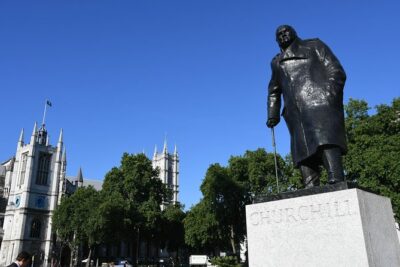
Parliament Square provides another short stop, lasting about 10 minutes. Here, you can see the statue of Churchill and consider how his wartime leadership has been remembered in the center of British government.
The statue is more than a photo opportunity. Your guide may use it to explain Churchill’s public image, his political career, and the complicated personality behind the familiar pose. The tour’s value comes from these connections between people, places, and symbols.
The small group should make this part more useful. If you have a question about Churchill’s speeches, political decisions, or reputation, you have a better chance of asking it without losing the guide in a crowd.
This is also where the subject can move beyond battlefield stories. One particularly useful part of the tour is its attention to women’s roles during the war and the way Britain continues to examine that contribution. If you already know the broad outline of Churchill’s career, that wider focus can add something new.
A few more tours and experiences worth a look
- The Premier Classic London: Private 4-Hour Tour in a Black Cab
★ 5.0 · 2,737 reviews - Stonehenge Inner Circle Private Tour from London with Bath Visit
★ 5.0 · 1,909 reviews - Private Tour: Black Taxi Tour of London
★ 5.0 · 1,153 reviews - Private London Arrival Transfer – Airport to Hotel / Accommodation
★ 3.5 · 1,085 reviews
Whitehall and the Cenotaph
The tour then moves through Whitehall for roughly 20 minutes. This is the political heart of London, lined with government offices, memorials, and reminders of Britain’s military past.
I like this section because it gives the tour a sense of place. The War Rooms make more sense when you have walked through the streets where wartime decisions were made and where the government still functions today. Whitehall is not simply a row of grand buildings. It is the setting for the relationship between military command, elected government, and national memory.
At the Cenotaph, you spend about 10 minutes paying respects to soldiers who fought and died in war. The stop is brief, but the memorial carries a serious tone. Your guide can explain the meaning of the monument and the role it plays in public remembrance.
You should be prepared for a walking experience with many pauses rather than one continuous lecture. Some stops are only 10 minutes long. That works well for photographs and a steady pace, but it means you will not receive an extended treatment of every memorial.
Houses of Parliament and Churchill’s Political Legacy
The Houses of Parliament receive another 10-minute stop. Your guide explains the building’s history and Churchill’s part in rebuilding the destroyed House of Commons.
This is a useful link between architecture and politics. Damage caused during the war was not simply a matter of repairing walls. Rebuilding Parliament carried symbolic importance, too. The tour uses that story to show how Churchill’s wartime leadership continued into the difficult work of restoring ordinary political life.
You will view the building from outside. The experience does not include an interior visit to the Houses of Parliament, so treat this as a contextual stop rather than a full parliamentary tour.
For first-time visitors, the location is excellent. Parliament, Big Ben, Parliament Square, and the surrounding memorials are all concentrated in this part of Westminster. A guide helps you make sense of the cluster instead of treating each famous building as an isolated sight.
Horse Guards Parade and Churchill the Soldier
Horse Guards Parade adds a military angle to Churchill’s life. The stop lasts around 10 minutes, and your guide discusses his time in the cavalry as well as the role of the parade ground.
This detail helps round out the familiar image of Churchill as a politician and wartime prime minister. You learn about the earlier military chapter of his life, which gives more context to his approach to war and leadership.
Again, this is a brief outdoor explanation. You are not signing up for a dedicated cavalry or military ceremony tour. The strength is the connection between a specific Westminster location and Churchill’s personal story.
The route also gives you another chance to take photographs. Walking between stops means you can see the changing character of Whitehall, but you should wear comfortable shoes and keep your expectations realistic. Three hours on city pavements is manageable for most people, yet it is not a seated sightseeing trip.
Westminster Abbey and Wartime Damage
Westminster Abbey is the final major outdoor sight, with about 10 minutes devoted to the coronation church and its wartime experience.
The abbey is nearly 1,000 years old, so its appearance represents many layers of English history. Hearing how it was attacked by the Nazis places World War II into a much longer story of national identity, monarchy, religion, and government.
You do not enter Westminster Abbey on this tour. That is important if an interior visit is a priority. You will see the building from outside and hear its wartime story, while the included interior museum visit is Churchill War Rooms.
The route’s selection of sights is sensible. Instead of trying to cover all of London, it stays in a compact Westminster area where the political and military stories connect naturally.
Entering Churchill War Rooms for 90 Minutes
Churchill War Rooms is the centerpiece. You receive an entrance ticket and spend about an hour and a half inside the former wartime command center beneath London.
The rooms are preserved as a time capsule from the 1940s. You can see the underground setting where military planning and government work continued during the bombing. The appeal is physical as much as historical: narrow rooms, working spaces, maps, and the sense of a government operating below the city.
Your guide does not accompany you inside. Instead, you receive an audio guide. This arrangement has both advantages and limits. You can move at your own pace and pause when something catches your attention. You can also spend less time on familiar material and more time with subjects that interest you.
The tradeoff is that you lose the chance to ask your walking guide questions as each room appears. If you want a live expert to interpret every display, this tour may feel incomplete. If you prefer some freedom after a lively outdoor walk, the audio guide works well.
The 90-minute allocation is enough for a meaningful visit, but history fans may want more time. The museum is described as one of London’s most extraordinary, and the War Rooms can reward careful reading. If the underground headquarters is your main reason for booking, keep your attention on the clock and avoid lingering too long at the first displays.
The tour ends at Churchill War Rooms on King Charles Street, London SW1A 2AQ. That is convenient because you can continue exploring the museum after the organized portion, if opening hours and your own schedule allow, though the included tour time is approximately 90 minutes.
Guides Who Give the Walk Its Character
The subject matter is serious, but the guide makes a major difference. Alex is praised for creating a vivid picture of wartime London and for offering useful tips before the museum visit. Judd is described as clear and well informed, while Rosie receives praise for being friendly, witty, and easy to understand.
Marnie, also referred to as Marni, is praised for tailoring the experience to a small family group. Amber is described as bringing the history alive with stories, humor, and singing. You may enjoy that lively style, especially if you already know the basic facts and want a more personal presentation.
The overall rating is 4.8 from 32 ratings, with 94 percent recommending the experience. That is a strong record, though the sample is not enormous. One serious complaint involved a missed meeting, but the provider states that the customer arrived on the wrong date. The practical lesson is simple: check the date, time, meeting point, and confirmation before setting out.
Price, Pace, and Practical Value
At $115.16 per person, this is a premium walking tour. The price covers the guide, the small group, and admission to Churchill War Rooms. Since the museum entry is included, you are paying for more than a standard outdoor orientation.
I see the value in the combination. You would need to organize the Westminster route yourself, research the wartime connections, and arrange War Rooms admission separately if you skipped the tour. The guide’s stories and the small group add convenience and context.
Still, the value depends on your interests. If you only want to enter Churchill War Rooms, buying a museum ticket alone may suit you better. If you want a clear WW2 thread through Westminster and appreciate a guide who can answer questions, the higher price makes more sense.
The walk is offered in English, with mobile ticketing and morning or afternoon departures. It is near public transportation, and most people can participate. Service animals are allowed. There are no bottled-water provisions, refreshments, or comfort breaks, so carry what you need and use facilities before the tour begins.
The experience is non-refundable and cannot be changed for personal reasons. Poor weather or failure to reach the minimum number of participants can lead to cancellation, in which case you are offered another date or a full refund.
Who Should Book It?
You should book this tour if you want a focused introduction to Churchill, World War II, and Westminster in one outing. It suits history fans, first-time London visitors, and anyone who prefers a small group to a large city tour.
I would especially recommend it if you value storytelling. The route is not just a series of famous buildings. It connects the RAF, the Blitz, Churchill’s military background, Parliament, memorials, and the underground rooms where wartime decisions were made.
You may want to skip it if you dislike walking in uncertain weather, need regular breaks, or expect a guide to lead you through every part of Churchill War Rooms. You should also consider another option if you want to enter Westminster Abbey or the Houses of Parliament, since neither interior visit is included.
For most people with a genuine interest in the period, I would book it. Check the date twice, arrive at the Battle of Britain Monument early, wear good shoes, and save enough energy for the War Rooms. The outdoor route gives you the setting. The museum gives you the atmosphere. Together, they make a useful and memorable three-hour lesson in how Churchill’s London worked under pressure.
FAQ
How long is the Churchill and Westminster tour?
The experience lasts approximately three hours.
How much does the tour cost?
The listed price is $115.16 per person.
What is included in the price?
The price includes a passionate, experienced guide and entrance to Churchill War Rooms.
Does the guide enter Churchill War Rooms with the group?
No. The guide does not join you inside the museum. You receive an audio guide for the War Rooms visit.
How much time do I get inside Churchill War Rooms?
The planned visit inside the War Rooms lasts about one and a half hours.
Where does the tour begin?
It begins at the Battle of Britain Monument, 79 Whitehall, London SW1A 2NS, UK.
Where does the tour end?
The tour ends at Churchill War Rooms on King Charles Street, London SW1A 2AQ, UK.
Is the tour available in the morning and afternoon?
Yes. You can choose from morning or afternoon departures.
How many people can join the tour?
The maximum group size is eight travelers.
Are food, water, and comfort breaks included?
No. Bottled water, refreshments, and comfort breaks are not included in the tour.
Can I cancel for a refund?
No. The experience is non-refundable and cannot be changed for personal reasons. If the provider cancels because of poor weather or an insufficient number of participants, you are offered a different date or a full refund.
Just added around London
- The Private British Museum Tour★ 5.0 · 6 reviews
- London to Southampton Cruise Port | Private Transfer★ 5.0 · 6 reviews
- London’s Chinatown Food Experience★ 4.0 · 6 reviews
- Christmas in Canterbury, Dover and Greenwich with Christmas Lunch★ 4.5 · 6 reviews
- Transfer from Heathrow Airport to London hotel on private car★ 4.5 · 6 reviews
- London Gatwick (LGW) Airport Departure Private Transfer – Hotel to Airport★ 4.0 · 6 reviews
- Jazz Notes – Jazz Jam Ticket★ 5.0 · 6 reviews
- Street Photography Workshops in London★ 5.0 · 6 reviews
Churchill War Rooms Tours, compared.
Westminster 3 Hour Walking Tour and Visit of Churchill War Rooms
Read our review →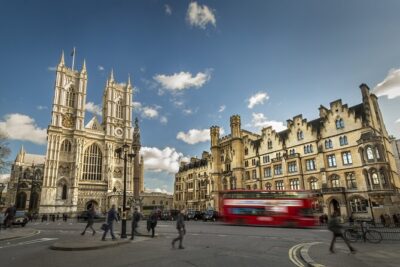
WW2 London Walking Tour & Churchill War Rooms Entrance Ticket
Read our review →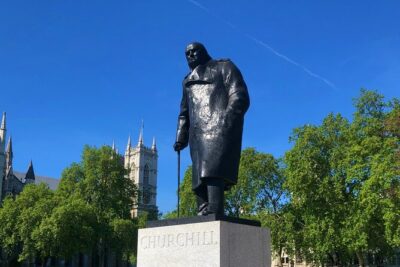
London in WW2 Walking Tour with Churchill War Rooms Visit
Read our review →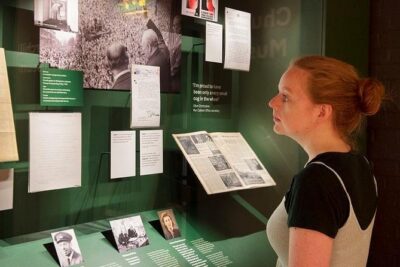
Churchill War Rooms “Behind The Glass” and Private Car Tour
Read our review →
Winston Churchill & London in World War II Walking Tour
Read our review →
Sir Winston Churchill Private Walking Tour & War Rooms
Read our review →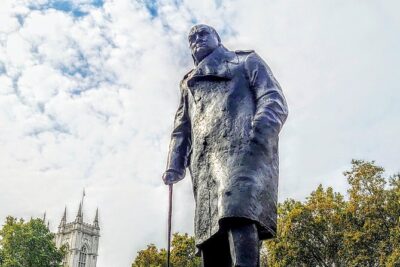
Winston Churchill’s London and The Churchill War Rooms – A Private Tour.
Read our review →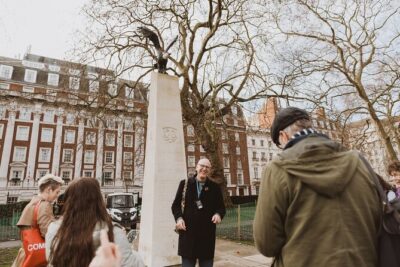
Winston Churchill Walking Tour with WII War Rooms Entrance
Read our review →Browse the lists this tour appears in