
Reviewed · WALKING TOURS
Small-group New Forest Discovery Walk from Lyndhurst
Look beyond the ponies and trees. This two-hour walk from Lyndhurst gives you a close look at the New Forest’s wildlife, old woodland, open heath, and long human story. With a maximum of 12 people, the outing feels personal rather than like a march behind a flag.
I especially like the slow pace, which leaves room to stop for birdsong, fungi, flowers, and insects. I also like the way the walk links nature with commoning, showing how ponies and cattle help shape the forest you see today. The main consideration is physical: the route covers about 8 kilometres, so you need moderate fitness and sensible footwear.
The walk begins at Bolton’s Bench at 10 a.m. and returns there. Marcus and Emily-Louise are warm, enthusiastic guides, with Marcus especially strong on birds and the wider ecology of the New Forest. At $23.30 per person, this is a fair price for a small-group walk led by people who clearly care about the place.
In This Review
- Key points at a glance
- Starting at Bolton’s Bench in Lyndhurst
- The Ridge and the open New Forest
- Denny Inclosure and the older woodland
- Wildlife from warblers to bee-wolves
- Pondhead Inclosure and working coppice woodland
- Guides who make the difference
- Is $23.30 good value?
- Who should book this Lyndhurst walk?
- Practical details before you go
- Should you book the New Forest Discovery Walk?
- FAQ
- Where does the New Forest Discovery Walk start?
- What time does the walk begin?
- How long is the experience?
- Where does the walk finish?
- How many people can join the walk?
- Is the walk suitable for families?
- What happens if bad weather cancels the walk?
Key points at a glance
- Bolton’s Bench start: Meet at this well-known Lyndhurst landmark before setting out across open heath.
- About 8 kilometres in two hours: The walk keeps moving, but the pace is relaxed enough for regular stops.
- Denny Inclosure woodland: Enter ancient woodland with beech, oak, fungi, flowers, and changing habitats.
- Pondhead Inclosure: See working coppice woodland and learn how woodland management continues today.
- Wildlife-led guiding: Look and listen for Dartford Warblers, fallow deer, butterflies, invertebrates, and woodland birds.
- Small group of up to 12: A useful size for asking questions without losing the feeling of being outdoors.
Starting at Bolton’s Bench in Lyndhurst
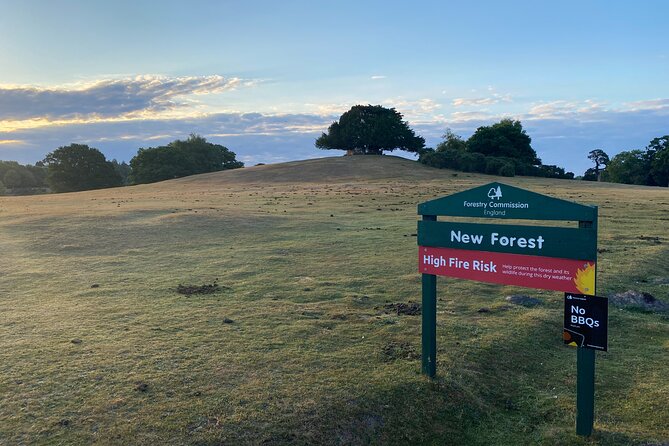
Bolton’s Bench is a fitting place to begin. From here, the route quickly opens onto the classic New Forest setting: broad heath, wet mire, and distant woodland. You are not starting with a long explanation in a car park. The forest is already in front of you.
The first section follows The Ridge. This gives you wide views and a quick sense of how varied the New Forest is. Heath and mire may look simple at first glance, but they support different plants, insects, birds, and animals. A good guide helps you notice those differences instead of treating the whole area as one green blur.
The 10 a.m. start works well for a morning outing. You have time to reach Lyndhurst, walk for two hours, and still keep the afternoon free. The meeting point is near public transportation, and the activity returns to the same place, which makes planning easier if you are exploring Lyndhurst without a car.
You should allow a little time to find Bolton’s Bench and arrive ready to walk. The meeting point is listed as Bolton’s Bench, Beaulieu Road, Lyndhurst, SO43 7DA. A mobile ticket is used, so there is no need to print a voucher.
More Walking Tours:
- Guided Walking Tour of New Forest National Park in Hampshire
★ 5.0 · 31 reviews - Oxford University Walking Tour With University Alumni Guide
★ 5.0 · 6,905 reviews - Tour for Muggles The Ultimate Harry Potter Walking Tour in London
★ 5.0 · 4,684 reviews
The Ridge and the open New Forest
The Ridge is one of the strongest parts of the route because it gives you a broad view before the walk moves into the trees. From this higher ground, you can see heath and mire stretching toward woodland. The views help explain why the New Forest is not simply a forest in the usual sense.
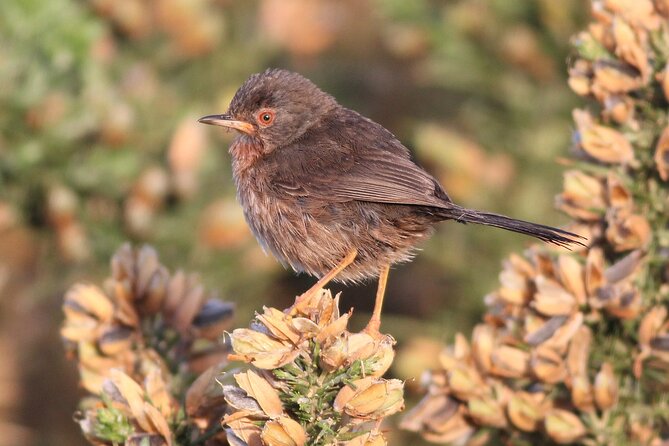
This open country is also a good place to start looking for birds. The Dartford Warbler is one of the species associated with New Forest heath, though no wildlife sighting can be guaranteed. You may hear birds before seeing them, which is where Marcus’s birding skill becomes especially useful.
One of the best details from the guiding is the attention paid to birdsong. Instead of only pointing out birds once they land in plain view, a guide may identify what you are hearing. That changes the walk. You begin to pay attention to sound, movement, and habitat rather than waiting for a large animal to cross the path.
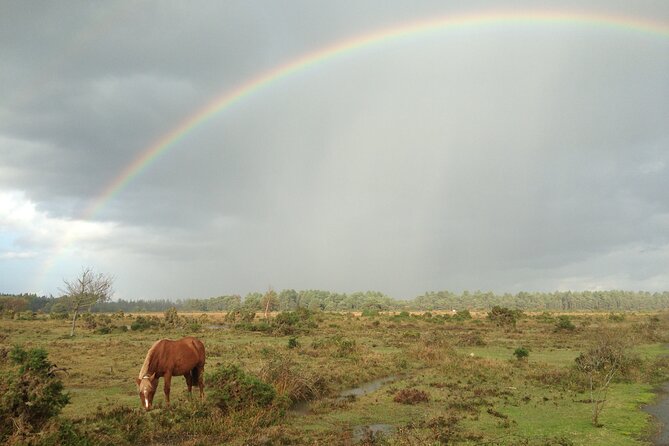
You may also see ponies and cattle in the open country. They are not just part of the postcard view. The walk explains the old practice of commoning and the part these animals play in keeping the heath and mire in their present form. This is a valuable lesson because it shows that the New Forest is shaped by both natural processes and long-standing human use.
The open section can be exposed in poor weather. Bring a waterproof layer, even if the morning begins bright. The weather policy requires suitable conditions, and the walk may be moved or refunded if poor weather causes cancellation.
Denny Inclosure and the older woodland
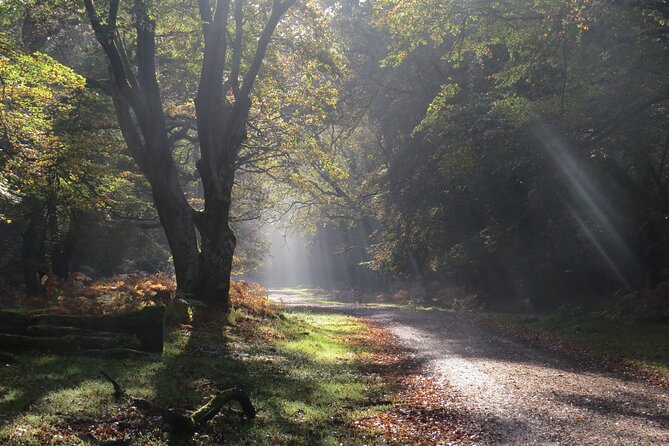
The route then enters Denny Inclosure, where the feel changes quickly. Open views give way to woodland shade, and the focus shifts from distant panoramas to details at your feet and above your head.
This is where you might find fungi, wildflowers, insects, and woodland birds. The range of subjects is one of the best reasons to choose this outing instead of taking a simple unaccompanied walk. You do not need to arrive with a specialist interest. The guides can move from birds to butterflies, from fungi to tree age, without making the walk feel like a classroom.
Ancient beech and oak are part of the story. Some trees are said to be as old as the human traditions connected with the forest, and seeing them in place gives the past a physical presence. The point is not simply to admire a large tree. It is to understand that the woodland has taken shape over centuries.
The forest also holds less obvious traces of its past. The route discusses the remains of the historic Parc Pale, which helps connect the woodland to earlier boundaries and management. Later history appears too, including the World War II bombing range. These details prevent the walk from becoming a narrow wildlife tour. You get nature, local customs, and national history in the same outing.
The woodland sections may feel more intimate than the opening stretch, but you should still expect uneven ground and a full walking distance of about 8 kilometres. This is not a short stroll with frequent benches. The pace is gentle, yet you need to be comfortable on your feet for roughly two hours.
Wildlife from warblers to bee-wolves
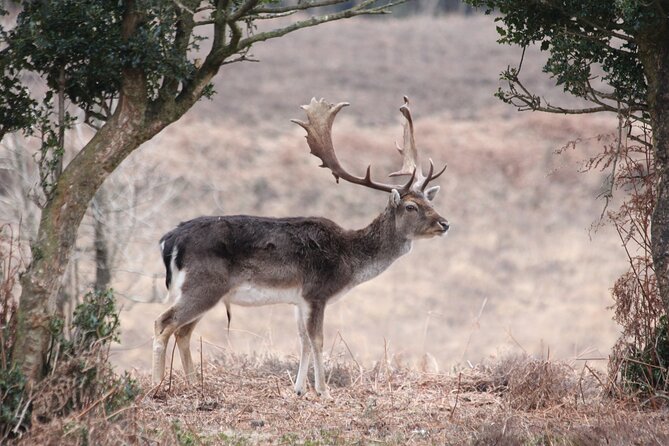
Wildlife is the main reason to book this experience, but it is best approached with realistic expectations. You are not visiting a zoo, and the guides cannot promise a particular bird or mammal. Conditions, season, and luck all matter.
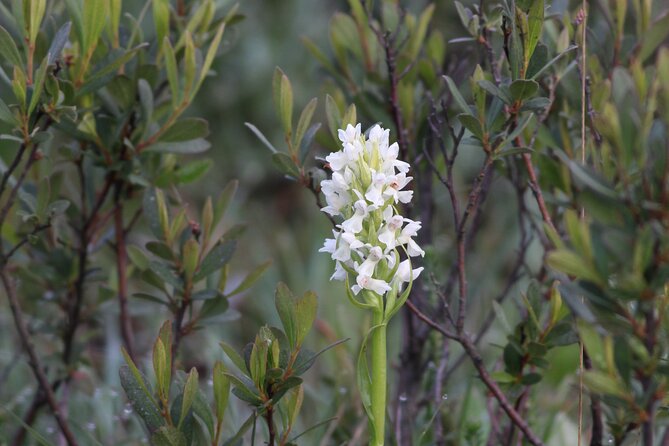
The possible list is wide. You might encounter the Dartford Warbler, hear several woodland birds, or spot fallow deer. You may also find butterflies, fungi, wildflowers, and small invertebrates that are easy to miss when walking alone.
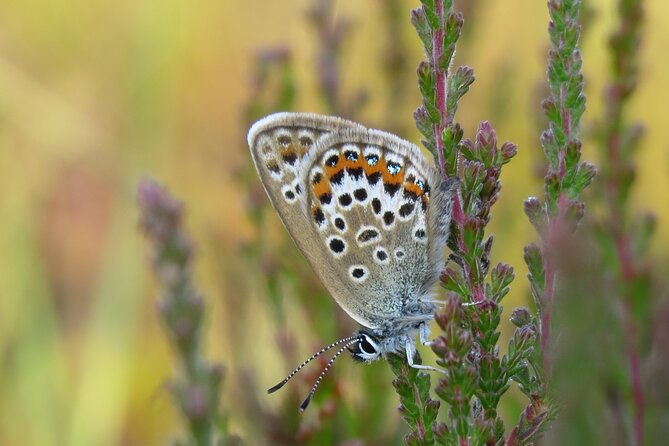
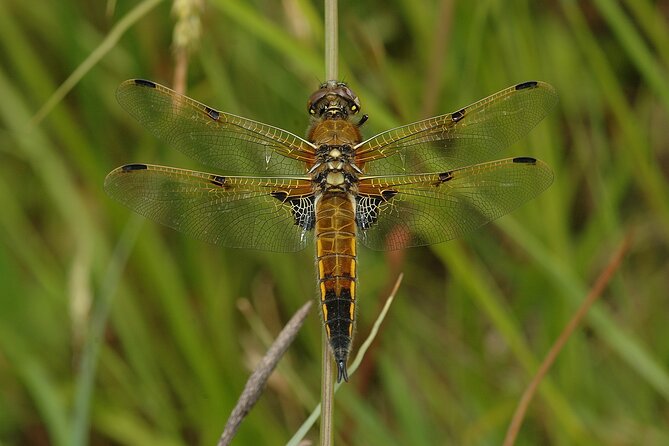
Past outings with Marcus and Emily-Louise have included a young cuckoo, a silver-washed fritillary, and a bee-wolf colony. These examples show the sort of close observation the walk encourages, but they should not be treated as a fixed schedule. The appeal is partly in seeing what the forest offers on the day.
I like the balance between larger wildlife and small creatures. Many nature walks focus on deer, ponies, and birds because they are easy to explain. Here, you can also learn about fungi, insects, and flowers. One person who joined a butterfly-focused outing came away with a much better grasp of butterfly life, which says something about the guides’ range.
Bird lovers will get the most from Marcus’s interest in birds and his ability to identify birdsong. Still, you do not need binoculars or advanced knowledge to enjoy the walk. The guiding is described as friendly and inclusive, so beginners can ask basic questions without feeling out of place.
Something different for another day:
- Leeds Castle Admission – Ultimate Explorer Tickets
★ 3.5 · 344 reviews - Southampton: Post-Cruise Tour to London via Salisbury, Stonehenge and Windsor
★ 4.5 · 333 reviews - Admission Pass to Eagle Heights in Kent
★ 4.5 · 110 reviews - Port Lympne Day Ticket
★ 3.5 · 97 reviews
Pondhead Inclosure and working coppice woodland
The return route passes through Pondhead Inclosure, a working coppice woodland. This section adds an important practical point: woodland is not always left untouched. Cutting and regrowth can be part of how a healthy, useful woodland is managed.
Coppicing creates different stages of growth, which can support different plants and animals. On this walk, you can look at the woodland not just as scenery but as a place where people still make decisions that affect wildlife. It is a useful counterpoint to the very old trees in Denny Inclosure.
The route’s mix of habitats is a real strength. Open heath, wet mire, ancient woodland, and coppice woodland each offer something different. That variety keeps the walk interesting and makes the two hours feel more substantial than a single-path outing.
The return to Bolton’s Bench also makes the route easy to understand. You are not left wondering where the walk ends or arranging a second pickup. After the final section, you finish where you started in Lyndhurst.
Guides who make the difference
A natural setting can be enjoyed without a guide, but the right guide changes what you notice. Marcus is repeatedly praised for his command of New Forest history, birds, mammals, habitats, and smaller wildlife. Emily-Louise adds the same friendly, enthusiastic approach, and the two work well together on walks.
Their strength is not only information. It is their ability to make the experience relaxed. You can ask questions along the way, and the small group gives the guides a fair chance to respond. On one outing, extra members of the team helped people ask more questions, which shows how much attention is given to keeping the walk welcoming.
That friendly tone matters if you are bringing children or someone new to nature walks. A daughter who felt unwell during one outing received kind help from the guides and other people in the group. You should still judge your own fitness carefully, but the atmosphere appears supportive rather than rigid.
The guides also seem comfortable adapting to different interests. If the group is keen on birds, the walk can include close attention to calls and identification. If people are curious about fungi, butterflies, or forest management, those subjects can become part of the conversation.
Is $23.30 good value?
At $23.30 per person, the price is reasonable for a two-hour guided walk with a maximum of 12 people. You are paying less for transport or a big attraction and more for interpretation: someone helping you understand what you are seeing.
The value is strongest if you want more than fresh air. An unaccompanied walk gives you the views, but it may not give you the story behind commoning, the clues to different habitats, or the ability to identify birdsong. The guide adds context without turning the outing into a formal lecture.
The group limit also matters. Twelve people is small enough for questions and conversation, but it does not guarantee a private tour. If you want a completely personal route based only on your interests, a bespoke walk would be a different product. For most people, this group size offers a good middle ground.
The walk is also a sensible introduction to the New Forest. You get a sample of several habitats and a broad explanation of how the area works. If you are staying nearby for a few days, what you learn here can improve the rest of your visit. You may notice ponies, heath plants, woodland birds, and old trees with a sharper eye afterward.
Who should book this Lyndhurst walk?
This experience suits families, couples, solo walkers, and anyone who wants a guided start to the New Forest. It is especially useful if you are visiting Lyndhurst for the first time or have been coming for years but still feel you only know the obvious paths.
You should have moderate physical fitness. The route covers about 8 kilometres, and the relaxed pace does not remove the need to walk that distance. Wear sturdy outdoor shoes and bring protection from changing weather. The exact ground conditions are not specified, so practical footwear is the safe choice.
Birdwatchers will find plenty to appreciate, particularly if Marcus is guiding your outing. Nature beginners should also feel at home because the subjects range from familiar ponies and trees to less obvious fungi and invertebrates.
People seeking a short, gentle stroll may find this more demanding than expected. Two hours can pass quickly, but 8 kilometres is still a proper walk. Likewise, if you need guaranteed sightings of deer or a particular bird, this is not the right format. Wild places work on their own timetable.
Service animals are allowed. The activity is near public transportation, but the available information does not give a detailed access assessment for the full route. If you have specific mobility needs, ask the provider before booking.
Practical details before you go
The walk starts at 10 a.m. from Bolton’s Bench in Lyndhurst and ends back at the meeting point. Confirmation arrives when you book, and the mobile ticket makes entry straightforward.
The group can include no more than 12 people. That limit is important because the walk depends on listening, spotting small wildlife, and asking questions. A smaller group also makes it easier to stay together when the guides stop to explain a bird call or an unusual plant.
Free cancellation is available if you cancel at least 24 hours before the local start time. Changes or cancellations inside that window are not accepted for a refund. If poor weather forces the provider to cancel, you can choose another date or receive a full refund.
I would plan to arrive early enough to find the meeting point, check your footwear, and settle in before 10 a.m. Keep your phone charged if you are relying on the mobile ticket. Most important, come ready to look closely. The best moments may be a sound in the trees, a butterfly in the heath, or a small patch of fungi rather than a dramatic animal sighting.
Should you book the New Forest Discovery Walk?
Book it if you want the New Forest explained by people who care about its birds, habitats, history, and working traditions. The combination of open heath, mire, ancient woodland, and coppice woodland gives you a broad introduction in a manageable morning.
I would choose this walk over a self-guided outing if you are curious about what lies behind the scenery. Marcus and Emily-Louise bring warmth and strong subject knowledge, and the $23.30 price is fair for a small group and two hours of thoughtful guiding.
Skip it if you want a very short walk, guaranteed wildlife sightings, or a route designed around a private interest. For everyone else, especially families and first-time visitors to the area, this is a practical and enjoyable way to meet the real New Forest.
FAQ
Where does the New Forest Discovery Walk start?
The walk starts at Bolton’s Bench, Beaulieu Road, Lyndhurst, SO43 7DA, UK.
What time does the walk begin?
The start time is 10 a.m.
How long is the experience?
The walk lasts approximately two hours and covers about 8 kilometres.
Where does the walk finish?
The activity ends back at the Bolton’s Bench meeting point.
How many people can join the walk?
The maximum group size is 12 people.
Is the walk suitable for families?
Yes. The experience is described as suitable for the whole family, though participants should have moderate physical fitness.
What happens if bad weather cancels the walk?
If the experience is canceled because of poor weather, you will be offered a different date or a full refund. You can also cancel for a full refund if you do so at least 24 hours before the start time.
Just added around South East England
- Private Kent castles★ 4.5 · 6 reviews
- 25 minute Royal Surrey Helicopter Tour★ 5.0 · 7 reviews
- 25 minute Helicopter Discovery Trial Lesson★ 5.0 · 9 reviews
- RHS Garden Wisley and Tea in the Garden Entry Ticket★ 4.0 · 10 reviews
- Private Minibus Arrival Transfer: Gatwick to Central London Airport★ 3.0 · 10 reviews
- Yoga & Forest Bathing Day Retreat★ 5.0 · 10 reviews
- Stonehenge Tour from Southampton to London★ 4.0 · 11 reviews
- 40 minute Helicopter Explorer Trial Lesson★ 5.0 · 12 reviews
Walking Tours, compared.

Oxford University Walking Tour With University Alumni Guide
Read our review →
Tour for Muggles The Ultimate Harry Potter Walking Tour in London
Read our review →

Cambridge University Walking Tour by Alumni™ Kings College Option
Read our review →
Blackbeard to Banksy – The Ultimate Walking Tour of Bristol
Read our review →
Air Raid Shelter + St. Nicholas Market Walking Tour
Read our review →
Walking Tour of Bath with Blue Badge Tourist Guide
Read our review →