
Reviewed · FULL-DAY
Ten Lakes Tour – Full Day – Up to 4 People
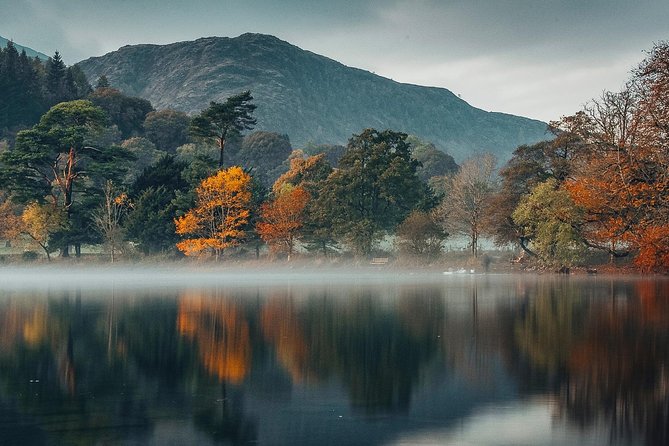
Ten lakes, one day, no map stress. This private tour from Windermere gives you a big sweep of the Lake District in an air-conditioned vehicle, with rugged fells, narrow lanes, dry stone walls, mountain passes, and historic villages along the way. I like the chance to see both famous places such as Windermere and Grasmere and quieter waters such as Crummock Water. I also like that the tour is private for up to four people, so your day is not tied to a large coach group.
The main consideration is time. You spend about 10 to 15 minutes at each lake, with much of the eight-hour day spent driving between them. That makes this an excellent first look at the region, but not the right choice if you want long walks, boat rides, or a slow afternoon beside one lake.
In This Review
- Key points to know before booking
- Why this private day works well
- Windermere and Esthwaite Water: starting with the best-known views
- Coniston Water and Rydal Water: industry beside poetry
- Grasmere: a village stop with a Wordsworth connection
- Thirlmere: a beautiful view with a difficult past
- Bassenthwaite and Derwentwater: northern lakes with different moods
- Crummock Water and Buttermere: the quiet finish
- What the $602.63 price really buys you
- Who should book this tour?
- Should you book the Ten Lakes Tour?
- FAQ
- How long is the Ten Lakes Tour?
- How many people can join the private tour?
- Which lakes are included?
- Is transportation included?
- Are food, drinks, and attraction admissions included?
- What happens if I need to cancel?
Key points to know before booking
- Ten lakes in roughly eight hours: You cover Windermere, Esthwaite Water, Coniston Water, Rydal Water, Grasmere, Thirlmere, Bassenthwaite, Derwentwater, Crummock Water, and Buttermere.
- Private transport for up to four people: The $602.63 group price works out to about $150.66 per person if four people share it.
- A driver who does more than drive: Guides including Derek, Kevin, Simon, and Gary have been praised for friendly service, local information, flexibility, and route planning.
- A strong choice for narrow Lake District roads: You avoid dealing with winding lanes, traffic, parking, and directions yourself.
- Historic and literary details throughout: You hear about Roman Fort Galava, Wordsworth, Manchester’s water supply, mining, hill crofters, and more.
- Short photo stops rather than extended visits: The tour gives you a taste of each place, while food, drinks, and attraction admissions cost extra.
Why this private day works well
The Lake District looks compact on a map, but its roads make sightseeing slower than you might expect. Lanes twist between stone walls and hills, and traffic can build around popular towns. Some roads are narrow enough to make driving feel like work, especially if you are unfamiliar with Cumbria.
That is where this tour earns its price. Your driver handles the route and parking while you watch the views. You can focus on the changing scenery instead of checking a navigation app at every junction.
The group size matters, too. With only your party of up to four, you get a more personal day than you would on a large sightseeing coach. Gary and Agata, for example, adjusted the route around a marathon in one of the towns on the original plan. That sort of flexibility is useful in a region where roads, events, and weather can affect the day.
The guides also seem to be one of the strongest parts of the experience. Derek is described as communicative, Kevin as flexible and informative, and Simon as friendly and well informed. Those details matter because a scenic drive becomes much more rewarding when you understand what you are seeing.
Still, you should set your expectations correctly. This is not ten separate lake visits with time for a full walk at each one. The listed stops run from 10 to 15 minutes apiece. You will have time to look, take photos, and hear a few facts, but the wider day depends on the drive itself.
Windermere and Esthwaite Water: starting with the best-known views
The day begins at 9:30 am, with Windermere as the first stop. At 10.5 miles long, one mile wide, and 220 feet deep, Windermere is England’s largest natural lake. It is also the lake most closely linked with the area’s tourism.
You may notice an odd detail about the town. Windermere itself does not sit directly on the water. The town took the lake’s name when the railway arrived in 1847 and the station was called Windermere. The older lakeside town of Bowness gradually grew together with it, creating the familiar destination now called Bowness-on-Windermere.
The 15-minute stop is short, but it gives you a quick introduction to the scale of the area. Windermere has long been a working waterway. Heavy materials moved along it, and the Romans built Galava fort at its northern end, near Waterhead.
Next comes Esthwaite Water, a smaller 280-acre lake known for its trout fishery. This 10-minute stop offers a change of pace from Windermere. Instead of a major resort setting, you get a quieter body of water with facilities for boat and bank fishing.
Because this is a brief sightseeing stop, you should not expect time to fish. The value is in seeing how varied the lakes can be. Windermere feels broad and famous. Esthwaite feels more restrained and closely linked with local outdoor use.
Coniston Water and Rydal Water: industry beside poetry
Coniston Water is five miles long and the third-longest lake in the region. Its three islands are owned by the National Trust, and the water once carried slate and ore from the Coniston mines toward the Furness peninsula.
That working past gives Coniston a different character from the purely scenic stops. You are looking at a beautiful lake, but also at an old transport route shaped by mining and railway development. A branch of the Furness Railway reached Coniston village in the 1850s, opening the area to more Victorian visitors.
The 15-minute stop is enough for photographs and a short look around. If Coniston is high on your personal list, you may wish you had more time. The tour is designed to show you the whole district, not to give one lake the afternoon.
Rydal Water is much smaller, measuring about three quarters of a mile long and a quarter of a mile wide. Its appeal is tied partly to William Wordsworth, whose favorite viewpoint is said to have been Wordsworth’s Seat above the western end.
The stop lasts about 10 minutes. That is enough to understand why Rydal attracted poets, but not enough for the walk up to the viewpoint. If the Wordsworth connection interests you, note that the tour gives you the setting and the story rather than a literary walking tour.
Grasmere: a village stop with a Wordsworth connection
Grasmere is one of the most appealing stops for visitors who want more than lake views. The lake itself is one mile long, half a mile wide, and 75 feet deep. Wordsworth called the surrounding area the most loveliest spot than man hath found, and his connection with nearby Dove Cottage adds a strong literary thread.
The small island in Grasmere once served as a favorite destination for Wordsworth while he stayed at Dove Cottage. It is privately owned today, so you should not try to land there.
The tour allows about 15 minutes here. That is not enough for a full visit to Dove Cottage or a long village wander, and the itinerary does not include admission to attractions. It is, however, enough to take in the setting and get your bearings in one of the Lake District’s historic villages.
I see Grasmere as one of the most useful stops for a first visit. You get a lake, a village, literary history, and a sense of why this part of Cumbria has attracted artists and writers for generations. If you want food or a proper village break, remember that lunch is not included and the stop is brief.
Thirlmere: a beautiful view with a difficult past
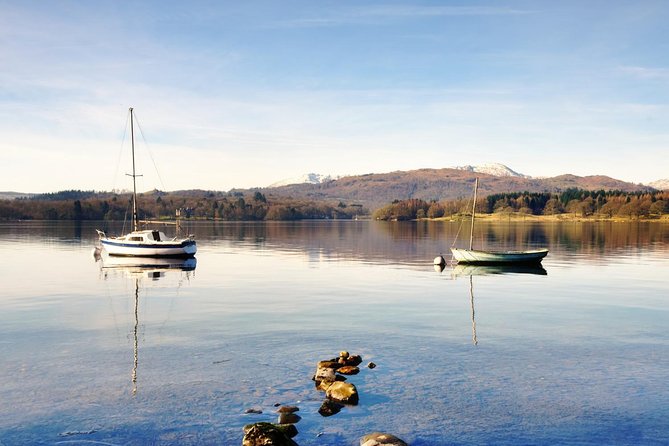
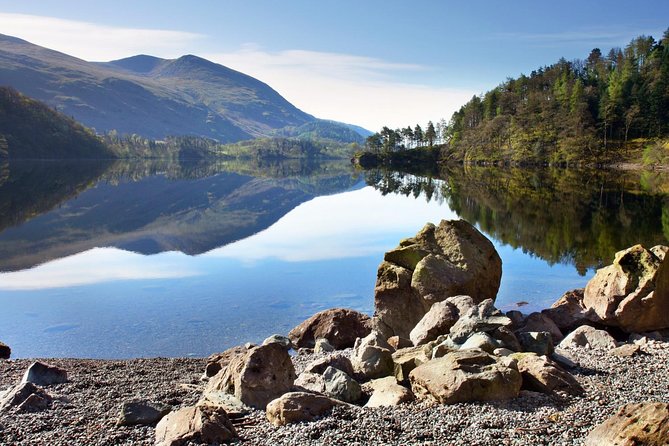
Thirlmere runs for 3.5 miles and reaches a depth of 158 feet. It was once two smaller lakes. In 1889, Manchester City Corporation Waterworks bought the area, built a dam, and turned it into a reservoir.
That change came at a cost. The settlements of Armboth and Wythburn were submerged, with the little church at Wythburn left as the main surviving building. Water now travels to Manchester through a 96-mile aqueduct.
This 15-minute stop is a reminder that the Lake District is not only a place for leisure and postcards. Its waters have been used for mining, transport, fishing, and urban supply. I appreciate that the route includes this context because it gives the scenery more meaning.
You will probably spend the stop looking across the water and up at the fells. The tour does not provide time for a longer walk or a detailed visit to Wythburn Church, so treat Thirlmere as a scenic and historical pause.
Bassenthwaite and Derwentwater: northern lakes with different moods
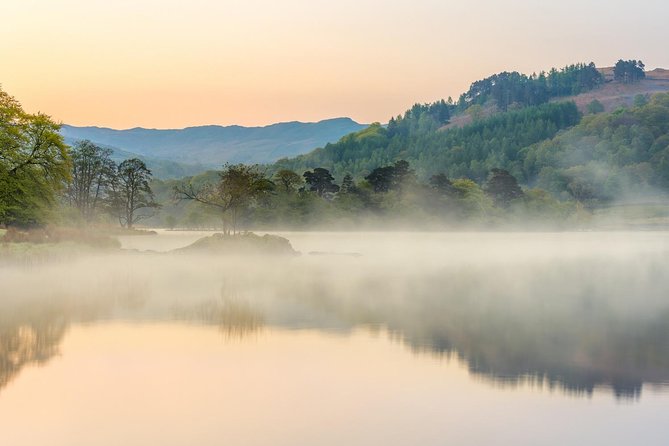
Bassenthwaite is the most northerly of the ten lakes and one of the largest, at four miles long and three quarters of a mile wide. It is also shallow compared with many of the others, reaching about 70 feet.
The National Park Authority owns Bassenthwaite, and there are no major settlements along its shores. Sailing boats often appear on the water, while a shore path follows much of the western side. Access to the eastern shore is limited, apart from the area around Mirehouse.
Bassenthwaite also has a rare natural feature. It is home to the vendace, an endangered fish found only here and in Derwentwater. Near Mirehouse, a small open-air theatre was built in 1974 for a reading of Morte d’Arthur for the Tennyson Society. Alfred, Lord Tennyson often stayed at Mirehouse and is thought to have composed much of the poem there.
The stop lasts 10 minutes, making it one of the quickest pauses of the day. You will get the view and the story, but not the time to explore the shore path or Mirehouse grounds.
Derwentwater, at three miles long, one mile wide, and 72 feet deep, has a more dramatic reputation. It is fed by the River Derwent, which gathers water in the high fells around Borrowdale.
The lake changes mood with the weather. Southern winds can send waves against Friar’s Crag, while calm mornings can turn the surface into a mirror. That changing quality is part of its appeal. You might see a bold, stormy lake, or a quiet sheet of water framed by hills.
The 15-minute stop gives you a quick taste of the area. If you have a particular interest in Derwentwater, you may prefer a separate boat trip or walking day on a future visit. Here, the point is to place it within the wider story of the region.
Crummock Water and Buttermere: the quiet finish
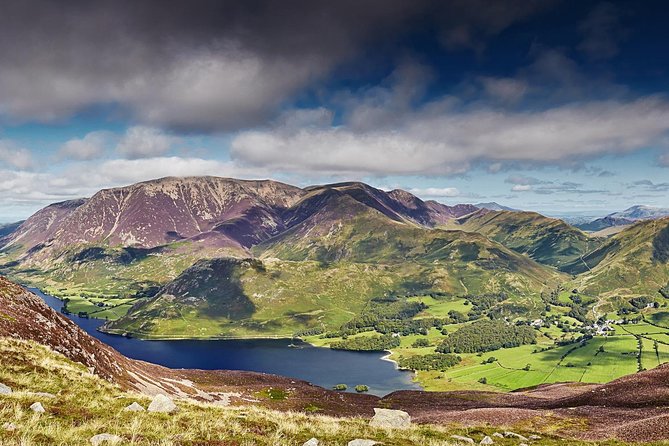
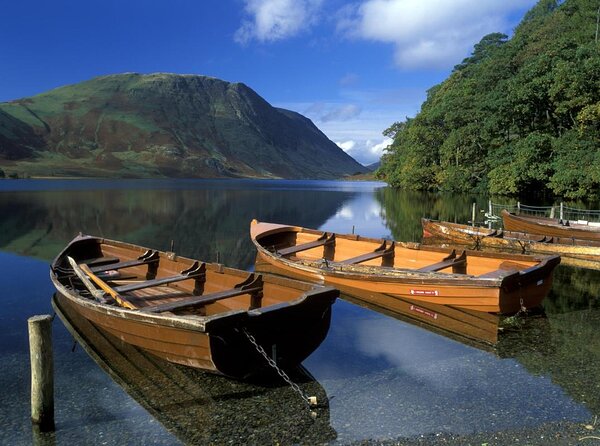
Crummock Water is often passed over in favor of nearby Buttermere, but it has an impressive setting of its own. Grassmoor rises to the west, Mellbreak frames the east, and the clear water sits between steep fell sides made from Skiddaw slate.
The lake is 2.5 miles long, three quarters of a mile wide, and 140 feet deep. Streams feed it, including the beck from Scale Force, which drops 170 feet and is the tallest waterfall in the Lake District. The River Cocker begins here before flowing toward Cockermouth and joining the River Derwent.
The 15-minute stop is a good chance to photograph a less obvious part of the district. You will not have time to walk to Scale Force, but knowing it is part of the water system makes the view more interesting.
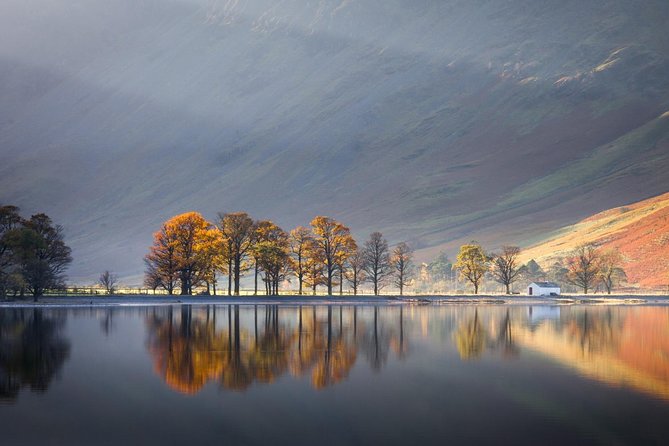
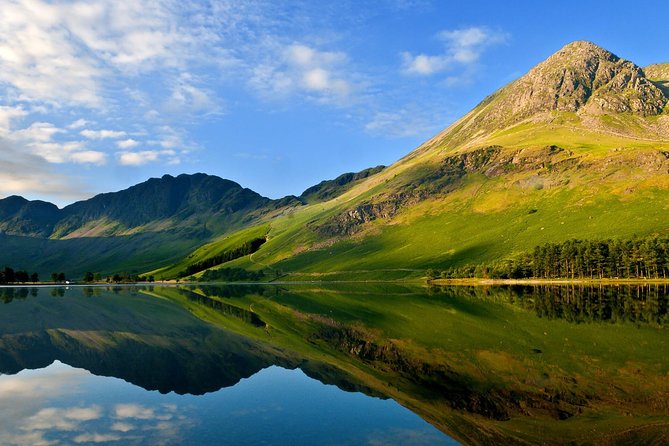
Buttermere is the final lake, measuring 1.5 miles long, three quarters of a mile wide, and 75 feet deep. Its name refers to the dairy pastures around it. The combination of water, steep mountains, and open walking country made it popular from the early days of Lake District tourism.
A footpath circles the lake, and paths lead toward Haystacks and Red Pike. Again, the 15-minute stop is a preview, not a hiking excursion. You can take in the classic view, but you will need another visit for the full walk around the shore.
Ending with Buttermere makes sense. After a day of moving through the region, you finish with one of the clearest examples of the Lake District’s classic scenery: a lake, high fells, and walking routes in every direction.
What the $602.63 price really buys you
The group price is $602.63 for up to four people. Split four ways, that is about $150.66 each. For a couple, the per-person cost is higher, but the tour includes private transportation, an air-conditioned vehicle, parking fees, and a full day with a local driver.
The real value is not admission to attractions. The stops themselves are sightseeing points, and food, drinks, and attraction entry fees are extra. You are paying for transport, route planning, local commentary, and the ability to see a wide section of the Lake District in one day.
I think the price makes the most sense for four people sharing the vehicle, especially if you have limited time or do not want to drive. It is also useful if this may be your only visit to Cumbria and you want to cover the famous lakes along with quieter places.
For two people, compare the cost with your own transport plans. The tour saves you from parking problems and difficult roads, but it does not replace a slower stay focused on walking or one particular lake.
Who should book this tour?
I would point this tour toward:
- First-time visitors who want a broad introduction to the Lake District
- Couples or families of up to four people
- People staying in or near Windermere
- Visitors with one full day available
- Anyone uncomfortable driving narrow, winding country roads
- Photographers who want many different settings in one day
- People who enjoy local history, poetry, and countryside views
I would hesitate if you want a long hike, a relaxed pub lunch, a boat ride, or extensive time in Grasmere or Bowness. The schedule is active and sightseeing-focused.
The private format helps soften the tight timing. You may have some flexibility to spend more or less time at a stop, though the full route still requires steady progress. The guide may also adjust the plan when local events affect roads, as happened when a marathon changed the route.
The experience has a 4.9 rating from nine reviews, with repeated praise for clean, comfortable vehicles, friendly drivers, clear communication, and flexible planning. Those are exactly the practical details that can make a long touring day enjoyable rather than tiring.
Free cancellation is available if you cancel at least 24 hours before the 9:30 am start. Changes made inside that window are not accepted, so keep the timing in mind when arranging other plans.
Should you book the Ten Lakes Tour?
Book it if your goal is to see the Lake District’s variety in one well-organized day. You will see large lakes and small ones, working water and quiet water, famous villages and less visited shores. You will also hear how Romans, miners, poets, water engineers, fishers, and hill crofters shaped the region.
Do not book it expecting ten leisurely lake visits. This is a fast, scenic overview with short stops and plenty of driving. For four people who value comfort, local guidance, and efficient sightseeing, it is a strong use of one day. For walkers, it works best as an introduction that helps you choose where to return and spend more time.
FAQ
How long is the Ten Lakes Tour?
The tour lasts approximately eight hours and starts at 9:30 am.
How many people can join the private tour?
Up to four people can participate, and only your group takes part.
Which lakes are included?
The route includes Windermere, Esthwaite Water, Coniston Water, Rydal Water, Grasmere, Thirlmere, Bassenthwaite Lake, Derwentwater, Crummock Water, and Buttermere.
Is transportation included?
Yes. The tour includes private transportation in an air-conditioned vehicle, along with parking fees. Pickup is offered.
Are food, drinks, and attraction admissions included?
No. Food and drinks are not included, and attraction entry fees are extra.
What happens if I need to cancel?
You can receive a full refund if you cancel at least 24 hours before the experience start time. Cancellations or changes made less than 24 hours before the start are not accepted for a refund.
Full-Day, compared.
Stonehenge, Windsor Castle and Bath Full Day Guided Tour
Read our review →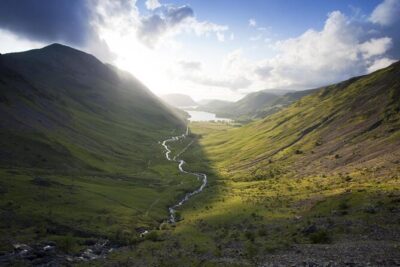
Mountain Goat Full Day Tour: Ten Lakes Tour of the Lake District
Read our review →
London Full Day Sightseeing Tour with London Eye
Read our review →
Cotswolds Villages and Oxford Full Day Tour from London
Read our review →
Cotswolds Villages Full-Day Small-Group Tour from Oxford
Read our review →
Steam Trains, Whitby, and the North York Moors Full-Day Tour from York
Read our review →
Hampton Court Guided Tour. Full day Access & High Tea
Read our review →
Full Day Cotswolds Tour & Shakespeare’s Stratford From London
Read our review →Browse the lists this tour appears in