
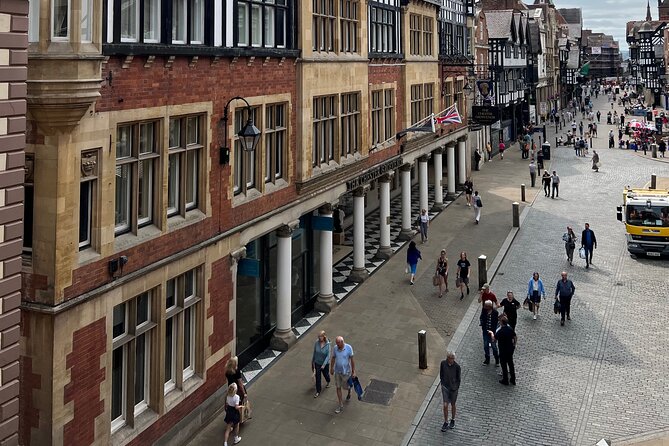
Reviewed · WALKING TOURS
The Heart of Chester Walking Tour – Guided Walk
Chester’s best stories are under your feet. The Heart of Chester Walking Tour makes the city easier to read, linking Roman ruins, medieval streets, the Rows, Chester Cathedral, and the famous Eastgate Clock in a compact 90-minute walk. You move through the city centre with a professional Green Badge Guide, rather than simply ticking off sights without knowing why they matter.
I especially like the small group limit of 15 people, which should make it easier to hear the guide and ask questions. I also like the broad sweep of the tour, from Roman military power to modern shops and restaurants in old buildings. The main drawback is simple: this is an outdoor walking tour, and admission to historic buildings is not included. You will see and discuss major sites, but you should not expect a full interior visit.
The tour costs $16.65 per person and begins at 1:00 pm outside the Chester Visitor Information Centre by the Town Hall. It ends at 2 Bridge Street, right in the city centre. With a 4.9 rating from 83 reviews and 99 percent of customers recommending it, this is a strong choice if you want a quick, useful introduction before exploring Chester on your own.
In This Review
- Key points before you book
- Why a 90-minute introduction works well in Chester
- Starting at Northgate Street and the Town Hall
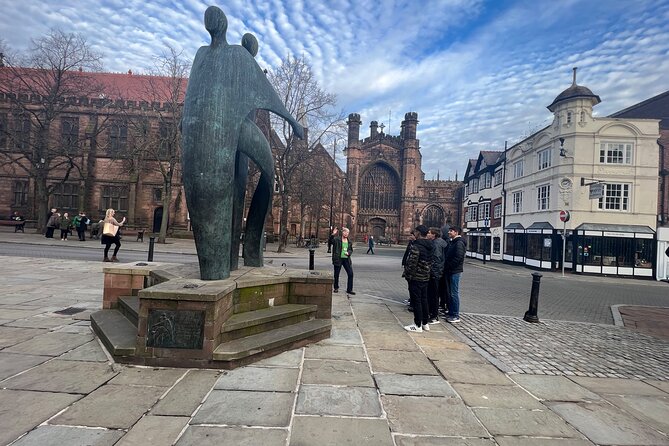
- Chester Cathedral, from Mercian princess to Victorian changes
- Watergate Street and the people who lived above the shops
- Four main streets leading to the Cross
- Eastgate and the clock above the city wall
- Chester Rows and the city’s unusual shopping streets
- The Chester Cross and the heart of the old market city
- Eastgate Street, Bridge Street, and Chester as a city of love
- Guide quality, group size, and the pace
- Is $16.65 good value?
- Who should book this walk?
- FAQ
- Where does The Heart of Chester Walking Tour start?
- Where does the tour finish?
- What time does the tour begin?
- How long does the walking tour last?
- What language is the tour offered in?
- How many people can join the tour?
- Are historic building admissions included?
- Can I cancel for a full refund?
- Should you book The Heart of Chester Walking Tour?
Key points before you book
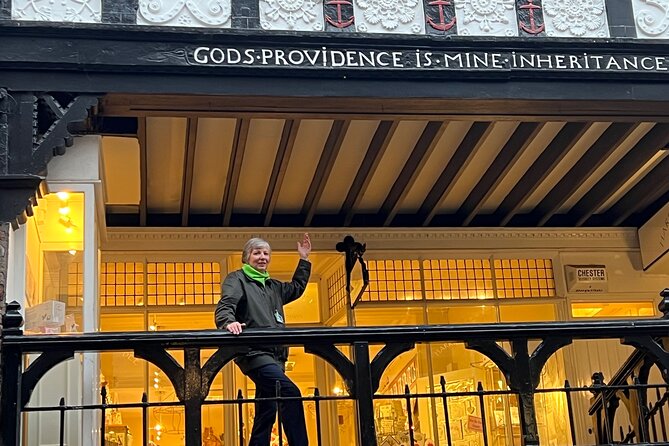
- Roman Chester beneath the modern city: You may hear about ruins hidden below cafés and shops, a vivid reminder that ancient Chester is still part of everyday life.
- A compact route through the historic core: The walk covers Northgate Street, Chester Cathedral, Watergate Street, the Rows, the Cross, Eastgate, and Bridge Street.
- Two named guides receive warm praise: Caroline and Phil are both noted for clear explanations, local insight, good pacing, and a friendly manner.
- The Rows make this more than a standard city walk: You learn how Chester’s unusual raised shopping galleries relate to medieval trade and town life.
- Small groups help with the storytelling: A maximum of 15 people is a useful balance between personal attention and a social group atmosphere.
- You finish near shops and places to eat: The end point on Bridge Street leaves you in a handy spot for continuing your afternoon.
Why a 90-minute introduction works well in Chester
Chester can look compact on a map, but its past is layered and not always easy to spot. Roman military planning, medieval markets, religious change, Georgian and Victorian alterations, and modern city life all occupy the same few streets. A guide gives you a framework for seeing those layers.
The length is one of the tour’s strengths. Ninety minutes is enough to cover the central sights without taking over your day. You can use it early in a Chester visit to get your bearings, or schedule it after lunch and then return to the places that caught your attention.
I would not choose this tour if you want long interior visits or a slow architectural study of every building. The route gives each major area roughly ten minutes, so the experience is brisk. Its value comes from connections: the guide explains how the fortress, trading town, religious centre, and modern shopping district fit together.
The strongest praise focuses on the guides’ ability to make facts understandable. Caroline is described as easy to follow, with a steady pace that suited someone who was not fluent in English. Phil is praised for adding humour, answering questions, and putting Chester’s past into perspective. That matters on a history walk. Dates alone can turn a city into homework, while good explanation helps you notice what you are looking at.
More Walking Tours in England:
- Oxford University Walking Tour With University Alumni Guide
★ 5.0 · 6,905 reviews - Tour for Muggles The Ultimate Harry Potter Walking Tour in London
★ 5.0 · 4,684 reviews - London Jack The Ripper Guided Walking Tour
★ 5.0 · 3,131 reviews
Starting at Northgate Street and the Town Hall
The meeting point is the Chester Visitor Information Centre at the Town Hall on Northgate Street. This is a practical starting place because you begin in the middle of Chester’s historic core, not on the edge of town.
The opening story brings together a Roman fortress, a medieval abbey, and Chester’s Gothic-style Town Hall. That combination sets the tone for the rest of the walk. You are not studying one period in isolation. You are seeing how different eras reused and reshaped the same urban space.
The Town Hall square also gives the guide room to establish the city’s basic layout. That is useful because Chester’s central streets can feel like a maze at first. The four main streets lead toward the Cross, and the route later uses this simple pattern to explain Chester as a fortress, trading centre, and military base.
You get time for photographs here and at the later stops. Still, keep your camera ready rather than expecting long pauses. The tour has a lot to cover, and the guide’s commentary is the main event.
Chester Cathedral, from Mercian princess to Victorian changes
The next stop brings you to Chester Cathedral and the surrounding area. The stories here reach from a Mercian princess and a talking goose to a Norman earl, a wolf connected with lawmaking, the Dissolution of the Monasteries, and a Victorian facelift.
That is an unusually lively set of subjects for one short stop. The point is not only to admire the cathedral’s stonework. You begin to understand how religious institutions shaped Chester and how the building survived major changes in English history.
The reference to the Dissolution is especially important. Chester Cathedral survived the period when Henry VIII’s government closed monasteries and religious houses, but its role and appearance changed over time. The later Victorian work also reminds you that an old building is rarely untouched. What looks medieval may include later repairs, restorations, and changes in taste.
The cathedral stop is free to visit from the outside as part of the walk, but entry into historic buildings is not included. If you want to go inside, treat that as a separate plan and check the cathedral’s own opening information. The guided walk gives you context, but it is not a cathedral admission ticket.
Watergate Street and the people who lived above the shops

Watergate Street shifts attention from grand institutions to ordinary life. The guide talks about medieval houses, everyday residents, wealthy landowners, townhouses, and mansions built to make an impression.
This is where Chester becomes more human. Streets are not only routes between monuments. They are places where people lived, worked, traded, displayed status, and adapted buildings to changing needs.
The stop also prepares you for the Rows. You begin to see why Chester’s architecture cannot be understood from street level alone. The raised galleries and upper shops are part of a larger pattern of commercial and residential life.
I like this part of the route because it gives balance. A city history focused only on kings, soldiers, and church leaders can feel distant. Stories about houses and ordinary streets help you picture the people who made Chester function day after day.
A few more tours and experiences worth a look
- Stonehenge, Windsor Castle and Bath Full Day Guided Tour
★ 4.5 · 5,346 reviews - London Jack the Ripper Guided Tour with Ripper-Vision
★ 4.5 · 4,840 reviews - Original Harry Potter Locations Tour – Guided Tour of London
★ 5.0 · 4,117 reviews - Ghost, Ghouls and Gallows Tour : Guided Tour with Boat Ride
★ 4.5 · 3,212 reviews
Four main streets leading to the Cross
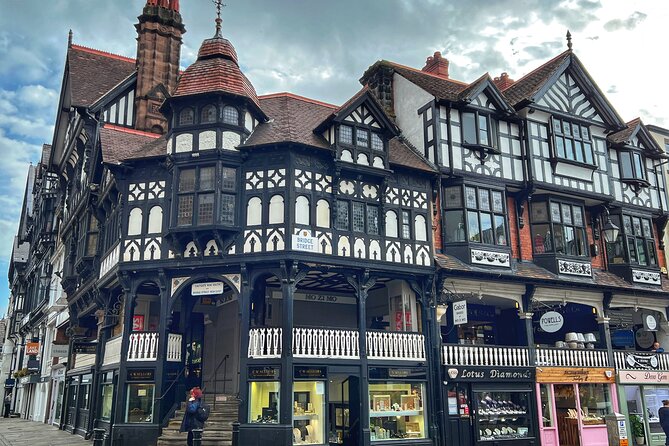
The walk then uses Chester’s four main streets to explain the city’s changing purpose. In different periods, Chester was a medieval city, a major trading hub, a fortress for a legion, and a base for armies.
This is one of the most useful orientation points on the tour. You are not simply walking from one attraction to another. You are learning how the street plan relates to Chester’s military and commercial roles.
A Roman fortress needed order and control. A trading town needed routes, markets, storage, and shops. A medieval city had its own social and religious systems. Later armies used Chester as a base for different reasons. The guide’s job here is to show how one place can serve several purposes without losing all traces of earlier eras.
The route is central and free to access, but it involves ordinary city pavements, crowds, and changes in level. The tour notes that there are steps to climb and asks for a moderate level of physical fitness. Wear shoes you can walk in comfortably, and allow for the fact that the tour continues even if the weather is less than perfect.
Eastgate and the clock above the city wall
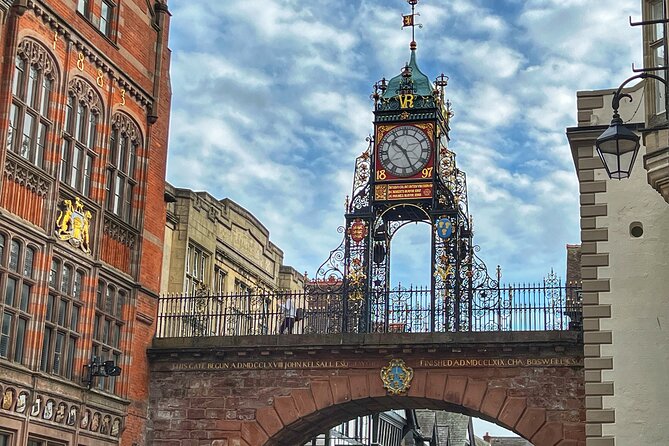
Eastgate Clock is Chester’s signature view, and the walk gives it the attention it deserves. You also stand on the city walls, which were first built for defence and later became a grand promenade.
That change in purpose tells you plenty about Chester. Walls once kept enemies out. Later, they became a pleasant route for seeing the city from above. The same stonework moved from military necessity to public enjoyment.
The clock is a natural photo stop, but it is more useful when you know how it fits into the city. From the wall, you can understand Chester’s compact centre and the relationship between the old defensive circuit and the streets below.
There are steps on the route, so this is not a completely level stroll. If stairs are difficult for you, ask before booking for current guidance on the route. The supplied information confirms that steps are part of the experience, but it does not promise an alternative path.
Chester Rows and the city’s unusual shopping streets
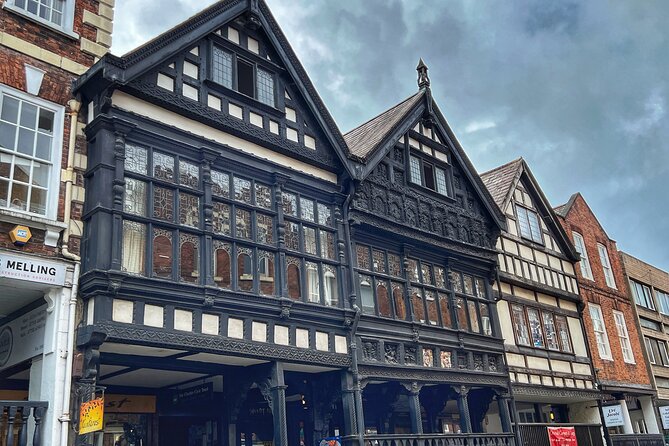
The Rows are probably the tour’s most distinctive architectural feature. Chester is famous for these raised galleries, and the walk explains their connection to old streets, shops, and trade.
This is where the tour earns its modest price. A casual walk along the Rows can be enjoyable, but you may miss why they are built at different levels or how they relate to the buildings below. The guide helps turn an attractive oddity into a readable part of Chester’s past.
The route also includes references to undercrofts and Roman remains beneath the modern city. This is one of the most memorable ideas in the whole walk: you might be drinking coffee or browsing a shop while ancient masonry lies below your feet. The contrast makes Chester feel less like a museum and more like a living city built over its own past.
You will also hear about stories of adversity, adventure, and love, along with the present-day shops, bars, and restaurants occupying historic buildings. That modern note is important. Chester is not frozen in the medieval period, and the guide connects the old streets to the city you see now.
Because the route is moving, you should not assume you will enter every undercroft or building discussed. The walk explains the architecture and points out what to notice. Admission to historic buildings is separate.
The Chester Cross and the heart of the old market city

The Chester Cross is a natural centre point. Here, the guide brings together medieval markets, old tales, a Roman headquarters, and the buskers who now help animate the space.
The Cross helps you understand Chester as a place of exchange. Goods, rumours, laws, entertainment, and news all met in public spaces like this. Some of the old stories may be playful, but they reveal how people remembered and retold the city’s past.
The mention of cock-and-bull stories adds a bit of humour, which suits the stop. Phil’s tours are praised for making history interesting rather than solemn, and this is the sort of location where a light touch can help.
It is also a good place to pause and watch city life. The walk is historical, but it is not sealed off from the present. Modern pedestrians, shops, musicians, and old buildings share the same space.
Eastgate Street, Bridge Street, and Chester as a city of love
The final section follows Eastgate Street and Bridge Street, with a theme of Chester as a city of love. That gives the tour a softer finish after the military, religious, and commercial chapters.
The route ends at 2 Bridge Street, in the heart of the centre. This is convenient because you can continue with shopping, food, or further sightseeing without needing transport back to the starting point.
The final streets also bring together the tour’s main ideas. Chester is ancient, but it is not only ancient. It is a city where old buildings support modern businesses and where romantic stories sit beside hard facts about war, trade, law, and religion.
I would plan a little time after the walk rather than rushing to another appointment. You may want to return to the Rows, look again at the Eastgate Clock, or visit a building that the guide introduced from the outside.
Guide quality, group size, and the pace
The experience is led by a professional Green Badge Guide, and the named guides associated with the tour are Caroline and Phil. The strongest praise goes to their command of Chester’s story, clear speaking, enthusiasm, humour, and ability to answer questions.
Caroline’s measured delivery may help if English is not your first language. One account specifically found her speech slow and easy to understand. Phil is praised for making the past enjoyable and placing Roman, medieval, and modern Chester into a clear sequence.
The group limit is 15 people. That is small enough for a more personal feel, though the actual group may be smaller or close to the maximum. A small group also makes it easier to keep up in busy streets and hear explanations at outdoor stops.
The 90-minute duration means the pace is purposeful. You should be ready to walk, climb steps, and remain outside. It is not designed for a long coffee break or extended time inside monuments.
Is $16.65 good value?
At $16.65 per person, the tour is fairly priced for a professional 90-minute introduction to central Chester. All the stops are free to see from public areas, so you are paying for the guide’s explanation, route planning, local perspective, and the time saved figuring out the city yourself.
That distinction matters. If you are happy to read signs and wander alone, you can see many of these streets without paying. But a self-guided stroll may not explain the Roman ruins beneath the city, the purpose of the Rows, the changes to the cathedral, or the shift from defensive walls to a public promenade.
The value is best for a first visit, a short stay, or anyone who wants a reliable overview before choosing which places deserve more time. It is less useful if you have already spent several days studying Chester’s past or want access to interiors included in the price.
The tour is often booked about 23 days ahead on average. That suggests you should not leave it until the last minute if your schedule is fixed, especially since the group is capped at 15 people.
Who should book this walk?
I would recommend it to first-time visitors, couples, solo sightseers, families with older children, and local residents who want a fresh look at familiar streets. The mix of Roman, medieval, religious, military, and modern stories gives you more than a single-theme tour.
It also suits you if you prefer a concise walk rather than a half-day commitment. The central route helps you get your bearings, and the finish near Bridge Street makes it easy to continue exploring.
You may want to skip it if you cannot manage steps or a 90-minute outdoor walk. It may also disappoint you if your main goal is to enter several historic buildings, since admissions are not included.
Free cancellation is available if you cancel at least 24 hours before the 1:00 pm start time. Cancellations or changes within 24 hours are not refunded or accepted, so keep that deadline in mind.
FAQ
Where does The Heart of Chester Walking Tour start?
It starts at the Chester Visitor Information Centre beside the Town Hall, Northgate Street, Chester CH1 2HJ, UK.
Where does the tour finish?
The walk ends at 2 Bridge Street, Chester CH1 1NP, in the city centre.
What time does the tour begin?
The scheduled start time is 1:00 pm.
How long does the walking tour last?
The tour lasts approximately 1 hour and 30 minutes.
What language is the tour offered in?
The regular tour is offered in English.
How many people can join the tour?
The maximum group size is 15 people.
Are historic building admissions included?
No. The experience includes a guided walk by a professional Green Badge Guide, but admission to historic buildings is not included.
Can I cancel for a full refund?
Yes. You can receive a full refund if you cancel at least 24 hours before the local start time. Cancellations within 24 hours are not refunded.
Should you book The Heart of Chester Walking Tour?
Yes, if you want a clear first look at Chester and enjoy history delivered in manageable pieces. The tour’s best features are its central route, small group size, Roman remains, the Rows, the city wall, and guides such as Caroline and Phil, who bring clarity and humour to the walk.
Book it early if your dates are firm, wear comfortable shoes, and expect steps. I would schedule it near the beginning of your Chester visit, then use the rest of the day to return to the places that caught your eye. For $16.65, it is a sensible way to turn a pretty old city into a place you can actually understand.
Just added around England
- The Private British Museum Tour★ 5.0 · 6 reviews
- London’s Chinatown Food Experience★ 4.0 · 6 reviews
- London to Southampton Cruise Port | Private Transfer★ 5.0 · 6 reviews
- Christmas in Canterbury, Dover and Greenwich with Christmas Lunch★ 4.5 · 6 reviews
- Transfer from Heathrow Airport to London hotel on private car★ 4.5 · 6 reviews
- London Gatwick (LGW) Airport Departure Private Transfer – Hotel to Airport★ 4.0 · 6 reviews
- Bristol private pub hopping and sightseeing with local guide★ 5.0 · 6 reviews
- Isle of Wight Tour App, Hidden Gems Game and Big Britain Quiz (7 Day Pass) UK★ 4.0 · 6 reviews
Walking Tours, compared.

Oxford University Walking Tour With University Alumni Guide
Read our review →
Tour for Muggles The Ultimate Harry Potter Walking Tour in London
Read our review →

Cambridge University Walking Tour by Alumni™ Kings College Option
Read our review →
Blackbeard to Banksy – The Ultimate Walking Tour of Bristol
Read our review →
Air Raid Shelter + St. Nicholas Market Walking Tour
Read our review →
Walking Tour of Bath with Blue Badge Tourist Guide
Read our review →
Changing of the Guard Guided Walking Tour in London
Read our review →Browse the lists this tour appears in