Reviewed · TICKETS
The London Dungeon Admission Ticket
History gets gruesome here. The London Dungeon turns Jack the Ripper, Sweeney Todd, the plague, Henry VIII, and the Great Fire into a fast-moving theatrical show. I like the superb actors and the clever sets, which make the stories feel close and immediate. I also like that you learn about London’s darker past while laughing, jumping, and trying not to become part of the entertainment.
The main caution is simple: this is not a gentle history lesson. Dark rooms, loud effects, grim scenes, tight spaces, audience participation, and a short ride may unsettle younger children or anyone with a nervous disposition. The English-only presentation also matters if you do not follow spoken English comfortably.
In This Review
- Key Points Before You Book
- Finding the London Dungeon at County Hall
- Entering the Bad Old Days
- Sweeney Todd and the Meat Pie Threat
- Whitechapel, the Ten Bells, and Jack the Ripper
- Plague, Torture, and the Price of Speaking Up
- Henry VIII, Traitors’ Gate, and a Royal Change of Mood
- The Great Fire of 1666
- The Mad Judge and Newgate Prison
- The Final Ride and Dungeon Tavern
- Is $37.21 Good Value?
- Who Will Enjoy It Most?
- Practical Details That Matter
- Should You Book the London Dungeon?
- FAQ
- Where is the London Dungeon?
- How long does the London Dungeon experience last?
- Is admission guaranteed?
- Is the London Dungeon suitable for children?
- Is the experience available in languages other than English?
- What does the standard ticket include?
Key Points Before You Book
- True stories with a wicked sense of humor: Jack the Ripper, Sweeney Todd, the plague, Henry VIII, and the Great Fire of London shape the main scenes.
- Strong live acting: Performers play the historical villains, judges, prisoners, and locals, often speaking directly to you.
- A roughly 1-hour-50-minute visit: The attraction is long enough to feel substantial, but some scenes can move slowly if your group is held between rooms.
- A ride near the end: The final ride adds a physical jolt after the walk-through scenes, though its exact format may change.
- Not for small children: Children under 5 cannot enter. Children under 16 need an adult aged 18 or older, and entry for children under 12 is left to a parent or guardian.
- Online booking saves time: Online tickets guarantee admission, while buying at the door may mean waiting for a much later time slot.
Finding the London Dungeon at County Hall
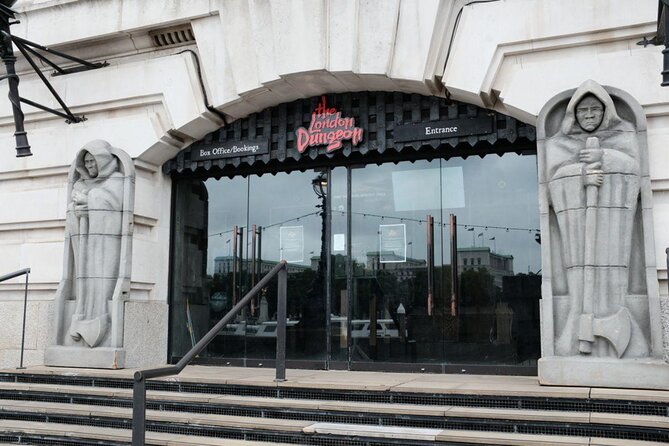
The London Dungeon sits in the Riverside Building at County Hall, beside Westminster Bridge in central London. Its address is Riverside Building, County Hall, Westminster Bridge Road, London SE1 7PB.
This is a very practical location for a day near the South Bank. You can pair it with other central London sights, but allow enough time for your booked entry and the full visit. The experience begins and ends at the same place, so you do not need to arrange a separate pickup or navigate back across town after the final scene.
Your mobile ticket is accepted, and confirmation arrives at booking. Bring identification matching the lead passenger name on the ticket. That name cannot be changed after it has been added, and staff may check the identification before entry.
The experience has a maximum group size of 40 people. That is not the same as having only 40 people inside the attraction, since several groups can move through different areas, but it helps keep the staged sections manageable. You may still be asked to stand close to the group in narrow passages or crowded rooms.
A few more tours and experiences worth a look
- Tower of London and Crown Jewels Exhibition Ticket
★ 4.5 · 6,677 reviews - Thorpe Park Admission Ticket
★ 4.0 · 5,915 reviews - The London Eye Entry Ticket
★ 4.0 · 3,498 reviews
Entering the Bad Old Days
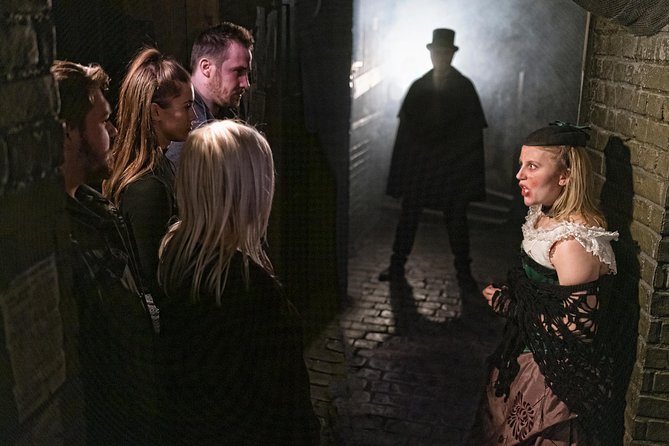
The London Dungeon does not present London history through glass cases and quiet labels. You walk through a series of rooms and stages while actors perform scenes around you. You see, hear, and sometimes smell the setting, with special effects designed to make the past feel unpleasantly close.
That theatrical format is the attraction’s greatest strength. A good performer can explain a historical event in a few minutes and give it a human face. The best scenes also make you part of the story, so you are not simply watching a speech from the back of a room.
The tone is not pure horror. It mixes grim facts with jokes, exaggeration, and audience interaction. You might be asked to respond, chosen for a small part, or placed in the middle of a scene. If you prefer to watch quietly, you can still follow the action, but you should expect the performers to address the group.
The quality of the acting receives consistent praise, and it is easy to see why. The actors carry much of the experience, since the rooms themselves are only half the show. Costumes, voices, timing, and sudden appearances do the rest.
Sweeney Todd and the Meat Pie Threat
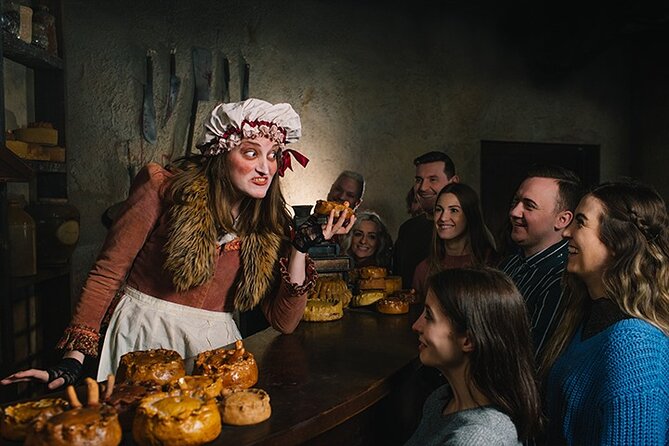
Sweeney Todd’s barber shop brings one of London’s most famous fictional villains into the Dungeon’s version of Fleet Street. The story is presented as a mix of stage comedy and menace, with Todd’s barbering and butchery at the center.
This section works best if you enjoy dark humor. The subject is gruesome, but the presentation is knowingly theatrical rather than a realistic crime reconstruction. You might laugh one moment and flinch the next.
The scene also gives you a taste of how the attraction uses its surroundings. Instead of simply telling you that Sweeney Todd was dangerous, it builds a room where the character can confront you directly. Keep your attention on the performer, not just the props. The live interaction is the point.
Whitechapel, the Ten Bells, and Jack the Ripper
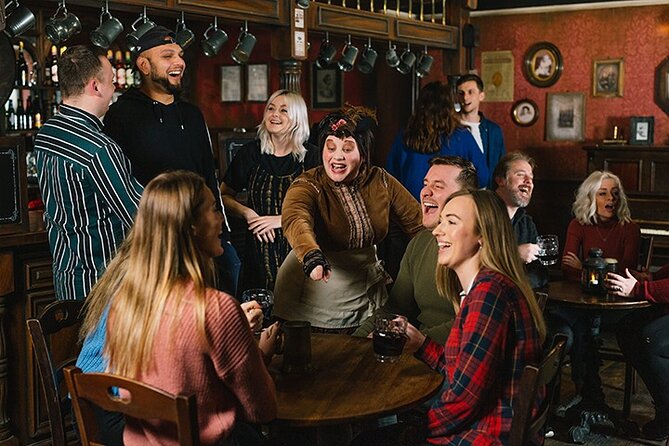
The Whitechapel section takes you into the fear surrounding Jack the Ripper’s murders. The Ten Bells setting recalls the pub where his victims once drank, and the atmosphere changes from stage comedy to suspicion and dread.
This part is among the more unsettling sections because it deals with real victims and a killer who was never identified. The show uses the cramped streets and shadows of Whitechapel to create uncertainty. You may find yourself checking corners even though you know the next scare is part of a performance.
The Dungeon does not replace a serious historical study of the murders. It condenses a complicated subject into a dramatic sequence, with the emphasis on mood and audience reaction. I find it useful as a starting point for understanding the fear of Victorian Whitechapel, but not as your only source if you want detailed history.
The dark staging can also make it harder to follow every spoken line. If you are relying on English subtitles or partial understanding, this section may be more difficult than a museum display.
Something different for another day:
- Stonehenge, Windsor Castle, and Bath from London
★ 4.5 · 18,662 reviews - London Big Bus Hop-On Hop-Off Tour with Optional River Cruise
★ 3.5 · 10,803 reviews - London Small Group Tour of Historical Pubs
★ 5.0 · 10,422 reviews - Stonehenge, Windsor Castle and Bath with Pub Lunch in Lacock
★ 4.5 · 7,402 reviews
Plague, Torture, and the Price of Speaking Up
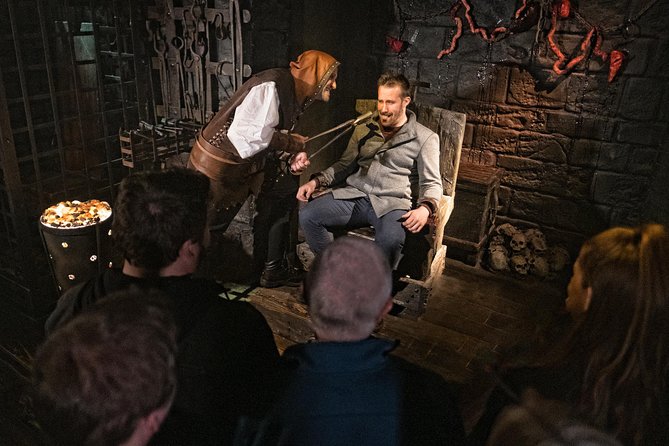
The plague scenes use smell and sight to make disease feel physical. This is one of the attraction’s clearest examples of sensory theater. You are not simply told that illness was frightening and dirty. The setting tries to make you uncomfortable enough to remember it.
The Dungeon then moves into torture and interrogation. The message is blunt: in earlier London, authority did not always need good evidence before demanding a confession. These scenes are deliberately exaggerated, but they point to the fear built into the legal system.
You may encounter stairs, passageways, darkness, and sudden effects. The attraction gives warnings about nervous dispositions and claustrophobia for good reason. Some areas are tightly packed, and the total blackout sections can be difficult if you dislike losing your sense of space.
The physical layout is part of the experience, but it also creates practical limits. If stairs or enclosed corridors are challenging for you, this is worth considering before you pay. The information provided does not promise step-free access, so contact the attraction directly if you need a specific accessibility answer.
Henry VIII, Traitors’ Gate, and a Royal Change of Mood

Henry VIII appears here not as the familiar portrait of a powerful king, but as a dangerous ruler surrounded by betrayal, punishment, and execution. You travel through a scene linked to Traitors’ Gate and the fate awaiting those who fell out of royal favor.
This section helps balance the attraction’s focus on ordinary criminals and notorious London characters. You see how power could make an executioner out of the state itself. It is less about memorizing names and dates than understanding the terror of crossing the wrong person.
The Dungeon’s version of history is broad and theatrical. It leaves out detail in favor of a clear story that works in a dark room with a live audience. That makes it easy to follow, but history fans should expect entertainment first and precision second.
The Great Fire of 1666
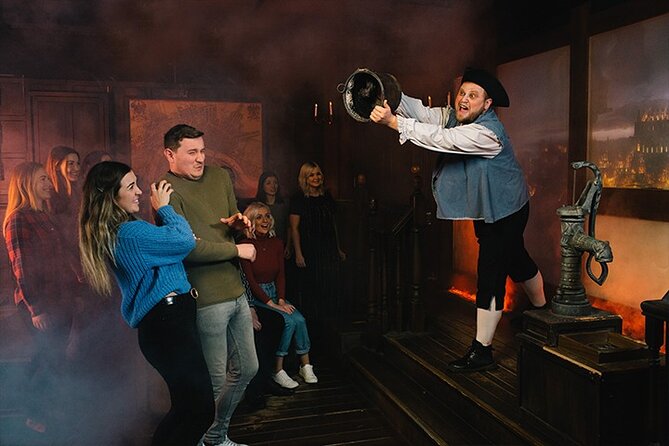
The Great Fire of London gives the show one of its most recognizable historical events. The attraction takes you back to 1666 and presents the disaster through staged effects and storytelling.
This is a good change of pace from murderers and torture. The fire was not a villain with a face, yet it transformed London and affected huge numbers of people. In the Dungeon, you feel the panic and disruption more than you study the city’s rebuilding.
I like this part because it connects the personal stories to a much larger event. The attraction is strongest when it shows how ordinary people experienced major changes. You leave with a clearer sense that London’s past was not only royal ceremonies and grand buildings. It was also smoke, disease, fear, crowded streets, and sudden loss.
The Mad Judge and Newgate Prison
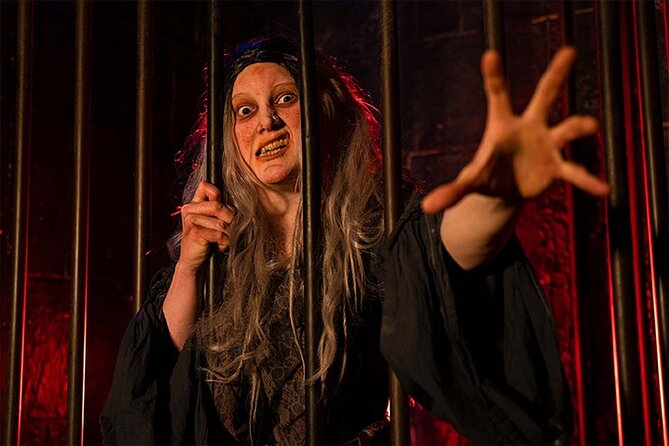
At some point, the audience is put on trial. The simulated court scene features a mad judge and a deliberately absurd approach to prosecution. You should expect the possibility of being singled out or made part of the proceedings.
This scene leans heavily into comedy. After the darker material, the ridiculous courtroom gives you room to laugh at the old system while still recognizing its cruelty. It is one of the attraction’s better examples of using humor to make a serious point.
The journey then leads toward Newgate Prison and a hanging sentence. The show makes it clear that you are guilty, at least according to the Dungeon’s logic. That direct address keeps the final stretch lively, even if you have already had enough darkness by this point.
Some people find the pacing slow, especially if performers speak quickly or if a group is waiting between rooms. Pay attention to the instructions at the start and keep side conversations quiet. Loud talking can make it harder to hear the actors, particularly in dark, enclosed sections.
The Final Ride and Dungeon Tavern
The visit finishes with a short, thrilling ride. The exact ride presentation can change, so I would not book this solely for one specific type of vehicle or effect. The ride has been described in different forms at different times, but its purpose remains the same: give you one last physical scare after the walk-through scenes.
If you dislike sudden motion, ask staff about the current ride before entering. One person may enjoy the final jolt while another may prefer to skip it. The experience can still be worthwhile for someone who likes live theater but not rides, though the attraction’s central route includes this final element.
After surviving the main horrors, you reach the Dungeon Tavern. It provides a lighter finish, with local gossip and a chance to come down from the staged terror. Food and additional drinks are not included in the standard admission, so plan to pay separately if you choose to order something.
Is $37.21 Good Value?
At $37.21 per person, the London Dungeon is not a cheap quick stop. The visit lasts about 1 hour and 50 minutes, which gives you more than a brief photo opportunity or a single haunted-house walk-through.
I think the price makes sense if you value live performers, detailed sets, sound effects, and audience participation. You are paying for a produced show with several themed sections, not simply entry to a historic building. The actors are the biggest part of that value, and strong performances can make repeat visits enjoyable.
The value is weaker if you want a traditional museum or a detailed academic account of London. The attraction compresses history and reshapes it for drama. You will learn useful context, but you will also get jokes, jump scares, darkness, and theatrical distortion.
Booking online is important. The online ticket guarantees admission, while buying at the door may send you to the next available time, potentially much later in the day. Since the attraction is popular and is booked an average of 23 days ahead, I would reserve before building the rest of your London schedule around it.
Free cancellation is available up to 24 hours before the start time for a full refund. Changes or cancellations inside that 24-hour window are not accepted for a refund.
Who Will Enjoy It Most?
I would recommend the Dungeon to:
- Teenagers and adults who enjoy theatrical scares
- Families with older children who are comfortable with dark subjects
- History fans who like stories brought to life rather than displayed on panels
- Visitors looking for a South Bank attraction that is not focused on royal London
- Repeat visitors who enjoyed the actors, sets, and audience interaction before
I would think twice if you are visiting with young children. Children under 5 are not allowed, and children under 16 must be accompanied by an adult aged 18 or older. Entry for children under 12 is at the parent or guardian’s discretion, but the content is clearly aimed at older children and adults.
You should also reconsider it if you dislike enclosed spaces, total darkness, loud effects, sudden scares, or being addressed by performers. The show is run in English, and people who are not comfortable with spoken English may miss some of the jokes and story details, even though the visual and sensory effects remain accessible.
Practical Details That Matter
The experience is offered in English and uses a mobile ticket. Most people can participate, but the attraction itself warns that it is not suitable for anyone of a nervous disposition.
The walk-through contains stairs, narrow passages, darkness, and some tightly packed areas. The group limit is 40 people, but you should still expect to move as part of a close cluster during some scenes.
Allow the full 1 hour and 50 minutes rather than planning a tight connection afterward. The attraction can be entertaining from beginning to end, but the timing between rooms and the pace of the performers may vary.
Should You Book the London Dungeon?
Book it if you want dark history with live acting, audience interaction, and a final thrill ride. The strongest reasons to go are the excellent performers, convincing sets, and unusual look at London beyond kings, palaces, and famous monuments.
Skip it if you want quiet historical detail, dislike scares, or are bringing children who may be frightened. At $37.21, it is good value for a polished theatrical attraction, but only if its mix of horror, comedy, and historical storytelling matches your taste.
For most older children, teenagers, and adults who enjoy a bit of theatrical mischief, I would book online and give the Dungeon a place in a South Bank day. Just arrive ready to laugh, listen, and keep your head attached.
FAQ
Where is the London Dungeon?
The London Dungeon is at the Riverside Building, County Hall, Westminster Bridge Road, London SE1 7PB, UK.
How long does the London Dungeon experience last?
The experience lasts approximately 1 hour and 50 minutes.
Is admission guaranteed?
Online tickets guarantee admission. Tickets bought at the door require you to take the next available time slot, which could be much later in the day.
Is the London Dungeon suitable for children?
Children under 5 are not permitted. Children under 16 must be accompanied by an adult aged 18 or older, and entry for children under 12 is at the discretion of a parent or guardian. The attraction is not recommended for people of a nervous disposition.
Is the experience available in languages other than English?
The Dungeon tour is run in English. People who are not proficient in English can still experience the sensory effects, but they may not understand the attraction in the same way as English speakers.
What does the standard ticket include?
The standard ticket includes admission to The London Dungeon. Food and additional drinks are not included.
Just added around London
- The Private British Museum Tour★ 5.0 · 6 reviews
- London to Southampton Cruise Port | Private Transfer★ 5.0 · 6 reviews
- London’s Chinatown Food Experience★ 4.0 · 6 reviews
- Christmas in Canterbury, Dover and Greenwich with Christmas Lunch★ 4.5 · 6 reviews
- Transfer from Heathrow Airport to London hotel on private car★ 4.5 · 6 reviews
- London Gatwick (LGW) Airport Departure Private Transfer – Hotel to Airport★ 4.0 · 6 reviews
- Jazz Notes – Jazz Jam Ticket★ 5.0 · 6 reviews
- Transfer from London Stansted Airport to Central London★ 5.0 · 6 reviews
Tickets, compared.
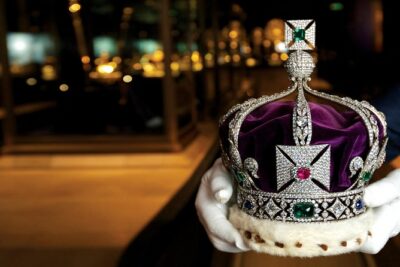
Tower of London and Crown Jewels Exhibition Ticket
Read our review →


Liverpool City Sights Hop On Hop Off City Tour – 24hr Ticket
Read our review →