Reviewed · LONDON TOURS
Turmoil, Templars & Oliver Twist London’s Squalor and Splendour
London keeps its darkest stories in plain sight. This two-hour walk through Holborn links Oliver Twist locations with medieval power, old prisons, British law, and the strange survival of London’s historic streets. I like the compact small-group format, and I like the way the route moves beyond the usual postcard sights. The main consideration is pace: you need to cover about two miles at a reasonable walking speed.
The guide, Tom, earns special praise for clear explanations, strong local knowledge, and thoughtful answers to questions. I also like the value at $27.42 per person, especially since the tour covers several historic areas and finishes near Blackfriars Station. Still, this is a street-based history walk, not a series of long indoor visits, so visitors wanting museum time may find it too quick.
In This Review
- Key points to know before you book
- Why Holborn makes such a good history walk
- Starting near Covent Garden and Bow Street
- Freemasons’ Hall and the city’s private institutions
- The Royal Courts of Justice and London law
- Temple Church and the Knights Templar
- The London Silver Vaults and the value of looking down
- Staple Inn and the survival of old London
- The Old Bailey and the site of Newgate Prison
- What the Oliver Twist theme adds
- Tom’s guiding style and the small-group advantage
- Price, timing, and practical value
- Who should book this London walking tour
- Should you book it?
- FAQ
- How long does the tour last?
- How much does the tour cost?
- Where does the tour begin?
- Where does the tour finish?
- What language is offered?
- How many people can join the tour?
- How much walking is involved?
- Can I cancel for a full refund?
Key points to know before you book
- Seven stops in about two hours: The route packs Bow Street, Freemasons’ Hall, the Royal Courts of Justice, Temple Church, the Silver Vaults, Staple Inn, and the Old Bailey into one focused walk.
- Dickens meets medieval London: You connect the grim world of Oliver Twist with the Knights Templar, old prisons, courts, and the streets of Holborn.
- Tom is a major strength: His clear delivery, useful answers, and suggestions for other historic places add value beyond the planned route.
- Small groups matter here: With a maximum of 15 people, you have a better chance to hear the guide and ask questions.
- The walk finishes near Blackfriars Station: The endpoint at Superdrug Health Clinic on New Bridge Street is useful for continuing toward the River Thames or catching the Underground.
- Book with walking in mind: The tour is not recommended if you cannot walk two miles at a reasonable pace.
Why Holborn makes such a good history walk
Holborn is one of those central London areas where grand institutions and darker stories sit close together. On this route, you move from Covent Garden toward the legal quarter, Temple, and the edge of the old City. The result is a walk about power, punishment, religion, crime, and daily life.
I like this setting because it gives the tour a clear thread. The history is not presented as a list of dates. Instead, each stop helps explain how London developed into a city shaped by courts, prisons, guilds, religious orders, and working people.
The Oliver Twist angle adds a human side. Charles Dickens used London’s poorer streets and institutions to show hunger, crime, charity, and social neglect. You do not simply hear about Dickens as a famous author. You see how the city around you helped form the world he wrote about.
At the same time, the route reaches further back than the Victorian period. The Knights Templar, medieval legal institutions, and old criminal courts all help explain why this part of London feels so layered. A short walk can cover centuries because the neighborhood has kept so many reminders of earlier London.
Other London trips people book alongside this one:
- Stonehenge, Windsor Castle, and Bath from London
★ 4.5 · 18,662 reviews - London Big Bus Hop-On Hop-Off Tour with Optional River Cruise
★ 3.5 · 10,803 reviews - London Small Group Tour of Historical Pubs
★ 5.0 · 10,422 reviews
Starting near Covent Garden and Bow Street
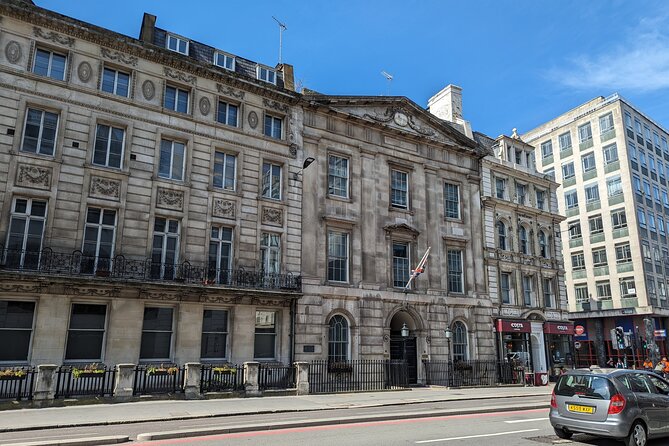
The meeting point is Covent Garden Underground Ltd on Long Acre, London WC2E 9JT. That location is convenient for public transport and easy to combine with time around Covent Garden.
The first stop is the Bow Street Museum of Crime and Justice, where the guide explains the Bow Street Runners. These early law enforcers form a useful opening because they introduce the city’s changing approach to crime and policing.
You will spend about five minutes here, so expect an outdoor explanation rather than a long museum visit. That short stop works well as a scene setter, though anyone hoping to explore a full collection should plan separate museum time.
The Bow Street Runners also fit the tour’s wider theme. London’s crime stories were not only about famous criminals. They were about how the city tried to control theft, disorder, and violence as its population grew. This gives the Oliver Twist material a firmer setting.
Freemasons’ Hall and the city’s private institutions
The walk continues to Freemasons’ Hall, with about five minutes devoted to its history. The building brings a different kind of power into the story. Instead of courts or prisons, you consider the role of a major private organization in London’s civic and social life.
This is a good example of the route’s range. You are not looking only at famous royal buildings. You are also learning how organizations, professional groups, and institutions helped shape the city.
The stop is brief, so the guide’s explanation matters. Tom’s clear style is especially useful on subjects that can become confusing or overly technical. You can ask questions in the small group, which helps if you want to understand the building’s place in London rather than simply take a photograph.
The Royal Courts of Justice and London law
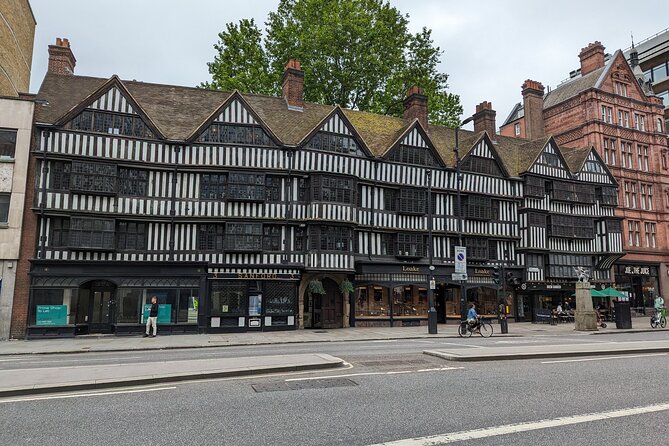
The Royal Courts of Justice provides one of the route’s strongest visual and historical pauses. The tour covers its history in roughly five minutes, connecting the building with the long development of British law.
This part should appeal to you if you enjoy seeing how national institutions operate within an old city. The courts are not presented as an isolated landmark. They form part of a legal district that has shaped Holborn for centuries.
The stop also helps explain the contrast at the heart of the tour. One side of London’s story involves grand institutions, formal procedure, and public authority. Another involves poverty, petty crime, and the harsh conditions associated with Dickens’s London. Placing those ideas close together makes the route more thought-provoking.
Again, do not expect an extended courtroom visit. The value is in the guide’s context and in seeing the building as part of the surrounding legal quarter.
Something different for another day:
- Stonehenge, Windsor Castle and Bath with Pub Lunch in Lacock
★ 4.5 · 7,402 reviews - Tower of London and Crown Jewels Exhibition Ticket
★ 4.5 · 6,677 reviews - Thorpe Park Admission Ticket
★ 4.0 · 5,915 reviews - Stonehenge, Windsor Castle and Bath Full Day Guided Tour
★ 4.5 · 5,346 reviews
Temple Church and the Knights Templar
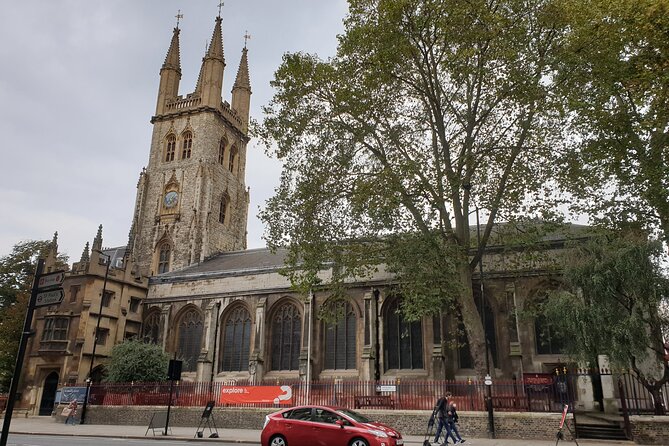
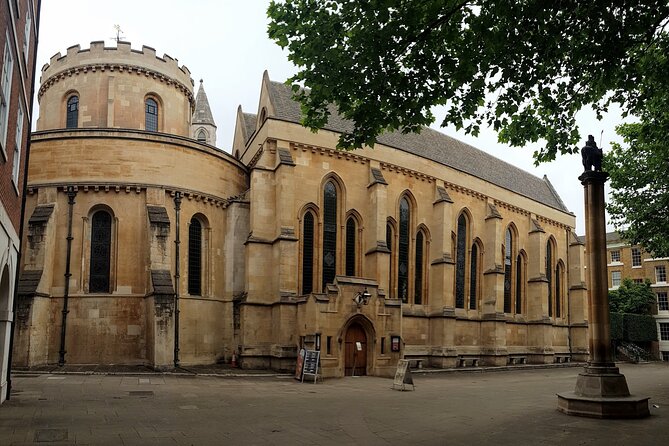
Temple Church is the medieval centerpiece of the walk. Here, the guide tells the story of the Knights Templar and the church connected with them.
The Templars bring drama to the route, but the real value is historical context. Their presence helps explain how religious and military organizations once held influence in England and across Europe. You also see how medieval institutions left a lasting mark on the city’s streets.
The stop lasts about five minutes in the stated program. Admission is listed as free, but the information does not promise a lengthy interior visit or a guaranteed opening for independent exploration. If seeing the inside of Temple Church is essential to you, check the arrangements before booking.
Even with a short stop, Temple Church gives the walk a strong change of mood. You have moved from law enforcement and civic buildings into medieval religious history, then soon return to the commercial and legal life of central London.
The London Silver Vaults and the value of looking down
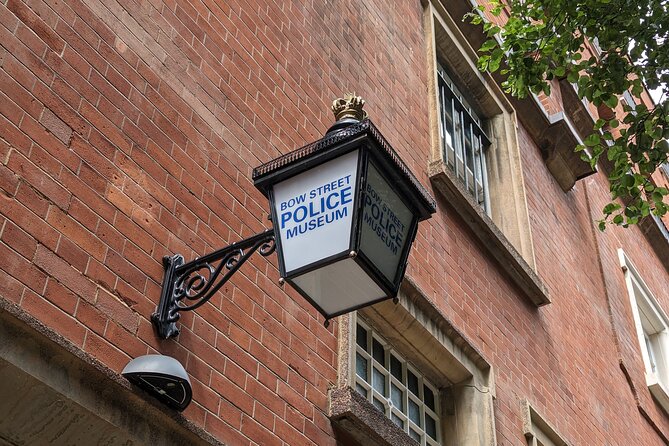
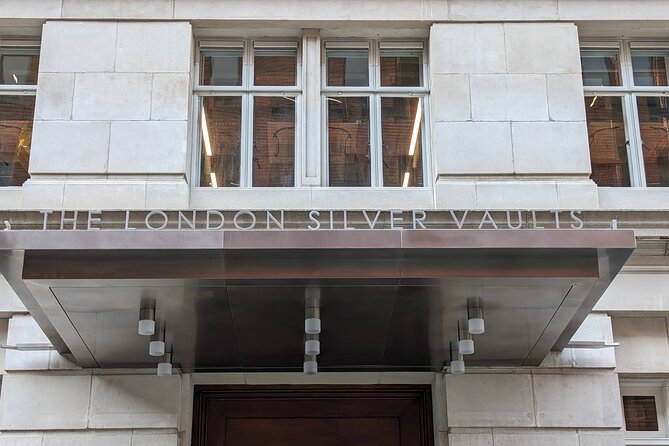
The London Silver Vaults is an unusual stop. It is described as the world’s largest collection of retail silver, and the guide gives about five minutes to its history.
This part of the walk reminds you that London’s character is not only found in major monuments. Commercial traditions, specialist shops, and working institutions also help define the city. Silver connects the area with craftsmanship, trade, wealth, and professional life.
The brief timing means you should think of this as an introduction rather than a shopping visit. You may find the stop most rewarding if you enjoy unusual London details and places that do not fit neatly into a standard sightseeing route.
I like the inclusion because it breaks up the courts and medieval material. It also supports the tour’s larger idea: London’s squalor and splendour often sit within a few minutes of each other.
Staple Inn and the survival of old London
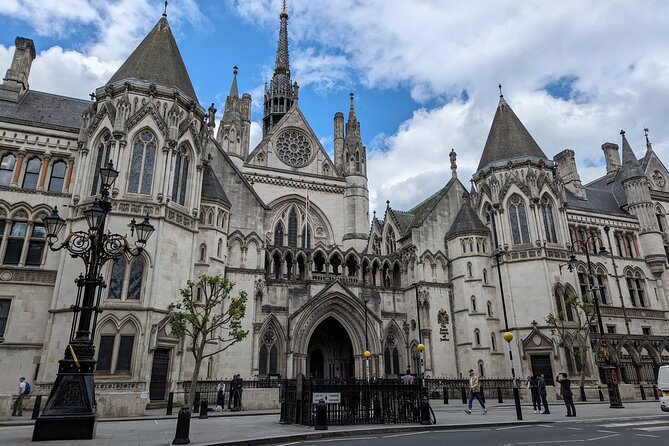
Staple Inn is presented as the last remaining example of the Inns of Chancery buildings. Its inclusion gives you another look at the legal history of Holborn, but in a more intimate setting than the Royal Courts of Justice.
The stop helps show how lawyers and legal education were tied to this part of London. It also offers a useful visual contrast with the larger formal buildings encountered earlier.
You will spend around five minutes here. That is enough for the guide to explain why Staple Inn matters, but not enough for a slow architectural study. If you enjoy old streets and surviving historic structures, pay close attention to the details around you rather than expecting a long lecture.
This is one of the places where a small group makes a difference. You can pause, look closely, and ask Tom to clarify how the Inns of Chancery fit into the wider legal system.
The Old Bailey and the site of Newgate Prison
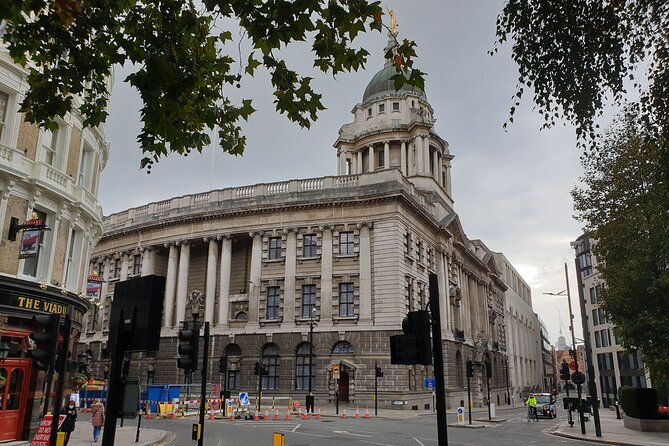
The final major stop is the Old Bailey, home of the Central Criminal Court. The site also marks where Newgate Prison once stood.
This is a fitting end for a tour that has moved through crime, law, Dickens, and social division. Newgate Prison is closely tied to the darker side of London’s past, while the Old Bailey represents the formal criminal justice system that followed.
The stop brings the route’s themes together. You can think about how crime was punished, how courts developed, and how writers such as Dickens used these realities in fiction. The setting also gives the Oliver Twist material more weight because it places literature beside the institutions that shaped everyday life.
The program allows about five minutes here, so expect a concise final explanation. You might want to spend more time in the area afterward if criminal justice or Dickens is a major interest.
What the Oliver Twist theme adds
The tour’s Dickens focus is not simply a promise of literary name dropping. It gives you a way to read the city through the eyes of a writer concerned with poverty, crime, and social unfairness.
You see the locations associated with Oliver Twist as part of a wider urban story. The route links Dickens’s fictional world with real places connected to courts, policing, imprisonment, and social authority.
I find this approach more useful than a walk that treats Dickens as a separate literary subject. You learn about the writer, but you also see why London provided such powerful material for him.
The title’s contrast between squalor and splendour is important. The route does not focus only on hardship. It places grim stories beside grand legal buildings, medieval institutions, specialist commerce, and long-established organizations. That balance gives you a more realistic sense of London’s past.
Tom’s guiding style and the small-group advantage
Tom is repeatedly praised for being clear, engaging, and well informed. He also offers ideas for other historic places to visit, which is useful if this walk is part of a longer London stay.
I would value his ability to answer questions more than a fast recital of facts. The tour covers several complicated subjects, from the Templars to British courts. A guide who can explain those topics in plain language makes the two hours far more useful.
The group is capped at 15 people. That is small enough for questions to feel practical rather than awkward, and it should be easier to hear the guide on city streets.
The small group does not remove every possible problem. London can be noisy, and the route moves at a steady pace. Still, this format is a better choice than a large coach or crowded walking group if you want conversation and the chance to shape the discussion.
Price, timing, and practical value
At $27.42 per person, the tour is reasonably priced for a two-hour guided walk in central London. You are paying for a guide who ties together seven stops, several historical periods, and the Dickens theme.
The value depends on how you use the route. If you want full admissions and long indoor visits, this is not the right comparison. The listed stops are free, and the experience centers on explanation, atmosphere, and efficient sightseeing.
I think the price works best for a first or second day in London, when you want to understand Holborn before exploring it on your own. It can also suit repeat visitors who have seen the major sights and want a more focused route away from the usual tourist track.
The tour is often booked about 31 days ahead, so you may want to reserve early if your dates are fixed. English is the offered language, and mobile tickets make the booking simple.
The walk ends at Superdrug Health Clinic, 36 to 37 New Bridge Street, London EC4V 6BJ, near Blackfriars Station on the northern bank of the Thames. That gives you a useful next step after the tour, though the experience itself does not include transport.
Who should book this London walking tour
I would recommend it to you if you enjoy:
- London history told through real streets
- Charles Dickens and Oliver Twist
- Medieval religious and military history
- British courts, crime, and prisons
- Small groups with room for questions
- Historic places beyond the standard sightseeing circuit
It is also a good choice for families with older children who can manage the walking pace. The subjects are serious, but the route’s variety helps keep the experience moving.
You should think twice if you cannot walk about two miles at a reasonable speed. The tour is not designed for extended rests, and the seven stops are close enough together to create a steady rhythm.
You may also prefer another experience if you want a full-day Dickens tour, extensive interior access, or a museum visit with lots of time to browse. This walk gives you a connected story, not a series of long stops.
Should you book it?
Book this tour if you want London’s less obvious stories explained by a guide who can handle questions and make connections between different periods. At $27.42, the small group, central route, and range of subjects offer solid value.
I would choose it for its mix of Dickens, the Knights Templar, old crime, and the legal quarter. The short stops mean you need to enjoy learning on the move, but that is also what keeps the walk focused.
If Tom is leading your date, his clear and engaging style is a strong reason to book. If you want a lively introduction to Holborn that leaves you with ideas for further exploring, this tour is a sensible pick.
FAQ
How long does the tour last?
The walking tour lasts approximately two hours.
How much does the tour cost?
The listed price is $27.42 per person.
Where does the tour begin?
It begins at Covent Garden Underground Ltd on Long Acre, London WC2E 9JT, UK.
Where does the tour finish?
It ends at Superdrug Health Clinic, 36 to 37 New Bridge Street, London EC4V 6BJ, near Blackfriars Station on the northern bank of the River Thames.
What language is offered?
The tour is offered in English.
How many people can join the tour?
The maximum group size is 15 people.
How much walking is involved?
You should be able to walk about two miles at a reasonable pace. The tour is not recommended if you cannot manage that distance.
Can I cancel for a full refund?
Yes. You can cancel at least 24 hours before the experience start time for a full refund. Cancellations or changes made less than 24 hours before the start time are not accepted for a refund.
Just added around London
- The Private British Museum Tour★ 5.0 · 6 reviews
- London to Southampton Cruise Port | Private Transfer★ 5.0 · 6 reviews
- London’s Chinatown Food Experience★ 4.0 · 6 reviews
- London Gatwick (LGW) Airport Departure Private Transfer – Hotel to Airport★ 4.0 · 6 reviews
- Christmas in Canterbury, Dover and Greenwich with Christmas Lunch★ 4.5 · 6 reviews
- Transfer from Heathrow Airport to London hotel on private car★ 4.5 · 6 reviews
- Jazz Notes – Jazz Jam Ticket★ 5.0 · 6 reviews
- Transfer from London Stansted Airport to Central London★ 5.0 · 6 reviews
London Tours, compared.
Stonehenge, Windsor Castle, and Bath from London
Read our review →
London Big Bus Hop-On Hop-Off Tour with Optional River Cruise
Read our review →

Stonehenge, Windsor Castle and Bath with Pub Lunch in Lacock
Read our review →
Tower of London and Crown Jewels Exhibition Ticket
Read our review →
Stonehenge, Windsor Castle and Bath Full Day Guided Tour
Read our review →