
Reviewed · FOOD & DRINK
Twinings 2-Hour Tea Tasting Masterclass in London
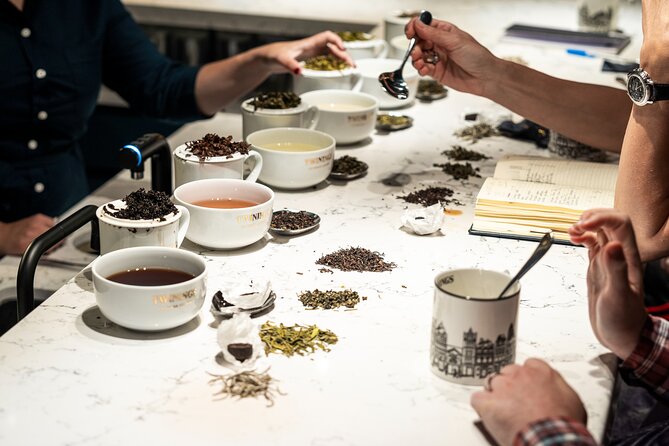
Tea has a surprisingly dramatic past. At the Twinings 2-Hour Tea Tasting Masterclass, you spend two hours at 216 Strand learning how tea is grown, processed, traded, and judged, then taste six major tea categories under the guidance of a tea expert. It is part history lesson, part sensory exercise, and part London cultural experience.
I especially like the small-group format, which allows plenty of questions and personal guidance. I also like that the tasting goes beyond familiar black tea, moving through white, yellow, green, oolong, black, and pu’erh. The main consideration is the price, $69.45 per person, which is fair for a specialist class but more than you would pay for an ordinary cup of tea and a quick shop visit.
The class earns a 4.9 rating from 105 reviews, with 98 percent of participants recommending it. Guides including Alessandra, Liam, Rachel, Rosie, and Angelo are praised for making the subject friendly, funny, and easy to follow. If you enjoy food education, British traditions, or trying unusual drinks, this is a strong two-hour choice.
In This Review
- Key Points to Know Before Booking
- What Happens at 216 Strand
- The Tea Plant’s Journey From Bud to Cup
- Six Teas, Six Different Ways to Taste
- Why the Small Group Makes a Difference
- A History Lesson That Does Not Drag
- Is $69.45 Good Value?
- Who Will Enjoy This Masterclass Most?
- Timing, Cancellation, and Practical Details
- My Verdict: Should You Book It?
- FAQ
- Where does the Twinings tea tasting take place?
- How long does the tea masterclass last?
- Which teas are included in the tasting?
- How many people can join the class?
- Is the experience offered in English?
- Can I cancel for a full refund?
Key Points to Know Before Booking
- Six tea categories in one sitting: Taste white, yellow, green, oolong, black, and pu’erh tea, then compare their aroma, flavor, mouthfeel, and aftertaste.
- A compact class with personal attention: The stated maximum is five people, although one account described a group of six.
- Tea from bud to cup: Learn how tea is grown, harvested, processed, and prepared.
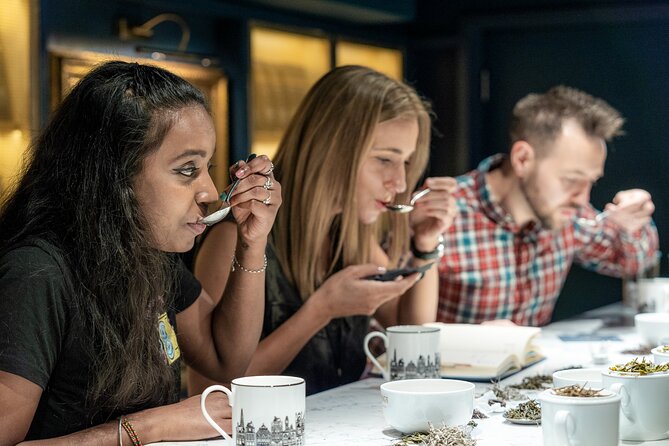
- Professional tasting technique: You are shown how tea experts evaluate a sample, including the famous slurping method.
- A London address with strong tea connections: The class begins and ends at Twinings, 216 Strand, Temple, London WC2R 1AP.
- A useful shopping bonus: A discount on products has been offered after the class, though the exact terms are not specified.
What Happens at 216 Strand
Your meeting point is 216 Strand, in the Temple area of central London. The activity ends at the same location, so you do not need to arrange a separate return journey or find your way to another part of the city.
The setting matters. Twinings is not simply a place where tea is served. It is a familiar name in British tea culture, and the experience connects the drink in your cup with the company, shop, and traditions around it. You get time to see the shop as part of the visit, and several class accounts describe the teaching area as a clean, stylish basement space.
That basement detail is worth keeping in mind. This is a seated teaching session rather than a walking tour through London. You should expect a focused indoor class, not a series of stops around the city. On a hot day, the air-conditioned setting can be especially welcome.
The class is offered in English. Confirmation arrives when you book, and the meeting point is near public transportation. The mobile ticket is useful for a London day when your phone is already doing the work of a map, transport pass, and restaurant guide.
More Food Tours in London
- London Bridge & Borough Market Food Tour with 7 Authentic Dishes
★ 5.0 · 1,972 reviews - London Foodie Adventure:More than 10 dishes with Sherpa Food Tour
★ 5.0 · 932 reviews - Eating London: Twilight Soho VIP Food & Drinks Tour
★ 5.0 · 590 reviews
The Tea Plant’s Journey From Bud to Cup
The first part of the class sets up the tasting. You learn where tea comes from and how it travels from a plant to the finished drink. The teaching covers production, harvesting, and the ways processing creates different types of tea.
This is the key idea that makes the class more useful than a simple sampling session: the six teas are not just six unrelated flavors. They belong to a wider family, and their differences are tied to how the leaves are handled after picking.
The session also covers the arrival of tea in Britain and its place in English life. That story gives context to the drink you are tasting. Tea is not only a breakfast habit or a polite afternoon ritual. Its arrival shaped commerce, household customs, and the way Britain built a national identity around a drink grown far beyond Britain.
You do not need previous tea knowledge. The teaching is designed to be approachable, and the class works well for people who arrive with little idea of how one tea differs from another. If you already know your oolong from your pu’erh, you can use the small class to ask more precise questions.
The guides are a major part of the experience. Alessandra is praised for handling questions with confidence and enthusiasm. Liam is described as an engaging speaker who keeps the history moving. Rachel brings a personable, entertaining approach, while Rosie is credited with making the class cheerful and interactive. Angelo is noted for explaining the tea industry and its effect on British culture.
Because different guides lead different sessions, the exact personality of the class will vary. That is normal for a live experience. The consistent feature is an emphasis on clear teaching, questions, and tasting rather than a stiff lecture.
Six Teas, Six Different Ways to Taste
The tasting covers the six broad categories listed on the menu:
- White
- Yellow
- Green
- Oolong
- Black
- Pu’erh
This sequence gives you a useful range. White tea offers a chance to consider a lighter style, while green tea brings another set of aromas and flavors. Oolong sits between categories in a way that can make you rethink the simple idea that tea is either green or black.
Black tea will probably feel the most familiar to many people, especially anyone used to British tea. Pu’erh can be the most distinctive sample because it takes you into a style many casual tea drinkers have never tried. Yellow tea is also less familiar to many people, making the six-sample lineup a good excuse to get outside your usual mug.
You are not simply handed six cups and left to decide which one you like. During the tasting, you are asked to describe what you notice. The class uses five areas of assessment, including appearance, aroma, flavor, mouthfeel, and aftertaste.
That vocabulary is practical. Instead of saying only that a tea tastes good or bad, you begin to separate what you see, smell, and feel. A tea can have an attractive aroma but a dry finish. Another might seem mild at first, then leave a longer aftertaste. This way of paying attention changes how you drink tea afterward.
The slurping lesson may feel strange for a second, especially in a formal setting. It has a purpose. Bringing air into the tasting helps spread the tea across your mouth and makes its character easier to assess. You are shown how the pros do it, then given a chance to try.
This is the most hands-on part of the class. You smell, taste, compare, and put words to your reactions. The format also gives you permission to have personal preferences. The point is not to guess the one correct answer. It is to understand why a tea tastes the way it does.
Why the Small Group Makes a Difference
The advertised maximum is five people, though one account described a group of six. Either way, this is a much smaller format than a large demonstration or a busy food tour.
A small group gives you room to ask about brewing, origins, processing, or a particular sample. It also makes the tasting less anonymous. The instructor can respond to the group’s reactions and adjust the explanation when someone wants more detail.
One memorable feature of the class is that it can still work with just one participant. An account of a solo session describes the guide giving the same level of care and attention despite the tiny attendance. That is reassuring if you book outside the busiest season or worry about a class feeling awkward with low numbers.
The group size also suits families and mixed-age groups. A mother, daughter, and granddaughter found it enjoyable across three generations, which makes sense: one person can focus on history, another on flavor, and another on the social side of tasting.
The tradeoff is that a small class may feel more structured and intimate than a casual drop-in tasting. You are expected to pay attention, sample each tea, and take part in the sensory discussion. If you want only a quick cup and a souvenir tin, this is more teaching than you need.
Something different for another day:
- Stonehenge, Windsor Castle, and Bath from London
★ 4.5 · 18,662 reviews - London Big Bus Hop-On Hop-Off Tour with Optional River Cruise
★ 3.5 · 10,803 reviews - London Small Group Tour of Historical Pubs
★ 5.0 · 10,422 reviews - Stonehenge, Windsor Castle and Bath with Pub Lunch in Lacock
★ 4.5 · 7,402 reviews
A History Lesson That Does Not Drag
Two hours is a useful length for this subject. You have enough time to cover tea production, British tea customs, six samples, and tasting terms without turning the class into an all-day seminar.
The strongest teaching style here appears to be storytelling. The guides connect the origins of tea with its arrival in Britain, then bring the subject back to the leaves in front of you. That keeps the historical material tied to something you can smell and taste.
The class also gives you a better sense of why tea quality is not a single simple idea. Quality can involve the leaf, its appearance, its aroma, the flavor in the mouth, and what remains after swallowing. Preparation matters too, so the session can help you understand why two teas with similar labels may produce very different cups.
I like this balance. You get facts, but you also get a way to use them. The subject is never treated as precious or overly formal. Several instructors are praised for humor, and the class is repeatedly described as entertaining as well as educational.
If you are not a committed tea drinker, you should still find enough variety to keep the tasting interesting. The six categories prevent the session from becoming six versions of the same breakfast tea. You may discover that you prefer a style you have never ordered before, or simply gain a better explanation for why your usual tea suits you.
Is $69.45 Good Value?
At $69.45 per person, this is not a bargain snack stop. You are paying for an expert-led class, six tastings, a small group, and two hours of instruction in a well-known London tea setting.
The value improves if you are curious about tea rather than looking for a free sample. You receive a framework for understanding production and tasting, not just a flight of drinks. The lesson can also make later shopping more useful because you have learned what to look for in appearance, aroma, flavor, mouthfeel, and aftertaste.
A product discount has been offered after some classes. The available information does not state the discount amount or its conditions, so I would treat it as a pleasant extra rather than part of the price calculation.
For a visitor who already plans to shop at Twinings, the class may help you choose with more confidence. One practical point: allow enough time after the lesson if shopping matters to you. The class itself takes about two hours, and the education may leave you wanting to browse products with a clearer idea of what you like.
The value is weaker if you dislike tea, do not want to taste several styles, or have only a short time in London. The activity ends where it begins, which is convenient, but it does not include a wider city tour or a meal.
Who Will Enjoy This Masterclass Most?
I would recommend the class to:
- Tea drinkers who want to understand more than brand names
- Visitors interested in British food and drink traditions
- Couples looking for a calm indoor activity
- Families with different generations
- People who enjoy guided tastings and sensory exercises
- Gift buyers seeking a two-hour experience rather than another object
It is also suitable for beginners. You do not need to arrive knowing tea terminology. The class teaches you words for what you notice, then gives you a chance to practice them.
I would be more cautious about booking it for very young children, but the provided information does not set a minimum age, so you should check the booking details before paying. Service animals are allowed, and the venue is near public transportation.
The experience is particularly appealing on a rainy London afternoon or a hot day when you want air conditioning and a seat. It makes a useful break from museums and major sights without sending you far from central London.
Timing, Cancellation, and Practical Details
The class lasts approximately two hours, begins at 216 Strand, Temple, London WC2R 1AP, and returns to that same meeting point. It is offered in English and includes a mobile ticket.
The experience is often booked about 28 days ahead. That does not guarantee every date will sell out, but it is a good reason to reserve early if your London schedule is fixed, especially because the group is small.
You can cancel for a full refund up to 24 hours before the start time. Cancellations made less than 24 hours in advance are not refunded, and changes inside that window are not accepted. The cut-off uses London local time, so check carefully if you are booking from another time zone.
The strong overall rating, 4.9 from 105 reviews, reflects broad approval, but no class suits everyone. The one four-star account still praised the guide and the unusual teas, suggesting that the difference between a very good and perfect experience may come down to personal expectations rather than a major flaw.
My Verdict: Should You Book It?
Book this masterclass if you want a focused, hands-on tea experience with history, tasting, and expert instruction in a small group. The six-category lineup gives you real variety, and the guides appear to be the heart of the class. Alessandra, Liam, Rachel, Rosie, and Angelo are each praised for making the subject warm, funny, and accessible.
Skip it if you want a quick afternoon tea, a full meal, or a walking tour of London. This is a class, not a standard tea service. At $69.45, it earns its price through personal attention and useful instruction, not through quantity of food.
For tea lovers, it is an easy recommendation. For beginners, it is a good introduction. Even if you arrive knowing little about tea, you leave with a better sense of what is in your cup and why the differences matter.
FAQ
Where does the Twinings tea tasting take place?
The experience starts at 216 Strand, Temple, London WC2R 1AP, UK. It ends back at the same meeting point.
How long does the tea masterclass last?
The masterclass lasts approximately two hours.
Which teas are included in the tasting?
You taste six categories: white, yellow, green, oolong, black, and pu’erh.
How many people can join the class?
The stated maximum is five participants. One class account described a group of six, so the actual number may vary slightly.
Is the experience offered in English?
Yes. The masterclass is offered in English.
Can I cancel for a full refund?
Yes, if you cancel at least 24 hours before the experience start time. Cancellations made less than 24 hours in advance are not refunded, and changes during that period are not accepted.
Just added around London
- The Private British Museum Tour★ 5.0 · 6 reviews
- London to Southampton Cruise Port | Private Transfer★ 5.0 · 6 reviews
- London’s Chinatown Food Experience★ 4.0 · 6 reviews
- London Gatwick (LGW) Airport Departure Private Transfer – Hotel to Airport★ 4.0 · 6 reviews
- Christmas in Canterbury, Dover and Greenwich with Christmas Lunch★ 4.5 · 6 reviews
- Transfer from Heathrow Airport to London hotel on private car★ 4.5 · 6 reviews
- Jazz Notes – Jazz Jam Ticket★ 5.0 · 6 reviews
- Transfer from London Stansted Airport to Central London★ 5.0 · 6 reviews
Food & Drink, compared.

London Bridge & Borough Market Food Tour with 7 Authentic Dishes
Read our review →
London Foodie Adventure:More than 10 dishes with Sherpa Food Tour
Read our review →
Eating London: Twilight Soho VIP Food & Drinks Tour
Read our review →
East London Indian Food Tour with 8+ Authentic Food Tastings
Read our review →

London Borough Market & London Bridge Food Tour
Read our review →
Ultimate London Cheese Crawl : Guided Food Tour
Read our review →Browse the lists this tour appears in