
Reviewed · WALKING TOURS
Walking tour of Lancaster – Execution Slavery Industry
Lancaster’s past is darker than its pretty streets suggest. This three-hour walk links the castle, old harbor, royal intrigues, slavery, executions, witchcraft, industry, and charity into one brisk city tour. I like the wide range of subjects and the way the route connects places you could easily pass without noticing. I also like the small-to-medium group size, capped at 20, which makes it easier to hear guide Barrie and ask questions.
The main trade-off is simple: you will walk and stand for much of the tour, and the weather can matter. There are no admission tickets included because the tour explains sites from public spaces rather than taking you inside them. If you want a quick introduction before choosing which buildings to visit later, this is a strong use of three hours. If you want long indoor visits, it is not the right format.
In This Review
- Key points to know before you go
- Why this Lancaster walk is more than a castle tour
- Starting at Lancaster Castle with prisoners and executions
- Saint George’s Quay and Lancaster’s slave-trade links
- Judges’ Lodgings, witchcraft, and the oldest house
- Church Street and the missing prince
- Market Street and two royal prices
- Dalton Square, forensic science, and compensation for slave owners
- Lancaster Canal and the Storey Brothers
- Penny’s Almshouses and charity that still serves a purpose
- The Storey and Lancaster’s educational tradition
- The walking pace, group size, and weather
- How Barrie shapes the experience
- Is $20.81 good value for three hours?
- Who should book this walk?
- Should you book the Execution Slavery Industry walking tour?
- FAQ
- How long does the walking tour last?
- Where does the tour begin and end?
- What language is the tour offered in?
- How many people can join the tour?
- Are admission tickets included?
- Can I cancel for a refund?
Key points to know before you go
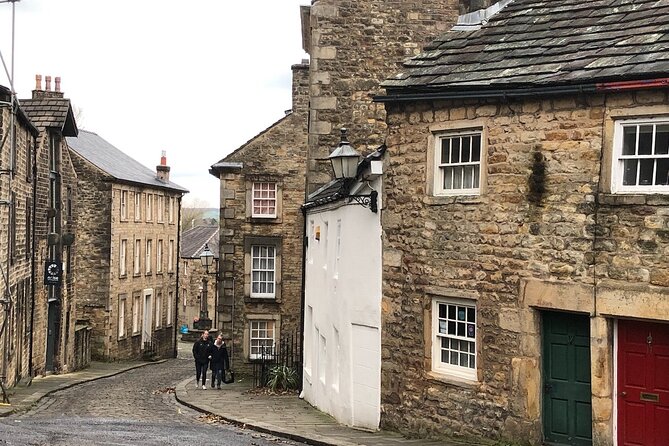
- Lancaster Castle sets the tone: Begin with prisoners, trials, executions, and the castle’s less obvious role in local history.
- The harbor reveals Lancaster’s slavery connections: Saint George’s Quay links the city to the international slave trade and the people who profited from it.
- Barrie’s storytelling is a major strength: His style combines researched facts, humor, odd details, and plenty of room for questions.
- Nine stops cover more than a standard sightseeing walk: You move from royal mysteries and witchcraft to forensic science, canals, charity, and education.
- Plan for outdoor walking: The pace is described as gentle, but expect plenty of standing and possible exposure to cold or rain.
- At $20.81, the value is strong: You receive about three hours of guided interpretation for less than the cost of many paid attractions.
Why this Lancaster walk is more than a castle tour
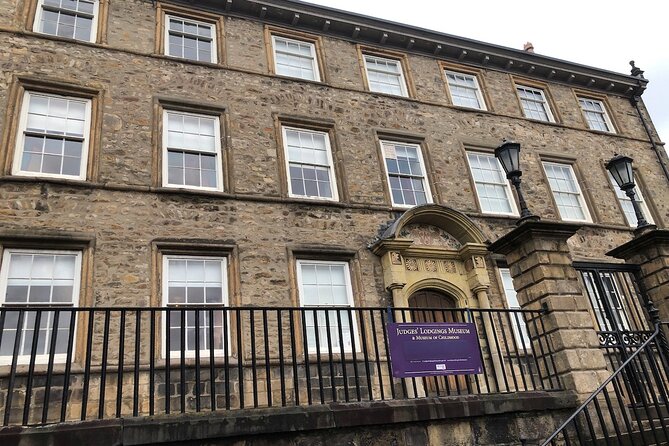
Lancaster is easy to underestimate. A first visit can seem to offer a castle, an old quay, handsome streets, and a few grand buildings. This walk shows how those places fit into a much larger story.
You will hear about power, punishment, trade, religion, industry, public money, and social change. The subjects are not all comfortable. That is part of the value. The tour does not treat Lancaster as a polished old town with the difficult parts sanded away.
The name of the experience points to execution and slavery, but the route is broader than those two themes. It also covers royal succession, witchcraft, murder, canal commerce, almshouses, and the beginnings of Lancaster’s university tradition.
I like this format for a first afternoon in the city. You get a useful mental map, then you can decide which places deserve a longer visit. The walk also works well as an add-on if you are staying elsewhere in Lancashire and have limited time in Lancaster itself.
More Walking Tours in England:
- Oxford University Walking Tour With University Alumni Guide
★ 5.0 · 6,905 reviews - Tour for Muggles The Ultimate Harry Potter Walking Tour in London
★ 5.0 · 4,684 reviews - London Jack The Ripper Guided Walking Tour
★ 5.0 · 3,131 reviews
Starting at Lancaster Castle with prisoners and executions
Meet at Castle Approach, outside Lancaster Castle. The castle-front meeting point is practical, especially if you do not know the city. It is an obvious place to find, and the tour returns there at the end.
The opening stop lasts about 20 minutes. Do not expect a full interior visit. Instead, you get the castle’s place in Lancaster’s story, including famous and less famous prisoners, trials, and executions.
That approach is useful because a castle can look impressive while saying little about how it functioned. Here, you begin with the human cost of law and authority. The setting gives the subject weight without requiring an admission ticket.
The castle also prepares you for the tour’s tone. This is not a parade of dates and building styles. You will hear stories about people caught up in crime, punishment, politics, and rumor. Barrie is praised for keeping difficult material lively, using humor and unusual details without losing the historical point.
Saint George’s Quay and Lancaster’s slave-trade links
From the castle, the route continues to Saint George’s Quay, an eighteenth-century harbor on the River Lune. Allow about 15 minutes here.
This is one of the most important stops on the walk because it connects Lancaster’s local prosperity with the international slave trade. A harbor can look quiet today, but its buildings and riverfront once supported a much larger commercial world. The stop introduces the people connected with the quay and explains the city’s links to slavery.
I especially value this part of the route because it moves the subject from distant textbook history to a real place. You are not just told that Lancaster had overseas commercial connections. You are shown where that activity belonged in the city.
The quayside also gives the walk a change of mood after the castle. There is room to picture sailing ships beside the river and to consider how goods, money, and human suffering moved through the same port. The stop is short, so if this subject matters to you, ask questions while you are there.
Judges’ Lodgings, witchcraft, and the oldest house
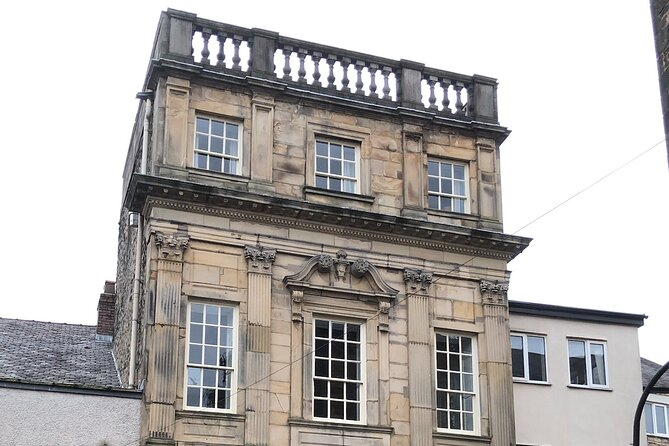
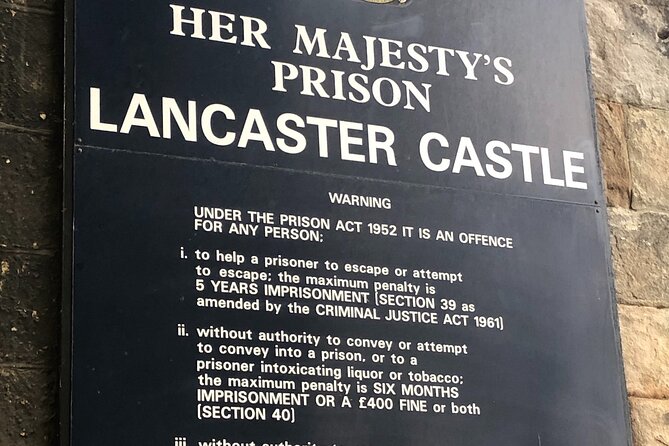
The next stop is Judges’ Lodgings, described as the oldest house in Lancaster. The visit lasts about 10 minutes and focuses on ownership and the building’s link with witchcraft.
That combination captures what makes the walk different from a standard architectural tour. You are not simply told when the house was built or who lived there. The building becomes a doorway into belief, justice, and the fear of witchcraft.
The brief stop works best as part of the larger route. You will not spend a long time examining rooms or interiors, but you will gain a reason to look at the building with more care if you return later.
The subject matter can be unsettling, particularly after the opening discussion of trials and executions. Still, it helps explain how authority and superstition could overlap in earlier periods. This is a tour for people who enjoy the human stories behind old walls.
Something different for another day:
- Stonehenge, Windsor Castle, and Bath from London
★ 4.5 · 18,662 reviews - London Big Bus Hop-On Hop-Off Tour with Optional River Cruise
★ 3.5 · 10,803 reviews - London Small Group Tour of Historical Pubs
★ 5.0 · 10,422 reviews - Beatles Magical Mystery Tour
★ 5.0 · 9,266 reviews
Church Street and the missing prince
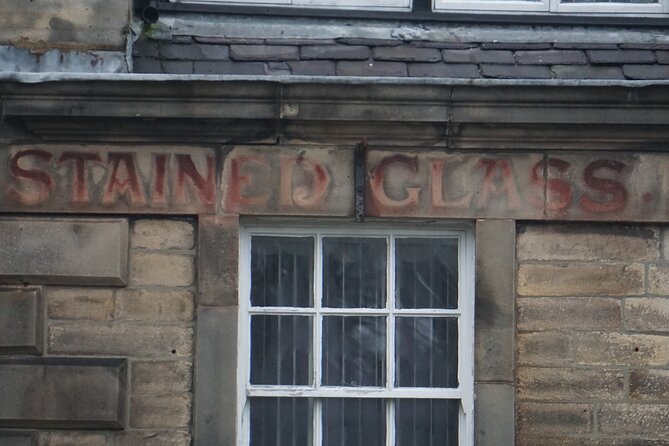
Church Street brings a royal mystery into the walk. The story concerns a prince who goes missing and the possibility that he could have become king of England.
You will spend about 10 minutes here. That is enough time for a focused story, though not enough for every theory or political detail surrounding it. The stop gives the route a welcome shift from local punishment and witchcraft to national power.
I like the way this section shows that Lancaster’s history is not isolated from the wider story of England. A city street can become connected to questions of succession, identity, and political danger.
The title of the stop hints at a tale that rewards close listening. This is not necessarily a place where you will see a dramatic monument to the missing prince. The value is in the explanation and the setting, so try to stay close enough to hear the full account.
Market Street and two royal prices
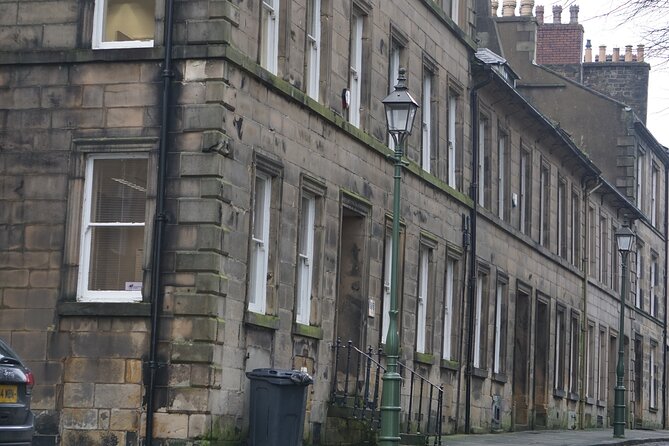
At Market Street, the tour turns to two royal stories separated by about 300 years. One prince raises a banner, while another loses a shoe.
The stop lasts around 10 minutes. The unusual details make it memorable, but the broader point is how royal ambition and public action could play out in ordinary urban spaces. You get a pair of stories rather than one long political lecture.
This is where Barrie’s storytelling style appears especially useful. The guide’s strengths are described as humor, energy, patience, and a talent for adding amusing anecdotes to solid facts. Odd details such as a raised banner or a lost shoe give you something concrete to remember after the tour ends.
The stop also helps break up the heavier material. After executions, slavery, and witchcraft, a slightly eccentric royal episode gives the walk some breathing room without abandoning its historical purpose.
Dalton Square, forensic science, and compensation for slave owners
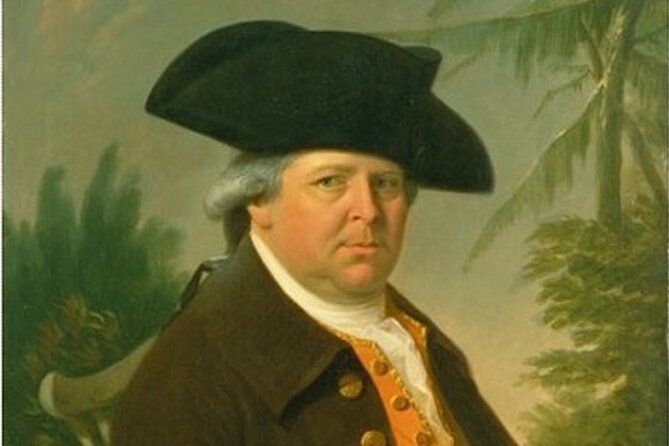
Dalton Square brings together two subjects that seem unrelated at first: a murder solved by forensic science and a government bonus paid to slave owners.
The stop lasts approximately 10 minutes. The murder story offers a look at changing investigative methods, while the discussion of compensation exposes the financial structures behind emancipation and slavery.
This pairing is one of the route’s most thought-provoking moments. It places a local crime beside a national and imperial decision about money and ownership. You are encouraged to see history as connected rather than divided into neat categories.
The forensic detail should appeal to anyone who likes true crime, but the government payment gives the stop greater weight. It asks who received protection and compensation when slavery ended, and who did not. That is the kind of context that makes a walking tour useful: you leave with questions that a quick photograph of a square would never provide.
Lancaster Canal and the Storey Brothers
The route then reaches the Lancaster Canal and White Cross Mill. This 10-minute stop focuses on the Storey Brothers and the canal’s most successful period.
Here, the tour turns toward industry and transport. Canals changed how goods moved, and the mill provides a concrete link to Lancaster’s working economy. The subject also helps explain why the city developed as it did, rather than treating its old buildings as isolated curiosities.
The canal stop gives your legs a different kind of scenery after the tighter streets and squares. It also adds balance to the tour. Lancaster’s past involved punishment and exploitation, but it also involved engineering, business, manufacturing, and civic growth.
The stop is short, and you will not get a full industrial-site visit. Think of it as a clear introduction to the canal and the Storey Brothers, with enough background to make a later visit more meaningful.
Penny’s Almshouses and charity that still serves a purpose
Penny’s Almshouses offer another change of subject. You will look at an almshouse that is still functioning today, learn who founded it, and hear how it was financed.
The stop takes about 10 minutes. Its value lies in showing how private charity shaped daily life and how buildings could continue serving their original purpose across generations.
I like this stop because it is easy to overlook an almshouse when walking through a city. Without explanation, it might seem like just another old structure. The story gives it social meaning and asks you to think about who paid for public good, who received help, and what has survived.
Because the almshouse remains in use, be respectful while listening. The tour explains its history from the public route, rather than turning it into a staged attraction.
The Storey and Lancaster’s educational tradition
The final listed stop is The Storey, an educational institute founded through donations. The story follows its development into an early influence on the university tradition in the city.
You will spend about 10 minutes here. This ending works well because it moves the tour from punishment and commerce toward education and civic ambition.
The building represents a city investing in learning through donations. That gives the final section a constructive note without pretending Lancaster’s past was simple or uniformly benevolent.
It also provides a useful link to modern Lancaster. After hearing about the castle, harbor, canal, and charitable institutions, you can see education as another part of the city’s long civic story.
The walking pace, group size, and weather
The tour lasts about three hours and has a maximum group size of 20. That is small enough to feel more personal than a large city walk, while still giving the guide a lively group to work with.
The pace is described as gentle, but do not confuse gentle with effortless. You will walk between nine stops and stand at each one. One person specifically noted plenty of walking and standing, while another found the route easy to manage but still tiring by the end.
You should wear comfortable shoes and check the forecast. The tour requires good weather, and the comments about cold and rain are worth taking seriously. Barrie is praised for continuing with enthusiasm in poor conditions, but a cheerful guide cannot make wet pavement or a cold afternoon disappear.
Most people can participate, and service animals are allowed. The meeting point is near public transportation. Since the route begins and ends at Castle Approach, you can plan the rest of your day from the same central point rather than arranging a separate pickup.
One practical caution: confirm the operating date and time carefully, particularly in winter. A no-show complaint was answered with an explanation that the tour did not operate on Wednesdays during that winter season. The issue appears unusual beside the otherwise very strong response, but checking the schedule before setting out is sensible.
How Barrie shapes the experience
Barrie receives the strongest praise for his delivery. The descriptions of his guiding consistently point to strong preparation, humor, patience, and an ability to keep people engaged for the full walk.
That matters here because the tour covers a lot of ground and several serious subjects. A less lively presentation could make the route feel like a list of names and dates. Barrie’s use of anecdotes helps you hold onto the details.
He also appears willing to answer questions. One account highlights his patience during many questions, while another praises his stamina and energy. That suggests you should not be shy about asking for clarification when a story raises a point you want to understand.
The tone is entertaining, but the content is not lightweight. You will hear about executions, slavery, murder, witchcraft, and political uncertainty. If you prefer a quiet, formal lecture, the humor may feel more animated than expected. If you like local history delivered as stories, it should suit you well.
Is $20.81 good value for three hours?
At $20.81 per person, this is inexpensive for a guided three-hour introduction to Lancaster. There are no extra admission fees during the route, and the cost pays for interpretation rather than a series of paid attractions.
That distinction matters. You are not buying entry to the castle or the other buildings. You are paying for someone to explain why these places matter, connect them to one another, and point out stories you might miss on your own.
I consider the value particularly good if you have limited time in Lancaster. The route covers nine places and several major themes in one outing. It can also save you from spending your first afternoon wandering without knowing which streets or buildings deserve closer attention.
The value is less clear if you only want to enter the castle or visit interiors. In that case, you may prefer to spend the money on a single attraction. But for context, orientation, and local stories, the price is fair.
Free cancellation is available up to 24 hours before the start time for a full refund. Changes or cancellations inside that window are not refunded, and poor weather or failure to reach the minimum number can lead to a new date or a full refund.
Who should book this walk?
I would recommend it to first-time visitors who want to understand Lancaster quickly. It is also a good fit for people staying elsewhere in Lancashire who can spare one afternoon and want more than a quick look at the castle.
History fans will find plenty to enjoy, especially if you like crime, royal stories, social history, trade, and unusual local details. The slavery section should appeal to anyone seeking a more honest account of how British towns connected to overseas wealth.
Families with older children may also find the stories engaging, though the subjects include executions, murder, and slavery. You know your group best, but this is not a purely lighthearted sightseeing walk.
It suits curious locals, too. The route includes places that long-time residents may have passed without knowing their significance. The city can still offer surprises when someone points out the links between its streets, buildings, harbor, canal, and institutions.
You should think twice if you dislike outdoor tours, standing, or weather-dependent plans. The walk is not difficult in pace, but three hours outside can feel long on a cold or wet day.
Should you book the Execution Slavery Industry walking tour?
Book it if you want a broad, story-led introduction to Lancaster rather than a single building visit. The route covers an impressive range for $20.81, and Barrie’s humor and command of local stories appear to be the main reason the experience works so well.
Use it early in your stay if possible. You will learn which places deserve a return visit and gain context for the rest of your time in the city.
I would skip it only if you need an indoor activity, want extended access to historic interiors, or cannot manage several hours of walking and standing. For most curious visitors with a free afternoon, this is a practical and unusually thoughtful way to meet Lancaster.
FAQ
How long does the walking tour last?
The tour lasts approximately three hours. You will walk between nine listed stops and spend short periods at each location.
Where does the tour begin and end?
It begins at Castle Approach, Lancaster LA1 1YN, outside Lancaster Castle. The activity ends back at the meeting point.
What language is the tour offered in?
The tour is offered in English.
How many people can join the tour?
The maximum group size is 20 people.
Are admission tickets included?
The listed stops have no admission ticket charge during the tour. The experience explains the sites from the walking route rather than providing paid entry to them.
Can I cancel for a refund?
You can cancel at least 24 hours before the start time for a full refund. Cancellations or changes made less than 24 hours before the start time are not refunded, and poor weather or an insufficient number of bookings may result in a different date or a full refund.
Just added around England
- The Private British Museum Tour★ 5.0 · 6 reviews
- London’s Chinatown Food Experience★ 4.0 · 6 reviews
- London to Southampton Cruise Port | Private Transfer★ 5.0 · 6 reviews
- Christmas in Canterbury, Dover and Greenwich with Christmas Lunch★ 4.5 · 6 reviews
- Transfer from Heathrow Airport to London hotel on private car★ 4.5 · 6 reviews
- London Gatwick (LGW) Airport Departure Private Transfer – Hotel to Airport★ 4.0 · 6 reviews
- Bristol private pub hopping and sightseeing with local guide★ 5.0 · 6 reviews
- Isle of Wight Tour App, Hidden Gems Game and Big Britain Quiz (7 Day Pass) UK★ 4.0 · 6 reviews
Walking Tours, compared.

Oxford University Walking Tour With University Alumni Guide
Read our review →
Tour for Muggles The Ultimate Harry Potter Walking Tour in London
Read our review →

Cambridge University Walking Tour by Alumni™ Kings College Option
Read our review →
Blackbeard to Banksy – The Ultimate Walking Tour of Bristol
Read our review →
Air Raid Shelter + St. Nicholas Market Walking Tour
Read our review →
Walking Tour of Bath with Blue Badge Tourist Guide
Read our review →