
Reviewed · WALKING TOURS
Working Women of the East End Walking Tour
Women changed London from the ground up. This 2.5-hour East End walk follows the lives, work, and politics of women often left out of standard London sightseeing, moving from Tower Hill toward Spitalfields Market. I like its focus on working-class women, and I like the way it connects personal stories to wider changes in labor and society.
The tour also brings forgotten places back into view, including wash houses and sites linked to women’s organizing. The main thing to consider is the subject matter: stories about poverty, hardship, exploitation, and Jack the Ripper can be grim, so this is not a light, postcard-style stroll.
In This Review
- Key points to know before you book
- Why this East End walk feels different
- Starting at Tower Hill with women of the Tower
- Spitalfields Market: a fitting final stop
- Brick Lane and the working East End
- The women behind the labor movement
- Jack the Ripper, handled within a wider story
- Becky and Emily: the guide can shape the whole walk
- Pace, breaks, and group size
- Is $55.50 good value?
- Booking timing and cancellation
- Who should choose this walking tour?
- Should you book the Working Women of the East End Walking Tour?
- FAQ
- Where does the Working Women of the East End Walking Tour start?
- Where does the walking tour finish?
- How long does the tour last?
- How much does the tour cost?
- What language is the tour offered in?
- Is food included?
- How many people can join the tour?
- Can I cancel for a full refund?
Key points to know before you book
- The walk begins at Tower Hill and ends at Spitalfields Market, making it easy to continue with food, shopping, or public transport afterward.
- Women’s working lives are the main subject, with attention to both famous figures and women whose names are less familiar.
- The guides Becky and Emily receive especially strong praise for clear storytelling, warmth, humor, and careful research.
- Jack the Ripper appears in the story, but the tour places those crimes within a wider account of East End women and social conditions.
- A short rest stop can include toilets and tea or coffee, a useful pause during the 2.5-hour walk.
- The group can include up to 20 people, and the price is $55.50 per person.
Why this East End walk feels different
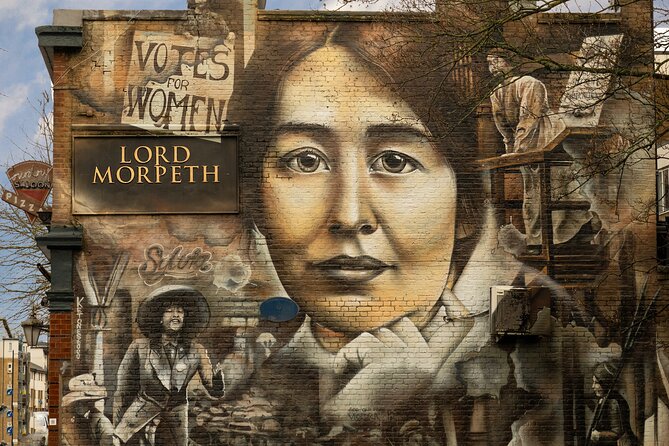
Many London walks lean on kings, churches, grand houses, and famous men. This one shifts the focus to laundresses, workers, organizers, campaigners, and women who helped change working life in London.
That change in viewpoint is the tour’s real strength. You are not simply walking past old streets while someone recites dates. You are asked to think about who worked in these places, who cleaned them, who organized for better conditions, and who had to fight to be heard.
The subject reaches across class lines. Becky, one of the guides praised most often, is described as covering women from both wealthy and poor backgrounds. That range matters. The East End was not shaped by one type of woman, and the tour does not reduce women’s history to a few famous names.
I also like that the walk places local stories in a broader setting. The women connected to labor movements are discussed alongside larger changes in British society. You get a clearer sense of how local action could affect working conditions, class relations, and the future of women in London.
The tone is serious but not stiff. Becky is praised for humor as well as research, while Emily is praised for making a large amount of information feel manageable. That balance is useful on a history walk. You want substance, but you do not want two and a half hours of dates delivered like a school assembly.
More Walking Tours in London
- Tour for Muggles The Ultimate Harry Potter Walking Tour in London
★ 5.0 · 4,684 reviews - London Jack The Ripper Guided Walking Tour
★ 5.0 · 3,131 reviews - Changing of the Guard Guided Walking Tour in London
★ 5.0 · 1,793 reviews
Starting at Tower Hill with women of the Tower
The meeting point is at Tower Hill, London EC3N 4DJ. From here, the tour explores the women connected with the Tower and nearby parts of the East End before gradually working toward Spitalfields.
The exact sequence of every story is not fixed in the information provided, but the opening theme is clear: you will explore women associated with the Tower and sites important to women’s history. This gives the walk a strong beginning because Tower Hill is one of London’s most recognizable historical areas, yet the familiar setting can be viewed through a less familiar lens.
Rather than treating the Tower only as a fortress or royal landmark, the tour asks you to notice the women tied to its story. That approach is useful if you have already seen the major sights and want something beyond the standard royal narrative.
The opening section also sets up the tour’s larger point. Women’s history is not separate from London’s main story. It is part of the city’s political, social, and working life, even when guidebooks give it little space.
You should expect plenty of standing and walking from the start. The experience lasts about two and a half hours, and the route covers several East End locations rather than staying in one compact courtyard or museum.
Spitalfields Market: a fitting final stop
Spitalfields Market at 65 Brushfield Street is the finishing point. The market receives only a short listed stop time, but its importance goes beyond the few minutes noted in the route.
Spitalfields is a useful place to end a walk about work, trade, migration, class, and changing city life. You can look around the market after the tour, find something to eat, or continue by local transport. That makes the end point practical as well as atmospheric.
I would plan to stay in the area after the walk rather than rushing away. The tour information specifically points to food, drink, and transport links at Spitalfields, so you can turn the afternoon into a longer East End outing without arranging another complicated transfer.
The market itself may be livelier than the quieter historical moments earlier in the walk. That contrast can be helpful. You finish by seeing how an old commercial area continues to function as part of modern London, rather than ending at a purely commemorative site.
Do not expect the market visit to be a long shopping session built into the tour. It is the endpoint, not a guided food tour or a market tasting experience. Food and drinks are not included in the price.
Brick Lane and the working East End
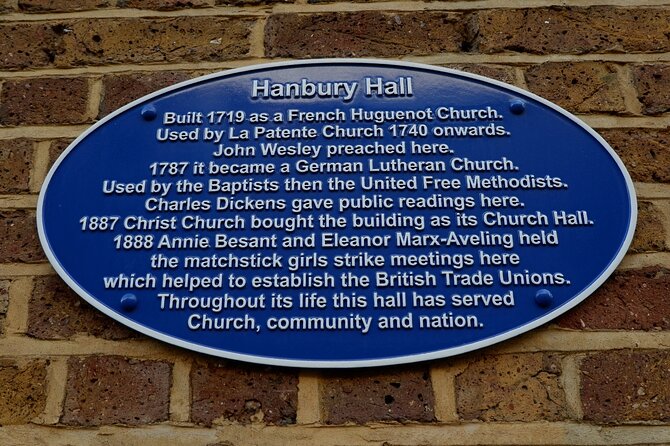
Brick Lane is another short listed stop. Today it is one of East London’s best-known streets, but this tour uses it as part of a much older social story.
The value here is not simply seeing a famous street. It is learning how ordinary women lived and worked within the East End’s changing communities. The tour uses local places to make those stories easier to picture, linking women’s lives to the streets where events unfolded.
Brick Lane can be busy, so this part may feel less intimate than a quieter walking route. Still, that is part of the point. You are seeing a real neighborhood rather than a sealed historic site. The East End continues to change, and the walk draws links between past struggles and present-day London.
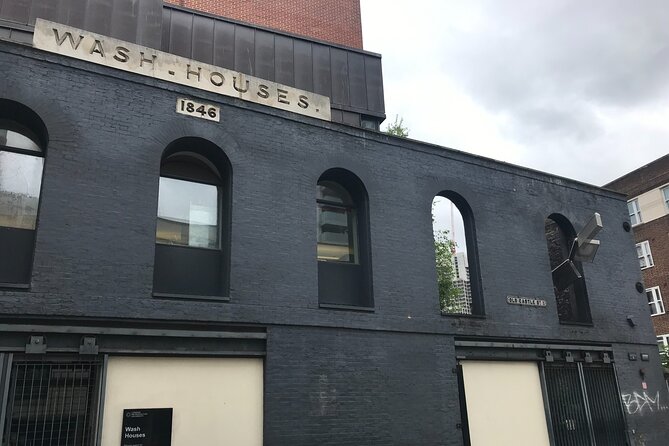
One particularly useful theme is the history of wash houses. A wash house connected with the year 1846 is mentioned during the experience, along with a plan showing its layout. If you have never thought about where working women washed clothes, cared for families, or found basic public services, this can be an eye-opening part of the walk.
The wash house material also shows why social history needs physical places. A name and date can feel remote. A building plan or surviving site gives you a better sense of the daily effort behind domestic work and the limits placed on women’s lives.
Something different for another day:
- Stonehenge, Windsor Castle, and Bath from London
★ 4.5 · 18,662 reviews - London Big Bus Hop-On Hop-Off Tour with Optional River Cruise
★ 3.5 · 10,803 reviews - London Small Group Tour of Historical Pubs
★ 5.0 · 10,422 reviews - Stonehenge, Windsor Castle and Bath with Pub Lunch in Lacock
★ 4.5 · 7,402 reviews
The women behind the labor movement

The strongest part of the experience is its attention to working women and labor history. You will hear about women who helped make working life safer and more equal, along with the political and social pressures they faced.
This is not presented as a simple tale of progress. The stories include sadness, hardship, and unequal treatment. That honest approach gives the tour more weight. Women’s advances did not happen because conditions slowly improved on their own. People organized, argued, protested, and took risks.
The walk also pays attention to women from different backgrounds. That is important because East End working life was not one uniform experience. Wealth, class, profession, and social position shaped what choices were available.
You may hear about women who are well known, but the guide also brings forward figures you are unlikely to meet on a standard London tour. That balance is one reason the walk works for both local residents and first-time visitors. Even if you grew up in East London, you may encounter stories you have never been taught.
I especially like the way the tour connects local figures to the wider labor movement. You are not left with isolated biographies. Instead, the stories help explain how women’s actions fitted into debates about work, class, safety, and political rights.
Jack the Ripper, handled within a wider story
The tour includes the horrific events associated with Jack the Ripper. This is unavoidable in many East End history walks, but the treatment here appears to be different from a tour built only around murder and mystery.
The crimes are used as part of a wider account of women’s lives and the dangers they faced. That context matters. A focus on sensational details can turn real people into entertainment. A social history approach gives you more reason to think about poverty, vulnerability, public attitudes, and the conditions in which women lived and worked.
You should still expect some disturbing material. If you prefer cheerful sightseeing, this may not be the right choice. If you want to understand how Victorian London treated poor women and how their stories have been remembered, the subject has a serious purpose.
The best way to approach this section is to listen for the wider questions. Who had protection? Who was believed? Which women were remembered, and which disappeared from the record? Those questions fit the tour’s larger aim of restoring women to the story of London.
Becky and Emily: the guide can shape the whole walk
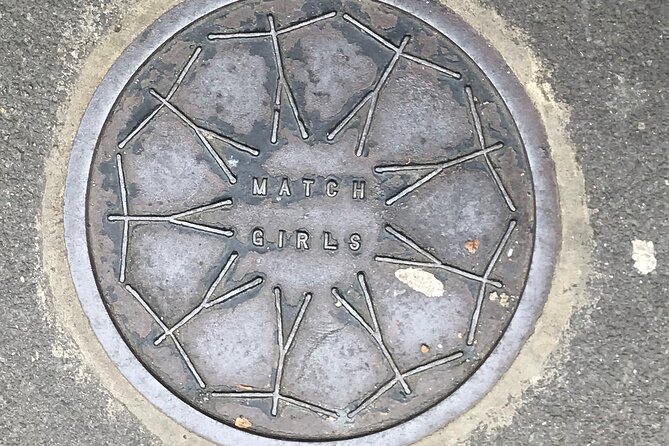
A history walk lives or dies by its guide. Here, Becky and Emily receive repeated praise for making the material clear, lively, and personal.
Becky is described as passionate, friendly, funny, and deeply prepared. One especially useful quality is her willingness to explain how she found her information. That gives the stories a sense of care and shows that the tour is built on more than familiar anecdotes.
Emily is praised for bringing a tremendous amount of information to the walk without making people feel rushed or overloaded. That is a valuable skill on a route covering several periods, locations, and social themes.
The guides also appear comfortable with questions. You should be able to ask about a person, place, or wider issue without feeling that you are interrupting a fixed speech.
The tone seems welcoming to a broad audience. The experience is not presented as a women-only event, and the subject will appeal to anyone interested in London, labor, class, or overlooked voices. It can also suit London residents who want a fresh reading of a familiar area.
Pace, breaks, and group size
The tour lasts approximately 2 hours and 30 minutes. That is long enough to offer real historical context, but short enough to fit into a morning or afternoon in London.
A toilet break is included, and some departures have included a small tea or coffee stop. Food and drinks are not included in the $55.50 price, so treat this as a pause rather than a meal.
The pace is described as comfortable, with enough time to cover many places without feeling hurried. Still, you should wear comfortable shoes and be ready for a walking experience rather than a seated talk.
The maximum group size is 20 people. That is small enough to feel more personal than a large coach excursion, though the experience will naturally feel different with two people than with a full group. One departure had only one participant, and the guide still made the person feel comfortable.
The route is near public transportation. Since it begins at Tower Hill and ends at Spitalfields Market, you can use the Underground or local connections to reach and leave the walk. Exact travel times depend on your starting point, so allow a little extra time before the start.
Is $55.50 good value?
At $55.50 per person, this is not the cheapest way to spend two and a half hours in London. You are paying for a specialist subject, a professional guide, and a researched route rather than simply walking through the East End on your own.
For me, the value is strongest if you want interpretation. You can visit Tower Hill, Brick Lane, and Spitalfields Market without paying for a guide, but you will not automatically understand the women’s working lives, the wash house system, or the links between local events and labor reform.
The fee includes the guide, professional guiding, and all fees and taxes. Lunch, food, and drinks are extra. Since the tour ends near places to eat, you can keep costs under control by choosing your own meal afterward.
The high satisfaction rate also suggests that the guide quality is central to the price. If the guide is as prepared and engaging as Becky or Emily, the walk offers something that is difficult to recreate with a guidebook alone.
Booking timing and cancellation
This experience is booked about 37 days ahead on average. That does not guarantee every date will sell out, but it is a good reason to reserve early if your London schedule is fixed.
You receive confirmation when booking. Free cancellation is available up to 24 hours before the start time for a full refund. Changes or cancellations inside that 24-hour window are not accepted for a refund.
The tour requires a minimum number of participants. If the provider cancels because that minimum is not met, you will be offered another date or experience, or receive a full refund.
Who should choose this walking tour?
I would recommend it to you if you want London history told from below, not only through royal buildings and famous men. It is a particularly good fit for people interested in women’s rights, labor movements, social history, class, or the East End.
It also suits repeat visitors. You may have already seen the Tower, walked Brick Lane, or eaten at Spitalfields Market. This tour gives those places a different meaning.
Families with older children and teenagers may find the stories thought-provoking, though the Jack the Ripper material and accounts of hardship require some maturity. The tour is not described as a children’s activity.
You should think twice if you want a short, relaxed sightseeing walk with little serious content. The route deals with difficult subjects and asks you to pay attention. It is rewarding, but it is not background entertainment.
Should you book the Working Women of the East End Walking Tour?
Yes, if you want a distinctive London walk with a clear purpose. The combination of lesser-known women, working-class history, wash houses, labor politics, the Tower, Brick Lane, and Spitalfields makes this more useful than a standard neighborhood stroll.
Book it early if your dates are limited, wear sensible shoes, and leave time for food or a look around Spitalfields afterward. The best reason to choose it is simple: you will leave seeing the East End, and London itself, through more than one set of eyes.
FAQ
Where does the Working Women of the East End Walking Tour start?
The tour starts at Tower Hill, London EC3N 4DJ, UK.
Where does the walking tour finish?
The tour finishes at Spitalfields Market, 65 Brushfield Street, London E1 6AA, UK.
How long does the tour last?
The experience lasts approximately 2 hours and 30 minutes.
How much does the tour cost?
The listed price is $55.50 per person.
What language is the tour offered in?
The tour is offered in English.
Is food included?
No. Lunch, food, and drinks are not included. The tour finishes at Spitalfields Market, where food and drink options are available.
How many people can join the tour?
The maximum group size is 20 people.
Can I cancel for a full refund?
Yes. You can cancel at least 24 hours before the start time for a full refund. Cancellations or changes made less than 24 hours before the start time are not accepted.
Just added around London
- The Private British Museum Tour★ 5.0 · 6 reviews
- London to Southampton Cruise Port | Private Transfer★ 5.0 · 6 reviews
- London’s Chinatown Food Experience★ 4.0 · 6 reviews
- London Gatwick (LGW) Airport Departure Private Transfer – Hotel to Airport★ 4.0 · 6 reviews
- Christmas in Canterbury, Dover and Greenwich with Christmas Lunch★ 4.5 · 6 reviews
- Transfer from Heathrow Airport to London hotel on private car★ 4.5 · 6 reviews
- Jazz Notes – Jazz Jam Ticket★ 5.0 · 6 reviews
- Transfer from London Stansted Airport to Central London★ 5.0 · 6 reviews
Walking Tours, compared.

Oxford University Walking Tour With University Alumni Guide
Read our review →
Tour for Muggles The Ultimate Harry Potter Walking Tour in London
Read our review →

Cambridge University Walking Tour by Alumni™ Kings College Option
Read our review →
Blackbeard to Banksy – The Ultimate Walking Tour of Bristol
Read our review →
Air Raid Shelter + St. Nicholas Market Walking Tour
Read our review →
Walking Tour of Bath with Blue Badge Tourist Guide
Read our review →
Changing of the Guard Guided Walking Tour in London
Read our review →Browse the lists this tour appears in