

Reviewed · WALKING TOURS
3 Hours Private City Highlights Liverpool Walking Tour
Liverpool wears its past proudly. This private three-hour walk links the Titanic memorial and Albert Dock with the Cavern Club, Chinatown, grand civic buildings, and the city’s music story. I like the way it connects famous sights with less expected stops, including Winslow House, the Bridewell, and St Luke’s Bombed Out Church. I also like the private format, since your guide can adjust the pace and spend more time on the subjects that interest you.
The main consideration is speed. Nineteen stops in about three hours means most visits are brief looks from outside, not long interior visits. You will cover a lot of ground, and the tour suits you best if you have moderate physical fitness and want a broad first look at central Liverpool rather than a slow museum tour.
In This Review
- Key points to know before you book
- Why this three-hour walk works
- Starting beside the Museum of Liverpool
- Albert Dock and the Three Graces
- Remembering the Titanic’s engine-room crew
- Winslow House, Town Hall, and Castle Street
- The Cavern Club and Liverpool’s music story
- From Queen Victoria to the old Bridewell
- St Luke’s Bombed Out Church and Chinatown
- The Philharmonic and Paddy’s Wigwam
- Mount Pleasant, Lime Street, and St George’s Hall
- Pace, walking effort, and what is included
- Who should book this Liverpool walk?
- Should you book it?
- FAQ
- How long does the Liverpool walking tour last?
- Where does the tour start?
- Where does the tour finish?
- How many people can join the private tour?
- What language is the tour offered in?
- Are attraction admission fees included?
- What cancellation terms apply?
Key points to know before you book
- The route packs in 19 central sights: You move from the Museum of Liverpool and waterfront to St George’s Hall, taking in dock history, music, architecture, war, migration, and industry.
- The Beatles appear in context: The Cavern Club and Jacaranda Club connect Liverpool’s famous music story with the city streets where it grew.
- The private group can number up to six: At $342.79 per group, the cost becomes much better value when shared by a full group.
- Most stops are short exterior visits: Several places have no admission fee, while some ticketed interiors are not included.
- Guides bring a strong local history focus: Martin is praised for turning poor weather into an enjoyable outing, while Dan is described as an energetic local with a particular interest in Liverpool’s past.
- The finish can vary: The stated end point is in the Mount Pleasant area, with the exact finish depending on how quickly your group walks.
Why this three-hour walk works
Liverpool can feel like several cities at once. The waterfront recalls the port that made the city wealthy, the center carries grand Victorian ambitions, and the music sites point to a more modern identity. This tour gives you a guided thread through all three.
I especially like the private arrangement for a city walk with this many themes. A group of six can ask questions without competing with a large crowd, and the guide can respond to your interests. If your group cares more about maritime history than the Beatles, or more about architecture than local politics, you have a better chance of shaping the conversation.
The advertised price is $342.79 for up to six people. That works out to about $57 per person if six people join, or about $86 per person for four. For two people, it is a much bigger spend, about $171 each. The value therefore depends heavily on your group size and on how much you want a private guide rather than a standard group walk.
You should also understand what the time allowance means. The listed stops average around five minutes, with about ten minutes at the Museum of Liverpool area. That is enough for a clear explanation, photographs, and a look at the setting. It is not enough for a full museum visit, a concert hall tour, or a long stop inside the Cavern Club.
More Walking Tours in Liverpool
- A Walk Through Time: History of Liverpool Walking Tour
★ 5.0 · 911 reviews - Liverpool Ghost Walking Tour
★ 5.0 · 862 reviews - Beatles Famous Walking Tour Of Liverpool- Fully Guided
★ 5.0 · 751 reviews
Starting beside the Museum of Liverpool
You meet near the Museum of Liverpool at Pier Head, by Mann Island. This is a practical starting point because you begin with the city’s origins before moving through its better-known landmarks.
The opening explanation helps set up the rest of the walk. Liverpool’s docks, trade, migration, architecture, and music are not separate subjects here. They are parts of one city story, and the waterfront gives your guide a useful place to explain how Liverpool grew.
Admission to the Museum of Liverpool is not included, and the tour begins near it rather than presenting a full museum visit. If you want to explore its galleries, plan that for another time or before the walk, but do not count on fitting a full visit into the three-hour route.
Albert Dock and the Three Graces
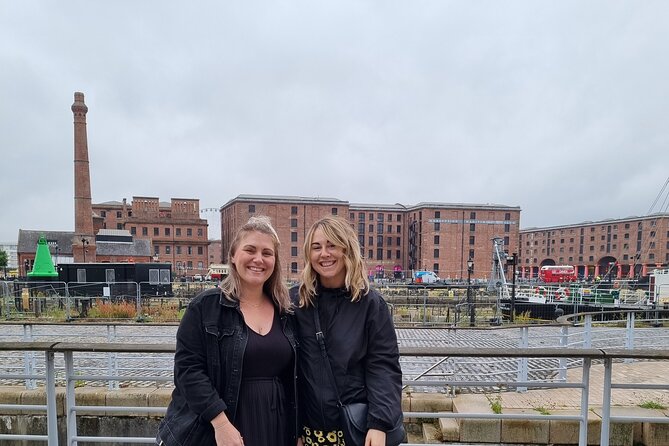
Albert Dock is an early highlight. Once among the world’s busiest docks, it now offers a striking contrast between Liverpool’s working port era and its present-day waterfront.
The stop is short, so you will mainly take in the setting and hear how the docks shaped the city and England’s trade. I find this kind of introduction useful because it gives later buildings a purpose. The grand structures are not just attractive backdrops. They grew from Liverpool’s role as a major port.
From there, the route reaches the Three Graces: the Royal Liver Building, the Cunard Building, and the Port of Liverpool Building. These buildings frame the waterfront and express the city’s former confidence in stone, offices, shipping, and world trade.
The Royal Liver Building gets special attention. Look upward for the Liver Birds, the paired symbols associated with Liverpool. Admission to the building is not included, so expect to admire it from outside rather than take a tower visit during the walk.
Remembering the Titanic’s engine-room crew
The Memorial to the Engine Room Heroes of the Titanic is one of the tour’s most serious stops. It remembers the men who stayed below deck and gave others time to escape during the sinking.
This is a useful reminder that Liverpool’s Titanic connection is not only about famous passengers or the ship’s departure story. The memorial focuses on the workers whose effort was largely unseen. Your guide can give the monument human meaning in a way that a quick photograph cannot.
The stop lasts about five minutes, so you will not linger for a long memorial visit. Still, it adds emotional weight to the waterfront section and keeps the tour from becoming only a parade of impressive buildings.
Something different for another day:
- Beatles Magical Mystery Tour
★ 5.0 · 9,266 reviews - Liverpool: “Blue Route” – City & Beatles Tour
★ 5.0 · 8,562 reviews - Liverpool City Sights Hop On Hop Off City Tour – 24hr Ticket
★ 4.5 · 2,555 reviews - The LFC Stadium Tour
★ 5.0 · 1,548 reviews
Winslow House, Town Hall, and Castle Street
Winslow House brings in a less familiar side of Liverpool. Here you hear about the city’s links to the American Civil War and its industrial past. This is exactly the sort of stop that makes a private walk worthwhile, since it moves beyond the most advertised sights.
The route then reaches Liverpool Town Hall and Castle Street. The Town Hall introduces modern civic Liverpool as well as the city’s older public traditions. Admission is not included, so the focus is on the building and its place in the street rather than an interior tour.
Castle Street is one of the city’s oldest streets. As you walk along it, the guide points out traces of former medieval markets. This gives you a sense of how Liverpool’s center changed over time, from a smaller medieval settlement to an international port city.
The short timing is again the tradeoff. You will gain a strong orientation, but you will need to return on your own if one building catches your eye and you want to explore inside.
The Cavern Club and Liverpool’s music story
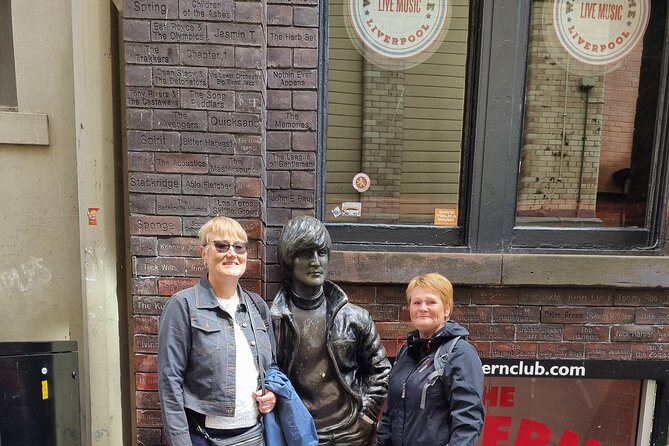
No first visit to Liverpool feels complete without some Beatles context, and the Cavern Club is the obvious stop. It is linked to the band’s early career and remains one of the city’s most recognizable music addresses.
The tour brings you to the site, but admission is not included. The five-minute stop is best understood as a guided look at the setting and its importance, not as a full club experience. If you want to go inside, hear live music, or spend time looking around, you will need to arrange that separately.
I like that the route does not stop with the Cavern Club. The Jacaranda Club adds another layer to the city’s music story. Walking by this famous venue shows that Liverpool’s musical identity grew through a wider network of clubs, streets, and local meeting places.
The music section is likely to suit Beatles fans, but it is not limited to them. The Cavern is one piece of a bigger story about how a port city developed a strong local cultural voice.
From Queen Victoria to the old Bridewell
The Queen Victoria Monument sits on a site connected with the former Liverpool Castle. This stop shifts the focus toward the Victorian era and the way public monuments can replace older parts of a city while preserving a sense of place.
Next comes the Bridewell, an old prison with a more cheerful later use. Admission is not included, and the tour appears to focus on its exterior and changing purpose. It is a small but enjoyable contrast to the formal monuments and civic buildings elsewhere on the route.
These stops reward curiosity. You may not have arrived expecting prison history or the location of a vanished castle, but these details help explain why Liverpool’s center feels layered rather than planned all at once.
St Luke’s Bombed Out Church and Chinatown
St Luke’s Bombed Out Church is one of the route’s most distinctive sights. The remains of the church tell the story of its destruction, while the open structure has become a sign of hope for people in Liverpool.
This is not a polished, complete monument. That is part of its power. You see damage, memory, and later community meaning in one place. The stop can be especially affecting if you enjoy places that show how a city lives with its past rather than simply restoring every building to its former appearance.
The walk continues into Chinatown, described as one of the largest in Europe. Here the guide explains how people from halfway around the world came to make Liverpool home. The stop broadens the tour beyond British political and industrial history, showing the city as a place shaped by movement across oceans.
Chinatown is also a good example of why walking helps. You notice how one part of the center leads into another, and you get a better feel for the city’s social geography than you would from a vehicle.
The Philharmonic and Paddy’s Wigwam
The Liverpool Philharmonic is another music-related stop, though its role is different from the Cavern and Jacaranda. It is a venue for concerts, comedians, productions, and films, and the building itself provides something for your guide to explain.
Admission is not included, so you will view it as part of the streetscape. The short stop gives you an architectural pause before the route moves toward the Metropolitan Cathedral of Christ the King.
The cathedral is a relatively new addition to Liverpool’s skyline. Its nickname, Paddy’s Wigwam, hints at the local character surrounding the building. Your guide explains how it gained that name and how its unusual form came to define this part of the city.
Again, this is mainly an exterior visit. If you want quiet time inside the cathedral, allow for a separate visit. The walk gives you the story and the setting, then keeps moving.
Mount Pleasant, Lime Street, and St George’s Hall
Mount Pleasant is connected with the lives of historical figures and gives the route another chance to tie individual stories to the city’s streets. The exact content will depend on your guide and your group’s questions, but the area forms an important part of the route toward the station and civic quarter.
Lime Street Railway Station is a major sight in its own right. It is described as the oldest operating grand terminus mainline station in the world. You will admire it from outside, since admission is not included, and learn why the station matters to Liverpool’s growth and connections.
The final landmark is St George’s Hall, a large neoclassical building that gives the tour a suitably grand finish. The guide points out final landmarks and suggests other places you can visit afterward.
There is one practical detail to watch. The stated end point is the Mount Pleasant area, and the exact finish can depend on your walking speed. St George’s Hall is the final major landmark described, but you should confirm the precise drop-off point with your guide if you need to reach a train, hotel, or timed booking.
Pace, walking effort, and what is included
This is a walking tour, not a sightseeing bus with occasional stops. You should expect steady movement through central Liverpool and enough time on your feet to make comfortable shoes important. A moderate level of physical fitness is requested.
The route includes free exterior access at places such as Albert Dock, the Three Graces, the Titanic memorial, Winslow House, Castle Street, Chinatown, and Mount Pleasant. At other sights, including the Museum of Liverpool, Royal Liver Building, Town Hall, Cavern Club, Bridewell, Jacaranda Club, St Luke’s, the Philharmonic, the Metropolitan Cathedral, Lime Street Station, and St George’s Hall, admission is not included.
That does not mean every one of those places requires a ticket to see from the street. It means you should not assume an interior visit is part of the $342.79 price.
You receive a mobile ticket, and the tour is offered in English. Service animals are allowed, and the route is near public transportation. Confirmation is provided at booking, which makes the arrangement fairly simple for a port day or a planned city visit.
Two guides receive particular praise in the available feedback. Martin is described as warm, helpful, and able to make a rainy day feel worthwhile, including for people met directly from a ship. Dan is praised for his energy, clear affection for his hometown, and strong interest in Liverpool’s past. Those details suggest that the guide’s storytelling is a major part of the experience, not a small extra.
Who should book this Liverpool walk?
I would choose this tour if you want a private overview and have only a few hours. It suits first-time visitors, families or friends who prefer their own group, and people arriving by ship who want a guide to meet them near the waterfront.
It also works well if your interests are broad. You get docks, architecture, memorials, music, immigration, war damage, civic history, and railways in one route. That variety is the strength of the experience.
I would be more cautious if you want long museum visits, extended time inside the Cavern Club, or a slow architectural study. Nineteen stops in three hours demands a brisk rhythm. You should also compare the group price with a regular shared walking tour if only one or two people are booking.
The tour has a five-star rating from seven submitted ratings, with repeated praise for friendly guides, careful planning, patience, local knowledge, and the ability to make the city engaging even in rain. That is a small sample, so I would treat it as encouraging rather than final proof, but the praise is consistent.
Should you book it?
Book this private Liverpool walk if you want a fast, well-guided introduction that joins the waterfront, Beatles sites, Chinatown, and the civic center into one route. It offers the best value for groups of four to six, especially when a private guide and flexible conversation matter to you.
Skip it if your priority is going inside major buildings or spending an hour at any one attraction. For everyone else, it is a practical way to get your bearings fast, learn the stories behind familiar sights, and leave with a clear list of places to explore on your own.
Free cancellation is available if you cancel at least 24 hours before the local start time. Changes or cancellations made later are not accepted for a refund.
FAQ
How long does the Liverpool walking tour last?
The tour lasts approximately three hours.
Where does the tour start?
You meet near the Museum of Liverpool at Pier Head, Mann Island, Liverpool L3 1DG.
Where does the tour finish?
The tour ends in the Mount Pleasant area. The exact finish can depend on how quickly your group walks.
How many people can join the private tour?
The price covers a private group of up to six people.
What language is the tour offered in?
The tour is offered in English.
Are attraction admission fees included?
Admission is not included at several listed sights, including the Museum of Liverpool, Royal Liver Building, Liverpool Town Hall, Cavern Club, Bridewell, Jacaranda Club, St Luke’s Bombed Out Church, Liverpool Philharmonic, Metropolitan Cathedral, Lime Street Railway Station, and St George’s Hall. Several outdoor stops are free.
What cancellation terms apply?
You can cancel for a full refund up to 24 hours before the experience starts. Cancellations or changes made less than 24 hours before the start time are not accepted.
More City Tours
- Liverpool City Centre Highlights Tour
★ 5.0 · 88 reviews - Beatles City Taxi Tours (3 hour duration)
★ 5.0 · 32 reviews - Liverpool: City & Cavern Quarter Walking Tour
★ 5.0 · 20 reviews - The Manchester City Stadium Tour
★ 5.0 · 4,176 reviews
Just added around Liverpool
- Welcome to Liverpool Tour – 2 Hour Private Walking Tour★ 5.0 · 7 reviews
- Private Half-Day Liverpool Tour with a Local, Personalized★ 5.0 · 7 reviews
- Football Experience With A Local Host In Liverpool★ 4.5 · 8 reviews
- Liverpool Football Club Museum Entry★ 5.0 · 10 reviews
- The Liverpool Pass®: All top attractions inc. Hop-On Hop-Off Bus Tour | 2-Days★ 4.5 · 11 reviews
- Liverpool Ultimate Beatles Ticket To Ride Half-Day PRIVATE Tour★ 5.0 · 12 reviews
- Liverpool Film and Music – 2 hour Private Walking Tour★ 5.0 · 12 reviews
- 2-Hour Private Liverpool Walking Tour★ 5.0 · 12 reviews
Walking Tours, compared.

Oxford University Walking Tour With University Alumni Guide
Read our review →
Tour for Muggles The Ultimate Harry Potter Walking Tour in London
Read our review →

Cambridge University Walking Tour by Alumni™ Kings College Option
Read our review →
Blackbeard to Banksy – The Ultimate Walking Tour of Bristol
Read our review →
Air Raid Shelter + St. Nicholas Market Walking Tour
Read our review →
Walking Tour of Bath with Blue Badge Tourist Guide
Read our review →
Changing of the Guard Guided Walking Tour in London
Read our review →Browse the lists this tour appears in