
Reviewed · WALKING TOURS
A Walk Through Time: History of Liverpool Walking Tour
Liverpool’s past is written along its waterfront. I like how this 1-hour-50-minute walk links medieval Liverpool, Georgian commerce, the cotton trade, and the docks in one clear route. I also like the strong local voice, especially when guide John leads the group with Scouse humor and a real feel for the city.
The main drawback is pace. There is a lot to cover, and one review found the guide spoke too quickly at times. The open waterfront can also be cold and windy, so bring a warm coat and wear sensible shoes.
In This Review
- Key points at a glance
- Starting beneath the Three Graces
- Finding medieval Liverpool at St. Nicholas’ Church
- Old Hall Street and the hard facts of trade
- Liverpool Town Hall and Georgian power
- Castle Street and the vanished castle
- Liverpool ONE and the city’s modern face
- The Old Dock, where Liverpool’s port changed course
- Royal Albert Dock and the 19th-century waterfront
- What the guide adds to the experience
- Is $27.74 good value?
- Time, weather, and practical comfort
- Who should take this Liverpool walk?
- Should you book it?
- FAQ
- Where does the tour begin?
- Where does the tour end?
- How long does the walking tour last?
- How much does the experience cost?
- Is the tour offered in English?
- What landmarks are included?
- Does the tour include admission to the buildings?
- How many people can join the tour?
- Can I cancel for a full refund?
Key points at a glance
- Medieval Liverpool in plain sight: Find the site of St. Nicholas’ Church and learn how the town began in 1207.
- A port built on trade: Follow Liverpool’s rise through the Cotton Exchange, Old Dock, and Royal Albert Dock.
- A strong local guide: John is praised for his energy, humor, clear storytelling, and impressive command of Liverpool’s past. Julio has also led the walk.
- More than Beatles history: The tour gives serious attention to shipping, commerce, empire, war, and the transatlantic slave trade.
- Good first-day orientation: The route connects the Three Graces, Castle Street, Liverpool ONE, and the waterfront.
- Affordable overview: At $27.74 per person, it offers nearly two hours of guided history for less than many major paid attractions.
Starting beneath the Three Graces
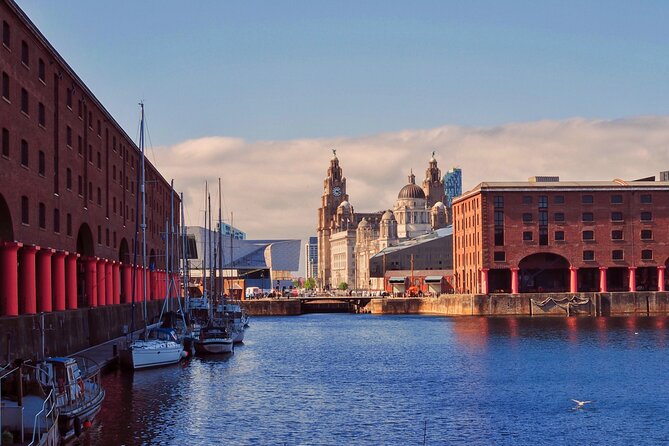
The walk begins at the Royal Liver Building on Liverpool’s Pier Head. This is one of the city’s famous Three Graces, the grand group of waterfront buildings that also includes the Cunard Building and the Port of Liverpool Building.
Your guide starts with the story of these buildings and Liverpool’s waterfront identity. This opening works well because you are not simply looking at impressive architecture. You are learning why the riverfront became the public face of a port city with worldwide connections.
The first stop lasts about 10 minutes, and admission to the building itself is not included. The experience is mainly an outdoor history walk, so you should not expect an interior visit to the Royal Liver Building.
This is a smart starting point for a first visit. The Pier Head is easy to recognize, close to public transportation, and near several major sights. Arrive ready to walk rather than expecting a museum-style tour with indoor shelter.
More Historical Tours in Liverpool
- Best Of Liverpool Heritage, History & Culture Guided Walking Tour
★ 5.0 · 539 reviews - History Guided Tour of Liverpool and the Beatles
★ 5.0 · 408 reviews - Liverpool Hidden History and Dead House Evening Walking Tour
★ 5.0 · 200 reviews
Finding medieval Liverpool at St. Nicholas’ Church
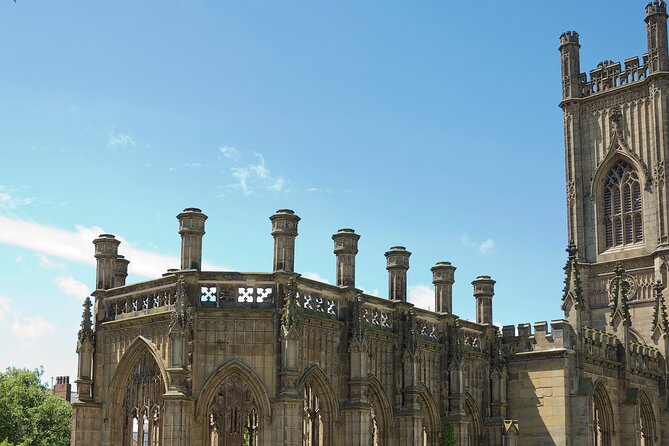
From the Liver Building, the route crosses the Strand to Liverpool Parish Church Gardens. This is where the walk shifts from grand modern waterfront architecture to the city’s much earlier beginnings.
The site was once known as St. Nicholas’ Church, named for the patron saint of the sea. That name fits Liverpool’s later role as a port, but the important point here is that the site connects the city to its medieval origins.
The guide explains Liverpool’s creation in 1207, using physical remains and features at the site as evidence. This is one of the most useful parts of the walk because it helps you picture Liverpool before the great docks, warehouses, and commercial buildings appeared.
You receive about 15 minutes here, with no admission charge. The stop is short, but the setting gives the history a clear anchor. Instead of hearing a vague story about an old town, you are shown where its earliest civic and religious life took shape.
Old Hall Street and the hard facts of trade
Old Hall Street carries the group toward the commercial story of Liverpool. The street dates from the 13th century and was connected with the old town hall after Liverpool received its town charter.
Along the way, you pass Grade I listed buildings and reach the former Cotton Exchange. This is where the tour becomes more direct about money, global trade, and Liverpool’s difficult past.
The Cotton Exchange represents the city’s growth as an international port. By the late 18th century, Liverpool had overtaken London in the cotton trade, a detail that helps explain the scale of its commercial rise.
This section also covers the Atlantic trade and Liverpool’s role in the transatlantic slave trade. That subject is not brushed aside, and it should not be. A useful city tour needs to explain both the wealth created by the port and the human cost behind parts of that wealth.
The stop lasts about 10 minutes, but the guide may provide more detail while walking. John is especially praised for connecting Liverpool’s commerce to its wider place in world history. If you want only pretty buildings and cheerful anecdotes, this section may feel serious. I see that as a strength.
Liverpool Town Hall and Georgian power
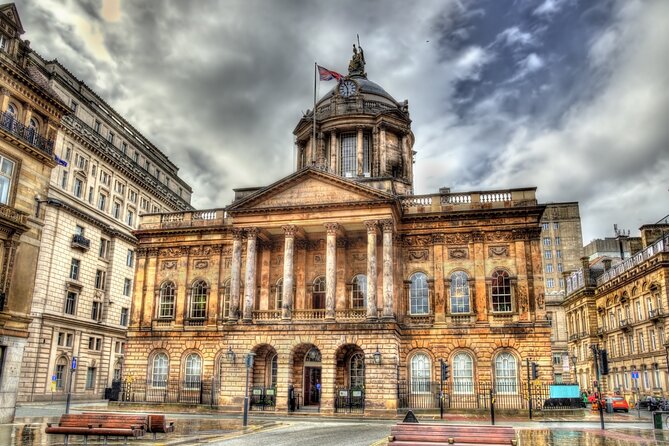
Liverpool Town Hall is the next major stop. Built in 1749, it is described as the finest surviving Georgian building in the United Kingdom.
The tour focuses on the building’s history and on Liverpool’s transformation into a global port and center of commerce. You will hear how civic confidence and commercial success shaped the city’s architecture.
The tour does not include admission inside the town hall. That matters if you hoped to see the interior, but the building’s exterior still fits neatly into the walk’s larger story. Here, you can see how Liverpool’s prosperity was expressed through formal civic design.
This is another 10-minute stop, so expect an explanation rather than a long architectural study. The benefit is momentum. You keep moving through the city instead of spending most of the morning in one place.
More Walking Tours in Liverpool
- Liverpool Ghost Walking Tour
★ 5.0 · 862 reviews - Beatles Famous Walking Tour Of Liverpool- Fully Guided
★ 5.0 · 751 reviews - Downtown Liverpool Walking Tour – In Spanish
★ 5.0 · 591 reviews - Tales from the Necropolis – A Ghost Walk Through St. James Cemetery
★ 5.0 · 263 reviews
Castle Street and the vanished castle
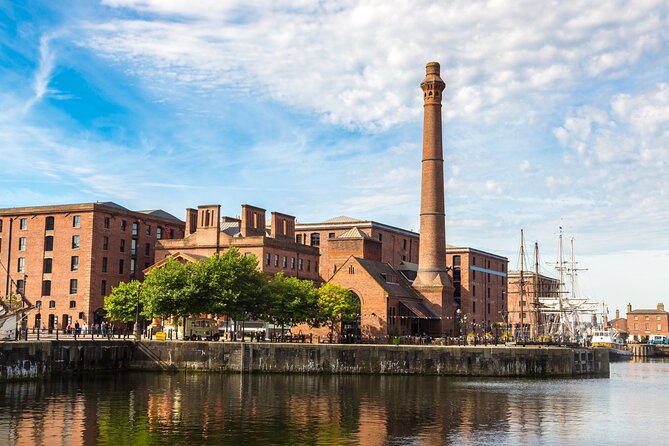
Castle Street offers one of the clearest examples of the city changing over time. The street’s buildings show different stages of Liverpool’s development, and the guide explains the importance of Liverpool Castle and the street named for it.
The castle itself is not presented as a surviving attraction to enter. Instead, the stop uses the site and the surrounding architecture to help you imagine an earlier Liverpool.
This is where the tour earns its name. You are not just passing from one famous building to another. You are moving through different periods, with the street plan and buildings acting as clues.
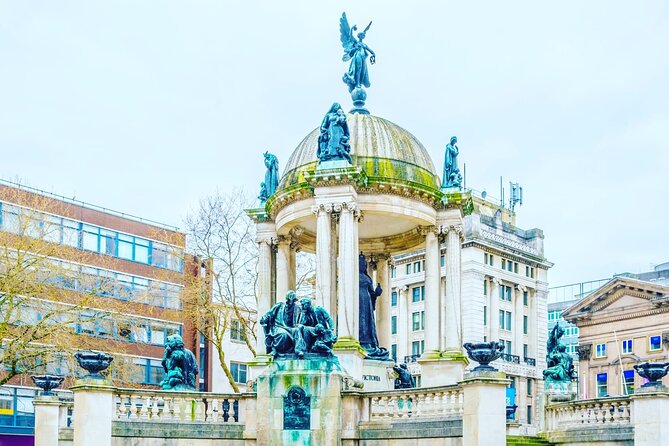
The walk spends about 15 minutes here. The Queen Victoria Monument follows, at the bottom of Castle Street, where the guide continues the story of Liverpool’s rise. By around 1800, Liverpool had become the largest port on the planet for global trade, according to the tour’s historical account.
That claim gives the section plenty of weight, but the value lies in the explanation behind it. You learn how Liverpool’s location, docks, shipping links, and commercial systems helped it grow so quickly.
Liverpool ONE and the city’s modern face
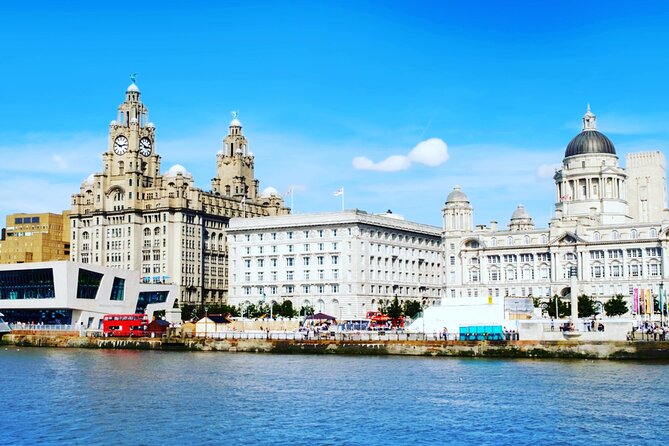
The route then passes through Liverpool ONE, the modern shopping and entertainment district. At first, this may seem like an odd inclusion on a history walk, but it helps show how the city has reused and reshaped its central areas.
The guide gives an overview of Liverpool ONE, its shops, and its attractions. This section lasts about 10 minutes and provides a pause from older buildings and port history.
It is not the most historically substantial stop, but it gives you a sense of present-day Liverpool. If you are planning time in the city after the tour, this is a useful orientation point for shopping and central attractions.
You should not expect a detailed retail tour. Think of Liverpool ONE as a bridge between the old commercial city and the modern center.
The Old Dock, where Liverpool’s port changed course
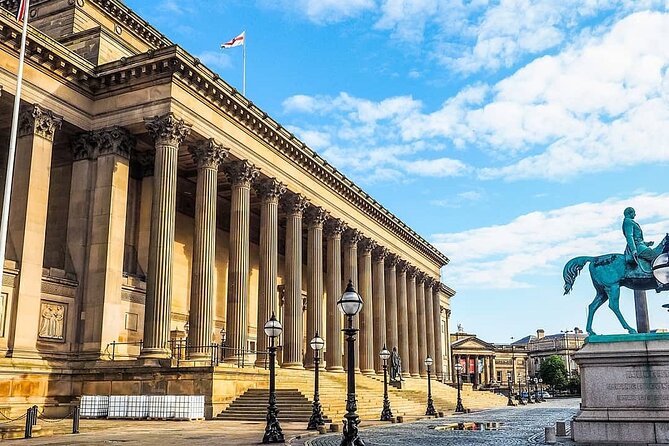
The Old Dock is one of the most important stops on the walk. Built in 1715, it was the first commercial wet dock on the planet.
That fact explains why Liverpool could handle ships and cargo more efficiently than a simple tidal waterfront allowed. The dock helped turn the city into a major port and became a foundation for its commercial power.
The guide presents the site as a turning point. Liverpool was no longer only a town beside a river. It was developing the infrastructure needed for large-scale international trade.
The stop lasts around 10 minutes and is free to visit. Do not expect a complete dock complex to appear in front of you. The appeal comes from understanding what happened here and how the dock influenced the city around it.
This is one of the places where a historian guide adds real value. Without explanation, an old dock site can be easy to overlook. With context, it becomes central to Liverpool’s story.
Royal Albert Dock and the 19th-century waterfront
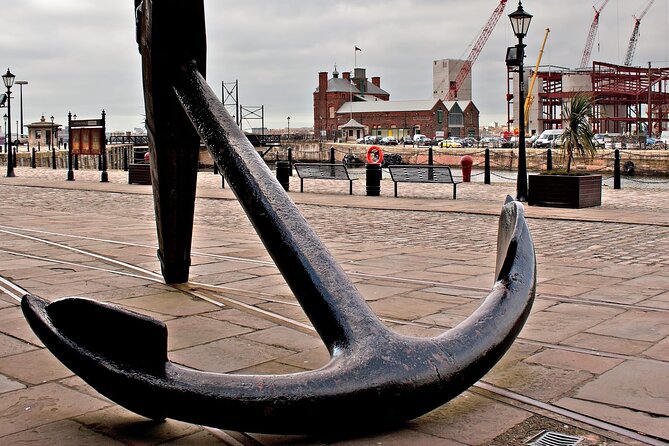
The route continues to Royal Albert Dock, built in 1846. This is one of Liverpool’s most recognizable areas, with its brick warehouses and broad waterside setting.
Here, the guide explains the dock’s role as a center of 19th-century commerce. You also learn about Liverpool’s important involvement in the First and Second World Wars.
Royal Albert Dock is visually rewarding, but the tour does not treat it as just a photo stop. The discussion connects the warehouses and dock basin to the city’s working past.
This part can be especially useful if you plan to return later for museums or longer visits. The walk gives you the historical frame first, so you can better understand what you are seeing when you explore the area on your own.
The tour information also describes the Royal Liver Building and waterfront as the final destination. At the same time, the stated end point is the Queen Victoria Monument at One Derby Square, at the bottom of Castle Street. Because those route details do not perfectly match, check the meeting and ending instructions before setting out.
What the guide adds to the experience
The guide is the main reason this tour receives such strong praise. The overall rating is 4.8 from 911 reviews, and 97 percent of participants recommend it.
John receives repeated praise for his passion, humor, storytelling, and ability to answer questions. Several comments describe him as especially good at making complicated history understandable. One local who had lived in Liverpool for more than 50 years still came away having learned a great deal.
That is a useful test. A tour that works for both first-time visitors and long-time residents has probably found a good balance between basic orientation and less familiar details.
Julio has also led the experience and is described as engaging and clear. Group size can reach 40 people, although one positive comment specifically praised having a smaller group. With a larger group, stand near the guide and ask for repetition if traffic noise or wind makes it hard to hear.
The walk is offered in English only. The guide’s delivery matters, and one person found the pace too fast. If you need a slower presentation, say so early. The guides are encouraged to take questions, and the strongest part of the experience is the chance to connect the facts to your own interests.
Is $27.74 good value?
At $27.74 per person, this is a strong value if you want a broad introduction to Liverpool. You get nearly two hours with a historian guide and visit many important sites without paying separate admission fees.
The tour does not include entry to the Royal Liver Building or Liverpool Town Hall. That keeps the cost down, but it also means the experience is focused on outdoor interpretation rather than interiors.
I would compare the price with the cost of trying to piece this story together alone. You could walk between the waterfront, Old Hall Street, Castle Street, Liverpool ONE, the Old Dock, and Royal Albert Dock for free. But you would not have the same chronological structure or the same explanation of Liverpool’s trade, docks, and social history.
The best value comes if you take the walk near the start of your stay. It helps you decide which places deserve a longer visit later. It also gives you a better sense of how the city center fits together.
Time, weather, and practical comfort
The walk lasts about 1 hour and 50 minutes. That is long enough to cover serious ground but short enough to fit into a morning or afternoon.
The route includes several outdoor stops, and the waterfront can be cold and windy. Wear a warm coat or jacket, especially if the forecast is poor, and choose comfortable shoes.
The experience requires good weather. If conditions force cancellation, you are offered another date or a full refund. The tour is near public transportation, service animals are allowed, and most people can take part.
Confirmation is provided at booking, and the experience is booked an average of 19 days ahead. That does not mean you must reserve exactly that early, but it suggests planning ahead is sensible during busy periods.
Free cancellation is available up to 24 hours before the start time. Cancellations or changes made within 24 hours are not refunded, except when the operator cancels because of weather.
There have been occasional very late cancellations, including one reported shortly before departure because of a family emergency. The operator provided refunds and offered alternative dates, but a late change can still disrupt a tightly planned day. If your schedule is packed, keep a backup plan.
Who should take this Liverpool walk?
I would choose this tour for a first visit, a short stay, or anyone who wants the city’s story explained in one sitting.
It suits you if you enjoy:
- Maritime and commercial history
- Architecture viewed from the street
- Medieval city origins
- Honest discussion of the slave trade and Liverpool’s difficult past
- A lively guide rather than a recorded audio tour
- A broad overview before exploring museums and docks independently
It may not suit you if you want long interior visits, a Beatles-centered experience, or a slow photography walk. The route covers a lot, and the guide may speak quickly when explaining complex subjects.
It is also a good choice for local residents. The tour is not limited to basic facts about the waterfront. Its strongest material concerns how Liverpool developed, why its docks mattered, and how commerce shaped the city.
Should you book it?
Book this walk if you want Liverpool to make sense before you explore it on your own. At a modest price, it connects the Three Graces, medieval foundations, Georgian civic power, the cotton trade, the Old Dock, and Royal Albert Dock into one readable story.
I would book it early in your stay, wear warm clothing, and confirm the endpoint because the route description gives both the Three Graces and Queen Victoria Monument as final locations. If you prefer a slower pace or need indoor attractions, choose another activity or allow extra time to ask questions.
For most visitors interested in Liverpool beyond its music fame, this is a well-priced and unusually useful introduction.
FAQ
Where does the tour begin?
It begins at the Royal Liver Building, Liver Building, Pier Head, Liverpool L3 1HU, United Kingdom.
Where does the tour end?
The stated meeting information gives the Queen Victoria Monument at One Derby Square, James Street, Liverpool L2 1AB, as the endpoint. The route description also refers to a final stop at the Three Graces, so confirm the exact ending details before departure.
How long does the walking tour last?
The tour lasts approximately 1 hour and 50 minutes.
How much does the experience cost?
The listed price is $27.74 per person.
Is the tour offered in English?
Yes. The tour is offered in English and includes a mobile ticket.
What landmarks are included?
The route includes the Royal Liver Building and Three Graces, Liverpool Parish Church Gardens, Old Hall Street, Liverpool Town Hall, Castle Street, the Queen Victoria Monument, Liverpool ONE, the Old Dock, and Royal Albert Dock.
Does the tour include admission to the buildings?
Admission to the Royal Liver Building and Liverpool Town Hall is not included. The other listed stops have free admission.
How many people can join the tour?
The maximum group size is 40 people.
Can I cancel for a full refund?
Yes, if you cancel at least 24 hours before the experience start time. Changes or cancellations made less than 24 hours before the start are not refunded. If poor weather causes the operator to cancel, you are offered a different date or a full refund.
More Historical Tours
- Liverpool Heritage, History, Culture Walking Tour-Shore Excursion
★ 4.5 · 21 reviews - Private Tour in Liverpool – History, Football, Views & Local Beer
★ 5.0 · 18 reviews - Inspirational Women Liverpool Past-Present History Tour – monthly
★ 5.0 · 17 reviews - London Small Group Tour of Historical Pubs
★ 5.0 · 10,422 reviews
Just added around Liverpool
- Welcome to Liverpool Tour – 2 Hour Private Walking Tour★ 5.0 · 7 reviews
- Private Half-Day Liverpool Tour with a Local, Personalized★ 5.0 · 7 reviews
- 3 Hours Private City Highlights Liverpool Walking Tour★ 5.0 · 7 reviews
- Football Experience With A Local Host In Liverpool★ 4.5 · 8 reviews
- Liverpool Football Club Museum Entry★ 5.0 · 10 reviews
- The Liverpool Pass®: All top attractions inc. Hop-On Hop-Off Bus Tour | 2-Days★ 4.5 · 11 reviews
- Liverpool Ultimate Beatles Ticket To Ride Half-Day PRIVATE Tour★ 5.0 · 12 reviews
- Liverpool Film and Music – 2 hour Private Walking Tour★ 5.0 · 12 reviews
Walking Tours, compared.

Oxford University Walking Tour With University Alumni Guide
Read our review →
Tour for Muggles The Ultimate Harry Potter Walking Tour in London
Read our review →

Cambridge University Walking Tour by Alumni™ Kings College Option
Read our review →
Blackbeard to Banksy – The Ultimate Walking Tour of Bristol
Read our review →
Air Raid Shelter + St. Nicholas Market Walking Tour
Read our review →
Walking Tour of Bath with Blue Badge Tourist Guide
Read our review →
Changing of the Guard Guided Walking Tour in London
Read our review →Browse the lists this tour appears in