
Reviewed · BATH TOURS
Private Guided Tour of Jane Austen’s Bath
Bath reads differently through Austen’s eyes. This private walking tour connects Jane Austen’s real addresses with places that shaped Northanger Abbey and Persuasion. I like the focused route through Bath Abbey, Queen Square, The Circus, the Assembly Rooms, and Sydney Place. I also like the private format, which gives your group of up to six a guide’s full attention.
The main drawback is that this is an outdoor walking tour, and several attractions are viewed from outside rather than entered. Admission tickets are not included at Bath Abbey, Sally Lunn’s Museum, the Cross Bath, or the Assembly Rooms. Poor weather can also cause a cancellation or date change, so keep that in mind when planning.
In This Review
- Five useful things to know before you book
- Why a private Austen tour works well in Bath
- Bath Abbey and Sally Lunn’s: starting with Austen’s city
- The Cross Bath and Pump Rooms: Bath as a social stage
- Queen Square and The Circus: architecture with Austen family connections
- Royal Crescent and the Assembly Rooms: status, fashion, and dancing
- Milsom Street and St Swithin’s Church: shopping and family memory
- Pulteney Bridge and Great Pulteney Street: finishing beside Austen’s home
- What the guide adds to the Austen connection
- Timing, tickets, weather, and practical planning
- Who will get the most from this private walk?
- Should you book the Jane Austen Bath tour?
- FAQ
- How long does the Jane Austen Bath tour last?
- Where does the tour begin?
- Where does the tour end?
- How many people can join the private tour?
- Is the price per person or per group?
- Are entrance tickets included?
- Can I cancel the tour?
Five useful things to know before you book
- It follows Austen’s Bath from Abbey to Sydney Place: The route begins outside Bath Abbey and finishes near the house where Austen and her family lived.
- It is private for up to six people: The $205.29 group price works out to about $34 per person for a full group of six.
- You get Georgian social context, not just architecture: Your guide explains etiquette, fashionable hours, dancing, marriage connections, and the places where people went to be seen.
- Theresa is one named guide: She is described as enthusiastic, entertaining, and fully informed about Austen and Bath.
- The route includes major city sights: You see Bath Abbey, Sally Lunn’s, the Roman bathing quarter, Queen Square, The Circus, Royal Crescent, Milsom Street, Pulteney Bridge, and Great Pulteney Street.
- Plan for weather and walking: The tour lasts about two and a half hours, uses a mobile ticket, and requires good weather.
Why a private Austen tour works well in Bath
Jane Austen did not simply set stories in an imaginary version of Bath. She lived here, visited family here, watched people here, and used the city’s social world as material for her novels. That makes a walking tour useful. You are not only looking at handsome Georgian buildings. You are learning how a particular city operated during Austen’s time.
I like the shortcut this tour provides. Bath has many Austen connections, but they are spread across the central city and beyond. You could find them yourself, but you would need to research addresses, match them with surviving buildings, and work out a sensible route. This experience gathers them into one clear walk.
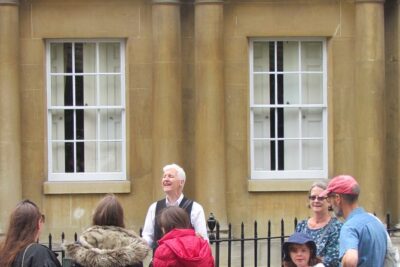
The private setup matters. Your group is limited to six, so you can ask about a favorite novel, Austen’s family, or the customs behind a scene. The guide can also adjust the conversation to your interests more easily than on a large group tour.
The cost is $205.29 per group, not per person. For six people, that is roughly $34 each. For two people, it is about $103 each, so the value depends heavily on your group size. A couple may find it expensive compared with a standard city walk, while a family or group of friends can get a fair deal from the fixed price.
The tour lasts approximately two hours and 30 minutes. That is long enough to cross much of central Bath without taking up an entire day. It also means you should wear comfortable shoes. The timing includes ten stops, so most locations receive a short explanation rather than a long visit inside.
A few more tours and experiences worth a look
- Bath Tour – 3 Hour Private Tour with Local Guide, £220 per group
★ 5.0 · 154 reviews - Stonehenge Private Tour – Half-Day Tour from Bath
★ 5.0 · 145 reviews - BATH: Private Walking Tour | Blue Badge Guide, 2h, £225 per group
★ 5.0 · 66 reviews
Bath Abbey and Sally Lunn’s: starting with Austen’s city
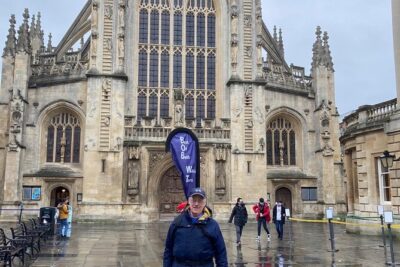
Meet your guide outside the West Doors of Bath Abbey. This is a practical starting point because the Abbey is one of Bath’s central landmarks and an easy place to find.
You spend about ten minutes here. The Abbey ticket is not included, and the walking experience does not appear to include an interior visit. If you want to see the building inside, plan that separately before or after the tour.
From the Abbey, the route continues to Sally Lunn’s Museum. This stop lasts about ten minutes and adds a food connection to the literary story. Sally Lunn is a large, light, yeasty bun associated with Bath. The name is linked to Solange Luyon, a young Huguenot refugee who is said to have brought the recipe to Somerset.
Austen liked Sally Lunns enough to write about them in her letters. That small detail helps bring her daily life down to earth. Austen was an author, but she was also someone who ate local food, visited friends, and took part in the routines of a fashionable spa city.
Sally Lunn’s is located in Bath’s oldest house, and the site combines a museum with a tea room. Admission is not included, so you may need a separate ticket if you want to go inside. The short stop is best understood as an introduction rather than a full meal break.
The Cross Bath and Pump Rooms: Bath as a social stage
The next stop is the Cross Bath, with about 20 minutes devoted to the bathing area and nearby Pump Rooms. This is one of the most useful parts of the tour because it explains why Bath attracted people who wanted both health treatments and social entertainment.
The Cross Bath is a historic bathing pool fed by natural mineral water. It was rebuilt in 1789 by Thomas Baldwin in the style associated with Robert Adam. You do not need to enter to appreciate its place in Bath’s story, and admission is not included.
The nearby Pump Rooms were a fashionable meeting place in Austen’s time. Bath’s public rooms were not casual spaces where people simply wandered in and out. They were places to observe and be observed, especially during the fashionable hour.
That social pressure matters when you read Austen. Her characters are often making decisions in public, managing appearances, and worrying about who has seen whom. The Pump Rooms help explain that world better than a plot summary can.
This stop also introduces a key theme: Bath was a social machine. People came for the water, but they also came to make connections, arrange marriages, show their clothes, and measure their standing. A guide who explains those rules adds real value here.
Queen Square and The Circus: architecture with Austen family connections
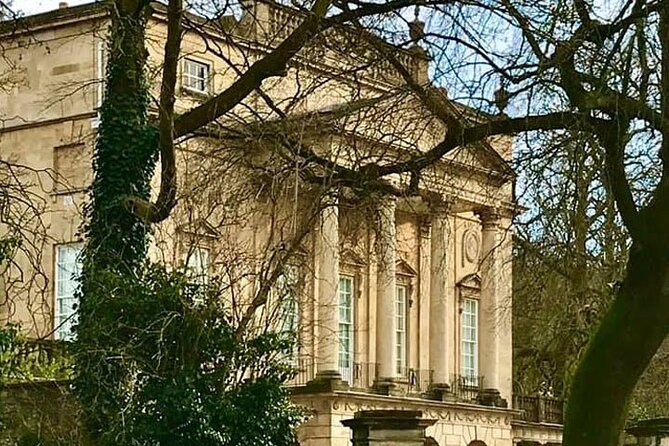
Queen Square is one of the tour’s strongest Austen stops. The square contains Grade 1 Georgian houses built in the Palladian style by John Wood the Elder. Its broad proportions and pale stone give you a clear sense of the setting Austen knew.
In 1799, Austen stayed with her family at number 13. From her bedroom window, she could watch elegantly dressed people pass through the square. The tour uses that address to connect the city’s architecture with the habits of looking, judging, and being seen that run through Austen’s work.
The stop lasts about ten minutes and is free. Your guide also shares stories about the people who lived behind the formal facades. That is worthwhile because Georgian Bath can otherwise feel like a row of beautiful but silent buildings.
At the center of the square is an obelisk erected by Beau Nash in honor of Frederick, Prince of Wales. It gives the space another link to Bath’s public ceremonies and social leadership.
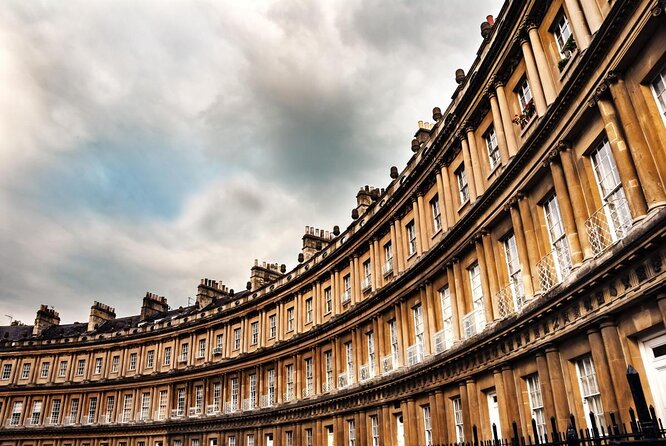
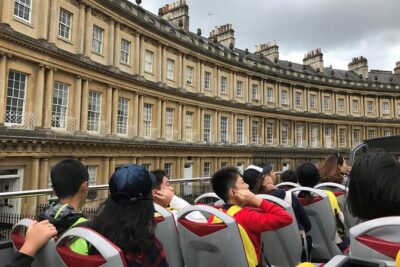
The Circus follows, with about 15 minutes here. John Wood the Elder planned it as part of a grand classical vision for Bath. The circular arrangement is one of the city’s most memorable examples of Georgian urban planning.
The Circus is a visual stop, but the guide’s comments about its residents give it more purpose. You begin to see Bath not as a museum of facades, but as a collection of addresses where people negotiated status and social access.
Both Queen Square and The Circus are free to view. The limitation is time. You will hear stories and get the Austen connection, but you will not have a long pause to inspect every building.
Something different for another day:
- Walking Tour of Bath with Blue Badge Tourist Guide
★ 5.0 · 1,877 reviews - Stonehenge, Avebury & the Cotswolds from Bath (Small group)
★ 5.0 · 798 reviews - Roman Baths and Bath City Walking Tour
★ 4.5 · 762 reviews - Fully Guided Bath Ghost Tours
★ 5.0 · 539 reviews
Royal Crescent and the Assembly Rooms: status, fashion, and dancing
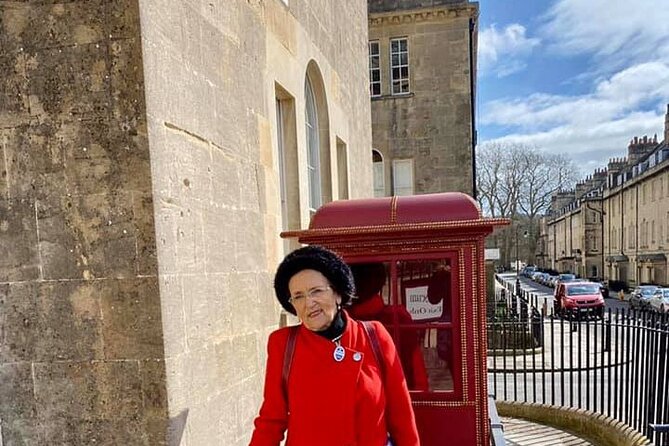
No. 1 Royal Crescent gives the tour one of its most photographed settings. The crescent contains 30 terraced houses arranged above Royal Victoria Park. It was designed by John Wood the Younger and built between 1767 and 1775.
The row remains much like it was when first built. That continuity makes the stop especially useful for anyone who wants to picture Austen’s Bath. You can look at the sweeping facade and imagine the city’s fashionable residents arriving, visiting, and displaying their social position.
The stop lasts about 15 minutes and is free from the outside. No. 1 Royal Crescent is an attraction in its own right, but entry is not part of this walking experience. If you want an interior reconstruction, you will need to arrange that separately.
The Assembly Rooms offer a different side of Bath. These rooms hosted balls, concerts, and other social events. Austen enjoyed dancing, and this was one of the places where she and the characters in her novels could take part in the city’s formal social life.
The guide also explains that one of Austen’s uncles was involved in the 17th-century investment plan that funded the Upper Rooms. That family connection adds a detail you are unlikely to pick up from architecture alone.
The Assembly Rooms stop lasts about ten minutes. Admission is not included. Still, the explanation of dancing and etiquette may be more important here than a quick interior look. Austen’s novels depend on the rules of public behavior, and this is where those rules become especially clear.
Milsom Street and St Swithin’s Church: shopping and family memory
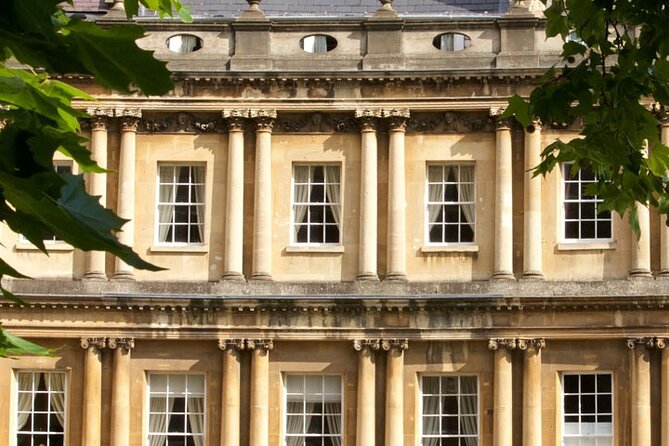
Milsom Street appears in both Northanger Abbey and Persuasion. It remains a shopping street today, making this one of the easiest places to compare Austen’s Bath with the modern city.
The tour spends about ten minutes in this area. You are not only being shown a literary reference. You are being shown a fashionable Georgian thoroughfare where shopping and social display were linked.
On the way, you pass St Swithin’s Church. Jane Austen’s parents were married there, and her father is buried there. That gives the route a more personal tone after the grand squares and public rooms.
This short stop is a good reminder that Austen’s Bath was not only about glamorous events. It also involved family, church, household arrangements, and the ordinary business of city life.
Because the tour is designed as a route through many sites, the time at Milsom Street is limited. You may want to return later if you want to shop or spend longer at the church.
Pulteney Bridge and Great Pulteney Street: finishing beside Austen’s home
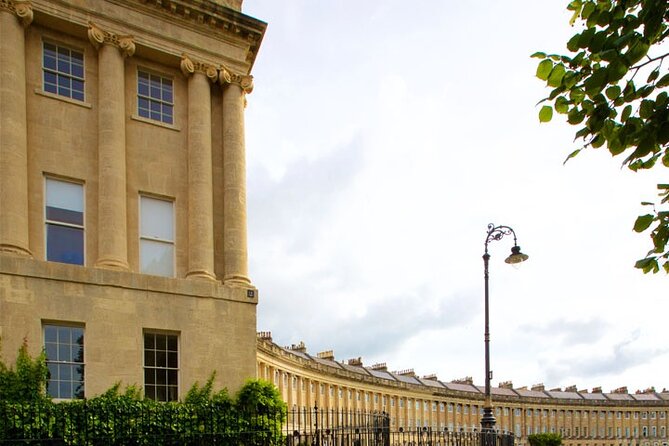
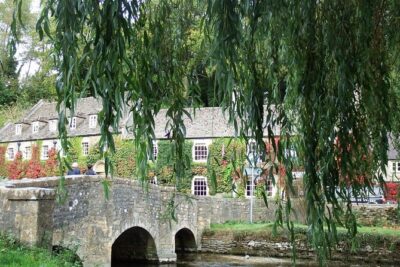
Pulteney Bridge is one of Bath’s most distinctive landmarks. Designed by Richard Adam, it crosses the River Avon with shops built across its full span on both sides. It is one of only four bridges in the world with shops spanning the entire bridge in this way.
The stop lasts about ten minutes and is free. It provides a welcome change from the formal squares. Here, the architecture meets the river and commercial life.
The final major stretch is Great Pulteney Street, with about 15 minutes of walking. Thomas Baldwin created this broad avenue to connect Bath with the River Avon, Bathwick, and Sydney Gardens. Georgian townhouses line the route.
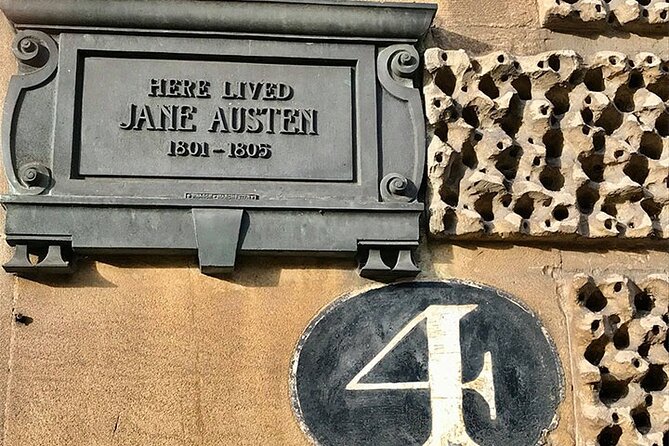
The tour continues to Sydney Place, where Jane Austen and her family lived at number 4. This gives the experience a satisfying endpoint. You finish not only at another grand Bath street, but near a specific family address.
The official end point is Sydney Place, Sydney Place, Bathwick, Bath BA2. That matters for your plans. You will not return to Bath Abbey, so arrange your next activity from the eastern side of central Bath.
What the guide adds to the Austen connection
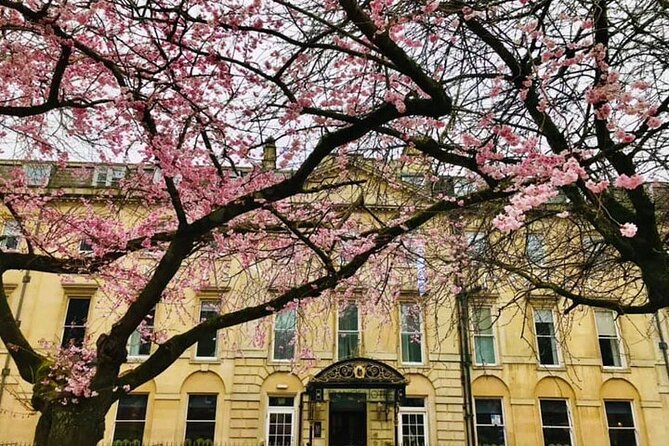
The best part of this experience is not simply recognizing buildings. It is learning how Austen might have understood them.
A guide can explain why the Pump Rooms mattered, how the Assembly Rooms worked, and why streets such as Milsom Street appear in the novels. You also get context about social etiquette in Regency England, including the importance of being seen in the right place and at the right time.
Theresa is specifically praised for being enthusiastic, entertaining, and fully informed about Jane Austen and Bath. Those qualities suit this subject. A dry list of dates would miss the point. Austen’s world was full of rules, gossip, small humiliations, and carefully managed appearances.
The named guide is not guaranteed for every departure, so treat Theresa’s involvement as a useful possibility rather than a promise. The provider is Strictly Jane Austen Tours.
Timing, tickets, weather, and practical planning
This is a walking experience lasting about two and a half hours. The route includes ten stops, with individual pauses ranging from ten to 20 minutes. Some time is spent moving between locations, and the tour finishes in Sydney Place rather than at its starting point.
The meeting point is outside Bath Abbey’s West Doors. You receive a mobile ticket, and confirmation is provided when you book.
Several admissions are not included:
- Bath Abbey
- Sally Lunn’s Museum
- The Cross Bath
- The Assembly Rooms
Queen Square, The Circus, No. 1 Royal Crescent, Milsom Street, Pulteney Bridge, and Great Pulteney Street are listed as free stops. That usually means you can view the relevant exterior or public area without adding an admission charge.
The tour requires good weather. If poor weather causes cancellation, you are offered another date or a full refund. You can cancel for a full refund up to 24 hours before the start time, but changes or cancellations inside that window are not accepted.
Bath is near public transportation, and service animals are allowed. Most people can take part. The information does not specify the exact walking distance or terrain, so ask the operator if you have concerns about stamina or mobility.
The experience is often booked around 78 days ahead. That suggests you should reserve early if your Bath dates are fixed, especially if you want a private tour for a particular day.
Who will get the most from this private walk?
I would recommend this tour to readers who have already read Austen, watched an adaptation, or simply want a literary way to understand Bath. It also suits couples, families, and small friend groups who prefer a conversation with one guide instead of a large scheduled party.
The full group price makes the experience more attractive for five or six people. A smaller group pays more per person, so compare the cost with the value of having a private guide and a route built around your interests.
This may not be the best choice if you want long interior visits, a food-focused tour, or a general history walk with equal attention to Roman Bath, medieval Bath, and modern Bath. Austen is the central subject, and the tour works best when that is what you want.
Should you book the Jane Austen Bath tour?
Book it if you want a focused literary walk through Bath, especially if you are traveling with enough people to share the group price. The route links Austen’s family addresses, novel settings, Georgian architecture, public rooms, and the social rules behind her stories.
Think carefully if you dislike outdoor tours, need guaranteed indoor access, or are visiting during uncertain weather. For Austen fans, the private format and lively guiding style make this a strong way to connect the author’s life with the city she knew. Theresa’s enthusiastic approach is a particular plus when available, but the main value comes from the route and the chance to ask questions along the way.
FAQ
How long does the Jane Austen Bath tour last?
The tour lasts approximately two hours and 30 minutes.
Where does the tour begin?
It begins outside the West Doors of Bath Abbey in Bath, England.
Where does the tour end?
It ends at Sydney Place in Bathwick, near number 4, where Jane Austen and her family lived.
How many people can join the private tour?
The private tour is for one group of up to six people.
Is the price per person or per group?
The listed price is $205.29 per group of up to six people.
Are entrance tickets included?
Admission is not included for Bath Abbey, Sally Lunn’s Museum, the Cross Bath, or the Assembly Rooms. The stops at Queen Square, The Circus, No. 1 Royal Crescent, Milsom Street, Pulteney Bridge, and Great Pulteney Street are listed as free.
Can I cancel the tour?
You can cancel up to 24 hours before the start time for a full refund. If poor weather causes the operator to cancel, you are offered another date or a full refund.
Just added around Bath
- Full-Day Private Tour of Stonehenge and Bath with Pickup★ 5.0 · 6 reviews
- Bridgerton’s Filming Locations in Bath Audio Guide★ 5.0 · 7 reviews
- Private Day Tour from Bath to Stonehenge and Salisbury with Pickup★ 5.0 · 9 reviews
- Wells, Cheddar Cheese and Cheddar Gorge – Private Day Trip from Bath★ 5.0 · 10 reviews
- The Beatles in Bath June 10th 1963★ 4.5 · 10 reviews
- Bath Private Guided Walking Tour★ 5.0 · 10 reviews
- Private Cotswolds tour from Bath★ 5.0 · 12 reviews
- Bath City Tour & Fly a Hawk Experience – Day Tour from Bath★ 5.0 · 13 reviews
Bath Tours, compared.

Walking Tour of Bath with Blue Badge Tourist Guide
Read our review →
Stonehenge, Avebury & the Cotswolds from Bath (Small group)
Read our review →
Bath Tootbus Hop-on Hop-off Sightseeing Bus Tour
Read our review →Browse the lists this tour appears in