
Reviewed · PHOTOGRAPHY SESSIONS
Ultimate introduction to photography in Central London
Your camera is smarter than you think. This five-and-a-half-hour London workshop turns the city into a practical classroom, with small groups of up to eight and patient tuition from Matthew. I like the hands-on format, and I like that the route moves from fast skate-park action to slow shutter work and evening river light. The main drawback is the weather dependence, since poor conditions can cancel the session.
You begin near the London Eye and finish where the Thames catches sunset, blue hour, or night light. Beginners get real camera practice, not just a classroom talk, while phone users can also benefit from advice on making better use of their camera apps. Bring a little stamina: you will be walking and standing around several central London locations.
In This Review
- Key things to know before booking
- Why this London photography course is worth your afternoon
- Starting beside the London Eye
- Leake Street Arches and the challenge of colour
- South Bank Skate Park and learning to freeze movement
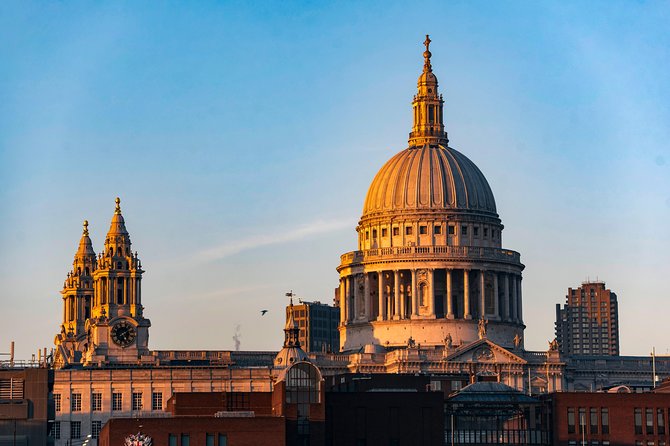
- St. Paul’s Cathedral and changing the way you frame London
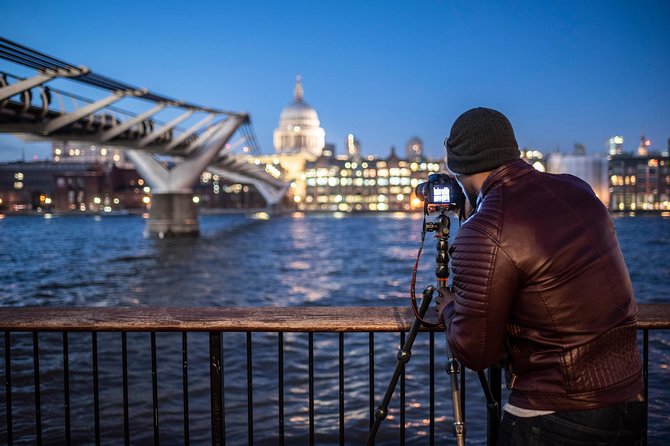
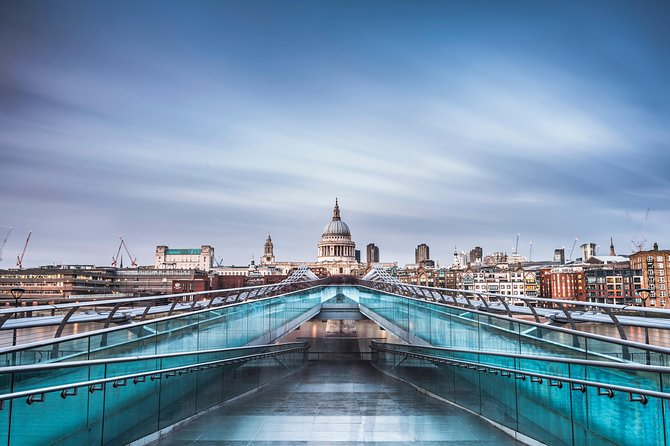
- The Thames at sunset, blue hour, and night
- Matthew’s teaching style and the small-group advantage
- Who should book this workshop?
- Practical details before you reserve
- Should you book the London photography workshop?
- FAQ
- Where does the photography workshop start?
- Where does the activity finish?
- How long does the photography workshop last?
- What camera skills will I learn?
- How many people can join the workshop?
- Is the workshop offered in English?
- Is the activity suitable for phone photographers?
- What happens if bad weather cancels the experience?
Key things to know before booking
- A five-and-a-half-hour practical lesson: You learn ISO, aperture, shutter speed, focusing, and shooting modes while making photographs on the street.
- Matthew teaches by coaching: His calm style suits complete beginners, families, retirees, and mixed-ability groups.
- The route has useful variety: The London Eye, Waterloo’s Leake Street Arches, St. Paul’s Cathedral, South Bank Skate Park, and the Thames each offer different photographic problems.
- You work toward manual control: The aim is not simply to collect London snapshots. You learn how settings affect movement, light, focus, and composition.
- The evening finish matters: Sunset, blue hour, and night shooting give you a chance to practise longer exposures after daylight fades.
- You need reasonable mobility and good weather: The activity is near public transport, allows service animals, and requires a moderate level of physical fitness.
Why this London photography course is worth your afternoon
Many camera lessons explain ISO, aperture, and shutter speed with diagrams, then leave you to remember everything later. This one puts those controls in your hands beside familiar London sights. That difference matters. You can see what happens when a shutter is too slow, notice how aperture changes the picture, and adjust settings while the scene is still in front of you.
I particularly like the focus on creating photographs rather than merely taking them. You are encouraged to think about the image before pressing the button: What deserves attention? Where should the eye go? Is the subject sharp, blurred, isolated, or part of a wider story?
That approach has lasting value. A list of camera settings can help for one afternoon. A better photographic eye helps you in a railway station, on a family trip, or under northern lights. One parent and teenage son used the session to build basic technical skills and improve composition. Another pair left with notes for an upcoming northern-lights trip. The lesson is firmly based in London, but the ideas travel well.
The workshop costs $232.25 per person. That is a sizeable price for an afternoon activity, especially if you already understand manual settings. For a complete beginner, though, the small group and field coaching make the cost easier to justify. You are paying for direct help with your own camera, repeated practice, and a finished set of images rather than a passive talk.
The value is strongest if you would otherwise spend months piecing together online lessons. Several people who had owned digital SLR cameras for years but stayed in auto mode came away more confident after one session. That does not make you an expert in five hours, but it can remove the technical fog that keeps many new photographers from experimenting.
More Photography Sessions in London:
- Professional Photoshoot in London Photographer
★ 5.0 · 102 reviews - Private landmarks photoshoot for families and couples
★ 5.0 · 92 reviews - Professional Private Photoshoot in London
★ 5.0 · 63 reviews
Starting beside the London Eye
The meeting point is the Starbucks on Belvedere Road, London SE1 7GQ. This puts you close to the London Eye and the South Bank, a useful setting for getting comfortable with the camera before the route becomes more demanding.
The London Eye gives you an immediate lesson in composition. You can work with a major landmark, surrounding buildings, open sky, and people moving through the frame. The point is not simply to photograph the wheel in the usual postcard way. You can practise deciding how much of the structure to include, where to place it, and how to handle competing details.
This first stop is also a sensible place to sort out camera basics. You work through ISO, aperture, shutter speed, shooting modes, and focusing. If you are new to manual control, Matthew can start with the absolute basics, including where the relevant settings are on your camera. That personal help is important because menus and controls vary widely between models.
You should not worry if another person in the group has more experience. Matthew has been praised for adjusting his teaching to different skill levels, helping beginners without holding back those who want more advanced tips. That makes the maximum group size of eight a practical feature, not just a number on the booking page.
Phone photographers are not left out. One group of retirees used phone cameras and received help with making more effective use of them. The course description centres on photography fundamentals, so you should still expect much of the language to apply most directly to a dedicated camera, but the teaching can be adapted to phone users.
Leake Street Arches and the challenge of colour
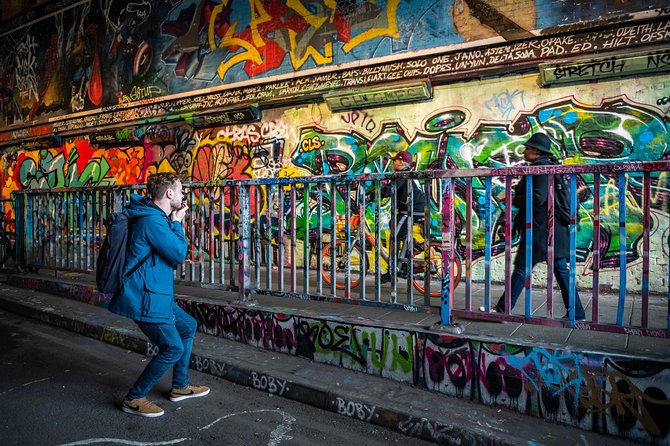
From the South Bank area, the route includes the Waterloo Graffiti tunnels at Leake Street Arches. The painted walls provide a sharp change from the open views around the London Eye. Here, you can work on colour, lines, texture, and layers within a more enclosed setting.
Graffiti also gives you a useful composition exercise. A wall may be full of detail, but a strong photograph still needs a clear subject or visual path. You might find yourself choosing between a close crop, a long view through the tunnel, or a frame that includes people alongside the artwork. Matthew’s emphasis on photographic decision-making is well suited to this stop.
This section is valuable because it moves you away from relying on famous landmarks. A recognisable building can carry a weak photograph. Street art forces you to make stronger choices about framing and balance.
The route also gives you a chance to compare different lighting conditions. The tunnels do not present the same open daylight as the riverside, so you can learn to notice how ISO and shutter speed respond to the available light. The goal is not to memorise one perfect setting. It is to understand why a setting works in one place and needs changing a few minutes later.
You will be standing and walking for much of the session, and the route is not designed as a sit-down seminar. Wear sensible footwear and plan for a moderate level of physical activity. The details provided do not specify a walking distance, so you should not treat this as a fully accessible transport-based tour.
South Bank Skate Park and learning to freeze movement
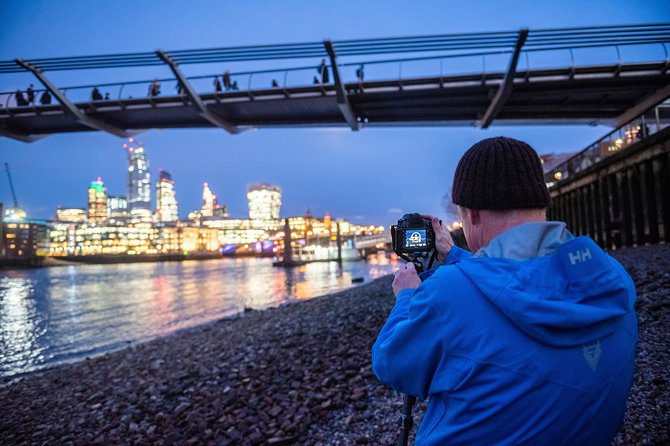
South Bank Skate Park brings movement into the lesson. Skateboarding makes shutter speed easier to understand because the result is obvious. A fast shutter can help freeze action, while a slower one can suggest movement and produce blur.
This is one of the strongest parts of the route for anyone who has only used automatic settings. You are not just told that shutter speed controls motion. You can test the idea on a moving subject, inspect the result, and make another attempt.
The setting also helps with timing. A technically correct image may still feel dull if the moment is poorly chosen. You learn to watch what is happening and anticipate a stronger frame. That is where the course’s creative side becomes as useful as its technical instruction.
You should keep expectations sensible. A five-and-a-half-hour workshop cannot guarantee a perfect action photograph from every attempt. Conditions, timing, and your own practice all matter. The benefit is learning how to respond, not receiving a guaranteed portfolio image.
The skate park is also a good point for discussing photographic storytelling. A picture can show one person, a sequence of movement, the setting around the action, or the relationship between people and place. Those choices help you make photographs that say more than I was here.
Something different for another day:
- Stonehenge, Windsor Castle, and Bath from London
★ 4.5 · 18,662 reviews - London Big Bus Hop-On Hop-Off Tour with Optional River Cruise
★ 3.5 · 10,803 reviews - London Small Group Tour of Historical Pubs
★ 5.0 · 10,422 reviews - Stonehenge, Windsor Castle and Bath with Pub Lunch in Lacock
★ 4.5 · 7,402 reviews
St. Paul’s Cathedral and changing the way you frame London
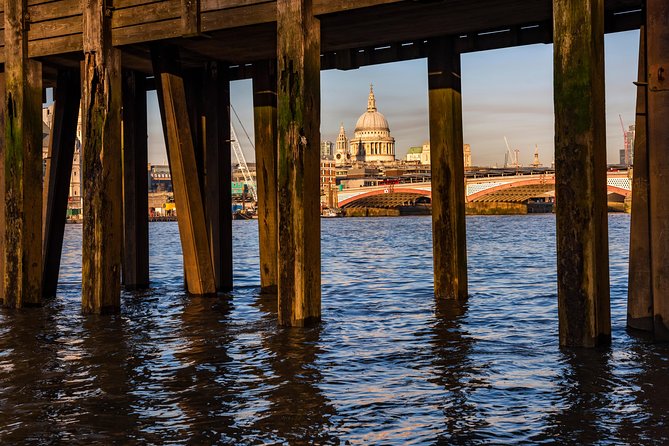
St. Paul’s Cathedral appears as another major stop on the route. The cathedral offers a different kind of photographic problem from the skate park and graffiti tunnels. Instead of fast action and saturated walls, you have a grand architectural subject that asks for careful framing.
You can use this part of the session to think about scale, symmetry, perspective, and the relationship between a landmark and its surroundings. The exact shooting position and available light will affect what you can do, so the useful lesson is learning to adapt rather than copying a fixed recipe.
This stop also reinforces the idea that famous sights need interpretation. You may photograph the whole cathedral, a detail, a view that includes the street, or a composition built around shape and contrast. Matthew’s coaching helps you consider why one version works better than another.
Some people come to the course with a new camera and little idea how its functions work. Others have owned a DSLR for five years and still used auto mode. St. Paul’s is the sort of place where a beginner can practise slowly, while a more confident photographer can work on a deliberate composition.
The Thames at sunset, blue hour, and night
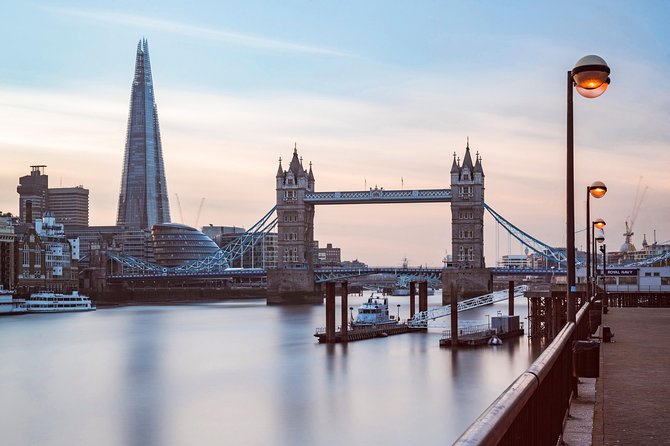
The final part of the workshop looks toward the Thames as daylight fades. Depending on the timing and conditions, you work with sunset, blue hour, or night photography. This gives the course a natural progression from basic controls to more demanding low-light work.
Slow shutter speeds become especially useful here. You learn how longer exposures affect brightness and movement, and you discuss ways to make the most of the changing light. Evening photography can expose weak habits quickly, so direct coaching is helpful.
The riverside finish also brings together the creative ideas from earlier in the afternoon. You need to consider the subject, the light, the composition, and the mood. A technically sharp image is not automatically the best one. At blue hour, a slightly slower exposure may communicate the evening better than a bright, frozen frame.
This is likely to be the most rewarding part if you want images that feel more atmospheric than ordinary daylight snapshots. It is also the section most affected by weather. The activity requires good conditions, and if poor weather forces a cancellation, you are offered another date or a full refund.
The experience ends back at the original meeting point. That is useful for planning, since you do not need to arrange a separate return meeting place. The exact finish time can vary with the approximate duration and the evening light, so leave some flexibility in your schedule afterward.
Matthew’s teaching style and the small-group advantage
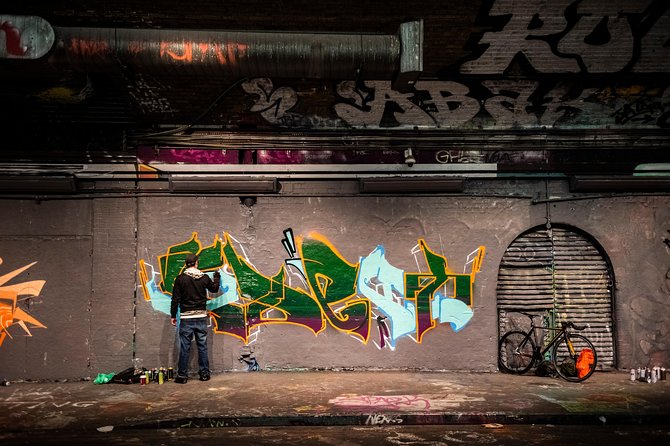
Matthew Williams-Ellis is the instructor, and his teaching style is one of the clearest reasons to choose this workshop. The strongest praise centres on patience, friendliness, and an ability to explain camera functions without making beginners feel foolish.
That matters because photography jargon can shut people down quickly. ISO, f-stops, aperture, and shutter speed sound technical until someone shows you how they interact on your own camera. Matthew’s method appears to be practical and encouraging, with enough detail to help you improve without turning the session into a lecture.
The group limit is eight people. That is small enough for individual questions, though it is not a private lesson. If every participant needs extensive help with a different camera system, time will still be shared. The group format works best if you are happy to practise independently between explanations and accept that the instructor must divide attention.
Mixed experience levels should not be a major concern. Matthew has adapted sessions for complete beginners, experienced camera owners, retirees using phones, parents with teenage children, and people seeking more specialised advice. His teaching can begin with simply finding the right settings, then move toward more advanced technique when appropriate.
Who should book this workshop?
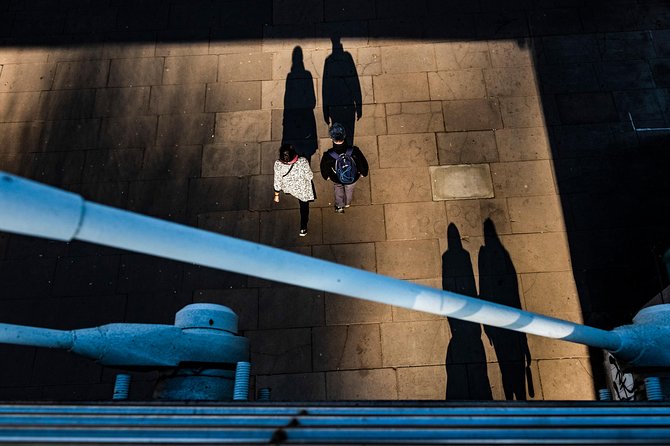
I would recommend it most strongly to:
- Someone who owns a DSLR or mirrorless camera but stays in auto mode.
- A beginner who wants face-to-face help rather than more online tutorials.
- A phone photographer who wants to make better use of manual-style controls and composition.
- A parent and teenager looking for a shared activity with a useful result.
- A photographer who wants practice with movement, architecture, low light, and composition in one session.
- Anyone preparing for a photo-heavy trip and needing confidence before departure.
It is less suitable if you already control ISO, aperture, shutter speed, focusing, and shooting modes with ease. You may still enjoy the London route and evening shoot, but the beginner-level instruction could feel slow.
It is also not ideal if you need a fully indoor activity or dislike walking and standing. Weather plays a real part, and the route depends on being outside in changing light.
Practical details before you reserve
The workshop is offered in English and uses a mobile ticket. Confirmation is sent within 48 hours of booking, subject to availability. The meeting point is Starbucks Coffee on Belvedere Road, London SE1 7GQ, and the activity ends back there.
The location is near public transportation, which helps with reaching the start point. Service animals are allowed. You should have a moderate level of physical fitness, but no specific walking distance is provided.
You can cancel for a full refund if you do so at least 24 hours before the local start time. Cancellations or changes made within 24 hours are not accepted for a refund. Since weather can affect the session, check your plans before setting aside the afternoon.
Should you book the London photography workshop?
Book it if you want to stop guessing and start controlling your camera. The best reason to go is the combination of patient instruction and varied real-world practice: the London Eye for basics, Leake Street for composition, the skate park for motion, St. Paul’s for architecture, and the Thames for fading light.
At $232.25, this is not a cheap sightseeing walk. It is better judged as a small-group lesson with a central London setting. If Matthew’s calm, hands-on style matches how you learn, the course can save you a long stretch of confused trial and error.
Skip it if you already shoot confidently in manual mode, need guaranteed sunshine, or want a purely scenic tour with no technical teaching. For beginners, phone photographers, and camera owners ready to leave auto mode behind, it offers a friendly and useful way to make London photos with more purpose.
FAQ
Where does the photography workshop start?
It starts at Starbucks Coffee, Belvedere Road, London SE1 7GQ, UK.
Where does the activity finish?
The workshop ends back at the original meeting point.
How long does the photography workshop last?
The approximate duration is five hours and 30 minutes.
What camera skills will I learn?
You learn the basics of ISO, aperture, shutter speed, shooting modes, and focusing. The session also covers slow shutter speeds, composition, and photographic storytelling.
How many people can join the workshop?
The maximum group size is eight participants.
Is the workshop offered in English?
Yes, the experience is offered in English.
Is the activity suitable for phone photographers?
Yes. The teaching can include advice on using phone cameras more effectively, as shown by a session with retirees using their phones.
What happens if bad weather cancels the experience?
You will be offered a different date or a full refund if the activity is canceled because of poor weather.
Just added around London
- The Private British Museum Tour★ 5.0 · 6 reviews
- London to Southampton Cruise Port | Private Transfer★ 5.0 · 6 reviews
- London’s Chinatown Food Experience★ 4.0 · 6 reviews
- London Gatwick (LGW) Airport Departure Private Transfer – Hotel to Airport★ 4.0 · 6 reviews
- Christmas in Canterbury, Dover and Greenwich with Christmas Lunch★ 4.5 · 6 reviews
- Transfer from Heathrow Airport to London hotel on private car★ 4.5 · 6 reviews
- Jazz Notes – Jazz Jam Ticket★ 5.0 · 6 reviews
- Transfer from London Stansted Airport to Central London★ 5.0 · 6 reviews
Photography Sessions, compared.
Professional Photoshoot in London Photographer
Read our review →
Private landmarks photoshoot for families and couples
Read our review →
Private Landmarks with a Professional Photographer
Read our review →
Private Tour: Personal Travel Photographer Tour in London
Read our review →Browse the lists this tour appears in