
Reviewed · WALKING TOURS
York Fire Walk
Fire changes the way you see York. This $21 walking tour links the city’s walls, churches, Minster, Roman remains, and Viking streets through stories about flames, furnaces, explosions, and survival. I like the unusual theme, and I especially like that guides Dr Simon Rogerson and Dr Liam Herringshaw use York’s side streets to tell stories that a standard sightseeing walk may skip.
The route is compact, with eight stops and plenty of fact-filled conversation. It is also a good value for anyone who wants more than a list of dates and buildings. The main consideration is that the fire theme sometimes gives way to broader local history, so you should book it for the storytelling and unusual connections rather than expect fire at every stop.
In This Review
- Key points to know before you book
- Why York works so well for a fire-themed walk
- Museum Gardens and the Roman emperor’s funeral question
- York Art Gallery, slag, soldiers, and fiery artwork
- St Michael le Belfrey and York schoolboys in the Gunpowder Plot
- York Minster and the fires that threatened it
- Stonegate and an explosive York scientist
- City Screen and the Frenchman who helped save York
- St Sampson’s Square and keeping Roman soldiers warm
- Coppergate and the fiery work of Viking York
- What the $21 price really buys you
- Who will enjoy this walk most
- Should you book the York Fire Walk?
- FAQ
- How long does the York Fire Walk last?
- Where does the tour begin?
- What time does the York Fire Walk start?
- Where does the tour finish?
- Are attraction admission tickets included?
- What happens if I need to cancel?
Key points to know before you book
- York’s fire stories reach from Roman times to the Gunpowder Plot: The walk connects Roman heating, Viking industry, Guy Fawkes, York Minster, and modern scientific work.
- Two science-minded guides lead the experience: Dr Simon Rogerson and Dr Liam Herringshaw bring attention to volcanology, explosive science, slag, and the practical side of fire.
- Eight short stops keep the route moving: Each listed stop takes about 10 minutes, with a total duration of roughly 1 hour 30 minutes to 2 hours.
- You finish near Jorvik: The walk begins at the Yorkshire Museum and ends at Coppergate Shopping Centre, close to the entrance to Jorvik.
- Small groups can make this feel personal: The maximum group size is 25, and on at least one occasion the experience became a one-on-one learning session for two people.
- Bad weather can affect the outing: You can receive another date or a full refund if poor weather forces cancellation.
Why York works so well for a fire-themed walk

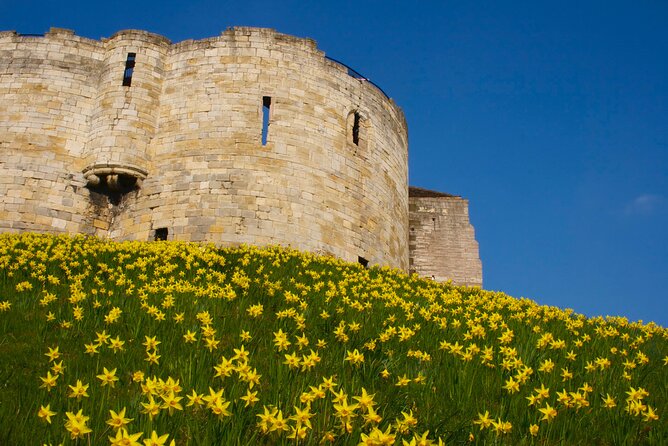
York can feel like a tidy medieval postcard, with stone walls, timbered lanes, and York Minster rising above the center. This walk asks you to look at the city as a place repeatedly shaped by heat and destruction.
That idea gives the route a useful focus. Instead of moving from one famous building to the next, you hear how people used fire, feared fire, and sometimes lost control of it. Roman soldiers needed warmth. Viking craftsmen needed hot working areas. Churches faced serious fire danger. Scientists studied explosive forces. The same basic element links all of these stories.
I like themed tours when the theme helps you notice details rather than simply decorate a familiar route. The York Fire Walk does that with a blend of local biography, science, architecture, archaeology, and military history.
The start time is 2:00 p.m., which makes this easy to fit into a day in York. You meet at the Yorkshire Museum in Museum Gardens and finish at Coppergate Walk. Since the end point is close to Jorvik, you can continue sightseeing in the same part of town after the walk.
More Walking Tours in York
- Shadows of York: Ghost Walk and Horrible History.
★ 5.0 · 1,403 reviews - Private Historical Walking Tour of York
★ 5.0 · 1,324 reviews - Wizard Walk of York – WINNER Best Tour & Best of York Award
★ 5.0 · 918 reviews
Museum Gardens and the Roman emperor’s funeral question
The first stop is in Museum Gardens, outside the Yorkshire Museum. You spend about 10 minutes learning where a Roman emperor could be cremated and how not to fight the Battle of the Bowling Green.
That pairing tells you what kind of tour this is. The guide is not simply going to offer a solemn speech about a major monument. You get a curious historical question, followed by a story with a more playful edge. The result should help you pay attention to the setting around you.
Museum Gardens is a sensible meeting place because it gives the group room to gather before heading into the tighter streets. Admission to the stop is free, though the tour does not present itself as an indoor museum visit. If you want to spend time inside the Yorkshire Museum, plan that separately.
The short opening stop also sets the pace. You are not expected to remain in one place for a long lecture. The route moves on after roughly 10 minutes, so wear shoes suited to walking and be ready to listen while standing.
York Art Gallery, slag, soldiers, and fiery artwork
At Exhibition Square, outside York Art Gallery, the conversation turns to slag, soldiers, and artwork connected with fire. You then pass through Bootham Bar on the way toward York Minster.
This is one of the tour’s more unusual combinations. Slag points toward the waste left by high-temperature work, while soldiers bring a military angle. Fiery artwork adds a visual and cultural side to the theme. You are likely to get a wider sense of how fire appears in both practical work and artistic expression.
The stop takes about 10 minutes. Admission to York Art Gallery is not included, and the tour description places the discussion outside the gallery rather than promising an interior visit. That is useful to know if you are hoping to see the collection. Treat this as an outdoor talk with the gallery as a backdrop.
Passing through Bootham Bar also gives the route a clear sense of movement. You are walking through one of York’s historic entrances rather than following a loop in a single square. The route begins to feel like a city walk, not a sequence of isolated talks.
St Michael le Belfrey and York schoolboys in the Gunpowder Plot

Outside St Michael le Belfrey Church, you hear how a group of York schoolboys became involved in the Gunpowder Plot. This stop brings the most famous York-born figure associated with the theme into view: Guy Fawkes.
Fawkes was born in York, and the walk uses his early life as more than a quick birthplace fact. The connection to schoolboys and the Gunpowder Plot gives the story a local starting point before it reaches national history.
The church stop lasts about 10 minutes, and admission is not included. Again, the focus is on the guide’s account outside the building. If you want to enter the church, you should not assume that entrance forms part of the tour.
This is likely to be a strong stop for anyone interested in political history, rebellion, or the way a familiar national story looks from its local setting. It also shows why the route is not limited to accidental fires or old building damage. Fire here is tied to conspiracy, explosives, and a young man whose name became part of British history.
Something different for another day:
- Mad Alice’s The Bloody Tour of York -Best Tour Award Europe
★ 5.0 · 2,749 reviews - Ghost Bus Tour of York
★ 4.5 · 2,404 reviews - Daytime Sightseeing Boat Cruise in York
★ 4.5 · 1,256 reviews - York Dungeon Entry Ticket
★ 4.5 · 1,108 reviews
York Minster and the fires that threatened it
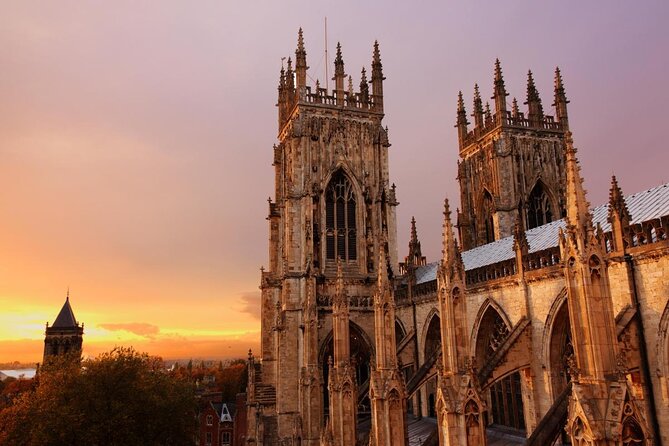
In Minster Yard, near the south entrance to York Minster, the guide paints a picture of fires that have engulfed the cathedral over the years. The stop lasts about 10 minutes and does not include Minster admission.
The setting carries much of the impact. York Minster is one of the city’s defining sights, so hearing about its vulnerability changes your view of the stonework, roof, and great scale. A huge cathedral can seem permanent. Fire reminds you that even major buildings depend on constant care and good fortune.
Do not confuse this stop with a guided tour of the Minster interior. The meeting point is in Minster Yard, and the emphasis is on the building’s fire stories from outside. If visiting the Minster is a priority, you will need to arrange that separately.
I consider this one of the most useful stops for first-time visitors because it adds tension to an otherwise familiar landmark. You see the Minster, but you also imagine it under threat. The account may be especially effective for people who enjoy architecture, religious buildings, and the practical problems of preserving old structures.
Stonegate and an explosive York scientist
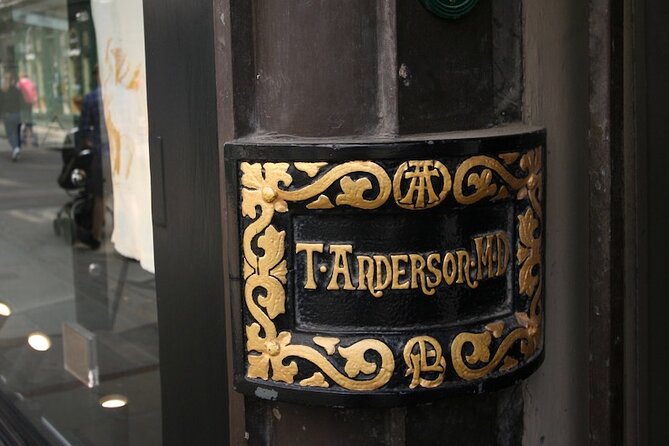
At 23 Stonegate, the tour tells the explosive life story of one of York’s important scientists. This is another point where the walk broadens beyond the simple idea of buildings catching fire.
The exact appeal lies in the combination of a busy historic street and a scientific story. Stonegate is already one of the places many people pass through, but the address gives you a reason to stop and consider the people connected with it. Fire becomes a subject of experiments, discovery, and danger.
The stop is free and lasts about 10 minutes. Since the route uses an address in the street rather than an admission-based attraction, you can expect the value to come from the explanation, not from entering a special site.
This part should suit you if you enjoy stories about people who worked with difficult or risky ideas. It also helps explain why the two guides, Dr Simon Rogerson and Dr Liam Herringshaw, matter to the experience. Their backgrounds allow the walk to connect local places with scientific questions rather than treating science as a footnote.
City Screen and the Frenchman who helped save York
Outside City Screen Picturehouse, beside the ruins of St Martin’s Church, you hear about a French volcanologist who helped prevent York from burning to the ground. This is perhaps the clearest example of the tour’s promise to present York from a new angle.
The story links a French scientist with the safety of an ancient English city. That unexpected connection is exactly the sort of detail that can stay with you after a sightseeing walk. It also brings fire into the modern scientific world, where understanding volcanic forces can have practical consequences.
The stop takes roughly 10 minutes. Admission is not included, and the focus is outside by the church ruins. The mix of cinema, ruined church, and volcanology gives the stop an especially varied setting.
One important point about the overall experience is that the fire subject does not always dominate every minute. The tour’s strength is the way it uses fire as a route into other subjects. If you want a tightly technical account of fires in York, this may feel broad. If you like surprising links between people, places, and ideas, the wider approach is a benefit.
St Sampson’s Square and keeping Roman soldiers warm
At the Roman Bath in St Sampson’s Square, the discussion turns to keeping a Roman legion warm and happy. The subject brings the walk back to everyday military life.
Roman power is often presented through battles and emperors. This stop looks at a more practical question: how did soldiers cope with cold conditions and maintain a workable daily routine? Heat was not just a destructive force. It was part of comfort, discipline, and survival.
The stop is listed at about 10 minutes, and admission is not included. You should therefore regard the Roman Bath as a meeting point for the talk rather than assume that the tour includes entry inside.
This is a good reminder that the route’s theme has two sides. Fire can destroy a church or inspire an explosive plot, but it can also make a military camp livable. Those contrasts give the walk more range than its title first suggests.
Coppergate and the fiery work of Viking York
The final stop is on Coppergate, where you learn about the heat involved in Viking industry and how the remarkable Jorvik excavation revealed it. The tour finishes at Coppergate Shopping Centre, near the entrance to Jorvik.
This ending makes practical sense. Coppergate connects present-day shopping with archaeological evidence from York’s Viking past. The discussion focuses on work that required heat, along with the traces left behind for archaeologists to find.
The stop is free, and it takes about 10 minutes. Jorvik admission is not included, but the location gives you a convenient option after the tour. You can finish the walk and decide if you want to continue with a separate visit to the attraction.
Ending here also gives the tour a satisfying chronological spread. You have moved through Roman, medieval, early modern, scientific, and Viking stories, with fire appearing in different roles at each stage. The route does not simply finish at York’s most famous building. It finishes with archaeology and industry, which feels fitting for a walk about how ordinary work can leave lasting marks.
What the $21 price really buys you
At $21, this is priced as an affordable specialty walk rather than a full-day guided excursion. You are paying for roughly 90 minutes to two hours with a guide, a planned route, and a carefully chosen set of stories. You are not paying for admission to York Minster, York Art Gallery, the Roman Bath, Jorvik, or other attractions.
I think the value is good if you enjoy guided conversation and want material that differs from a basic city introduction. The walk covers eight stops, and the small maximum of 25 people gives the guides a reasonable chance to keep the group together.
The value becomes even better when the group is small. One outing became a personal lesson for only two people, and the activity continued rather than being canceled because of low numbers. You cannot count on having a private walk, but low attendance may make the experience feel especially direct.
The tradeoff is that each stop is short. You will not receive a long examination of every site, and the route may leave you wanting more detail about particular buildings. For that reason, I see this as a themed introduction that adds layers to York, not a replacement for visiting the city’s major attractions.
Who will enjoy this walk most
I would recommend the York Fire Walk to you if you like local stories, science, archaeology, architecture, or unusual historical connections. It should also suit repeat visitors who have already seen the main sights and want a different way to understand them.
Families with older children may find the Gunpowder Plot, Roman soldiers, Viking industry, and explosions more engaging than a standard chronology. The short stops help keep the route moving, though the experience still requires standing and walking for up to two hours.
It is also a good choice for visitors who prefer a conversation-led walk instead of a heavily scripted presentation. The guides are named as Dr Simon Rogerson and Dr Liam Herringshaw, and the experience is built around fact-filled discussion.
You should think twice if your main goal is a detailed interior visit to York Minster or York Art Gallery. Those attractions are part of the route’s setting, but entrance tickets are not included. You may also want another type of tour if you want every stop to focus strictly on fires. One useful criticism of the experience is that the fire theme can sometimes feel more like a starting point than the main subject.
The tour requires reasonably good weather. If poor weather cancels it, you are offered another date or a full refund. You can cancel for a full refund up to 24 hours before the 2:00 p.m. start time. Changes or cancellations inside that window are not refunded.
The activity accepts mobile tickets, service animals, and is near public transportation. Most people can take part, and the maximum group size is 25.
Should you book the York Fire Walk?
Book it if you want smart, local storytelling for $21 and like your sightseeing with a twist. The route uses familiar York landmarks, but the stories about Guy Fawkes, Roman heat, Viking industry, York Minster fires, a French volcanologist, and an explosive scientist give those places fresh meaning.
Skip it if you want a conventional tour focused on major interiors or a strict catalogue of York fires. The subject wanders into science, politics, archaeology, and biography. For me, that broad approach is the point. You get a more curious picture of York, with plenty of unusual facts and a route that ends conveniently near Jorvik.
FAQ
How long does the York Fire Walk last?
The experience lasts approximately 1 hour 30 minutes to 2 hours. The route includes eight listed stops, each planned for about 10 minutes.
Where does the tour begin?
The walk begins at the Yorkshire Museum in Museum Gardens, Museum Street, York YO1 7FR.
What time does the York Fire Walk start?
The stated start time is 2:00 p.m.
Where does the tour finish?
The walk finishes at Coppergate Shopping Centre on Coppergate Walk, York YO1, close to the entrance to Jorvik.
Are attraction admission tickets included?
No. Admission is not included for places such as York Art Gallery, St Michael le Belfrey Church, York Minster, City Screen Picturehouse, the Roman Bath, or Jorvik. Some outdoor stops are listed as free.
What happens if I need to cancel?
You can cancel at least 24 hours before the experience starts for a full refund. Cancellations or changes made less than 24 hours before the start time are not refunded. If poor weather causes the provider to cancel, you are offered another date or a full refund.
Just added around York
- The Full Hoot Distillery Tour & Guided Hooting Owl Experience★ 5.0 · 6 reviews
- Welcome to York – The River Route★ 5.0 · 7 reviews
- Private York Christmas Walking Tour★ 5.0 · 7 reviews
- Private Walking Tour: York City Highlights and York Minster★ 5.0 · 8 reviews
- York 3-Hour Photography Walking Tour★ 5.0 · 9 reviews
- Full-Day Heartbeat Locations Tour from York★ 3.5 · 11 reviews
- Guided Historic Pub Tour (York)★ 4.5 · 11 reviews
- Private Roman Tour of York★ 5.0 · 14 reviews
Walking Tours, compared.

Oxford University Walking Tour With University Alumni Guide
Read our review →
Tour for Muggles The Ultimate Harry Potter Walking Tour in London
Read our review →

Cambridge University Walking Tour by Alumni™ Kings College Option
Read our review →
Blackbeard to Banksy – The Ultimate Walking Tour of Bristol
Read our review →
Air Raid Shelter + St. Nicholas Market Walking Tour
Read our review →
Walking Tour of Bath with Blue Badge Tourist Guide
Read our review →
Changing of the Guard Guided Walking Tour in London
Read our review →Browse the lists this tour appears in