
Reviewed · YORK TOURS
Welcome to York – The River Route
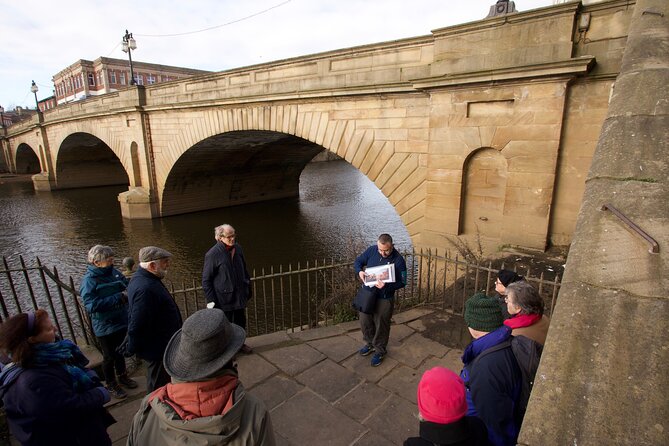
History follows the river here. This York walking tour links St Mary’s Abbey, the Ouse, and Clifford’s Tower in a compact route that shows how the city grew around water, trade, religion, and conflict. I like the clear 90-minute to two-hour format, and I like that the walk moves through real streets and riverfront places rather than keeping you inside museums.
The price is reasonable at $16.45 per person, especially for a small-group tour capped at 25 people. The main consideration is weather: the walk requires good conditions, and admission to Clifford’s Tower is not included.
In This Review
- Key points at a glance
- Why York’s river route is worth your time
- Starting among the ruins of St Mary’s Abbey
- Marygate and the old road north
- Crossing the Ouse at Ouse Bridge
- King’s Staith and York’s working waterfront
- Small details that reward close attention
- Ending beneath Clifford’s Tower
- Price, timing, and group size
- Who will enjoy this York walk?
- Should you book Welcome to York: The River Route?
- FAQ
- Where does the tour start?
- What time does the tour start?
- Where does the walk finish?
- How long does the experience last?
- How much does the tour cost?
- Is entry to Clifford’s Tower included?
- Is the tour offered in English?
- How large is the tour group?
- What happens if bad weather cancels the tour?
Key points at a glance
- York’s river story is the main subject: You follow the Ouse from the abbey precinct to the city’s old quay and castle.
- The walk begins at St Mary’s Abbey: Free to view, these striking ruins provide the setting for Henry VIII’s dissolution of the monasteries.
- Marygate adds medieval street context: You see old abbey walls and Marygate Tower while learning how the street linked the river with the road north.
- King’s Staith brings York’s trading past to life: This was the city’s main quay for more than 500 years.
- Small groups make questions easier: The maximum group size is 25, and private-feeling departures may happen when numbers are low.
- The guide can add local details: Ian has been praised for clear, interesting explanations, including stories connected to the John Snow plaque and Dick Turpin’s grave.
Why York’s river route is worth your time
York is easy to admire from its walls and lanes, but the River Ouse gives you another way to understand the city. Water shaped its trade, transport, defenses, and daily life. This walk makes that connection the central story.
The route is also useful early in a York visit. It gives you a basic map of the western side of the center, from Museum Gardens down toward the castle area. Afterward, you will have a better sense of where the abbey ruins, Marygate, Ouse Bridge, King’s Staith, and Clifford’s Tower fit together.
I especially like the scale of the experience. You are not committing half a day to a coach excursion or a long country walk. The stated duration is about one hour 30 minutes to two hours, with several brief stops. That leaves time for the York Castle Museum, the Minster, lunch, or your own wandering afterward.
The route is historical but not overloaded with formal attractions. Most of the stops are viewed from public streets or open areas, so you are paying for the guide’s interpretation rather than a string of entrance tickets. That is an important distinction. If you enjoy stories, connections, and a sense of place, the cost is good value. If you want extended indoor visits, this may feel too light.
The walk is offered in English and begins at 2:00 p.m. That afternoon timing can work well if you have spent the morning at York Minster or the National Railway Museum. It also means you should check your day carefully if you plan to enter Clifford’s Tower afterward, since the walk itself only finishes at its foot.
Other York trips people book alongside this one:
- Mad Alice’s The Bloody Tour of York -Best Tour Award Europe
★ 5.0 · 2,749 reviews - Ghost Bus Tour of York
★ 4.5 · 2,404 reviews - Shadows of York: Ghost Walk and Horrible History.
★ 5.0 · 1,403 reviews
Starting among the ruins of St Mary’s Abbey
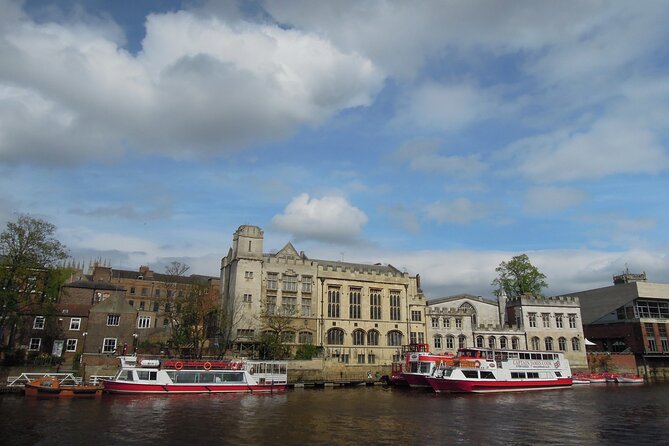
Meet at the Yorkshire Museum in Museum Gardens, on Museum Street, York YO1 7FR. The first stop is St Mary’s Abbey, whose remains sit in one of the city’s most pleasant historic settings.
The abbey ruins are free to view, but the value here comes from the explanation. The guide connects the site to King Henry VIII’s dissolution of the monasteries, a major break in English religious and political life. You are not just looking at broken arches. You are being shown how a powerful religious institution lost its position and buildings during the Tudor period.
The stop is listed at about five minutes, so expect a sharp introduction rather than a full archaeological tour. That is enough to set the tone for the rest of the walk. You get the major point, then move on to the streets and river that reveal how the abbey related to the wider city.
Museum Gardens is also a practical meeting place. It is central, easy to identify, and close to other York sights. Arrive with enough time to find the Yorkshire Museum and gather before the 2:00 p.m. start. The meeting point is not at Clifford’s Tower, so make sure you begin on Museum Street rather than heading directly to the castle area.
Marygate and the old road north
From Museum Gardens, the route heads down toward the hamlet of St Marygate. This short section explains how the ancient street connected the River Ouse with the main road north.
That detail gives the walk a useful human scale. Medieval York was not just a collection of grand buildings. It was also a network of routes, gates, river crossings, and working streets. Marygate helps you see how movement through the city supported the power of St Mary’s Abbey.
You will see the old abbey walls and Marygate Tower along the way. The tower is a physical reminder that religious power needed boundaries and protection. The guide also explains how St Mary’s Abbey controlled large areas of medieval Yorkshire, putting the local remains into a much wider regional setting.
This stop lasts about ten minutes. It is one of the better parts of the walk for people who like urban history because the information is tied to what is directly around you. You are not being asked to picture an entirely vanished city. The walls, street, and tower provide visible clues.
The route is a walking experience through York’s historic center, not a vehicle tour. Wear shoes suitable for city streets and be ready to keep moving between stops. The supplied information does not give a precise distance or an accessibility grade, so anyone with mobility concerns should consider asking the provider for route details before booking.
Crossing the Ouse at Ouse Bridge
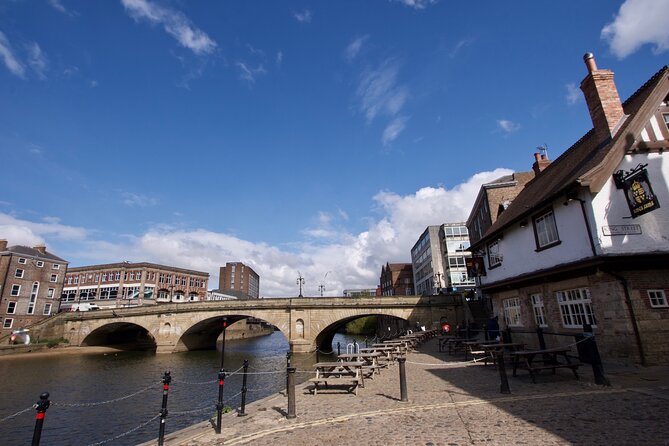
At Ouse Bridge, the subject shifts from abbey power to crossings and movement. A bridge has crossed the river at this point for more than 1,000 years, making it one of the clearest places to understand why York grew where it did.
The stop is brief, around five minutes, but the idea is large. Bridges bring together roads, markets, neighborhoods, and river traffic. They also become vulnerable points during trouble, so a crossing can tell you about defense as well as commerce.
Do not expect a long pause with an interior visit. The bridge is experienced from the public route, and the guide’s account supplies the historical detail. I find that format works well here because the modern bridge still lets you see the Ouse and grasp the importance of the crossing.
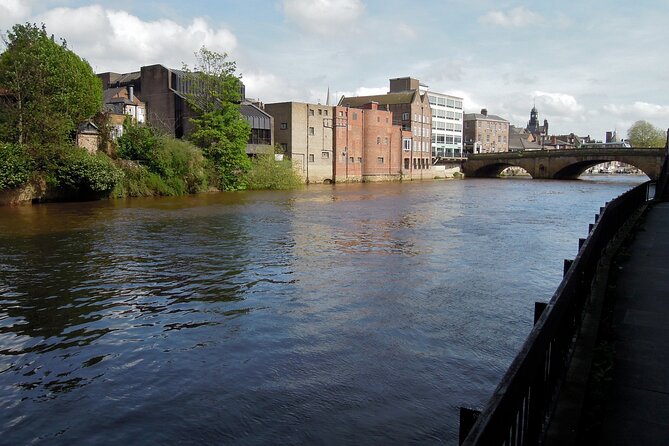
This is also a natural point to pay attention to the river itself. The walk is called the River Route for good reason. The Ouse is not just background scenery. It is the thread that connects the abbey, the quay, the bridge, and the castle district.
Something different for another day:
- Private Historical Walking Tour of York
★ 5.0 · 1,324 reviews - Daytime Sightseeing Boat Cruise in York
★ 4.5 · 1,256 reviews - York Dungeon Entry Ticket
★ 4.5 · 1,108 reviews - Wizard Walk of York – WINNER Best Tour & Best of York Award
★ 5.0 · 918 reviews
King’s Staith and York’s working waterfront
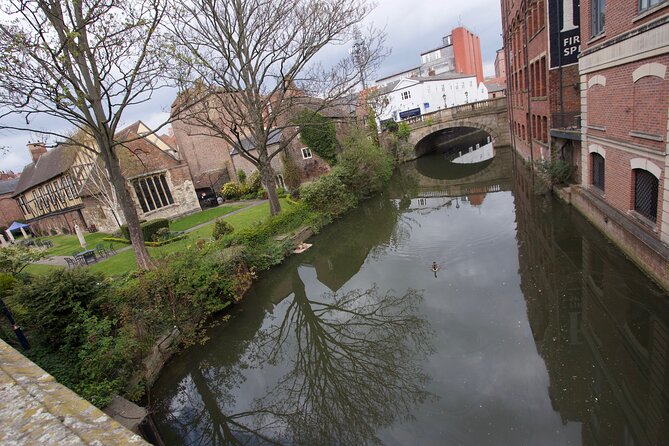
King’s Staith is the longest listed stop, at about ten minutes, and it is likely to be one of the most memorable. This was York’s main quay for more than 500 years, giving you a direct view of the river’s role in trade and transport.
Here the guide covers York’s medieval water lanes and explains why very few kings actually landed at King’s Staith. That small joke in the name opens up a useful point: royal titles and civic names do not always tell you how a place functioned day to day.
The quay helps balance the earlier focus on abbeys and walls. You learn that York’s story was also built around goods, boats, river access, and the practical business of moving supplies. If you prefer history tied to ordinary activity, this may be your favorite stop.
King’s Staith is also a good place to pause and take in the setting. The route does not promise a long photography break, so have your camera ready as you arrive. The river view is part of the experience, but the guide’s explanation is the reason to join rather than simply walking along the waterfront on your own.
Small details that reward close attention
The tour can include details beyond the main five stops. One example is the John Snow plaque, which was a favorite discovery on the walk for one participant. The information provided does not give the plaque’s exact location or full story, so I would treat it as a detail to watch for rather than a guaranteed formal stop.
A small group can also bring extra discoveries. On one especially quiet departure, the group visited Dick Turpin’s grave. That visit is not listed as a standard stop, so you should not book expecting it. Still, it shows how a flexible guide may add a nearby point of interest when time and group size allow.
Ian has received warm praise for making the city’s growth along the river easy to understand. That is the strongest reason to choose a guided walk instead of tracing the same route alone. York has no shortage of signs and plaques, but a good guide connects separate facts into one story.
The group limit is 25 people. That is not an intimate private tour, but it is small enough to keep the guide within earshot and make occasional questions practical. If you prefer a very quiet, personal walk, your experience may depend on the departure size. If the group is as small as two people, the format can feel almost like a private outing.
Ending beneath Clifford’s Tower
The walk finishes at the foot of Clifford’s Tower on Tower Street, near York Castle Museum. This is a strong ending because the route moves from religious authority and river commerce to the dramatic medieval keep of York Castle.
The guide discusses the tower’s remarkable past, but entry is not included. That keeps the tour price low, yet it also means you need to plan separately if you want to go inside. The tower is described as well worth visiting after the walk, so you can treat the guided route as an introduction before making your own decision.
The finish is convenient for continuing your afternoon. You are near the York Castle Museum and other central sights, with the city center still within reach. You can stop for the tower, visit the museum, or simply use the river route as a guide for further exploring.
Because the tour ends outdoors rather than at an indoor attraction, allow some flexibility. The walk lasts approximately 90 minutes to two hours, not an exact fixed period. Questions, group size, and the pace between stops can affect the finish time.
Price, timing, and group size
At $16.45 per person, this is a modestly priced city walk. You are not paying for attraction admissions, transport, or a meal. You are paying for a focused route and a guide who explains why these places matter.
That makes the value strongest for first-time visitors, history fans, and anyone who wants orientation before exploring alone. The cost is also easy to justify if you use the tour to plan the rest of your day around the castle district and riverfront.
The value is less clear if you already know York well or prefer to spend long periods inside each site. The stop times are short, with five minutes at St Mary’s Abbey, five minutes at Ouse Bridge, and ten minutes each at Marygate, King’s Staith, and Clifford’s Tower. This is a moving overview, not a slow study of one building.
Booking is commonly made around 24 days ahead, so reserving early may be sensible if your dates are fixed. Confirmation is provided at booking. Free cancellation is available up to 24 hours before the start time, but changes or cancellations inside that period are not refunded.
Good weather is required. If poor weather causes cancellation, you will be offered another date or a full refund. Since much of the appeal comes from the river views and open-air ruins, this weather rule is understandable, but keep a backup plan for the afternoon.
Service animals are allowed, the route is near public transportation, and most people can participate. The supplied details do not state a precise walking distance, step count, or full accessibility information. Contact York’s Hidden History Walks directly if those points matter for your planning.
Who will enjoy this York walk?
I would choose this experience if you want a short introduction to York’s western center with a clear theme. It suits you especially well if you enjoy seeing how a city’s river shaped its roads, trade, politics, and defenses.
It also works for people who dislike long, crowded attraction visits. You spend most of the time outdoors, with the guide using the city itself as the material. The route offers enough structure to keep you oriented without taking over your whole day.
Families and mixed-age groups may find the duration manageable, though the walk remains history focused. People interested in medieval York, monastic power, bridges, quays, and castle history will get the most from it.
I would think twice if you want a deep visit inside St Mary’s Abbey or Clifford’s Tower. The abbey stop is brief, and tower admission costs extra. The tour is best viewed as a guided thread through York, not a collection of full attraction visits.
Should you book Welcome to York: The River Route?
Book it if you want good historical value in a short afternoon walk. The route has a sensible shape, the price is fair, and the river gives the tour a clear story rather than a random list of landmarks.
I would be especially happy to recommend it to a first-time York visitor who wants help getting oriented. Ian’s clear explanations, the possible extra details such as the John Snow plaque, and the chance of a smaller group add real character.
Skip it if rain is likely, if you need a fully specified accessible route, or if your main goal is entering York’s major attractions. For everyone else, this is a practical way to see how the abbey, river, bridge, quay, and castle belong to the same city story.
FAQ
Where does the tour start?
It starts at the Yorkshire Museum in Museum Gardens, Museum Street, York YO1 7FR, UK.
What time does the tour start?
The scheduled start time is 2:00 p.m.
Where does the walk finish?
It finishes at the foot of Clifford’s Tower on Tower Street, near the York Castle Museum.
How long does the experience last?
The walk lasts approximately one hour 30 minutes to two hours.
How much does the tour cost?
The listed price is $16.45 per person.
Is entry to Clifford’s Tower included?
No. Admission to Clifford’s Tower is not included in the tour price.
Is the tour offered in English?
Yes. The experience is offered in English.
How large is the tour group?
The maximum group size is 25 people.
What happens if bad weather cancels the tour?
If poor weather causes a cancellation, you will be offered a different date or a full refund.
Just added around York
- The Full Hoot Distillery Tour & Guided Hooting Owl Experience★ 5.0 · 6 reviews
- York Fire Walk★ 5.0 · 6 reviews
- Private York Christmas Walking Tour★ 5.0 · 7 reviews
- Private Walking Tour: York City Highlights and York Minster★ 5.0 · 8 reviews
- York 3-Hour Photography Walking Tour★ 5.0 · 9 reviews
- Full-Day Heartbeat Locations Tour from York★ 3.5 · 11 reviews
- Guided Historic Pub Tour (York)★ 4.5 · 11 reviews
- Private Roman Tour of York★ 5.0 · 14 reviews
York Tours, compared.

Mad Alice’s The Bloody Tour of York -Best Tour Award Europe
Read our review →

Shadows of York: Ghost Walk and Horrible History.
Read our review →



Wizard Walk of York – WINNER Best Tour & Best of York Award
Read our review →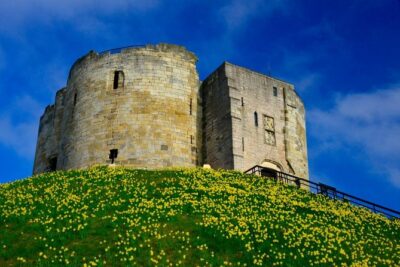
Browse the lists this tour appears in