
Reviewed · WALKING TOURS
Bath Public Walking Tour including Bath Abbey
Bath comes alive when you know where to look. This two-hour walk ties together the city’s Roman beginnings, Georgian architecture, hot springs, and modern life, with a 30-minute guided visit inside Bath Abbey included in the $57.87 price. I like the way it covers major sights without turning the outing into a long, tiring day, and I also like the small-group limit of 20 people, which should make it easier to hear and ask questions.
The main caution is the pace. One detailed account praised the guide but warned that you need to walk quickly and handle hills. The tour is wheelchair-friendly, and service animals are welcome, but you should still consider your own comfort with a two-hour route through Bath’s streets.
In This Review
- Key Points Before You Book
- Why a Walking Tour Works So Well in Bath
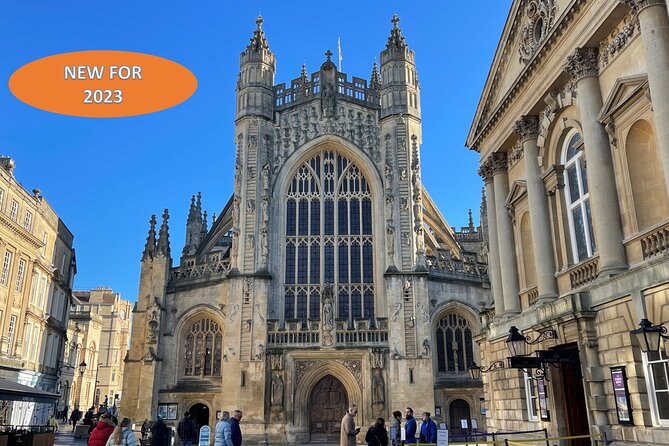
- Starting at Bath Abbey
- Pulteney Bridge and Bath’s River Story
- The Royal Crescent and Georgian Bath
- The Circus and Bath’s Grand Design
- The Cross Bath and the Power of Hot Water
- The Roman Baths Without the Admission Ticket
- Pace, Hills, and Group Size
- How Much Value Do You Get for $57.87?
- Which Guides Make the Difference?
- Who Should Book This Bath Walk?
- Should You Book It?
- FAQ
- How long does the Bath walking tour last?
- Where does the tour start?
- Where does the tour end?
- Is Bath Abbey entry included?
- Is entry to the Roman Baths included?
- Is the tour offered in English?
- Is the tour wheelchair-friendly?
- How many people can join the tour?
- Can I cancel for a full refund?
Key Points Before You Book
- Bath Abbey is included: You get a 30-minute guided tour inside one of Bath’s most important buildings, not just an outside look.
- Six central sights in about two hours: The route links the Abbey, Pulteney Bridge, the Royal Crescent, the Circus, the Cross Bath, and the Roman Baths.
- Guides bring energy and humor: Victoria, Owen, and Fred have each been praised for clear explanations, warmth, and a lively manner.
- The group is capped at 20 people: That is a sensible size for a walking tour, especially when the guide is explaining details in busy public spaces.
- The Roman Baths are viewed from outside: The tour explains their importance, but admission is not included.
- You finish where you start: The meeting point is in Abbey Churchyard, making the tour easy to fit around other plans in central Bath.
Why a Walking Tour Works So Well in Bath
Bath is compact, but it is not simple. Roman ruins, medieval religious life, Georgian planning, spa culture, and grand 18th-century architecture all sit close together. Without some explanation, you can admire the honey-colored stone and miss the reasons the city looks and feels the way it does.
This tour gives you a useful framework early in your visit. You hear how the hot springs shaped Bath from Roman times to the present, then see how later generations built around that foundation. The route also moves beyond the obvious center, reaching the Royal Crescent and the Circus, where the city’s Georgian design becomes easier to understand.
I especially like the balance between famous sights and short stops. Pulteney Bridge receives only about five minutes, and the Cross Bath receives a similar amount of time, but the guide uses those moments to explain why each place matters. You are not spending the entire morning at one attraction, yet you are getting enough context to make a later independent visit more rewarding.
The guide’s role matters here. Feedback on the experience repeatedly praises the energy, humor, and depth of the explanations. Victoria was singled out for her command of Bath’s past, while Owen was praised for mixing facts with entertaining details. Fred also received high marks for his friendly approach and strong grasp of the city.
The tone seems friendly rather than stiff. You are encouraged to ask questions as you walk, which is useful in a city where a simple doorway, street curve, or change in building style can lead to a good explanation.
More Walking Tours in Bath
- Walking Tour of Bath with Blue Badge Tourist Guide
★ 5.0 · 1,877 reviews - Roman Baths and Bath City Walking Tour
★ 4.5 · 762 reviews - Best of Bath Walking Tours – Georgian Tour
★ 5.0 · 449 reviews
Starting at Bath Abbey
The tour begins in Abbey Churchyard, a central location beside Bath Abbey. This is a practical meeting point because it puts you close to several major sights and public transport. Confirmation arrives when you book, and the tour returns to the same place at the end.
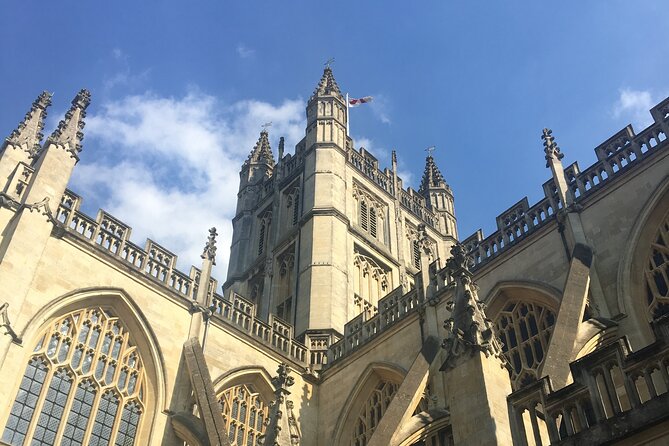
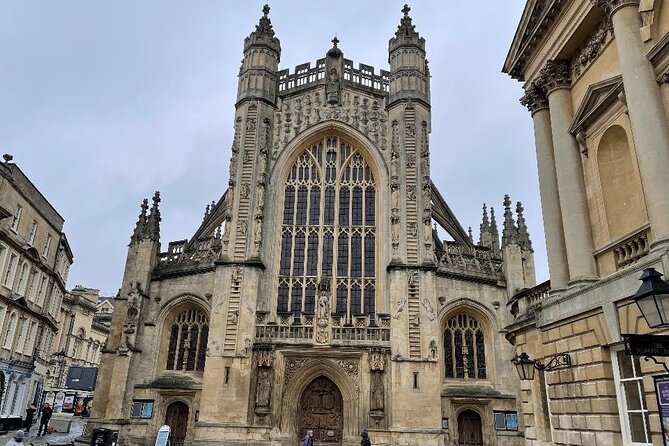
Bath Abbey is the strongest part of the experience. The included visit lasts about 30 minutes and focuses on the building’s main features and story. Instead of merely passing the church on the street, you get an organized explanation of what you are seeing inside.
That matters because Bath Abbey can be easy to treat as a quick photo stop. A guided visit gives the building more meaning and helps you notice details that may otherwise slip past. It also adds real value to the price, since entry and the guided Abbey tour are included.
The Abbey has sometimes been closed for a tour. One account describes a closure caused by the building being unavailable, with a partial refund arranged. That is a useful reminder to keep plans flexible. The operator works with the Abbey, but no church can promise uninterrupted access on every date.
If the Abbey is open, allow the guide to set the pace and save your questions for the natural pauses. The included time is not long enough for an exhaustive church visit, but it is enough to make this more than a quick look around.
Pulteney Bridge and Bath’s River Story
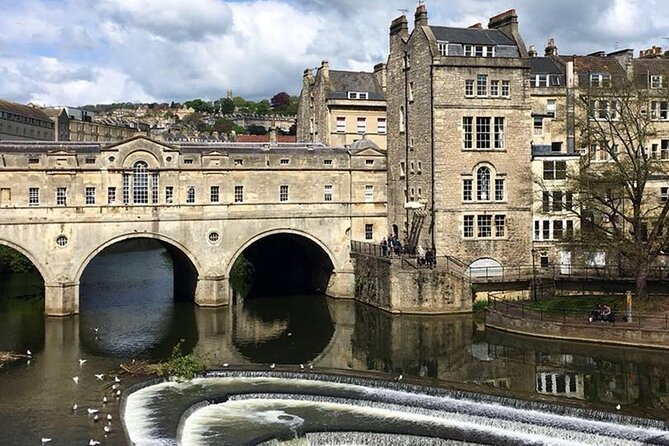
The stop at Pulteney Bridge lasts about five minutes. That sounds brief, but the bridge is one of Bath’s most recognizable sights and deserves more than a passing glance.
The guide explains its origins and why it matters to the city. This is the kind of short explanation that helps you see a structure as part of Bath’s development rather than as a pretty backdrop for photographs.
Because the visit is short, you should not expect a long architectural lecture or extended free time. The benefit is orientation. You learn the basic story, take in the view, and continue before the tour loses momentum.
I like this format for a first visit. A walking tour should give you a map in your head, not keep you in one spot until your feet go numb.
The Royal Crescent and Georgian Bath
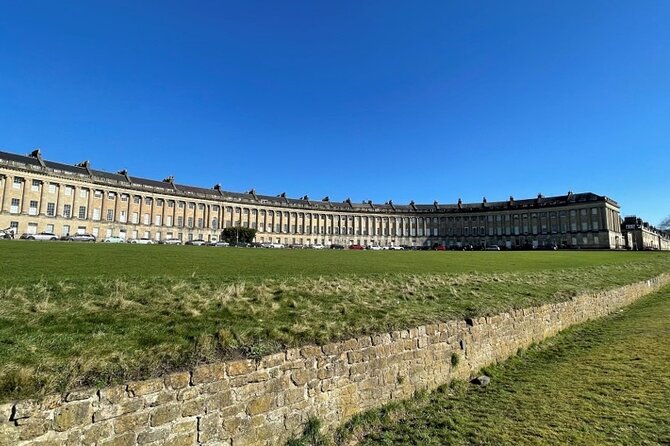
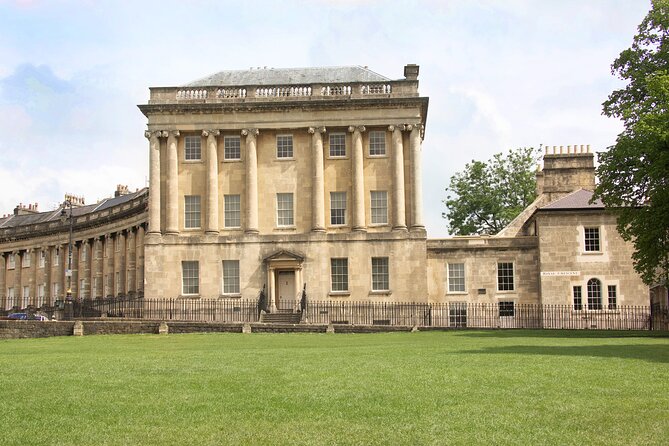
The walk then reaches No. 1 Royal Crescent, with about ten minutes devoted to the building and the stories connected with it. This is one of Bath’s defining views, and the stop gives the guide time to explain why it became such an important example of the city’s Georgian character.
The appeal is not only the curve of the building. The guide helps bring the place to life through the people and events connected with it. That human element is useful because grand architecture can otherwise feel remote. You see the stone, the symmetry, and the scale, but the stories explain how the building functioned as part of Bath society.
No. 1 Royal Crescent is also a good example of why a guide can add value even when you are not going inside every attraction. The tour does not include admission to that house, but the outside explanation helps you decide if you want to return for a separate visit.
The walk to this part of Bath may include hills, and that is where the pace becomes important. The tour is not advertised as a slow, flat stroll. Wear comfortable shoes and be ready to keep moving when the group leaves a stop.
Something different for another day:
- Stonehenge, Avebury & the Cotswolds from Bath (Small group)
★ 5.0 · 798 reviews - Fully Guided Bath Ghost Tours
★ 5.0 · 539 reviews - Bad of Bath fun Walking Tour of Bath
★ 5.0 · 402 reviews - The Cotswolds Tour From Bath (Small group)
★ 5.0 · 349 reviews
The Circus and Bath’s Grand Design
The Circus receives about five minutes, but the guide uses the stop to explain the thinking behind this unusual structure. It is a key part of Bath’s Georgian plan, and its relationship with the Royal Crescent helps you understand the city as a designed place rather than a random collection of handsome buildings.
This is one of the tour’s best teaching moments. You are looking at architecture, but you are also learning how public spaces were arranged and how Bath presented itself as a fashionable spa city.
Five minutes will not cover every architectural detail. That is not really the point. You get the main idea, hear the story behind the structure, and gain a better eye for the rest of Bath.
The tour’s short stops work because the guide connects them. The Abbey reflects religious and civic importance. Pulteney Bridge links the city to its river. The Royal Crescent and Circus show Georgian ambition. The springs explain why people came here in the first place.
The Cross Bath and the Power of Hot Water
At the Cross Bath, the tour turns directly to Bath’s springs. The explanation covers their effect on the city’s history and culture, from the Romans to today.
This is a vital part of the walk because the water is the thread running through Bath’s story. The springs helped draw Roman attention, shaped later spa culture, and continue to influence the city’s identity.
The stop lasts about five minutes, so expect an overview rather than a bathing experience or a detailed look at the facilities. Admission to the Cross Bath is not listed as part of the tour. You are there to understand its place in Bath, not to use it.
I find this kind of context especially useful if you plan to visit the Roman Baths afterward. You already understand why the water mattered before you enter the museum, and the Roman site no longer feels like an isolated ruin.
The Roman Baths Without the Admission Ticket
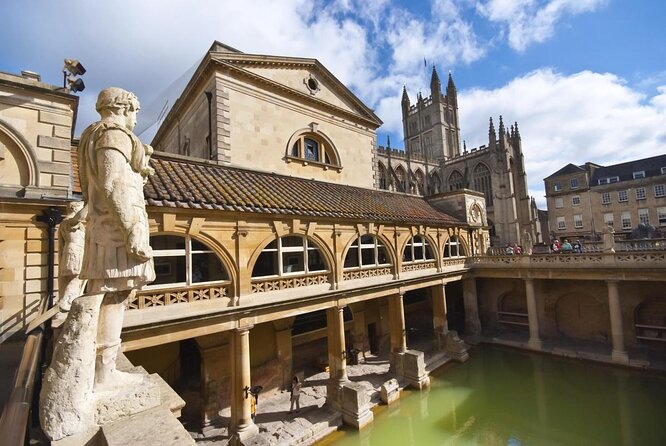
The final listed stop is the Roman Baths, where the guide explains the Roman impact on Bath and on England. The tour does not include entry, so you will hear about the site from outside rather than taking a full museum visit with the group.
This distinction is important when you judge the price. At $57.87 per person, the tour includes Bath Abbey but not the Roman Baths. If the Roman museum is high on your list, plan and budget for a separate ticket.
That is not a flaw in the walking tour itself. The Roman Baths can take much longer than a brief stop, and keeping the experience to about two hours makes it easier to combine with other plans. You can take the introduction from the guide, then decide if you want to return for a more detailed visit.
The result is a useful split: the walking tour provides the citywide story, while a separate Roman Baths visit gives you time with the exhibits and remains.
Pace, Hills, and Group Size
The route is listed at about two hours, with the Abbey taking 30 minutes and the outdoor stops making up the rest. The schedule is active, not rushed in the sense of being careless, but it does require you to keep up.
One clear warning is that parts of Bath involve hills and that the group may walk quickly. This is the main practical issue to consider. If you prefer long pauses, frequent sitting, or a very gentle pace, this may not be your ideal introduction.
The group limit is 20 people. That is small enough for a guide to manage questions and large enough to offer a social feel without creating a private-tour price. Actual group size can vary, but the stated maximum is reasonable for narrow streets and busy sightseeing areas.
The tour is wheelchair-friendly, and service animals are allowed. Those are useful accessibility points, though you should still contact the provider if you need specific route information. The supplied details do not spell out every surface, slope, or restroom arrangement.
Most people can take part, and the tour is near public transportation. Since it starts and ends at Abbey Churchyard, you avoid the hassle of finding a second return point across town.
How Much Value Do You Get for $57.87?
The price makes the most sense if you value explanation and want Bath Abbey included. A ticket alone does not tell you why the buildings matter, and this tour adds a local guide who connects the Roman, religious, spa, and Georgian parts of the city.
You are paying for about two hours, a small-group format, the Abbey entry and guided visit, and a route that reaches several of Bath’s best-known sights. The Roman Baths are not included, so do not treat the tour as a complete admission package for every major attraction.
I would call the price fair for a first look at Bath, especially if you are in town for a short stay. It is less compelling if you already know the city well or prefer to read plaques and explore at your own speed.
The experience is also booked, on average, 38 days ahead. That suggests you should not leave it until the last minute if your dates are fixed. Free cancellation is available up to 24 hours before the start time, giving you some flexibility. Changes made inside that 24-hour window are not accepted, and late cancellations are not refunded.
The tour needs good weather. If poor weather cancels it, you are offered another date or a full refund. That policy is helpful, though Bath’s weather can be changeable, so bring sensible clothing even on a promising morning.
Which Guides Make the Difference?
The guide is the heart of this experience. The strongest praise goes to the people leading it, not simply to the route.
Victoria is described as a strong history guide who covers the main sights with confidence. Owen is praised for combining facts, humor, and a wide range of interesting details. Fred is described as friendly and well informed, with enough flexibility to help when late arrivals caused a problem.
That last point is worth noting. When traffic delayed an arrival, Fred had arranged for another guide to wait and help the late guest catch up. It shows a practical attitude that can matter in a walking tour, especially in a city where traffic and unfamiliar streets can cause delays.
Guide quality can vary from one departure to another, as it does with any group experience. Still, the pattern here is encouraging: the guides appear to be the part that turns a standard city walk into something more memorable.
Ask questions. The tour specifically encourages them, and Bath rewards curiosity. If you wonder why a building is placed where it is, how the springs affected the city, or what changed between Roman and Georgian times, speak up.
Who Should Book This Bath Walk?
I would recommend this tour to first-time visitors who want a strong introduction without giving up an entire day. It suits anyone who likes architecture, history, city planning, and short stories about how places developed.
It is also a good fit if Bath Abbey is on your list. The included guided visit makes the experience more useful than a route that only points out the church from the outside.
Families and mixed-age groups may appreciate the short stops and lively explanations, though the fast pace and hills could be tiring for some people. The small maximum group helps, but it does not turn the walk into a private, stop-and-start outing.
You should think twice if the Roman Baths are your main goal. You will hear about them, but you will not receive entry. In that case, treat this as a city orientation and arrange a separate Roman visit.
Should You Book It?
Yes, if you want Bath to make sense quickly. The combination of Bath Abbey, Pulteney Bridge, the Royal Crescent, the Circus, the Cross Bath, and the Roman Baths gives you a well-shaped introduction to the city. The strongest reasons to book are the included Abbey tour, the capable guides, and the chance to ask questions while walking.
Go in prepared for hills and a brisk pace. Bring comfortable shoes, allow extra time if you hope to visit the Roman Baths afterward, and remember that Abbey access can occasionally be affected by closure.
For $57.87, this is a solid choice for a first visit, especially when you value stories as much as photographs. It will not replace a full day exploring Bath on your own, but it can give that day a much better beginning.
FAQ
How long does the Bath walking tour last?
The tour lasts approximately two hours.
Where does the tour start?
It starts at Abbey Churchyard in Bath, England, with the listed address as Bath BA1, UK.
Where does the tour end?
The activity ends back at the meeting point in Abbey Churchyard.
Is Bath Abbey entry included?
Yes. Entry and a 30-minute guided tour of Bath Abbey are included.
Is entry to the Roman Baths included?
No. The guide explains the Roman Baths and their importance, but admission is not included.
Is the tour offered in English?
Yes. The tour is offered in English.
Is the tour wheelchair-friendly?
Yes. The experience is wheelchair-friendly, and service animals are welcome.
How many people can join the tour?
The maximum group size is 20 people.
Can I cancel for a full refund?
Yes, if you cancel at least 24 hours before the local start time. Cancellations made less than 24 hours before the start time are not refunded, and changes within that period are not accepted. If poor weather causes the operator to cancel, you are offered another date or a full refund.
Just added around Bath
- Full-Day Private Tour of Stonehenge and Bath with Pickup★ 5.0 · 6 reviews
- Bridgerton’s Filming Locations in Bath Audio Guide★ 5.0 · 7 reviews
- Private Guided Tour of Jane Austen’s Bath★ 5.0 · 7 reviews
- Private Day Tour from Bath to Stonehenge and Salisbury with Pickup★ 5.0 · 9 reviews
- Wells, Cheddar Cheese and Cheddar Gorge – Private Day Trip from Bath★ 5.0 · 10 reviews
- The Beatles in Bath June 10th 1963★ 4.5 · 10 reviews
- Bath Private Guided Walking Tour★ 5.0 · 10 reviews
- Private Cotswolds tour from Bath★ 5.0 · 12 reviews
Walking Tours, compared.

Oxford University Walking Tour With University Alumni Guide
Read our review →
Tour for Muggles The Ultimate Harry Potter Walking Tour in London
Read our review →

Cambridge University Walking Tour by Alumni™ Kings College Option
Read our review →
Blackbeard to Banksy – The Ultimate Walking Tour of Bristol
Read our review →
Air Raid Shelter + St. Nicholas Market Walking Tour
Read our review →
Walking Tour of Bath with Blue Badge Tourist Guide
Read our review →
Changing of the Guard Guided Walking Tour in London
Read our review →Browse the lists this tour appears in