
Reviewed · BATH TOURS
Bath Self-Guided Private Tour
Bath rewards slow walking. This low-cost audio tour links Roman ruins, Georgian streets, riverside gardens, and grand squares in one easy route. I like the freedom to stop whenever you want and the useful narration by Helen, whose clear voice gives the walk a human touch. I also like the modest price, $12.33 per person, which makes this a strong value for couples, families, or friends exploring together.
The main caution is technical. Some users had trouble with app crashes, battery drain, or audio that would not play. You also need to read the activation instructions carefully, since this is an app-based experience with no office visit, printed ticket, or in-person guide.
In This Review
- Key Points About Bath’s App-Based Walking Route
- What You Are Really Buying for $12.33
- Starting Beside Bath Abbey and York Street
- Sally Lunn’s Museum and Old Lilliput Lane
- Parade Gardens, Pulteney Bridge, and the River Avon
- Henrietta Park and the Holburne Museum
- Great Pulteney Street and Bath’s Grand Scale
- The Circus, Gay Street, and No. 1 Royal Crescent
- Royal Victoria Park and Queen Square
- Theatre Royal and Thermae Bath Spa
- How the App Works in Real Conditions
- Who Will Enjoy This Bath Tour Most
- Should You Book the Bath Self-Guided Tour?
- FAQ
- How long does the Bath self-guided tour take?
- Where does the tour begin?
- Where does the tour end?
- Is an in-person guide included?
- What is included with the app?
- Is the Roman Baths admission included?
- What should I do if I have trouble activating the tour?
Key Points About Bath’s App-Based Walking Route
- Roman and Georgian Bath in one walk: The route connects the Roman Baths and Bath Abbey with the Circus, Royal Crescent, Pulteney Bridge, and other major sights.
- Helen provides the narration: The tour includes a recorded audio guide with a real narrator rather than a computer-generated voice.
- Three weeks of access: You receive unlimited access to the route, map, audio, pictures, videos, and recommendations for 21 days.
- A flexible private experience: Only your group takes part, and you can pause for coffee, pubs, ice cream, gardens, or extra sightseeing.
- The walk usually takes 2 to 3 hours: Allow more time if you enter attractions, linger in the parks, or stop for refreshments.
- App preparation matters: Activation instructions arrive by email, and the booking reference is not the code used to start the tour.
What You Are Really Buying for $12.33
At $12.33 per person, this is not a guided tour in the traditional sense. You are paying for a digital walking route, recorded commentary, navigation, pictures, videos, and local recommendations.
That distinction matters. You will not meet a guide at Abbey Chambers, and nobody will lead your group from stop to stop. The starting point is simply where you open the app and begin. For some people, that feels wonderfully easy. For others, it may feel too bare-bones.
The value comes from flexibility. A live walking tour runs on someone else’s clock. Here, you can pause the narration, take photographs, sit in Parade Gardens, or spend extra time around Pulteney Bridge. One person completed the route in about two and a half hours, while another took five hours after lingering in the parks. Both approaches fit the design of the tour.
The price also works well for a private group. A party of four pays the same low per-person rate, while a conventional private guide would normally cost much more. You get the outline and commentary without paying for a person to walk beside you.
The trade-off is depth and personal contact. Helen can explain the sights, but she cannot answer a question about a building, change the route for your interests, or point out something unexpected in real time.
A few more tours and experiences worth a look
- Bath Private Self-Guided Walking Audio Tour
★ 3.0 · 21 reviews - Bridgerton’s Filming Locations in Bath Audio Guide
★ 5.0 · 7 reviews - Westminster Abbey Entrance Ticket Including Audio Guide
★ 4.0 · 661 reviews
Starting Beside Bath Abbey and York Street
The walk begins at Abbey Chambers on Church Street, beside Bath Abbey. This is a sensible place to begin because you are already near the city’s main historic core.
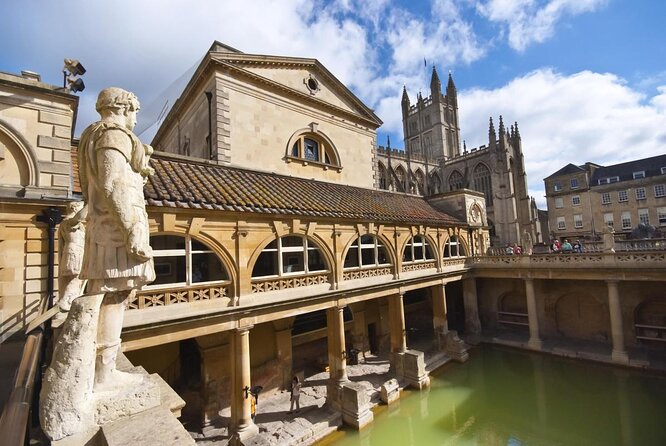
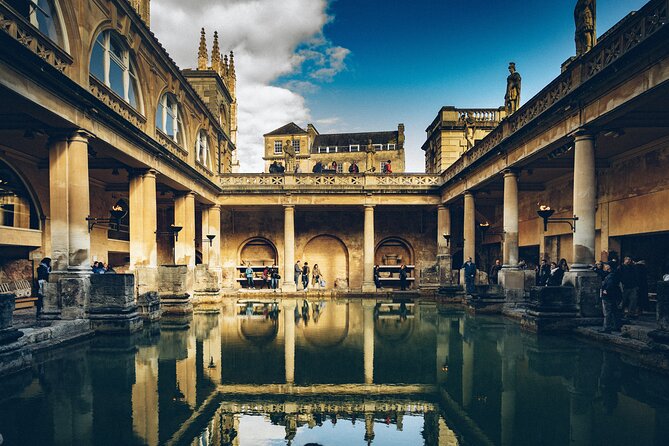
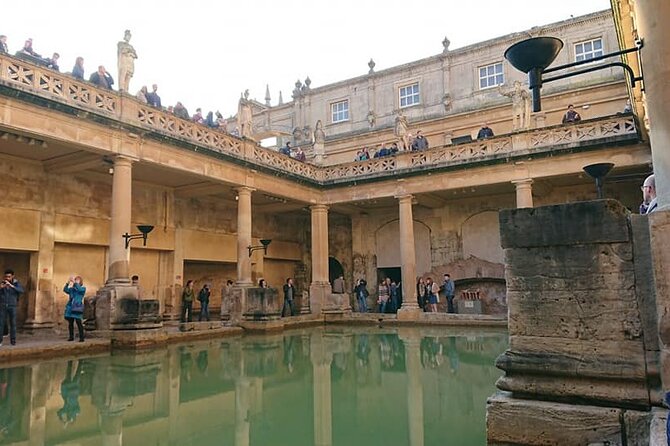
Bath has been a destination since Roman times. The original Roman name, Aquae Sulis, refers to the settlement that grew around the hot springs from about AD 43. The Roman Baths are both a Grade I listed building and a Scheduled Monument, so even a short look at the exterior gives you a sense of the site’s importance.
The route then leads through Kingston Parade toward York Street. Despite its name, Kingston Parade feels more like a square than a formal promenade. It is a good orientation point, with views toward the Abbey and the Roman Baths.
You spend about 10 minutes here, and admission is free. That timing is enough for the basic commentary and a few photographs, but you should not expect to explore the Roman Baths themselves within this tour. The route takes you around the city rather than providing entry to paid attractions.
Sally Lunn’s Museum and Old Lilliput Lane
Next comes North Parade Passage, once known as Old Lilliput Lane. This narrow passage contains some of Bath’s surviving pre-Georgian character.
Most of the old timber-framed houses in Bath have been rebuilt or altered over the centuries. Sally Lunn’s, at number 4 North Parade Passage, still retains its timber framework, making it one of the more distinctive stops on the route.
The stop lasts about 10 minutes, with no admission ticket included or required for the walk itself. The audio commentary helps turn a quick look at an old lane into a lesson in how much of Bath predates the grand Georgian rebuilding that defines the city today.
Sally Lunn’s is also linked with one of Bath’s best-known historic food names. The tour information focuses on the building and its setting, so do not assume that a meal or tasting is part of the experience. You are free to make your own stop if you want one.
Parade Gardens, Pulteney Bridge, and the River Avon
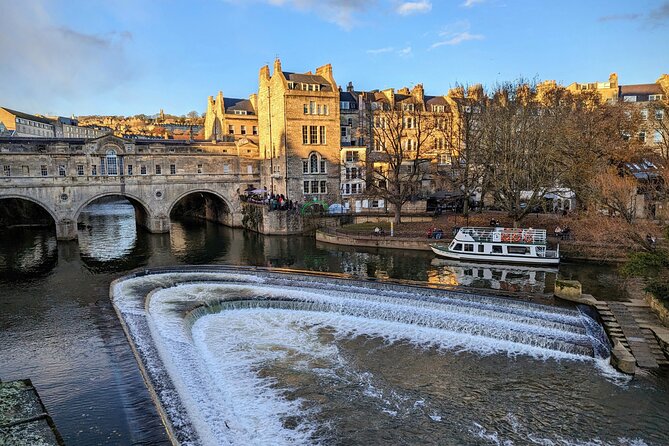
Parade Gardens offers a change of pace. The two-and-a-half-acre park sits beside the River Avon and dates to 1709. It is now a Grade II-listed park, and the route allows roughly 10 minutes here.
I like this pause because it gives the walking tour some breathing room. Bath can feel dense around the Abbey and Roman Baths, with stone façades close on every side. The riverside garden opens the view and gives you a place to rest.
The route then reaches Pulteney Bridge, one of Bath’s most memorable structures. Shops line the full span on both sides, a design found on only a small number of bridges worldwide. The bridge was proposed by William Johnston Pulteney, whose name it carries.
Allow another 10 minutes. You can look at the shopfronts from the bridge, then consider how unusual the structure is from the river level. The tour does not include shopping or food, but the setting makes this a natural place to pause.
Pulteney Weir is only a five-minute stop, yet it adds useful practical context. The weir appeared on maps as early as 1603 and was built to power two corn mills, one on each side of the river. Today, it is mainly a scenic water feature, but the commentary reminds you that the river was once part of Bath’s working economy.
Something different for another day:
- Walking Tour of Bath with Blue Badge Tourist Guide
★ 5.0 · 1,877 reviews - Stonehenge, Avebury & the Cotswolds from Bath (Small group)
★ 5.0 · 798 reviews - Roman Baths and Bath City Walking Tour
★ 4.5 · 762 reviews - Fully Guided Bath Ghost Tours
★ 5.0 · 539 reviews
Henrietta Park and the Holburne Museum
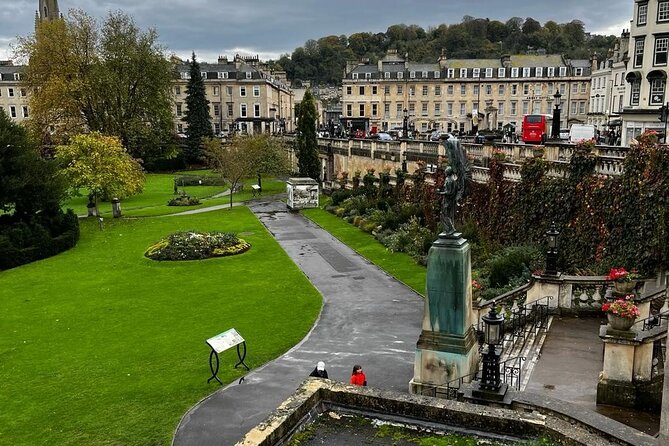
Henrietta Park is one of the quieter points on the route. The seven-acre park opened in 1897 to mark Queen Victoria’s Diamond Jubilee.
The itinerary allows 15 minutes here, making it one of the longer outdoor stops. That is useful if you want a break from Bath’s stone streets. You can also extend the visit, as one user did, and turn the 2 to 3-hour route into a much longer outing.
The tour then introduces the Holburne Museum. Its collection began with objects owned by Sir William Holburne, who inherited a modest fortune and spent part of it travelling around Europe. The commentary focuses not only on the collection but also on the man behind it.
The museum itself is not listed as an included admission, so treat this as an orientation stop. If art interests you, you may want to return separately rather than trying to fold a museum visit into the standard walking time.
Great Pulteney Street and Bath’s Grand Scale
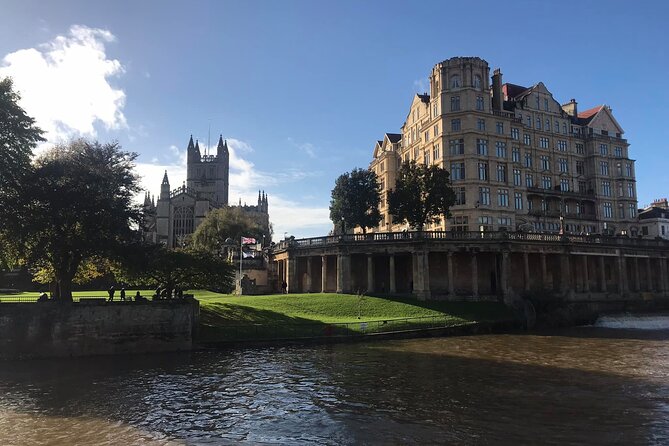
Great Pulteney Street shows Bath at its most formal. It is the widest and grandest thoroughfare in the city, with pavements designed to be unusually broad. In places, the pavement is nearly as wide as the road.
You spend about 10 minutes here. That may sound brief, but the point is the overall scale. The street is less about one object and more about the Georgian idea of order, symmetry, and controlled space.
From here, the route passes Upper Borough Walls, named for the original medieval town wall. Many houses along the road are listed buildings in their own right. This is a useful reminder that Bath’s story did not begin and end with the Romans or the Georgian builders.
The audio format works well on this stretch because you can look up at the buildings while listening. Still, you may want to pause the recording at busy crossings or while taking photographs. Navigation is easier when you are not trying to read and walk at the same time.
The Circus, Gay Street, and No. 1 Royal Crescent
The Circus is one of Bath’s finest Georgian set pieces. It was originally called the King’s Circus and was designed as a circular composition of townhouses.
The stop lasts about five minutes, so you should arrive ready to look around. The value here is visual. Stand in the center, look up at the curved façades, and let the commentary explain the design rather than rushing straight on.
Gay Street forms part of the same development. John Wood the Elder designed the Circus, and his son, John Wood the Younger, completed the work after his father died. Many houses along Gay Street are Grade I or Grade II listed.
No. 1 Royal Crescent follows. The crescent was built between 1767 and 1775 and contains 30 Grade I listed houses. The route gives you five minutes here, enough to admire the sweep of the building and understand why this is one of Bath’s signature views.
The nearby museum at No. 1 Royal Crescent is not included as an entry attraction. If you want to see the interiors, you will need to arrange that separately. The walking tour gives you the architectural setting, not a complete house visit.
Royal Victoria Park and Queen Square
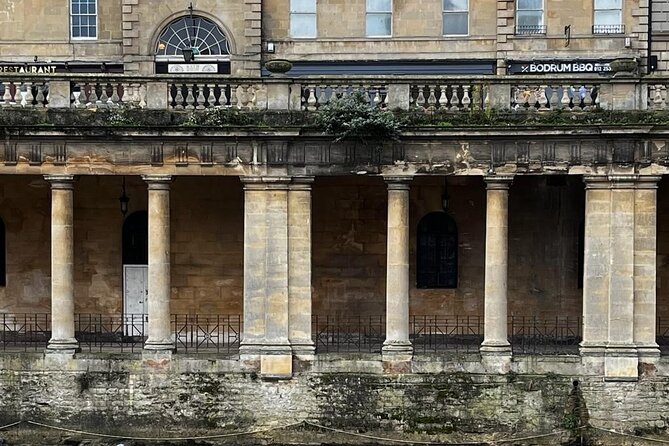
Royal Victoria Park opened in 1830 and was inaugurated by the future Queen Victoria when she was only eleven years old. The stop lasts about five minutes.
That is enough for a quick look, but it may feel short if you want to enjoy the park properly. Like Henrietta Park, this is a place where you can choose to spend extra time. The app does not force you to stay on schedule.
Queen Square is another planned Georgian space. The one-acre communal garden is surrounded by Grade I listed buildings and was dedicated to Queen Caroline, the wife of George II.
The route gives Queen Square five minutes. The stop helps connect Bath’s architecture with the city’s social history. These squares were not accidental patches of grass. They were carefully planned urban spaces designed to frame elegant housing and give residents a shared outdoor setting.
Theatre Royal and Thermae Bath Spa
The Theatre Royal Bath is a Georgian building dating from 1805. It was refurbished in 2010 and is considered one of the oldest and most attractive theatres in the country.
The tour allows five minutes here. You will get the building’s place in Bath’s cultural life, but not a performance or backstage visit.
The final stop is Thermae Bath Spa, where the walk ends at the Hetling Pump Room on Hot Bath Street. The spa opened in 2006 on the site of the former Beau Street swimming baths. Its water is heated naturally through the thermal waters of the Minerva Bath.
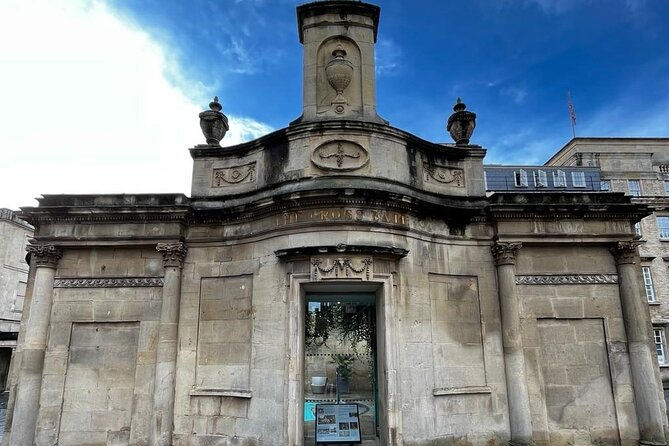
This is a fitting finish because the modern spa brings you back to Bath’s oldest calling: hot spring bathing. The tour ends here, and you are free to continue toward Thermae Bath Spa and the Cross Bath afterward. Admission to either facility is not included.
The route’s official end time is open throughout the day, listed from midnight to 11:30 p.m. That does not mean every attraction is open around the clock. It simply gives you flexibility in when you use the self-guided route.
How the App Works in Real Conditions
The package includes three weeks of unlimited access. You receive a map, directions, GPS route, stop information, audio, videos, pictures, and recommendations for places such as coffee shops, pubs, and ice cream stops.
Helen narrates the audio, and that detail matters. A real voice feels less mechanical than computer-generated speech, especially on a history walk where tone helps keep the information readable.
The main weakness is reliability. Some audio sections have failed to play, forcing users to read the written information instead. App crashes and battery drain have also been reported, with one person reinstalling the app several times before giving up.
I would prepare before reaching Bath. Activate the tour while you have a reliable internet connection, check that the map and audio work, and carry a charged phone. The email contains activation instructions, and the booking reference is not the activation code.
Do not go looking for a physical office or ticket collection point. This is a digital product, and the meeting address is the route’s starting location, not a check-in desk. If something goes wrong, the provider states that support is available by email, WhatsApp, phone, and Viator messaging.
Who Will Enjoy This Bath Tour Most
I would choose this tour if you like setting your own pace and already feel comfortable using a smartphone for directions. It works especially well for:
- Couples who want a private walk without joining a large group
- Families who need the option to pause often
- Independent visitors who want structure without a fixed timetable
- Repeat visitors who want a broad overview of Bath
- Budget-conscious visitors who want commentary for far less than a private guide
It is less suitable if you want lively conversation, personal recommendations in the moment, or help with app problems while walking. It also may not satisfy you if your main aim is a guided visit inside the Roman Baths, Bath Abbey, No. 1 Royal Crescent, or the Holburne Museum.
The route requires a moderate level of fitness. You will walk through city streets, parks, and passages, and you should expect to manage your own navigation. Service animals are allowed, and the starting area is near public transportation.
Should You Book the Bath Self-Guided Tour?
Book it if you want an inexpensive, flexible introduction to Bath’s main sights. The route covers an impressive range, from Roman foundations and medieval walls to Georgian squares, river engineering, parks, theatre, and modern thermal bathing.
The strongest reasons to book are the $12.33 price, Helen’s narration, the private format, and the option to stretch a short route into a full half-day. The biggest reasons to hesitate are the app problems and the lack of a live guide.
Read the activation email before you arrive, test the app, and keep your expectations clear. This is a useful digital companion for exploring Bath, not an escorted tour and not an attraction ticket. If that suits your style, it offers good value and a pleasant way to see the city at your own rhythm.
FAQ
How long does the Bath self-guided tour take?
The route is designed to take about 2 to 3 hours. You can take longer if you spend extra time in Henrietta Park, Parade Gardens, Royal Victoria Park, or at cafés and other stops.
Where does the tour begin?
The tour begins at Abbey Chambers, Church Street, Avon, Bath BA1 1LZ, United Kingdom.
Where does the tour end?
It ends at Thermae Bath Spa, The Hetling Pump Room, Hot Bath Street, Bath BA1 1SJ. You can continue exploring Thermae Bath Spa and the Cross Bath afterward.
Is an in-person guide included?
No. This is a self-guided private activity, and only your group participates. The commentary is delivered through the app by Helen.
What is included with the app?
You receive three weeks of unlimited access, a map, directions, GPS routing, stop information, audio, videos, pictures, and recommendations.
Is the Roman Baths admission included?
No admission to the Roman Baths is listed as part of the tour. The route provides commentary and takes you through the surrounding historic area.
What should I do if I have trouble activating the tour?
Check the email instructions carefully because the booking reference is not the activation code. The provider states that support is available through email, WhatsApp, phone, and Viator messaging.
Just added around Bath
- Full-Day Private Tour of Stonehenge and Bath with Pickup★ 5.0 · 6 reviews
- Bridgerton’s Filming Locations in Bath Audio Guide★ 5.0 · 7 reviews
- Private Guided Tour of Jane Austen’s Bath★ 5.0 · 7 reviews
- Private Day Tour from Bath to Stonehenge and Salisbury with Pickup★ 5.0 · 9 reviews
- Wells, Cheddar Cheese and Cheddar Gorge – Private Day Trip from Bath★ 5.0 · 10 reviews
- The Beatles in Bath June 10th 1963★ 4.5 · 10 reviews
- Bath Private Guided Walking Tour★ 5.0 · 10 reviews
- Private Cotswolds tour from Bath★ 5.0 · 12 reviews
Bath Tours, compared.

Walking Tour of Bath with Blue Badge Tourist Guide
Read our review →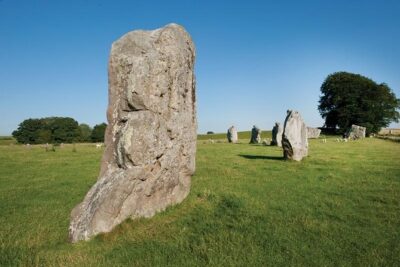
Stonehenge, Avebury & the Cotswolds from Bath (Small group)
Read our review →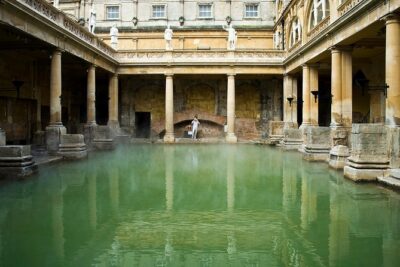

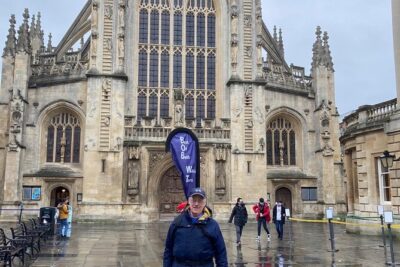
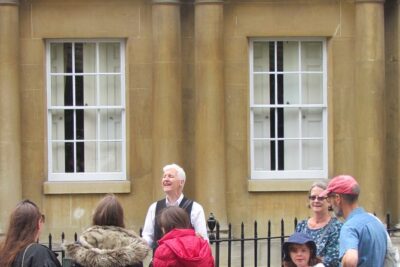
Bath Tootbus Hop-on Hop-off Sightseeing Bus Tour
Read our review →Browse the lists this tour appears in