
Reviewed · BRITISH MUSEUM TOURS
British Museum London Guided Tour Semi-Private 8ppl Max
Ancient treasures reward a well-chosen route. This 2.5-hour British Museum tour keeps the group to eight people, giving you a much better chance to hear the guide and ask questions than on a large walking tour. I like the focused selection of famous objects, and I like that guides such as Ivo, Jake, James, Laurence, Steph, and Guy bring humor and modern context to the displays. The drawback is simple: two and a half hours can only cover a small slice of a museum holding about eight million objects.
At $108.44 per person, this is not the cheapest way into a free museum. You are paying for direction, historical explanation, and a small group, not admission. It makes the most sense if you have limited time in London or feel that a huge collection would otherwise leave you wandering from case to case.
In This Review
- Key points at a glance
- Why the British Museum needs a guide
- Meeting at Great Russell Street
- First look at a collection spanning 6,000 years
- The Mummy of Katebet and ancient Egyptian belief
- The Rosetta Stone and the power of writing
- Assyrian lion hunts and the drama of empire
- The Lewis Chessmen and medieval life
- Greek sculpture and the difficult questions behind display
- How the 2.5-hour route feels
- Is $108.44 good value?
- Who should book this British Museum tour?
- Should you book it?
- FAQ
- Where does the British Museum tour begin?
- Where does the tour end?
- How long does the tour last?
- How many people can join the semi-private tour?
- Is admission to the British Museum included?
- Is the tour suitable for wheelchair users?
- Are temporary exhibitions included?
- What should I bring or avoid bringing?
- What is the cancellation policy?
Key points at a glance
- Eight people maximum: The small group makes it easier to hear the guide, move through busy galleries, and ask questions.
- A fast route through 6,000 years: Expect selected highlights such as the Rosetta Stone, the Mummy of Katebet, the Lewis Chessmen, Assyrian reliefs, and Parthenon sculptures.
- Guides add the missing context: Strong guides explain why objects mattered, how they were used, and how they reached the museum.
- A practical choice for a first visit: The tour gives you a clear introduction without trying to cover every gallery.
- Several start times: You can choose a departure that fits around other London plans.
- Plan for security and walking: Small bags are allowed, large luggage is not, and the tour is not suitable for wheelchair users or people with walking disabilities.
Why the British Museum needs a guide
The British Museum can be free to enter, but it is not easy to understand at a glance. Rooms stretch across continents and centuries. One gallery may show an Egyptian coffin, while the next presents medieval game pieces or ancient stone reliefs. Without a plan, you can spend an hour looking at beautiful objects and still miss the ideas behind them.
That is where this tour earns its keep. The guide selects a manageable group of objects and links them into a story about belief, power, trade, war, writing, and daily life. You are not simply told that an object is old. You learn what it was made for and why it still matters.
The small format also changes the feel of the visit. With no more than eight people, you should be able to stay close to the guide instead of trying to follow a flag through a crowd. Guides such as Guy have been praised for mixing facts with humor, while James and Ivo are noted for making difficult subjects easy to follow.
This is still a museum tour, not a private conversation in every room. Busy periods can bring crowds, and some rooms require quiet or limit speaking. Still, a small group gives you a better chance of staying connected to the guide.
More British Museum tours:
- The British Museum London – Exclusive Guided Museum Tour
★ 5.0 · 555 reviews - British Museum Guided Tour
★ 4.0 · 470 reviews - Private Guided Tour of the British Museum – Tickets Included
★ 5.0 · 193 reviews
Meeting at Great Russell Street
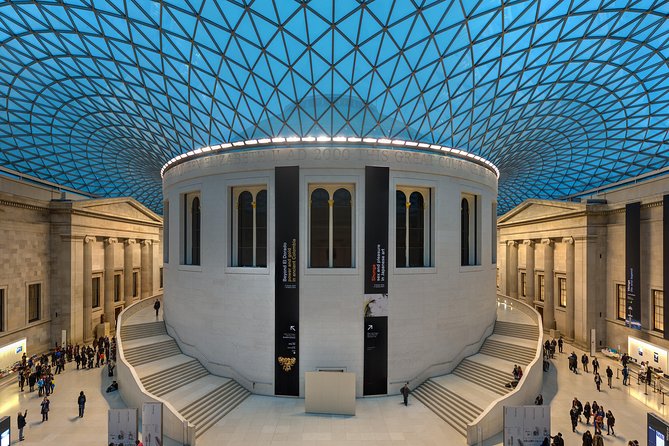
The tour begins at the British Museum, Great Russell Street, London WC1B 3DG. You choose the start time while booking, and the activity ends back at the same meeting point.
The museum is near public transport, but hotel pickup and drop-off are not included. I would allow extra time to reach the entrance, especially if you are crossing central London during a busy part of the day. Being late is a poor way to begin a timed tour, and one useful practical tip is to carry an umbrella. London weather rarely asks permission.
Security rules matter here. Large bags and suitcases cannot enter, while handbags and small, thin backpacks may pass through security. Leave bulky luggage elsewhere before you arrive. You also need to provide a mobile phone number with the country code when booking, so the operator can contact you if needed.
The tour is offered in English. Appropriate dress may be required for entry to some sites, although the main concern for this visit is comfortable clothing and shoes. You will be on your feet and walking through several galleries.
First look at a collection spanning 6,000 years
The opening introduction places the British Museum in context. Its collection covers roughly 6,000 years of human history and includes objects from many parts of the world. The scale is almost comic. Eight million items cannot be sensibly covered in one visit, so the value of the tour lies in selection.
The guide’s job is to give you a useful framework. Ancient Egypt, Assyria, Greece, medieval Europe, and other cultures appear not as isolated schoolbook chapters, but as evidence of what people made, feared, valued, and fought over.
That approach also lets the guide address the complicated side of the collection. Several guides, including Jake and Eleisha, have been praised for discussing how objects came to London and for answering questions about disputed ownership with honesty. This is important at the British Museum. A visit that presents every object as a simple trophy would leave out a major part of the institution’s story.
You should not expect a full treatment of every culture represented in the building. The route is a highlights tour. Its purpose is to help you understand the most important stops and leave you with enough orientation to explore further on your own.
The Mummy of Katebet and ancient Egyptian belief
The Mummy of Katebet is one of the tour’s named highlights. An Egyptian mummy can look like a silent, sealed object, but the guide’s explanation gives it a human scale. You learn to look beyond the wrappings and consider the beliefs, rituals, and hopes connected with burial.
This is one of the clearest benefits of having a guide. A museum label may give you a name, date, and place. A good explanation connects those facts to the person and society behind the object. Ivo and Becky have been praised for bringing artifacts to life through stories and clear historical explanation, qualities that matter especially in galleries where many objects may look similar to an untrained eye.
The Egyptian sections can also be absorbing for children and teenagers, though the tour is not designed only for families. Guy has been praised for keeping teenagers interested, using wit without turning the subject into a comedy routine.
More Museums in London:
- Tower of London and Crown Jewels Exhibition Ticket
★ 4.5 · 6,677 reviews - Chelsea FC Stadium Tours and Museum
★ 5.0 · 1,908 reviews - Official tickets: Moco Modern & Contemporary Art Museum
★ 4.5 · 1,157 reviews - The Postal Museum Admission Ticket
★ 4.5 · 347 reviews
The Rosetta Stone and the power of writing
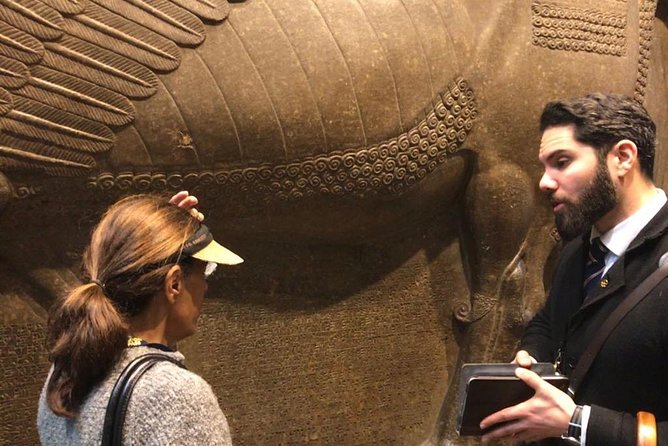
The Rosetta Stone is the stop most first-time visitors expect to see. It is the actual stone, not the language-learning company with a similar name. Its importance comes from the same decree being written in three scripts, which helped scholars make progress in reading Egyptian hieroglyphs.
The object is often surrounded by people, so a guide is useful here. You get the basic story, but you also get a reason to look closely at the writing and the political purpose of the inscription. The stone is not just a famous slab. It shows how language, government, and scholarship can meet in one object.
Starting with the Rosetta Stone can also give the tour a strong narrative line. Steph has been praised for shaping the visit like a story that begins with this famous object and then moves through other major works. That structure helps prevent the museum from feeling like a random sequence of rooms.
Expect a crowd around this display at popular times. Your guide may need to position the group carefully, and you may not have a long, quiet period in front of the stone. The benefit is that you get the essential explanation without spending your limited museum time trying to work out why it matters.
Assyrian lion hunts and the drama of empire
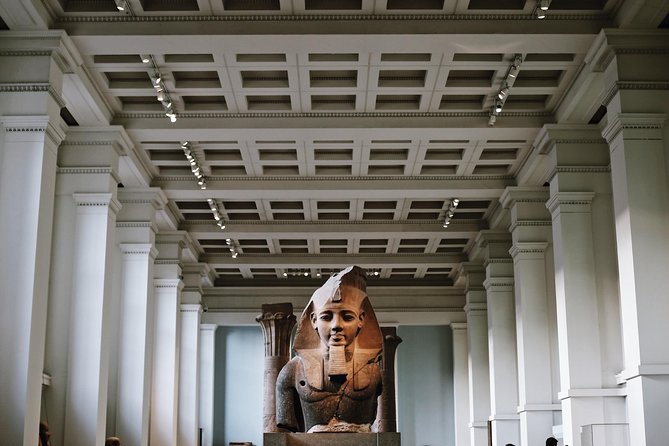
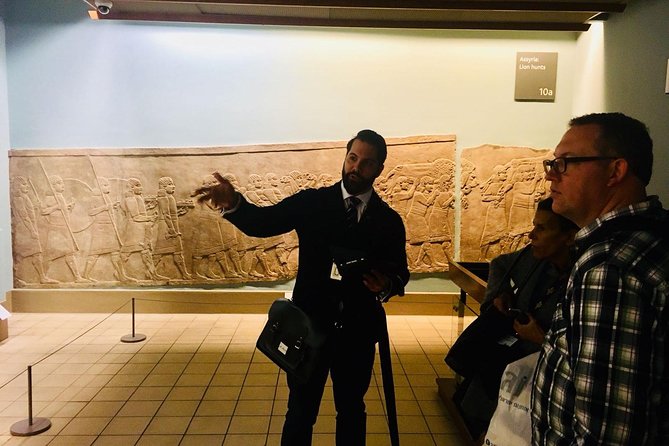
The Assyrian galleries offer a useful change of mood. The carved lion-hunting reliefs, dating from the seventh century BC, are among the tour’s more dramatic stops. They show power in action, with the king presented as a figure capable of controlling both nature and empire.
James has been praised for including the Assyrian section rather than rushing only between the most famous objects. That is a good sign for anyone who wants more than a checklist. The Rosetta Stone is essential, but less famous galleries can provide some of the strongest visual moments.
The reliefs also open a discussion about propaganda. A royal hunting scene is not a neutral snapshot. It tells you how a ruler wanted to be seen. A guide can point out the artistic detail and then connect it to the political message.
This is the kind of interpretation that is hard to gain from walking alone unless you arrive with a strong background in ancient Near Eastern art. The tour does not promise every major Assyrian object, but the lion hunt gives you a memorable example of how art served authority.
The Lewis Chessmen and medieval life
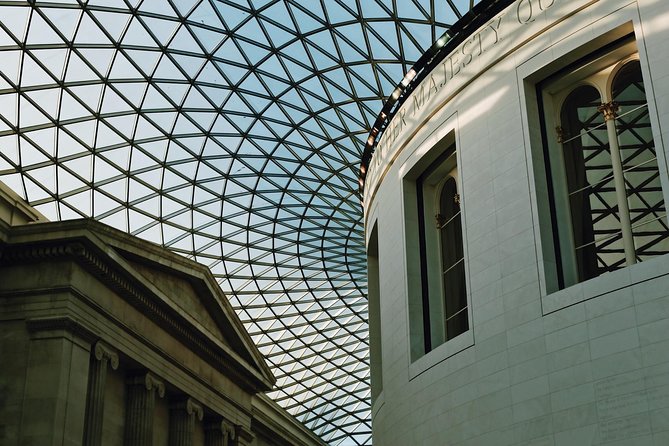
The 12th-century Lewis Chessmen bring the tour into medieval Europe. These small carved figures are more intimate than a huge stone relief, and they show how a familiar game can reveal social values and craft traditions.
The chessmen are popular because they are expressive. Their faces and poses make them feel almost like characters rather than pieces in a game. The guide can use them to explain medieval society, trade, leisure, and the craftsmanship behind luxury objects.
This stop also gives the route variety. You move from royal inscriptions and burial practices to an object connected with play. That change keeps the visit from becoming a parade of solemn monuments.
The museum contains far more medieval material than you can see in this tour. Treat the chessmen as an introduction, not a complete survey. If this period interests you most, ask the guide for suggestions about what to see after the official route. Several guides have offered follow-up recommendations based on personal interests.
Greek sculpture and the difficult questions behind display
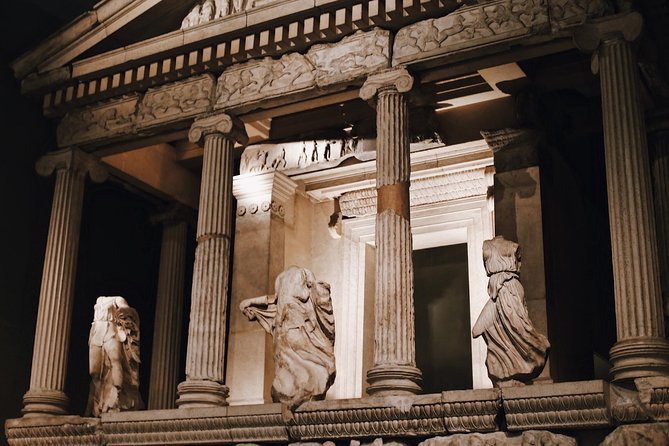
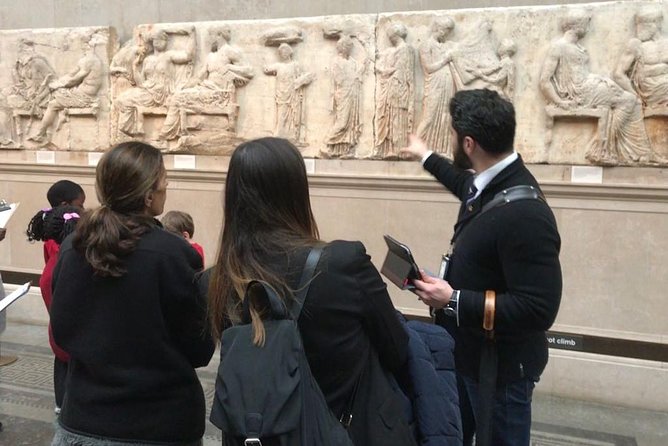
The route may include Parthenon sculptures alongside other major highlights. These works are visually powerful, but they also raise questions about collecting, empire, removal, and the ownership of cultural objects.
Jake has been praised for addressing controversial topics instead of avoiding them. Eleisha has also been described as offering an honest contemporary perspective when discussing the museum’s objects. That is valuable because the British Museum is not only a place to admire art. It is also a place to think about how museums were formed.
The discussion will not settle every dispute in one visit. Nor should you expect a legal or political seminar. But a guide who acknowledges the difficult parts gives you a more useful understanding than a tour that treats the collection as uncomplicated.
Crowds can be heavy near the best-known Greek displays. Andy has been praised for moving a family through crowded areas while making sure they still reached key points of interest. That practical skill matters. A tour can be packed with facts and still fail if the group cannot see the objects.
How the 2.5-hour route feels
Two and a half hours is long enough for a meaningful introduction and short enough to fit into a busy London day. You should expect steady walking, frequent stops, and a fair amount of standing.
The guide will not show you all eight million objects, and that is a strength rather than a failure. A complete museum tour would be exhausting and impossible to absorb. This route gives you a selection of major works, along with less obvious choices such as the Assyrian reliefs.
The pace may feel brisk if you like to read every label or linger over each display. This is a guided highlights visit, not an open-ended afternoon. If you want time for sketches, detailed photography, or close reading of every object, plan to return independently after the tour.
The museum can also be crowded, especially during holiday periods. A smaller group helps with movement, but it cannot empty the galleries. Quiet or restricted-speaking areas may limit how much the guide can say inside a particular room. In those cases, expect the explanation before entering.
Is $108.44 good value?
The price is $108.44 per person, while general admission to the British Museum is free. That comparison needs to be made plainly. You are paying a substantial premium for a professional guide, a planned route, and a group capped at eight.
For a first visit with only one free museum window in London, I think the cost can be justified. You avoid spending precious time deciding where to go, and you gain explanations that are unlikely to come from a quick scan of labels. The small group is the main value feature, especially compared with a large coach-style outing.
The price is harder to justify if you already know the museum well, have several hours available, or enjoy planning your own route. Independent visitors can return to favorite galleries and set their own pace without paying a tour fee.
A private upgrade is available for people who want the guide and route tailored entirely to their party. That will cost more, so the semi-private option is the better balance for most couples, families, and small groups of friends.
Group discounts may be available. Since the tour requires at least two people to operate, a solo booking may not run unless the minimum is met. If the minimum is not reached, you are offered an alternative or a full refund.
Who should book this British Museum tour?
I would recommend it most strongly to first-time visitors, families, and anyone with a tight London schedule. It also suits people who like to ask questions and want the guide to explain disputed ownership and cultural context rather than simply point out famous objects.
It is a good fit for a group of six or eight friends who want a more personal visit without paying for a fully private guide. It can also work well for teenagers, since guides such as Guy have been praised for keeping younger minds involved.
I would hesitate to recommend it to anyone with limited mobility. The tour is not available to people using wheelchairs or those with walking disabilities, and a moderate level of physical fitness is required. It is also not ideal if your priority is temporary exhibitions, since those are not included.
Book at least a little ahead if your London dates are fixed. The experience is booked on average 42 days in advance, which suggests that popular times can fill. Choose the start time carefully, arrive at Great Russell Street early, and wear comfortable shoes.
Should you book it?
Book this tour if the British Museum feels too large to tackle alone, or if you want the major objects explained rather than simply photographed. The best features are the eight-person limit, the clear two-and-a-half-hour route, and guides who can make subjects such as imperial power and disputed ownership part of the conversation.
Skip it if you are happy with a self-guided visit, need wheelchair access, or want to spend most of the day in temporary exhibitions. At $108.44, the fee is not minor, but for a time-pressed first visit, the direction and small group can make the museum far easier to understand.
Free cancellation is available up to 24 hours before the start time. Cancellations or changes made less than 24 hours ahead are not refunded or accepted.
FAQ
Where does the British Museum tour begin?
It begins at the British Museum on Great Russell Street, London WC1B 3DG, UK.
Where does the tour end?
The activity ends back at the meeting point at the British Museum.
How long does the tour last?
The tour lasts approximately 2 hours and 30 minutes.
How many people can join the semi-private tour?
The group has a maximum of eight people. A private option is also available if selected.
Is admission to the British Museum included?
The tour information lists museum admission as free. The tour price covers the semi-private guided experience, but temporary exhibitions are not included.
Is the tour suitable for wheelchair users?
No. The tour is not available for people using wheelchairs or those with walking disabilities. A moderate level of physical fitness is required.
Are temporary exhibitions included?
No. Temporary exhibitions are not included in the tour.
What should I bring or avoid bringing?
Large bags and suitcases are not allowed inside. Handbags and small, thin backpacks may pass through security. Comfortable shoes and an umbrella are practical choices.
What is the cancellation policy?
You can cancel up to 24 hours before the experience start time for a full refund. Cancellations or changes made less than 24 hours before the start time are not accepted or refunded.
Just added around London
- The Private British Museum Tour★ 5.0 · 6 reviews
- London to Southampton Cruise Port | Private Transfer★ 5.0 · 6 reviews
- London’s Chinatown Food Experience★ 4.0 · 6 reviews
- London Gatwick (LGW) Airport Departure Private Transfer – Hotel to Airport★ 4.0 · 6 reviews
- Christmas in Canterbury, Dover and Greenwich with Christmas Lunch★ 4.5 · 6 reviews
- Transfer from Heathrow Airport to London hotel on private car★ 4.5 · 6 reviews
- Jazz Notes – Jazz Jam Ticket★ 5.0 · 6 reviews
- Transfer from London Stansted Airport to Central London★ 5.0 · 6 reviews
British Museum Tours, compared.
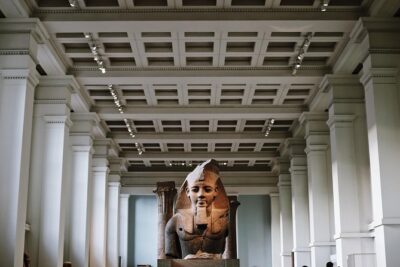
The British Museum London – Exclusive Guided Museum Tour
Read our review →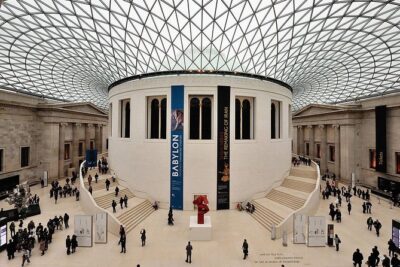
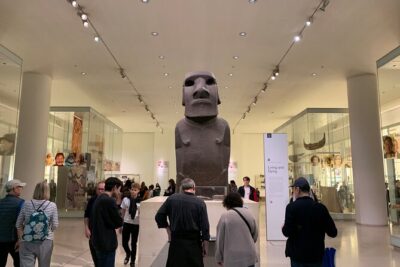
Private Guided Tour of the British Museum – Tickets Included
Read our review →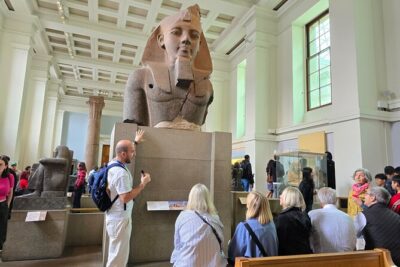
British Museum Guided Tour with Priority Timeslots(Small Group)
Read our review →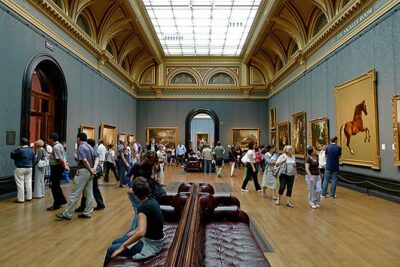
British Museum & National Gallery of London Semi-Private 8ppl Max
Read our review →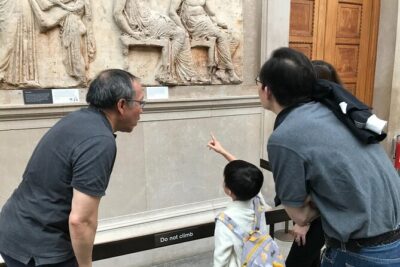
Explore Biblical Artifacts at the British Museum
Read our review →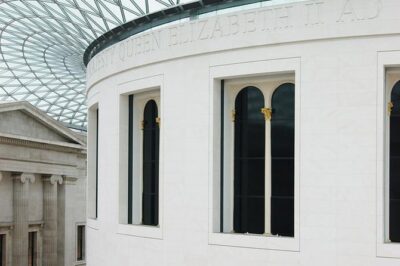
British Museum Highlights Private Tour in London including the Rosetta Stone
Read our review →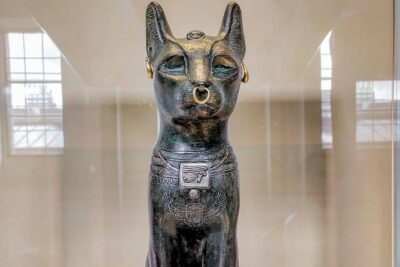
Crash course in archaeology at the British Museum
Read our review →Browse the lists this tour appears in