
Reviewed · BRITISH MUSEUM TOURS
Crash course in archaeology at the British Museum
Five hours can barely scratch the surface. This guided British Museum experience makes the vast collection easier to understand by following human development from early tools and settlement to the Romans, Saxons, Vikings, Aztecs, and beyond. I like the chronological structure, and I like the way archaeologist Rossa connects famous objects with the people who found, studied, and deciphered them.
The main trade-off is time on your feet. The tour focuses on selected objects rather than trying to show you every famous room, and some talks last long enough for tired legs to become part of the lesson. Still, the museum provides small folding stools, and breaks are built into the five-and-a-half-hour morning.
In This Review
- Key points at a glance
- Why this British Museum tour works
- Starting at Russell Square at 9:45 am
- From early tools to the first cities
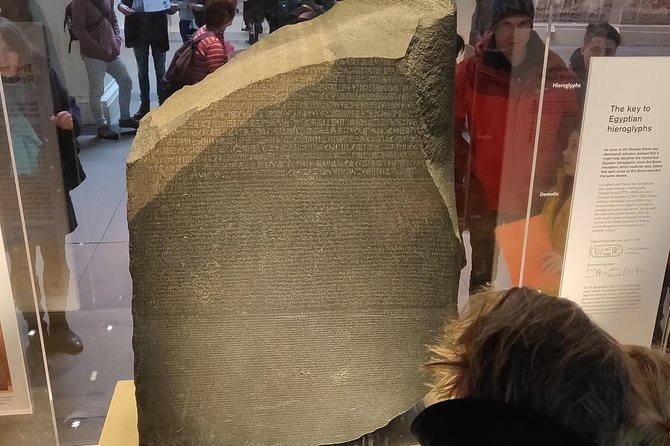
- Egypt, hieroglyphs, and the Rosetta Stone
- Mesopotamia and the meaning of cuneiform
- Greece, Rome, and the British Museum’s famous rooms
- Vikings, Saxons, and the route toward Britain
- Storytelling is the main attraction
- The practical reality of five and a half hours
- What the $83.34 price gives you
- Who should book this experience
- Should you book the British Museum archaeology crash course?
- FAQ
- Where does the tour start?
- Where does the tour finish?
- What time does the tour begin?
- How long does the experience last?
- Is entrance to the British Museum included?
- Is lunch included?
- Is the tour offered in English?
- How large can the group be?
- Can I cancel for a full refund?
Key points at a glance
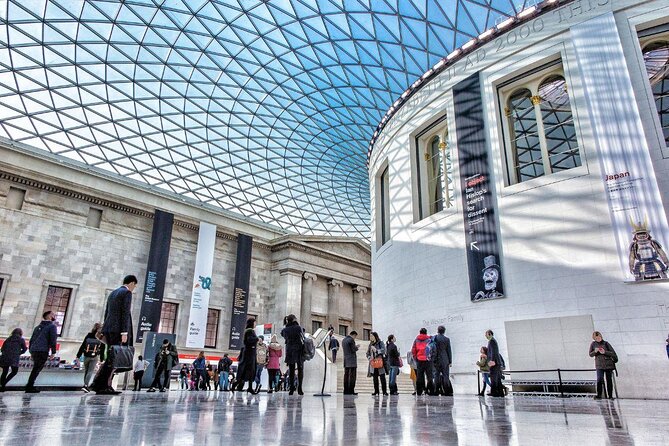
- A five-hour walk through human civilization: Follow a clear timeline from early hominids and hunter-gatherers to the Anglo-Saxons and modern Britain.
- Famous objects with useful context: See the Rosetta Stone, Elgin Marbles, Lewis Chessmen, Assyrian works, Egyptian pieces, and more.
- Archaeology, not just object spotting: Learn how scripts were translated, how digs changed our understanding, and how collectors shaped the museum.
- Rossa is the heart of the experience: His storytelling, archaeological training, humor, and sense of timing receive especially strong praise.
- More depth than breadth: This is not a rapid highlights tour. You spend time with chosen objects and follow their place in the story.
- Good morning timing: The 9:45 am start leaves your afternoon open for London plans.
Why this British Museum tour works
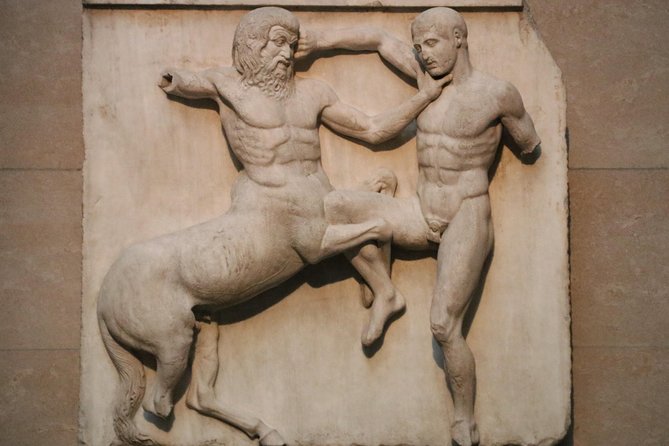
The British Museum can feel like four museums stacked on top of one another. Each gallery offers something important, but the links between Mesopotamia, Egypt, Greece, Rome, and Britain are not always obvious when you walk alone.
This tour gives you a route through that material. Instead of treating each object as an isolated prize, Rossa uses selected displays to explain how people lived, worked, worshipped, traded, recorded information, and built cities.
I like that approach. You do not simply stand in front of the Rosetta Stone, hear that it helped scholars read Egyptian hieroglyphs, and move on. You also learn about the process of deciphering ancient writing and why the breakthrough mattered.
The same method applies to cuneiform. The marks pressed into clay can look like abstract scratches behind glass. With the right explanation, they become evidence of administration, language, government, and everyday life.
That is why this suits a history-minded visitor better than someone who wants a fast photo tour. You will see important objects, but the real product is the story that ties them together.
More British Museum tours:
- British Museum London Guided Tour Semi-Private 8ppl Max
★ 5.0 · 984 reviews - The British Museum London – Exclusive Guided Museum Tour
★ 5.0 · 555 reviews - British Museum Guided Tour
★ 4.0 · 470 reviews
Starting at Russell Square at 9:45 am
The meeting point is on Bernard Street near Russell Square. The tour then finishes at the British Museum on Great Russell Street, so you should expect to make your own way to the starting point and plan for the museum portion to end at a different location.
The start time is 9:45 am. That is early enough to make good use of the museum before the day gets away from you, and the morning schedule leaves the afternoon free for Covent Garden, the West End, Westminster, or another museum.
The group can include up to 25 people. That is not a private visit, but it is still small enough for a guide to keep a shared conversation going. The exact feel may depend on the final group size, yet the limited capacity should be more manageable than a large coach-style museum tour.
Admission to the British Museum itself is listed as free. Your payment, priced at $83.34 per person, covers the guided experience rather than a museum entrance ticket. That price makes the most sense if you want several hours of expert interpretation. If you only want to see the Rosetta Stone, take a few photographs, and leave, it is not the economical choice.
From early tools to the first cities
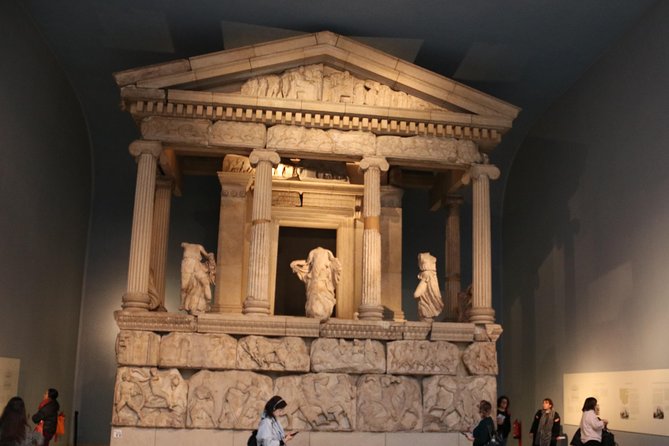
The opening part sets the basic question for the day: how did humans move from simple tools and mobile hunting groups to agriculture, permanent settlements, towns, and cities?
The selected objects help make those changes concrete. Rather than treating archaeology as a parade of dates, the tour looks at what objects reveal about human choices and social change.
You might hear about early hominids and their tools, the hunter-gatherer way of life, and the shift toward farming. From there, the story moves to the first villages and urban centers.
This beginning matters because it gives the later galleries a framework. Egyptian temples, Assyrian reliefs, and Roman objects seem less disconnected when you have already considered why settled communities needed new systems of work, belief, storage, writing, and authority.
The route is not a full survey of every early culture. It is a carefully chosen chain of examples. If you expect a room-by-room introduction to every collection, you may want more time afterward to wander alone.
Egypt, hieroglyphs, and the Rosetta Stone
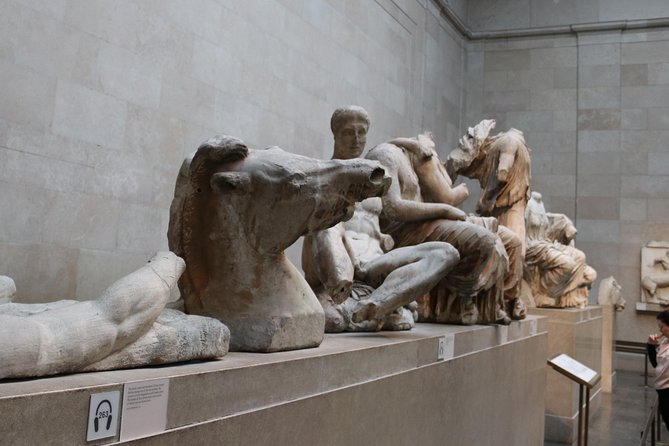
Egypt receives strong attention, but this is not an Egypt-only tour. The Egyptian galleries form one part of a larger account of how civilizations developed and how modern archaeology began to read their remains.
The Rosetta Stone is an obvious highlight. Its value is not only its fame or its place in museum photography. It offers a way to understand the decipherment of hieroglyphs and the patient comparison of scripts that made ancient Egyptian writing readable again.
The tour also brings the human side of archaeology into view. You learn about the archaeologists, explorers, and relic hunters who helped assemble collections and shape modern ideas about the past.
That story has complications. Museums do not fill themselves by magic, and the people who excavated, bought, transported, or claimed objects often had very different motives. The experience appears to treat those people as part of the history, rather than pretending that every artifact arrived through a simple, neutral process.
You should not expect to examine every Egyptian masterpiece. The aim is to use selected pieces to explain language, belief, power, and archaeological discovery.
More Museums in London:
- Tower of London and Crown Jewels Exhibition Ticket
★ 4.5 · 6,677 reviews - Chelsea FC Stadium Tours and Museum
★ 5.0 · 1,908 reviews - Official tickets: Moco Modern & Contemporary Art Museum
★ 4.5 · 1,157 reviews - The Postal Museum Admission Ticket
★ 4.5 · 347 reviews
Mesopotamia and the meaning of cuneiform
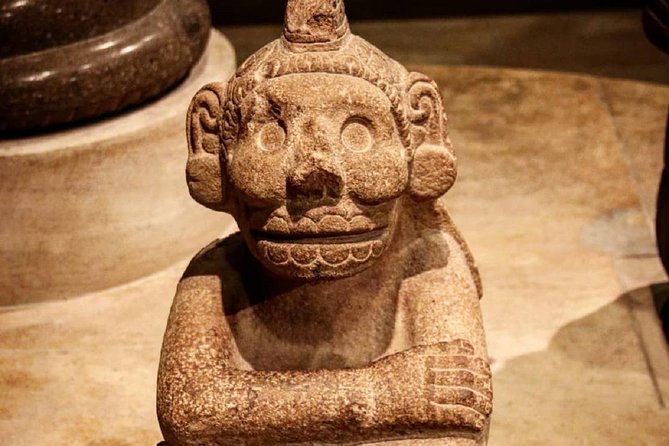
The Mesopotamian section is especially useful if you want to understand how archaeology changed modern knowledge of the ancient world. The British Museum played a major role in bringing Assyrian and Mesopotamian material to public attention, and the tour connects objects with the story of excavation and interpretation.
Cuneiform is central to that story. The wedge-shaped signs can record languages and administrative details across long stretches of time. Learning how scholars worked out what those signs meant gives you a better sense of archaeology as detective work, not treasure hunting alone.
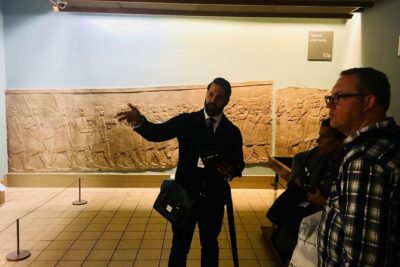
Assyrian displays add scale and drama. Reliefs and royal images show how rulers wanted power to be seen, while the excavation story reveals how modern researchers tried to reconstruct a vanished political world.
This is one of the tour’s strongest qualities. A short label may tell you what an object is. A skilled guide can explain who made it, who found it, why it mattered, and how our understanding changed afterward.
Greece, Rome, and the British Museum’s famous rooms
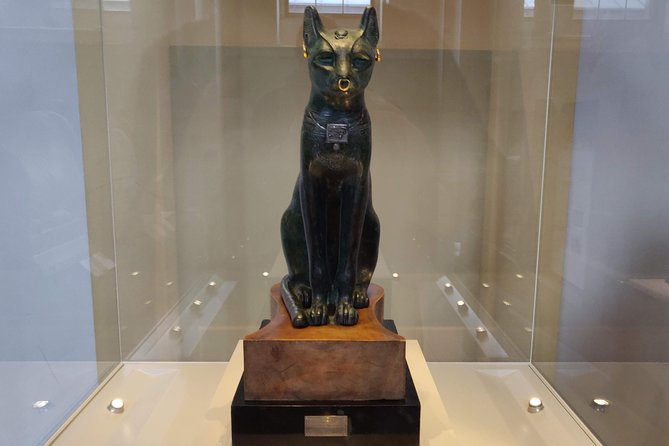
The Greek and Roman sections provide familiar landmarks, including the Elgin Marbles. You will see these objects within the larger story of empire, art, public life, and the way later societies reused ancient ideas.
The point is not simply to admire marble sculpture. The tour asks you to think about how the objects were made, displayed, moved, and interpreted. That creates a more useful museum visit than a quick declaration that something is beautiful.
Roman material then helps carry the story toward Britain. The empire’s reach, its systems, and its long afterlife connect the Mediterranean world with the later development of Britain.
The tour does not appear to linger equally over every period. Some sections may feel brief if your personal interest lies mainly in classical Greece or Rome. The reward comes from keeping the whole timeline moving.
Vikings, Saxons, and the route toward Britain
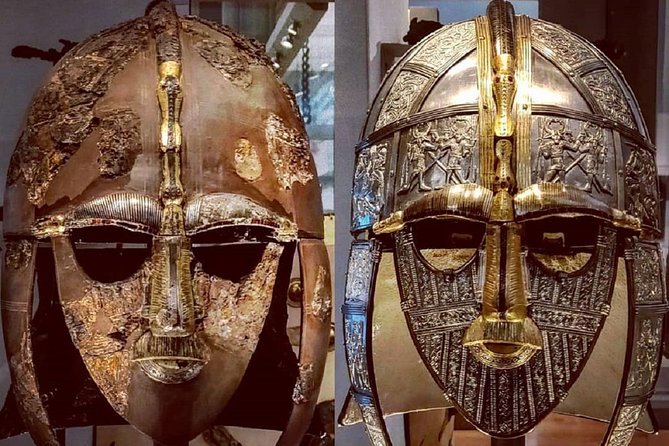
Later sections bring the story closer to home with the Vikings and Anglo-Saxons. These displays help show that British history did not begin in isolation. It grew through movement, trade, conflict, migration, and contact with wider worlds.
The Lewis Chessmen are a particularly memorable stop. They are visually appealing, but the more interesting questions concern how they were made, used, found, and preserved. That is the pattern throughout the tour: the object catches your eye, then the context gives it weight.
The chronology continues toward modern Britain, with references to Victorian London and Paris. That gives the experience a wider ending than a tour that stops with Rome or the Norman period.
One unusual thread is the changing view of human origins, including current thinking about Ethiopia. The guide uses the museum’s objects to show how archaeological conclusions can change as evidence and methods improve.
Storytelling is the main attraction
Rossa receives repeated praise for his delivery, and that is important because five hours of museum explanation can easily become a lecture that drains the room.
The strongest descriptions focus on his ability to tell stories about each artifact: how it was found, who found it, what it revealed, and why it still matters. He is also described as passionate, clear, funny, and attentive to the group’s energy.
That combination makes a difference. Archaeology contains difficult names, disputed dates, unfamiliar scripts, and large stretches of time. A good story gives those details a human shape.
The tour also includes lighter moments, such as playing the ancient Ur dice game. Small activities like that can help break up long stretches of looking and listening.
I would choose this experience for someone who enjoys asking why an object matters. If you prefer to move quickly, photograph the major pieces, and read labels at your own pace, the format may feel slow.
The practical reality of five and a half hours
The advertised duration is about five hours and 30 minutes. That is a serious commitment inside a museum, especially when much of the time is spent standing in front of displays.
Breaks help. The schedule includes a lunch stop of about 40 minutes, along with a later break of roughly 10 minutes. Bathroom and refreshment pauses are part of the day, and the guide may adjust timing if the start is delayed by entry queues.
Still, bring sensible footwear. If standing is difficult for you, look for one of the museum’s small folding stools as soon as you enter. Several people found these useful, and they can make the difference between enjoying the final hour and wishing for a chair.
Lunch is not included. Bring food if that suits your plans, since the museum’s food options are described as limited and expensive. You can also use the break to buy something, but do not assume it will be the cheapest or quickest meal of your London day.
Because the route moves between different rooms, you should also expect regular walking. The museum is large, and the tour uses that size to connect collections from different regions.
What the $83.34 price gives you
At $83.34 per person, this is not a casual add-on. The museum has free admission, so the cost is almost entirely for the archaeologist guide, the planning, and the five-hour structure.
I think the value is strong for a visitor who might otherwise spend hours looking at objects without knowing where to begin. You get a clear sequence, access to selected highlights, and explanations that go far beyond basic labels.
The price is harder to justify if you already have a firm plan to visit only one gallery. It is also less suitable if you want a broad checklist of famous objects. This experience gives you more depth than breadth.
The tour is recommended by 98 percent of customers and holds a 4.9 rating from 96 reviews. Those figures point to a very consistent experience, especially around the guide’s delivery and the amount people learn.
Who should book this experience
I would put this near the top of the list for:
- First-time British Museum visitors who feel overwhelmed by the building
- Anyone interested in archaeology, ancient civilizations, and the history of discovery
- Adults who enjoy lectures when the speaker brings humor and stories
- Repeat museum visitors who want a new way to connect familiar objects
- Parents or gift buyers looking for an educational half-day experience
- Visitors who want their afternoon free after a substantial morning activity
I would think twice if you cannot stand for extended periods, dislike fixed group pacing, or want to see every major gallery. Families with different interests may also find the chronological format too focused for some members.
The experience is offered in English. Confirmation arrives at booking, mobile tickets are available, service animals are allowed, and the tour is near public transportation. Most people can participate, but the length and walking still deserve attention when planning your day.
Should you book the British Museum archaeology crash course?
Book it if you want the British Museum to make sense, not just look impressive. The best part is the connection between objects, archaeology, and the human effort to reconstruct the past.
Do not book it as a quick highlights run. You will spend much of the day listening to detailed explanations of selected pieces, and you may leave with several rooms still unseen.
For the right person, that is a fair trade. Rossa’s timeline, from early tools to Anglo-Saxon Britain, gives the museum a readable shape. Bring comfortable shoes, carry lunch or money for the museum café, find a folding stool early, and allow your afternoon for independent exploring.
Free cancellation is available up to 24 hours before the 9:45 am start for a full refund. Changes made within 24 hours are not accepted, and the experience may be rescheduled or refunded if its minimum group size is not reached.
FAQ
Where does the tour start?
It starts at Russell Square, on Bernard Street, London WC1N 1LJ.
Where does the tour finish?
The tour ends at the British Museum on Great Russell Street, London WC1B 3DG.
What time does the tour begin?
The start time is 9:45 am.
How long does the experience last?
It lasts approximately five hours and 30 minutes.
Is entrance to the British Museum included?
The British Museum admission ticket is free. The experience includes a qualified archaeologist guide.
Is lunch included?
No. Lunch is not included.
Is the tour offered in English?
Yes. The tour is offered in English.
How large can the group be?
The maximum group size is 25 travelers.
Can I cancel for a full refund?
Yes. You can cancel at least 24 hours before the experience start time for a full refund. Cancellations or changes made less than 24 hours before the start are not accepted for a refund.
Just added around London
- The Private British Museum Tour★ 5.0 · 6 reviews
- London to Southampton Cruise Port | Private Transfer★ 5.0 · 6 reviews
- London’s Chinatown Food Experience★ 4.0 · 6 reviews
- Christmas in Canterbury, Dover and Greenwich with Christmas Lunch★ 4.5 · 6 reviews
- Transfer from Heathrow Airport to London hotel on private car★ 4.5 · 6 reviews
- London Gatwick (LGW) Airport Departure Private Transfer – Hotel to Airport★ 4.0 · 6 reviews
- Jazz Notes – Jazz Jam Ticket★ 5.0 · 6 reviews
- Transfer from London Stansted Airport to Central London★ 5.0 · 6 reviews
British Museum Tours, compared.
British Museum London Guided Tour Semi-Private 8ppl Max
Read our review →
The British Museum London – Exclusive Guided Museum Tour
Read our review →
Private Guided Tour of the British Museum – Tickets Included
Read our review →
British Museum Guided Tour with Priority Timeslots(Small Group)
Read our review →
British Museum & National Gallery of London Semi-Private 8ppl Max
Read our review →
Explore Biblical Artifacts at the British Museum
Read our review →
British Museum Highlights Private Tour in London including the Rosetta Stone
Read our review →Browse the lists this tour appears in