
Reviewed · BRITISH MUSEUM TOURS
British Museum London Private Guided Tour – 3 hour
The British Museum can swallow a whole morning. This three-hour private tour makes that giant collection manageable, with a guide who helps you reach the famous objects without wandering past them. I like the personalized route and the way Robert Miller adjusts the visit to your interests. I also like that museum admission is included. The main consideration is price: at $267.36 for up to six people, it makes the most sense for a small group rather than a solo visitor.
You choose a morning or afternoon start, then meet at the British Museum on Great Russell Street and finish at the same place. I would lean toward morning if you want the best chance of seeing major objects before crowds build. Three hours is long enough for a strong introduction, but not enough for every gallery, so you should arrive with a few priorities in mind.
In This Review
- Key points at a glance
- Why the British Museum needs a guide
- Meeting at Great Russell Street
- Starting with the Rosetta Stone
- Ancient Egypt, Greece, and Rome
- The Enlightenment Room and Waddesdon Bequest
- Sutton Hoo, Lewis Chessmen, and Chinese art
- Easter Island and the objects between the famous ones
- Robert Miller’s guiding style
- Is $267.36 good value?
- Morning or afternoon?
- Who should book this private visit?
- Cancellation and final practical advice
- Should you book it?
- FAQ
- Where does the British Museum tour start and finish?
- How long does the tour last?
- Are British Museum admission tickets included?
- How many people can join the private tour?
- Can I choose a morning or afternoon start?
- Is the tour available in English?
Key points at a glance
- Private group of up to six: You get the guide’s attention instead of following a large crowd.
- Robert Miller earns repeated praise: His storytelling, museum knowledge, and calm handling of questions are the tour’s biggest strengths.
- Major objects plus lesser-seen pieces: Expect the Rosetta Stone, Parthenon Marbles, Egyptian treasures, Sutton Hoo, Lewis Chessmen, and more.
- Morning or afternoon choice: Morning may help you avoid the heaviest crowds, while afternoon can fit neatly into a busy London schedule.
- Admission is included: The $267.36 group price covers entry, making the per-person cost more reasonable when shared by several people.
- Useful for families: Children and teenagers have been kept engaged by the stories, focused route, and chance to see objects tied to their interests.
Why the British Museum needs a guide
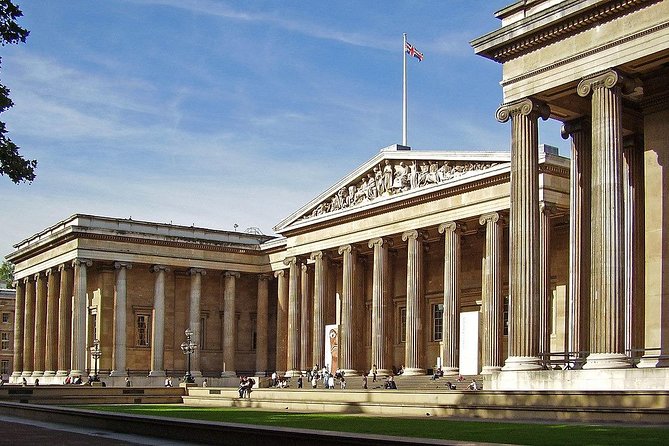
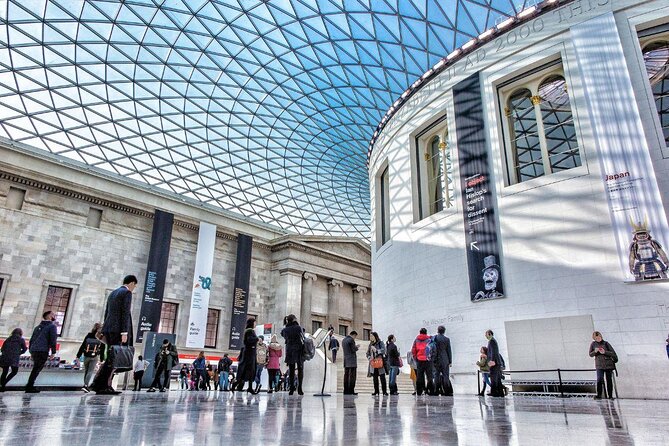
The British Museum is not a quick stop where you stroll through one famous hall and leave. Its collections cover ancient Egypt, Greece, Rome, China, Britain, Easter Island, Mesopotamia, and much more. The building itself can feel just as imposing as the objects inside it.
That scale creates the museum’s central problem: you can spend hours walking and still miss the pieces you most wanted to see. A map may point you toward the Rosetta Stone, but it will not explain why the stone matters, how its inscriptions helped scholars read Egyptian hieroglyphs, or what details deserve your attention.
A private guide changes the experience from a hunt for famous names into a connected story. Robert has been praised for explaining objects in clear, entertaining terms, while also answering follow-up questions. He is described as an art dealer, a long-time member of the British Museum, and someone involved in the art world for many years.
That background matters most when you pause in front of an object that looks modest at first glance. A guide can explain its purpose, age, materials, or cultural setting before you move on. In three hours, that can mean seeing fewer rooms but getting much more from the objects you do see.
More British Museum tours:
- British Museum London Guided Tour Semi-Private 8ppl Max
★ 5.0 · 984 reviews - The British Museum London – Exclusive Guided Museum Tour
★ 5.0 · 555 reviews - British Museum Guided Tour
★ 4.0 · 470 reviews
Meeting at Great Russell Street
The meeting point is the British Museum, Great Russell Street, London WC1B 3DG. The tour begins and ends there, so you do not need to arrange a second pickup or find your way to another part of London afterward.
The museum is near public transportation, which helps if you are fitting this into a sightseeing day. Your booking confirmation arrives at the time of booking, and the experience is offered in English.
The entrance matters more than it might seem. The museum is a major London attraction, and the security line can become slow. Robert has been praised for giving clear meeting instructions and for reaching the entrance early. Some groups were taken through a less crowded entrance and went directly toward the Rosetta Stone.
I would take the meeting instructions seriously and allow extra time. Being late can cost you part of a three-hour tour, even if the guide is understanding. One family specifically appreciated Robert’s patience when they were running behind, but it is still better not to rely on that kindness.
Starting with the Rosetta Stone
The Rosetta Stone is often the natural opening act. It is one of the museum’s best-known objects, and it gives your guide an immediate way to explain how written language, archaeology, and scholarship connect.
Expect the guide to help you get close enough to study the stone while explaining its importance. Going early can make a real difference here. One group was taken straight to the object before the room became more crowded, which allowed them to see it at close range and listen without fighting through a packed crowd.
The stone is not the largest or most visually dramatic object in the museum. Its value comes from what it represents. A good explanation helps you look beyond its dark surface and inscribed text, turning it into a key to understanding ancient Egypt.
This is also a good example of why the tour is more than a list of famous stops. You are not simply checking off the Rosetta Stone. You are learning how to look at it.
Ancient Egypt, Greece, and Rome
The ancient Egyptian, Greek, and Roman collections give the tour much of its visual power. The exact route depends on your interests, but these galleries offer plenty of material for a guide to connect art, religion, politics, daily life, and burial customs.
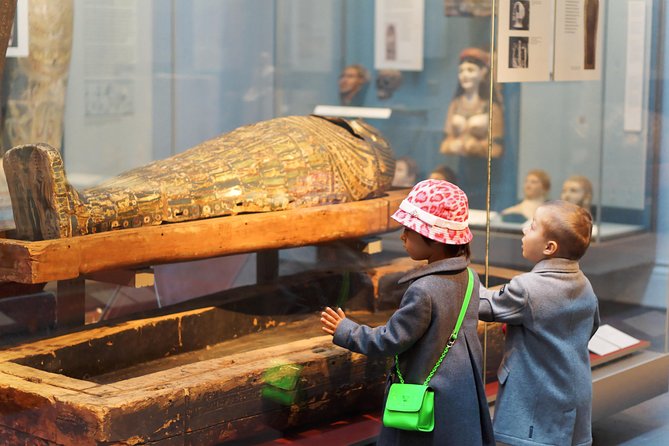
The Egyptian collection can be especially useful for families. Mummies and monumental objects catch children’s attention, while stories about the people who made and used them give the displays a human scale. One family with children aged 9, 11, and 13 found the pace and explanations engaging for all three.
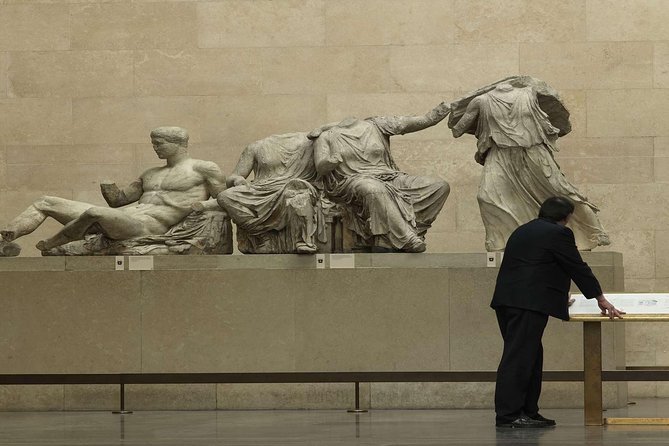
The Greek galleries include the Parthenon Marbles, among the museum’s most discussed holdings. A guide can help you notice the sculptural details and explain the wider setting of the temple and its decoration. The subject also raises questions about ownership and the movement of cultural objects, giving you something more serious to consider than simple admiration.
The Roman material adds another layer. You might see objects connected with public life, private belief, trade, or household use. A guide’s stories can help you compare Roman habits with Egyptian and Greek ideas rather than treating each room as an isolated display.
More Museums in London:
- Tower of London and Crown Jewels Exhibition Ticket
★ 4.5 · 6,677 reviews - Chelsea FC Stadium Tours and Museum
★ 5.0 · 1,908 reviews - Official tickets: Moco Modern & Contemporary Art Museum
★ 4.5 · 1,157 reviews - The Postal Museum Admission Ticket
★ 4.5 · 347 reviews
The Enlightenment Room and Waddesdon Bequest
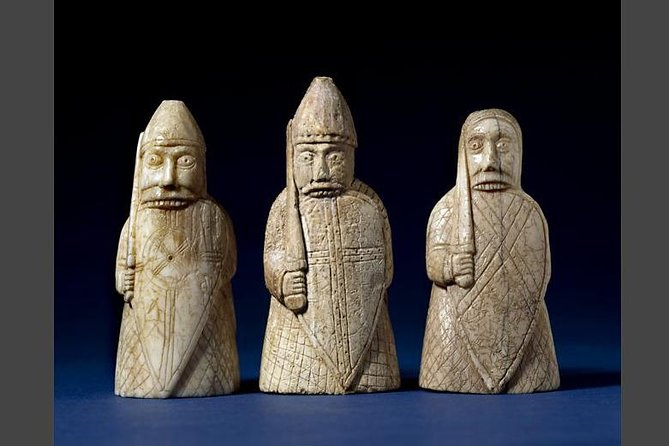
The Enlightenment Room offers a change of mood. Instead of focusing only on one civilization or period, it reflects the way European collectors and scholars once organized knowledge. It can help you understand how museums were formed and why the British Museum contains objects from so many parts of the world.
The Waddesdon Bequest provides another shift. It is known for decorative arts and finely made objects, so the appeal is in craftsmanship, materials, and detail. These displays can be easy to pass if you are rushing toward the museum’s biggest names.
This is where Robert’s approach seems particularly useful. Several groups valued his ability to point out objects they would otherwise have walked past. The tour is not only about the Rosetta Stone and Parthenon Marbles. It also gives time to pieces that reward a slower look.
If your group has different interests, tell the guide early. One person may want ancient Egypt, another may prefer art, and a child may have a particular object in mind. The private format makes those preferences easier to handle than a fixed group route.
Sutton Hoo, Lewis Chessmen, and Chinese art
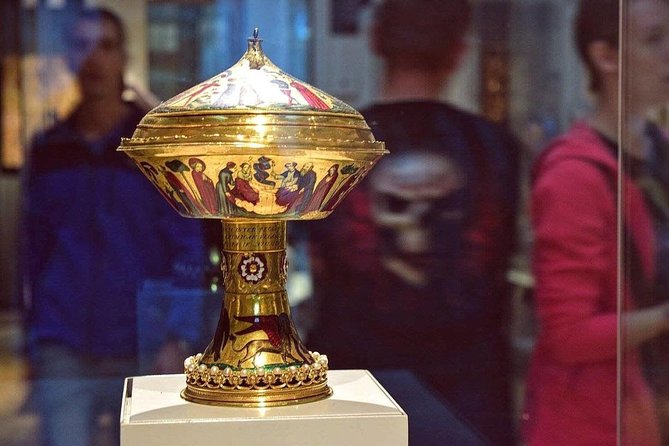
The Sutton Hoo Treasure brings early English history into the tour. Its objects help create a picture of status, burial customs, trade, and craftsmanship in early medieval Britain. The display is memorable because it links small objects to a much larger story about a buried ship and the society around it.
The Lewis Chessmen offer a different kind of connection. Their carved faces and familiar game pieces make them approachable, even for people who do not usually seek out medieval art. A guide can explain why these small figures matter and help you notice the character in their expressions.
Chinese works of art add another broad chapter to the visit. The collection can include objects with different uses and styles, and a guide can help you understand what you are seeing instead of leaving you to guess from a label.
These stops show the advantage of a three-hour overview. You can move between cultures and centuries without committing your entire day to one section. The tradeoff is that each area receives only limited time, so you should not expect a specialist-level study of every collection.
Easter Island and the objects between the famous ones
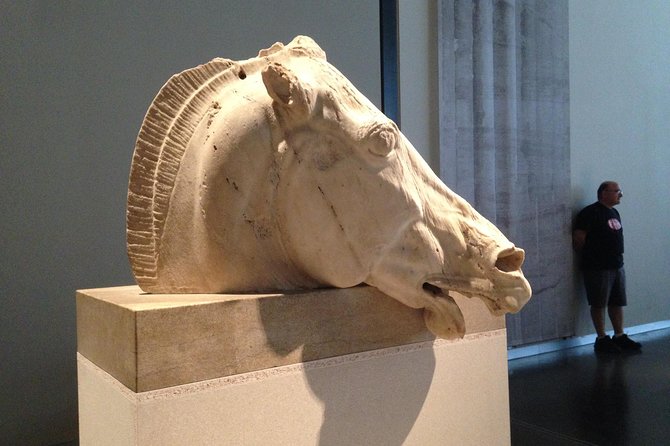
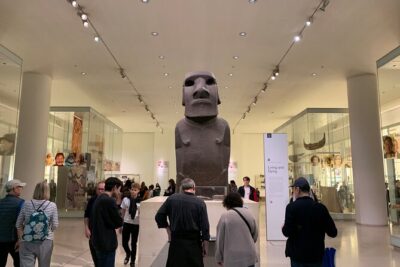
Hoa Hakananaia from Easter Island is another important stop named for this tour. The figure has a strong presence, but its significance reaches beyond its size and appearance. It invites questions about belief, community, craftsmanship, and the removal of cultural objects from their original setting.
A guide can give you the context needed to avoid treating it as a strange sculpture in a distant room. That context is one of the most valuable parts of a museum tour, especially in a collection assembled across centuries and continents.
The tour may also include prehistoric carving and many other objects selected around your interests. This is where the private format earns its keep. You can ask to spend more time on a subject that catches your attention, or move along when a display is not connecting with your group.
Do not expect a complete circuit of the museum. The British Museum is simply too large. The goal is a well-chosen introduction, not an attempt to see everything.
Robert Miller’s guiding style
The strongest pattern in the feedback is Robert’s ability to make information feel alive. His stories are described as captivating, amusing, and full of historical detail. He also seems comfortable with questions, which is important in a private tour where conversation can shape the pace.
His communication before the visit is another practical strength. Groups appreciated clear directions, early arrival, and help avoiding the worst of the entrance line. Those small details reduce stress on a busy London morning.
The guide also appears to work well with mixed-age groups. Families with teenagers and younger children found the three-hour visit engaging, while adults valued the art and historical context. The pace was praised as full rather than crammed, with enough time to listen and look.
One piece of feedback refers to a guide named Richard, but most of the detailed comments identify Robert Miller. If having Robert is important to you, confirm the guide’s name when you book.
Is $267.36 good value?
The price is $267.36 per group of up to six people, with admission tickets included. For six people, that works out to about $44.56 each. For a couple, the cost is about $133.68 per person, so the value depends heavily on group size and how much help you want inside the museum.
For a first visit, I can see the appeal. You are paying for direction, interpretation, crowd awareness, and a route shaped around your interests. You are also less likely to lose an hour wandering between galleries or reading every label without knowing which objects deserve your time.
For a solo visitor, the cost is harder to justify. You may prefer the museum on your own, especially if you enjoy moving slowly or returning to one collection. For a group of four to six, the private rate becomes more reasonable, particularly if this is your only British Museum visit.
The tour is also a good fit for families who want to avoid a long, unfocused museum day. Three hours gives you a firm stopping point before attention fades. You can then eat, rest, or continue sightseeing elsewhere in London.
The experience is booked an average of 71 days ahead, so popular dates may require planning. If your London schedule is fixed, I would not leave this until the last minute.
Morning or afternoon?
Both start times are useful, but they serve different plans. A morning tour gives you the best chance of reaching major objects before the museum fills. The early approach is especially helpful for the Rosetta Stone and for groups who dislike crowded rooms.
An afternoon tour may suit you if you are staying near the museum, visiting another attraction in the morning, or prefer a slower start to the day. The tradeoff is that the museum may be busier by then, and you could feel more pressure if you have evening plans.
Since the tour lasts about three hours and ends back at the museum, build in time afterward if you want to revisit a favorite gallery. Do not schedule a tight timed attraction immediately after it unless you are comfortable leaving as soon as the tour ends.
Who should book this private visit?
I would recommend it most strongly to:
- First-time visitors who want a clear route through a huge museum
- Families with children or teenagers
- Small groups who can share the cost
- People with limited time in London
- Anyone who prefers stories and conversation to reading labels alone
- Repeat visitors who want a new focus or better access to lesser-seen pieces
You may not need it if you have already studied the British Museum’s collections, prefer complete independence, or plan to spend most of the day in one specialist gallery. The tour moves at a purposeful pace, so it is less suited to someone who wants to linger for ten minutes at every object.
Service animals are allowed, and most people can participate. The experience is private, so only your own group joins the guide.
Cancellation and final practical advice
Free cancellation is available if you cancel at least 24 hours before the local start time. Cancellations or changes made inside that window are not accepted for a refund.
Before you go, choose two or three priorities for your group. Tell the guide if the Rosetta Stone, Egyptian material, the Parthenon Marbles, Sutton Hoo, Chinese art, or another collection matters most. That gives the three hours a clear shape without turning the visit into a rigid checklist.
Should you book it?
Book this tour if you want the British Museum to feel understandable rather than overwhelming. Robert Miller’s storytelling, early-arrival strategy, and ability to adjust the route are the strongest reasons to choose it. The experience has earned a five-star rating from 37 reviews, with 100 percent recommending it.
I would especially choose it for a family or group of four to six making a first visit. The price is less attractive for one or two people, but the time saved and the added context can still justify it if the museum is a major part of your London trip.
If you go alone and enjoy wandering, you can certainly visit independently. But if you want to see the key objects, avoid aimless miles through the galleries, and leave with a better sense of how to look at museum pieces, this private three-hour tour is a strong choice.
FAQ
Where does the British Museum tour start and finish?
It starts at the British Museum, Great Russell Street, London WC1B 3DG. The tour ends back at the same meeting point.
How long does the tour last?
The visit lasts approximately three hours.
Are British Museum admission tickets included?
Yes. Admission tickets to the British Museum are included in the tour price.
How many people can join the private tour?
The price covers a private group of up to six people. Only your group participates.
Can I choose a morning or afternoon start?
Yes. The tour offers both morning and afternoon options.
Is the tour available in English?
Yes. The tour is offered in English.
Just added around London
- The Private British Museum Tour★ 5.0 · 6 reviews
- London to Southampton Cruise Port | Private Transfer★ 5.0 · 6 reviews
- London’s Chinatown Food Experience★ 4.0 · 6 reviews
- London Gatwick (LGW) Airport Departure Private Transfer – Hotel to Airport★ 4.0 · 6 reviews
- Christmas in Canterbury, Dover and Greenwich with Christmas Lunch★ 4.5 · 6 reviews
- Transfer from Heathrow Airport to London hotel on private car★ 4.5 · 6 reviews
- Jazz Notes – Jazz Jam Ticket★ 5.0 · 6 reviews
- Transfer from London Stansted Airport to Central London★ 5.0 · 6 reviews
British Museum Tours, compared.
British Museum London Guided Tour Semi-Private 8ppl Max
Read our review →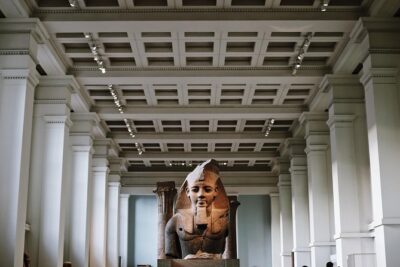
The British Museum London – Exclusive Guided Museum Tour
Read our review →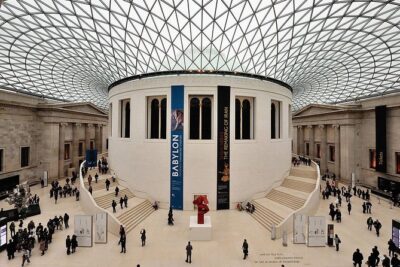
Private Guided Tour of the British Museum – Tickets Included
Read our review →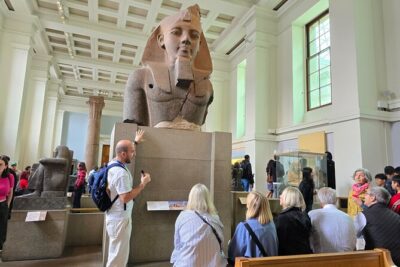
British Museum Guided Tour with Priority Timeslots(Small Group)
Read our review →
British Museum & National Gallery of London Semi-Private 8ppl Max
Read our review →
Explore Biblical Artifacts at the British Museum
Read our review →
British Museum Highlights Private Tour in London including the Rosetta Stone
Read our review →Browse the lists this tour appears in