
Reviewed · WALKING TOURS
Discovering Birmingham 2 hour Walking Tour to the Jewellery Quarter
Birmingham rewards curious walkers. This two-hour tour links Centenary Square with the Jewellery Quarter, using backstreets, city squares, and a little-used canal route that is easy to miss when you are exploring alone. I like the close-up view of Birmingham and the guide’s use of stories, objects, and humor to make the city’s past feel real. The main drawback is that a group of up to 40 people can feel large, and two hours only gives you an introduction.
I also like the practical route. You see major landmarks such as Birmingham Cathedral, but you also reach places that coaches and cars cannot. Guides including Jonathan Berg, Bernard, Ann, and Maria have been praised for their warmth, clear storytelling, and ability to keep the mood light in poor weather. Bring a coat or umbrella, since the tour runs in rain and may only change its route during icy conditions.
In This Review
- Key points to know before you book
- Why this Birmingham walk works so well
- Starting in Centenary Square at 1:30 pm
- Entering the Jewellery Quarter by canal
- Seeing the Jewellery Quarter church from outside
- Birmingham Cathedral and the chance to see Burne-Jones glass
- St Chad’s and the cost of postwar redevelopment
- Victoria Square and Chamberlain Square
- A guide who teaches with stories and objects
- Is $20.80 good value for two hours?
- Who should book this walking tour?
- My verdict: book it for the stories, not just the sights
- FAQ
- Where does the Birmingham walking tour start?
- What time does the tour begin?
- Where does the tour finish?
- Is the tour conducted in English?
- Is Birmingham Cathedral included?
- What happens if it rains or the weather is icy?
Key points to know before you book
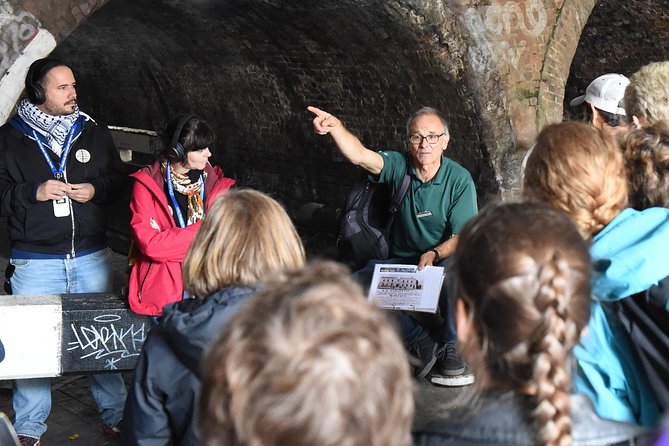
- A secret canal approach reaches the Jewellery Quarter: The route uses a lesser-known way into one of Birmingham’s most characterful districts.
- The tour begins and ends at the Library of Birmingham: Meet in Centenary Square at 1:30 pm, then return to the same place after about two hours.
- Jonathan Berg adds props and personal insight: His bag of historical objects has been described as a museum on the streets, giving the talk a hands-on feel.
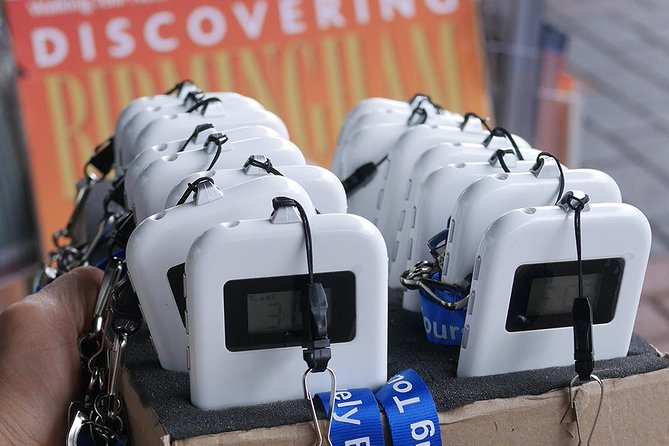
- You hear the guide clearly with a loaned receiver: This matters in a group of up to 40 people, especially on busy streets.
- The route connects old Birmingham with its rebuilt center: Georgian buildings, Victorian and Baroque churches, postwar roads, new public spaces, and modern development all appear.
- The $20.80 price includes a local guide and equipment: There are no extra admission charges for the tour, though entry inside Birmingham Cathedral is not guaranteed.
Why this Birmingham walk works so well
Birmingham is easy to underestimate if you only see it from a car window. This tour fixes that by slowing the city down to walking pace. You move from a modern public square to old religious buildings, canals, workshop districts, roads shaped around cars, and newly redesigned civic spaces.
I like that the experience does not treat the city as a collection of isolated sights. The guide explains how different parts of Birmingham developed and how today’s city is still changing. You get enough background to understand what you are looking at, but the format remains active rather than turning into a long indoor lecture.
The route also suits people who want an introduction before exploring alone. A guide can point out details you might pass without noticing, then give you a map or useful ideas for the rest of your stay. One particularly generous touch associated with Jonathan Berg is a free book for participants, although you should not assume every departure includes the same gift.
The tour is conducted in English. A loaned audio receiver lets you hear the guide from some distance, which is useful when the group spreads out around a square or narrow street. Still, this is a walking tour, not a private visit. With a maximum of 40 people, you may sometimes need to stay close to the guide.
More Walking Tours in Birmingham
- Birmingham Walking Tour: Canals, Victorians & Today (1:30pm)
★ 5.0 · 346 reviews - Birmingham Slogging Gangs Walking Tour with Edward Shelby
★ 4.5 · 306 reviews - Birmingham City Centre Daily Walking Tour (10:30am & 2pm)
★ 5.0 · 265 reviews
Starting in Centenary Square at 1:30 pm
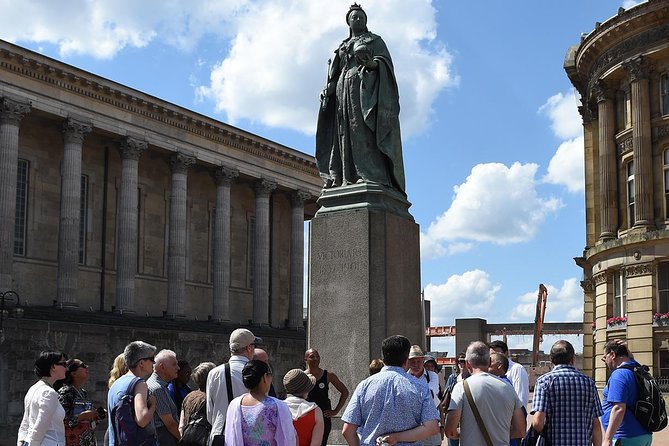
The meeting point is beside the Library of Birmingham in Centenary Square. This is a practical starting place because the square provides room for the group to gather, and the nearby library is easy to identify in the city center.
The opening 20 minutes use the square and its surroundings to introduce Birmingham. You begin with the city itself rather than rushing straight to a famous building. That helps you understand how the central area fits together before the walk moves into older streets and the Jewellery Quarter.
This first section is also useful for orientation. If you have just arrived, you can get your bearings around the library, central squares, and major pedestrian routes. I would arrive a little early, especially if you are unfamiliar with Birmingham or need to find the exact meeting point.
Centenary Square is open air, so weather matters from the first minute. The operator tries to run the tour in adverse weather, so a waterproof coat or umbrella is sensible. The route may be adapted in icy conditions, but rain alone is not a reason to expect cancellation.
Entering the Jewellery Quarter by canal
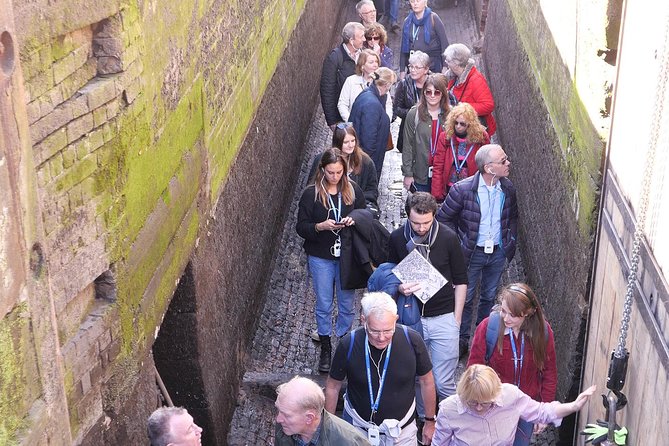
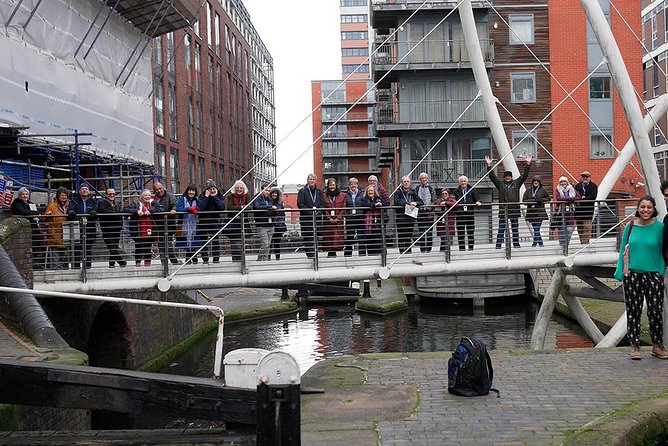
The walk’s most unusual section is the route into the Jewellery Quarter. Instead of simply approaching along a main road, the group enters by what is described as a secret canal route, a path even many local people have never used.
That choice gives the tour a stronger sense of discovery. The Jewellery Quarter is famous for jewelry production, but its character is easier to understand when you see how it connects with canals, narrow routes, workshops, and the wider city. The guide explains how the district developed from Georgian times and how different kinds of business took root there.
You also look at the Quarter as a living part of modern Birmingham. The point is not to preserve it in the past. The tour considers how older industrial and commercial buildings now sit alongside new uses and current development.
Allow about 30 minutes for this portion. That is enough time for a clear introduction, but not enough to examine every street or building. If you want a longer visit to the Jewellery Quarter afterward, this tour gives you the background to do it with more purpose.
A small caution: canal paths and backstreets can be less even than a broad city pavement. The tour asks for a moderate level of fitness, and you should expect to walk continuously for about two hours. Comfortable shoes matter more here than fashionable ones.
Seeing the Jewellery Quarter church from outside
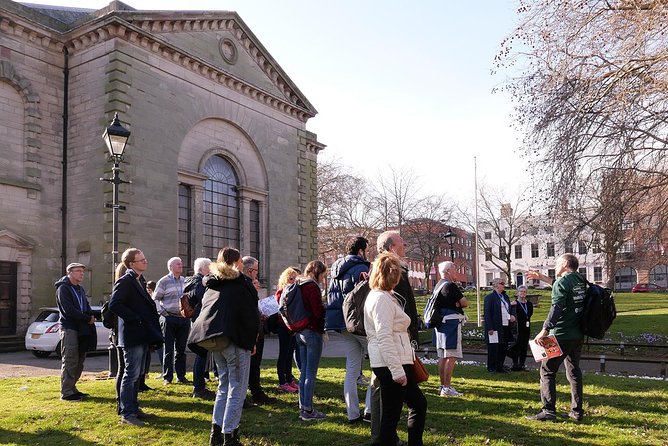
The walk includes an outside view of the church known as the Jewellery Quarter church, a Georgian building dating from 1779. Even without an interior visit, this stop helps show the district’s age and civic importance.
The building is a useful contrast to the workshops and canals. You begin to see that the Quarter was not only a place of trade. It also had religious, social, and residential life, with architecture that reflected the ambitions of Georgian Birmingham.
The stop is brief, so do not expect a full architectural tour. Its value comes from the explanation around it, especially the way the guide connects the church with the growth of the surrounding district.
More Walking Tours:
- Birmingham Gangs Nighttime Historical Walking Tour with Pub Stops
★ 5.0 · 53 reviews - 2.5-Hours Walking Tour of Birmingham into Black Heritage Madiba
★ 5.0 · 49 reviews - Birmingham Private Self-Guided Walking Tour
★ 4.0 · 13 reviews - Oxford University Walking Tour With University Alumni Guide
★ 5.0 · 6,905 reviews
Birmingham Cathedral and the chance to see Burne-Jones glass
The tour then turns toward Birmingham Cathedral, a fine example of English Baroque architecture. The scheduled stop is only about five minutes, but the building gives the route a change of scale after the smaller streets and canal paths.
On some departures, if time allows and no conflicting event is taking place, the group may go inside to see the Edward Burne-Jones stained glass. This is an important qualification. Interior access is possible, not promised, so you should not book the tour solely for the stained glass.
Even from outside, the cathedral helps explain the city’s changing identity. The tour does not present Birmingham as only industrial or modern. Religious buildings, civic spaces, and public art all form part of the story.
The short timing keeps the tour moving, but it also limits what you can absorb. If the cathedral is a priority, consider returning independently when you have more time. The tour’s main purpose is to place it within a larger walk rather than provide a detailed cathedral visit.
St Chad’s and the cost of postwar redevelopment
After seeing St Philip’s Cathedral and other central sights along the route, you view St Chad’s from the inner ring road. This is one of the more thoughtful parts of the experience because the guide uses the setting to discuss postwar redevelopment and the era when the car shaped city planning.
You are invited to consider Birmingham’s redevelopment for yourself. Was the city planned well? What was lost when roads and traffic took priority? How should the center be reshaped now? These questions give the tour more bite than a simple procession of dates and building names.
The viewpoint beside the inner ring road may not be the prettiest part of the walk. Traffic and road noise can affect the atmosphere, and this is not a quiet churchyard stop. That is also the point. The setting lets you see how planning decisions affect the experience of moving through a city.
I value this kind of stop because it connects history with the Birmingham you see today. You are not only learning what happened long ago. You are looking at the results of those choices and thinking about what comes next.
Victoria Square and Chamberlain Square
The walk returns toward the Library of Birmingham through several important city squares. At Victoria Square, you see St Philip’s Cathedral and other central features before continuing to Chamberlain Square.
The Victoria Square section lasts about 10 minutes. It works as a bridge between the older buildings and the city’s civic core. The guide can pull together the different parts of the route, helping you see how religious buildings, public art, government, commerce, and pedestrian spaces meet in central Birmingham.
Chamberlain Square receives a shorter stop of about five minutes. Its recent renovation offers a clear look at how Birmingham is trying to reconfigure the center for the future. After walking through older areas, this modern public space gives you a chance to compare different ideas about how a city should work.
These squares are also practical reference points for the rest of your visit. Once the tour ends back at Centenary Square, you are close to the library and central attractions, so you can continue exploring without needing another long transfer.
A guide who teaches with stories and objects
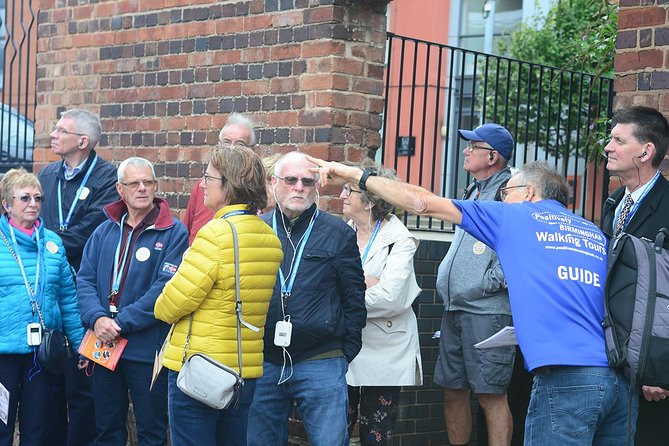
The strongest part of this experience is the guiding. Jonathan Berg is praised for witty storytelling, enthusiasm, and the use of historical objects. His props help turn abstract information into something you can look at and discuss.
That style will suit you if you enjoy facts delivered with personality. The guide may use humor to keep the group engaged, and the tour has an interactive quality rather than a strictly scripted feel. Bernard has also been praised for keeping the mood cheerful during persistent rain, while Ann and Maria have led enjoyable departures as well.
The tone appears warm rather than formal. You should expect stories, questions, and connections between buildings, not a dry list of construction dates. A Birmingham local may still learn something new. One long-time resident described crossing a canal bridge they had never used during decades in the city, which tells you how effectively the route gets beyond familiar paths.
The audio receiver is a useful part of the package. It means you do not have to stand shoulder to shoulder with the guide at every stop. Even so, keep an eye on the group and listen for movement, since city streets are not a controlled museum setting.
Is $20.80 good value for two hours?
At $20.80 per person, the tour is fairly priced for a two-hour guided walk, particularly because the cost includes a local guide and an audio receiver. There are no entry tickets required, so you do not face a series of small extra charges during the route.
The value comes from access and interpretation rather than admission. You are paying for a route that uses places you might not find alone, plus the guide’s ability to explain how the Jewellery Quarter, churches, canals, roads, and civic squares connect.
The price looks even better if you use the walk as a first-day orientation. It can help you decide where to spend the rest of your time, and the free book and map associated with some departures may add practical value. Still, the tour is not designed as a full-day exploration. You will need to return to the Jewellery Quarter or cathedral later if you want long visits inside specific sites.
A group of up to 40 people is the main value tradeoff. You get a lower price than a private tour, but less flexibility and less chance to ask long individual questions. The receiver reduces this problem, though it cannot make the experience feel personal for everyone.
Who should book this walking tour?
I would recommend it to first-time visitors who want a useful introduction to Birmingham without spending half a day indoors. It also suits people who enjoy architecture, city planning, industrial history, public spaces, and local stories.
It is especially appealing to former Birmingham residents. The route may show you familiar places from a new angle, including canal crossings and details you have walked past for years. It also works well as a staycation activity for local people who want to understand their own city better.
You should think twice if you dislike walking in rain, need guaranteed indoor access, or prefer a very small group. The cathedral interior is not assured, the group can reach 40 people, and the tour continues in wet weather.
The moderate fitness requirement is worth taking seriously. You will be outdoors for about two hours, moving through streets, squares, back routes, and canal areas. Bring suitable footwear and clothing, and remember that the route may change in icy conditions.
Free cancellation is available if you cancel at least 24 hours before the 1:30 pm start. Changes or cancellations made inside that window are not refunded, so check the local cut-off time before making last-minute plans.
My verdict: book it for the stories, not just the sights
I would book this tour if I wanted to understand Birmingham quickly and see how its old and new parts fit together. The canal approach to the Jewellery Quarter, the discussion of car-led redevelopment, and the guide’s objects and humor make it more personal than a basic landmark walk.
The experience is not perfect. Two hours passes quickly, the cathedral visit may remain outside only, and a group of 40 is not intimate. But at $20.80, it offers a strong introduction and sends you off with better context for the rest of your stay.
Book it early if your schedule is fixed, since it is often reserved about three weeks ahead. Choose this walk when you want Birmingham explained by someone who clearly cares about the city, then leave time afterward to revisit the places that catch your eye.
FAQ
Where does the Birmingham walking tour start?
It starts at the Library of Birmingham in Centenary Square, Birmingham B1 2ND, UK.
What time does the tour begin?
The tour starts at 1:30 pm.
Where does the tour finish?
The activity ends back at the meeting point in Centenary Square.
Is the tour conducted in English?
Yes. The tour is offered in English.
Is Birmingham Cathedral included?
The tour includes a visit to the cathedral area. If time allows and there is no conflicting event, the group may go inside to see the Edward Burne-Jones stained glass, but interior access is not guaranteed.
What happens if it rains or the weather is icy?
The tour normally runs in adverse weather, so bring a suitable coat or umbrella. In icy conditions, the route may be adapted.
Just added around Birmingham
- Birmingham to Heathrow Airport private taxi transfers★ 5.0 · 7 reviews
- Best of Birmingham 12km Running Tour★ 5.0 · 12 reviews
- Birmingham Private Self-Guided Walking Tour★ 4.0 · 13 reviews
- On the Origins of Charles Darwin: A Self-Guided Audio Tour of Shrewsbury★ 4.5 · 16 reviews
- Taste of Shrewsbury Food and Drink Tour with Guide★ 5.0 · 22 reviews
- Cotswolds Full-Day Tour From Birmingham★ 4.5 · 30 reviews
- From Birmingham Stonehenge and Bath Day Tour★ 4.5 · 33 reviews
- Birmingham Ghost Hunt: Haunted Self-Guide Tour & Quest★ 4.5 · 37 reviews
Walking Tours, compared.

Oxford University Walking Tour With University Alumni Guide
Read our review →
Tour for Muggles The Ultimate Harry Potter Walking Tour in London
Read our review →

Cambridge University Walking Tour by Alumni™ Kings College Option
Read our review →
Blackbeard to Banksy – The Ultimate Walking Tour of Bristol
Read our review →
Air Raid Shelter + St. Nicholas Market Walking Tour
Read our review →
Walking Tour of Bath with Blue Badge Tourist Guide
Read our review →
Changing of the Guard Guided Walking Tour in London
Read our review →Browse the lists this tour appears in