
Reviewed · WALKING TOURS
Guided Walking Tour of Bristol Old City and Harbour
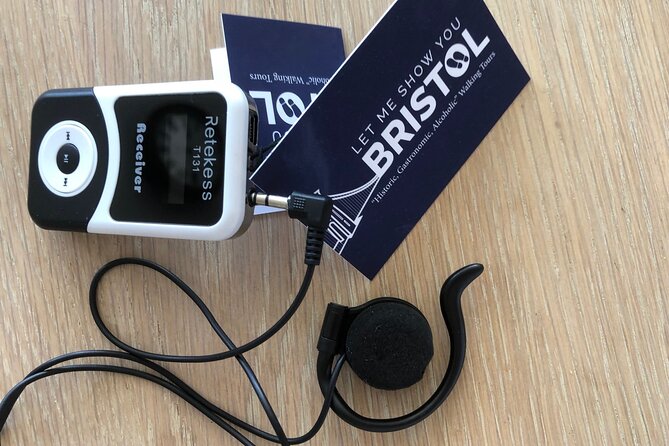
Bristol reveals itself on foot. This 2-hour-15-minute walk links the cathedral, harbour, Old City, street art, and trading landmarks in one well-packed route. I like the small maximum of eight people, and I like that every guest receives an audio receiver, so you can hear guide Mike even beside busy roads or crowded waterfront spots. The main point to consider is the pace: you cover a lot of ground, and comfortable shoes are essential.
At $29.86 per person, this is a good-value introduction if you are new to Bristol or want help putting its scattered sights together. Mike brings a personal feel, with stories about residents, historic buildings, Banksy murals, and modern Bristol. The tour can run a little longer than advertised, which gives the walk breathing room, but you should still be ready for a steady outing rather than a short stroll.
In This Review
- Key points to know before you book
- Why this Bristol walk works as a first introduction
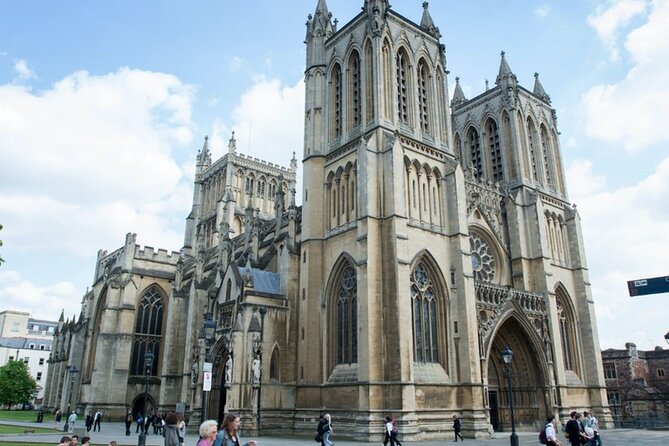
- College Green and Bristol Cathedral
- Canon’s Marsh and the working waterfront
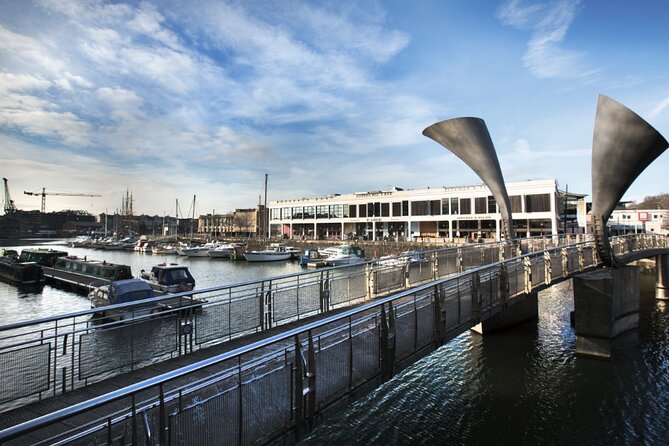
- Bristol City Docks and Pero’s Bridge
- Prince Street Bridge, M Shed, and the Matthew
- Bathurst Basin and Redcliffe’s stories
- Queen Square, the King William statue, and a literary pub
- Bristol Old Vic, King Street, and Welsh Back
- Baldwin Street and the Old City
- St John on the Wall and Bristol’s surviving gate
- Edward Colston and the return to College Green
- Pace, equipment, and value at $29.86
- Who should book this Bristol walking tour?
- Should you book it?
- FAQ
- Where does the tour start?
- What time does the tour begin?
- How long does the walking tour last?
- How many people can join the tour?
- Is an audio device provided?
- Is the tour offered in English?
- What should I bring?
- Can I cancel for a refund?
Key points to know before you book
- A full central-Bristol circuit: The route joins College Green, the harbour, Queen Square, King Street, Baldwin Street, and the Old City.
- Audio receivers included: You can follow the commentary without crowding around the guide.
- Small-group format: With a maximum of eight people, questions and conversation are easier than on a large coach-style tour.
- Strong local storytelling: Mike covers Bristol’s Saxon beginnings, maritime trade, famous residents, churches, street art, and changing social history.
- Banksy and street-art context: The walk points out places connected with Bristol’s street-art culture, not just the major monuments.
- Plan for walking: The route is roughly two and a quarter hours, with enough ground covered that water, weather-ready clothing, and sensible shoes matter.
Why this Bristol walk works as a first introduction
Bristol is not a city you understand from one square or one grand avenue. Its story is spread between College Green, the floating harbour, Queen Square, the old commercial streets, and small remnants of medieval Bristol. This tour earns its keep by connecting those pieces.
You begin at the Bristol Marriott Royal Hotel on College Green at 2:00 pm. From there, the route moves through ten short viewing stops rather than taking you inside a long list of paid attractions. Admission is free at each listed stop, so your fee pays for the guide, the route, the commentary, and the work of making sense of what you see.
I especially like the audio equipment. A walking guide can lose half a group when traffic, wind, or other conversations get in the way. Here, the receiver lets you keep looking at the building or view while listening. That is a small practical feature, but it can make a large difference.
The group limit is another real advantage. Eight people is small enough for questions, and the guide can adjust the explanation when a particular subject catches your interest. One person with a strong interest in street art, for example, received extra attention on that part of the walk. That personal touch is harder to manage with 20 or 30 people.
More Walking Tours in Bristol
- Blackbeard to Banksy – The Ultimate Walking Tour of Bristol
★ 5.0 · 1,961 reviews - Air Raid Shelter + St. Nicholas Market Walking Tour
★ 5.0 · 1,950 reviews - Ghosts, Ghouls & Gallows :The Original Bristol Ghost Walk
★ 5.0 · 262 reviews
College Green and Bristol Cathedral
The first stop brings you to Bristol Cathedral and the buildings around College Green. You also look toward St Marks, the Council House, Park Street, and the Well Hung Lover, one of the better-known works associated with Bristol’s street-art scene.
This opening section gives you several layers of Bristol at once. The cathedral represents the city’s religious and architectural past, while the nearby civic buildings show its role as a modern regional centre. Park Street adds a different feel, with its climb and dense run of buildings.
The Well Hung Lover is a useful early reminder that Bristol is not presented as a city frozen in the past. The tour joins formal architecture with contemporary art and explains how the city’s public character has changed. If you want only medieval churches, this may feel broad. If you want to understand Bristol as a living place, the mixture works well.
You spend about ten minutes here. That is enough for an orientation and photographs, but not an architectural inspection of the cathedral interior. The experience is primarily an outdoor walking tour, so do not expect extended indoor visits.
Canon’s Marsh and the working waterfront
The walk then heads toward Canon’s Marsh, where you view Oporto Quay, Limekiln Dock, cranes, and shipping. This is where Bristol’s relationship with water becomes much easier to read.
The harbour area is not just a scenic stretch for photographs. The docks help explain how Bristol grew, traded, and connected with the wider world. Cranes and dock structures give the setting a practical edge, while the quays show how old waterfront spaces have been adapted for present-day use.
I find this part valuable because a guide can point out the difference between simply seeing water and understanding why the water is there. The commentary helps you connect the harbour to Bristol’s economic story instead of treating it as a pleasant walk beside boats.
You spend around ten minutes at Canon’s Marsh. The short stop keeps the tour moving, though anyone who likes lingering beside the water may want to return later on your own. The tour is designed to give you a map of the city, not to exhaust every dockside view.
Bristol City Docks and Pero’s Bridge
From Canon’s Marsh, you walk through Bristol City Docks toward the medieval trench. The route crosses Pero’s Bridge and continues to Arnolfini.
This is one of the most effective transitions on the walk. You move from working dock features into spaces where Bristol’s medieval and modern identities meet. Pero’s Bridge is a memorable landmark in its own right, and the walk uses it as a visual link across the harbour.
The harbour section also helps you understand Bristol’s scale. You are not simply being taken from one isolated monument to another. The route shows how the docks shape the city centre and how different districts sit around the water.
Expect another ten-minute stop. The pace is generally steady, but the total route means you should not treat every stop as a long break. If your walking ability is reduced, tell Mike early. One tour was adjusted when a participant experienced a health problem, and the guide was able to change the plan to suit the group.
More Walking Tours:
- Guided Walking Tour Suspension Bridge Clifton Splendour & City.
★ 5.0 · 100 reviews - Bristol Harbourside Self-Guided Walking Tour
★ 4.5 · 12 reviews - Oxford University Walking Tour With University Alumni Guide
★ 5.0 · 6,905 reviews - Tour for Muggles The Ultimate Harry Potter Walking Tour in London
★ 5.0 · 4,684 reviews
Prince Street Bridge, M Shed, and the Matthew
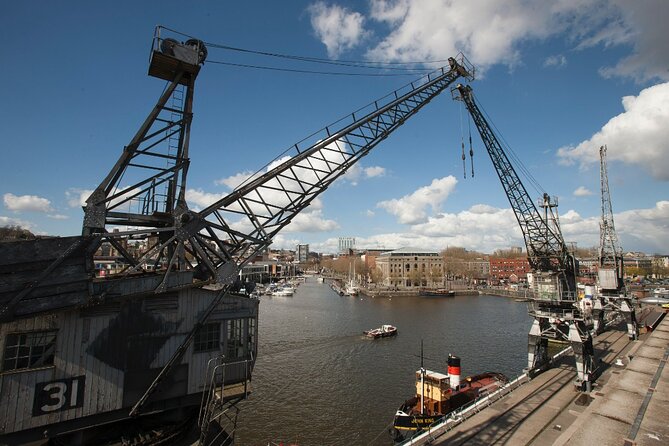
Prince Street Bridge brings another set of recognizable Bristol sights into view. From the bridge, you see M Shed, the Matthew, Container Village, and old prison ruins.
A bridge is a smart viewing point because it lets you take in several parts of the harbour at once. M Shed adds Bristol’s social and civic story, while the Matthew recalls the city’s seafaring connections. Container Village gives the waterfront a newer, more informal layer.
The old prison ruins are the sort of detail you could easily miss when walking alone. This is where a guide’s route planning matters. Mike uses photographs, drawings, and other visual material to show how Bristol has changed, which can make fragments and altered buildings easier to understand.
Again, the stop lasts about ten minutes. You get a strong overview, but the tour does not include admission to M Shed or any other attraction. If a museum visit interests you, make a separate plan for it.
Bathurst Basin and Redcliffe’s stories
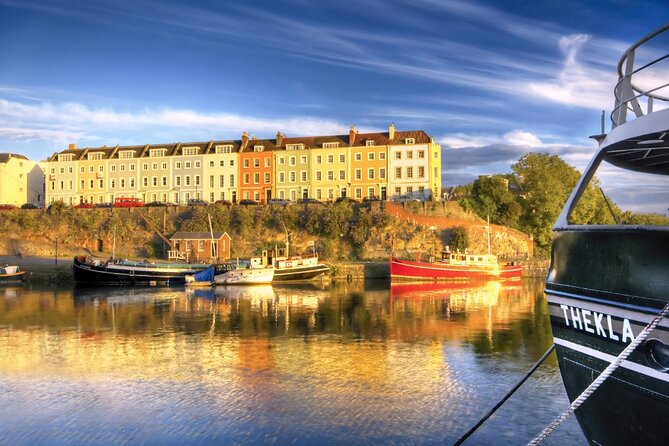
At Bathurst Basin, the walk takes in the Old Mill Pond, Guinea Street, the houses of former slave captains, the setting associated with A House Through Time, and Redcliffe Church.
This is one of the more thought-provoking sections because it connects attractive streets and waterfront views with difficult parts of Bristol’s past. The references to slave captains’ houses place the city’s wealth in a wider historical context. That makes the walk more useful than a simple parade of handsome buildings.
Redcliffe Church adds another landmark to the route, while Guinea Street and the basin show how residential and commercial areas developed around the docks. You are given stories about Bristol residents as well as buildings, so the city feels shaped by people and decisions, not just dates.
The scheduled stop is about ten minutes. The subject matter deserves attention, and the guide’s commentary is especially useful here because the visual evidence alone cannot explain the connections.
Queen Square, the King William statue, and a literary pub
The route works around the docks to Queen Square, where you see the King William statue and the American Consulate. You also hear about the Spy Glass Inn, linked with Treasure Island.
Queen Square offers a change from the tighter harbour spaces. Its open layout makes it easier to pause and take in the surroundings. The King William statue provides a focal point, while the American Consulate adds a modern diplomatic connection.
The Treasure Island reference brings in Bristol’s place in popular imagination. It is a nice example of how the tour moves beyond official history into stories, books, and local associations. Mike is also happy to suggest pubs and restaurants for the rest of your stay, which can be useful when you are still finding your way around.
This is the longest listed stop, at about 15 minutes. Even so, the walk remains active. If you have been sightseeing since morning, use the short pauses to drink water rather than assuming you will get a long café break. Coffee and tea are not included.
Bristol Old Vic, King Street, and Welsh Back
Next comes the Bristol Old Vic, along with King Street and Welsh Back. This section shifts attention toward theatre, historic streets, and the city’s cultural life.
The Old Vic gives the route a strong performing-arts connection. King Street and Welsh Back then broaden the view, showing how old commercial and waterfront areas sit close to modern Bristol. The tour does not ask you to enter the theatre, but the exterior and surrounding streets help place it within the city centre.
This is a good point for questions. If you are interested in theatre, architecture, trade, or the way Bristol’s districts connect, the small group makes it easier to stop and ask. You may also get suggestions for places to return to later.
The stop lasts around ten minutes. The walk is full of such compact sections, so expect a lot of information delivered in manageable pieces rather than one long lecture.
Baldwin Street and the Old City
Baldwin Street is the gateway to the Old City portion of the walk. Here, the guide explains the origins of Bristol as a Saxon settlement, then leads you toward Castle Park and the old commercial core.
You see churches, law courts, merchants’ trading areas, the Corn Exchange, the Nails, and former guild meeting places. This is where Bristol’s early civic and trading identity comes into focus.
The Nails are particularly useful for understanding how commerce was conducted in the old city. Rather than passing through streets without context, you learn how merchants used these places and how guilds shaped local life. The law courts and churches add civic and religious layers to the same compact area.
This ten-minute section covers a lot. Mike is praised for remembering dates, names, and places, and his use of old drawings or photographs helps show how the streets evolved. The amount of material is a strength, but it also explains why the tour can feel packed. You need to listen actively if you want to retain every detail.
St John on the Wall and Bristol’s surviving gate
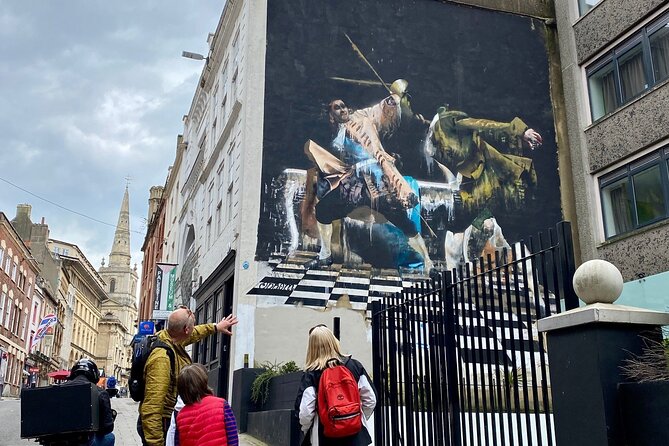
The walk continues through St John on the Wall, one of the remaining Old City gates. You also see the conduit and examples of street art.
This is the kind of stop that makes a guided walk worthwhile. A surviving gate can look like an unusual piece of masonry until someone explains its place in the city’s defenses and street plan. The conduit adds another practical detail from Bristol’s earlier urban life.
The street art brings the story into the present again. Bristol is strongly linked with Banksy, and the tour helps you find murals and understand their place in the city rather than simply hunting for a famous image. Works can change or disappear, so the emphasis is on seeing the city’s art culture in context.
You spend about ten minutes here. The route includes old stonework and uneven urban surfaces, so sensible footwear is more than a polite suggestion.
Edward Colston and the return to College Green
The final section covers the statue of Edward Colston, the Colston-related memorial area, the Cenotaph, and the return to the Marriott starting point.
This ending gives the tour a direct route into Bristol’s modern debates about public memory. Edward Colston is a significant and contested figure in the city’s story, and the stop allows the guide to connect monuments, civic memory, and changing ideas about whom cities choose to honor.
The route ends where it began, which is convenient for collecting a bag, meeting a taxi, or continuing your afternoon from College Green. The full walk is scheduled to take about 2 hours 15 minutes, though the guide has sometimes allowed extra time when the group is engaged and the pace permits it.
Pace, equipment, and value at $29.86
At $29.86, I consider this a fair price for a small-group tour lasting more than two hours. You are not paying for entrance tickets, food, or transport. You are paying for a local guide who organizes a complicated route and supplies the historical links that make the sights meaningful.
The audio receiver is an important part of that value. It lets Mike keep talking while you look around, and it reduces the need to gather tightly at every stop. With only eight people, you also get a better chance to ask questions than on a standard city group walk.
The pace is the main tradeoff. Several stops are only ten minutes, and the route covers a large central area. One direct description called it fast and suggested keeping up, while other experiences found the pace leisurely or relaxed. The practical answer is that the speed depends partly on the group and the day, but you should prepare for continuous walking.
Wear comfortable shoes, bring water, and dress for the weather. The tour requires good weather, and poor conditions can lead to a new date or a full refund. You can cancel for a full refund up to 24 hours before the 2:00 pm start time. Service animals are allowed, the meeting point is near public transport, and most people can participate, though the route may not suit anyone who struggles with sustained walking.
The tour is often reserved well ahead, with an average booking lead time of 76 days. If your Bristol dates are fixed, booking early is sensible, especially because the group limit is eight.
Who should book this Bristol walking tour?
I would choose this tour for a first visit, a short weekend, or the first afternoon of a longer stay. It gives you a working map of the centre and points out places you may want to revisit, including harbour areas, churches, Old City streets, museums, and street-art locations.
It also suits repeat visitors. The route is broad enough to reveal details you may have passed before, and the guide’s visual aids and local stories add more than a basic orientation.
This is less suitable if you want long indoor visits, a slow photography walk, or a tour focused only on Banksy. Street art is part of the story, but so are docks, trade, civic buildings, theatre, churches, and Bristol’s difficult links to slavery.
Should you book it?
Book it if you want a compact, personal introduction to central Bristol and prefer stories to a simple list of landmarks. Mike’s warmth, local pride, visual material, and easy conversation are major strengths, while the audio receivers solve one of the common problems with city walking tours.
Skip it if you dislike a steady pace or want plenty of time inside attractions. For most people who can comfortably walk for two and a quarter hours, the combination of harbour views, Old City streets, historic figures, and street art makes $29.86 good value.
FAQ
Where does the tour start?
The tour starts at the Bristol Marriott Royal Hotel on College Green, Bristol BS1 5TA, UK.
What time does the tour begin?
The tour starts at 2:00 pm.
How long does the walking tour last?
The advertised duration is approximately 2 hours 15 minutes. It may run a little longer depending on the group and the pace.
How many people can join the tour?
The maximum group size is eight travelers.
Is an audio device provided?
Yes. An audio receiver is provided so you can hear the guide clearly during the walk.
Is the tour offered in English?
Yes. The tour is offered in English.
What should I bring?
Wear comfortable shoes, bring water, and wear clothing suited to the weather. Coffee and tea are not included.
Can I cancel for a refund?
Yes. You can cancel at least 24 hours before the start time for a full refund. Cancellations or changes made less than 24 hours before the tour are not accepted.
More City Tours
- Bristol Old City Food & drink Tour
★ 5.0 · 15 reviews - Afternoon Bath City Tour – Private tour from Bristol with a local guide
★ 5.0 · 7 reviews - Liverpool: “Blue Route” – City & Beatles Tour
★ 5.0 · 8,562 reviews - The Manchester City Stadium Tour
★ 5.0 · 4,176 reviews
Just added around Bristol
- Bristol private pub hopping and sightseeing with local guide★ 5.0 · 6 reviews
- Afternoon Bath City Tour – Private tour from Bristol with a local guide★ 5.0 · 7 reviews
- Brunel’s Bristol: A Self-Guided Tour from SS Great Britain to Clifton Bridge★ 4.5 · 11 reviews
- Bristol Harbourside Self-Guided Walking Tour★ 4.5 · 12 reviews
- Wine & Cheese in the Somerset Valleys – with Michelin-star lunch!★ 5.0 · 12 reviews
- 4 Day Tour in Cornwall, Devon and Stonehenge from Bristol★ 4.5 · 14 reviews
- Bristol Old City Food & drink Tour★ 5.0 · 15 reviews
- Cocktail Classes in Bristol, England★ 4.5 · 15 reviews
Walking Tours, compared.

Oxford University Walking Tour With University Alumni Guide
Read our review →
Tour for Muggles The Ultimate Harry Potter Walking Tour in London
Read our review →

Cambridge University Walking Tour by Alumni™ Kings College Option
Read our review →
Blackbeard to Banksy – The Ultimate Walking Tour of Bristol
Read our review →
Air Raid Shelter + St. Nicholas Market Walking Tour
Read our review →
Walking Tour of Bath with Blue Badge Tourist Guide
Read our review →
Changing of the Guard Guided Walking Tour in London
Read our review →Browse the lists this tour appears in