
Reviewed · HISTORICAL TOURS
History of London Photography Tour
London looks different through a lens. This two-hour walking tour links churches, banks, bridges, and monuments with practical photography advice and a steady stream of historical detail. You begin at St. Mary Woolnoth in the City of London and finish at Tate Modern, passing St. Paul’s Cathedral, Millennium Bridge, and views toward Tower Bridge along the way.
I like the hands-on camera coaching, especially because the guide helps people with different skill levels, from beginners to SLR owners who have slipped back into automatic settings. I also like the route’s mix of famous buildings and less obvious street views. The main drawback is that the tour may feel too focused on well-known sights if you arrive expecting a series of secret corners or unusual locations.
The price is $71.63 per person, which is fair if you want both sightseeing and instruction rather than a standard history walk. You receive a professional photography guide, advice on composition and camera technique, and plenty of chances to build a personal set of London images. Bring a camera or camera phone, since the equipment is not provided.
In This Review
- Key Points to Know Before You Book
- Why This Tour Works for More Than Camera Experts
- Starting Beneath St. Mary Woolnoth
- The Royal Exchange and Bank of England
- Guildhall and St. Mary-le-Bow
- St. Paul’s Cathedral in Twenty Minutes
- The Firefighters Memorial and Millennium Bridge
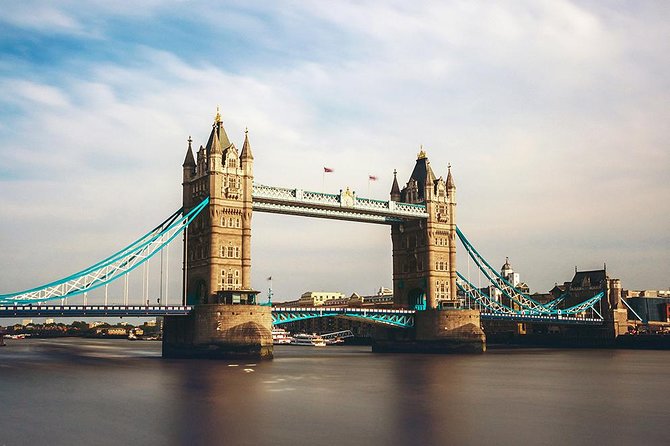
- Views Toward Tower Bridge
- Ending at Tate Modern
- The Value of $71.63
- Practical Details That Matter
- Who Should Book This London Photo Walk
- Should You Book the History of London Photography Tour?
- FAQ
- How long does the History of London Photography Tour last?
- What is the price per person?
- Where does the tour begin?
- Where does the tour end?
- Is a camera included?
- Who leads the tour?
- What locations are included?
- Is admission to the stops included?
- What is the maximum group size?
- Can the tour be canceled because of weather?
Key Points to Know Before You Book
- Start at St. Mary Woolnoth: Meet at IMPRINT Church London, 10 to 13 Lombard Street, beside one of the City’s most historic churches.
- Learn while walking: The guide offers practical help with settings, composition, lighting, and finding better angles.
- Follow a changing London story: The route moves from Roman-era religious traces and medieval guild power to the Blitz, modern bridges, and Tate Modern.
- Expect a small group: The maximum group size is 18 people, large enough for a social walk but not a private lesson.
- Finish at Tate Modern: The tour ends beside the former Bankside Power Station, with the South Bank and Millennium Bridge nearby.
- Plan around the weather: The experience requires good weather and may be rescheduled or refunded if poor conditions force cancellation.
Why This Tour Works for More Than Camera Experts
This is not a silent photo outing where you are left to wander with a camera. The point is to look closely, then make a picture with guidance from someone who understands photography.
That makes the tour useful for beginners who want simple help with camera settings. It also suits experienced photographers who have become comfortable with automatic mode and need a reason to experiment again. One participant specifically used the walk to refresh old SLR habits, which is a good sign for anyone who knows the basics but wants a practical push.
The teaching sounds relaxed rather than technical for its own sake. Guide Richard is praised for helping people get their settings in order before the walk, then offering support without making the session feel like a classroom. That matters in a mixed group, where one person may use a phone and another may carry a more advanced camera.
You should still keep your expectations sensible. The tour is only about two hours, and the group can include up to 18 people. You will receive useful advice, but this is not a full photography course or an individual portfolio review.
More Historical Tours in London
- London Small Group Tour of Historical Pubs
★ 5.0 · 10,422 reviews - Soho Music & Historic Pubs Tour
★ 5.0 · 1,993 reviews - Royal Historic Pubs Walking Guided Tour in London
★ 5.0 · 803 reviews
Starting Beneath St. Mary Woolnoth
The meeting point is St. Mary Woolnoth, at 10 to 13 Lombard Street. This church gives the tour a strong opening because it sits in the middle of London’s financial district while reaching far back beyond the office towers around it.
The site has been used for worship for at least 2,000 years. Traces of Roman and pagan religious buildings were found beneath the present church, which was rebuilt in 1727 to a design commissioned from Nicholas Hawksmoor. That combination gives you several photographic subjects in one place: the church’s architecture, the surrounding streets, and the contrast between old stone and modern finance.
You spend about 10 minutes here. That is enough time for an introduction, a few photographs, and a first lesson in looking for angles rather than simply pointing at the front entrance.
The Royal Exchange and Bank of England
The Royal Exchange follows, with another 10 minutes devoted to its architecture and photographic possibilities. This is one of the best places on the walk to think about symmetry, repeated columns, and the way a large building fills the frame.
The guide’s role here is important. A major building can produce a flat photograph if you stand in the obvious spot and shoot straight ahead. Advice on viewpoint, composition, and available light can help you make a more deliberate image.
Next comes the Bank of England, where you spend about 15 minutes. The building is packed with history and imposing architectural details. You might find this part especially useful if you enjoy photographing facades, stonework, entrances, and strong lines rather than only postcard views.
The financial district can also be visually demanding. Streets are tight, buildings are tall, and the best position is not always clear. A professional photographer can help you decide what to leave out of the frame, which is often as useful as deciding what to include.
Guildhall and St. Mary-le-Bow
At Guildhall, the tour turns toward medieval London. The building is about 800 years old and known for its Gothic character. The suggested stop lasts 15 minutes, giving you more time than some of the churches and smaller monuments.
Guildhall is a good lesson in scale. You can work with the whole facade, then look for smaller details that suggest age and power. The historic setting also adds context to the City of London, which can otherwise seem like a district of banks and modern office blocks.
St. Mary-le-Bow comes next for about 10 minutes. Tradition says that a true Cockney must be born within earshot of the church bells. That detail gives the stop a lively local connection, even if your main goal is architectural photography.
The church is another chance to practice framing a familiar London subject in a less predictable way. The tour promises artistic views rather than a simple checklist of landmarks, though the overall route still includes many places you will recognize from guidebooks.
More Photography Sessions in London:
- Professional Photoshoot in London Photographer
★ 5.0 · 102 reviews - Private landmarks photoshoot for families and couples
★ 5.0 · 92 reviews - Professional Private Photoshoot in London
★ 5.0 · 63 reviews - Private Tour: Night Photography Tour in London
★ 5.0 · 48 reviews
St. Paul’s Cathedral in Twenty Minutes
St. Paul’s receives the longest stop, about 20 minutes, and rightly so. Sir Christopher Wren’s cathedral is one of London’s most recognizable buildings, but recognition does not guarantee a good photograph.
The guide can help you work out how to handle the cathedral’s size, surrounding streets, and changing viewpoints. You might focus on the dome, the facade, a detail in the stonework, or the relationship between St. Paul’s and nearby city buildings.
The cathedral also brings a large amount of national history into the walk. Catherine of Aragon married Prince Arthur here in 1501. Queen Elizabeth I visited after the defeat of the Spanish Armada in 1588. The church is also linked to the grim punishment of Guy Fawkes and his fellow conspirators after the Gunpowder Plot.
You do not need to memorize every historical detail to enjoy this stop. The useful point is that the guide connects the building to events that shaped Britain, then gives you time to make your own photograph of it.
The Firefighters Memorial and Millennium Bridge
The National Firefighters Memorial offers a different subject. The monument, created by sculptor John Mills, honors professional firefighters and the men and women who helped London survive the Blitz.
This is a strong stop for anyone who likes photographing people in sculpture, memorials, and dramatic poses. The statue’s setting among major London landmarks gives you a chance to combine a close subject with a larger city view.
The stop lasts 10 minutes. That is not long, but it is enough to try a close frame, a wider composition, or an image that places the memorial against the city behind it.
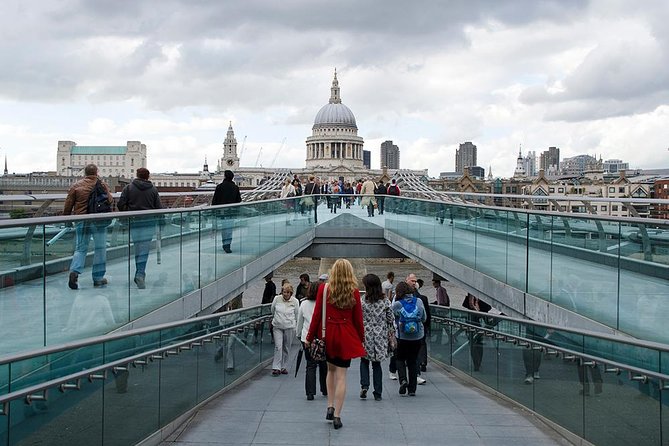
The Millennium Bridge follows for another 10 minutes. Opened on June 10, 2000, the 325-meter footbridge links Tate Modern with the City of London and St. Paul’s Cathedral. It provides one of the tour’s clearest opportunities for strong lines and perspective.
A bridge naturally guides the eye into the distance. Your guide can help you use that shape rather than treating it as a simple crossing. The connection between St. Paul’s, the bridge, and Tate Modern also gives you a chance to photograph London’s old and new sides in one frame.
Views Toward Tower Bridge
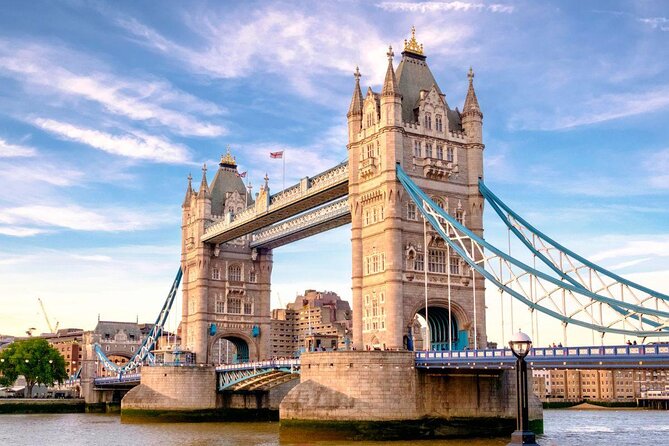
The route continues to a viewpoint for panoramic views of the River Thames and Tower Bridge. The listed stop is about 10 minutes, so do not expect an extended visit inside the bridge or a detailed tour of its machinery.
Instead, think of this as a city-view stop. Tower Bridge is one of London’s strongest subjects, but it can be photographed in predictable ways. The guide’s advice may help you decide how much river, sky, bridge structure, and surrounding city to include.
This is also one place where the weather matters. Bright sun, cloud, or poor visibility can change the result. Since the entire activity requires good weather, check the forecast before booking, especially if you care about clear river views.
Ending at Tate Modern
The tour ends at Tate Modern after about 10 minutes focused on the building and its surroundings. The gallery occupies the former Bankside Power Station, designed by Sir Giles Gilbert Scott, who also designed Battersea Power Station.
The old power station’s brick mass makes a fine final subject because it differs so sharply from the churches and banks earlier in the walk. Instead of finishing with another historic facade, you end with industrial architecture and the modern South Bank.
Tate Modern is Britain’s national gallery of international modern art, but admission to the gallery is not listed as part of the tour. The photography walk ends there, so you can continue independently if you want to visit the museum afterward.
Ending at Tate Modern is practical as well as photogenic. You finish near the Millennium Bridge and the river, with the final images of your walking portfolio likely to feel quite different from the first shots around Lombard Street.
The Value of $71.63
At $71.63 per person, this tour costs more than a basic sightseeing walk. The value depends on how much you want from the photography side.
If you already know your camera well and only want a guide to point out London landmarks, the price may feel high. You can see many of these buildings on your own. The route includes famous places, and one disappointed participant felt it offered ordinary tourist sights rather than rare views.
I think the price makes more sense if you want instruction at the same time as sightseeing. A good guide can save you from spending a whole afternoon taking flat, automatic photographs. You also receive historical background, help with camera technique, and a planned route between central London sights.
The maximum group size is 18. That is not a private photography lesson, but it is limited enough to allow some interaction. The strongest praise centers on the guide’s friendly and supportive approach, especially with mixed ages and abilities.
You should bring a camera or camera phone that you know how to operate. The tour can help with settings, but you will gain more if you arrive with a charged device and a willingness to try something beyond automatic mode.
Practical Details That Matter
The experience lasts approximately two hours and uses a mobile ticket. All listed stops are free admission, so you are paying for the guided walk and photography instruction rather than entry fees.
The route begins at St. Mary Woolnoth and ends at Tate Modern. It passes near public transportation, and service animals are allowed. Most people can participate, but the walk covers several central London locations, so comfortable shoes are a sensible choice.
The minimum age is listed as 18. The additional note says children must be accompanied by an adult and that both need paid tickets, so families should confirm how the age rule applies before booking.
The tour is non-refundable and cannot be changed for any reason after booking. If poor weather cancels it, you will be offered another date or a full refund. The same applies if the minimum number of participants is not met, with the option of a different experience or a full refund.
Who Should Book This London Photo Walk
I would recommend this experience to a visitor who wants a creative way to see central London without committing to a full-day photography class. It also suits local residents who know the landmarks but want fresh ideas for photographing familiar streets.
It is particularly good for:
- Beginners who want help with camera settings
- SLR users who rely too heavily on automatic mode
- Phone photographers interested in composition and viewpoint
- Visitors who enjoy architecture and British history
- People who prefer an interactive walk to a standard lecture
I would be more cautious if your main goal is to find obscure, rarely photographed corners. The route includes some backstreets and different angles, but it also visits St. Paul’s, Tower Bridge, the Royal Exchange, and other major sights. The experience is best understood as a guided creative look at well-known London, not a search for places nobody else has seen.
Should You Book the History of London Photography Tour?
Book it if you want to come away with better habits, not just more pictures. The most useful part is the combination of a professional photographer, a relaxed teaching style, and a route that gives you many different subjects in a short time.
I especially like that the guide works with mixed abilities and encourages experimentation. Richard’s support with camera settings and the friendly approach described by participants suggest a low-pressure session, which is ideal if you feel rusty.
Skip it if you only want a conventional London sightseeing walk, or if $71.63 feels too much for a route made up largely of free public sights. You can visit these landmarks independently. But if you want help seeing them differently, this is a practical and enjoyable way to spend two hours.
FAQ
How long does the History of London Photography Tour last?
The tour lasts approximately two hours.
What is the price per person?
The price is $71.63 per person.
Where does the tour begin?
It begins at IMPRINT Church London, St. Mary Woolnoth, at 10 to 13 Lombard Street, London EC3V 9AN.
Where does the tour end?
The tour ends at Tate Modern, Bankside, London SE1 9TG.
Is a camera included?
No. You need to bring a camera or camera phone to get the most from the experience.
Who leads the tour?
A professional photographer leads the walk. A guide named Richard is specifically associated with helping participants with camera settings and technique.
What locations are included?
The route includes St. Mary Woolnoth, the Royal Exchange, the Bank of England, Guildhall, St. Mary-le-Bow, St. Paul’s Cathedral, the National Firefighters Memorial, Millennium Bridge, views of Tower Bridge, and Tate Modern.
Is admission to the stops included?
The listed stops have free admission. The experience includes the guided photography walk, but entry inside Tate Modern is not listed as part of the tour.
What is the maximum group size?
The tour has a maximum of 18 participants.
Can the tour be canceled because of weather?
Yes. Good weather is required. If poor weather causes cancellation, you will be offered a different date or a full refund.
Just added around London
- The Private British Museum Tour★ 5.0 · 6 reviews
- London to Southampton Cruise Port | Private Transfer★ 5.0 · 6 reviews
- London’s Chinatown Food Experience★ 4.0 · 6 reviews
- London Gatwick (LGW) Airport Departure Private Transfer – Hotel to Airport★ 4.0 · 6 reviews
- Christmas in Canterbury, Dover and Greenwich with Christmas Lunch★ 4.5 · 6 reviews
- Transfer from Heathrow Airport to London hotel on private car★ 4.5 · 6 reviews
- Jazz Notes – Jazz Jam Ticket★ 5.0 · 6 reviews
- Transfer from London Stansted Airport to Central London★ 5.0 · 6 reviews
Historical Tours, compared.
Shadows of York: Ghost Walk and Horrible History.
Read our review →
A Walk Through Time: History of Liverpool Walking Tour
Read our review →
Royal Historic Pubs Walking Guided Tour in London
Read our review →
Private Group: Historical Pub Walking Tour of London
Read our review →
Best Of Liverpool Heritage, History & Culture Guided Walking Tour
Read our review →Browse the lists this tour appears in