
Reviewed · MUSEUMS
National Maritime Museum Private Tour
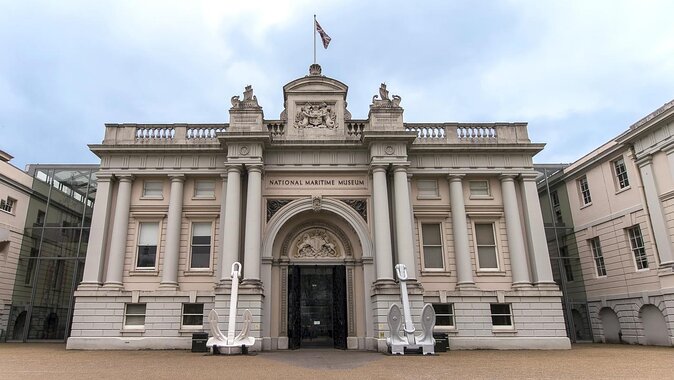
History comes alive around Greenwich. This private London tour gives you a focused way to see the National Maritime Museum, with Nelson’s wounded jacket and Turner’s Battle of Trafalgar as major highlights. I like the small-group format, which lets your guide shape the visit around your interests, and I like the honest treatment of Britain’s role in the Atlantic slave trade. The main drawback is pace: three and a half hours sounds generous, but Greenwich has a great deal to see, and a guide who talks at length can leave you wishing for more museum time.
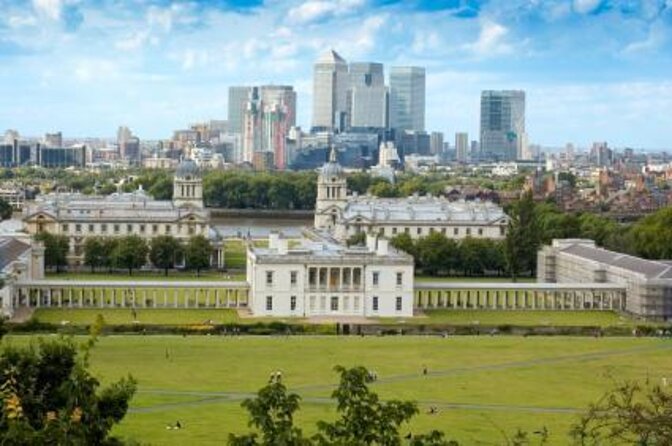
The tour also includes the Queen’s House and its famous Armada Portrait of Elizabeth I. That combination gives you war, trade, exploration, art, and painful colonial history in one outing. Still, the $237.59 per person price is high when the main museum admission is free, so the value depends on how much you want a private guide rather than simply access to the galleries.
In This Review
- Key points at a glance
- Starting beside Ship in a Bottle at 12:30
- Turner’s Battle of Trafalgar sets the tone
- Nelson’s coat makes naval history personal
- Trade, empire, and the East India Company
- A serious stop at the Atlantic Slavery gallery
- Lighthouses and a well-timed cafe pause
- Queen’s House and the Armada Portrait
- Is $237.59 per person fair value?
- Who will enjoy this Greenwich tour most?
- Booking, timing, and cancellation advice
- Should you book the National Maritime Museum private tour?
- FAQ
- How long does the National Maritime Museum private tour last?
- What time does the tour begin?
- Where does the tour meet?
- Where does the tour end?
- Is this a private tour?
- What language is the tour offered in?
- What is included in the tour?
- Are food and drinks included?
- Can children join the tour?
- How many people are required to book?
- Can I cancel for a full refund?
Key points at a glance
- Nelson’s actual jacket: See the coat Admiral Horatio Nelson wore when he was mortally wounded aboard HMS Victory.
- Turner’s Trafalgar painting: Begin with J. M. W. Turner’s dramatic painting of the Battle of Trafalgar, completed in the early 1820s.
- A private group of your own: Only your party takes part, making it easier to ask questions and set the pace.
- Atlantic slavery gallery: Expect a direct account of the slave trade and England’s part in it, not a polished naval triumph story.
- Tea break included in the rhythm: You have time for a coffee or tea stop at the museum cafe, though food and drinks cost extra.
- Queen’s House finale: Spend about 45 minutes seeing the Armada Portrait and the historic house.
Starting beside Ship in a Bottle at 12:30
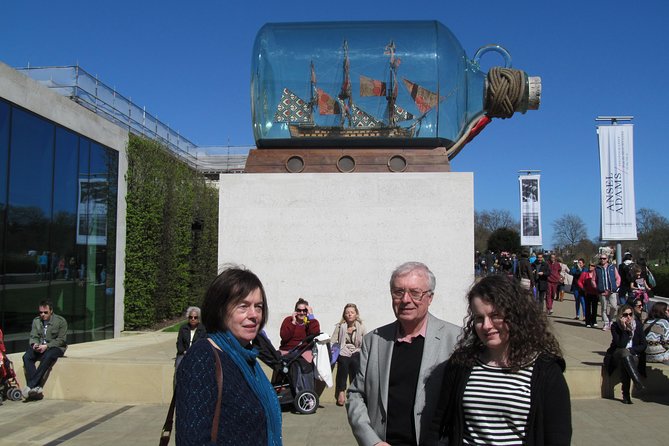
Your meeting point is Nelson’s Ship in a Bottle, at the southern entrance to the National Maritime Museum, on the Observatory side of Greenwich. The address is Herbaceous Border, London SE10 8QY. You should arrive with enough time to locate the sculpture, since the museum grounds cover a broad area and the tour begins at 12:30 pm.
This start point is fitting. The Ship in a Bottle is an eye-catching introduction to Greenwich’s naval theme, and it puts you close to the museum entrance. The tour ends back at the same meeting point, which keeps the outing simple if you are planning to continue around Greenwich afterward.
The location is near public transportation, and the tour requires a moderate level of physical fitness. The supplied details do not specify the exact amount of walking or whether seating is available in every gallery, so plan for a substantial museum visit rather than a quick look at a few objects.
Because it is a private activity, you are not joining a large coach group. That matters in a museum. You can ask for a little more explanation at an object that catches your attention, or tell the guide to move along if a display is not holding your interest. A minimum of two people is required per booking, and children must be accompanied by an adult.
More Museums in London:
- Tower of London and Crown Jewels Exhibition Ticket
★ 4.5 · 6,677 reviews - Chelsea FC Stadium Tours and Museum
★ 5.0 · 1,908 reviews - Official tickets: Moco Modern & Contemporary Art Museum
★ 4.5 · 1,157 reviews
Turner’s Battle of Trafalgar sets the tone
The first major artwork is Turner’s painting of the Battle of Trafalgar, created in the early 1820s. It gives the tour a strong opening because it is not simply a portrait of ships in battle. The painting connects naval power with national memory, and your guide’s narration can help you read the scene rather than just glance at it and move on.
The Battle of Trafalgar is closely tied to Nelson, Britain’s most famous naval commander, so this first stop prepares you for the Nelson, Navy, Nation gallery. The two displays work well together: one presents the battle through art, while the next brings you close to a personal object connected to the admiral himself.
I would pay attention to how the painting presents victory and loss at the same time. Naval paintings can look grand and heroic from a distance, but the subject also involves smoke, wreckage, and death. That contrast becomes important later, when the tour turns toward slavery and the wider costs of British maritime power.
Nelson’s coat makes naval history personal
The Nelson, Navy, Nation gallery contains the jacket Nelson was wearing when he was mortally wounded aboard HMS Victory. This is the kind of object that changes the scale of history. Instead of thinking only about fleets and battle plans, you are looking at something worn by a real person at a decisive moment.
For families and younger visitors, this can be the point where a distant historical figure becomes easier to understand. For adults, the coat offers a quiet counterweight to the grand battle painting. It is not just a relic of victory. It is also a reminder that military glory came with a human price.
The guide’s stories matter here. The tour is designed around narration, so you are not left to read every label alone. One guide named Graham was praised for explaining things clearly and knowing what to say at the right moment. Wendy was also described as offering a very informative Greenwich tour that included the maritime museum, Queen’s House, the Cutty Sark, and the meridian. Those accounts suggest that a good guide can make the visit much more coherent, although the individual assigned to your booking may be different.
Trade, empire, and the East India Company
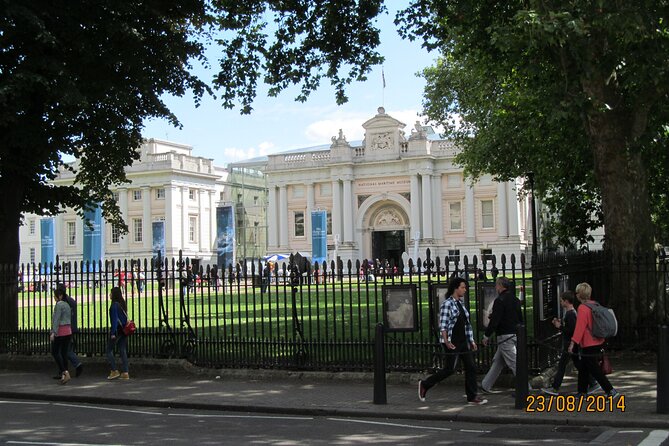
The Trade Gallery shifts the focus from battles to commerce. Here you learn about trade with the Far East and the origins of that trade through the East India Company. This is useful because Britain’s maritime story was never only about warships. Ships also carried goods, money, people, and political power.
I like this section because it widens the tour beyond Nelson. You get a clearer sense of how sea routes shaped British influence and how commercial activity supported the growth of empire. The subject can be complicated, and a private guide gives you a chance to ask for clarification instead of silently moving past unfamiliar names and connections.
At the same time, you should know what kind of museum experience to expect. The National Maritime Museum has a large amount of material, but not every exhibit uses dramatic sound, screens, or large-scale theatrical effects. One sharp criticism of the museum was that some galleries felt sterile and relied too heavily on objects in glass cases. If you want the highly designed, sensory approach found in some modern museums, parts of this visit may feel restrained.
That is not necessarily a flaw for everyone. I often prefer displays that leave room for the objects, especially when a guide supplies the missing context. But families with children who need frequent interaction may find some sections less exciting than expected.
A few more tours and experiences worth a look
- The Premier Classic London: Private 4-Hour Tour in a Black Cab
★ 5.0 · 2,737 reviews - Stonehenge Inner Circle Private Tour from London with Bath Visit
★ 5.0 · 1,909 reviews - Private Tour: Black Taxi Tour of London
★ 5.0 · 1,153 reviews - Private London Arrival Transfer – Airport to Hotel / Accommodation
★ 3.5 · 1,085 reviews
A serious stop at the Atlantic Slavery gallery
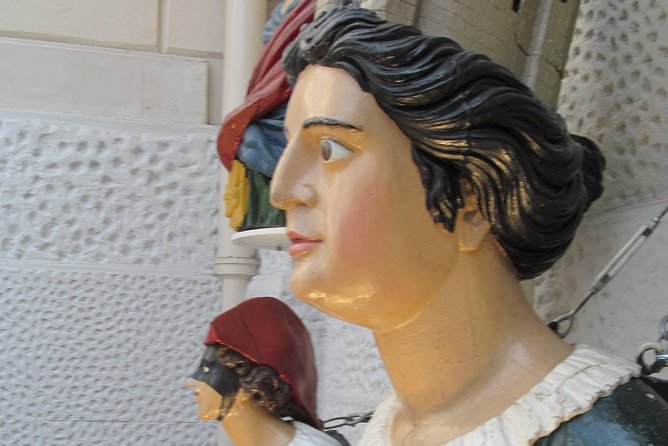
The Atlantic Slavery gallery is one of the most important parts of the route. It presents the slave trade and England’s role in that trade in direct terms. This prevents the tour from becoming a simple celebration of naval success and overseas commerce.
The gallery can be difficult, and it should be. The same maritime networks that carried trade and helped Britain project power were tied to exploitation and human suffering. Seeing those subjects alongside naval paintings, military objects, and East India Company material gives you a more complete understanding of the period.
This is also where the private format has real value. You can ask questions about the material, take a moment when needed, and have a guide explain how the different galleries connect. A large group may move on quickly, while your own group can spend more time with an exhibit that deserves careful thought.
The tour is described as suitable for families, but parents should judge the subject for their own children. The Atlantic Slavery gallery is educational, yet it deals with brutal events. Teenagers with an interest in history may find it especially meaningful, while younger children may need more explanation from the accompanying adult.
Lighthouses and a well-timed cafe pause
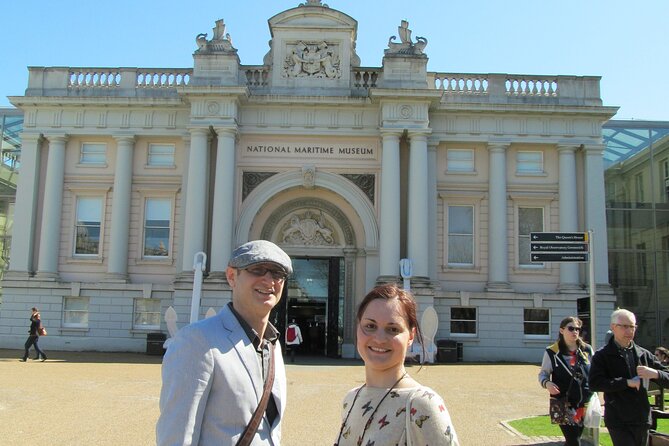
The tour also covers the history of lighthouses in the United Kingdom. This is a welcome change of pace after the galleries on war, trade, and slavery. Lighthouses show the practical side of maritime life: safe navigation, dangerous coastlines, and the systems that allowed ships to travel farther.
Halfway through the visit, you have the chance to stop at the museum cafe for coffee or tea. Food and drinks are not included, so bring money for the break. One account described stopping for fish and chips at the cafeteria, but you should treat that as an option rather than part of the tour price.
The pause helps because three and a half hours in a museum can be tiring. It gives children a reset and lets adults compare notes with the guide. Since the exact timing can vary, do not assume you will have a long meal. The stated duration is approximate, and the tour has several galleries to cover.
The cafe break also highlights a practical issue with the itinerary. There is plenty to see, and one account described arriving late and running out of time. Arrive promptly at 12:30 so you do not sacrifice one of the main galleries before the tour has properly begun.
Queen’s House and the Armada Portrait
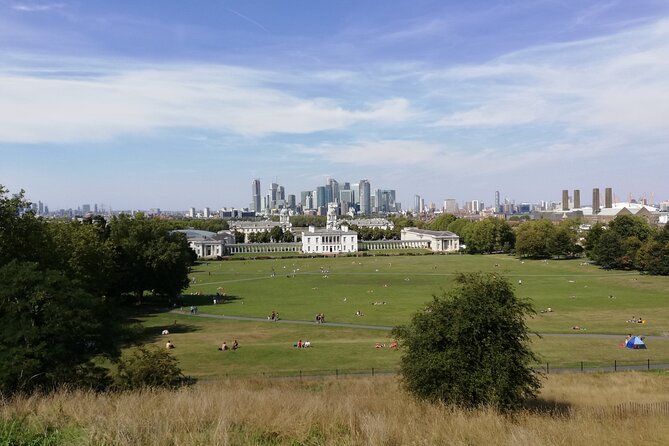
The final stop is Queen’s House, with about 45 minutes devoted to the historic building and its famous Armada Portrait of Queen Elizabeth I. The portrait commemorates the defeat of the Spanish Armada and presents Elizabeth as a powerful monarch at the height of her reign.
After the maritime museum’s ships, uniforms, trade displays, and navigation themes, Queen’s House offers a change in mood. You move from naval objects to royal art and architecture. The portrait also connects back to the broader story of English power at sea, so the stop does not feel unrelated.
Forty-five minutes is enough for a purposeful visit, particularly with a guide pointing out what matters. It is not enough to explore every work in the house at leisure. If you are an art specialist, you may want more time here than the schedule allows. If the Armada Portrait is your main reason for booking, ask how the guide plans to divide the available time.
The supplied details identify Queen’s House as included in the tour. The main National Maritime Museum admission is listed as free, while the Queen’s House visit is included. That makes the guide’s interpretation and the organized route the central products you are paying for.
Is $237.59 per person fair value?
At $237.59 per person, this is not a budget museum visit. You can enter the National Maritime Museum without an admission charge, and Greenwich has enough attractions to keep you busy without booking a private guide.
The price makes more sense for a couple or small family that values personal attention. You are paying for a local guide, a planned route, interpretation of key objects, the Queen’s House visit, and the chance to ask questions without competing with a large group. If you have only a short stay in London, that structure can save time and help you avoid wandering through a very large museum without knowing what to prioritize.
The value is weaker if you enjoy setting your own pace. You may prefer to spend an hour with Turner, skip the East India Company material, or linger in the slavery gallery. A private tour can adapt to your group, but it still has a planned duration and several major stops to cover.
The rating of 4.1 from eight reviews suggests a generally positive but not flawless experience. The strongest praise focuses on the variety of exhibits, the family appeal, friendly staff, and guides who tell clear, memorable stories. The main criticism concerns presentation: some people find the museum too plain and too dependent on glass cases. Your expectations matter. Book this for context and access to important objects, not for a fully theatrical museum production.
Who will enjoy this Greenwich tour most?
I would recommend it most to:
- Families with older children or teenagers who need a clear route and regular explanation.
- History buffs interested in Nelson, naval warfare, trade, empire, and exploration.
- First-time visitors to Greenwich who want several major themes covered in one afternoon.
- Couples who prefer a private guide and do not want to join a large group.
- Anyone who wants the Atlantic Slavery gallery explained within the wider story of British maritime power.
It may be less suitable if you dislike guided visits, want long stretches of quiet viewing, or expect every exhibit to use interactive screens. One family found the interactive displays appealing but wished there were more of them. That is a fair warning for parents choosing a museum mainly for hands-on entertainment.
The tour is offered in English, so you should be comfortable following an English-speaking guide for three and a half hours. Children need an adult with them, and all participants should be ready for a moderate level of physical activity.
Booking, timing, and cancellation advice
You receive confirmation when you book, and the tour accepts mobile tickets. The start time is 12:30 pm, with the meeting point at Ship in a Bottle near the southern, Observatory-side entrance.
The activity returns to the meeting point at the end. That is useful if you want to continue exploring Greenwich afterward, though the supplied details do not promise additional stops beyond the National Maritime Museum and Queen’s House.
Cancellation is free up to 24 hours before the local start time. If you cancel less than 24 hours before the tour, you do not receive a refund, and changes made inside that window are not accepted. Keep the local cut-off time in mind if you are booking from another time zone.
Should you book the National Maritime Museum private tour?
Book it if you want the museum’s major stories arranged into one thoughtful route, especially if Nelson, Turner, the East India Company, the Atlantic slave trade, and Elizabeth I all interest you. The private format is the strongest reason to pay the premium. A good guide can connect objects that might otherwise feel like separate displays.
I would skip it if your main goal is cheap museum access or if you prefer to explore independently. The museum admission is free, and some displays may feel plain beside newer, more theatrical museums.
For families, history buffs, and short-stay visitors, this can be a useful Greenwich afternoon. Arrive on time, budget for the cafe, and expect serious subjects alongside naval spectacle. If that mix suits you, the tour offers a focused and personal way to understand Britain’s relationship with the sea.
FAQ
How long does the National Maritime Museum private tour last?
The tour lasts approximately 3 hours and 30 minutes.
What time does the tour begin?
The scheduled start time is 12:30 pm.
Where does the tour meet?
You meet at Nelson’s Ship in a Bottle, beside the Herbaceous Border in London SE10 8QY, at the southern entrance on the Observatory side of the National Maritime Museum.
Where does the tour end?
The activity ends back at the meeting point.
Is this a private tour?
Yes. Only your group participates in the activity.
What language is the tour offered in?
The tour is offered in English.
What is included in the tour?
A local guide is included. The National Maritime Museum portion has no admission charge listed, and the visit to Queen’s House is included.
Are food and drinks included?
No. Food and drinks are not included, although the tour allows time for a coffee or tea break at the museum cafe.
Can children join the tour?
Yes. Children may join, but they must be accompanied by an adult.
How many people are required to book?
A minimum of two people per booking is required.
Can I cancel for a full refund?
Yes, if you cancel at least 24 hours before the experience start time. Cancellations made less than 24 hours before the start time are not refunded, and changes inside that period are not accepted.
Just added around London
- The Private British Museum Tour★ 5.0 · 6 reviews
- London to Southampton Cruise Port | Private Transfer★ 5.0 · 6 reviews
- London’s Chinatown Food Experience★ 4.0 · 6 reviews
- London Gatwick (LGW) Airport Departure Private Transfer – Hotel to Airport★ 4.0 · 6 reviews
- Christmas in Canterbury, Dover and Greenwich with Christmas Lunch★ 4.5 · 6 reviews
- Transfer from Heathrow Airport to London hotel on private car★ 4.5 · 6 reviews
- Jazz Notes – Jazz Jam Ticket★ 5.0 · 6 reviews
- Street Photography Workshops in London★ 5.0 · 6 reviews
Museums, compared.
Tower of London and Crown Jewels Exhibition Ticket
Read our review →

Official tickets: Moco Modern & Contemporary Art Museum
Read our review →
British Museum London Guided Tour Semi-Private 8ppl Max
Read our review →
The British Museum London – Exclusive Guided Museum Tour
Read our review →

Skip the Line: Liverpool Beatles Museum – The perfect tribute to the Beatles
Read our review →Browse the lists this tour appears in