
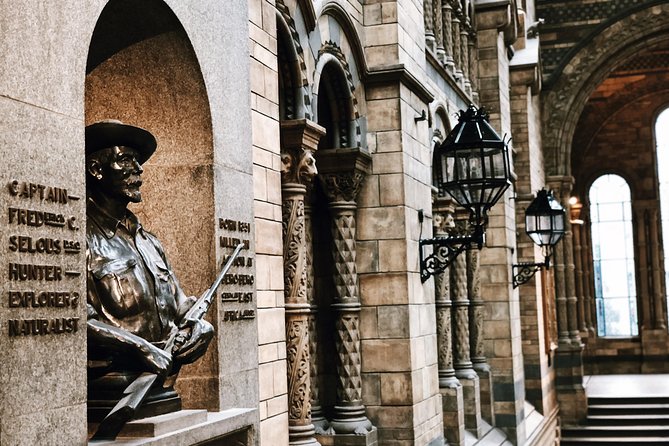
Reviewed · MUSEUMS
Natural History Museum London – Exclusive Guided Museum Tour
Natural history gets a grand stage here. The Natural History Museum makes a fine first stop for curious minds, but its size can quickly turn a visit into a march through crowded galleries. I like the way this two-hour guided route picks the major sights, and I like the chance to tailor the visit around dinosaurs, gemstones, architecture, or family interests. The main concern is price: at $108.49 per person, this is a serious supplement to a museum visit that does not charge general admission.
The tour is best for anyone who wants a clear path through a huge collection. Guides such as Ivo, Becky, Matilda, Andi, Sacha, Lawrence, and Anthony Matthews have earned especially warm praise for their storytelling and patience. You should also know that the tour only scratches the surface, temporary exhibitions cost extra, and a self-guided visit may be better value for confident museum-goers.
In This Review
- Key points at a glance
- Entering London’s cathedral of natural history
- Why the two-hour route works
- The dinosaurs, birds, and Dodo
- Fossils, volcanoes, and the age of Earth
- Pompeii casts and uncomfortable human stories
- Plants, gemstones, and the museum’s stranger treasures
- Architecture, quiet rooms, and the vault
- Private versus semi-private booking
- Is $108.49 a fair price?
- Families, older visitors, and access needs
- Practical details that affect your day
- Who should book this tour?
- Should you book it?
- FAQ
- Where does the Natural History Museum tour begin?
- Where does the tour end?
- How long does the guided tour last?
- Is museum admission included?
- Is this a private tour?
- Is the tour wheelchair friendly?
- Can I cancel for a full refund?
Key points at a glance
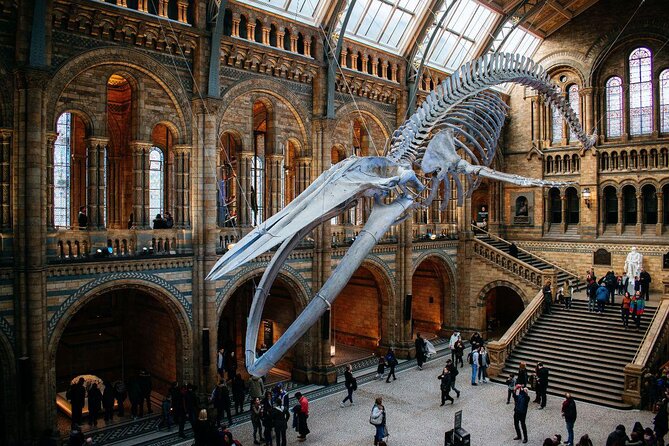
- Archaeopteryx and dinosaur highlights: See the rare Archaeopteryx, Sophie the Stegosaurus, and a Dodo skeleton while your guide explains the links between ancient reptiles and birds.
- A fast route through a vast museum: The guide chooses the essential displays, which helps you avoid wandering and makes two hours count.
- More than fossils: Expect Pompeii casts, cursed gemstones, rare plants, human skull traditions, preserved animals, and a giant slice of sequoia.
- Strong family appeal: Guides have kept children as young as three interested with stories, questions, and dinosaur-focused explanations.
- Private and semi-private choices: Morning and afternoon private tours are available, while the savings option does not include an exclusive guide for your group.
- Simple central meeting point: Meet outside the Natural History Museum on Cromwell Road in South Kensington, near public transport.
Entering London’s cathedral of natural history
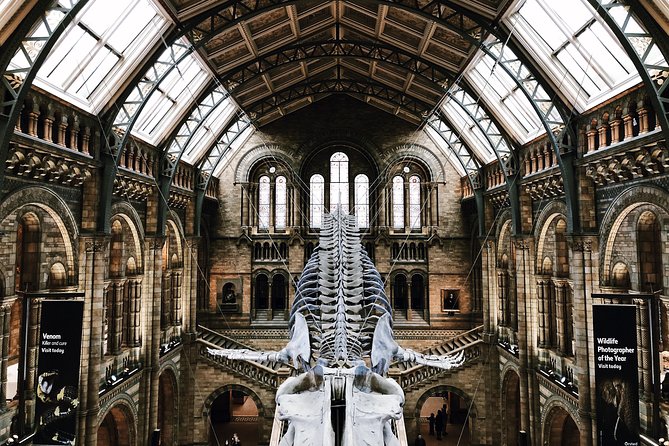
The building itself is part of the show. Your meeting point is at the Natural History Museum on Cromwell Road, South Kensington, London SW7 2DH. The tour ends back at the same place, so you can continue exploring the museum afterward if you still have energy.
This is not a small collection in a tidy box. The museum covers the origins of Earth, geological upheaval, extinct animals, plants, fossils, human development, minerals, and much more. The practical problem is easy to understand: you can spend hours reading every label and still leave feeling you missed the main story.
That is where the guide earns the fee. A good guide gives you a route and a reason for each stop. Several guides have also been praised for pointing out architectural features that are easy to miss when your attention is fixed on dinosaur bones and display cases.
Expect security at the entrance. Large bags and suitcases are not allowed. Bring only a handbag or a small, thin backpack, and keep your phone number with the booking because the operator says a mobile number with country code is required.
More Historical Tours in London
- London Small Group Tour of Historical Pubs
★ 5.0 · 10,422 reviews - Soho Music & Historic Pubs Tour
★ 5.0 · 1,993 reviews - Royal Historic Pubs Walking Guided Tour in London
★ 5.0 · 803 reviews
Why the two-hour route works
The opening section can feel quick. That is intentional. If your guide stopped at every case, you would spend the whole tour in one small part of the building.
Instead, the route moves across major chapters in Earth’s story. You may begin with the planet’s origins and volcanic disasters, then shift toward fossils, dinosaurs, plants, minerals, and early humans. The value is not simply seeing more rooms. It is getting a basic structure that helps the objects make sense.
I like this approach for a first visit. A museum this large can overwhelm you with facts before you have a framework for them. Your guide supplies that framework, then adds the memorable details: why certain cultures used human skulls as drinking vessels, what the Pompeii casts reveal, and how rare specimens reached the collection.
The pace may not suit someone who wants long, quiet periods at each exhibit. You will often stop, listen, ask questions, and move on. If you already know the museum well, or if one particular collection matters most to you, tell the guide at the start so the route can bend toward your interests.
The dinosaurs, birds, and Dodo
For many people, the dinosaur displays are the main event. The tour includes Sophie the Stegosaurus, a full skeleton that gives the animal a strong sense of shape and scale. The guide can turn a familiar dinosaur name into a lesson about body structure, survival, and extinction.
The rare Archaeopteryx is another major stop. It is presented as an important link between dinosaurs and birds, making it more than a pretty fossil in a case. This is the kind of object that benefits from explanation, because the significance is not always obvious when you are looking at a flat fossil.
The Dodo skeleton adds a human dimension to the story. It represents an extinct species, but it also raises questions about how people record, collect, and remember animals that are gone. A guide can connect the object to the wider theme of extinction instead of treating it as one more old bone.
Families seem especially well served here. Ivo has been praised for making dinosaur subjects enjoyable for children, while Becky and Andi have been singled out for keeping younger children involved. A three-year-old may not follow every scientific point, but a good guide can turn the museum into a series of short stories instead of a long corridor of labels.
Fossils, volcanoes, and the age of Earth
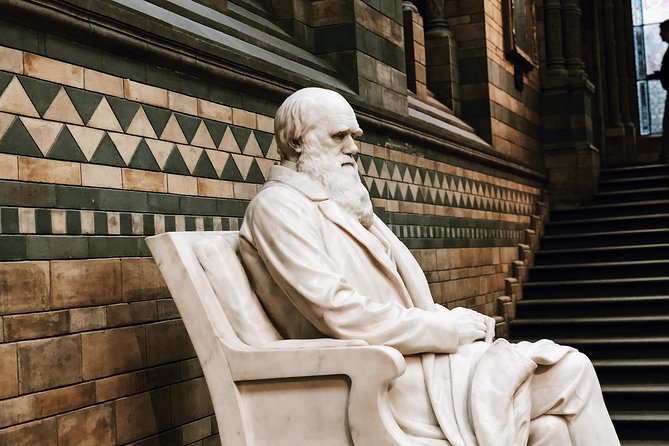
The tour does not treat natural history as a dinosaur-only subject. It begins on a much larger scale, with the origins of the planet and the forces that shaped it.
Volcanic disasters provide a useful bridge between geology and human history. You are not just looking at rocks. You are considering how eruptions alter land, affect living things, and leave evidence that scientists can study long after the event.
Fossils then help the guide explain deep time. This can be hard to picture in a museum because the numbers are so large. A good explanation gives those numbers a human-friendly shape, helping you see why a small fossil can tell a story far older than any civilization.
The benefit of a private guide is that you can stop for a question without feeling you are holding up a large group. If your interest is plants, fossils, or geology rather than dinosaurs, say so. The advertised route includes rare plants and fossils, and the private format gives the guide room to adjust the emphasis.
More Museums in London:
- Tower of London and Crown Jewels Exhibition Ticket
★ 4.5 · 6,677 reviews - Chelsea FC Stadium Tours and Museum
★ 5.0 · 1,908 reviews - Official tickets: Moco Modern & Contemporary Art Museum
★ 4.5 · 1,157 reviews - British Museum London Guided Tour Semi-Private 8ppl Max
★ 5.0 · 984 reviews
Pompeii casts and uncomfortable human stories
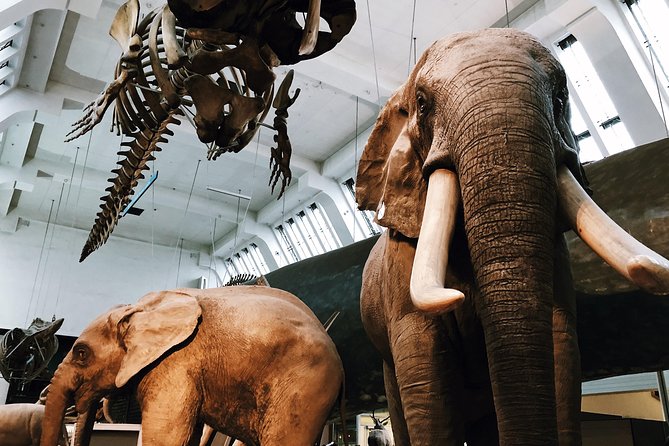
The Pompeii casts are among the tour’s more powerful stops. They show the human cost of volcanic disaster in a direct way, without turning the subject into a mere science lesson.
This section may not be ideal for every young child. The material can be difficult, and the guide may need to adjust the explanation depending on your group. The experience is strongest when presented with care, as part of the story of archaeology, disaster, and the evidence people leave behind.
The discussion of human skulls used as drinking vessels is also unusual. It is the sort of detail you might walk past without context, yet it opens a window onto beliefs and customs that can seem startling today.
That is one of the tour’s best qualities. It does not only point at the biggest skeleton in the room. It explains why an object matters, what question it raises, and how it fits into the human story.
Plants, gemstones, and the museum’s stranger treasures
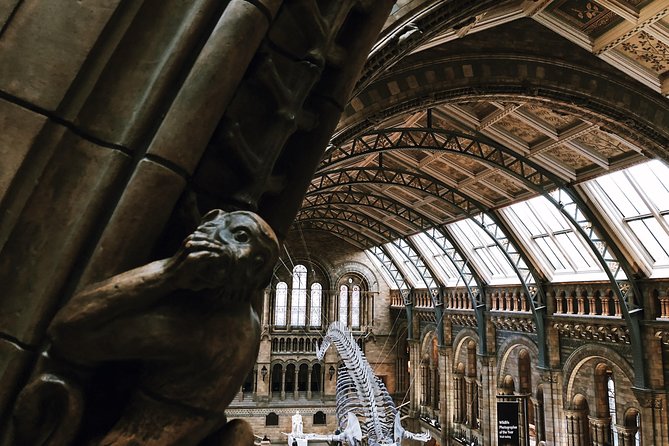
Natural history includes much more than animals. The tour takes in rare plants, minerals, and gemstones, including specimens linked to tales of curses. Those displays offer a change of pace after the dinosaurs and fossils.
The gemstone section has a visual pull, but the stories give it staying power. The guide may explain how people attach fear, power, or superstition to valuable stones. That mix of science and human belief keeps the subject from becoming a simple lesson in mineral identification.
You may also see alcohol-preserved animals. This is a less polished side of museum collecting, and it can be fascinating precisely because it shows how specimens were kept for study. Some rooms and collections can change during the year, so the exact route may not be identical on every date.
The giant slice of a Giant Sequoia makes a simple point with great force: trees can live on a scale that is difficult to grasp until you see the evidence in front of you. The display connects plant science to time, growth, and climate in a way that even children can understand.
Architecture, quiet rooms, and the vault
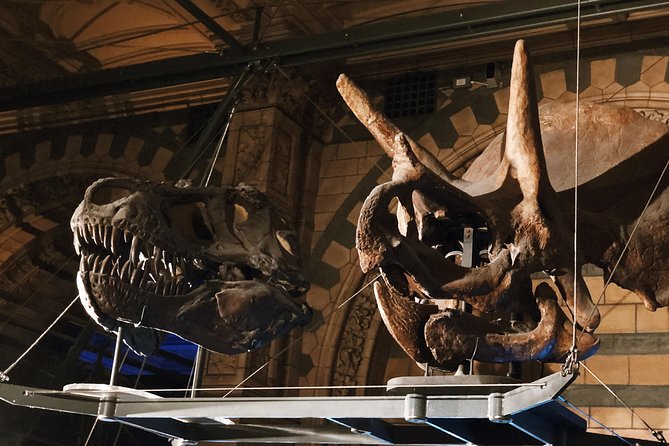
Do not keep your eyes only on the cases. The museum’s architecture deserves attention, and guides have pointed out details that independent visitors often miss.
Some rooms have quiet or restricted speaking rules. Your guide will explain those limits before you enter, so do not expect a running commentary everywhere. This may briefly interrupt the flow, but it also protects the atmosphere of spaces that need silence.
The vault is another highlight. It offers a more unusual look at the collection and the way precious or important specimens are presented. One especially enthusiastic account also praised the museum’s architecture and the enormous library area behind it.
The point is not to promise access to every room or every display. Collections can vary across the year, and the route has to fit the museum’s current conditions. Still, the tour makes a genuine effort to show more than the obvious dinosaur galleries.
Private versus semi-private booking
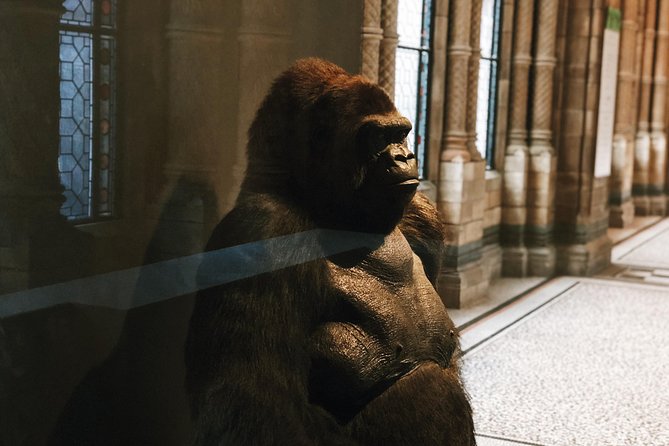
The wording matters here. A private tour means your group participates alone with its guide. That makes it easier to ask questions, pause for photographs, and request more time with a favorite subject.
The savings option is semi-private and does not include a guide exclusively for your group. It also does not carry the same wheelchair-friendly provision listed for the private version. Read that distinction carefully before paying.
Morning and afternoon private departures are available. Timing can affect the feel of the visit, especially in a popular museum. Guides such as Matilda have been praised for finding routes that avoid much of the crowd, while Andi and Ivo have also helped groups move through busy galleries without losing the main points.
No tour can promise an empty museum. Security lines may still form, even when a booking includes special access language. The advantage is having someone who knows where to go, not a magical guarantee that every queue disappears.
Is $108.49 a fair price?
The general museum admission is free, so the price needs a clear justification. You are paying for a guide, planning, time saved, and a more focused visit, not for the building entry itself.
For a family with limited time, the fee can make sense. A two-hour route gives you the major displays without requiring a full day of wandering. A guide can also keep children interested, answer questions on the spot, and adjust the explanation when attention starts to fade.
For two adults who enjoy reading every label, the value is less certain. A self-guided visit costs far less and lets you return to one gallery for as long as you wish. One customer considered the price, nearly £450 for two people, far too high for what was received. That criticism deserves attention because it identifies the tour’s central weakness.
I would think of this as a time-saving service. If your London schedule is tight, $108.49 may buy a better two hours. If you have a free afternoon and enjoy finding your own route, save the money and explore independently.
The guide quality also matters. The strongest praise has gone to Ivo, Becky, Matilda, Andi, Sacha, Lawrence, and Anthony Matthews. Their strengths vary slightly, but the common thread is clear: good storytelling, patience, practical route planning, and the ability to answer questions.
Families, older visitors, and access needs
This tour suits families particularly well. The guides have made the experience work for groups with young children, including one three-year-old, and have used dinosaurs and fun facts to keep attention alive.
It can also suit older visitors who would rather not spend hours walking without a plan. The tour requires a moderate level of physical fitness, so you should be comfortable moving through a large museum for roughly two hours.
The private version is listed as wheelchair friendly. The semi-private savings option does not carry that same provision. If access is important, choose the private format and confirm the current arrangements before setting out.
There is no hotel pickup or drop-off. Plan to reach South Kensington on your own using public transport, a taxi, or Uber. The central meeting point is convenient, but leave enough time to find Cromwell Road and the correct stop, listed as Stop H.
Practical details that affect your day
You receive booking confirmation at the time of booking. You must provide a mobile phone number with the country code, which allows the operator to contact you about the meeting.
Dress appropriately for museum entry. Security rules prohibit large bags and suitcases, so pack lightly. Temporary exhibitions are not included, and you should not assume the tour covers every special display.
Occasional closures or delayed opening can happen without warning. If the museum opens more than one hour late, the operator says it will provide an appropriate alternative, but it will not provide a refund or discount in that situation.
The cancellation rule is friendlier than the closure policy. You can cancel up to 24 hours before the local start time for a full refund. Changes or cancellations inside that 24-hour window are not accepted and are not refunded.
Who should book this tour?
Book it if you have only a couple of hours, want the essential displays, or feel daunted by the museum’s size. It is also a smart choice for families who want a guide to turn science into stories rather than a pile of labels.
The private format is best for anyone with a strong interest in one subject. Tell the guide if you care most about dinosaurs, fossils, plants, minerals, architecture, or human history. The more specific you are, the more useful the two hours can become.
Skip it if your main goal is low-cost entry or a slow, independent visit. The museum is free to enter, and the $108.49 fee is difficult to defend if you do not value personal guidance.
Should you book it?
I would book this for a first visit with limited time, especially with children or an older family member who benefits from a planned route. The strongest guides, including Ivo, Becky, Matilda, Andi, Sacha, Lawrence, and Anthony Matthews, have made the difference through clear explanations and warm personalities.
I would choose the private option if the budget allows. It offers the best chance to ask questions and shape the route around your interests. Just remember that this is a highlights tour, not an all-day examination of the museum, and that the free admission makes the added cost a choice about time and guidance.
FAQ
Where does the Natural History Museum tour begin?
It begins at the Natural History Museum on Cromwell Road, Stop H, South Kensington, London SW7 2DH, UK.
Where does the tour end?
The activity ends back at the meeting point at the Natural History Museum.
How long does the guided tour last?
The guided tour lasts approximately two hours.
Is museum admission included?
The tour includes the guided museum tour, and the itinerary lists the admission ticket as free. Temporary exhibitions are not included.
Is this a private tour?
The standard private activity is for your group only. The Save, Book Semi-Private option does not include a guide exclusively for your group.
Is the tour wheelchair friendly?
The private tour is listed as wheelchair friendly. This provision does not apply to the semi-private savings option.
Can I cancel for a full refund?
Yes. You can cancel at least 24 hours before the local start time for a full refund. Cancellations or changes made less than 24 hours before the start are not accepted or refunded.
Just added around London
- The Private British Museum Tour★ 5.0 · 6 reviews
- London to Southampton Cruise Port | Private Transfer★ 5.0 · 6 reviews
- London’s Chinatown Food Experience★ 4.0 · 6 reviews
- Christmas in Canterbury, Dover and Greenwich with Christmas Lunch★ 4.5 · 6 reviews
- Transfer from Heathrow Airport to London hotel on private car★ 4.5 · 6 reviews
- London Gatwick (LGW) Airport Departure Private Transfer – Hotel to Airport★ 4.0 · 6 reviews
- Jazz Notes – Jazz Jam Ticket★ 5.0 · 6 reviews
- Street Photography Workshops in London★ 5.0 · 6 reviews
Museums, compared.
Tower of London and Crown Jewels Exhibition Ticket
Read our review →
Official tickets: Moco Modern & Contemporary Art Museum
Read our review →
British Museum London Guided Tour Semi-Private 8ppl Max
Read our review →
The British Museum London – Exclusive Guided Museum Tour
Read our review →

Skip the Line: Liverpool Beatles Museum – The perfect tribute to the Beatles
Read our review →Browse the lists this tour appears in