
Reviewed · SELF-GUIDED TOURS
Private Liverpool Self-Guided Tour
Liverpool wears its past openly. This self-guided walk links St. George’s Hall, the Cavern Quarter, and the Three Graces in one clear route, with audio stories and local tips along the way. I like the freedom to pause for coffee, shelter from rain, or enter a museum without holding up a group. I also like the low price: $12.35 per person for three weeks of access is strong value if you plan to use the route more than once. The main drawback is simple: there is no in-person guide, and one customer had trouble connecting to the tour at all.
The route covers 18 stops, though the supplied details give full descriptions for the main ten and several shorter points along the way. You get GPS directions, a map, pictures, videos, written information, and audio commentary from Jenny, a real voice rather than a computer-generated one. A 4.5 rating from 19 ratings and a 95 percent recommendation rate suggest a good experience overall, but you should activate the tour before setting out and check the Before You Go instructions carefully.
In This Review
- Key details before you set out
- Starting at St. George’s Hall and William Brown Street
- The library, museum, and St John’s Gardens
- Williamson Square, St John’s Beacon, and the Playhouse
- The Cavern Quarter and Liverpool’s Beatles connection
- Castle Street, Exchange Flags, and difficult civic history
- Pier Head and the Three Graces
- Royal Albert Dock and the final museum choices
- How the self-guided format works in real use
- Price, timing, and who gets the most value
- Should you book this Liverpool tour?
- FAQ
- Where does the Liverpool self-guided tour begin?
- Where does the tour finish?
- How long does the tour take?
- How long can I access the tour?
- Is a live guide included?
- Are attraction admission fees included?
Key details before you set out
- Three weeks of access: You can return to the route during your Liverpool stay instead of rushing through it in one afternoon.
- A strong central route: The walk begins at St. George’s Hall and ends at Royal Albert Dock, taking in major city sights along the way.
- Beatles and city history together: The Cavern Club and Pier Head Beatles monument share space with libraries, theatres, memorials, docks, and civic buildings.
- Real audio narration: Jenny guides you through the stops, supported by text, photos, videos, and map directions.
- Good rainy-day flexibility: You can stop, read, take shelter, and restart at your own pace.
- Paid sights remain separate: Entry to the Cavern Club and museum attractions is not included.
Starting at St. George’s Hall and William Brown Street
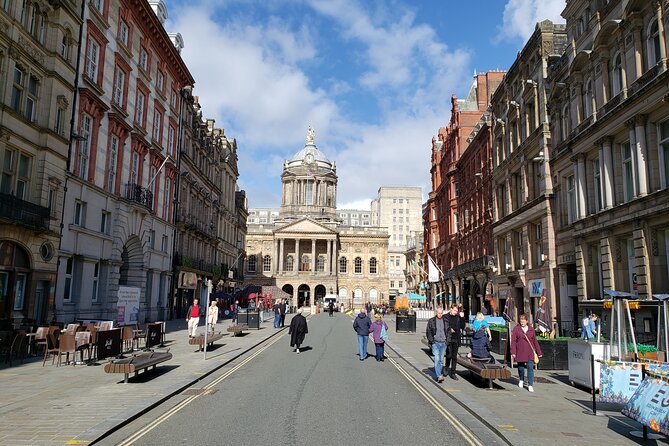
The tour begins at St. George’s Hall, St. George’s Place, a practical meeting point near several major cultural buildings. You start with Liverpool’s origins as a tidal pool beside the River Mersey, then follow the story of how the settlement founded in the 13th century grew into a major city.
St. George’s Hall deserves time. It is a Grade I listed building with a design inspired by an ancient temple. Its location on a large podium was chosen to give the building command over its surroundings. The audio stop lasts about 15 minutes, enough to give you a useful introduction without turning the opening into a lecture.
From here, the walk moves onto William Brown Street. This is Liverpool’s principal cultural quarter, with an unusually high number of major public buildings in one compact stretch. The street takes its name from William Brown, a merchant, MP, and philanthropist who donated the land in 1860 for cultural use.
You pass the former County Sessions Court, Walker Art Gallery, Central Library, World Museum Liverpool, the former North Western Hotel, Empire Theatre, Steble Fountain, and Wellington Memorial. I like this early section because it gives you a sense of Liverpool as more than a Beatles destination. The city’s public face is grand, civic, and occasionally theatrical.
A few more tours and experiences worth a look
- Western Approaches Self Guided Tour
★ 5.0 · 505 reviews - Liverpool Ghost Hunt: Paranormal Detective Self-Guided Game
★ 4.5 · 26 reviews - Westminster Abbey Entrance Ticket Including Audio Guide
★ 4.0 · 661 reviews
The library, museum, and St John’s Gardens
The Liverpool Central Library and World Museum share a Grade II listed building in classical style. The tour gives you practical advice on which parts may be worth seeing and where to go inside. General admission is expected to be free, though special events can carry a charge.
That detail matters. You are not simply told to visit a building and left to work it out. You get a basic plan for using your own time. If you want to enter, build in extra hours beyond the stated two to four hour walking time. The audio route itself only introduces the institutions, so it cannot replace a proper museum visit.
Next comes St John’s Ornamental and Memorial Gardens, a park beside St. George’s Hall that occupies what was once heathland known as the Great Heath. Flower beds, statues, and memorials give the stop a quieter pace after the heavy architecture of William Brown Street.
The most serious subject here is the Hillsborough disaster. The tour explains the fatal crush at Hillsborough Stadium in Sheffield on April 15, 1989, and why the event remains important to Liverpool’s memory. This is not light sightseeing, and it should not be treated as a quick football fact. The route connects the memorial story with the city’s wider identity, including football culture beyond club loyalties.
Williamson Square, St John’s Beacon, and the Playhouse
Williamson Square brings you back into central Liverpool. A fountain with changing coloured lights gives the square a playful centre, while Liverpool Playhouse adds a major piece of theatre history.
The theatre opened in 1866 as the Star Concert Hall and later became Liverpool Playhouse. The audio commentary traces its development and its role in northern theatre. For a city often marketed through music, this stop gives you another cultural angle.
Behind the theatre is St John’s Beacon, also called the Radio Tower. Its story is a neat example of changing city attitudes. Once abandoned and disliked by many locals, it has since been revived and appreciated again. The tour uses the tower to explain how a building can shift from eyesore to city symbol.
This section is short, around 15 minutes at the square, but it rewards a slower pace if you enjoy architecture and local urban stories. The route is not only a checklist of famous attractions. It also gives attention to places you might otherwise pass without knowing why they matter.
The Cavern Quarter and Liverpool’s Beatles connection
The Cavern Quarter is the route’s most obvious music stop. Narrow pedestrian streets lead through a concentration of pubs, clubs, restaurants, and nightly live music venues. The area remains closely tied to Liverpool’s music identity, with the Beatles present in the stories, signs, and atmosphere.
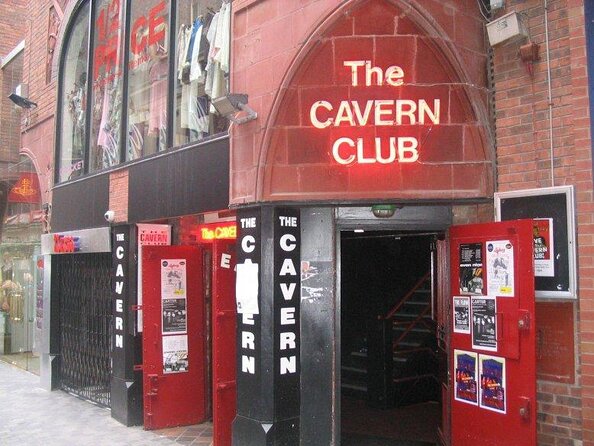
The central attraction is the Cavern Club, the venue associated with the Beatles and the Merseybeat scene of the early 1960s. The tour explains the club’s role in Liverpool’s rock and roll story, but admission is not included. You will need to pay separately if you want to go inside.
That separation is worth noting when you budget. The $12.35 tour price gets you the route and commentary, not a bundle of attraction tickets. Still, the commentary can help you decide if the club fits your plans before spending extra.
The Cavern stop is listed at about 25 minutes, but the quarter invites lingering. You can pause for food, look around, or listen to live music if the timing suits you. The self-guided format works particularly well here because the area is about atmosphere as much as information.
One rating praised the tour for being simple to use, with accurate place information, a clear map, and all the main points of interest listed. Another solo visitor found it helped cover the sights on time while saving effort. Those are useful strengths in a district where it is easy to wander without a plan.
Something different for another day:
- Beatles Magical Mystery Tour
★ 5.0 · 9,266 reviews - Liverpool: “Blue Route” – City & Beatles Tour
★ 5.0 · 8,562 reviews - Liverpool City Sights Hop On Hop Off City Tour – 24hr Ticket
★ 4.5 · 2,555 reviews - The LFC Stadium Tour
★ 5.0 · 1,548 reviews
Castle Street, Exchange Flags, and difficult civic history
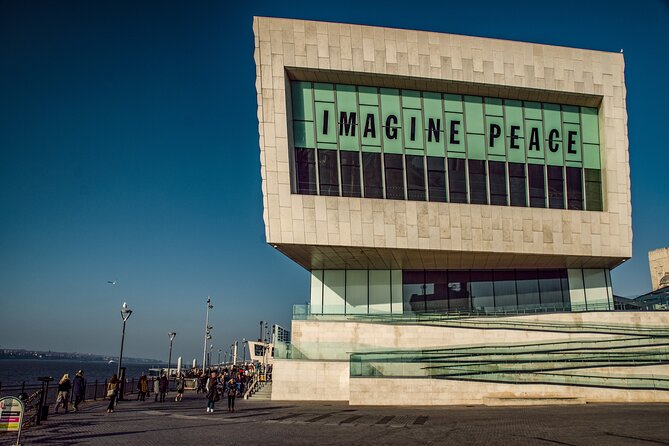
Castle Street is one of Liverpool’s original seven ancient streets, appearing on maps from the 13th century. It sits at the heart of the city’s World Heritage area and includes the Grade I listed Town Hall and former Bank of England, along with 17 Grade II listed buildings.
The tour then guides you toward Exchange Flags Square. Here the subject turns to commerce, war, slavery, and the people connected with Liverpool’s past. You also learn how to read Nelson’s bronze monument and understand the controversy around it.
This is one of the route’s more useful features. Liverpool’s wealth grew through trade that included slavery, and a responsible city walk should not polish that past until it shines. The commentary places the monuments and buildings within that harder story, giving you more to think about than architectural dates alone.
The Castle Street section takes about 25 minutes. Since it is outdoors and free to view, you can take it at a relaxed pace. The Town Hall is especially worth noticing at the top of the street. It is Grade I listed and described as one of the finest surviving 18th-century town halls. The tour also addresses the darker story connected with the monument behind it.
Pier Head and the Three Graces
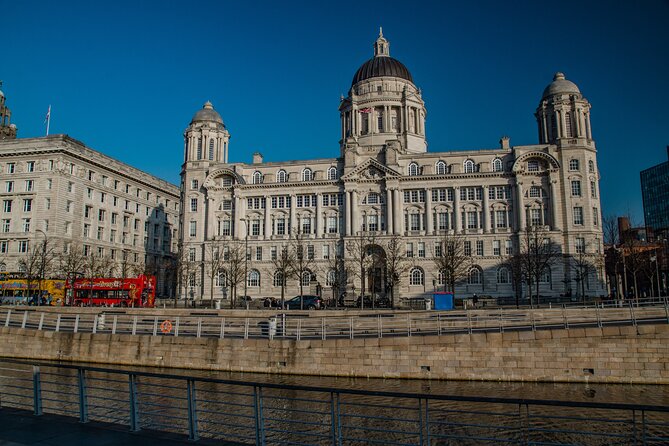
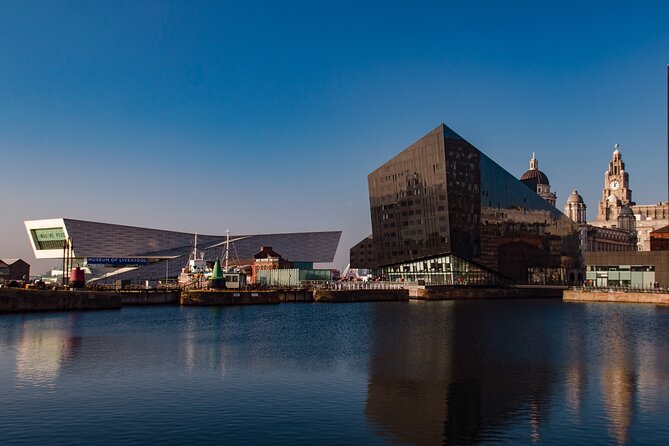
At Pier Head, Liverpool’s waterfront opens up. The Three Graces are the Royal Liver Building, Cunard Building, and Port of Liverpool Building, arranged along the riverfront in a memorable group of grand commercial architecture.
The Royal Liver Building is famous for the two Liver Birds on its roof. The audio commentary covers the local legends around them, why the bird appears in Liverpool’s coat of arms, and the building’s place in the city’s identity. It also explains that the building was an early example of reinforced concrete construction.
The Cunard Building mixes Italian Renaissance and Greek Revival ideas, with design influences from Italian palaces. The Port of Liverpool Building, once the Mersey Docks and Harbour Board Offices, is the oldest of the three. Its architects were Sir Arnold Thornely and F. B. Hobbs, and its design reflected Liverpool’s role in maintaining the British Empire.
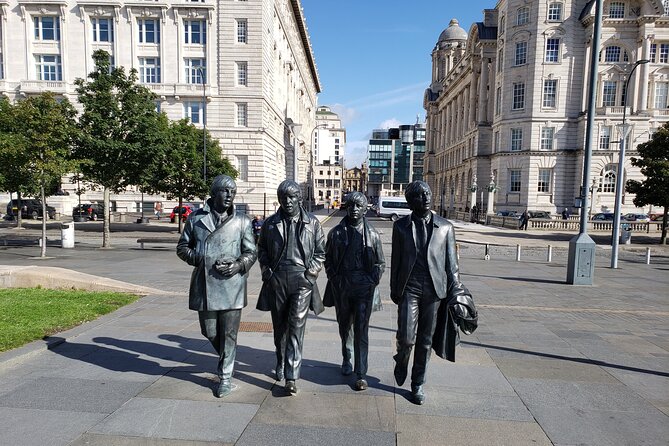
You also get stories about the Pier Head Beatles monument and lesser-known details about the Fab Four. That combination works well. The waterfront is not just a photo stop for the Liver Birds, and the Beatles are not kept separate from the city’s maritime past.
The route lists about 15 minutes here, but I would not rush the view. You can use the audio for the facts, then pause to look across the Mersey and compare the three facades. The waterfront is one of the places where the self-guided format gives you an advantage. Nobody is hurrying you toward the next group photo.
Royal Albert Dock and the final museum choices
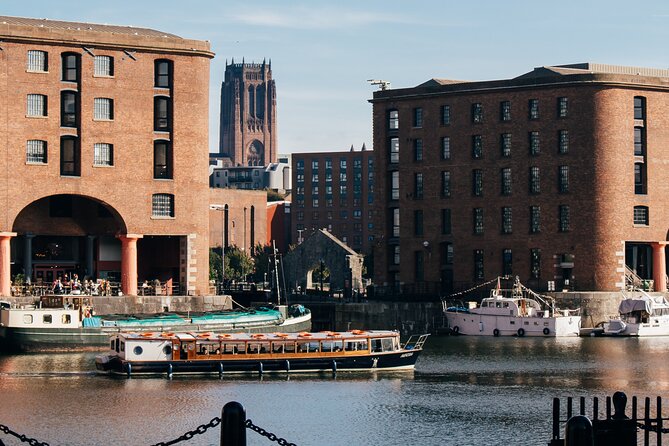
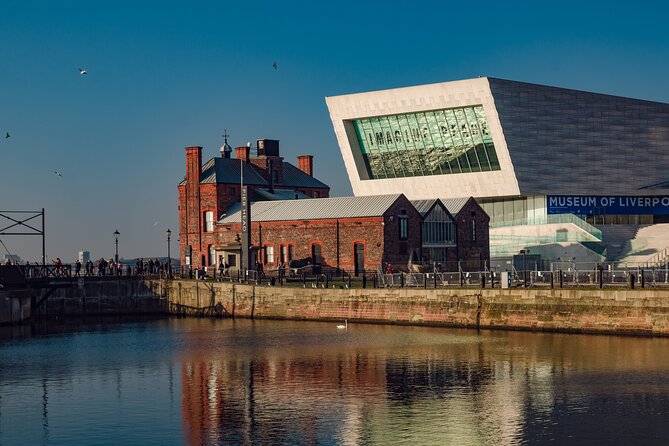
The walk finishes at Royal Albert Dock, where Liverpool’s maritime story turns toward museums, restaurants, and the arts. The dock’s large scale shaped the waterfront, and the commentary explains how the area was used before and after the Second World War.
The route also covers Liverpool’s connection with the Titanic and explains why several museums were placed here. You receive an introduction to the Museum of Liverpool, The Beatles Story, and Merseyside Maritime Museum, plus suggestions for places to eat and things to do after the walk.
The Museum of Liverpool stop itself is listed at about ten minutes and offers basic advice on what to expect and where to go inside. Admission to the museum is listed as free, though the tour does not include entry to attractions generally. The Beatles Story and other paid attractions will need their own tickets.
Ending at Royal Albert Dock is practical. You are not left at an obscure corner of town. You finish beside museums and restaurants, with a natural chance to continue exploring. If you have only a short time in Liverpool, this final point helps you turn the walk into a larger half-day plan.
How the self-guided format works in real use
You book online and receive instant confirmation, followed by an email with instructions to activate the tour. The booking reference is not the activation code, so read the instructions carefully. This is a small but important point, especially if you are trying to start the tour while standing outside St. George’s Hall.
The app supplies a GPS route, map, directions, stop information, photos, videos, and audio. Jenny provides the narration, and the use of a real voice is a plus. You can read along as you listen, which one rating found useful for understanding the stories more clearly.
The route is private in the sense that only your group participates, but there is no guide walking beside you. That means you control the pace, order, breaks, and time spent indoors. It also means you must handle navigation and technical problems yourself.
One customer could not connect after several attempts and received no usable tour at the time. Support is advertised through phone, chat, and email, but you should still activate the experience early rather than waiting until the exact start time.
The two to four hour estimate is realistic for the core route if you keep moving and listen at each stop. Add time for the Central Library, World Museum, Cavern Club, Museum of Liverpool, food, photographs, and weather breaks. The three-week access period lets you split the route across different days, which is the best way to get full value.
Price, timing, and who gets the most value
At $12.35 per person, this is inexpensive for a route covering major civic buildings, Beatles sites, the waterfront, and museum guidance. A live private guide would offer conversation and instant answers, but this format costs less and gives you far more control.
The strongest value comes from using the access period well. You could walk the outdoor route one day, revisit the Cavern Quarter at night, and return to Royal Albert Dock for museum time later. If you only listen once while rushing through the city, the price is still fair, but the three-week benefit is largely wasted.
The experience suits:
- Solo visitors who want structure without joining a group
- Beatles fans who also want civic and maritime history
- Independent walkers who prefer pauses and detours
- People working around unpredictable weather
- Visitors who want a low-cost introduction before choosing museum admissions
It is less suitable if you want a chatty local guide, personal recommendations tailored on the spot, or help with every turn. It is also not ideal for anyone who dislikes app-based tours or has unreliable phone access.
The route is near public transportation, service animals are allowed, and most people can participate. No separate accessibility details are supplied, so check the route and venue conditions before booking if you have specific mobility needs.
Should you book this Liverpool tour?
I would book it if you want a flexible first look at Liverpool and plan to spend time around the city centre and waterfront. The best parts are the clear route, useful audio, strong Beatles coverage, and the way the walk places music beside Liverpool’s architecture, football memory, trade, and docks.
I would skip it if your main goal is a live conversation with a guide. I would also be cautious if you cannot activate the app before setting out. For everyone else, $12.35 buys a well-planned introduction, and the three weeks of access make it easy to use as a city companion rather than a one-shot walk.
FAQ
Where does the Liverpool self-guided tour begin?
It begins at St. George’s Hall, St. George’s Place, Liverpool L1 1JJ, UK.
Where does the tour finish?
The route finishes at Royal Albert Dock Liverpool, L3 4AD. The dock has museums and restaurants nearby.
How long does the tour take?
The estimated duration is two to four hours, depending on your pace and how long you spend at the stops.
How long can I access the tour?
You receive three weeks of unlimited access to the self-guided tour through the app.
Is a live guide included?
No. This is a self-guided experience with audio narration, maps, directions, photos, videos, and written information.
Are attraction admission fees included?
No. Entrance fees are not included. The Cavern Club and some museum or special event entries may require separate payment.
Just added around Liverpool
- Welcome to Liverpool Tour – 2 Hour Private Walking Tour★ 5.0 · 7 reviews
- Private Half-Day Liverpool Tour with a Local, Personalized★ 5.0 · 7 reviews
- 3 Hours Private City Highlights Liverpool Walking Tour★ 5.0 · 7 reviews
- Football Experience With A Local Host In Liverpool★ 4.5 · 8 reviews
- Liverpool Football Club Museum Entry★ 5.0 · 10 reviews
- The Liverpool Pass®: All top attractions inc. Hop-On Hop-Off Bus Tour | 2-Days★ 4.5 · 11 reviews
- Liverpool Ultimate Beatles Ticket To Ride Half-Day PRIVATE Tour★ 5.0 · 12 reviews
- Liverpool Film and Music – 2 hour Private Walking Tour★ 5.0 · 12 reviews
Self-Guided Tours, compared.
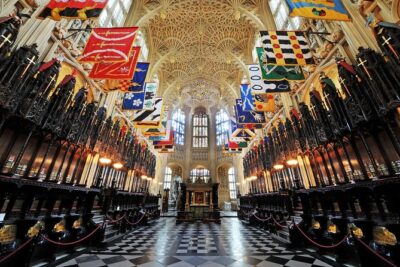
Westminster Abbey Entrance Ticket Including Audio Guide
Read our review →
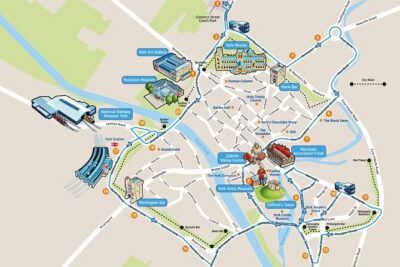
Golden Tours York Hop-on Hop-off Open Top Bus Tour with Audio Guide
Read our review →
Windsor Castle Tour from London with Transportation & Audio Guide
Read our review →
London Panoramic Open Top Bus Tour with Audio Guide
Read our review →
Romans, Vikings and Medieval York: An Audio Tour
Read our review →
Emirates Stadium and Arsenal Museum Entrance Ticket Including Audio Guide
Read our review →
Private Self-Guided Dinky Door Hunt in Cambridge
Read our review →Browse the lists this tour appears in