
Reviewed · SELF-GUIDED TOURS
Western Approaches Self Guided Tour
Liverpool’s wartime secrets sit beneath your feet. I like the chance to walk through the original Western Approaches bunker at my own pace, and the preserved Map Room gives the visit a powerful sense of place. The included annual pass is another useful bonus, especially if you plan to return to Liverpool within 12 months. The main drawback is that much of the display relies on written information and static exhibits, so it may feel less theatrical than London’s Churchill War Rooms.
This is a good choice if you enjoy military history, old working spaces, and museums where the building matters as much as the objects inside. I also like that you can stay longer than the advertised one to two hours, with wartime-priced hot drinks, traditional games, and a film about Liverpool life during the war. Finding the entrance can take a little patience, and you must manage steps down into the bunker.
In This Review
- Key points at a glance
- Why Liverpool needed a secret bunker
- Going below street level
- The Map Room, the heart of Western Approaches HQ
- Telephones, typewriters, and wartime routine
- A self guided format that gives you control
- Liverpool life after the main displays
- Is $24.26 good value?
- Who will enjoy this bunker most?
- Opening hours and planning advice
- Final call: should you book it?
- FAQ
- Where is the Western Approaches Museum?
- How long does the self guided tour take?
- What does the admission ticket include?
- What are the opening hours?
- Is the tour guided?
- Are there steps into the bunker?
- Are service animals allowed?
- Can I cancel for a refund?
Key points at a glance
- An actual underground command centre: Western Approaches HQ was a secret wartime bunker below Liverpool’s city centre, near the Town Hall.
- The Map Room remains in wartime condition: The huge operational room was left as it stood when the bunker closed on 15 August 1945.
- A self guided visit with no fixed pace: Walk the corridors, read the displays, sit at desks, and spend extra time in the rooms that interest you.
- Women’s wartime work receives attention: WRNS and WAAF personnel worked alongside commanders in the bunker, and a separate WRNS display adds useful context.
- Your ticket lasts 12 months: The annual pass allows free return admission within the year.
- A modest museum with real atmosphere: The setting is compelling, though some exhibits would benefit from more audio and interactive material.
Why Liverpool needed a secret bunker
Liverpool was central to the Atlantic supply route during the Second World War. Ships carrying food, fuel, weapons, and other supplies crossed the Atlantic, while German submarines tried to sink them. The Western Approaches command centre helped British forces track those movements and direct a response.
That work depended on accuracy, speed, and secrecy. The staff below Liverpool watched convoy routes, marked enemy positions, passed information to the Royal Navy, and sent reports to the British government. A mistake on the map could put an entire convoy at risk.
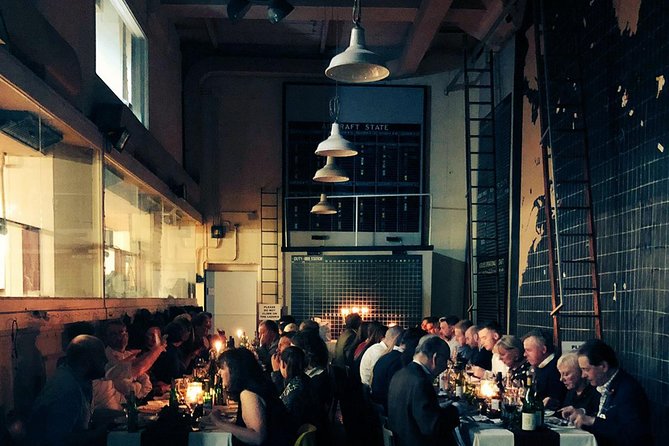
The bunker was not built as a museum. It was a working place, with long shifts, crowded offices, ringing telephones, paperwork, maps, and tightly controlled information. That difference matters. You are not simply looking at a collection of wartime objects in a bright gallery. You are walking through the rooms where people performed a demanding job under pressure.
The site is close to the Town Hall and roughly a five-minute walk from Albert Dock. That makes it easy to add before or after the waterfront museums, though the street entrance can be easy to miss. Liverpool’s street signs are not always helpful, so allow a few extra minutes to get your bearings.
A few more tours and experiences worth a look
- Liverpool Ghost Hunt: Paranormal Detective Self-Guided Game
★ 4.5 · 26 reviews - Private Liverpool Self-Guided Tour
★ 4.5 · 19 reviews - Westminster Abbey Entrance Ticket Including Audio Guide
★ 4.0 · 661 reviews
Going below street level
You begin at street level, where admission is handled, then descend a staircase into the bunker. The steps are an important practical point. The museum states that a moderate level of physical fitness is needed, and the underground setting is not ideal for anyone who finds stairs difficult.
Once below ground, the narrow corridors and plain rooms help establish the character of the place. This is not a polished attraction designed to hide every rough edge. The tunnel-like spaces feel functional, and that plainness suits the story.
A short film introduces the Battle of the Atlantic and gives you the basic setting before you begin the self guided walk. It is a useful start because the bunker contains plenty of names, maps, military terms, and operational detail. A little background makes the later rooms easier to understand.
You then move through about a dozen rooms, each linked to a different part of the command operation. Some spaces are more striking than others. I would not rush through the first half, because the smaller offices and equipment help explain how the larger Map Room functioned.
The Map Room, the heart of Western Approaches HQ
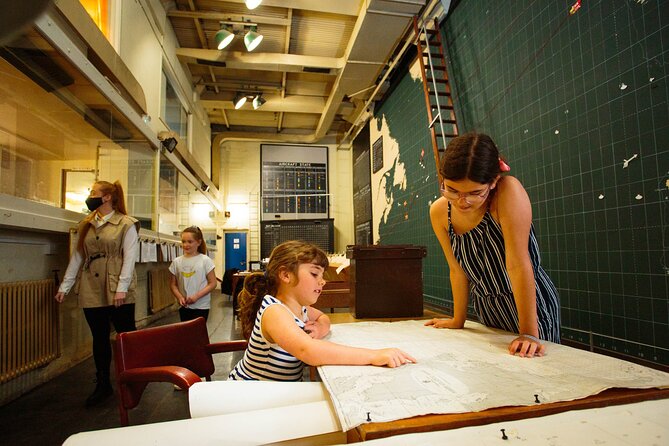
The Map Room is the clear centerpiece. It was the nerve centre of the Battle of the Atlantic, where commanders, WRNS personnel, and WAAF staff monitored shipping lines and convoy routes.
A large map covered the table, with enemy positions and ship movements marked with care. Staff needed to know where vessels were located so the Royal Navy could respond. The room’s importance comes from the connection between ordinary marks on a map and real ships, crews, and cargoes at sea.
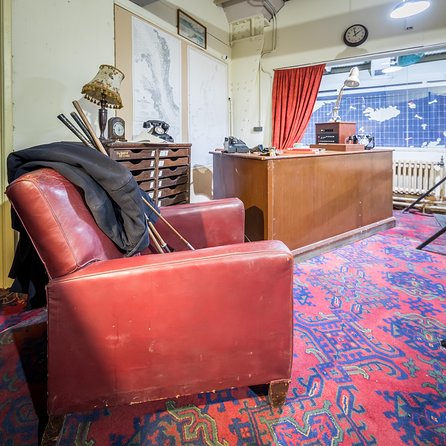
The strongest feature is its condition. The Map Room was left as it was when the doors closed on 15 August 1945. The desks, map tables, ladders, and walls covered with maps create the impression of a working office suddenly paused.
You can look closely at the layout rather than viewing it from behind glass. That physical closeness is one reason the museum works so well for people who enjoy historic places. You can see where staff sat, how they moved through the room, and how much information had to be held in one cramped command centre.
The room is not a high-tech show. You will not find a constant flow of projections or elaborate sound effects. Instead, the maps and arrangement ask you to picture the work for yourself. Some visitors will find that convincing. Others may wish for more audio explanation, particularly around the battle craft blackboard and the marked locations of ships.
Telephones, typewriters, and wartime routine
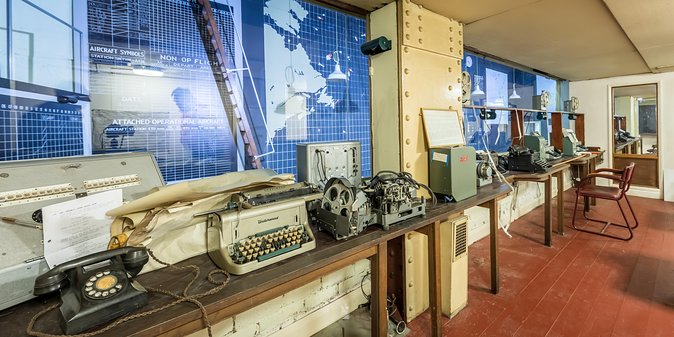
The bunker’s smaller exhibits bring the daily work into focus. You can see documents and tools used to watch enemy convoys and report information while keeping it away from German intelligence.
One especially notable object is one of only two surviving wartime telephones with a direct connection to the War Cabinet in London. It is a small object with a large implication. A call made on that phone could carry information from Liverpool to the centre of British decision-making.
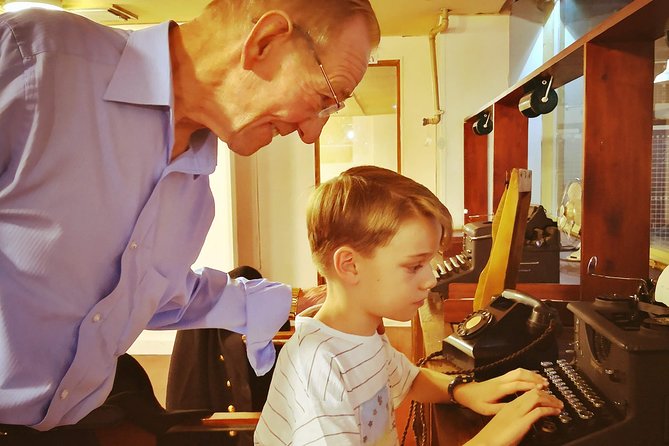
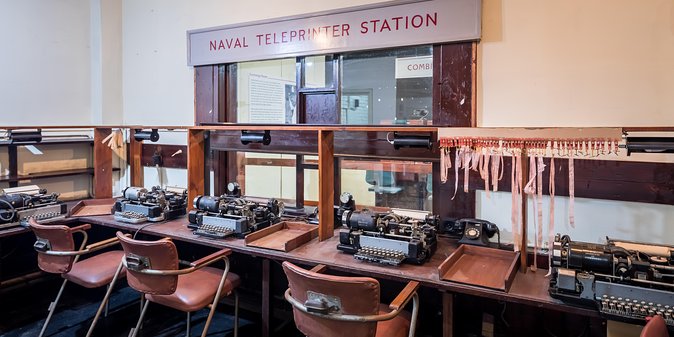
Other parts of the visit are more hands-on. You can sit at desks, try typewriters, operate teleprinter machines, inspect the telephone exchange, and handle uniforms by trying them on. These activities are useful for families because they break up the reading and give younger visitors something physical to do.
The displays also show that the bunker was not powered only by senior commanders. WRNS and WAAF personnel worked through the day and night, handling communications, plotting information, and keeping the operation moving. The separate WRNS display is an unexpected strength because it gives more attention to the women whose work was essential to the command centre.
I would allow time to read the labels, but do not expect every room to provide a long video or interactive presentation. Much of the information comes through text panels. If you prefer a highly produced museum, the visit can feel underdeveloped in places. If you like examining original spaces and making connections yourself, the quieter approach has value.
Something different for another day:
- Beatles Magical Mystery Tour
★ 5.0 · 9,266 reviews - Liverpool: “Blue Route” – City & Beatles Tour
★ 5.0 · 8,562 reviews - Liverpool City Sights Hop On Hop Off City Tour – 24hr Ticket
★ 4.5 · 2,555 reviews - The LFC Stadium Tour
★ 5.0 · 1,548 reviews
A self guided format that gives you control
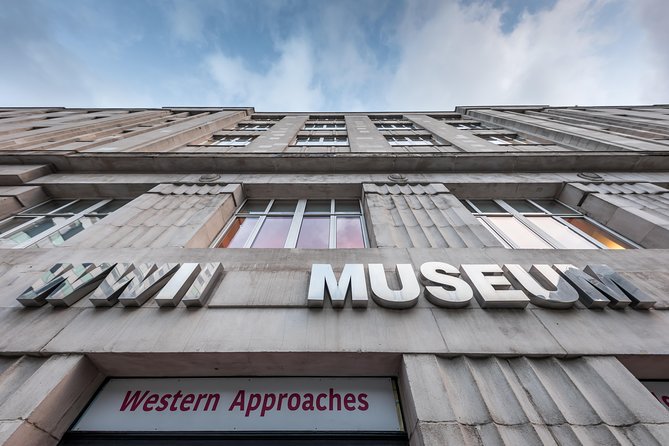
The self guided setup is simple. You enter, receive access to the museum, and move through the bunker without having to keep up with a scheduled group. That is helpful in a place where some rooms deserve five minutes and others may hold your attention for much longer.
The advertised visit takes about one to two hours. I would treat two hours as a sensible target if you plan to read carefully and try the displays. Some people may finish sooner, while others will stay longer because the bunker contains many small details.
The format also suits mixed groups. A serious history enthusiast can spend time with maps and documents, while another person can move on to the uniforms, machines, or film. You are not locked into a single pace.
The tradeoff is the lack of a guide who can explain the operational details as you go. A knowledgeable staff member may be available in the museum, but the ticket is for a self guided visit, not a scheduled guided tour. If you arrive with little knowledge of the Battle of the Atlantic, watch the introductory film and read the basic panels before focusing on the finer points.
Liverpool life after the main displays
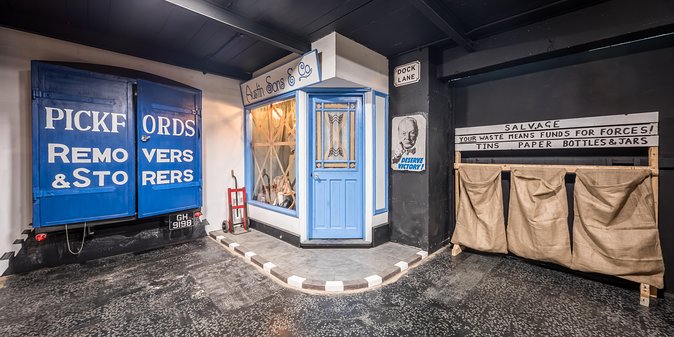
At the end of the route, a separate room offers hot drinks at wartime prices. Traditional games and a film about life in Liverpool during the war add a more local and domestic side to the story.
This space is worth treating as part of the visit rather than a quick refreshment stop. The main bunker explains command work and military planning. The film helps connect that work to daily life above ground, where families dealt with shortages, danger, uncertainty, and long periods of war.
The wartime pricing is a small but pleasant touch. It adds atmosphere without turning the visit into a themed performance. If you are with children, the games can provide a welcome pause after the text-heavy rooms.
Is $24.26 good value?
At about $24.26 per person, the ticket is not the cheapest short museum visit in Liverpool. The value depends on how much you care about the subject and how carefully you explore.
For a one-hour visit, the price may feel high beside Liverpool’s many free cultural attractions. For a full two-hour visit in an original command bunker, it becomes easier to justify. The annual pass changes the calculation. You receive free return admission within 12 months, so a second visit gives the ticket much better value.
The return option is especially useful if you live nearby, are staying in Liverpool for several days, or want to revisit after reading more about the Battle of the Atlantic. The museum contains enough documents, maps, and small operational details that a second look could reveal more than a first quick circuit.
I would not compare it only with a standard gallery. Part of the price pays for access to the preserved site itself. The rooms, corridors, map table, and wartime fittings cannot be separated from the objects on display.
Still, expectations matter. The Churchill War Rooms in London offer a larger, more polished presentation with stronger multimedia storytelling. Western Approaches is smaller and more basic. Its value comes from authenticity, local importance, and the chance to walk through the actual command centre.
Who will enjoy this bunker most?
I would recommend the museum most strongly to:
- People interested in the Second World War and the Battle of the Atlantic
- Families who want a museum with typewriters, teleprinters, uniforms, and games
- Visitors interested in women’s work during wartime
- Anyone who enjoys historic working spaces more than polished exhibition halls
- Repeat visitors who can use the 12-month return admission
- People already visiting Albert Dock or Liverpool’s city centre
You may enjoy it less if you want a fast, heavily guided attraction with frequent films, audio commentary, and interactive technology. The museum asks you to read, look closely, and imagine the work taking place around you.
It is also worth remembering that this is an underground bunker. The corridors may feel enclosed, and the stairs are unavoidable according to the practical information provided. Service animals are allowed, and the museum is near public transportation.
Opening hours and planning advice
The published opening hours are 10:00 AM to 6:00 PM daily, for the stated period from 4 March 2024 through 3 March 2027. Because the experience is self guided, you have plenty of flexibility during the day, but you should not arrive just before closing if you want to read the displays.
The museum is close to the Town Hall and Albert Dock, so it fits neatly into a city centre walking plan. I would pair it with other nearby sights rather than make it your only stop in Liverpool.
Book at least a day ahead if you want the protection of free cancellation. You can cancel for a full refund up to 24 hours before the scheduled start time. Changes or cancellations made within 24 hours are not accepted for a refund.
The experience is usually booked around three weeks in advance, which suggests that planning ahead is sensible during busy periods. Confirmation is provided when you book, and the ticket is mobile, so you do not need a printed voucher.
Final call: should you book it?
Book the Western Approaches Self Guided Tour if you want to understand Liverpool’s wartime role from inside the place where decisions were made. The preserved Map Room, the direct War Cabinet telephone, and the evidence of WRNS and WAAF work give the museum real weight.
I would not book it expecting the scale or polished storytelling of the Churchill War Rooms. The text-heavy displays can feel plain, and some maps and blackboards would benefit from audio or interactive explanation. But the bunker itself does much of the work.
At $24.26, the annual return pass makes this a better deal for anyone likely to visit twice. For a first-time Liverpool visitor with an interest in military history, allow two hours, wear comfortable shoes, and look carefully for the entrance near the Town Hall. This is a small museum, but its subject is large, and its most important rooms remain remarkably close to the way they were left.
FAQ
Where is the Western Approaches Museum?
The museum is in Liverpool, England, beneath the city centre near Liverpool Town Hall. It is also about a five-minute walk from Albert Dock.
How long does the self guided tour take?
The visit takes approximately one to two hours. You can move at your own pace and spend extra time in the rooms that interest you.
What does the admission ticket include?
Admission to the Western Approaches Museum is included. The ticket also provides free return admission within 12 months through the annual pass.
What are the opening hours?
The published opening hours are 10:00 AM to 6:00 PM, Monday through Sunday, for the period listed from 4 March 2024 to 3 March 2027.
Is the tour guided?
No. This is a self guided museum visit, so you explore the bunker independently rather than following a scheduled guide.
Are there steps into the bunker?
Yes. There are steps down from the street-level entrance into the underground bunker.
Are service animals allowed?
Yes. Service animals are allowed at the museum.
Can I cancel for a refund?
Yes. You can cancel up to 24 hours before the experience start time for a full refund. Cancellations or changes made less than 24 hours before the start time are not accepted for a refund.
Just added around Liverpool
- Welcome to Liverpool Tour – 2 Hour Private Walking Tour★ 5.0 · 7 reviews
- Private Half-Day Liverpool Tour with a Local, Personalized★ 5.0 · 7 reviews
- 3 Hours Private City Highlights Liverpool Walking Tour★ 5.0 · 7 reviews
- Football Experience With A Local Host In Liverpool★ 4.5 · 8 reviews
- Liverpool Football Club Museum Entry★ 5.0 · 10 reviews
- The Liverpool Pass®: All top attractions inc. Hop-On Hop-Off Bus Tour | 2-Days★ 4.5 · 11 reviews
- Liverpool Ultimate Beatles Ticket To Ride Half-Day PRIVATE Tour★ 5.0 · 12 reviews
- Liverpool Film and Music – 2 hour Private Walking Tour★ 5.0 · 12 reviews
Self-Guided Tours, compared.
Westminster Abbey Entrance Ticket Including Audio Guide
Read our review →
Golden Tours York Hop-on Hop-off Open Top Bus Tour with Audio Guide
Read our review →
Windsor Castle Tour from London with Transportation & Audio Guide
Read our review →
London Panoramic Open Top Bus Tour with Audio Guide
Read our review →
Romans, Vikings and Medieval York: An Audio Tour
Read our review →
Emirates Stadium and Arsenal Museum Entrance Ticket Including Audio Guide
Read our review →
Private Self-Guided Dinky Door Hunt in Cambridge
Read our review →
Buckingham Palace: Walking Tour with Entry & Audio Guide
Read our review →Browse the lists this tour appears in