
Reviewed · WALKING TOURS
Reel Tours: Liverpool Film Location Walking Tour
Liverpool has a movie set around every corner. I like the local storytelling and the way the tour links famous streets with films, television, music, and city history. I also like that guide Gary brings personal energy to stories about Samuel L. Jackson, Tom Hardy, and productions that made Liverpool look like Manhattan. The main drawback is the length: at about two and a half hours and 2.6 miles, it may feel a little long if you want a quick city introduction.
This is a smart choice for film fans who also want to see central Liverpool on foot. You get the Cavern Club, the Three Graces, Castle Street, William Brown Street, and St George’s Hall in one walk, with visual aids filling in what you cannot see from the pavement. The tour has earned a 5 out of 5 rating from 188 reviews, with 100 percent recommending it, though one useful criticism is that two hours might suit some people better.
In This Review
- Key points at a glance
- Why Liverpool makes such a good film set
- Williamson Square starts the story
- Beatles history meets film locations on Stanley Street
- Mathew Street and the Cavern Club exterior
- Castle Street turns Liverpool into cinema
- From Mann Island to the Three Graces
- The Royal Liver Building becomes Manhattan
- Exchange Flags and cinematic civic buildings
- Dale Street brings local character and Tom Hardy
- William Brown Street is the film-history heavyweight
- St George’s Hall ends with behind-the-scenes stories
- Is the $27.78 price good value?
- Who should book this Liverpool film tour?
- Practical tips for getting more from the walk
- Should you book Reel Tours: Liverpool Film Location Walking Tour?
- FAQ
- Where does the Liverpool Film Location Walking Tour start?
- Where does the tour end?
- How long is the walking tour?
- Is the Cavern Club interior included?
- How many people can join the tour?
- What happens if the weather is poor?
Key points at a glance
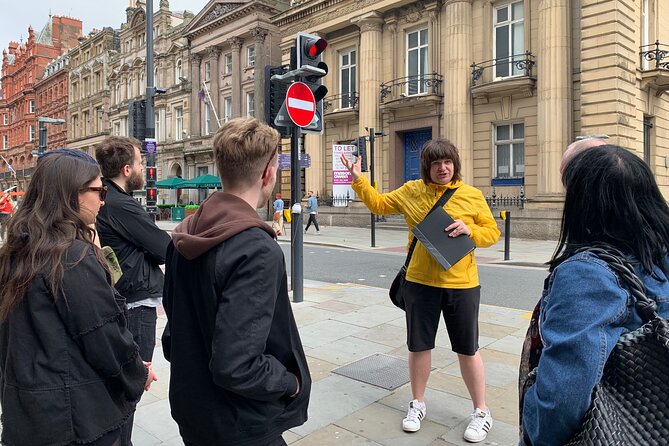
- Gary’s personal delivery: The guide’s enthusiasm is a major part of the experience, especially during behind-the-scenes stories about film crews and actors.
- Liverpool as a movie double: Castle Street, the Royal Liver Building, and St George’s Hall have all represented other cities and periods on screen.
- A 2.6-mile city walk: The route connects Williamson Square with the waterfront and finishes near Lime Street Station.
- Free outdoor stops: You see important locations from the street without paying separate admission, though the Cavern Club interior is not included.
- More than film trivia: The walk adds Beatles history, dockland context, architecture, and local stories about Castle Street and St George’s Hall.
- Small maximum group: Up to 20 people can join, which should make it easier to hear the guide in busy central areas.
Why Liverpool makes such a good film set
Liverpool works on screen because its streets can suggest several places and periods without much alteration. Grand civic buildings, old commercial streets, waterfront views, and narrow lanes sit close together. That gives filmmakers a useful city centre, and it gives you a compact walking route.
Reel Tours uses that setting well. Instead of taking you to one isolated location, the walk shows how whole sections of Liverpool have been reshaped for film and television. A familiar building may become downtown Manhattan. A Liverpool street may represent another British city. St George’s Hall may double for places far beyond Merseyside.
I like this approach because you are not simply ticking off locations. You are learning to look at the city in two ways: as Liverpool today and as the place a camera once turned it into. Gary’s stories add the human side, including cast and crew details and the practical tricks used during filming.
The tour begins at 11am in Williamson Square and ends at St George’s Hall. That timing matters. You start in the heart of the shopping and theatre district, then walk through the historic centre toward the river before returning inland. The route gives you a useful orientation to central Liverpool, though it is not a relaxed, stop-for-lunch sightseeing stroll.
More Walking Tours in Liverpool
- A Walk Through Time: History of Liverpool Walking Tour
★ 5.0 · 911 reviews - Liverpool Ghost Walking Tour
★ 5.0 · 862 reviews - Beatles Famous Walking Tour Of Liverpool- Fully Guided
★ 5.0 · 751 reviews
Williamson Square starts the story
Williamson Square is a sensible meeting point because it is one of Liverpool’s early public squares and sits near several important cultural sights. The fountain helps you identify the starting area, and the opening discussion introduces the city as both a real place and a regular film location.
You spend about 20 minutes here, the longest stop at the beginning of the walk. That gives Gary time to explain the square’s role in local film history before moving into the narrower streets nearby.
The opening is useful for setting expectations. This is an outdoor talk, not a series of building visits. You will hear about productions and locations while looking at the actual streets, façades, and public spaces around you.
Beatles history meets film locations on Stanley Street
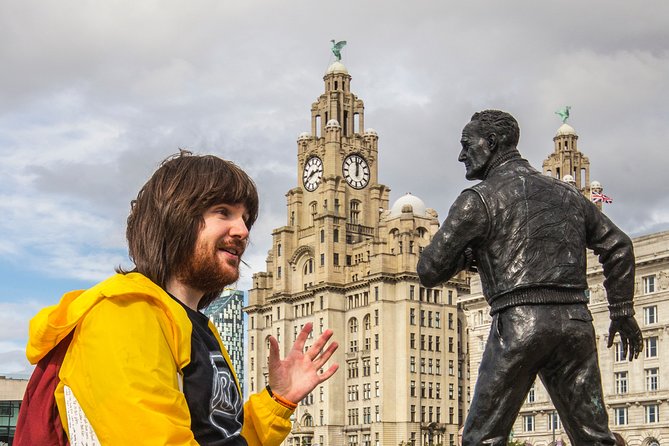
The next stop brings you to the Eleanor Rigby statue on Stanley Street. The statue is a natural Liverpool landmark, but the tour uses it for more than a quick photograph. Gary explains its lesser-known story and connects it with two filming locations only a short distance away.
This section should suit you if your interests run across music and cinema. The Beatles connection is not the main subject of the tour, but it gives the walk a stronger sense of place. Liverpool’s cultural identity is not divided into neat boxes, and this stop shows how music history and screen history overlap in the same few yards.
You spend about 10 minutes here. That is enough for a focused explanation, but not enough for a long pause or extended photography session. If you want a picture of the statue, take it promptly so you can keep up with the group.
Mathew Street and the Cavern Club exterior
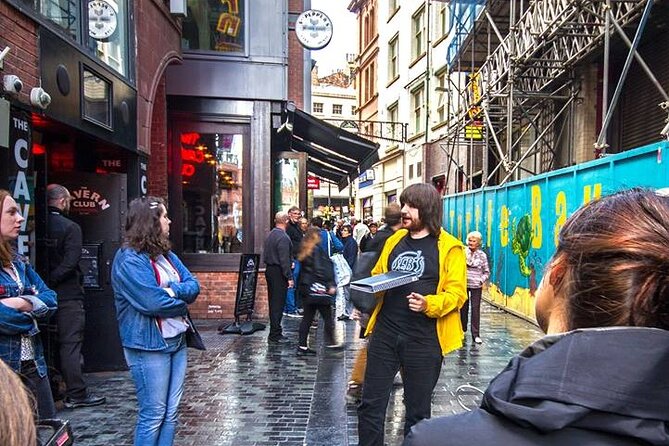
Mathew Street brings the tour into one of Liverpool’s best-known entertainment areas. You see the exterior of the Cavern Club and hear how the street has developed around its famous music venue.
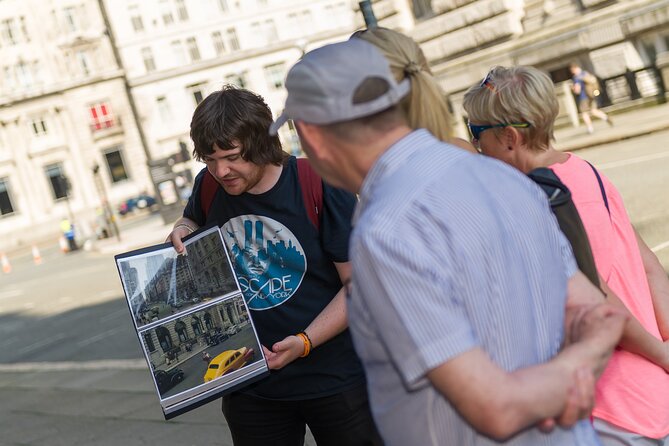
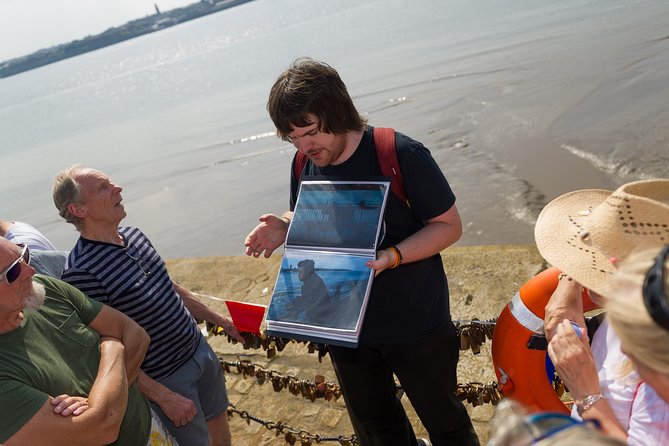
The Cavern Club itself is not included as an interior visit. That is important to know before booking. Gary uses photographs to show what the club looked like in the 1960s, then adds information about musicians who performed there and about film and television productions that used Mathew Street.
I see this as a good compromise for a film-location walk. You get the setting and the context without turning the tour into a separate music-history visit. Still, if entering the Cavern Club is a priority, you will need to arrange that independently.
The stop lasts about 10 minutes. Mathew Street can be lively, so stay close enough to hear Gary and expect the group to keep moving rather than spread out for long.
Something different for another day:
- Beatles Magical Mystery Tour
★ 5.0 · 9,266 reviews - Liverpool: “Blue Route” – City & Beatles Tour
★ 5.0 · 8,562 reviews - Liverpool City Sights Hop On Hop Off City Tour – 24hr Ticket
★ 4.5 · 2,555 reviews - The LFC Stadium Tour
★ 5.0 · 1,548 reviews
Castle Street turns Liverpool into cinema
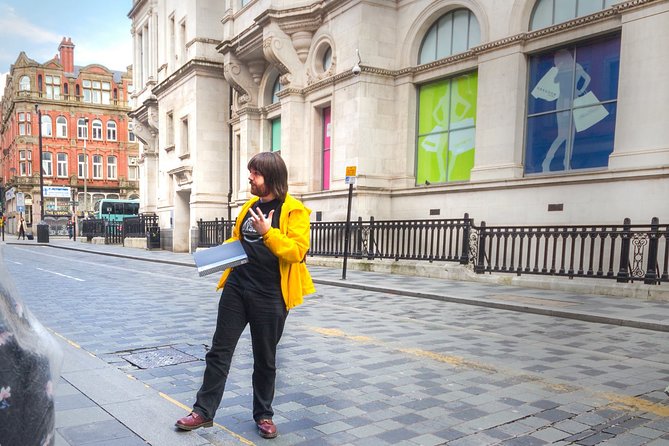
Castle Street is one of the strongest parts of the route. Three major motion pictures have filmed along this street, and Gary explains how the productions used its buildings and viewpoints.
You also get fine views of Liverpool Town Hall and the Queen Victoria monument. This is where the tour’s two subjects, film and local history, work especially well together. Gary explains that Castle Street really did have a castle long ago, a small historical detail that gives the street more meaning than its movie appearances alone.
The stop takes about 10 minutes. That is enough to understand how the street looked on screen, but the value comes from comparing the real view with Gary’s visual aids and descriptions. You may never look at a grand civic street in quite the same way after hearing how filmmakers frame it.
From Mann Island to the Three Graces
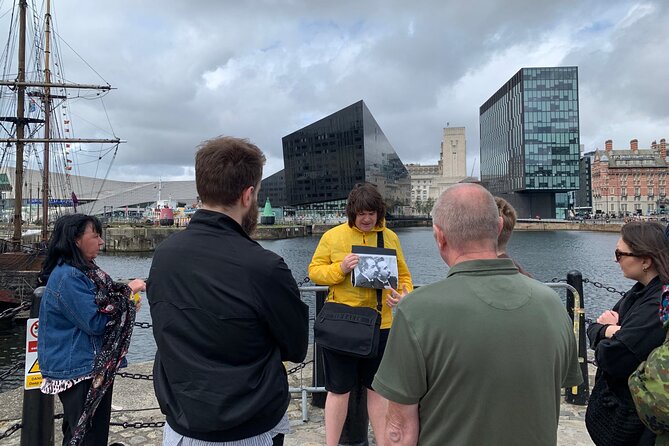
At Mann Island, the walk reaches the River Mersey and shifts toward Liverpool’s dockland story. Gary discusses the Strand, the long road linking many of the city’s docks, and explains why this route mattered to the growth of cinema in the area.
This is a useful pause in the tour because it widens the subject. You are no longer hearing only about individual buildings. You are learning how roads, docks, and the river helped shape the city that filmmakers later used.
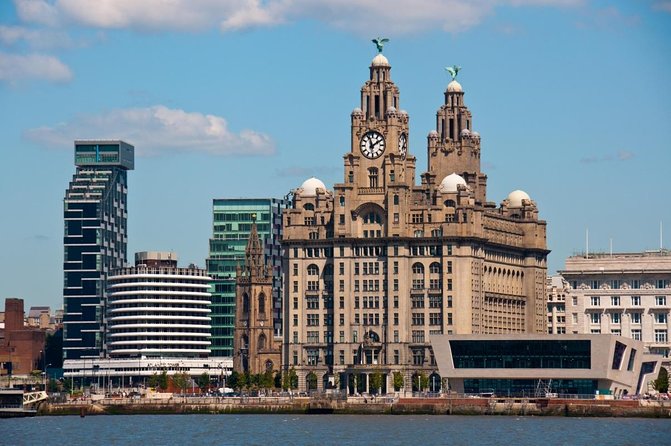
The next stop is Pier Head, where you can take in the Three Graces: the Port of Liverpool Building, the Cunard Building, and the Royal Liver Building. These are among Liverpool’s most recognizable structures, and their waterfront setting gives the tour one of its best views.
Gary covers the buildings’ local story and their appearances in independent films, Hollywood productions, and television. He also explains how the River Mersey itself has featured in films made in and around Liverpool.
You spend about 20 minutes at Pier Head, which gives this major setting the time it deserves. Bring a coat or rain layer if the weather looks uncertain. The stop is outdoors beside the river, and the tour requires good weather to operate.
The Royal Liver Building becomes Manhattan
Outside the Royal Liver Building, Gary uses visual aids to show how the building has appeared in film and television. This is a short five-minute stop, but it carries one of the tour’s most memorable ideas: Liverpool’s grand waterfront architecture was transformed to resemble downtown Manhattan in the 1940s.
That kind of production detail is exactly why I would choose this tour over a general city walk if you enjoy movies. You see a building you might already know, then learn how lighting, costumes, camera angles, and surrounding streets can change its identity.
The Royal Liver Building is also a good example of the tour’s wider purpose. You do not need to recognize every title mentioned to appreciate the lesson. The important point is that Liverpool often provides a convincing stand-in for somewhere else.
Exchange Flags and cinematic civic buildings
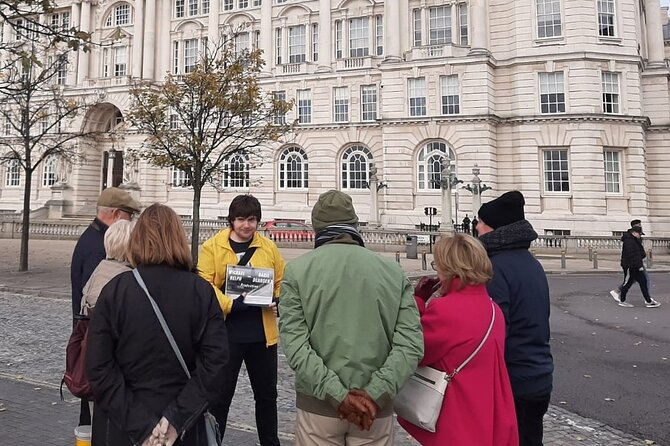
Exchange Flags offers views of Martins Bank and Liverpool Town Hall. Gary explains the background of both buildings, then links them to well-known films and major cinematic events.
This stop should appeal to fans of recent Hollywood productions, as well as musical lovers. The setting has the formal architecture that filmmakers often want for grand interiors, public ceremonies, and period scenes, even though this part of the tour remains outside.
The walk is strongest when it combines a building’s real purpose with its screen identity. You get a better sense of Liverpool when you know what these civic spaces were designed to do, not just which actor appeared nearby.
You spend about 10 minutes here. The route is moving back through central Liverpool, so this is a good time to notice how quickly the waterfront and commercial district connect with the city’s older public buildings.
Dale Street brings local character and Tom Hardy
Dale Street is a brief five-minute stop, but it offers one of the more local sections of the walk. Gary reveals the secrets of a particular Scouse film staple and explains why the street is a personal favourite of Tom Hardy.
The appeal here is less about a grand landmark and more about local character. A short stretch of road can carry a strong sense of Liverpool identity while also attracting major film talent.
Because this stop is brief, listen closely. It is the sort of place where the story matters more than the view, and the group will not linger for long.
William Brown Street is the film-history heavyweight
William Brown Street is one of the route’s most impressive settings. From here, you see St John’s Gardens, the World Museum, Central Library, the Walker Art Gallery, County Sessions House, and other major public buildings.
The architecture gives filmmakers a broad range of visual options. Pavements, steps, gardens, and formal façades can suggest different eras and cities. Gary takes you through the area’s screen connections across several decades, including productions featuring household names and Oscar-winning performers.
I especially like this stop because it asks you to notice the whole setting rather than one famous building. William Brown Street functions as a ready-made collection of backdrops. You may recognize the buildings from real life without realizing how often they have appeared in films and television.
The stop lasts about 10 minutes. That is enough for an overview, though anyone wanting to explore the World Museum, Walker Art Gallery, or Central Library will need to return separately. Those attractions are seen from the route, not toured inside.
St George’s Hall ends with behind-the-scenes stories
The tour finishes on the steps of St George’s Hall, with about 15 minutes devoted to film productions in and around the building. This is a strong ending because the location itself has an unmistakable screen presence.
Gary shares behind-the-scenes stories involving major actors and productions. He also explains how St George’s Hall has doubled for several cities around the world. The location’s grand steps and classical frontage give filmmakers an immediate sense of scale, ceremony, and old-world drama.
The stories go beyond famous names. You hear how a small food company went global because of something connected with the steps, and how a student became very wealthy because of movies filmed at this site. These details give the finale some local colour and keep it from becoming a simple list of credits.
The ending is practical, too. St George’s Hall is opposite the Empire Theatre and Liverpool Lime Street Station, so you are well placed for onward plans. You could continue sightseeing, catch a train, or use the location as a central point for lunch and other city attractions.
Is the $27.78 price good value?
At $27.78 per person, I consider this good value if you want a guided experience rather than a self-directed list of film addresses. The tour lasts around two and a half hours, covers about 2.6 miles, and includes a local guide, visual aids, and a broad range of city sights.
The value is not in paid admissions. Every listed stop is viewed from outside, and you do not enter the Cavern Club. You are paying for the connecting stories, the local perspective, and the chance to understand how Liverpool has been used on screen.
A maximum group of 20 people helps keep the experience manageable. It is still a public city walk, so street noise and crowds may affect what you hear, but the group size is more personal than a large coach tour.
The clearest trade-off is time. One person found that two hours would be ideal, and I can understand that view. The route includes many short stops, so the tour can feel full rather than leisurely. If you like detail and stories, the extra 30 minutes is useful. If you mainly want quick photographs, it may feel slow.
Who should book this Liverpool film tour?
I would recommend it to:
- Film and television fans who enjoy learning how locations are altered for the screen.
- Beatles fans who want music history included without booking a separate music tour.
- First-time visitors who want a guided look at central Liverpool.
- Architecture fans interested in civic buildings, waterfront landmarks, and public squares.
- Visitors who prefer a small walking group to a coach or large organized tour.
- Anyone curious about the connection between local streets and major Hollywood productions.
You should think twice if you need indoor attractions, a very short walk, or a fully weatherproof activity. The tour is outdoors, lasts about two and a half hours, and requires good weather. Most people can take part, and service animals are allowed, but the distance and duration still matter when planning your day.
The guide is central to the experience. Gary’s enthusiasm receives repeated praise, and the tour depends on his ability to turn buildings and pavements into engaging stories. If you enjoy a lively guide with plenty of anecdotes, this is likely a strong match. If you prefer quiet sightseeing with only occasional commentary, you may find the pace and talk too much.
Practical tips for getting more from the walk
Book ahead if your Liverpool dates are fixed. The experience is often reserved about 44 days in advance, and the group limit is 20 people.
Wear comfortable shoes. The route covers 2.6 miles through central streets, with repeated standing stops. You should also check the forecast before setting out, since poor weather can lead to a new date or a full refund rather than a normal departure.
Arrive ready for an 11am start at Williamson Square. Keep the meeting and ending points in mind when planning other activities. The finish at St George’s Hall is especially convenient for Lime Street Station and the Empire Theatre.
Bring a phone or camera, but do not let photography distract you from the visual explanations. The visual aids matter, particularly at the Cavern Club, Royal Liver Building, and St George’s Hall, where the contrast between the real location and its screen version is the point.
You can cancel for a full refund up to 24 hours before the start time. Changes or cancellations inside that window are not refunded, so check your plans before the deadline.
Should you book Reel Tours: Liverpool Film Location Walking Tour?
Book it if you want Liverpool explained through film, television, music, architecture, and local stories all at once. The route is well planned, the price is fair for a two-and-a-half-hour guided walk, and Gary’s enthusiasm appears to be a major strength.
Skip it if you want to enter film-related buildings, spend a long time at each attraction, or keep your sightseeing under two hours. For everyone else, this is a lively way to see central Liverpool with fresh eyes, especially if the idea of St George’s Hall becoming another city or the Royal Liver Building becoming 1940s Manhattan sounds like fun.
FAQ
Where does the Liverpool Film Location Walking Tour start?
The tour starts at Williamson Square in Liverpool, England, at 11am.
Where does the tour end?
It ends at St George’s Hall, opposite the Empire Theatre and Liverpool Lime Street Train Station.
How long is the walking tour?
The outdoor tour lasts about two and a half hours and covers approximately 2.6 miles.
Is the Cavern Club interior included?
No. The tour visits the exterior of the Cavern Club. Photographs are shown to explain what the venue was like in the 1960s.
How many people can join the tour?
The maximum group size is 20 people.
What happens if the weather is poor?
The experience requires good weather. If it is canceled because of poor weather, you will be offered another date or a full refund.
Just added around Liverpool
- Welcome to Liverpool Tour – 2 Hour Private Walking Tour★ 5.0 · 7 reviews
- Private Half-Day Liverpool Tour with a Local, Personalized★ 5.0 · 7 reviews
- 3 Hours Private City Highlights Liverpool Walking Tour★ 5.0 · 7 reviews
- Football Experience With A Local Host In Liverpool★ 4.5 · 8 reviews
- Liverpool Football Club Museum Entry★ 5.0 · 10 reviews
- The Liverpool Pass®: All top attractions inc. Hop-On Hop-Off Bus Tour | 2-Days★ 4.5 · 11 reviews
- Liverpool Ultimate Beatles Ticket To Ride Half-Day PRIVATE Tour★ 5.0 · 12 reviews
- Liverpool Film and Music – 2 hour Private Walking Tour★ 5.0 · 12 reviews
Walking Tours, compared.

Oxford University Walking Tour With University Alumni Guide
Read our review →
Tour for Muggles The Ultimate Harry Potter Walking Tour in London
Read our review →

Cambridge University Walking Tour by Alumni™ Kings College Option
Read our review →
Blackbeard to Banksy – The Ultimate Walking Tour of Bristol
Read our review →
Air Raid Shelter + St. Nicholas Market Walking Tour
Read our review →
Walking Tour of Bath with Blue Badge Tourist Guide
Read our review →
Changing of the Guard Guided Walking Tour in London
Read our review →Browse the lists this tour appears in