
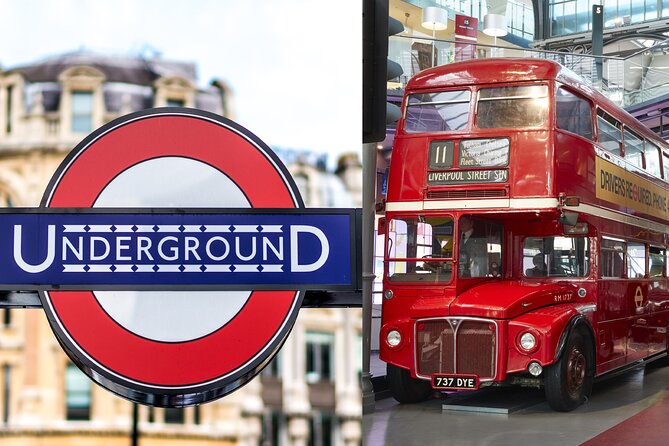
Reviewed · MUSEUMS
Secrets of Underground Walking Tour with London Transport Museum
London’s secrets run below street level. This half-day experience turns familiar Tube stops into history lessons, with an expert guide leading you from Baker Street to Westminster through old platforms, unusual station stories, and the engineering behind the world’s first underground railway. I like the clever route through central London and the included entry to the London Transport Museum. I also like that audio headsets help you hear the guide in noisy stations.
The main caution is that the tour does not take you inside abandoned ghost stations. You see the outside of some disused stations and hear their stories. You also need to pay for your own Underground travel, and the museum visit is independent rather than guided.
In This Review
- Key points to know before you book
- Why London’s Tube makes such a good walking tour
- Baker Street at 1:00 pm: begin with the first Underground railway
- Oxford Circus and the problem of changing trains
- Green Park and Down Street’s lost station
- Piccadilly Circus and layered station design
- Victoria Embankment and the city built beside the Thames
- Westminster: finish beneath one of London’s grandest areas
- Getting to the London Transport Museum on your own
- What the $32 price really covers
- The guide can make or break the afternoon
- Walking demands and the afternoon schedule
- Who will enjoy this London Underground tour
- Booking advice and cancellation terms
- Should you book this tour?
- FAQ
- Where does the Secrets of the Underground tour start?
- Where does the guided walking tour finish?
- Is entry to the London Transport Museum included?
- Is the museum visit guided?
- Where is the London Transport Museum?
- Is transport to the museum included?
- Do I need an Oyster card or Travelcard?
- Can I enter the ghost stations?
- How long is the experience?
- What is the cancellation policy?
Key points to know before you book
- Baker Street starts the story: Meet by the Sherlock Holmes statue outside Baker Street Underground Station at 1:00 pm, near one of the original Metropolitan Railway stops.
- Disused stations are viewed from outside: Down Street and other closed stations are part of the discussion, but direct access to ghost platforms is not included.
- The guide leads the most valuable part: The walking tour runs to about 3:30 pm, with live commentary and personal audio headsets.
- You pay for Tube travel separately: Bring an Oyster card, Travelcard, or contactless payment card valid for Zone 1.
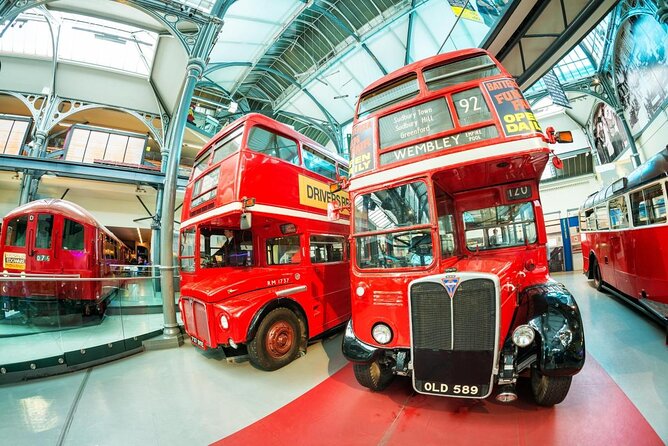
- The museum comes afterward: Your London Transport Museum admission is included, but you make your own way to Covent Garden and explore without a guide.
- The price is modest, with extra costs: At about $32, the tour offers good value if you want expert context, though transit and food are not included.
Why London’s Tube makes such a good walking tour
The London Underground is not just a way to get across town. It is a record of London’s growth, engineering arguments, wartime decisions, changing neighborhoods, and old transport companies that eventually became one system.
That makes this tour more useful than simply riding the Tube from one attraction to another. You stop at major interchanges, look at the shape and location of stations, and hear why some platforms survived while others disappeared. The guide’s live commentary gives the network a human scale that signs and maps rarely provide.
I especially like the way the route uses working stations as teaching points. Baker Street, Oxford Circus, Piccadilly Circus, Embankment, and Westminster are still busy parts of the network, yet each carries a different chapter of Underground history.
The tour is limited to a maximum of 25 people. That is not a tiny group, but it is small enough for a guide to keep the walk together. The audio headset is a useful touch. Stations can be loud, and without one, a good explanation can vanish under the brakes, announcements, and footsteps.
More Walking Tours in London
- Tour for Muggles The Ultimate Harry Potter Walking Tour in London
★ 5.0 · 4,684 reviews - London Jack The Ripper Guided Walking Tour
★ 5.0 · 3,131 reviews - Changing of the Guard Guided Walking Tour in London
★ 5.0 · 1,793 reviews
Baker Street at 1:00 pm: begin with the first Underground railway
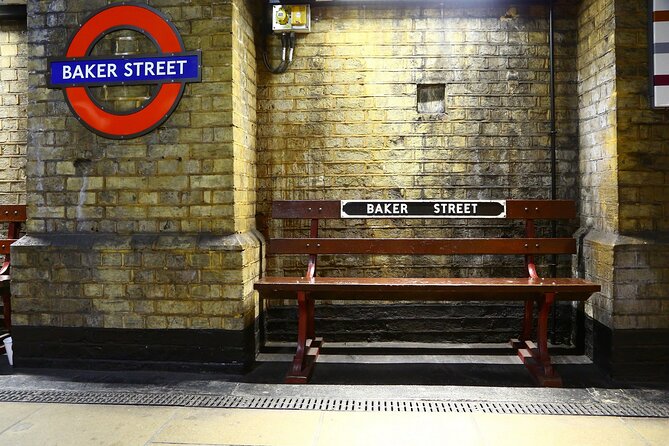
Meet at the Sherlock Holmes statue outside Baker Street station at 1:00 pm. This is an easy place to identify, but allow time to find the correct station exit and gather before the walk begins.
Baker Street is a fitting starting point because it connects directly with the Metropolitan Railway, the world’s first underground railway. The station is among the original stops on that system, so the tour starts with the birth of underground transport rather than jumping straight into modern Tube trivia.
This first stop lasts about 30 minutes. You can expect the guide to set out the basic story of how London began building railways beneath its streets and how the Underground developed into a network of separate lines and companies.
The station is also a practical place to begin because it is well connected by public transport. Your own fare to reach the starting point is not included, so use contactless payment, an Oyster card, or another valid Zone 1 travel option.
Oxford Circus and the problem of changing trains
The next stop is Oxford Circus, another 30-minute station visit. This is one of central London’s key interchanges, and the focus here is the Victoria line’s arrival and the way cross-platform interchange was planned.
Construction began in 1962 on the initial Walthamstow to Victoria section. The Victoria line platforms at Oxford Circus opened on March 7, 1969, as part of the second extension from Warren Street to Victoria.
For you, the value of this stop is seeing how passenger convenience shapes station design. A Tube map makes interchange look simple. On the ground, connecting lines means fitting new platforms, tunnels, stairs, ventilation, and passenger routes into a crowded city.
Oxford Street can be busy, so stay close to the guide and keep your headset on. This is less about taking photographs and more about understanding how an everyday interchange was planned and expanded.
Green Park and Down Street’s lost station
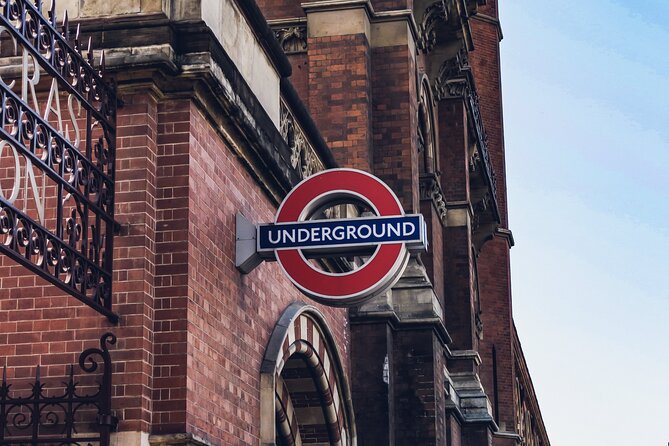
At Green Park, the tour turns toward Down Street station, which once served the Piccadilly line. Down Street opened in 1907 under the Great Northern, Piccadilly and Brompton Railway. It sat between Dover Street, now called Green Park, and Hyde Park Corner.
The station closed in 1932. Its low passenger numbers and closeness to nearby stations made it unnecessary, a reminder that a station can become obsolete even while the line around it remains important.
This is one of the tour’s most interesting subjects, but expectations matter. You do not enter Down Street or walk through its abandoned platforms. You see the station from outside and learn what happened to it. One person who enjoyed the walk specifically noted this distinction, so treat ghost stations here as stories and exterior views, not access to sealed platforms.
That limitation will disappoint anyone hoping for an underground expedition into closed stations. Still, the explanation has value because it shows how London’s network changes over time. Some stations close because they are too close together, while others lose their purpose after neighborhoods and travel patterns shift.
More Museums in London:
- Tower of London and Crown Jewels Exhibition Ticket
★ 4.5 · 6,677 reviews - Chelsea FC Stadium Tours and Museum
★ 5.0 · 1,908 reviews - Official tickets: Moco Modern & Contemporary Art Museum
★ 4.5 · 1,157 reviews - British Museum London Guided Tour Semi-Private 8ppl Max
★ 5.0 · 984 reviews
Piccadilly Circus and layered station design
Piccadilly Circus offers another look at the age and complexity of the Underground. The station opened on March 10, 1906, for the Baker Street and Waterloo Railway, now the Bakerloo line. The Piccadilly line platforms opened later, on December 15, 1906.
The important point is that this was never one single, perfectly planned system. Different railways arrived at different times, with different names and owners. The modern Underground makes more sense once you understand that its stations are layers of earlier decisions.
A 30-minute stop here gives the guide time to explain how the station developed and why central interchanges can feel so intricate. You will still be in a working Tube station, not a museum set. That is part of the appeal, but it also means crowds, noise, and walking between areas are part of the experience.
Victoria Embankment and the city built beside the Thames
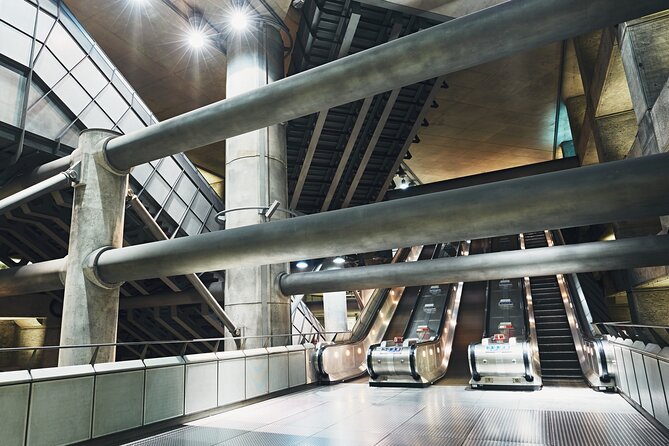
The route then reaches Embankment, beside Victoria Embankment and the north bank of the Thames. The embankment itself was developed in the 19th century to reclaim marshy land from the riverbank. That bit of city building helps explain why transport, roads, sewers, and public spaces often appear together in this part of London.
Embankment station gives the tour another chance to connect transport with urban planning. Underground lines do not exist in isolation. They follow streets, rivers, bridges, older buildings, and land that was reshaped before the railway could use it.
This 30-minute stop should appeal to you if you like London as a working city rather than a collection of monuments. The subject is not only trains. It is how the city made room for them.
Westminster: finish beneath one of London’s grandest areas
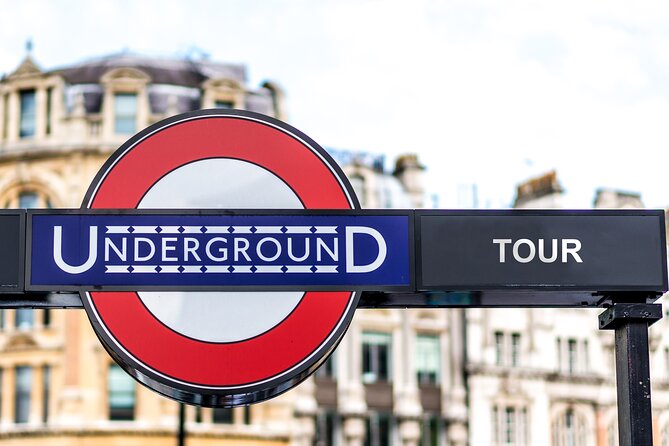
The guided walk ends at Westminster Underground Station at about 3:30 pm. Westminster station opened as Westminster Bridge on December 24, 1868, under the steam-operated District Railway, now the District line.
At first, access came through a passage from Bridge Street and a pedestrian subway beneath the road. That detail shows how early Underground stations had to negotiate ordinary streets and pedestrian movement long before the modern network took shape.
Westminster is a strong finishing point because it places the Underground story beside one of London’s most recognizable civic areas. You can stop here, continue sightseeing nearby, or make your own way to the museum.
The guided portion takes about two and a half hours, despite the overall experience being advertised at roughly five and a half hours. The remaining time belongs to your independent museum visit and your journey there, so plan your afternoon accordingly.
Getting to the London Transport Museum on your own
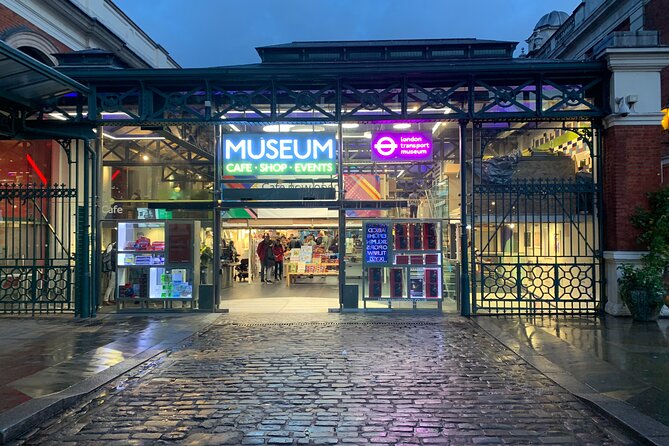
London Transport Museum admission is included, but the guide does not accompany you. You must travel independently from Westminster to Covent Garden Piazza, where the museum is located.
The museum is also within about a 4 to 10 minute walk of Leicester Square, Holborn, Charing Cross, and Embankment stations. Since transport to the museum is not included, you should keep your Oyster card, Travelcard, or contactless payment card ready.
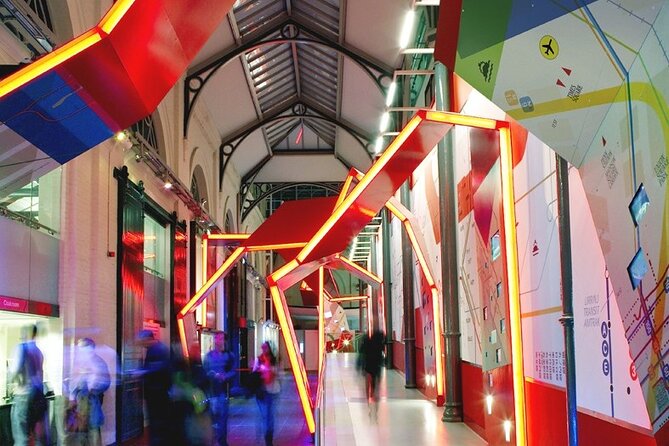
Allow about 1 hour and 30 minutes for the museum. You can explore London’s transport story over the last 200 years, including the people who worked on the system and the people who used it. The displays also look toward future transport technology and how it may affect London.
I like this arrangement because you can set your own pace after the structured walk. If you enjoy reading displays, you can take your time. If you are ready for a break after the stations, you can shorten the museum visit. The tradeoff is that you receive no guided introduction once you enter.
Pay attention to your ticket at the museum entrance. Two low-rated experiences described trouble with admission or confusion about the ticket, including one report of being asked to pay an additional amount. The operator responded by asking for direct contact to resolve the issue. That does not prove every booking will have a problem, but it is sensible to carry your confirmation and check the admission terms before you leave the meeting point.
What the $32 price really covers
At about $32, this is a reasonably priced way to add structure and expert commentary to a central London afternoon. You receive the guided Underground walk, a personal audio headset for that walk, and entry to the London Transport Museum.
The value is strongest if you already plan to visit the museum and enjoy transport history. Buying those elements separately could take more planning, while this experience links them through one theme.
The price does not cover Tube fares, lunch, or hotel pickup and drop-off. Those extras are not surprising in London, but they matter when you set your budget. You also need to travel from Westminster to Covent Garden on your own.
I would not book this only for access to closed stations. That is not what the experience provides. I would book it for the guide’s stories, the chance to read active stations differently, and the museum admission afterward.
The guide can make or break the afternoon
The guide is the heart of the walking portion. John received especially warm praise for making the history entertaining and easy to follow. One family group even had the tour with John as a private-feeling experience because they were the only people in their group at the time.
That does not guarantee John will lead your departure, but it shows the difference a good guide can make. The information is detailed enough to interest transport fans, yet the best version of this tour should also work for someone who simply wants to understand London better.
Use the headset. It is supplied for the Underground portion and helps you catch names, dates, and explanations while moving through noisy stations. You will get more from the tour if you listen closely rather than treating the stops as photo opportunities.
Walking demands and the afternoon schedule
This is a walking tour through several Tube stations, so a moderate level of physical fitness is required. The information provided does not promise step-free access or a route designed for limited mobility. If stairs, long station corridors, or extended walking are difficult for you, confirm suitability before booking.
The start time is fixed at 1:00 pm, and the Underground walk finishes around 3:30 pm. You will be on your feet for much of that period, with several 30-minute stops. Wear comfortable shoes and eat beforehand, since lunch is not included.
The maximum group size is 25 people. That keeps the experience more personal than a large coach tour, but it is still a group walk. Keep an eye on the guide at interchanges and listen for meeting instructions.
Who will enjoy this London Underground tour
I would recommend it to you if you enjoy:
- Transport history and old engineering projects
- London’s lesser-known stories
- Guided walks with several central stops
- Seeing familiar places from a new angle
- A self-directed museum visit after a structured tour
- Family outings where a guide can turn technical details into stories
It is also a good choice for a repeat London visitor who has already seen the main sights. Baker Street, Piccadilly Circus, Embankment, and Westminster may be familiar names, but the Underground gives them a different meaning.
I would be more cautious if you want actual access to abandoned stations, dislike walking through busy transport hubs, or prefer a fully guided museum visit. The museum portion is independent, and that is clearly part of the design.
Booking advice and cancellation terms
Confirmation is provided when you book. Free cancellation is available if you cancel at least 24 hours before the local start time. Changes or cancellations inside that 24-hour window are not refunded or accepted.
If the minimum number of people is not reached and the experience is canceled, you are offered another date or experience, or a full refund. For date changes and ticket problems, keep in mind that third-party booking arrangements can limit what the tour operator can change directly.
Should you book this tour?
Book it if you want the London Underground explained by a guide rather than simply ridden. The route gives you strong historical variety, from the first Metropolitan Railway at Baker Street to the Victoria line at Oxford Circus, the closed Down Street station, the layered design of Piccadilly Circus, the Thames-side setting of Embankment, and the early District Railway at Westminster.
The best features are the guide commentary, the headset, the manageable group limit, and the museum admission. The biggest weaknesses are the lack of entry into ghost stations, extra Tube costs, and the independent museum transfer.
At $32, I think it is good value for a curious first-time visitor or a London fan who likes transport stories. Just arrive with realistic expectations, bring a Zone 1 payment method, confirm your museum admission details, and treat the closed stations as historical views rather than places you will explore underground.
FAQ
Where does the Secrets of the Underground tour start?
It starts at Baker Street Underground Station, by the Sherlock Holmes statue outside the station, at 1:00 pm.
Where does the guided walking tour finish?
The guided Underground tour finishes at Westminster Underground Station at approximately 3:30 pm.
Is entry to the London Transport Museum included?
Yes. Admission to the London Transport Museum is included in the experience price.
Is the museum visit guided?
No. The museum visit is independent, and you explore it at your own pace after the walking tour.
Where is the London Transport Museum?
The museum is at Covent Garden Piazza, London, WC2E 7BB. Covent Garden is the nearest Underground station, and the museum is also within about a 4 to 10 minute walk of Leicester Square, Holborn, Charing Cross, and Embankment stations.
Is transport to the museum included?
No. You must make your own way from Westminster to the London Transport Museum, and your Underground fare is not included.
Do I need an Oyster card or Travelcard?
You need an Oyster card, Travelcard, or contactless payment card for Zone 1 to participate in the tour. This cost is not included.
Can I enter the ghost stations?
No. The tour does not provide access to disused Underground stations or ghost platforms. You may see the outside of some closed stations, including Down Street, and hear their stories.
How long is the experience?
The overall experience is listed at approximately 5 hours and 30 minutes. The guided Underground walk runs from 1:00 pm to about 3:30 pm, followed by an independent museum visit of about 1 hour and 30 minutes, plus your travel time.
What is the cancellation policy?
You can receive a full refund if you cancel at least 24 hours before the local start time. Cancellations or changes made within 24 hours are not refunded or accepted.
Just added around London
- The Private British Museum Tour★ 5.0 · 6 reviews
- London to Southampton Cruise Port | Private Transfer★ 5.0 · 6 reviews
- London’s Chinatown Food Experience★ 4.0 · 6 reviews
- London Gatwick (LGW) Airport Departure Private Transfer – Hotel to Airport★ 4.0 · 6 reviews
- Christmas in Canterbury, Dover and Greenwich with Christmas Lunch★ 4.5 · 6 reviews
- Transfer from Heathrow Airport to London hotel on private car★ 4.5 · 6 reviews
- Jazz Notes – Jazz Jam Ticket★ 5.0 · 6 reviews
- Transfer from London Stansted Airport to Central London★ 5.0 · 6 reviews
Museums, compared.

Tower of London and Crown Jewels Exhibition Ticket
Read our review →
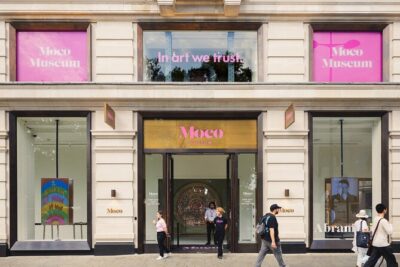
Official tickets: Moco Modern & Contemporary Art Museum
Read our review →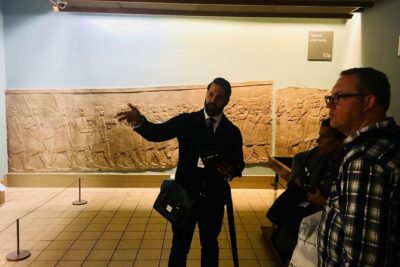
British Museum London Guided Tour Semi-Private 8ppl Max
Read our review →
The British Museum London – Exclusive Guided Museum Tour
Read our review →


Skip the Line: Liverpool Beatles Museum – The perfect tribute to the Beatles
Read our review →Browse the lists this tour appears in