
Reviewed · YORK TOURS
The Best of York on Foot in a Small Group
York gives away its secrets on foot. This 90-minute walking tour links Roman remains, abbey ruins, the Minster, Stonegate, and the Shambles in one tidy route. I like the small group cap of eight, and I like the way guides such as Alfred and Sarah use iPad images to show how ruined buildings once looked. The main drawback is simple: this is an outdoor introduction, so cathedral and museum entry are not included.
At $27.74, the tour is good value if you have only one day in York or want a clear starting point before exploring alone. You should expect a brisk but manageable walk, plenty of standing, and a condensed look at a city with more centuries packed into its streets than most visitors can absorb at once.
In This Review
- Key points to know before you book
- Why this short York walk works so well
- Starting among the ruins of St. Mary’s Abbey
- Seeing where York began in Museum Gardens
- Meeting York Minster from the outside
- Following Stonegate and its snickelways
- Walking into the Shambles
- Guides who tell the story, not just the facts
- What the small group changes
- Price, timing, and what you actually receive
- Who should book this York experience
- Should you book The Best of York on Foot?
- FAQ
- How long does The Best of York on Foot last?
- How much does the tour cost?
- What sights are included in the walking route?
- Does the tour enter York Minster?
- Are museum admissions included?
- How many people can join the tour?
- Is the tour offered in English?
- Where does the walk finish?
- Can I cancel for a full refund?
Key points to know before you book
- Five major York sights in about 90 minutes: The route takes in St. Mary’s Abbey, Museum Gardens, York Minster, Stonegate, and the Shambles.
- A genuinely small group: The stated maximum is eight people, which makes it easier to hear the guide and ask questions.
- Local guides add personality: Alfred, Sarah, Charlotte, and Ferah are praised for clear storytelling, enthusiasm, and friendly conversation.
- Visual help makes ruins easier to understand: Guides carry iPads with multimedia illustrations of older buildings and landmarks.
- It finishes in the center: The walk ends at Whip-Ma-Whop-Ma-Gate, near the end of the Shambles.
- No admission tickets are bundled in: You see the sights from outside, so plan and pay separately if you want to enter York Minster or a museum.
Why this short York walk works so well
York can feel confusing at first. The city center is compact, but its story is not. Roman foundations sit below medieval streets, Victorian gardens surround ancient remains, and grand religious buildings rise beside narrow lanes. If you wander without context, you may notice the charm without understanding how the pieces fit together.
This tour gives you that framework quickly. You move from the remains of St. Mary’s Abbey to the Roman fortress fragments in Museum Gardens, then toward York Minster and the old streets of Stonegate and the Shambles. The route is not meant to cover every corner of York. Instead, it gives you a useful map in your head.
I especially like the emphasis on layers. The guides explain how Roman, medieval, and later York developed around one another. That approach is more useful than a long string of disconnected dates. You begin to see why York feels like a time capsule, with different periods visible on the same short walk.
The compact format also suits a first morning in town. You can use the walk to decide where to spend more time later. If the Roman remains catch your interest, you can return to Museum Gardens. If the Minster grabs you, you can arrange a separate interior visit. If narrow lanes and old buildings are your priority, the Shambles and Stonegate give you an easy next step.
Other York trips people book alongside this one:
- Mad Alice’s The Bloody Tour of York -Best Tour Award Europe
★ 5.0 · 2,749 reviews - Ghost Bus Tour of York
★ 4.5 · 2,404 reviews - Shadows of York: Ghost Walk and Horrible History.
★ 5.0 · 1,403 reviews
Starting among the ruins of St. Mary’s Abbey
The first stop is St. Mary’s Abbey, described as the largest abbey in northern England. Today, you see magnificent ruins rather than a working religious complex, and that contrast gives the opening of the tour real impact.
A guide can do more here than simply point at broken walls. The iPad illustrations are useful because ruins often require imagination. A photograph or reconstruction helps you picture the scale of the original building and understand that these stones were once part of a major institution.
The stop lasts about 10 minutes, so it is an introduction rather than a full archaeological visit. That is both a strength and a limitation. You get a quick explanation of why the abbey matters, but you will not have time for a slow inspection of every surviving feature.
Admission to the stop is free. Since the tour is outdoors, you should also know that the walk does not function as a formal abbey museum visit. I would treat St. Mary’s as a strong visual beginning, then return later if you want more time with the ruins.
Seeing where York began in Museum Gardens
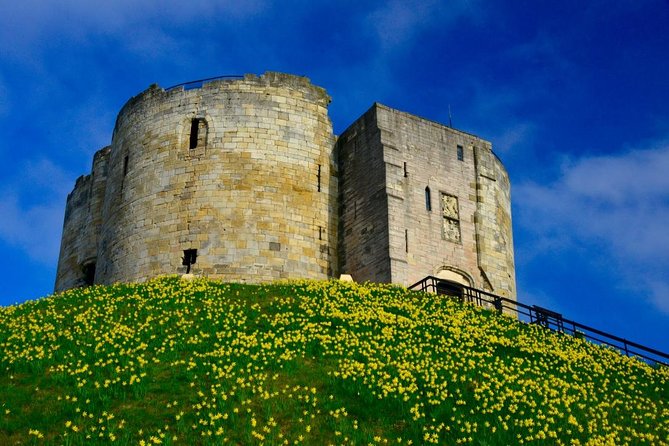
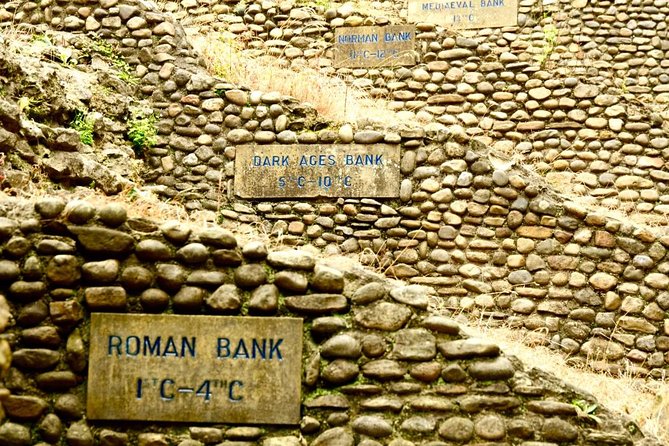
Next comes Museum Gardens, a Victorian botanic garden with the standing remains of the Roman fortress that marks the place where York began. This is one of the most useful stops for understanding the city’s earliest layer.
The setting helps. Instead of encountering Roman remains in isolation, you see them within a later public garden. That pairing makes York’s unusual character clear: old foundations are not hidden away in a distant archaeological park. They are part of the everyday center.
The guide’s visual material is especially helpful at this point. Roman remains can be hard to read when you are looking at surviving fragments, but historic images and illustrations can make the original structure easier to grasp. Several tour guests specifically appreciated the way older buildings and landmarks were brought back to life through pictures.
Again, allow about 10 minutes. The stop gives you a solid orientation, not an exhaustive Roman archaeology lesson. If ancient York is your main interest, you will want to spend additional time at museums or archaeological sites beyond this walk. Those admission costs are not part of the $27.74 price.
Meeting York Minster from the outside

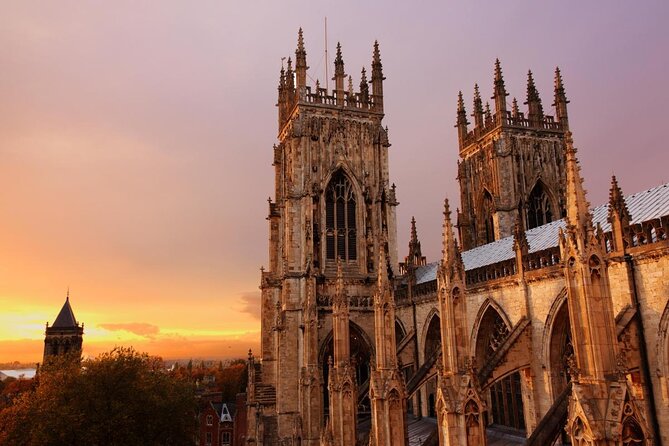
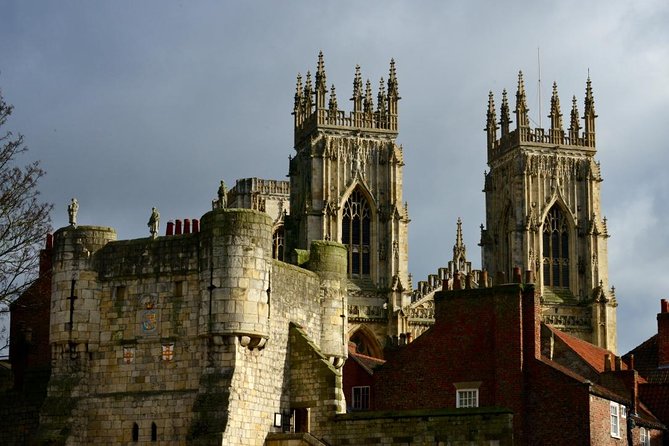
York Minster is the largest medieval Gothic cathedral in northern Europe, and the tour gives it a place in the middle of the route. Even from outside, it is a powerful marker of York’s religious and architectural importance.
The value here comes from explanation. A guide can point out what makes the Minster significant and connect it to the city’s wider development. You are not simply taking a photograph and moving on. You are hearing how this great cathedral fits into the story of York.
The tour does not include entry. This matters when you compare the price with other sightseeing options. The walk is an orientation tour, not a bundled attraction pass. If you want to see the interior, you will need to pay a separate admission fee and return on your own time.
That arrangement may suit you well. A short outdoor tour keeps the cost down and prevents the group from spending most of its 90 minutes inside one building. It also gives you the freedom to decide later if the Minster deserves a longer visit. I would book this experience early in your York stay if you plan to enter the cathedral afterward, since the guide’s explanation can make that visit more rewarding.
Something different for another day:
- Private Historical Walking Tour of York
★ 5.0 · 1,324 reviews - Daytime Sightseeing Boat Cruise in York
★ 4.5 · 1,256 reviews - York Dungeon Entry Ticket
★ 4.5 · 1,108 reviews - Wizard Walk of York – WINNER Best Tour & Best of York Award
★ 5.0 · 918 reviews
Following Stonegate and its snickelways
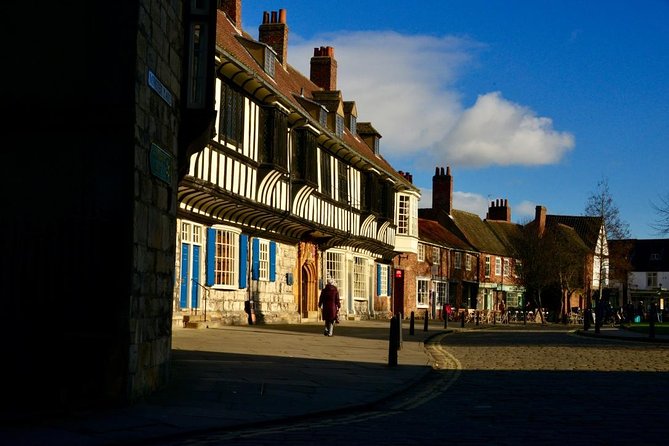
Stonegate brings the tour into York’s maze of medieval shortcuts, often called snickelways. This is where the walk becomes less about one landmark and more about how the city feels under your feet.
The narrow routes are easy to miss when you explore alone. A guide can draw attention to shortcuts, building lines, and small details that do not announce themselves with a large sign. The tour’s focus on these passages helps explain why York’s center can feel both compact and labyrinthine.
This section should appeal to you if you enjoy urban history rather than only famous monuments. The streets themselves are the evidence. You are moving through places shaped by old movement patterns, trade, worship, and daily life.
The guide-led format also helps with orientation. Since the tour ends near the Shambles, Stonegate forms part of a logical progression through the old center. You get a sense of how the streets connect rather than seeing each lane as a separate attraction.
Walking into the Shambles
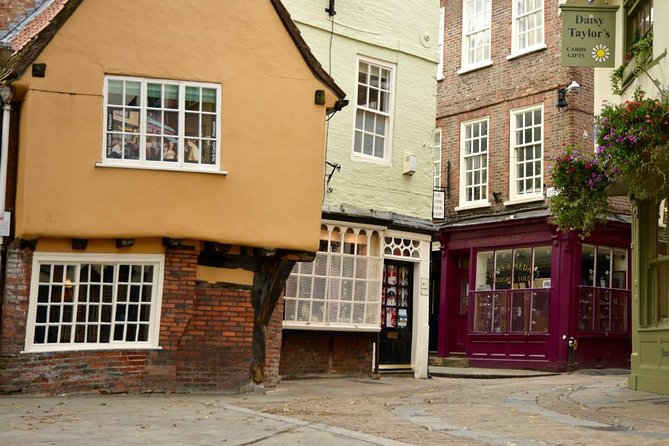
The Shambles is the final named stop and is described as the best-preserved medieval street in Europe. It is also famous as the inspiration for Diagon Alley, which gives the street a modern pop-culture link, though its real appeal is older and more tangible.
The Shambles is narrow, atmospheric, and visually memorable. A guide can add meaning to the overhanging buildings and tight street plan, helping you look past the busy photo opportunities. The stop also makes a good ending because you finish in one of York’s most recognizable places rather than being left at an out-of-the-way corner.
The route ends at Whip-Ma-Whop-Ma-Gate, at the end of the Shambles. That is practical. You are already in the heart of town, close to more shops, food, and independent exploring.
Do not expect solitude here. The tour data does not promise a quiet visit, and the Shambles is a well-known York sight. What the guide adds is context and a better sense of what you are looking at.
Guides who tell the story, not just the facts
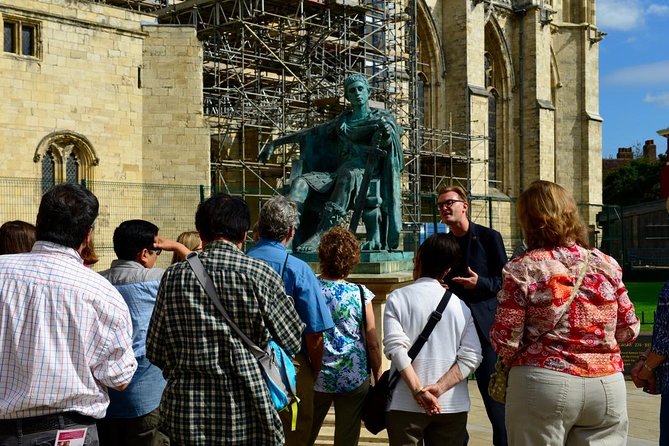
The strongest part of this experience is the guiding. Alfred receives repeated praise for bringing York’s past to life with humor, local knowledge, and strong storytelling. Sarah is praised for clear explanations, thoughtful answers, personal contact before the walk, and useful suggestions for meals and further activities. Charlotte is described as flexible and attentive to individual interests, while Ferah is praised for being both well informed and personable.
Those details matter because a walking tour can easily become a lecture delivered at a group. This one appears designed to be conversational. Guides introduce themselves, learn names, and invite questions. The small group makes that possible.
Alfred’s approach seems particularly appealing if you like stories tied to physical places. He has been praised for explaining Roman foundations, narrow covered passages, local architecture, and the way different eras coexist. Sarah’s style sounds well suited to first-time visitors who want a calm, clear overview and practical suggestions for the rest of the day.
The tour has also worked across age groups. Teenagers have been engaged, and one particularly difficult audience member, described as a moody teenager, apparently enjoyed the walk. Very young children may get less from the historical detail, so families should consider the age and attention span of their children.
One correction is worth noting: a comment about a driver, tea, lunch, and a full-day outing clearly belongs to a different experience. This is a walking tour, not a vehicle-based tour. That distinction affects footwear, weather planning, and your expectations.
What the small group changes
The maximum group size is eight. That is a major advantage in York, where narrow lanes and crowded public spaces can make a large tour awkward.
With fewer people, you are more likely to hear every explanation without standing shoulder to shoulder at the back. You can ask about a building, a street name, or a historical period without holding up a large crowd. The guide can also adjust the emphasis if the group becomes interested in Roman York, architecture, or medieval streets.
A past accommodation reportedly allowed a group of 10 after train delays disrupted plans, but the stated limit for this experience is eight. I would use eight as the normal expectation and regard the larger group as an unusual exception.
Small groups also help the tour feel less formal. Several guides make a point of learning everyone’s name, and that simple gesture can change the mood. You are more likely to feel part of a conversation than a face in a crowd.
Price, timing, and what you actually receive
At $27.74 per person, this is a sensible price for a focused city introduction. You are paying for about 90 minutes of guiding, a small group, local storytelling, a York map, and visual material carried on the guides’ iPads.
The value is strongest if you are short on time. One direct comment described the walk as ideal for someone with only one full day in York, and I agree with that use. You see the main historic center quickly, then you can choose your own priorities afterward.
The value is less clear if you already know York well or want long visits inside major attractions. The tour does not include the cathedral interior, museums, or other entrance fees. It also does not promise a full treatment of every historic site.
A complimentary map is a useful extra, especially after the walk. You can mark places to revisit and use the route as a base for independent wandering. The personalized greeting sign at the meeting point should make the start easier, though you should still read the meeting instructions carefully because the starting address is given only as York YO1 7DS.
Confirmation arrives when you book. The activity is near public transportation, service animals are allowed, and most people can participate. Since this is an urban walking route, wear comfortable shoes and plan for changing English weather, although the supplied information does not specify a weather policy.
Free cancellation is available if you cancel at least 24 hours before the start time. Cancellations made less than 24 hours ahead are not refunded, and last-minute changes are not accepted.
Who should book this York experience
I would choose this walk if you are visiting York for the first time, have one day, or want a useful introduction before exploring independently. It is also a good fit if you prefer local explanation to an audio guide and want to ask questions as you go.
The tour suits adults, older children, and teenagers who can stay engaged during a 90-minute history-focused walk. It may be less suitable for very young children who need frequent activity changes. Most people can take part, but the experience still involves walking and standing outdoors.
You should also book it if you like architecture and street patterns. The focus is not only on headline sights. Stonegate’s shortcuts, Roman foundations, abbey remains, and the relationship between different eras give the walk its character.
I would not choose it as your only York activity if you want extensive interior sightseeing. Think of it as a well-led first chapter. You will still need separate time and tickets for the Minster interior, museums, and any other attractions you want to enter.
Should you book The Best of York on Foot?
Yes, if you want a friendly, fast orientation to York. The combination of a small group, strong local guides, visual illustrations, and a route through five key areas gives you a lot for $27.74.
Book it early in your stay, ideally when you still have time to revisit the Minster, Museum Gardens, or the Shambles. Choose it for context, stories, and practical bearings, not for admission to attractions or a slow, detailed examination of each site.
If Alfred, Sarah, Charlotte, or Ferah is leading, you can expect an engaging personal style based on the feedback attached to their tours. The experience earns its high marks by making York easier to read. For a first look at this layered city, that is exactly what a good walking tour should do.
FAQ
How long does The Best of York on Foot last?
The tour lasts approximately 1 hour and 30 minutes.
How much does the tour cost?
The listed price is $27.74 per person.
What sights are included in the walking route?
The route includes St. Mary’s Abbey, Museum Gardens, York Minster, Stonegate, and the Shambles.
Does the tour enter York Minster?
No. The tour is outdoors, and admission to the interior of York Minster is not included.
Are museum admissions included?
No. Museum visits and other entrance fees are not included.
How many people can join the tour?
The stated maximum is eight travelers.
Is the tour offered in English?
Yes. The tour is offered in English.
Where does the walk finish?
It ends at Whip-Ma-Whop-Ma-Gate in central York, at the end of the Shambles.
Can I cancel for a full refund?
Yes, if you cancel at least 24 hours before the experience starts. Cancellations made less than 24 hours before the start time are not refunded.
Just added around York
- The Full Hoot Distillery Tour & Guided Hooting Owl Experience★ 5.0 · 6 reviews
- York Fire Walk★ 5.0 · 6 reviews
- Welcome to York – The River Route★ 5.0 · 7 reviews
- Private York Christmas Walking Tour★ 5.0 · 7 reviews
- Private Walking Tour: York City Highlights and York Minster★ 5.0 · 8 reviews
- York 3-Hour Photography Walking Tour★ 5.0 · 9 reviews
- Full-Day Heartbeat Locations Tour from York★ 3.5 · 11 reviews
- Guided Historic Pub Tour (York)★ 4.5 · 11 reviews
York Tours, compared.

Mad Alice’s The Bloody Tour of York -Best Tour Award Europe
Read our review →

Shadows of York: Ghost Walk and Horrible History.
Read our review →



Wizard Walk of York – WINNER Best Tour & Best of York Award
Read our review →
Browse the lists this tour appears in