
Reviewed · BRITISH MUSEUM TOURS
The British Museum: a highlights tour with a TV historian
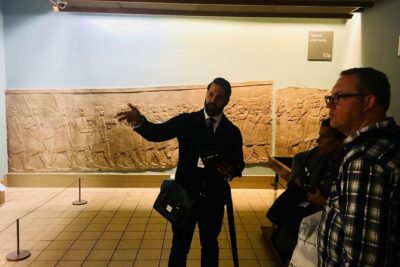
The British Museum rewards a sharp-eyed guide. This private three-hour tour pairs the museum’s greatest objects with a former staff guide and TV historian, Loona, who knows the galleries from years of working inside them. I like the personal service and the wide sweep, from Egyptian writing to Anglo-Saxon treasure. I also like that the tour does not treat famous objects as isolated curiosities, but explains how they were found, understood, and acquired.
The main consideration is pace. The planned route covers a huge number of subjects, so some displays receive only a short explanation. You also need to book the museum’s free timed-entry ticket yourself, and the entrance process can take about 30 minutes.
In This Review
- Key points to know before booking
- Why a guide changes the British Museum
- Starting at the Reading Room at 11:00 am
- Rosetta Stone, Rameses II, and the start of written history
- Fakes, crystal skulls, and museum detective work
- Sutton Hoo and the Lewis Chess pieces
- The oldest library and the world’s oldest epic
- Aztec jewellery, Maya carvings, and the problem of acquisition
- Assyrian warfare and the first declaration of human rights
- Benin Bronzes, Celtic jewellery, and objects with a human scale
- Parthenon Sculptures, Easter Island, China, and India
- How the pace and private format work
- Who gets the best value from this tour?
- Booking, entry, and cancellation details
- Should you book the British Museum highlights tour?
- FAQ
- How long does the British Museum highlights tour last?
- Is British Museum admission included?
- Where does the tour meet?
- Is this a private tour?
- Which British Museum objects are included?
- Can I cancel for a full refund?
Key points to know before booking
- Former British Museum staff guide: Loona has worked at the museum and has even supervised sleepovers with the mummies.
- A private three-hour visit: Only your own group takes part, allowing the guide to adjust explanations and answer questions.
- Famous objects with backstories: Expect the Rosetta Stone, Parthenon Sculptures, Sutton Hoo treasure, Benin Bronzes, and much more.
- Good for families: Harry Potter, Hollywood, and modern-life references help make ancient objects easier for children to grasp.
- Free museum entry, paid guiding: The museum ticket costs nothing, but you pay for the private guiding service.
- Book entry early: Timed tickets can sell out, and you should allow extra time to get through the entrance before the 11:00 am start.
Why a guide changes the British Museum
The British Museum can feel like several museums placed under one roof. It covers Egypt, Assyria, Greece, Rome, Britain, China, India, Mesoamerica, Africa, and more. If you walk in alone, the scale can leave you admiring objects without understanding why they matter.
This tour gives you a route through major moments in human culture. You are not simply shown a stone, statue, or piece of jewellery. You hear what it was made for, what it tells us, and how modern scholars learned to read or identify it.
That last point matters. The museum’s labels are useful, but a private guide can connect separate displays into one story. Cuneiform, hieroglyphs, and Maya carvings become part of a larger account of how people recorded language, power, religion, and daily life.
Loona’s former museum work is the strongest reason to choose this experience over a standard introductory visit. He knows the collections at close range and can add the kind of behind-the-scenes detail that a brief label cannot provide. His experience supervising sleepovers with the mummies also gives him an unusual connection to the building and its displays.
The private format helps too. With only your group attending, you can ask why an object is in London, how experts translated an inscription, or what makes one famous piece more important than another. The guide can also slow down for a favourite gallery or keep the route moving if attention begins to fade.
More British Museum tours:
- British Museum London Guided Tour Semi-Private 8ppl Max
★ 5.0 · 984 reviews - The British Museum London – Exclusive Guided Museum Tour
★ 5.0 · 555 reviews - British Museum Guided Tour
★ 4.0 · 470 reviews
Starting at the Reading Room at 11:00 am

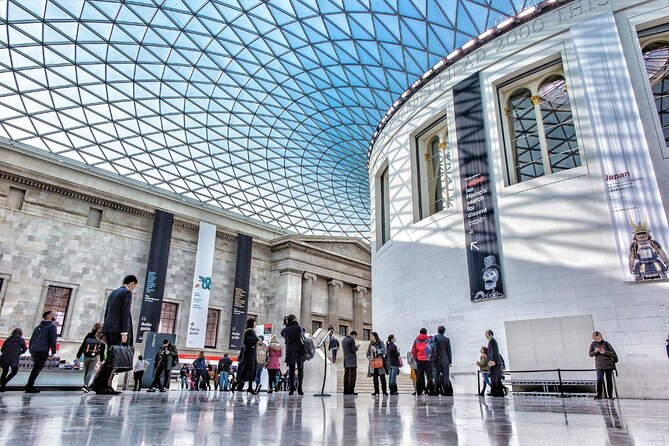
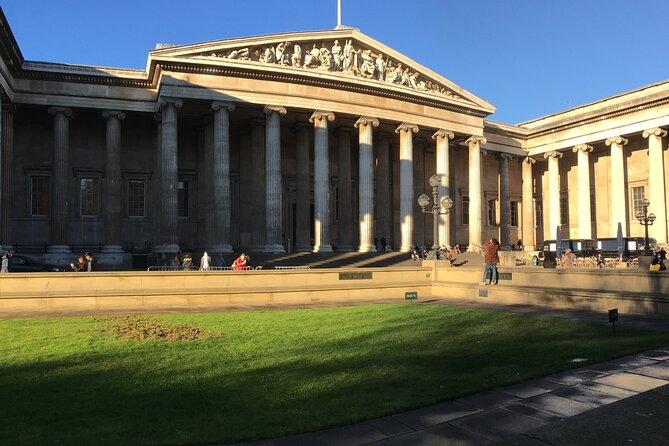
The meeting point is the British Museum Reading Room on Great Russell Street. The tour begins at 11:00 am and ends at the museum, with the route including the Mummies gallery.
Your museum admission is not included because entry to the British Museum is free. You still need to reserve a free timed ticket through the museum’s own website. This is not a minor detail. Timed capacity can fill, and one review specifically advises booking several days ahead.
Allow around 30 minutes to enter the museum. Security and admission procedures can take time, so arriving at the last minute is a poor plan. Your guide may be ready at 11:00 am, but your group cannot enjoy a three-hour tour if you are still waiting to get inside.
The mobile-ticket format is convenient, yet it does not remove the need to plan. Keep your museum reservation available on your phone, check the date and time carefully, and leave room for the journey to Great Russell Street.
Rosetta Stone, Rameses II, and the start of written history
The Rosetta Stone is an obvious first highlight, but it earns the attention. The stone carries the same decree in three scripts, including Greek and Egyptian forms. Its importance comes from the comparison that helped scholars decipher hieroglyphs.
A guide can make this process easier to follow than a quick glance at the case. You learn why a language can remain unreadable for centuries, and how a known script can provide the key to another. The object then becomes more than a famous slab. It becomes a record of how people recovered a lost system of writing.
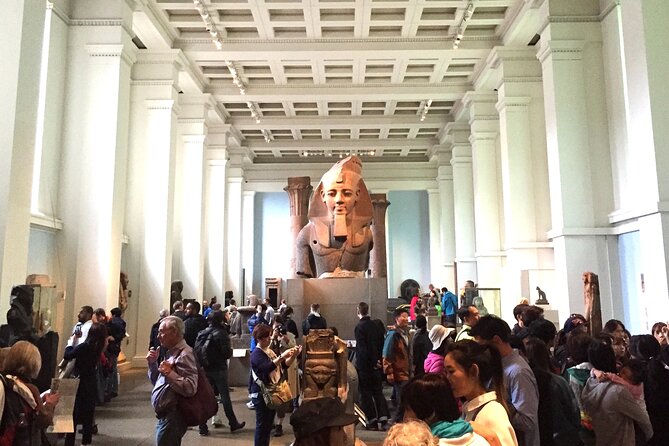
The bust of Rameses II gives the Egyptian section a human face. The tour uses this object alongside the Rosetta Stone to show both royal image-making and the practical work of reading ancient inscriptions.
Families may appreciate the way Loona links these subjects to modern references. Harry Potter, Hollywood, and contemporary life can give younger visitors a familiar bridge into material that might otherwise seem remote. The approach is not designed only for children. Adults who prefer stories and comparisons to dates and terminology should find it useful too.
Fakes, crystal skulls, and museum detective work
One of the more playful parts of the route concerns objects that are not what they claim to be. Crystal skulls and mermaids appear in the discussion of fakes, giving the tour a welcome dose of skepticism.
This is valuable because museums are not only places of admiration. They are also places where claims must be tested. A convincing object can still be modern, altered, or wrongly identified. The guide can show how the museum approaches doubtful pieces and why a dramatic story is not the same thing as reliable evidence.
That theme should appeal to children who are more interested in mystery than chronology. It also breaks up the grand procession of kings, temples, and war scenes. After a few thousand-year-old monument, a questionable mermaid can be exactly the change of mood you need.
More Museums in London:
- Tower of London and Crown Jewels Exhibition Ticket
★ 4.5 · 6,677 reviews - Chelsea FC Stadium Tours and Museum
★ 5.0 · 1,908 reviews - Official tickets: Moco Modern & Contemporary Art Museum
★ 4.5 · 1,157 reviews - The Postal Museum Admission Ticket
★ 4.5 · 347 reviews
Sutton Hoo and the Lewis Chess pieces
The Anglo-Saxon Sutton Hoo treasure is one of the strongest stops for visitors interested in Britain. The finds connect burial customs, craftsmanship, status, and contact between cultures. One reviewer singled out this treasure as a favourite, which makes sense: it offers a vivid story close to home while still fitting into the museum’s wider account of early societies.
The Lewis Chess pieces provide a different kind of connection. They are instantly understandable because the game remains familiar, yet their workmanship and age make them far more than a set of playing pieces. The display helps show how objects used for leisure can also reveal social rank, artistic style, and trade.
These stops are especially effective for families. A buried treasure and a chess set provide clear entry points, even if the finer details of Anglo-Saxon society or medieval craft are new to you.
The oldest library and the world’s oldest epic
The tour also moves into the early written records of Mesopotamia. You hear about the oldest library and the world’s oldest epic story, subjects that can sound abstract until you see the surviving evidence in front of you.
Cuneiform is central here. The marks may look like simple wedges, but they carried administrative records, royal claims, stories, and laws. The guide explains how cuneiform was translated, giving you a practical sense of the work involved in turning marks on clay into readable language.
This section pairs well with the Rosetta Stone. At one point, you are looking at the key to Egyptian writing. Later, you are considering another writing system and the scholars who reconstructed its meaning. The result is a useful lesson in how much of the ancient world is known through patient comparison rather than guesswork.
The world’s oldest epic story adds a more human note. Ancient writing was not limited to taxes and rulers. People also recorded heroes, conflict, fear, ambition, and ideas about mortality.
Aztec jewellery, Maya carvings, and the problem of acquisition
Aztec jewellery connected with Montezuma brings the Americas into the route. Fine personal objects can tell you about rank, belief, ceremony, and skilled workmanship. The reference to Montezuma also opens the door to questions about Spanish conquest and the movement of objects across the world.
Maya carvings add another view of Mesoamerican writing and visual culture. Together, these stops prevent the tour from becoming too heavily focused on Europe and the ancient Mediterranean.
The tour also promises attention to acquisition, which is one of its most important features. The British Museum’s fame is tied to the sheer range of its collections, but that range also raises difficult questions about empire, excavation, ownership, and the removal of cultural objects.
The Benin Bronzes are particularly relevant to this discussion. They are remarkable works of art, but their presence in European museums cannot be separated from the violence and colonial power connected with their removal. A guide who explains both artistic value and acquisition gives you a more honest visit than a tour that presents every object as a simple triumph of collecting.
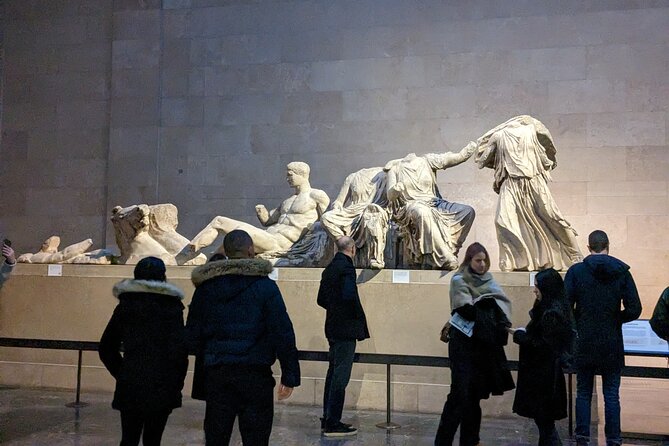
The Parthenon Sculptures raise similar questions. You see extraordinary Greek sculpture while also confronting the continuing debate over how parts of the Parthenon reached Britain. This is one reason the tour’s promise to explain acquisition matters. The museum experience is stronger when admiration and difficult questions are allowed to sit together.
Assyrian warfare and the first declaration of human rights
The Assyrian displays add scale and force. The tour describes an Assyrian war machine, allowing you to see how art and state power worked together. Reliefs and royal images were not neutral decoration. They presented military strength, conquest, and authority to anyone who encountered them.
That subject contrasts with the first declaration of human rights, another major idea included in the route. The exact objects and explanations will depend on the guide’s path through the galleries, but the pairing creates a useful tension between force and law, empire and individual claims.
This is where a personal guide earns the fee. You can ask how ancient rulers wanted to be remembered, who had rights in different societies, and how modern labels shape your understanding of old political ideas. A standard walk through the rooms may not prompt those links.
Benin Bronzes, Celtic jewellery, and objects with a human scale
The Benin Bronzes bring questions of collection and colonial power into sharp focus, but the tour does not remain only with monumental works. Celtic jewellery offers a closer look at personal adornment and technical skill.
Small objects often reward guided attention. You can easily pass a piece of jewellery without noticing its materials, pattern, or social purpose. A guide can point out what to look for and explain how an item fits into the culture that made it.
This change of scale keeps the three hours varied. You move from royal sculpture and military reliefs to objects that people wore, used, or handled. That variety is one of the tour’s practical strengths, especially if your group includes different interests.
Parthenon Sculptures, Easter Island, China, and India
The Parthenon Sculptures are among the museum’s best-known displays. They are also among its most debated. You get the chance to appreciate the carving while considering the modern dispute over ownership and display.
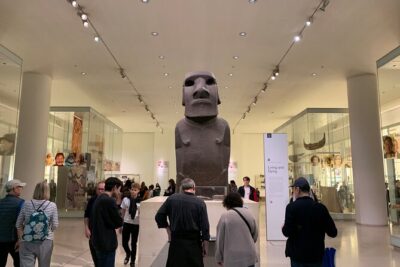
The Easter Island statue creates another memorable visual pause. Its size and distinctive form make it easy to recognize, but the most useful part of the stop is the context supplied by the guide. A private tour can explain what you are seeing without leaving you to guess why one object represents a wider culture in this collection.
The Chinese Buddha and Shiva statue from India broaden the final section of the route. They introduce religious art from Asia and show how artists represented divine figures through posture, gesture, clothing, and symbolism.
For a first visit, this global range is exciting. It also carries a small risk: you may leave wanting more time in every gallery. Three hours is long enough for a well-chosen overview, not enough for a full study of each culture.
How the pace and private format work
The advertised duration is about three hours, though one booking lasted three and a half hours. Plan for a substantial museum visit, with time for pauses and questions rather than a rushed march from case to case.
The private format is the main practical advantage. You do not have to follow the interests or pace of a large mixed group. If your children need a change of subject, the guide can bring in contemporary references. If you are fascinated by cuneiform or Sutton Hoo, you can ask for more explanation.
The guide has also been praised for keeping the experience entertaining while showing a large range of exhibits. That balance matters at the British Museum. Facts alone can blur together after an hour, while jokes without substance leave you no wiser. Loona’s reported approach combines information, stories, and direct links to familiar culture.
Still, the tour is not ideal for someone who wants a quiet, unstructured museum day. You will cover many highlights, and the route will shape what you see. If you prefer to spend an hour with one single collection, visit independently first or plan a return visit after the tour.
Who gets the best value from this tour?
I see the best value here for a first-time visitor with limited London time. The museum is free, but your time is not. Paying for a private guide can make sense when you want to understand the top objects without spending hours deciding where to go.
Families should also consider it seriously. The Harry Potter, Hollywood, and modern-life comparisons are practical tools, not empty decoration. They can help children connect with unfamiliar objects, while the fakes section adds a mystery angle.
The tour suits adults who want context around disputed objects. The Parthenon Sculptures and Benin Bronzes are more meaningful when acquisition is part of the conversation. You are not asked to admire without thinking.
It may be less suitable if you need a slow, highly specialized academic tour of one civilization. The route covers Egypt, Mesopotamia, Britain, the Americas, Africa, Greece, China, India, and Easter Island. That breadth is the point, but it limits depth at individual displays.
The guiding service is the paid part of the experience. Museum admission itself is free, and souvenirs, fees, and taxes are not included. Since the actual tour price is not provided here, compare the cost with your group size: a private guide can offer better value for a family or small group than for one person traveling alone.
Booking, entry, and cancellation details
Book your free museum timed ticket directly through the British Museum website. Do this at least several days ahead if possible, since available times may fill.
The meeting point is the British Museum Reading Room on Great Russell Street at 11:00 am. The end point is within the British Museum, near the Mummies gallery. Public transport is nearby, and service animals are allowed. Most people can take part.
You receive confirmation when booking. The experience has free cancellation up to 24 hours before the start time. Cancellations or changes made within 24 hours are not refunded or accepted. A minimum group requirement applies, and if the experience is canceled for that reason, you are offered another date or experience, or a full refund.
Should you book the British Museum highlights tour?
Book it if you want the British Museum to make sense quickly, especially on a first London visit. Loona’s former staff experience, entertaining explanations, and ability to connect objects across continents give you more than a list of famous names.
I would choose it for families, small private groups, and anyone curious about how objects entered the collection. I would skip it only if you prefer complete freedom, long stretches in one gallery, or a self-guided visit at your own pace.
The free museum ticket keeps the basic admission cost low. Your payment goes toward focused guidance, storytelling, and the time saved. At a museum this large, that can be money well spent, provided you reserve entry early and arrive with enough time to get through the doors.
FAQ
How long does the British Museum highlights tour last?
The tour lasts approximately three hours. One recorded experience lasted three and a half hours, so you should allow some flexibility.
Is British Museum admission included?
Museum admission is free, but you must book your own free timed-entry ticket directly through the British Museum website. The guiding service is the paid part of the experience.
Where does the tour meet?
The meeting point is the British Museum Reading Room on Great Russell Street, London. The start time is 11:00 am.
Is this a private tour?
Yes. Only your own group takes part in the private tour or activity.
Which British Museum objects are included?
The route can include the Rosetta Stone, bust of Rameses II, Aztec jewellery linked with Montezuma, Sutton Hoo treasure, cuneiform, Benin Bronzes, Lewis Chess pieces, Parthenon Sculptures, Easter Island statue, Chinese Buddha, Shiva statue from India, and other highlights.
Can I cancel for a full refund?
Yes. You can cancel at least 24 hours before the experience start time for a full refund. Cancellations or changes made less than 24 hours before the start time are not refunded or accepted.
Just added around London
- The Private British Museum Tour★ 5.0 · 6 reviews
- London’s Chinatown Food Experience★ 4.0 · 6 reviews
- London to Southampton Cruise Port | Private Transfer★ 5.0 · 6 reviews
- London Gatwick (LGW) Airport Departure Private Transfer – Hotel to Airport★ 4.0 · 6 reviews
- Christmas in Canterbury, Dover and Greenwich with Christmas Lunch★ 4.5 · 6 reviews
- Transfer from Heathrow Airport to London hotel on private car★ 4.5 · 6 reviews
- Jazz Notes – Jazz Jam Ticket★ 5.0 · 6 reviews
- Street Photography Workshops in London★ 5.0 · 6 reviews
British Museum Tours, compared.
British Museum London Guided Tour Semi-Private 8ppl Max
Read our review →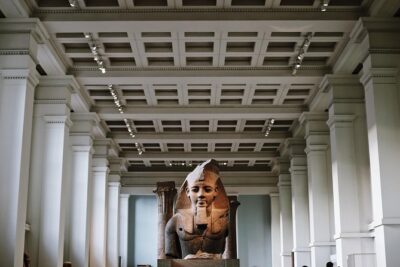
The British Museum London – Exclusive Guided Museum Tour
Read our review →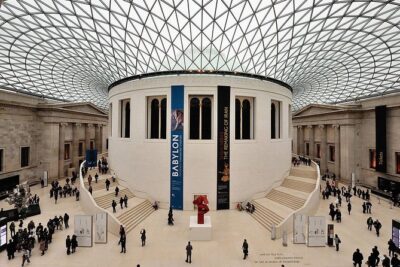
Private Guided Tour of the British Museum – Tickets Included
Read our review →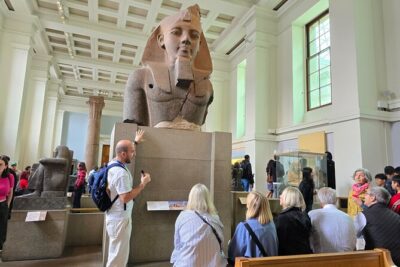
British Museum Guided Tour with Priority Timeslots(Small Group)
Read our review →
British Museum & National Gallery of London Semi-Private 8ppl Max
Read our review →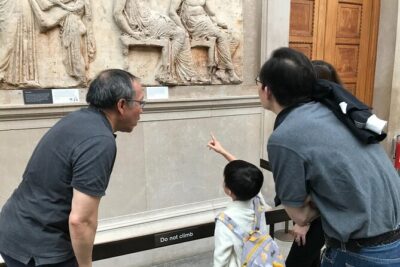
Explore Biblical Artifacts at the British Museum
Read our review →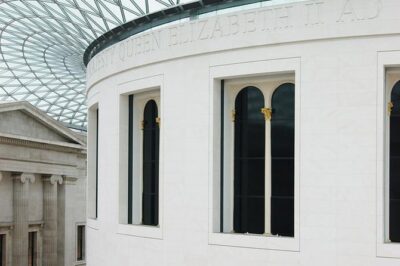
British Museum Highlights Private Tour in London including the Rosetta Stone
Read our review →Browse the lists this tour appears in