
Reviewed · MUSEUMS
The National Gallery of London – Exclusive Guided Museum Tour
The National Gallery rewards a plan. This 2.5-hour private tour gives you one, guiding you through Botticelli, Monet, Rembrandt, Vermeer, Van Gogh, and other major painters without leaving you to wander its 2,300 paintings at random. I like the personal format, since you can ask to see works that matter to you, and I like the way the best guides turn small details into memorable stories.
The main drawback is the price, $108.44 per person, before gratuity. That can be good value for a small private group, but less so if you only want a quick look at Sunflowers and a few famous names. You will also do a fair amount of standing and walking, and temporary exhibitions are not included.
In This Review
- Key points to know before you book
- Why a guide helps at the National Gallery
- Meeting your guide in Trafalgar Square
- The National Gallery route, from early art to Van Gogh
- Early paintings and the changing role of art
- Botticelli and Renaissance storytelling
- Jan van Eyck and The Arnolfini Portrait
- Rembrandt, Vermeer, and the Dutch masters
- Monet and the move toward modern painting
- Van Gogh’s Sunflowers
- What the guide adds beyond labels
- The physical side: walking, standing, and museum rules
- Is $108.44 per person good value?
- Who will get the most from this tour?
- Smart ways to prepare
- Should you book the National Gallery private tour?
- FAQ
- Where does the National Gallery tour begin?
- Where does the tour end?
- How long does the tour last?
- Is the tour private?
- What language is offered?
- Is admission to the National Gallery included?
- Can I request specific paintings or artists?
- Are large bags allowed inside?
- Is the tour wheelchair friendly?
- Can I cancel for a full refund?
Key points to know before you book
- Private attention shapes the route: Tell your guide which artists, periods, or paintings you want to see before setting off.
- The collection spans six centuries: The route can move from 14th-century religious art to 19th-century Impressionism and 20th-century work.
- The guide teaches you how to look: Expect discussion of detail, lighting, perspective, symbolism, and the lives behind the paintings.
- A strong choice for first-time museum visitors: The tour gives you a useful framework before you explore more on your own.
- Guide quality is central to the experience: Jamie, Matilda, Sheldon, Steph, Jake, Becky, and others have been praised for lively, clear presentations.
- Plan for security and limited bags: Large bags and suitcases are not allowed, and occasional queues can still occur.
Why a guide helps at the National Gallery
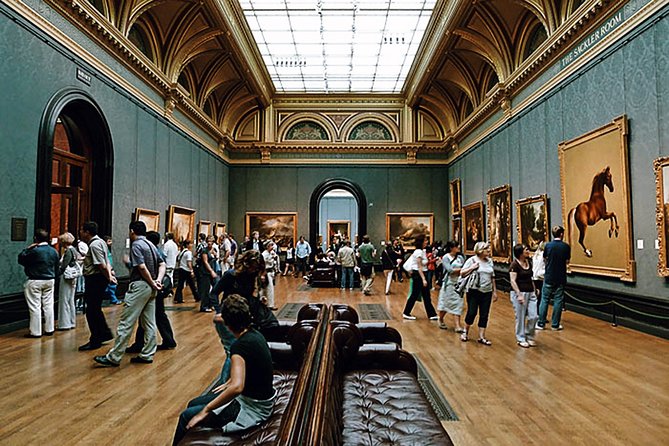
The National Gallery is free to enter, but free admission does not make it simple. More than 2,300 paintings are spread across rooms covering hundreds of years of European art. Without a plan, you can spend a long time walking from room to room, then leave having seen plenty but understood little.
That is where this tour earns its keep. Your guide selects a manageable group of paintings and connects them across time. You might begin with early religious art, move through Renaissance changes in proportion and storytelling, then arrive at Dutch painting, French Impressionism, and Van Gogh. The point is not to tick off every famous canvas. It is to understand why the works look different and what changed between them.
I especially like the focus on things you can actually see. A strong guide may ask you to notice the direction of light, the way a painter creates depth, or a tiny object that changes the meaning of a scene. Jamie has been praised for pointing out details in lighting, perspective, and technique that are easy to miss. That kind of instruction stays useful after the tour ends.
The presentation also appears to be conversational rather than a long stream of dates and names. Wesley, for example, used questions and opinions to keep the group involved. That makes a difference if you are new to art. You do not need a background in art history to take part.
More National Gallery tours:
- National Gallery of London Museum Tour Semi-Private 8ppl Max
★ 5.0 · 178 reviews - British Museum & National Gallery of London Semi-Private 8ppl Max
★ 5.0 · 168 reviews - Official National Gallery Highlights Guided Tour
★ 4.5 · 149 reviews
Meeting your guide in Trafalgar Square
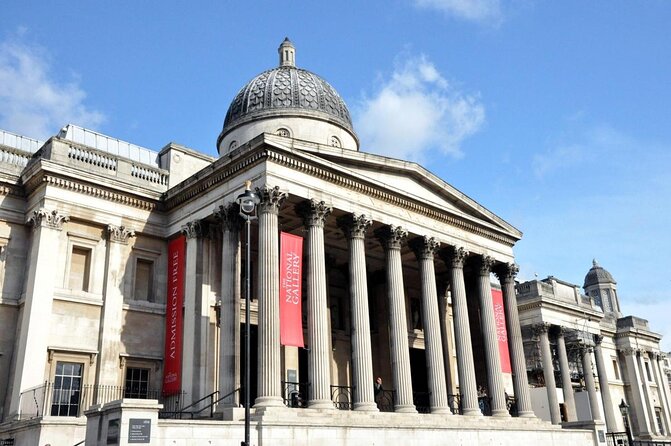
The tour begins at the front entrance of the National Gallery, at Trafalgar Square, London WC2N 5DN. This is an easy central meeting point, near public transportation, and the building itself is hard to miss.
You will meet your private guide there and discuss your interests before entering or beginning the main route. This is the moment to speak up. If you care about Dutch interiors, Italian Renaissance painting, French modern art, or a particular artist, say so early. The tour is designed to adjust to your group rather than follow one rigid script.
The private arrangement is important. You are not simply listening from the back of a large crowd. Your guide can respond to your questions, change the pace, and spend more time on a painting that catches your attention. The exclusive guide option applies to the private booking choice. A lower-priced semi-private option is also offered, but it does not include a guide exclusively for your group and does not carry the same wheelchair-friendly inclusion noted for the private tour.
The meeting point is also the end point. There is no hotel pickup or drop-off, so plan to reach Trafalgar Square yourself. The provider recommends using a taxi or Uber for hotel transfers.
The National Gallery route, from early art to Van Gogh
The only listed stop is the National Gallery itself, but the museum offers enough variety for a full, carefully paced visit. The route normally focuses on selected major and interesting works rather than attempting to cover the entire building.
Early paintings and the changing role of art
The collection begins with paintings dating from the 1300s. In these early rooms, your guide can help explain why religious subjects, formal poses, and gold backgrounds were so common. You may find that the paintings make more sense once you understand who commissioned them and how they were meant to be viewed.
This section gives you a useful starting point. Instead of treating every painting as an isolated object, you can see how artists gradually handled space, bodies, light, and emotion in new ways. The tour may not linger on every early work, but the period helps set up what comes later.
More Museums in London:
- Tower of London and Crown Jewels Exhibition Ticket
★ 4.5 · 6,677 reviews - Chelsea FC Stadium Tours and Museum
★ 5.0 · 1,908 reviews - Official tickets: Moco Modern & Contemporary Art Museum
★ 4.5 · 1,157 reviews - British Museum London Guided Tour Semi-Private 8ppl Max
★ 5.0 · 984 reviews
Botticelli and Renaissance storytelling
Botticelli offers a chance to talk about myth, beauty, line, and the revival of classical themes. A guide can point out how a scene is arranged and why certain figures, gestures, or symbols matter.
This is one of the advantages of a small private tour. If the painting seems puzzling, you can ask for the short version, the deeper version, or a comparison with another artist. That flexibility is harder to achieve when you are following a fixed group through a crowded room.
Jan van Eyck and The Arnolfini Portrait
The museum’s famous Arnolfini Portrait provides one of the tour’s best lessons in close looking. The work is packed with objects and details, so a guide can direct your attention to parts you might otherwise pass over.
You may examine the room, the figures, the mirror, and the carefully painted surfaces while discussing what the scene could mean. The tour description calls this a less familiar work, but it is exactly the kind of painting that benefits from explanation. It rewards patience more than a quick photograph.
One small correction is worth noting: the painting is by Jan van Eyck, not Jane van Eyck. You will see it described under Jan van Eyck in the museum.
Rembrandt, Vermeer, and the Dutch masters
Rembrandt and Vermeer allow the guide to compare two very different ways of using light and mood. The Dutch rooms are a good place to slow down and consider how ordinary interiors, portraits, and domestic scenes can carry so much atmosphere.
A guide may help you spot brushwork, reflections, facial expression, or the placement of a figure within a room. These are not just attractive pictures. They are carefully built visual experiences, and a few well-aimed comments can make the difference between seeing a scene and understanding how it was made.
Monet and the move toward modern painting
Monet gives the tour a chance to discuss changing ideas about color, light, and the momentary view. You can see how painters moved away from the precise, polished finish favored in earlier periods and began to focus more on perception.
The chronological structure used by guides such as Sheldon, Jamie, and Matilda is particularly helpful here. It lets you notice changes rather than memorize them. By the time you reach Impressionism, you have a better sense of what earlier painters were trying to achieve and why the new approach felt so different.
Van Gogh’s Sunflowers
Sunflowers is likely to be a major stop for many groups. The painting is familiar from books and screens, but seeing the actual surface gives your guide a chance to discuss color, paint handling, energy, and the difference between reproduction and the original.
You should not expect the entire tour to revolve around Van Gogh. That would shortchange the rest of the collection. Instead, the painting works best as one part of a larger story, showing where some of the museum’s artistic changes lead.
If you have only a passing interest in art, this is often where the earlier discussion begins to click. If you already love Van Gogh, tell your guide. The private format lets you ask for more context or request other related works.
What the guide adds beyond labels
Museum labels give you basic facts. A good guide adds connections, choices, and questions.
The most praised guides on this tour include Matilda, Jamie, Sheldon, Steph, Jake, Becky, Sacha, Wesley, Laurence M, and Luis. Guide assignments can change, so you cannot count on a particular person unless the provider confirms it. Still, the repeated praise points to a clear strength of the experience: the tour depends heavily on guides who enjoy explaining art to real people, not just reciting information.
Matilda is described as energetic, quick-witted, and able to include a mixed group. She has also used a chronological structure, which is useful if you want a broad introduction to the collection. Jamie has brought an iPad to show extra information and has used questions to draw people into the discussion. Sheldon has been praised for making the paintings feel alive and for offering a clear route through art history.
Steph is a good match if you want an entertaining presentation. She has been described as passionate and engaging, while Becky has compared major works and explained how art developed across periods. Laurence M is noted for covering the collection from the pre-Renaissance through post-Impressionism in a well-paced 2.5 hours.
These details matter because two and a half hours can either feel focused or exhausting. The best guides keep the pace moving, vary the paintings, and give you enough time to look without turning every stop into a lecture.
The physical side: walking, standing, and museum rules
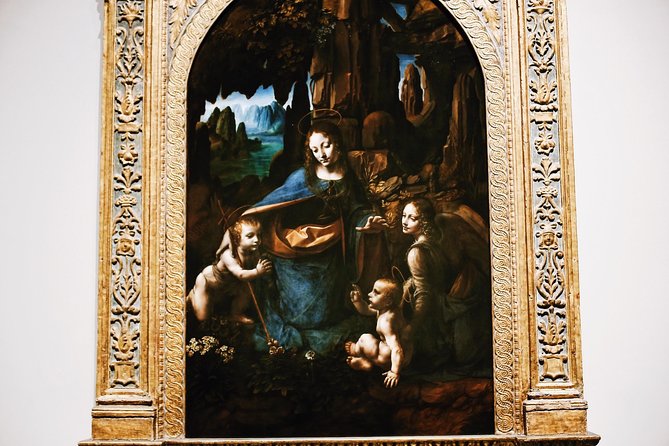
You should expect a moderate level of physical activity. The tour involves walking through the gallery and standing while discussing paintings. One especially useful observation is that the route includes a fair bit of walking, so comfortable shoes are sensible.
The museum is wheelchair friendly with the private option, according to the stated inclusions. That does not mean every possible route or room will feel equally easy during a busy museum visit, so mention mobility needs when booking.
Security rules are practical but important. Large bags and suitcases are not allowed. Only handbags or small, thin backpacks can pass through security. You may find coat check and bathroom areas easier to manage with a guide, but do not arrive carrying luggage and expect to take it inside.
Some rooms require very quiet behavior or restrict speaking. Your guide will explain these rules before entering. Security lines can also form, even when a tour has special access arrangements. Museum rooms and collections can change during the year, and the National Gallery may occasionally close without advance warning.
If opening is delayed by more than an hour, an alternative may be offered. The stated policy does not promise a refund or discount in that situation. This is uncommon, but it is worth knowing before you build a tightly packed day around the tour.
Is $108.44 per person good value?
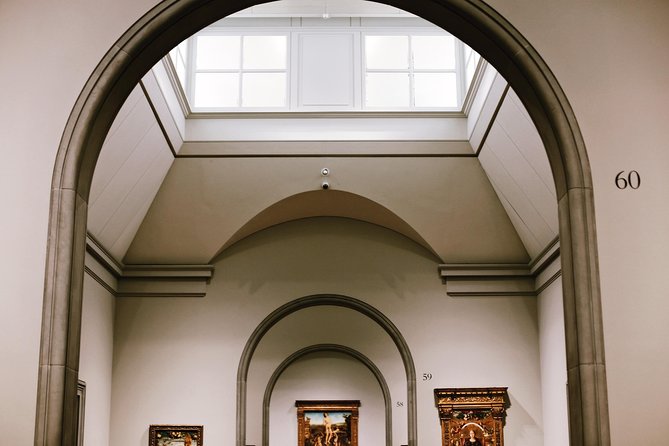
The answer depends on your group and your museum habits.
For one person or a couple, $108.44 is a meaningful extra cost for a museum that has free general admission. You are paying for the guide’s time, route planning, interpretation, and the chance to shape the visit around your interests. If you normally walk through museums without knowing where to focus, this can prevent a great deal of wasted time.
For a private group, the value improves because the guide’s attention is reserved for you. Group discounts are available, although the exact saving is not stated here. Check the total price for your party before booking, rather than assuming the per-person figure tells the whole story.
The tour is less compelling if you already know exactly which rooms you want and prefer to explore alone. It is also not the right choice if your main goal is a temporary exhibition, since temporary exhibitions are excluded.
I would view the cost as payment for a focused introduction, not an admission ticket. The National Gallery’s permanent collection is free, but expert guidance can make two and a half hours much more productive. The fee feels more justified when you ask questions, request specific artists, and stay for independent exploration afterward.
Who will get the most from this tour?
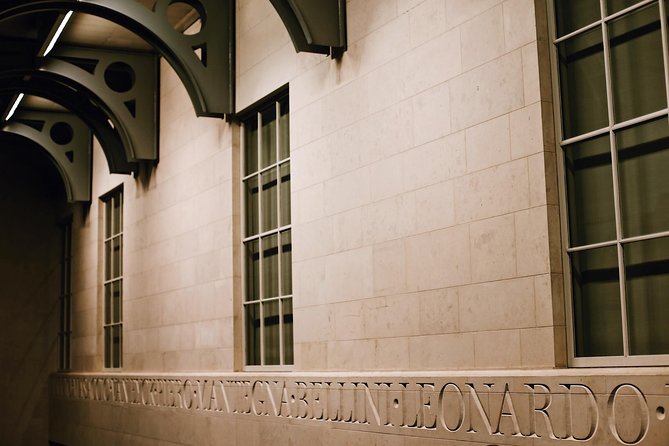
This tour suits first-time visitors who want a clear route through a large collection. You will get the most from it if you want the famous works but also want to understand how they fit into wider changes in European art.
It is also a good choice for families and mixed groups. One person can ask about technique, another about the artist’s life, and someone else can simply ask why a painting matters. The interactive style praised in several guide descriptions should help keep the visit from becoming a dry classroom session.
Art lovers will benefit from the chance to request personal favorites and lesser-known works. Beginners may benefit even more, since a guide can explain basic ideas without assuming prior study.
I would skip it if you want total freedom to linger for long periods at a single painting. A guided route has a pace, and two and a half hours will not cover everything. You can continue exploring after the tour, but the guided portion is built around selected works.
Smart ways to prepare
Keep your bag small and leave suitcases elsewhere. Wear shoes suitable for walking and standing, and provide a mobile phone number with the country code when booking so the provider can contact you if needed.
Think about your priorities before you arrive. Make a short list of artists or paintings you care about, then tell the guide at the start. You do not need to know the official room names. Even a simple request such as wanting Dutch art, portraits, or Van Gogh gives the guide a useful direction.
Allow time after the tour if you can. The guide finishes at the National Gallery, and you receive suggestions for handling the rest of the collection independently. That extra time is valuable because you can return to a painting that caught your attention without needing another paid visit.
Book with the cancellation deadline in mind. You can receive a full refund if you cancel at least 24 hours before the start time. Changes or cancellations made less than 24 hours ahead are not accepted for a refund.
Should you book the National Gallery private tour?
Book it if you want the National Gallery to make sense, not merely to see it. The strongest part is the guide’s ability to connect paintings, point out details, and adjust the route to your interests. Matilda, Jamie, Sheldon, Steph, Jake, Becky, and the other praised guides have earned strong marks for making the visit educational, lively, and personal.
The price is high beside free museum admission, and the tour cannot include every painting or temporary exhibition. Still, for a first visit, a family group, or anyone who tends to feel lost in major museums, the focused route can be worth the extra money.
My practical advice is simple: arrive with a few requests, carry only a small bag, wear comfortable shoes, and keep time afterward for your own wandering. If that sounds like your ideal museum day, this is a smart way to meet the National Gallery.
FAQ
Where does the National Gallery tour begin?
It begins at the National Gallery’s front entrance at Trafalgar Square, London WC2N 5DN, UK.
Where does the tour end?
The tour ends back at the National Gallery meeting point.
How long does the tour last?
The guided tour lasts approximately 2 hours and 30 minutes.
Is the tour private?
Yes. The private tour is for your group only. The separate semi-private booking option does not include a guide exclusively for your group.
What language is offered?
The tour is offered in English.
Is admission to the National Gallery included?
The tour includes the guided museum tour. General admission to the National Gallery is listed as free. Temporary exhibitions are not included.
Can I request specific paintings or artists?
Yes. You can discuss your interests with the guide and customize the itinerary to include paintings that matter to you.
Are large bags allowed inside?
No. Large bags and suitcases are not allowed. Only handbags or small, thin backpacks can pass through security.
Is the tour wheelchair friendly?
The private option is listed as wheelchair friendly. This inclusion does not apply to the semi-private option.
Can I cancel for a full refund?
Yes. You must cancel at least 24 hours before the experience start time for a full refund. Cancellations or changes made less than 24 hours before the start time are not accepted for a refund.
Just added around London
- The Private British Museum Tour★ 5.0 · 6 reviews
- London to Southampton Cruise Port | Private Transfer★ 5.0 · 6 reviews
- London’s Chinatown Food Experience★ 4.0 · 6 reviews
- London Gatwick (LGW) Airport Departure Private Transfer – Hotel to Airport★ 4.0 · 6 reviews
- Christmas in Canterbury, Dover and Greenwich with Christmas Lunch★ 4.5 · 6 reviews
- Transfer from Heathrow Airport to London hotel on private car★ 4.5 · 6 reviews
- Jazz Notes – Jazz Jam Ticket★ 5.0 · 6 reviews
- Transfer from London Stansted Airport to Central London★ 5.0 · 6 reviews
Museums, compared.
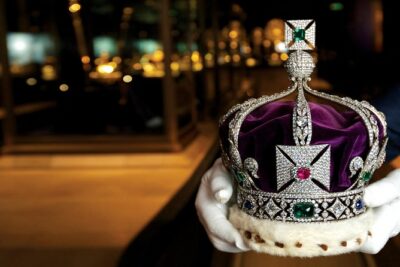
Tower of London and Crown Jewels Exhibition Ticket
Read our review →
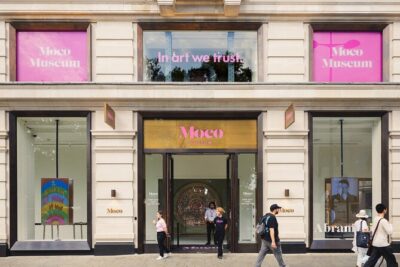
Official tickets: Moco Modern & Contemporary Art Museum
Read our review →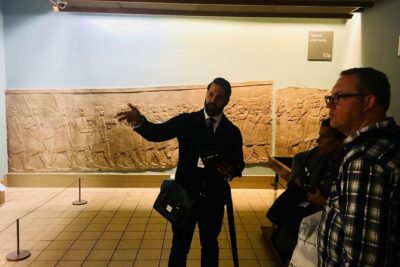
British Museum London Guided Tour Semi-Private 8ppl Max
Read our review →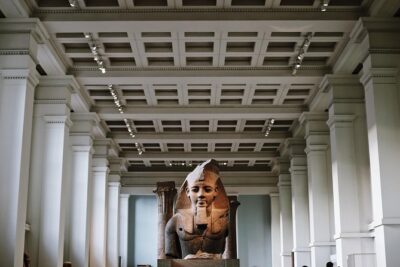
The British Museum London – Exclusive Guided Museum Tour
Read our review →

Skip the Line: Liverpool Beatles Museum – The perfect tribute to the Beatles
Read our review →Browse the lists this tour appears in