
Reviewed · HISTORICAL TOURS
Walkabout Durham History Tour
Durham’s best stories begin on foot. This 90-minute walk links the market, river, university bailey, castle views, and cathedral in a compact route that gives you both local context and a useful first look at the city. I like the friendly, conversational style of guide Peter, and I like that the walk ends at Durham Cathedral, where you can continue exploring on your own.
The tour costs $22.20 per person, a fair price for a small-group city introduction with no extra admission charges along the route. My main caution is the terrain: Durham is hilly, and you may want a rest and a cup of tea by the end, especially in poor weather. The cathedral interior and tower are not part of this walk, either.
In This Review
- The best parts of the walk at a glance
- Why this 90-minute route works
- Starting among Durham’s civic stories in Market Place
- Framwellgate Bridge and Durham’s classic view
- Riverside paths and the view from Prebends Bridge
- Entering the Bailey and Durham University
- St Mary the Less and Bailey legends
- Bow Lane and the eastern side of the Cathedral
- Palace Green and the final approach to the Cathedral
- Peter’s guiding style and the value of local stories
- Price, timing, and who gets the most from it
- Should you book the Walkabout Durham History Tour?
- FAQ
- Where does the Walkabout Durham History Tour start?
- Where does the tour end?
- How long does the tour last?
- Is Durham Cathedral admission included?
- Are dogs allowed on the tour?
- What is the cancellation policy?
The best parts of the walk at a glance
- Market Place to Cathedral: A clear route through Durham’s central sights, ending at the cathedral’s main doors.
- Framwellgate Bridge views: See Durham Castle and Cathedral from the city’s oldest bridge.
- Peter’s local storytelling: Expect facts, legends, personal research, and plenty of time for questions.
- Riverside scenery: The route leaves busy streets for attractive paths beside the River Wear.
- Small-group feel: The tour allows a maximum of 20 people, which helps keep the conversation personal.
- Dog-friendly and practical: Dogs are welcome, service animals are allowed, and the route begins near public transport.
Why this 90-minute route works
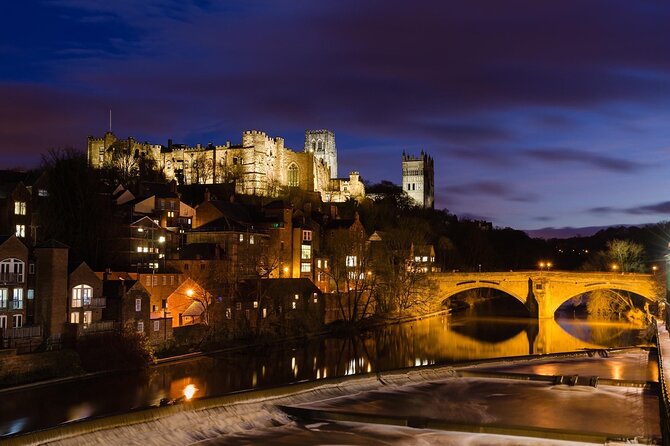
Durham can feel confusing at first. The River Wear loops around the central peninsula, while the cathedral, castle, university colleges, bridges, and older streets sit on different levels. A walk that simply points out buildings would help only so much. This route works because it gives you a story and a physical sense of the city at the same time.
You begin in Market Place and finish at Durham Cathedral. Along the way, you cross or view historic bridges, follow the riverside, enter the university’s Bailey, and reach Palace Green. By the end, you understand how Durham’s religious power, medieval defenses, university life, and river setting fit together.
I particularly like the pace. Each stop gets enough attention to make it worthwhile, but the walk does not linger so long that you lose the thread. The published timing adds up to about 90 minutes, with the longest sections allowing time for short walks between points. Peter is happy to answer questions, and his approach seems well suited to people who prefer a friendly talk over a formal lecture.
The route is also a useful first activity after arriving in the city. Peter gives tips about other things to see and do, so you can use the walk to plan the rest of your visit. If you have only one night in Durham, a compact orientation like this is especially useful.
More Historical Tours in England:
- London Small Group Tour of Historical Pubs
★ 5.0 · 10,422 reviews - Soho Music & Historic Pubs Tour
★ 5.0 · 1,993 reviews - Shadows of York: Ghost Walk and Horrible History.
★ 5.0 · 1,403 reviews
Starting among Durham’s civic stories in Market Place
The meeting point is Durham Market Place, at DH1 3NJ. This is a practical starting point because it sits in the city center and is close to public transport. You begin with the 19th-century Town Hall and Guildhall, St. Nicolas’ Church, and the statues that recall important figures from Durham’s past.
This opening section takes about 20 minutes. It sets up the city’s civic story before the route turns toward the river. Rather than beginning with the most famous cathedral view, the tour first explains the people and institutions that shaped Durham and the county.
That choice gives the rest of the walk more meaning. The cathedral is not an isolated grand building at the end of a pretty street. It is part of a city shaped by church authority, political power, local trade, defense, and education. Market Place helps you see the everyday city before you reach the monumental one.
The square can be active, so listen carefully when the guide is speaking. You are outdoors throughout this part, and weather matters. Bring a waterproof layer if rain is possible, since the tour continues even in less friendly conditions. Peter has managed to keep the walk enjoyable in rain and cold, but sensible clothing will make your own experience much better.
Framwellgate Bridge and Durham’s classic view
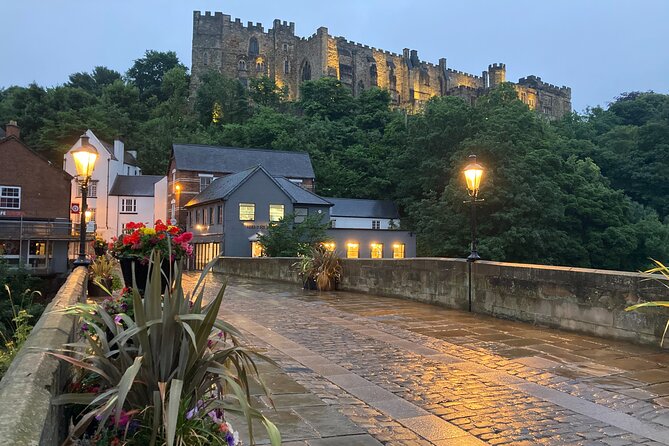
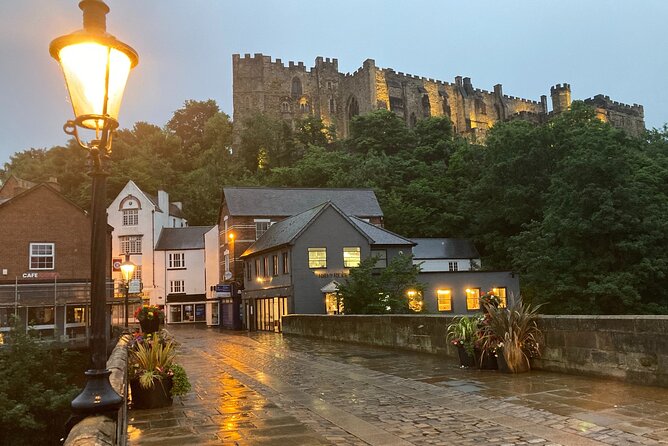
From Market Place, the group walks to Framwellgate Bridge. At about 15 minutes, this is one of the key stops, and the view alone makes it memorable. The bridge is described as the oldest of Durham’s bridges, with a fine outlook toward Durham Castle and Cathedral.
This is where the city’s setting becomes clear. The river, steep banks, castle, and cathedral work together to explain why Durham developed where it did. You are not simply looking at two impressive buildings. You are seeing the defensive and religious center of the medieval city from a bridge that helped connect it to the wider town.
The guide uses this point to talk about Durham Castle and the Prince Bishops. These churchmen held unusual power, and their role helps explain why Durham feels grander than its size might suggest. Peter’s style is strongest when history is tied to a place you can see directly. A story about authority is easier to grasp while looking up at the castle and cathedral above the river.
The bridge itself may be busy, and the approach includes slopes. If you have limited mobility, ask about the route before booking. The tour is open to most people, but it is still a walking route through a hilly medieval city, not a flat promenade.
Riverside paths and the view from Prebends Bridge

After Framwellgate Bridge, the route follows the river for about five minutes to Prebends Bridge, with a short exploration of the mills and riverbanks along the way. This change of scene is welcome. You leave the city streets and get a quieter look at Durham’s natural setting.
Prebends Bridge is a major photo stop. From here, the cathedral appears in a particularly attractive setting above the river. The view gives you time to appreciate the shape of the peninsula and the way the water wraps around it.
The listed stop is brief, about five minutes, but the walk between bridges adds to the experience. I like this section because it prevents the tour from becoming a string of urban facts. You get architecture, local stories, and a little breathing space.
Still, keep your expectations realistic. This is not a long countryside walk or a nature tour. The riverside section is part of a city history route, and the guide’s attention remains on Durham’s mills, riverbanks, buildings, and stories. Wear shoes that are comfortable on mixed paths and inclines.
Something different for another day:
- Stonehenge, Windsor Castle, and Bath from London
★ 4.5 · 18,662 reviews - London Big Bus Hop-On Hop-Off Tour with Optional River Cruise
★ 3.5 · 10,803 reviews - Beatles Magical Mystery Tour
★ 5.0 · 9,266 reviews - Liverpool: “Blue Route” – City & Beatles Tour
★ 5.0 · 8,562 reviews
Entering the Bailey and Durham University
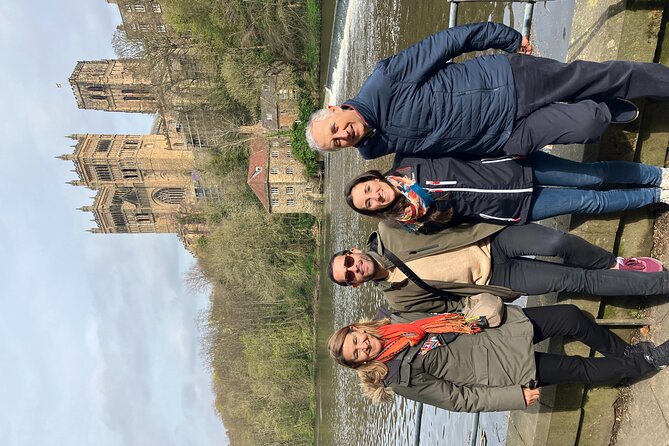
The walk then heads toward St Cuthbert’s Society and Durham University, taking about 15 minutes. On the way, you encounter the medieval city wall and hear about Durham’s historic rivalry with the Scots. The route enters the Bailey, a central part of Durham University.
This is one of the most distinctive sections because the university occupies historic buildings rather than a separate modern campus far from the old city. The Bailey feels tied to Durham’s medieval core. As you walk through it, the past is not merely displayed in a museum. It remains part of the city’s daily life.
The guide connects the wall and the rivalry with Scotland to Durham’s position in the north of England. Those stories help explain the city’s defensive character and its place in regional history. They also make the route more than a list of dates.
St. Cuthbert’s Society is included as a point of interest, but you should not expect a college tour or extended indoor visit. The value here is the outdoor setting, the university context, and the way Peter links the buildings to the city’s past.
St Mary the Less and Bailey legends
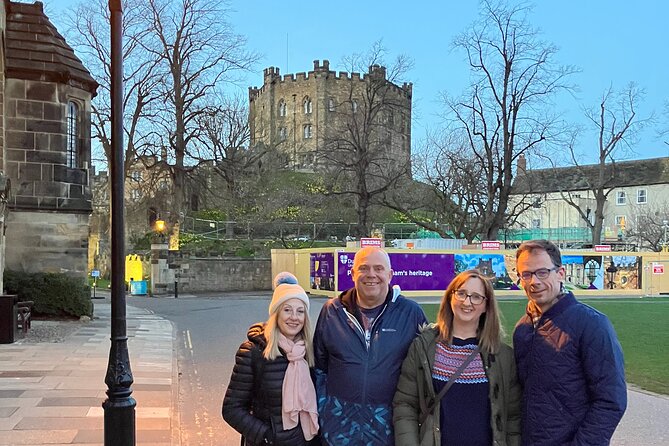
St Mary the Less is the next stop, with roughly 10 minutes devoted to the church and its surroundings. Now connected with St John’s College, it has links to Durham legends and an interesting architectural setting on the Bailey.
This is the sort of stop that can easily be missed if you explore alone. You may pass the church without knowing why it matters, but the guide gives you a reason to pause. Durham’s story includes formal history as well as local myths, and Peter brings both into the walk.
I like the balance between fact and legend here. The tour does not treat every old story as proven history. Instead, tales connected with churches and saints add character to the places you are seeing. That approach makes the walk lively without turning it into a theatrical performance.
The Bailey is also a good place to ask questions. Peter is open to them, and several comments about the experience point to his willingness to explain things at the visitor’s level. If you have a particular interest in university history, medieval religion, or local folklore, this is a good time to speak up.
Bow Lane and the eastern side of the Cathedral
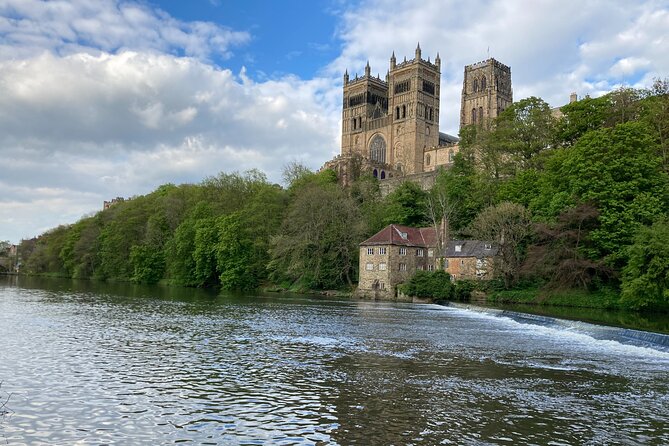
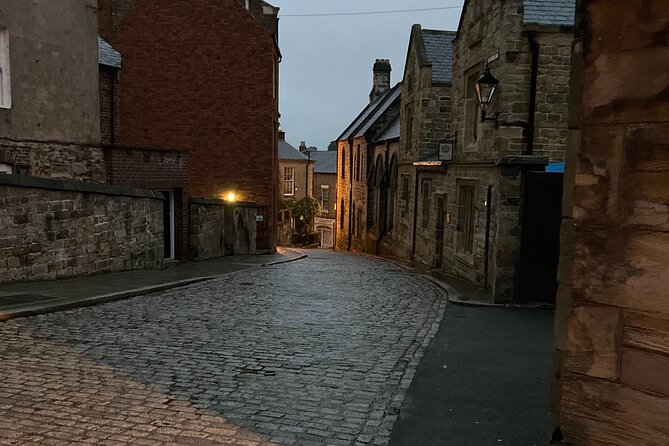
At Bow Lane, the route reaches the eastern side of Durham Cathedral. This 10-minute stop focuses on early medieval history, St Cuthbert, and several Durham University colleges. The group then walks along the Bailey toward the top of Saddler Street.
St Cuthbert is central to Durham’s identity, and this section gives you a chance to connect his story with the city itself. The emphasis is on stories and context rather than entering the cathedral. You are approaching the building from the city, seeing how the surrounding streets and colleges frame it.
Saddler Street brings the walk back toward the main central route. It is a useful transition from the university quarter to Palace Green. By now, the tour has covered several layers of Durham: civic life, medieval defense, religious authority, university tradition, local legend, and river geography.
The route is not strenuous in the manner of a long hike, but the hills add up. The combination of slopes, bridges, steps, and standing at stops is worth bearing in mind. Comfortable footwear is more important here than dressing for a fashionable city stroll.
Palace Green and the final approach to the Cathedral
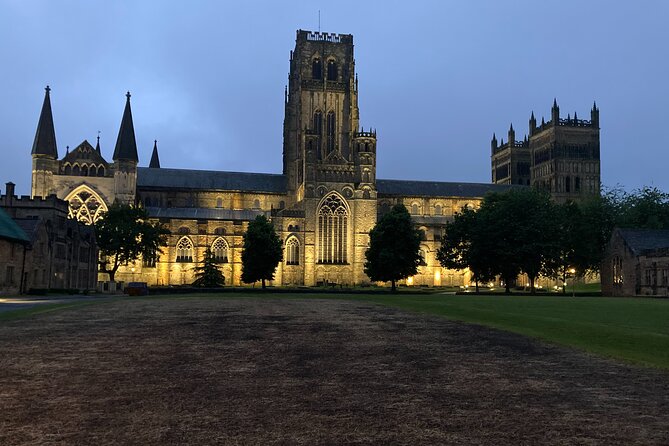
The final 15-minute section reaches Palace Green, the heart of Durham’s UNESCO World Heritage site. Here, the guide discusses the buildings around the green, along with battles, tragedies, and miracles connected with Durham’s story.
This is a strong finish because the whole route leads naturally to this point. You have seen the cathedral from bridges and the riverside. Now you arrive at its doors with a clearer understanding of the setting around it.
The tour ends at the main doors of Durham Cathedral, at DH1 3EH. That is convenient if you want to continue inside afterward, but admission to the cathedral is not included in this walking tour. The same applies to the cathedral tower, which is not part of the experience.
One past participant thought the tour would be even better with the tower included. That is a fair point if you want high views and a more extensive cathedral visit. Still, leaving the tower out keeps the walk focused and helps it fit into a 90-minute schedule. You can choose later whether to pay for additional cathedral experiences based on your time and energy.
Peter’s guiding style and the value of local stories
Peter is the guide most closely associated with this experience. His background as a geography teacher comes through in the way he connects physical setting with history. He is described as friendly, entertaining, and easy to approach, with a habit of bringing in local anecdotes and stories from his own research.
That matters because Durham’s past can sound dry when reduced to institutions and dates. Peter appears to make it easier to follow by explaining why a bridge, wall, college, church, or riverbank matters where it does. He also welcomes questions rather than treating them as interruptions.
The tone is not highly formal. If you want a specialist academic seminar, this may feel too relaxed. If you want an approachable introduction with facts, myths, and local perspective, it should suit you well.
The group limit of 20 is another plus. It is not a private tour, but it is small enough for the guide to keep people together and respond to questions. The experience is offered in English, with a mobile ticket.
Price, timing, and who gets the most from it
At $22.20 per person, the tour offers good value if you want a guided introduction rather than simply a route map. All listed stops are free to access, so you are paying for Peter’s time, research, storytelling, and the convenience of moving through the city in a sensible order.
I would book it early if your schedule is fixed. It is usually reserved about 15 days ahead, which suggests that popular dates can fill before arrival. Free cancellation is available up to 24 hours before the start time, but cancellations or changes inside that window are not accepted for a refund.
This walk suits:
- First-time visitors who want to understand Durham quickly
- People with only a short stay in the city
- History fans who enjoy local legends as well as documented events
- Families, since all ages are welcome
- Dog owners, because dogs are very welcome
- Visitors who want practical suggestions for the rest of their visit
It may be less suitable if you need a fully accessible, flat route, want extensive indoor sightseeing, or mainly hope to climb the cathedral tower. The route is outdoors and hilly, and most of the buildings are viewed from the street.
Should you book the Walkabout Durham History Tour?
I would book this tour for a first visit to Durham, especially if you have one or two days and want to get your bearings before exploring alone. The strongest reasons are the well-planned route, the views from Framwellgate and Prebends bridges, and Peter’s friendly way of joining facts with local stories.
You should skip it only if you are looking for a cathedral interior tour, a tower visit, or a long countryside walk. For everyone else, $22.20 buys a useful 90-minute introduction to Durham’s streets, river, university, castle, and cathedral. Bring good shoes, allow for the hills, and keep some time afterward for the cathedral itself.
FAQ
Where does the Walkabout Durham History Tour start?
It starts in Durham Market Place, Durham DH1 3NJ, in the historic center of the city.
Where does the tour end?
The tour ends at the main doors of Durham Cathedral, Durham DH1 3EH.
How long does the tour last?
The tour lasts approximately 1 hour and 30 minutes.
Is Durham Cathedral admission included?
No. The walk ends at the cathedral’s main doors, but cathedral admission and the cathedral tower are not included.
Are dogs allowed on the tour?
Yes. Dogs are very welcome, and service animals are allowed.
What is the cancellation policy?
You can cancel up to 24 hours before the experience begins for a full refund. Cancellations or changes made less than 24 hours before the start time are not accepted for a refund.
Just added around England
- The Private British Museum Tour★ 5.0 · 6 reviews
- London’s Chinatown Food Experience★ 4.0 · 6 reviews
- London to Southampton Cruise Port | Private Transfer★ 5.0 · 6 reviews
- Christmas in Canterbury, Dover and Greenwich with Christmas Lunch★ 4.5 · 6 reviews
- Transfer from Heathrow Airport to London hotel on private car★ 4.5 · 6 reviews
- London Gatwick (LGW) Airport Departure Private Transfer – Hotel to Airport★ 4.0 · 6 reviews
- Bristol private pub hopping and sightseeing with local guide★ 5.0 · 6 reviews
- Isle of Wight Tour App, Hidden Gems Game and Big Britain Quiz (7 Day Pass) UK★ 4.0 · 6 reviews
Historical Tours, compared.


Shadows of York: Ghost Walk and Horrible History.
Read our review →
A Walk Through Time: History of Liverpool Walking Tour
Read our review →
Royal Historic Pubs Walking Guided Tour in London
Read our review →
Private Group: Historical Pub Walking Tour of London
Read our review →
Best Of Liverpool Heritage, History & Culture Guided Walking Tour
Read our review →Browse the lists this tour appears in