
Reviewed · OXFORD TOURS
Women and Queer Histories Tour – by Uncomfortable Oxford™
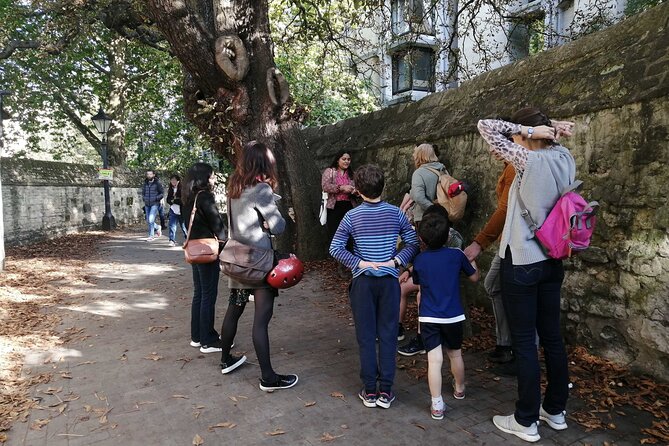
Oxford has more stories than its colleges reveal. The Women and Queer Histories Tour by Uncomfortable Oxford looks past famous scholars and grand stonework to examine women’s rights, childcare, masculinity, trans lives, and the policing of women. I like its small groups of up to 15 people and its discussion-based style, which gives you room to ask questions instead of simply following a lecture. The main consideration is that the tour deals with difficult subjects, so it may feel demanding rather than lighthearted.
I also like the route itself. It begins at the Radcliffe Observatory Quarter and ends in the city center, linking modern academic buildings with old passages and college walls. At about 90 minutes and $27.54 per person, it offers strong value if you want to understand how Oxford’s institutions shaped ordinary lives, not just admire the architecture.
In This Review
- The tour in four useful points
- Why this Oxford walk feels different
- Starting at the Radcliffe Observatory Quarter
- Somerville College and women entering the university
- St Paul’s Nursery and the problem of childcare
- The War Memorial Garden and Laurence Michael Dillon
- Lamb and Flag Passage: masculinity in old Oxford
- Wadham College and representations of women
- The Clarendon Building and the policing of women
- The discussion format is the real strength
- Is $27.54 a fair price?
- Who will enjoy this walk most?
- Who may want a different Oxford tour?
- My recommendation
- FAQ
- Where does the Women and Queer Histories Tour begin?
- Where does the tour end?
- How long does the tour last?
- How much does the tour cost?
- How many people can join the tour?
- Who leads the tour?
- What subjects does the tour cover?
- Are the attractions included in the price?
- Can service animals join the tour?
- Is free cancellation available?
The tour in four useful points
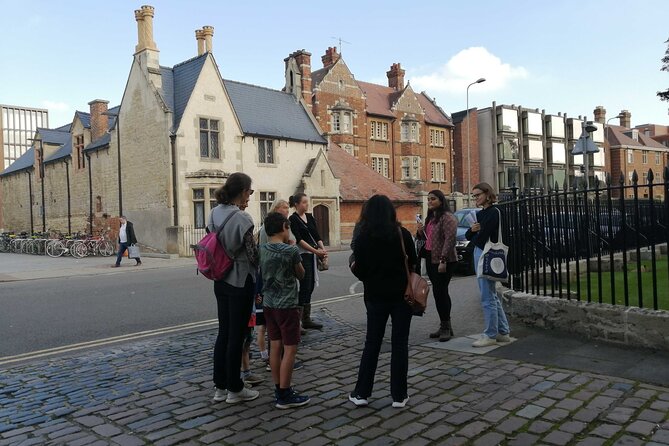
- Seven stops connect buildings with personal lives, from childcare at St Paul’s Nursery to trans history in the War Memorial Garden.
- Women’s education is a central theme, especially at Somerville College and Wadham College.
- The conversation matters as much as the facts, with guides inviting opinions and questions from the group.
- University of Oxford students lead the walk, bringing a close connection to the institution being examined.
- The route ends near Broad Street, making it easy to continue sightseeing in central Oxford afterward.
- A 97 percent recommendation rate and 4.8 rating from 60 reviews suggest a consistently strong experience, particularly for guide quality and thoughtful discussion.
Why this Oxford walk feels different
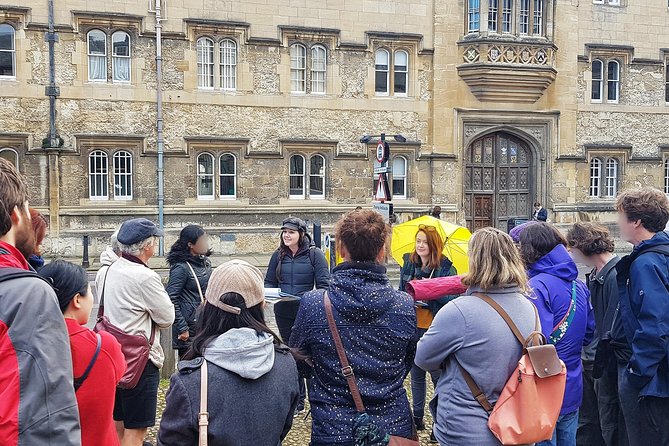
Many Oxford walks focus on famous graduates, college traditions, literary connections, or architectural details. This one asks who was allowed into those spaces, who was kept out, and how the city treated people whose lives did not fit the dominant story.
That shift changes the way you look at Oxford. A college gate becomes more than an attractive entrance. A nursery becomes evidence of the practical barriers facing academics with children. A university office becomes a place to discuss how women were controlled in the city.
The tour is led by University of Oxford students, and that matters. A student guide can connect the subject to the institution as it exists today, rather than treating the past as a sealed-off chapter. Guides are encouraged to ask questions and invite discussion, so you are not simply standing in one place while someone recites dates.
Previous guides associated with Uncomfortable Oxford include Devika, Julie, Cameron, Olivia, Waqar, Waqas, and Chase. The exact guide depends on the departure, but the strongest feedback consistently focuses on guides who are warm, clear, energetic, and good at making space for different views.
This is not a tour for people who want a fast checklist of Oxford sights. It is better for you if you enjoy asking why a city looks the way it does and what its buildings leave out.
Other Oxford trips people book alongside this one:
- Oxford University Walking Tour With University Alumni Guide
★ 5.0 · 6,905 reviews - 1.5-hour Oxford City and University Walking Tour
★ 4.5 · 1,383 reviews - Oxford Official University & City Tour
★ 5.0 · 1,134 reviews
Starting at the Radcliffe Observatory Quarter
The meeting point is at the Radcliffe Observatory Quarter on Woodstock Road, at the site of the old hospital. The first stop sets the tone by asking how the histories of certain communities can be difficult to access through the built environment.
That is a smart beginning. Buildings usually preserve the stories of powerful institutions more clearly than the lives of people who worked around them, challenged them, or were excluded from them. The old hospital site gives the guide a useful setting for discussing absence, memory, and whose experiences become visible in public places.
You spend about 15 minutes here. It is not merely an introduction followed by sightseeing. It gives you a way to read the rest of the walk. As you move through Oxford, you are encouraged to notice not only plaques and grand façades, but also the missing names and overlooked experiences.
The stop is free, as are all the places on the route. You should arrive ready to listen and participate. The tour’s discussion format works best when you are comfortable considering questions without expecting a single neat answer.
Somerville College and women entering the university

Outside Somerville College, the tour turns directly to the difficulties women faced when they first attended Oxford. You spend about 10 minutes here, looking at one of the city’s most famous women’s colleges from the outside.
Somerville offers a useful contrast with the traditional image of Oxford. Its presence points to women’s academic achievements, but the discussion also deals with the obstacles that made their participation difficult in the first place. Access to education was not simply a matter of personal ambition. It depended on institutional rules, social expectations, and the willingness of established authorities to change.
I appreciate that the tour does not treat a women’s college as a decorative exception. Instead, it uses the building to ask what women had to overcome to study, teach, and gain recognition.
Because the stop takes place outside the college, you should not expect an interior visit or a college tour. The value is in the context supplied by the guide and in the questions raised about access, opportunity, and the meaning of an institution built around women’s education.
St Paul’s Nursery and the problem of childcare
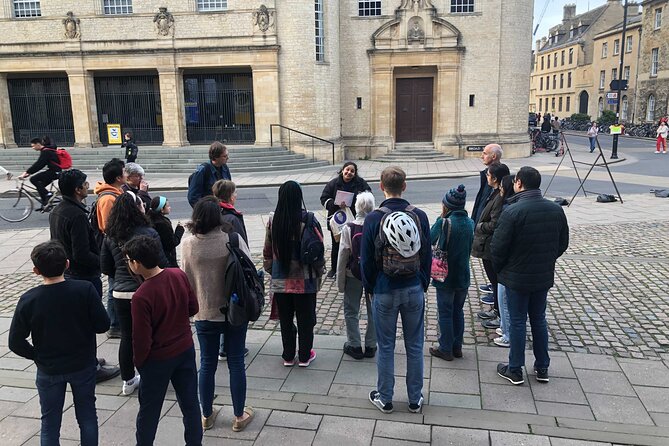
The stop outside St Paul’s Nursery lasts about 10 minutes and focuses on access to childcare and the academic barriers faced by parents. This may be the most immediately practical part of the tour.
Universities often present achievement as the result of talent and hard work. Childcare complicates that story. The presence of a nursery makes visible the daily support needed to study, teach, or conduct research while caring for children.
This stop is especially useful because it connects a large social question to one specific place. You are not discussing childcare as an abstract policy issue. You are looking at a facility connected with academics and considering what its existence says about who could participate in university life.
The topic also broadens the tour beyond women’s colleges and formal rights. It shows how ordinary arrangements, such as where children can be cared for, may decide who gets to pursue an academic career.
Something different for another day:
- City Sightseeing Oxford Hop-On Hop-Off Bus Tour
★ 4.5 · 1,042 reviews - Harry Potter Walking Tour of Oxford Including New College
★ 4.5 · 930 reviews - Oxford Sightseeing River Cruise Along The University Regatta Course
★ 4.5 · 652 reviews - Afternoon Tea Sightseeing River Cruise in Oxford
★ 5.0 · 583 reviews
The War Memorial Garden and Laurence Michael Dillon
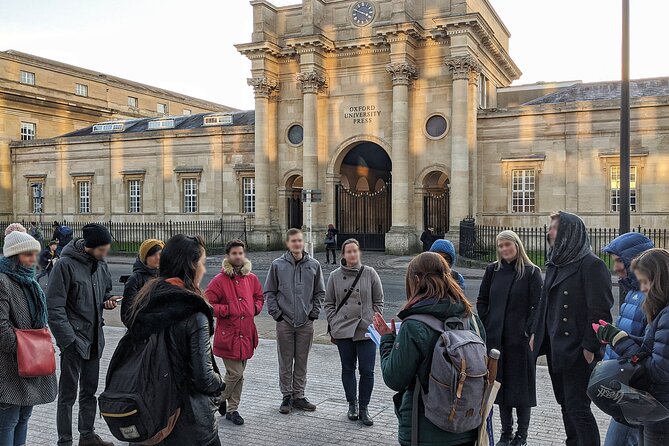
At the War Memorial Garden, the tour introduces the story of Laurence Michael Dillon and the history of trans people. The stop takes around 10 minutes.
This section adds an important dimension to the tour’s focus on gender. It moves beyond the question of women’s access to education and examines how trans lives have been recorded, remembered, or left out of public accounts.
Dillon’s story gives the guide a person rather than only a broad category. That can make the subject more direct and human. You are asked to think about how a life can be connected to an institution and a city while still being poorly represented in the stories those places tell.
The garden also provides a different kind of setting from the colleges. A memorial space naturally raises questions about remembrance, and the guide can use that setting to consider who receives public recognition and how later generations interpret the past.
This is one of the more sensitive stops. The tour does not appear designed to avoid discomfort, and that is part of its purpose. If you want a purely celebratory account of Oxford, this section may not suit you. If you want a fuller account of gender and identity in the city, it is a meaningful part of the route.
Lamb and Flag Passage: masculinity in old Oxford
The route then moves into older parts of the city and through Lamb and Flag Passage. This 15-minute stop examines masculinity in both the town and the university.
The subject helps balance the tour. Women’s and queer histories are not only about the people excluded from male institutions. They also involve examining the forms of masculinity that shaped those institutions, their customs, and their power.
A narrow passage is a fitting location for this discussion. Oxford can feel grand and formal around its colleges, but passages and older routes reveal a more crowded, everyday city. The tour uses that contrast to consider how university life and town life interacted.
You may find this section more open-ended than a standard historical talk. The guides often ask participants to offer ideas and opinions, then build the discussion from there. That approach can make the subject more engaging, but it also means the experience depends partly on the group. A quiet group may produce less conversation, while an active one can make the stop especially memorable.
Wadham College and representations of women
Outside Wadham College, the tour looks at representations of women from the early modern period. The examples include women from wealthy backgrounds as well as women with fewer advantages, giving the discussion a useful social range.
That distinction is important. A story about women in Oxford can easily focus only on those with money, connections, or unusual access to education. By considering women from different social positions, the guide can show that gender barriers did not affect everyone in the same way.
The stop lasts about 15 minutes. Wadham’s buildings provide the visual setting, but the main subject is how women were depicted and understood in an earlier period. You are invited to consider what those representations reveal about status, morality, work, education, and public life.
This is another place where the tour asks you to look beyond attractive architecture. You may leave noticing how easily buildings can preserve the image of a powerful institution while giving much less space to the people represented within its culture.
The Clarendon Building and the policing of women
The final stop is outside the Clarendon Building on Broad Street, the historic office of the vice-chancellor. Here, over about 15 minutes, the tour examines the policing of women in the city.
It is a strong place to finish. The Clarendon Building represents official authority, while the subject turns to the rules and social pressures placed on women. The pairing makes the tour’s larger point clear: institutions do not merely educate people or occupy buildings. They also create standards of behavior and decide who is treated as respectable, troublesome, or out of place.
Because the route ends in central Oxford, you can easily continue to other sights after the tour. You are outside the Clarendon Building, not inside it, so plan to combine the experience with your own visit to Broad Street, the Bodleian area, or nearby colleges if those are on your list.
The final discussion may leave you with more questions than answers. That is deliberate. Uncomfortable Oxford presents itself as a starting point for thinking rather than an authority that settles every issue.
The discussion format is the real strength
The most praised part of the experience is the way guides involve the group. Visitors describe the tours as interactive, respectful, thought-provoking, and engaging. One particularly useful feature is that guides ask for opinions and encourage people to discuss how difficult legacies should be handled.
I prefer this approach to a fixed script when the subject involves memory, identity, and institutional power. You hear information, but you also test your own assumptions. The best guides, including Devika, Julie, Cameron, Olivia, Waqar, Waqas, and Chase in different Uncomfortable Oxford programs, have been described as friendly, energetic, and good at keeping the conversation moving.
There is a tradeoff. A discussion-based walk can feel less predictable than a conventional tour. The exact shape of the conversation depends on the guide and the group. If you want every minute packed with dates and polished commentary, you may find the open format slower. If you like having your ideas respected and challenged, it is a major advantage.
The small maximum of 15 people helps. You have a better chance to hear the guide, ask a question, and take part without shouting across a crowd.
Is $27.54 a fair price?
At $27.54 per person, the tour is not the cheapest way to walk around Oxford, since the sites themselves have no admission charge. But you are paying for the research, structure, and interpretation that connect those places.
In 90 minutes, you cover seven stops and several related subjects: women’s education, childcare, trans lives, masculinity, representations of women, and the policing of women. That is a lot of material for a short walk.
I consider the price fair if you want a focused theme and a guide who can turn ordinary streets and institutional buildings into points for discussion. It is less compelling if you only want to see the major sights or take photographs.
Group discounts may improve the value for families, student groups, college societies, or organized parties. A mobile ticket is available, and confirmation is provided when you book. Free cancellation is available up to 24 hours before the start time, but changes or cancellations within 24 hours are not refunded.
Who will enjoy this walk most?
I would choose this tour if you are interested in feminism, women’s rights, LGBTQ+ history, trans history, gender, social access, or the less polished side of prestigious institutions. It also suits anyone who has already seen Oxford’s classic sights and wants a different framework for understanding them.
The tour can work well for students, educators, academics, and people who enjoy public discussion. The focus on childcare may be especially relevant if you are interested in how institutions support or limit working parents.
You do not need to be an Oxford expert. The guides explain the subjects as you go, and the questions help bring the group into the conversation. Still, you should be prepared for challenging material and for the possibility that the tour will ask you to reconsider familiar ideas.
Most people can participate, and service animals are allowed. The route is near public transportation. Since it is a walking tour lasting about an hour and a half, check the meeting point carefully and allow enough time to reach the Radcliffe Observatory Quarter on Woodstock Road.
Who may want a different Oxford tour?
This is not the best choice for a first-time visitor who wants a broad introduction to Oxford’s colleges, famous alumni, and major architectural sights. You will see impressive places, but the tour does not treat them as the main attraction.
It may also be a poor fit if you prefer history without group participation. The guides invite questions and opinions, and the experience is shaped by conversation. That is one of its strongest features, but it is not everyone’s preferred travel style.
Finally, think about the mood you want. The title is accurate. The tour addresses exclusion, social control, unequal access, and underrepresented lives. It can be stimulating and rewarding, but it is not a breezy stroll built around amusing anecdotes.
My recommendation
Book the Women and Queer Histories Tour if you want Oxford to become more than a collection of beautiful colleges. The route is short, focused, and sensibly priced, while the small group format gives the guide room to engage with you directly.
I especially recommend it after you have seen some of Oxford’s famous buildings. You will look at them differently once you have considered who could enter, who could study, who could raise a family while working, and whose identity was remembered.
Skip it if you want a standard sightseeing circuit or a strictly chronological lecture. Choose it if you want a thoughtful conversation that links Oxford’s streets and institutions to real questions about gender, authority, and belonging.
FAQ
Where does the Women and Queer Histories Tour begin?
It begins at the Radcliffe Observatory Quarter, Woodstock Road, Oxford OX2 6GG, at the old hospital site.
Where does the tour end?
The tour ends in central Oxford outside the Clarendon Building at 48 Broad Street, Oxford OX1 3AZ.
How long does the tour last?
The walking tour lasts approximately 1 hour and 30 minutes.
How much does the tour cost?
The listed price is $27.54 per person.
How many people can join the tour?
The maximum group size is 15 people.
Who leads the tour?
The tour is run by University of Oxford students through Uncomfortable Oxford.
What subjects does the tour cover?
It covers women’s education, women’s rights, childcare and academic access, trans history, masculinity, representations of women, and the policing of women.
Are the attractions included in the price?
The stops listed on the route have free admission. The value comes from the guided interpretation and discussion connecting them.
Can service animals join the tour?
Yes. Service animals are allowed.
Is free cancellation available?
Yes. You can cancel at least 24 hours before the start time for a full refund. Cancellations or changes made less than 24 hours before the start time are not refunded or accepted.
Just added around Oxford
- Cotswolds One Day Guided Cycle Tour – Private Groups★ 5.0 · 7 reviews
- Follow the Money Tour – by Uncomfortable Oxford™★ 5.0 · 7 reviews
- CS Lewis & Tolkien Tour with Magdalen Entry Public tour 13.45★ 5.0 · 8 reviews
- Oxford Scenic Cycle Tour- 2 persons minimum summer season★ 5.0 · 8 reviews
- Oxford Private Guided Walking Tour★ 4.5 · 8 reviews
- History of Medicine Tour – by Uncomfortable Oxford™★ 4.5 · 8 reviews
- Oxford: to Cotswolds (Half Day)★ 5.0 · 8 reviews
- Oxford Walking Tour – Discover its University and Traditions★ 4.0 · 9 reviews
Oxford Tours, compared.

Oxford University Walking Tour With University Alumni Guide
Read our review →
1.5-hour Oxford City and University Walking Tour
Read our review →

City Sightseeing Oxford Hop-On Hop-Off Bus Tour
Read our review →
Harry Potter Walking Tour of Oxford Including New College
Read our review →
Oxford Sightseeing River Cruise Along The University Regatta Course
Read our review →
Afternoon Tea Sightseeing River Cruise in Oxford
Read our review →
Inspector Morse, Lewis and Endeavour Oxford Walking Tour
Read our review →Browse the lists this tour appears in